user profile avatar

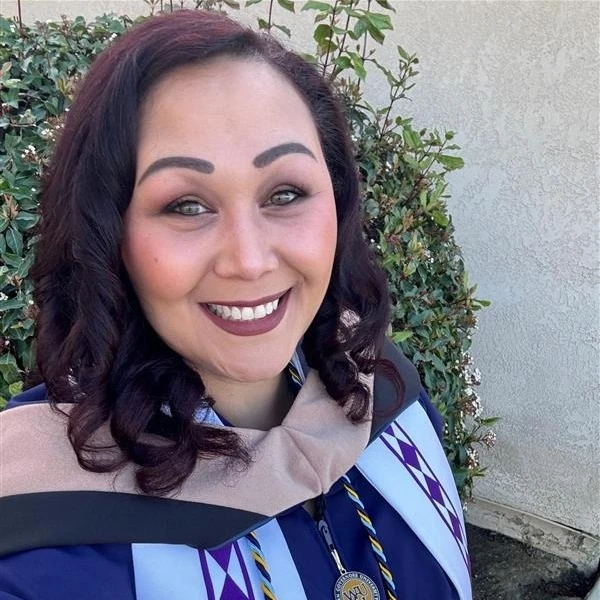
Chrystal Sheppard

1x

Finalist

Bio

I am a single mother of two daughters whose path to law began with a temporary position at the Kern County Bar Association, which grew into a five-year career working alongside many local attorneys and judges. That experience sparked my passion for the law and inspired me to pursue a Bachelor of Science in Criminal Justice and Administration. In 2019, I made the life-changing decision to take guardianship of two of my young nieces who were coming out of a traumatic environment. While raising four girls on my own, I continued to work full-time and furthered my education by earning a Master of Science in Business Management and Leadership. Throughout these challenges, I never lost sight of my ultimate goal of attending law school. My professional background includes experience with the County Sheriff’s Office and the District Attorney’s Office, where I gained invaluable insight into the justice system. Now, I am ready to take the next step: pursuing a law degree to become a licensed attorney. My goal is to serve my community through the practice of law while showing my daughters that with determination, resilience, and hard work, no dream is out of reach.

Education

Monterey College of Law

Doctoral degree program (PhD, MD, JD, etc.)
2026 - 2030
  • Majors:
    • Law

Western Governors University

Master's degree program
2023 - 2024
  • Majors:
    • Business, Management, Marketing, and Related Support Services, Other

University of Phoenix-California

Bachelor's degree program
2007 - 2011
  • Majors:
    • Criminal Justice and Corrections, General

East Bakersfield High School

High School
1999 - 2003

Miscellaneous

  • Desired degree level:

    Doctoral degree program (PhD, MD, JD, etc.)

  • Graduate schools of interest:

  • Transfer schools of interest:

  • Majors of interest:

    • Law
  • Not planning to go to medical school
  • Career

    • Dream career field:

      • Law Practice
    • Dream career goals:

      Sports

      Softball

      Intramural
      2014 – 20162 years

      Public services

      • Advocacy

        Black Infant and Maternal Health Initiative — Steering Committee Member
        2021 – Present

      Future Interests

      Advocacy

      Volunteering

      Philanthropy

      Entrepreneurship

      Ruthie Brown Scholarship
      I am approaching my student loan debt with a long-term structured plan that combines responsible borrowing, consistent repayment habits, and acting with the utmost fiscal responsibility throughout my time in law school and beyond. At this time, I am financing my legal education through a combination of private student loans, which I am already repaying monthly, to cover my current tuition expenses. Additionally, I pay for all of my books and study materials out of pocket. Once my law school becomes eligible for federal student loan programs, I plan to incorporate federal loans as part of a more balanced and flexible repayment plan. I understand the importance of taking advantage of the favorable loan terms, repayment options, and protections that federal student loan programs can offer. In addition to borrowing, I am committed to actively reducing the long-term impact of my debt while I am still in school. I work full-time in public health as a Program Specialist, and I maintain long-term stable employment and ensure a consistent income stream. I use this income to make ongoing monthly payments on my private loans, rather than deferring all repayments until after graduation. This approach allows me to reduce principal where possible and limit the interest accumulated over the duration of my loan. I also plan ahead financially by using tax returns, budgeting carefully, and prioritizing debt repayment as part of my monthly budget planning. Any additional income or lump-sum resources are directed toward student loan payments, when possible. While balancing full-time work, law school, and family responsibilities is challenging, I have made the decision to treat loan repayment as an ongoing responsibility rather than a heavy post-graduation burden. Looking ahead, my goal is to continue this disciplined approach after completing my degree. I plan to seek legal employment in the public sector or a mission-driven organization where I can serve diverse and BIPOC communities while also maintaining a sustainable repayment plan. I am also aware of repayment options such as income-driven repayment plans and potential loan forgiveness programs that may be available to me, and I intend to explore every resource available to me in order to pay off my loan debt. Overall, my strategy is grounded in accountability and practicality. I am not relying solely on future income or assuming that the debt will resolve itself after graduation. Instead, I am actively managing it now through monthly payments, careful budgeting, and responsible borrowing decisions while I continue to invest in my education and growth opportunities. My goal is to complete law school with a clear financial plan in place, manageable debt, and a stable foundation that allows me to focus on my long-term objective: building a career in law that serves my community while maintaining financial responsibility for myself and my family.
      Lori LaPray Scholarship
      As I continue through law school and prepare for legal practice, I do not see the ABA Model Rules of Professional Conduct as abstract standards, but as the daily framework that will guide how I represent clients, make decisions, and build credibility in the justice system. My experience in public health has already shaped how I understand diversity and ethics in practice. As a Program Specialist and coordinator for the Black Infant Health program, I work with pregnant and postpartum women who are often navigating complex systems and challenges. In my role, I am trusted with sensitive information and expected to communicate with honesty, accuracy, and respect. I have learned that advocacy only works when trust exists, and trust depends on consistency, confidentiality, and protecting people’s dignity. This same practice is what I intend to carry into my legal work. In my future legal career, I plan to integrate the model rules by being intentional about diligence, candor, and confidentiality in every matter I handle. Zealous advocacy means I will be fully committed to a client’s interests and use every lawful tool available to me to advance their case. However, it does not mean misrepresenting facts, omitting material information, or stretching legal arguments beyond what the law and evidence support. The line between zealous advocacy and compromised integrity is crossed when advocacy becomes distortion. That can include misrepresenting facts, overstating legal authority, or presenting information in a misleading way to gain an advantage. It can also happen more subtly, when an attorney becomes so focused on winning that they stop critically assessing whether their conduct aligns with fairness and professional responsibility. I understand that this boundary is most likely to be tested in emotionally charged cases or when clients are under significant stress and expect immediate results. In those moments, there may be pressure to take shortcuts or push arguments further than what is appropriate. My approach will be to stay grounded in the rules, slow down my decision-making enough to evaluate whether I would feel comfortable if my actions were fully reviewed by the court, and seek guidance from mentors or colleagues when ethical questions arise. I also understand that credibility is one of the most valuable tools an attorney has, and once it is damaged, it directly impacts my ability to be effective as an advocate. My commitment to these ethical principles is also tied to my commitment to diversity and inclusion in the legal field. Much of my work has focused on serving underrepresented populations through the Maternal and Adolescent Health division at Public Health. My experience has shown me how systems can impact people differently depending on race, income, and access to resources. It has also shown me the importance of advocates who understand those realities and can navigate systems with competence and cultural awareness. Moving forward, I plan to continue contributing through public interest advocacy, mentorship, and service to underrepresented communities. I want to use my legal education to help individuals understand their rights and gain access to fair representation. I also want to mentor students and young professionals from similar backgrounds who are considering law or public service, especially those who may not see many others with shared experiences in this field. Ultimately, I see ethical lawyering and inclusion as connected. The model rules ensure fairness and integrity in legal practice, while diversity ensures the system itself is equally accessible. My goal is to practice law in a way that represents strong advocacy grounded in honesty, and a commitment to expanding access and representation within the legal profession.
      Bick First Generation Scholarship
      No one in my immediate family—my parents, siblings, aunts, uncles, or grandparents—has attended college. Because of that, I did not grow up with a roadmap for higher education. I had to learn everything from scratch along the way: how to apply for school, how to get student loans, and how to navigate unfamiliar systems despite struggling to figure out the process alone. My experiences have shaped me into someone who values education not just as an achievement, but as a transformation. Every step I have taken has been intentional. I have balanced work, parenting, caregiving, and school while also learning how to advocate for myself in spaces where I often had many questions that no one in my family could answer. There were moments when the weight of responsibility felt overwhelming, especially as a single parent raising four girls while working full-time. But I also learned that persistence can replace privilege when it is matched with discipline. My professional life in public health has also strengthened my commitment to education and community service. As a Program Specialist and coordinator in the Maternal Child and Adolescent Health division, I work with pregnant and postpartum women and families navigating complex systems that are often inequitable. That work reminds me daily why I chose this path: to be a part of creating change in systems that impact families like mine. My experience has also shown me the roles that advocacy, compassion, and education play in empowering people to make informed decisions about their health and their lives. I am currently pursuing my law degree because I want to expand that impact. My goal is to become an attorney who advocates for families, especially those who are often unheard or underserved. I want to use my legal education to help people understand their rights, access resources, and navigate systems that can feel overwhelming or inaccessible. What drives me most is my children. Two of my daughters are nieces for whom I am their legal guardian. I took them out of a bad situation, and I want them to see that where we start does not determine where we can go. I want them to see what it looks like to build something new from the ground up—to create a legacy where education is not the exception, but the expectation. I want to carve out a new path in my family, one where future generations of my children and grandchildren grow up with access to knowledge, opportunity, and confidence in their ability to shape their own destiny. This scholarship would make a meaningful difference in helping me continue that journey. It would ease the financial pressure that comes with balancing tuition and living expenses while raising a family on my own. It would also allow me to focus more on my studies and less on survival-level financial stress. Ultimately, this scholarship would not just support my education, it would support the beginning of the generational shift I am working to accomplish.
      Jimmy Chong Scholarship
      As I continue through law school and prepare for legal practice, I do not see the ABA Model Rules of Professional Conduct as abstract standards, but as the daily framework that will guide how I represent clients, make decisions, and maintain credibility in the justice system. My experience in public health has already shaped how I understand ethics in practice. As a Program Specialist and coordinator for the Black Infant Health program, I work with pregnant and postpartum women who are often navigating systems that are complex and not always accessible. In my role, I am trusted with sensitive information and expected to communicate with honesty, accuracy, and respect. I have learned that advocacy only works when trust exists, and trust depends on consistency, confidentiality, and protecting people’s dignity. This same practice is what I intend to carry into my legal work. In my future legal career, I plan to integrate the model rules by being intentional about diligence, candor, and confidentiality in every matter I handle. Zealous advocacy means I will be fully committed to a client’s interests and use every lawful tool available to me to advance their case. However, it does not mean misrepresenting facts, omitting material information, or stretching legal arguments beyond what the law and evidence support. The line between zealous advocacy and compromised integrity is crossed when advocacy becomes distortion. That can include misrepresenting facts, overstating legal authority, or presenting information in a misleading way to gain an advantage. It can also happen more subtly, when an attorney becomes so focused on winning that they stop critically assessing whether their conduct aligns with fairness and professional responsibility. I understand that this boundary is most likely to be tested in emotionally charged cases or when clients are under significant stress and expect immediate results. In those moments, there may be pressure to take shortcuts or push arguments further than what is appropriate. My approach will be to stay grounded in the rules, slow down my decision-making enough to evaluate whether I would feel comfortable if my actions were fully reviewed by the court, and seek guidance from mentors or colleagues when ethical questions arise. I also understand that credibility is one of the most valuable tools an attorney has, and once it is damaged, it directly impacts my ability to be effective as an advocate. My commitment to these ethical principles is also tied to my commitment to diversity and inclusion in the legal field. Much of my work has focused on serving underrepresented populations through the Maternal and Adolescent Health division at Public Health. My experience has shown me how systems can impact people differently depending on race, income, and access to resources. It has also shown me the importance of advocates who understand those realities and can navigate systems with competence and cultural awareness. Moving forward, I plan to continue contributing through public interest advocacy, mentorship, and service to underrepresented communities. I want to use my legal education to help individuals understand their rights and gain access to fair representation. I also want to mentor students and young professionals from similar backgrounds who are considering law or public service, especially those who may not see many others with shared experiences in this field. Ultimately, I see ethical lawyering and inclusion as connected. The model rules ensure fairness and integrity in legal practice, while diversity ensures the system itself is equally accessible. My goal is to practice law in a way that represents strong advocacy grounded in honesty, and a commitment to expanding access and representation within the legal profession.