Hobbies and interests
Golf
Bowling
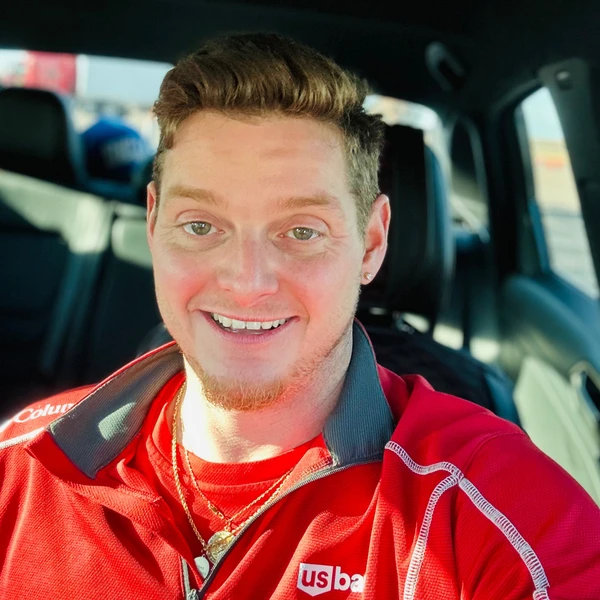
Christopher Bolin
1x
FinalistChristopher Bolin
1x
FinalistBio
I'm Chris Bolin, a dedicated full-time student at Scott Community College pursuing a 4-year degree in automation engineering with University of Northern Iowa. Raised by my hardworking single mom, I faced early challenges with speech and reading but found support from a compassionate 3rd-grade teacher. Despite struggles with addiction, I embraced sobriety in April 2022. Working 3 part-time jobs, I maintain a 3.7 GPA while balancing work, school, AA meetings, and family. With a passion for engineering, I've completed courses and earned accolades, including Phi Theta Kappa induction. I serve as the Vice President of Leadership and Service in PTK. I'm committed to personal growth, family reconciliation, and inspiring others with similar struggles. Seeking scholarships, I aim to continue my transformative journey and contribute to the community.
Education
Eastern Iowa Community College District
Associate's degree programMajors:
- Electrical/Electronic Engineering Technologies/Technicians
Miscellaneous
Desired degree level:
Bachelor's degree program
Graduate schools of interest:
Transfer schools of interest:
Majors of interest:
- Electrical, Electronics, and Communications Engineering
Career
Dream career field:
Automation Engineer Management
Dream career goals:
Crc
Us bank2022 – 20242 years
Sports
Bowling
Club2022 – 20231 year
Research
Accounting and Computer Science
Phi Theta Kappa — Chapter President2023 – Present
Public services
Volunteering
World Relief — Youth mentor2023 – PresentVolunteering
Young People of Alcoholics Anonymous — Attend meetings and Conferences2022 – Present
Learner Math Lover Scholarship
I love math because it helps me see the world in a way that feels organized and possible. It sharpens how I think, how I solve problems, and how I make decisions. What pulls me in most is pattern recognition. I enjoy spotting connections in problems that others might not see. Math gives me a calm, focused mindset where I can break things down and look for structure. Once I see the pattern, everything starts to make sense. That feeling is addictive. It is like cracking a code.
When I face a tough problem, I do not avoid it. I get excited. I take my time, work through each part, and keep pushing until I get the answer. That process builds confidence. It reminds me that I can handle pressure and stay focused even when things seem unclear at first. Solving problems has helped me in school, in work, and even in my recovery journey. It has taught me patience, discipline, and how to think through things instead of reacting.
Math shows up in everything I do. I use it in engineering, finances, planning, and even in understanding how systems work. It keeps me curious and always learning. I do not just want to be good at math. I want to use it to build things, fix problems, and make life better for others. That is why I am going into electrical engineering. It is a field that lets me take all the problem solving and pattern recognition I enjoy and apply it in a real and meaningful way. Math is more than a subject to me. It is a part of how I live, and it keeps me motivated to grow.
Mark Green Memorial Scholarship
A few years ago, I was broken. I had no direction, no purpose, and no reason to believe things would ever get better. I was deep in addiction and convinced that people like me did not get second chances. But I did. And I have done everything I can to make that second chance count.
Today, I am a full time student who just earned my second associate degree with a combined GPA of 3.7. I work two jobs, lead my campus honor society as Phi Theta Kappa president, and stay active in recovery. I give back because people gave to me. I show up because I remember what it felt like to be lost. I push forward every day with the hope that my story will help someone else believe change is possible.
When I came back to school, I was not sure what I would become. But I knew I wanted to rebuild. I started with a degree in engineering technology. That led me to discover my love for problem solving and systems. I just finished a physics transfer degree and plan to continue at Milwaukee School of Engineering to complete my bachelor’s in electrical engineering. Getting accepted to MSOE was a major milestone for me. The truth is, it is financially outside of my reach. But thanks to the merit scholarships I have already received, it is becoming more possible. I am applying for additional help because I want to be able to live comfortably while I focus on school and continue to stay involved in the recovery and student communities. I am doing everything I can to make this dream a reality.
But my impact is not limited to the classroom. I started a SMART Recovery group on my campus because there was nothing in place for students in recovery. I saw the gap and decided to fill it. I worked with treatment centers and faculty to get it going. I helped people get to meetings. I built something that others could lean on. I did it quietly, and I kept it going because it mattered. That group continues to give people a place to breathe. That is what I care about most. Not recognition. Just results.
As PTK president, I have led fundraisers, spoken at events, and helped students feel connected. I have learned how to organize and how to follow through. These are skills I plan to carry into everything I do. I want to use my education and experience to keep helping others—especially those who are overlooked. I want to bring recovery meetings to other schools. I want to mentor students who are trying to start over. I want to show them it is possible to be proud of who you are becoming.
This scholarship would allow me to stay on track and continue moving forward. I am not asking for help because I feel entitled to it. I am asking because I believe I can do something meaningful with it. I will never forget what it felt like to have nothing. That is what drives me. That is what keeps me showing up. And that is what I plan to keep doing long after I graduate.
Chadwick D. McNab Memorial Scholarship
One of the most meaningful projects I have worked on was not tied to a classroom. It was the long process of completing my engineering technology degree while working, staying active in recovery, and stepping into leadership at my college. I treated school like a full time job. Every class became a challenge to push myself further. That project, my education, changed me.
At the same time, I was building something outside of school. I started SMART Recovery meetings on campus after seeing students who were struggling with addiction and feeling disconnected. I had been there myself. I knew how powerful it could be to have a space where people felt supported. I partnered with local treatment centers. I worked with college staff. I handled the logistics. I built a program from nothing. Over time, it became a place where people could show up and feel less alone.
That experience showed me something important. I realized I did not just like helping people. I liked building systems that worked. I enjoyed solving problems, creating structure, and watching something grow from an idea into something real. That same mindset showed up in my engineering classes. When I was learning about circuits or using design software, I felt the same satisfaction I had when building recovery meetings. I wanted to understand how things worked so I could create things that had purpose.
That is what pushed me toward electrical engineering. I want to design and build systems that improve lives. Technology gives me the ability to do that. It is not just about wires and numbers. It is about seeing problems and creating something better. I want to be the kind of engineer who never forgets the people on the other side of the work. I am inspired by how technology can change the way people live. It can bring electricity to a home that has never had power. It can connect someone in recovery to a support meeting on the other side of the country. It can bring people into classrooms they never thought they would see. I am inspired by how something invisible, like current running through a circuit or code behind a screen, can become something that helps someone get through the day.
As president of Phi Theta Kappa, I have led service projects and student support work. I learned how to plan, how to show up, and how to lead by example. These same habits help me in school. I am currently studying advanced physics and calculus and applying for internships. I am not exactly sure what part of engineering I will land in, but I know I want to make things that solve problems that matter.
Technology inspires me because it creates connection and progress. I have already rebuilt my life through education and recovery. Now I want to build for others. I want to take what I have learned and use it to design systems that bring people together and move us forward
First-Gen Futures Scholarship
My path to higher education has been anything but traditional. I did not grow up hearing much about college. My mom never went, and I never met my dad. My grandparents supported me and taught me the value of hard work and respect, but college was not something we talked about. I had no real influence or direction when it came to higher education.
I did go to community college right after high school. At the time, I had a desire to do something more with my life, but I lacked direction and support. Then, when my grandfather passed away at 19, everything changed. He was the closest thing I had to a father figure, and losing him shattered me. I dropped out of school not long after and began to spiral. I turned to alcohol and eventually drugs to cope with the grief and pain. That decision led me into a cycle of addiction that lasted through my twenties and into my mid-thirties.
During that time, I had good jobs and promising opportunities, but I lost every one of them because of my drinking. Alcohol took everything from me- my focus, my self-worth, and my ability to believe in a future. I spent years in survival mode, living in pain, stuck in a version of myself I did not recognize.
Eventually, I hit a breaking point. I had nothing left but a choice to stay on the same destructive path or try to rebuild. I chose to rebuild. I got sober and entered recovery, which gave me the strength and clarity to believe that change was possible. Going back to college was not just about starting a new career. It was about rewriting my life.
As a first-generation student, I had to learn how to navigate everything from scratch- financial aid, advising, degree requirements, and how to balance school with work and recovery. But I showed up, asked for help, and kept moving forward. Every step was a step toward a better version of myself.
Education has reconnected me to who I was before addiction. It has given me purpose, structure, and confidence. What started as a practical move to gain skills has turned into something much deeper. I am now pursuing a degree in electrical engineering, with plans to specialize in robotics or computer systems. I chose this path partly because of my grandfather, who was an electrician in the Navy. I admired his ability to build and repair, and now I see that same strength in myself.
Today, I maintain a 3.8 GPA, and that number means more to me than academic success. It is a symbol of how far I have come. I have taken on leadership roles, including serving as president of my Phi Theta Kappa chapter. I started a SMART Recovery group on campus to create space for others battling addiction and mental health challenges. I continue to attend AA and stay connected to service and recovery, which are the foundation of my life today.
I have prepared for this journey by completely changing my lifestyle, building discipline, and showing up even on the hard days. Being a first-generation college student means breaking cycles, finding your own way, and creating opportunities for yourself that no one else handed you. My story is not perfect, but it is honest, and it is mine. I am proud of how far I have come, and even more excited about where I am going.
Mikey Taylor Memorial Scholarship
For a long time, I didn’t even realize how deeply my mental health was impacting my life. Struggling with alcoholism wasn’t just about the drinking. It was about the emptiness I was trying to fill and the pain I didn’t know how to talk about. It took hitting rock bottom for me to finally ask for help. That’s when I found Top of the World Ranch, and my life began to shift in ways I never thought possible.
My recovery journey began with Alcoholics Anonymous, and it continues to be the foundation of how I stay sober. Through AA, I learned accountability, connection, and how to live one day at a time. It gave me a community and a sense of purpose, and it’s where I learned that helping others is what truly keeps me grounded.
At the same time, I saw a need for more peer-to-peer support on campus—something inclusive to all addictions and open to students who might not connect with traditional recovery programs. That’s why I started a SMART Recovery group at my school. It’s a mental health-focused, peer-led space where students can talk about their struggles without judgment. While AA is where I do most of my personal recovery work, SMART gave me a way to reach people who just needed someone to talk to.
My career path was also shaped by someone close to me. My grandfather, who was an electrician in the Navy, introduced me to electrical work and was a big part of my life. He drank a lot too and struggled with many health problems because of it. He passed away when I was 19. Losing him shattered me. He was the only father figure I ever had, since I never met my dad. When he died, it spiraled my life into a darkness I wasn’t prepared for. I spent decades lost in alcoholism and pain, trying to cope with a hole that felt impossible to fill.
It took time, a lot of work, and a lot of humility to begin crawling out of that place. But once I started to find clarity, I also started to find purpose. Now I’m studying electrical engineering, with hopes to work in robotics or computer systems. Engineering is more than just a career for me. It represents structure, problem solving, and rebuilding, much like I’ve had to do in my own life.
Mental health has reshaped my beliefs. I’ve learned to value honesty, vulnerability, and growth. It has impacted my relationships. I’ve let go of toxic dynamics and learned how to build healthier ones. And it has fueled my ambition. I want to prove to myself and others that you can come back from the darkest places and still do something incredible. My story isn’t perfect, but it’s real. And if sharing it helps me keep growing and supporting others, then I know I’m on the right path.