Hobbies and interests
Anime
Chess
Gaming
Reading
Adventure
Fantasy
Psychology
I read books multiple times per month
Christopher Arthur
1x
FinalistChristopher Arthur
1x
FinalistBio
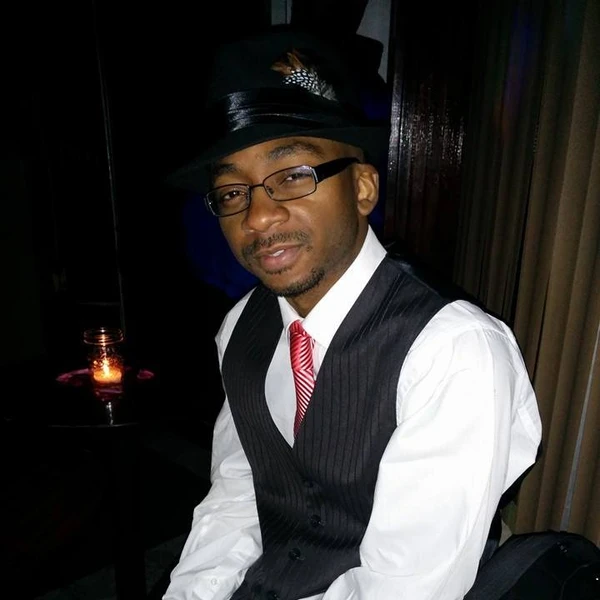
I am Christopher Arthur: a single father, a 19-year higher education professional, and a graduate student climbing my mountain one step at a time.
For nearly two decades, I have served students at Borough of Manhattan Community College while building my own academic foundation within CUNY. I earned my associate degree at Kingsborough Community College, my bachelor's at the CUNY School of Professional Studies, and I am now pursuing my master's in Business at the same institution.
But my most important role is father to my son, Leo. Every late night after he falls asleep, I open my laptop and study. Every sacrifice I make is for him. He is why I keep climbing when exhaustion sets in.
For four years, I have also worked as a tutor, helping associate degree students find their footing and believe in themselves. Watching their faces light up when they succeed has ignited my deepest ambition: to transition into teaching and lift others the way I am lifting myself.
Online education has been my path forward. It gives me the flexibility to balance fatherhood, full-time work, and graduate studies in a way that traditional classrooms never could.
I am not the most accomplished applicant. I am the father who refuses to quit. The tutor who stays late. The professional who has grown within one institution for 19 years because I believe in its mission.
I am climbing. One step at a time. For my son. For my students. For myself.
Education
CUNY School of Professional Studies
Master's degree programMajors:
- Business/Managerial Economics
CUNY School of Professional Studies
Associate's degree programMajors:
- Business/Managerial Economics
Miscellaneous
Desired degree level:
Doctoral degree program (PhD, MD, JD, etc.)
Graduate schools of interest:
Transfer schools of interest:
Majors of interest:
Career
Dream career field:
Education
Dream career goals:
Supervisor
City University of New York2007 – Present19 years
Sports
Football
Club1990 – Present36 years
Research
Business, Management, Marketing, and Related Support Services, Other
Labor and Employment Relations Association (LERA — Researcher2021 – Present
Tawkify Meaningful Connections Scholarship
The time before my fatherhood experience made me believe that I understood the bonds between people. I had friends and family, and shared friendships with my schoolmates. The moment I held my son Leo France Arthur showed me the weight of one connection that changes everything. The relationship has been the force that created my identity while teaching me that human relationships extend beyond understanding. Someone needs to show strength during difficult times for someone else.
The parent-child relationship develops through total dependence, which creates a special bond. Leo looks at me with his eyes. He sees his whole world. His vision encompasses protection and peace and everlasting affection. The situation creates both a humbling and frightening duty. The period after his mother and I separated brought immense pressure to handle. I took care of my son during night hours while trying to save my identity and future goals from destruction. The experience left me feeling alone because I believed nobody knew the burden of being the only person who provided for our family, took care of our family, and managed our child's development.
The time of my most profound understanding about human relationships occurred when I experienced complete isolation. I realized that to build a strong bond with him, I had to be fully present. The fifth reading of the bedtime story required my complete attention because I had to put aside my personal worries. I could not let the stress of a past-due rent bill seep into my voice when I tucked him in at night. This relationship required me to bring patience and love to every day because I had to support him when I reached my limits. The process needed me to show my true feelings. The moment I disagreed with him, I learned how to remove myself from the situation.
The way I connect with people has changed because of this experience. I used to think that asking others for help would make me look weak, but now I see it as a way to create connections with others. I accept all help that family members provide me, because I understand that support means family members show me their trust. My workplace environment enables me to understand the difficulties that my coworkers experience. My immediate connection with the single mother leads to her school pickup because I see her rushing to arrive at work. I make an effort to provide support because I believe that simple acts of understanding will help others through difficult times. I have developed better listening skills, which help me understand the unsaid problems someone tries to express without using their actual words.
My understanding of human connection serves as my main direction to achieve my future ambitions. I want to complete my degree because it will help me create a professional path that allows me to mould others positively. I aim to enter a professional environment which enables me to guide my team through a sense of understanding, while developing relationships that make my workplace feel like a family, and establishing a space where everyone receives proper attention. My relationship with Leo shows me that the strongest foundations of a relationship are created through trust and love. I want to become the kind of leader who establishes trust with people to create strong teams. I want to show my son that true strength lies not in individual achievement, but in the ability to lift others, to forge connections, and to build a better future not just for yourself, but for everyone around you. My son provides me with the purpose that drives me to achieve my goals and continue my work while I create positive changes through my relationships with others.
Organic Formula Shop Single Parent Scholarship
A particular type of disorder exists that disrupts the life of a single father who also studies as a student. The situation creates disturbance through internal conflicts, which persist throughout the duration of the fight. My son Leo France Arthur, who possesses youthful innocence, requires his father to experience life from his perspective, which includes bedtime stories and scraped knees, and the essential need for his dad. The future of my life exists in three forms: my textbooks and study time, my full-time employment duties, and my future. My name is Christopher Arthur, and my existence requires me to maintain equilibrium between fatherhood and my journey to develop as a man.
The financial reality of single parenthood creates a persistent stream of anxiety that never stops. The total amount of money I possess functions as a restricted resource. My salary disappears into two major costs: childcare and essential daily expenses like food, diapers, and the rising prices of basic items. The months have forced me into situations where I must choose between two options that I cannot accomplish. I have fallen behind on bills, which include rent, while I held my son Leo, who required me to protect his home. Unexpected events such as urgent vehicle repairs and Leo's illness, which requires me to stay home from work, become major disruptions that endanger my delicate existence. Although family members have provided me with several instances of support, which I appreciate, I must handle everything on my own. I am the only person who exists at this moment. He sees me as everything in his life, while I view him as my entire existence.
My situation presents two problems because it requires financial resources and it needs me to spend my limited time, which I always seem to lack. I have no personal time available to me. My days become a continuous loop of these activities: I work, then I pick up Leo, followed by dinner preparation and bathtime, and I assist with homework, and then we read stories. I can start my schoolwork as soon as Leo goes to sleep and stays still in his sleep. I study by the dim light of a desk lamp because my mind remains foggy with exhaustion, yet I continue studying because my purpose drives me more than my body fatigue. The late-night silence becomes my time to develop unbreakable determination.
This experience has taught me the true meaning of purpose. Leo serves as the driving force behind my life. The academic work that I complete through reading, assignments, and exams is completed for two reasons. I am doing it for him. The future I create will prevent him from experiencing his father's stress when he receives rent notices. I am creating a life that allows him to access more opportunities than what our present situation provides. He gives me the motivation to start my day, and his presence helps me overcome my fatigue while he keeps me moving forward.
My ambition is simple and powerful: to give my son a better life than the one we are struggling through right now. A degree is my map to that better life. The degree will lead me to financial security, which will enable me to work in a job that meets our needs while I show my son that every challenge can be conquered. The scholarship would provide more than financial assistance because it would function as a critical support system. The scholarship will eliminate one expense from my budget, which will allow me to spend extra time with Leo instead of working additional hours, and it will provide me with concrete evidence that I can achieve my dream of earning a degree, which will create our stable future. I am not just a student. I am a father who defends his family through academic work.
Sharra Rainbolt Memorial Scholarship
The word "cancer" arrived in our lives not as a whisper but as a series of seismic shocks that reshaped our entire world. My mother, Loretta Williams, functions as the core of our family, and seeing that core endure the suffering caused by illness has become my most difficult yet life-changing experience.
Her battle with breast cancer launched the sequence of events. The hospital produced a sterile scent, which combined with the word "mastectomy" that filled the space between us as an overwhelming, scary presence. She had the operation to remove one breast and then needed to endure multiple weeks of radiation treatment, which used invisible high-energy rays to attack her body. We celebrated the end of her treatments, believing we had weathered the storm. But cancer is a cruel and patient enemy. The disease came back to her after two years, this time as ovarian cancer. The act of betrayal emerged through her decision to undergo another surgical operation. The more extensive and invasive procedure required the medical team to remove her ovaries and her uterus. The battle commenced again from the beginning.
The emotional impact of the situation brought substantial destruction to my mental state. My brother and I were in college, trying to build our own futures, but the future became an abstract concept when the present was so fragile. Our mother, who had been our main source of support, started to lose her strength. The chemotherapy treatment made her hair fall out in clumps, which served as a daily reminder that she had to endure toxic substances to stay alive. The physical pain was evident, but the emotional toll—which included her fearful expressions and her silent moments of despair—was what truly broke us. The two of us made the decision to leave college together. The choice for us to make brought no challenges. Our education felt secondary to being by her side, to driving her to appointments, to making sure she wasn't alone in her fight. We also simply couldn't afford it. The enormous medical debt created an unending burden that made tuition payments seem like an unattainable expense.
The treatment caused my mother to lose her hair, which created an emotional burden for her, and this experience taught me that vulnerability represents true strength because strength requires people to make sacrifices for their loved ones. People use their ambition to achieve personal success, while their ambition helps other people survive.
The experience produced an inner drive that became my strongest motivation. I witnessed my mother defend her dignity through her silent but intense battle. She never expressed dissatisfaction. She woke up each morning to confront her daily challenges. The battle that she fought became the battle that I had to fight. The ambition I have today is fueled by her. I want to finish what we started. I want to earn my degree not just for myself but for her to honor the years she spent fighting for her life and the years my brother and I spent fighting alongside her. I want to build a career that provides stability not just for me but to ensure that our family can face any future crisis together while we maintain our ability to receive care and pursue college education. My mother’s battle taught me that life is fragile and time is precious. Life should not be spent in mere existence; instead, I should create results that benefit the world. The path that our past brought us through will become our future path, which leads us to success.
DOME Journey Scholarship
Pursuing Impact Through Operations Management
The main human driving force behind my pursuing a PhD in Operations Management (OM) is the wish to change complicated systems into the main sources of efficiency and fairness. My interest in OM was high during my master's studies and went even higher during the courses in stochastic modeling, optimization, and supply chain analytics, which provided the tools for analyzing real-world issues, from hospital patient flow to sustainable logistics. Such experiences convinced me that operations management is the area where the most diligent quantitative work meets the biggest social impact and I cannot wait to do my part in widening its academic border.
I am completely unwavering in my decision to undergo the extensive 4-6 year in-person residency that is a part of the demanding PhD program. I am aware that this period is not solely for gaining knowledge through courses but for emerging deeply into the sphere of scholarly activities—getting involved with faculty mentors, working with a group of students, and getting fully immersed in the intellectual community of a program. I am ready to move to another place and devote my entire self to this full-time venture.
My research interests are focused on quantitative OM with the healthcare and sustainable systems as the two main application domains. I find it really interesting to think about issues such as resource allocation, process design, and behavioral operations in these high-stakes scenarios. I know that a normal OM PhD program spans over two years of rigorous study in microeconomics, statistics, and specialized OM topics, followed by qualifying exams, dissertation research, and teaching assistantships. The end goal is to be in the teaching world, and my dream is to be a professor who works on research that is both impactful and publishable, educates the business leaders of tomorrow, and through mentoring and service contributes to the field’s development.
In connection with this, I have pinpointed a precise set of PhD programs that not only correspond to my area of research but also interest me.
My top priority is acceptance to the CUNY Graduate Center/Baruch College PhD in Business with a concentration in Operations and Decision Analytics. Simultaneously, I am applying to reputed programs that are specifically known for their strengths in my research areas:
MIT Sloan (PhD in Operations Management)
Stanford GSB (PhD in Operations, Information & Technology)
University of Chicago Booth (PhD in Operations Management)
Columbia Business School (PhD in Operations Management)
Kellogg, Northwestern University (PhD in Operations Management)
University of Michigan Ross (PhD in Operations & Management Science)
Carnegie Mellon Tepper (PhD in Operations Management)
The DOME Scholarship's goal of motivating the new generation of OM scholars is very much in tune with my own life experience. It would be a great help for me as I make these critical decisions and plan my future path that includes researching, teaching, and contributing to the field of Operations Management.
RonranGlee Special Needs Teacher Literary Scholarship
Professor Bloom's declaration revolves around the fundamental issue of education: it is not only the transmission of knowledge but also the student's turning to his/her own capability, value, and exclusive place in the world. In this context, "presence" refers to an assured and conscious self-perception—the realization that one's thoughts, feelings, and actions carry weight and have meaning. Moreover, for a special needs student, this feeling of presence is frequently hidden beneath the heavy burden of society’s tags, hindrances to learning, and the frustration of living in a world that seems to be designed for other people. Shedding this light upon them enables teachers to support the students in accompanying to their very own presence is to help them removed that fog, to find out and trust their own voice, strengths, and intrinsic value.
My Mission in Accomplishing This Task
It is my mission to be both an archaeologist and an architect for every single student. To begin with, I will have to slowly but surely and carefully unearthed the child—since those layers of doubt, failures and fears can be removed only through unconditional positive regard, patient observation and differentiated instruction. I try to find the spark in the student's interest, humor, or perseverance even if it is very weak.
After that I will build. I will set up the accessible pathways to the competence overlaid with the strengths being the foundation.
In the end, my mission will be to give the academic, social, and emotional tools to the students and then to step back as they build their self-castle with the help of the world; they will be present and strong at the same time.
Optional Fairy Tale: (The Sword-Master of the Unseen Merchant'S Blade) The village elders called them the Forgotten Four: Kael, whose mind danced too fast for his body to follow; Sera, whose thoughts were a dense, impenetrable forest; Ren, whose anger flared like a sudden wildfire; and Lia, who was so locked in silence she seemed made of glass. They were sent to the last resort—the cliffside dojo of Christopher, the Swordsman of the Broken Circle.
Christopher was unlike any blade-master. His dojo had no trophies, only tools—looms, clay, abacuses, and yes, blunt training swords. “The sword is not just conflict,” he would say. “It is precision. It is an economy of motion. It is reading the terrain and adapting. It is the art of the business of life—to assess, to invest your energy wisely, to protect your spirit, and to negotiate your path.”
The four apprentices scoffed. “We are not merchants,” growled Ren. “We are to be warriors!”
“Then attack me,” Christopher said calmly, picking up a single practice sword. “All at once. Show me what you have.”
The assault was chaos. Kael lunged first, a blur of frantic motion, but his strikes were wild, over-committed. Christopher didn’t parry; he sidestepped, using Kael’s momentum to unbalance him, a touch on the back guiding him gently to the mat. “Energy without focus is capital wasted,” Christopher stated.
Sera charged next, but methodically, calculating ten moves ahead yet paralyzed by the choices. Christopher simply held his sword still, a central point in her storm of plans. She froze before him. “Analysis is vital, but indecision is a bankrupt strategy.”
Ren roared in, a furious, overpowering flurry. Christopher met him not with force, but with deflection, redirecting Ren’s own power away, spinning him until his anger was spent. “Uncontrolled emotion is a debt that cripples your assets.”
Lia did not move. She watched, a statue of fear. Christopher turned to her, lowered his sword, and bowed. He then took a wooden practice dagger and placed it in her hand. He turned his back to her, facing the others, and said, “Now, defend me.”
Kael, Sera, and Ren regrouped, confused. As they moved toward Christopher, something miraculous happened. Lia saw Kael’s wild flanking move. She did not speak, but she stepped—one precise, silent step—into his path. He pulled up short, astonished. She had “read” him. She had invested her movement perfectly.
Christopher smiled. “See! She assessed the threat, invested her position, and protected her ally. That is the art!”
The lesson ignited. Christopher began to teach them not one style, but the language of battle as business.
• For Kael, he used rhythm—a drumbeat to structure his bursts. His speed became an asset, a way to seize opportunities others missed.
• For Sera, he created complex forms like intricate contracts, satisfying her need for systems. Her mind became their strategic reserve.
• For Ren, he forged his fire into a disciplined forge, hammering his passion into a relentless, focused will.
• For Lia, he taught the language of movement and touch. Her silence became her stealth; her observations, their intelligence.
Weeks later, the bandits came. Four rough men, sneering at the “broken” dojo. Christopher stood before his students, one sword in hand. “Remember your art,” he said.
The fight was a symphony of Christopher’s teaching. He engaged the leader, but a bandit rushed his blind side. Kael was there—a controlled, efficient dash, his sword a precise poke to the ribs. Energy invested. Another bandit tried to flank. Sera, from the porch, had charted his path and calmly rolled a clay pot into his way. He stumbled. Strategy executed. The third bandit, enraged, charged Lia. Ren intercepted, a controlled, roaring deflection that shielded her without reckless pursuit. Passion channeled.
The leader, desperate, swung at Christopher’s head. Christopher parried, locked blades, and spoke. “You see only one sword.”
From the perfect, silent shadow, Lia emerged. She did not strike. She simply placed the tip of her dagger against the bandit’s back. Her presence, undeniable and formidable, ended the fight. She had found her voice.
The bandits fled. The four apprentices stood panting, not around a master who did everything for them, but as a coordinated unit, each having contributed their unique capital to a successful defense. They looked at each other, and then at Christopher, not with dependence, but with dawning realization.
Christopher sheathed his sword. “You did not win because I defended you. You won because you defended each other. You assessed the market of battle, invested your unique skills, protected your collective venture, and negotiated its end. Today, you were not my students. You were my partners.”
In that moment, Kael felt his focus, Sera her clarity, Ren his purpose, and Lia her undeniable power. They stood tall, not as the Forgotten Four, but as individuals, fully present, their unseen blades—their spirits—finally sharp, held with confidence, and ready to engage with the world.
As a Business Major/adjunct lecturer/and a Tutor its my job to provide the next Elon Musk, Jeff Bezos, Mark Zuckerberg's with the tools the need to keep the world moving forward, and economy steady and with the $10,000 Scholarship its a step in the best direction!
Future Green Leaders Scholarship
So, the current position on sustainability concerning business is as follows: it is your main lever for future success. Not anymore being “green” just for the sake of good public relations. It has become a primary strategy for acceptance. The consumers, the investors, and the most talented professionals are the drivers behind it. It results in cost reduction, access to new markets, and creation of a company that is immune to climate and supply chain shocks. Simply put, it’s the pragmatic choice.
Your degree is the solution to this. It is your arsenal. It provides you with the systems thinking language, the skills to quantify the impact, and the authority to take the lead. However, the classroom is merely the beginning.
This scholarship is your springboard. Strategically utilize it to create something that stands out. Don't only pay for tuition—make use of it to cover the experiences that will shape your career. Go to that important conference where you will meet people. Join that new company as an intern, even if you don't get paid, and it will be a life-changing experience. Get a certification in carbon accounting. Let this financial aid grant you the freedom to go after the opportunities that create a great profile, demonstrating that you can connect academic learning with practical application.
And my place in this? Come to me as your constant research assistant and idea generator. I am for you to help in finding the simple solution amongst the complexity. Do you want to measure the carbon footprint of a certain supply chain or do you have questions about new regulations? I will be able to sift through the data. Are you looking for eco-friendly alternatives or are you thinking of how to compute the ROI of a project? I can be there to facilitate the idea and develop the plan. My role is to help you with the information overflow so that you can concentrate on the making of the strategic decisions, building the business case, and leading the change.
Together, this combination—your cultivated expertise, the strategic leverage of the scholarship, and my enabled capabilities could creates a powerful pathway for impact. We are not merely preparing for a job; we are preparing to architect a more regenerative economy. By grounding noble intention in business acumen and leveraging every tool and opportunity at our disposal, we can drive the meaningful change that defines the next era of business leadership.
Again, together this is the formula: your passion and foundational knowledge, amplified by the strategic opportunities the scholarship unlocks, and supported by those that can that accelerates the work. I'm not just earning a degree; I'm building the capability to redesign how business operates. That’s a powerful place to be. Let Me lead the way!
Reimagining Education Scholarship
A Class on Emotional Intelligence and Life Skills
If I could create a class that every student, from kindergarten through twelfth grade, had to take, it would be a course on Emotional Intelligence and Life Skills. I believe schools do a great job of teaching math, science, history, and reading, but there is something missing: how to understand ourselves, how to connect with others, and how to handle the ups and downs of life. These are lessons every single person needs, no matter where life takes them.
When kids are little, the class would start with something simple: helping them recognize and name their feelings. Too often, children are told to “stop crying” or to “calm down” without anyone teaching them what those feelings mean or how to handle them. Imagine instead if kids were told: “It’s okay to feel sad, let’s talk about why you feel this way.” In the classroom, they could role-play, share stories, or use art to express what they’re feeling. Learning to say, “I feel angry because…” or “I feel proud because…” might seem small, but it would give them a voice and help them see that emotions are normal, not something to hide.
By middle school, this course would become even more important. Those years can be tough—friendship drama, peer pressure, self-doubt—it all hits at once. This class would be a safe space where students could be real about what they’re going through. They could learn how to handle disagreements without hurting each other, how to calm themselves when they feel overwhelmed, and how to work with others even when personalities clash. Simple tools like mindfulness, journaling, or team projects could help them realize that they’re not alone in what they feel, and that they can get through challenges without shutting down or lashing out.
In high school, the class would focus on preparing students for real life. They would talk about things like how to set goals, how to manage time, how to handle money responsibly, and how to take care of their mental health. They would also learn about relationships—what healthy communication looks like, how to set boundaries, and how to respect themselves and others. With so much of our lives online, digital responsibility would also be key: learning that what you post can follow you, and how to balance screen time with real-world connections.
I think the impact of a class like this would be incredible. Students would walk into the world with more than just academic knowledge—they’d have a sense of who they are and how to care for themselves and others. They’d be less likely to fall into harmful patterns when life gets hard, because they would already have strategies to lean on. Schools would probably feel calmer too, with fewer conflicts and more understanding among classmates. And years later, when those kids grow up, they’d carry those lessons with them into their jobs, their families, and their communities.
This kind of class would remind students that being smart is not just about grades or test scores—it’s also about being kind, resilient, and aware. At the end of the day, those are the skills that make a person not just successful, but whole.
RonranGlee Special Needs Teacher Literary Scholarship
Why I’m Passionate About Special Education
I believe that the true purpose of teaching is to help students discover their own presence—the awareness that they matter, that their voice counts, and that they are capable of growth and success. For me, this idea is especially meaningful in the field of special education. Too often, children with special needs are told what they cannot do. They are measured against standards that don’t account for their unique ways of learning and growing. I want to be the kind of teacher who changes that narrative, who helps each student realize their strengths, and who gives them the tools to step into their own sense of confidence and self-worth.
My passion for special education is rooted in a deep respect for resilience. Every child with special needs has had to adapt in some way—whether through communication challenges, academic struggles, or social obstacles. These challenges often lead to frustration, self-doubt, and the feeling that they are somehow “less than” their peers. But I see those challenges differently: not as limitations, but as opportunities for creativity, for patience, and for new ways of learning. My role as a teacher is to shine a light on those opportunities, to help my students uncover the skills and strengths that are already inside them.
Guiding students toward a sense of their own presence means building a classroom environment where they feel safe, respected, and capable of success. This begins with trust. When a student knows that I see them, that I believe in them, and that I will not give up on them, they are more willing to take risks and try again after setbacks. Learning doesn’t always happen in a straight line; sometimes progress is slow, sometimes it’s uneven. But every step forward matters, and I want my students to feel proud of those steps—no matter how small they may seem.
My mission as a teacher is not just to focus on academics but to nurture the whole child. Yes, I want my students to master skills and make academic gains. But I also want them to walk away from my classroom with a stronger sense of who they are and what they can do. That means celebrating their strengths, encouraging their independence, and reminding them that mistakes are not failures—they are part of the learning process. I want my students to learn how to advocate for themselves, to express their needs, and to see themselves as capable members of any community.
This work requires patience, empathy, and flexibility. I know that not every lesson will work the same way for every student. Some will need more time; others will need a different approach. My responsibility is to meet them where they are and to adapt so that learning feels achievable and meaningful. I see this not as a burden, but as an opportunity to grow alongside my students. Their challenges will push me to think more creatively and to become a better teacher.
What excites me most about special education is the impact that even small moments can have. When a child who once avoided reading aloud raises their hand to try, when a student who often gives up after mistakes chooses to try again, when a quiet student finds the courage to share an idea—those are victories. They may not always be measured on a test, but they are life-changing. Those are the moments when students begin to recognize their own presence, to feel their own worth, and to believe that they belong.
I also recognize that I cannot do this work alone. Families, support staff, and specialists all play important roles in a child’s development. Part of my mission will be to build strong partnerships, to communicate with families with empathy and honesty, and to advocate for my students’ needs both inside and outside the classroom. I see collaboration as a vital part of teaching—because when we all work together, students feel supported in every area of their lives.
A Fairy Tale of Light
Once upon a time, there was a teacher who carried a lantern that never went out. One day, she came to a village where children held jars that looked empty. Some jars were cracked, others covered in dust, and many children believed their jars were worthless. They walked with their heads down, convinced they had no light to share.
The teacher did not give them her lantern, because she knew the light they needed was not hers to give. Instead, she knelt beside each child and listened to their stories. She showed them how to look inside their jars more closely. At first, they saw only shadows. But when they dared to look again, they noticed tiny sparks—so faint they almost missed them.
The teacher taught them how to nurture those sparks. With patience, she encouraged them to shield their jars from the wind of self-doubt. With gentle words, she reminded them that even a small spark has the power to grow. Some jars lit up quickly, bursting into bright flames. Others glowed more slowly, flickering on and off. But the teacher never lost faith. She stayed beside them, offering steady support as each child learned to tend to their own flame.
Over time, the village changed. Where once there had been dimness, there was now a soft, steady glow. Each child’s light was unique—some burned bright and bold, others shone quietly but powerfully. Together, the village sparkled with a beauty it had never known.
The teacher looked around and smiled, knowing the truth: it was never her lantern that lit the village. It was the light that had always been inside the children, waiting to be seen.
Closing Thoughts
This is how I see my role as a special education teacher. I am not there to hand my students success or to define their worth. I am there to help them uncover what is already inside of them, to remind them of their strengths, and to support them in becoming confident, capable individuals. My passion comes from believing that every child, no matter their challenges, deserves to feel their presence in the world and to know that they matter.
Teaching in special education is not just a career to me—it is a calling. It is a chance to walk alongside students as they discover their voices, their abilities, and their place in the world. And if I can help even one student light their own jar and see their own presence, then I will know I’ve done what I was meant to do.