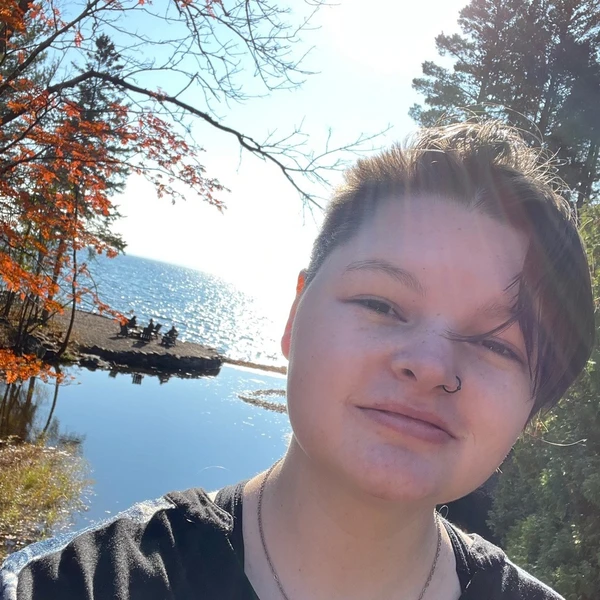
Hobbies and interests
Cooking
Rock Climbing
Biking And Cycling
Hiking And Backpacking
Travel And Tourism
Reading
True Story
History
Adult Fiction
Horror
Thriller
Suspense
Young Adult
Christina Martin
1x
Finalist
Christina Martin
1x
FinalistBio
Christina Martin is a non-traditional student working towards a Bachelor’s degree in Forensic Science, with a minor in Forensic Psychology. She holds an Associate of Applied Science in Forestry and Wildlife Management from Vermilion Community College, where she gained practical experience in field investigation and analytical documentation. Her academic journey reflects a strong interest in evidence-based problem-solving and investigative science. Christina's career goal is to work in crime scene investigation, where she aims to apply scientific accuracy, ethical responsibility, and attention to detail in support of the justice system.
Education
Hamline University
Bachelor's degree programVermilion Community College
Associate's degree programMajors:
- Natural Resources and Conservation, Other
Miscellaneous
Desired degree level:
Bachelor's degree program
Graduate schools of interest:
Transfer schools of interest:
Majors of interest:
- Criminology
- Psychology, Other
Career
Dream career field:
forensic science/crime scene invertigation
Dream career goals:
Deli worker, Fast Food Management, Restaurant server/host
Food service2017 – Present9 years
Sports
Cycling
Junior Varsity2017 – 20192 years
Awards
- highschool letters
Arts
High school AP Art
Visual Arts2019 – 2019
Public services
Volunteering
High school — participated in service leaning trip in Chicago2016 – 2016
Future Interests
Advocacy
Volunteering
Entrepreneurship
Our Destiny Our Future Scholarship
I plan to make a positive impact by helping to build a more just and compassionate criminal justice process—one where evidence is handled with integrity and victims are supported, not overlooked. Growing up in a low-income community in northern Minnesota, I saw how access to resources and support can shape outcomes. Those experiences showed me that justice is not only about solving cases, but about ensuring that every person involved is treated with fairness and care. That understanding has shaped what I am working to build for my future and the communities I plan to serve.
I am laying the foundation for this goal through my education. While earning my associate’s degree in forestry, I developed strong skills in observation, attention to detail, and scientific thinking. Although I chose a different path, those skills now serve as essential tools as I pursue a bachelor’s degree in forensic science with a minor in forensic psychology. By combining these fields, I am building the knowledge needed to understand both the physical evidence involved in crimes and the human impact behind them.
Outside the classroom, I am dedicated to creating meaningful support systems for victims. I plan to volunteer with victim advocacy organizations and shelters, where I can offer emotional support, resources, and guidance to individuals who may feel unheard or underserved. I hope to be the person or thing that can help someone when they are struggling. This hands-on work is a crucial part of my mission; it allows me to connect science with compassion and gain a deeper understanding of the real-life impact of the justice system.
In my future career as a crime scene investigator, I will continue building this vision by ensuring that evidence is carefully collected, preserved, and interpreted. Accurate evidence is critical to achieving fair outcomes, and by upholding these standards, I can help strengthen trust in the justice system. At the same time, my background in psychology and advocacy will allow me to approach each case with empathy and respect for those affected.
The impact of my work goes beyond just my own career. By contributing to a system where evidence is reliable and victims receive support, I aim to help create safer and more equitable communities. With the help of this scholarship, I will be able to fully focus on my education and community involvement, allowing me to continue building a future that makes a meaningful difference for individuals and the communities they call home.
Bulkthreads.com's "Let's Aim Higher" Scholarship
I want to build a more just and compassionate criminal justice process—one where evidence is handled with integrity and victims are supported, not overlooked. Growing up in a low-income community in northern Minnesota, I saw how access to resources and support can shape outcomes. Those experiences showed me that justice is not only about solving cases, but about ensuring that every person involved is treated with fairness and care. That understanding has shaped what I am working to build for my future.
I am laying the foundation for this goal through my education. While earning my associate’s degree in forestry, I developed strong skills in observation, attention to detail, and scientific thinking. Although I chose a different path, those skills now serve as essential tools as I pursue a bachelor’s degree in forensic science with a minor in forensic psychology. By combining these fields, I am building the knowledge needed to understand both the physical evidence involved in crimes and the human impact behind them.
Beyond the classroom, I am committed to building meaningful support systems for victims. I plan to volunteer with victim advocacy organizations and shelters, where I can provide emotional support, resources, and guidance to individuals who may feel unheard or underserved. This hands-on work is an important part of what I am building—it allows me to connect science with compassion and to better understand the real-life impact of the justice system.
In my future career as a crime scene investigator, I will continue building this vision by ensuring that evidence is carefully collected, preserved, and interpreted. Accurate evidence is critical to achieving fair outcomes, and by upholding these standards, I can help strengthen trust in the justice system. At the same time, my background in psychology and advocacy will allow me to approach each case with empathy and respect for those affected.
The impact of what I am building extends beyond my own career. By contributing to a system where evidence is reliable and victims are supported, I hope to help create safer, more equitable communities. With the support of this scholarship, I will be able to focus more fully on my education and community involvement, continuing to build a future that makes a meaningful difference for both individuals and the communities they call home.
Women in STEM Scholarship
My decision to pursue STEM comes from a desire to understand what others overlook—and to use that understanding to help people who feel unheard. My interest in forensic science and forensic psychology is rooted not only in curiosity about how things work, but in lived experience. I have seen how mental health struggles can shape a person’s life, and how often those struggles are misunderstood or dismissed. STEM, to me, is a way to bring clarity, evidence, and compassion into spaces that desperately need all three.
During my time in community college, especially throughout the pandemic, I faced challenges with my own mental health that forced me to reevaluate my direction. That period of my life was difficult, but it also gave me a sense of purpose. I realized I didn’t just want to succeed academically, I wanted to understand why people struggle, how those struggles manifest, and how systems respond to them. This realization led me to pursue forensic science with a minor in forensic psychology, where science and human behavior intersect in meaningful, real-world ways.
What draws me to STEM is its ability to uncover truth. In forensic science, evidence tells a story when people cannot. In forensic psychology, behavior becomes a form of evidence that can explain actions, motives, and patterns. I am especially interested in how mental health factors into criminal behavior and the justice system. Too often, individuals with mental health challenges are treated as problems to be managed rather than people to be understood. I want to be part of changing that narrative by using scientific knowledge to advocate for more informed, humane approaches.
As a woman entering a STEM field, I am also aware of the importance of representation. STEM fields, especially those tied to criminal justice and science, have historically lacked diverse perspectives. Women bring valuable insight, particularly in fields that require empathy, communication, and attention to nuance—qualities that are essential in forensic work. I hope to contribute not only through my work but by encouraging other women to see a place for themselves in STEM, even if they do not fit the traditional mold.
Making a difference, to me, means bridging the gap between science and humanity. I want to use my education to help ensure that evidence is interpreted accurately, that mental health is considered thoughtfully, and that individuals are treated with dignity within the justice system. Whether I end up working in a lab, alongside investigators, or contributing to psychological evaluations, my goal is to bring both precision and empathy into my work.
Ultimately, my path into STEM is not just about science—it is about impact. My experiences have shaped a perspective that values both data and people, and I am committed to using that perspective to make a meaningful difference. As a woman in STEM, I hope to be part of a future where the field is not only more inclusive but also more compassionate and effective in serving the people it affects.
Brooks Martin Memorial Scholarship
I was thirteen when my grandfather passed away. He had been a foundational part of my childhood, someone whose presence shaped the way I understood family, love, and stability. Some of my earliest and most cherished memories are tied to him. When I was seven, my parents bought a trailer home and moved it onto the property my grandfather owned. The decision was made so we could be closer to my grandparents and help care for them as their health began to decline.
Living just steps away from my grandfather changed my childhood in ways I didn’t fully appreciate at the time. Ordinary days became opportunities to sit with him, listen to his stories, and learn from his quiet strength. He taught me how to drive the riding lawn mower, trusting me with something that felt far bigger than I was. On warm afternoons, he would take me down the dirt road on the four-wheeler to look for lady’s slippers, turning something simple into something special. Whenever I walked into their house, he would greet me by singing “A Bushel and a Peck” as he pulled me into his lap and hugged me, a small ritual that made me feel seen and loved every time. In the summers, I would sometimes neglect my chores just to spend hours playing dominoes with him, and we would make BLTs for lunch—me sitting at the table, laughing with him, sometimes I can still feel the toast scrape against my gums.
One year, for my grandmother’s birthday, he helped me find a diamond willow tree on the property and turn one of its branches into a walking stick for her. He showed me every step of the process: cutting the branch, peeling away the bark, sanding it smooth, and carefully adding the finishing touches and hardware. I remember sitting in his shop while he worked, smiling to myself whenever I caught him talking under his breath as he focused. In those moments, I wasn’t just spending time with him—I was learning patience, care, and the kind of love that shows itself through effort.
Looking back, those moments might have seemed ordinary, but they became the memories I hold onto most. Being so close to him allowed me to witness not only his role as my grandfather but also the patience, warmth, and quiet joy that defined him as a person.
Losing my grandfather at thirteen was the first time I truly understood what it meant to lose someone who shaped my everyday life. In the years since, I’ve become more intentional about the way I show up in my relationships. I hold onto small moments more tightly, whether that means sitting a little longer at the table, listening more closely, or making time for the people I love even when life feels busy. His patience and the way he expressed love through actions—teaching, building, and simply being present—have shaped how I try to care for others.
This loss has also influenced my goals and outlook on life. It taught me that time is limited in ways we don’t always expect, and that the impact we leave is often found in the smallest, most consistent acts of kindness. Because of that, I want to build a life centered around connection and purpose, where I can support others in meaningful ways, just as he did for me. Whether through my education or future career, I am driven by a desire to make people feel seen, valued, and supported—because I know firsthand how lasting that kind of presence can be.
Tawkify Meaningful Connections Scholarship
Relationships play a central role in shaping both my personal and professional goals. They influence not only who I am, but also the kind of impact I hope to make in my future career. Through the relationships in my life, I have developed a deeper understanding of trust, responsibility, and the importance of showing up for others—values that directly guide my path forward.
Personally, my relationships have taught me the importance of communication, consistency, and mutual support. One of the most influential relationships in my life is with my partner. His ability to remain calm under pressure, act with integrity, and prioritize the well-being of others has had a profound impact on how I view both service and responsibility. He has not only inspired me, but has also challenged me to hold myself to a higher standard in my own life.
Beyond inspiration, this relationship has also shaped how I approach challenges. Balancing responsibilities, navigating stressful situations, and working toward long-term goals together has required patience, trust, and clear communication. These experiences have helped me grow into someone who values reliability and emotional awareness, both in my personal life and in my interactions with others. I have learned that strong relationships are built intentionally, and that the ability to support and be supported is essential for long-term success.
These lessons extend directly into my professional goals. As I pursue a degree in forensic science with a minor in forensic psychology, I am not only focused on developing technical skills, but also on understanding the human side of the field. Crime scene investigation is often seen as purely analytical, but it is deeply connected to people—victims, families, and communities searching for answers. The ability to approach this work with empathy, respect, and care is just as important as attention to detail and scientific accuracy.
My relationships have also influenced my interest in victim advocacy. I plan to volunteer with organizations that support individuals affected by crime, where building trust and offering emotional support are essential. In these roles, connection is not just beneficial—it is necessary. People facing traumatic experiences often need someone who will listen, understand, and provide guidance without judgment. Through both my education and these experiences, I hope to develop the ability to connect with others in a way that is both compassionate and effective.
Additionally, my upbringing has shaped how I view relationships and their role in creating opportunity. Growing up in a low-income household, I saw how important strong support systems can be when resources are limited. The encouragement and stability provided through relationships can make a significant difference in a person’s ability to pursue their goals. Because of this, I strive to be someone who contributes positively to the lives of others, offering support and understanding whenever possible.
Looking ahead, I hope to build a life and career centered on both purpose and connection. I want to be someone who contributes to justice through my work, while also making a meaningful difference in the lives of others. Whether through forensic science or victim advocacy, my goal is to combine technical skill with genuine compassion, ensuring that the people behind each case are never overlooked.
Ultimately, relationships are not separate from my goals—they are what give them meaning. They shape how I approach challenges, how I interact with others, and the kind of professional I hope to become. The connections I have built have shown me that even in the most difficult circumstances, support and understanding can make a lasting impact. It is this belief that continues to guide me as I pursue my education and work toward a future rooted in service, integrity, and human connection.
Kristinspiration Scholarship
Education is important to me because it represents both opportunity and responsibility. Growing up in a low-income family in northern Minnesota, I learned early on how access to resources and support can shape outcomes. I saw how easily individuals and families can be overlooked when systems fail to provide equitable support. These experiences have made education more than just a personal goal—it is a pathway that allows me to create meaningful change, both for myself and for others.
My educational journey has not been linear, but each step has contributed to where I am today. I began by earning an associate’s degree in forestry, where I developed strong skills in observation, attention to detail, and scientific thinking. Although I ultimately chose a different path, those skills now serve as a foundation for my future studies. I plan to pursue a bachelor’s degree in forensic science, along with a minor in forensic psychology, to better understand both the physical evidence involved in crimes and the human impact behind them.
For me, education is not just about gaining knowledge—it is about gaining the tools to serve a greater purpose. Through a career in crime scene investigation, I hope to play a role in ensuring that evidence is properly collected, preserved, and interpreted. Accuracy in this work is critical, as it directly affects whether justice is served. My education will allow me to contribute to a system where decisions are based on reliable evidence, helping to create fairness and accountability within the criminal justice system.
Beyond the technical aspects of my field, education also empowers me to support others on a more personal level. While pursuing my degree, I plan to volunteer with victim advocacy organizations and shelters. Through this work, I hope to provide emotional support, resources, and guidance to individuals who may otherwise feel unheard or underserved. Education gives me the ability to combine scientific expertise with compassion, allowing me to approach my future career with both skill and empathy.
The legacy I hope to leave is one rooted in integrity, advocacy, and service. I want to be someone who contributes to a system where victims are heard, evidence is trusted, and communities feel safer and more supported. Whether through my work in forensic science or my involvement in victim advocacy, I aim to make a lasting impact by helping ensure that justice is both accurate and accessible.
I am also inspired by those around me who dedicate their lives to helping others, including my partner, who continually encourages me to pursue my goals. Their example reinforces my belief that meaningful work is built on both skill and compassion. With financial support from this scholarship, I will be able to focus more fully on my education and community involvement, further preparing me to make a difference.
Ultimately, education is important to me because it provides the foundation for the life and impact I want to build. It is not only a tool for personal growth, but a means of creating change. Through my education and career, I hope to leave a legacy defined by fairness, support, and a commitment to helping others navigate some of the most difficult moments in their lives.
Best Greens Powder Heroes’ Legacy Scholarship
Growing up as the child of a parent who served in the military has shaped my life in quieter, but still meaningful ways. Although my father served in the Air Force before I was old enough to remember it, his experience didn't end when he transitioned into civilian life. Instead, it became part of the foundation of how I was raised, influencing both my educational journey and my long-term career goals.
Because I don't have firsthand memories of my father in the military, my understanding of his service comes from the values he carried with him afterward. His time in the Air Force instilled a strong sense of discipline, accountability, and resilience. From a young age, I was taught the importance of following through, staying organized, and finding ways to push through challenges even when things felt difficult. These lessons have directly impacted how I approach my education. Whether managing coursework, balancing responsibilities, or staying motivated during stressful periods, I rely on the structure and persistence that were emphasized in my upbringing.
In addition to his military service, my father’s entrepreneurial journey has been a significant source of inspiration for me. Watching him build and navigate his own path showed me the importance of independence, adaptability, and problem-solving. When I was young, my father owned and operated his own mechanic shop and also traveled locally to work on vehicles and heavy farm machinery. When I was in high school, he switched careers and began working for a construction company splicing fiber optic cable. Over the course of a decade, he worked his way into a management position. As of last year, he took the risk of leaving that role to start his own business with a work colleague.
Entrepreneurship requires taking risks, learning from failure, and continuously improving—mindsets that I have applied to my own pursuits. His example has encouraged me to take ownership of my goals and to approach my future with both confidence and flexibility.
These influences have played a key role in shaping my interest in pursuing a degree in forensic science, along with a minor in forensic psychology. This field requires attention to detail, critical thinking, and a strong sense of responsibility—traits that align closely with the values my father developed through both his military service and entrepreneurial efforts. I am drawn to a career where I can apply these skills meaningfully, contributing to the pursuit of justice and helping others.
While my experience differs from that of many military children, I have come to understand that the impact of military service extends far beyond active duty. I didn't grow up moving frequently or experiencing long deployments, but I was raised in an environment shaped by the lessons my father learned during his time in the Air Force. Those lessons have guided my approach to education, helping me stay focused and committed to my goals.
At the same time, his transition into entrepreneurship demonstrated that growth and reinvention are always possible. It showed me that a career path does not have to be linear, and that success often comes from perseverance and a willingness to adapt. This perspective has given me confidence as I pursue higher education and prepare for my future career.
Ultimately, being the child of a veteran has influenced me not through direct memories but through the lasting impact of my father’s experiences. His military service and entrepreneurial journey have shaped how I approach challenges, education, and my future. Together, they have inspired me to pursue a path that reflects both discipline and purpose, while remaining open to growth and opportunity.
Dick Loges Veteran Entrepreneur Scholarship
Growing up as the child of a parent who served in the military has shaped my life in quieter, but still meaningful ways. Although my father served in the Air Force before I was old enough to remember it, his experience didn't end when he transitioned into civilian life. Instead, it became part of the foundation of how I was raised, influencing both my educational journey and my long-term career goals.
Because I don't have firsthand memories of my father in the military, my understanding of his service comes from the values he carried with him afterward. His time in the Air Force instilled a strong sense of discipline, accountability, and resilience. From a young age, I was taught the importance of following through, staying organized, and finding ways to push through challenges even when things felt difficult. These lessons have directly impacted how I approach my education. Whether managing coursework, balancing responsibilities, or staying motivated during stressful periods, I rely on the structure and persistence that were emphasized in my upbringing.
In addition to his military service, my father’s entrepreneurial journey has been a significant source of inspiration for me. Watching him build and navigate his own path showed me the importance of independence, adaptability, and problem-solving. When I was young, my father owned and operated his own mechanic shop and also traveled locally to work on vehicles and heavy farm machinery. When I was in high school, he switched careers and began working for a construction company splicing fiber optic cable. Over the course of a decade, he worked his way into a management position. As of last year, he took the risk of leaving that role to start his own business with a work colleague.
Entrepreneurship requires taking risks, learning from failure, and continuously improving—mindsets that I have applied to my own pursuits. His example has encouraged me to take ownership of my goals and to approach my future with both confidence and flexibility.
These influences have played a key role in shaping my interest in pursuing a degree in forensic science, along with a minor in forensic psychology. This field requires attention to detail, critical thinking, and a strong sense of responsibility—traits that align closely with the values my father developed through both his military service and entrepreneurial efforts. I am drawn to a career where I can apply these skills meaningfully, contributing to the pursuit of justice and helping others.
While my experience differs from that of many military children, I have come to understand that the impact of military service extends far beyond active duty. I didn't grow up moving frequently or experiencing long deployments, but I was raised in an environment shaped by the lessons my father learned during his time in the Air Force. Those lessons have guided my approach to education, helping me stay focused and committed to my goals.
At the same time, his transition into entrepreneurship demonstrated that growth and reinvention are always possible. It showed me that a career path does not have to be linear, and that success often comes from perseverance and a willingness to adapt. This perspective has given me confidence as I pursue higher education and prepare for my future career.
Ultimately, being the child of a veteran has influenced me not through direct memories but through the lasting impact of my father’s experiences. His military service and entrepreneurial journey have shaped how I approach challenges, education, and my future. Together, they have inspired me to pursue a path that reflects both discipline and purpose, while remaining open to growth and opportunity.
Mikey Taylor Memorial Scholarship
Mental health has significantly influenced my goals in numerous ways. I would not be where I am today, planning to major in forensic science with a minor in forensic psychology, if it weren't for the struggles I've faced. I want to use my experiences with mental health to further my education and help others.
A particularly relevant example of my mental health struggles occurred during my time at community college amid the pandemic. I was nearing the end of my first-year spring semester when the lockdown began, resulting in the semester being cut short. I was forced to move back to my hometown, where I worked part-time at the local grocery store over the summer while also completing a full-time internship. That summer was isolating, and I spent a lot of time walking my dog to get out of the house.
As the fall semester commenced for my second year of college, I made the decision to take on the role of a Resident Assistant (RA). This choice was primarily motivated by my desire to alleviate some of the financial burden associated with student housing, which can be quite significant. However, about halfway through the semester, a significant number of students in a particular program tested positive for COVID-19, prompting the school to switch fully to remote learning for the rest of the semester. As an RA, I was required to stay on campus while all of my roommates went home, which took a toll on my mental health due to the isolation I experienced.
By the time the spring semester arrived, I was feeling quite depressed. I began attending virtual therapy sessions and found myself sleeping a lot when I wasn’t working or attending classes. One of the few things I looked forward to was my duties as an RA. Unfortunately, my struggles affected my performance, and I nearly failed my 8 AM lab class due to numerous absences.
Although I graduated with an associate's degree in applied science, my experiences with mental health during my studies led me to realize that I did not want to pursue a career in forestry or wildlife, which is related to my degree. Recently, my partner encouraged me to reflect on my long-term goals. Since graduating, I have often felt stuck, merely maintaining my current situation rather than striving toward my aspirations. This reflection prompted me to consider my interests in true crime and criminal justice, which ultimately led me to explore the forensic science program at Hamline University.
Lippey Family Scholarship
One of the most significant challenges I have faced—and one that led to meaningful personal growth—was navigating my mental health during my time in community college throughout the COVID-19 pandemic. That period forced me to confront isolation, burnout, and uncertainty, ultimately shaping both my resilience and my future goals.
In the spring semester of my first year, the pandemic abruptly disrupted my routine. Classes ended early, and I moved back to my hometown while balancing a part-time job at a grocery store and a full-time summer internship. Although the transition was difficult, the greater challenge came the following fall when I returned to campus as a Resident Assistant (RA) to help cover housing costs.
Midway through the semester, a COVID-19 outbreak on campus forced the school to shift entirely to remote learning. While most students returned home, I was required to remain on campus as part of my RA responsibilities. Suddenly, I found myself living in near-total isolation. Without my roommates or a sense of community, my mental health began to decline. By the time the spring semester arrived, I was struggling with depression, attending virtual therapy sessions, and sleeping excessively when I wasn’t working or in class. My academic performance suffered, and I nearly failed my early morning lab courses due to repeated absences.
At the time, it felt like I was simply trying to get through each day. However, that experience ultimately became a turning point. I learned how to recognize when I needed support and took the important step of seeking therapy. I also began to understand the impact that environment, connection, and purpose have on my well-being. Most importantly, I realized that pushing through challenges without addressing my mental health was not sustainable.
Although I completed my associate’s degree, my experiences during that time made me reevaluate my career path. I recognized that I wanted to pursue a field where I could not only challenge myself academically, but also make a meaningful difference in people’s lives. Through reflection and encouragement from my partner, I began exploring my long-standing interest in criminal justice, which led me to pursue a degree in forensic science with a minor in forensic psychology.
This challenge taught me resilience, self-awareness, and the importance of aligning my goals with both my strengths and my well-being. It also inspired me to use my experiences to help others, particularly those who may be struggling in silence. As I move forward in my education and career, I carry with me the lessons I learned during that difficult time—lessons that continue to shape who I am and who I strive to become.
Jeannine Schroeder Women in Public Service Memorial Scholarship
I am working to address the social issue of justice for victims and the proper handling of evidence within the criminal justice system. Growing up in a low-income family in northern Minnesota, I learned early on how access to resources and support can shape outcomes. These experiences have driven my desire to pursue a career where I can make a meaningful difference in my community.
My educational journey began with an associate’s degree in forestry, where I gained valuable skills in observation, attention to detail, and scientific thinking. Although I chose not to continue in that field, those skills now serve as a strong foundation for my current path. I plan to pursue a bachelor’s degree in forensic science with a minor in forensic psychology to better understand both the physical evidence involved in crimes and the human impact behind them.
Through a career in crime scene investigation, I aim to play a critical role in ensuring that evidence is properly collected, preserved, and interpreted. While first responders provide immediate aid and law enforcement officers pursue suspects, crime scene investigators contribute by uncovering the facts that allow justice to be served. By helping to ensure accuracy and integrity in evidence, I am supporting fair outcomes and accountability within the justice system.
In addition to my academic goals, I am committed to directly supporting victims. While pursuing my degree, I plan to volunteer with victim advocacy organizations and shelters. Through this work, I hope to provide emotional support, resources, and guidance to individuals who may otherwise feel overlooked or underserved. By combining scientific expertise with compassion and advocacy, I strive to offer a level of care that extends beyond traditional roles in the field.
I am inspired by those around me who dedicate their lives to helping others, including my partner, a first responder and volunteer firefighter, who continually encourages me to pursue my goals. With financial support from this scholarship, I will be able to focus more fully on my education and community involvement, allowing me to further develop the skills needed to address this important issue.
Ultimately, my goal is to contribute to a more just and supportive system—one where victims are heard, evidence is trusted, and communities are better protected to directly support victims. While pursuing my degree, I plan to volunteer with victim advocacy organizations and shelters. Through this work, I hope to provide emotional support, resources, and guidance to individuals who may otherwise feel overlooked or underserved. By combining scientific expertise with compassion and advocacy, I strive to offer a level of care that extends beyond traditional roles in the field.
I am inspired by those around me who dedicate their lives to helping others, including my partner, who continually encourages me to pursue my goals. With financial support from this scholarship, I will be able to focus more fully on my education and community involvement, allowing me to further develop the skills needed to address this important issue.
Ultimately, my goal is to contribute to a more just and supportive system—one where victims are heard, evidence is trusted, and communities are better protected.
Robert F. Lawson Fund for Careers that Care
I grew up in a low-income family in northern Minnesota. I have always had a strong interest in learning about the world around me. From a young age, I have always loved the outdoors and animals - I grew up with three large dogs and two cats. I am the middle child of three siblings, and my father and stepmother have always been my biggest support and have continued to stand by me through my educational journey.
After graduating from high school, I decided to pursue an associate's degree in forestry. Although I ultimately decided not to continue following that path to a career, I did gain valuable information and experiences that I will take with me.
I now plan to pursue a degree in forensic science and forensic psychology as a means of furthering my education and building a career that allows me to make an impact. I hope to gain the knowledge, tools, and resources to make a difference in my community.
With a bachelor's in forensic science, I plan to build a career in crime scene investigation. My goal is to become a meaningful part of the criminal justice system that looks for evidence, and allows that evidence to tell the story of what took place, and use it to help solve crimes. I know that my role as a CSI won't be the same as that of the officers and first responders who arrest suspects and provide aid to victims. But by filling the role of crime scene investigator, I can do my part to ensure that evidence is handled correctly and victims see the justice they deserve.
I also plan to minor in forensic psychology, as it will strengthen my ability to serve as both a victim advocate and a credible witness in court—skills that are essential for a career as a CSI. While pursuing my degree, I intend to volunteer and work with victim advocacy organizations and shelters. Through this experience, I hope to provide a level of support that goes beyond what typical first responders or frontline workers are able to offer.
I gain inspiration from those around me who work to help people and make the world a better place. My partner of four years - a first responder and volunteer firefighter - is the one who encourages me to follow my passion and further my educational journey.
The money from his scholarship will help to ease the financial pressure associated with my degree and help me to further my career and educational opportunities.
Ethel Hayes Destigmatization of Mental Health Scholarship
Mental health has shaped my goals in numerous ways. I would not be where I am now, looking to major in forensic science with a minor in forensic psychology, if it weren't for the struggles I've been through. I want to use my struggles with mental health to further my education and help other people.
The most relevant example of mental health struggle that I can point to is my experience in community college during the pandemic. I was toward the end of the spring semester of my first year of college when lockdown hit, and the semester ended early. I was forced to move back to my hometown, and I worked part-time at the local grocery store during the summer, along with my full-time summer internship.
When the fall semester started for my second year of school, I became an RA in order to save money on student housing. About halfway through the semester, the majority of the students in a particular program had tested positive for COVID, so the school had decided to go fully remote for the rest of the semester. As an RA, however, I was required to stay on campus while all of my roommates went home for the remainder of the semester. That isolation took a toll on my mental health.
By the time that spring semester came around, i as petty depressed. I began doing virtual therapy and was sleeping a lot when I wasn't working or in class. One of the few things that I looked forward to was RA Duty. I nearly failed my 8 am lab classes due to numerous absences. Mental health has significantly shaped my goals in many ways. I wouldn't be where I am today—planning to pursue a major in forensic science with a minor in forensic psychology—if it weren't for the struggles I've faced in the past. I aim to use my experiences with mental health to further my education and to help others.
A particularly relevant example of my mental health struggles occurred during my time in community college amid the pandemic. I was nearing the end of the spring semester of my first year when the lockdown began, resulting in an early conclusion. I was forced to move back to my hometown, where I worked part-time at the local grocery store during the summer while also completing a full-time internship.
When the fall semester began for my second year, I became a Resident Assistant (RA) to save money on student housing. However, about halfway through the semester, a significant number of students in a particular program tested positive for COVID-19, prompting the school to transition fully to remote learning for the remainder of the semester. As an RA, I was required to remain on campus while all of my roommates returned home, which took a toll on my mental health due to the isolation I experienced.
By the time the spring semester arrived, I was feeling quite depressed. I began attending virtual therapy sessions and found myself sleeping a lot when I wasn’t working or attending classes. One of the few things I looked forward to was my RA duties. Unfortunately, my struggles affected my performance, and I nearly failed my 8 AM lab classes due to numerous absences.
Although I graduated with an associate's degree in applied science, my experiences with mental health during my studies led me to realize that I did not want to pursue a career in forestry or wildlife, which is related to my degree. Recently, my partner encouraged me to consider what I want to pursue in the long term. Since graduating, I have often felt stuck, merely maintaining my current situation rather than striving toward my goals. This reflection made me think about my interests in true crime and criminal justice, which in turn led me to explore the forensic science program at Hamline University.