Hobbies and interests
Pilates
Board Games And Puzzles
Beach
Sports
Reading
Health
Philosophy
Self-Help
I read books daily
Christina Gomez
1x
Finalist1x
WinnerChristina Gomez
1x
Finalist1x
WinnerBio
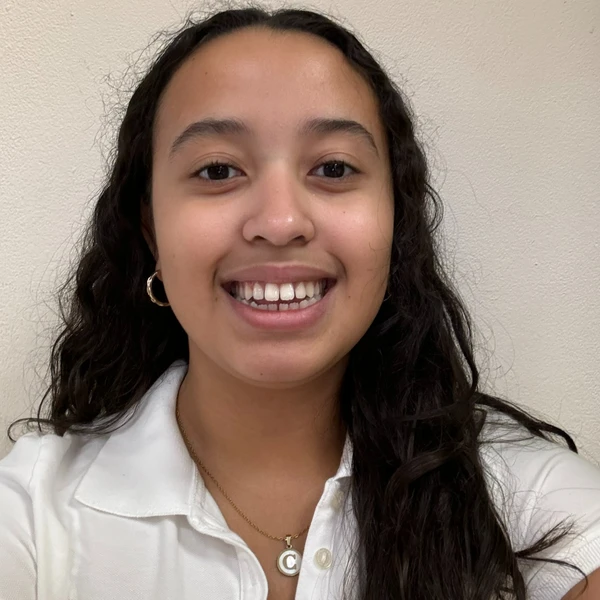
My aspiration to be the first in my family to attend college and pursue a career as a doctor will enable me to provide personalized care for my underrepresented patients both in the Bay Area and globally, where more equitable medical treatment is necessary for all our futures. The opportunity to win this scholarship will provide me with the confidence I need to support my future in college as a first-generation college student and pursue a degree despite financial instability. This will empower me to bridge the cross-cultural divides by bringing the values instilled in me by the Bay Area to a community that values my intellect, heritage, and heart for change.
Education
Sacred Heart Cathedral Preparatory
High SchoolMiscellaneous
Desired degree level:
Bachelor's degree program
Majors of interest:
- Clinical/Medical Laboratory Science/Research and Allied Professions
- Biomedical/Medical Engineering
Career
Dream career field:
Medicine
Dream career goals:
Medical Laboratory Scientist
Athletic Department Student Worker
Sacred Heart Cathedral Prep2024 – Present2 years
Sports
Volleyball
Club2019 – Present7 years
Volleyball
Junior Varsity2023 – 20241 year
Public services
Volunteering
Habitat for Humanity — Volunteer2013 – Present
Future Interests
Volunteering
Christian Fitness Association General Scholarship
Entering and participating in each of my honors and advanced placement courses has been a personal and academic challenge. As a multiracial female aspiring to be an honors college candidate, I often find myself as the only Black student in the room. These spaces, shaped by longstanding educational disparities, frequently lack the cultural awareness and inclusivity that allow students like me to feel seen, heard, or valued. This environment makes it difficult to fully express myself, share my ideas confidently, or engage authentically. Instead of focusing solely on learning, I frequently navigate feelings of not belonging, which limit not only my voice but also my potential to thrive and contribute.
Seeing my grandmother rushed to the hospital, as she was struggling to breathe and gasping for each breath, made me feel like my heart dropped to my stomach. She’s my best friend and always taught me to stand up for my beliefs, act with empathy, and stay true to myself. Despite clear signs of distress, the sense of urgency faded as she was greeted by doctors and nurses who acted as if nothing was wrong. I knew this wasn’t right and advocated for her health, urging the doctors to run more tests and find out the root of her debilitating pain. That experience blatantly showed me how racial disparities in medicine are often suppressed and disregarded, and how deeply they could impact someone I loved. It taught me that medicine extends beyond science and providing care; it’s about advocating for others who are frequently overlooked.
My grandmother's recent diagnoses of heart failure and an uncommon autoimmune disease, along with other unknown illnesses that have also contributed to her pain, have been challenging to navigate as a family and for me. Seeing first-hand how she has struggled to find the root cause of her problems and a doctor who will better understand her, culturally and emotionally, has sparked my drive to become the first doctor in my family. When heart problems and other health disparities are so common in the Black community, it can be hard to truly connect with doctors. Sometimes it feels like they don’t fully see or understand us and what we’re carrying. Because of this, I believe it is essential to have Black diversity in the medical field. Each time my grandmother encounters a Black doctor, her eyes light up with confidence, as she hopes that this will be the doctor who can connect the dots in her illnesses. The internship opportunities with Doctors on Board, UCSF Brain Camp, and the Perry Outreach Program have deepened my understanding of the body's complexities, the evolution of these conditions, and the role of modern medicine in making them more manageable. I want to be a part of innovating advancements in medicine that not only prevent disease but also elevate communities that are too often dismissed, forgotten, or ignored by advocating for culturally responsive healthcare because everyone deserves to be seen, heard, and cared for — no matter their background.
My passion for improving the world drives my aspiration to help others. My ability to deeply connect with others is deeply rooted in where I grew up, surrounded by cultural diversity, art, and resiliency. The Bay Area has instilled in me my heritage, heart for change, and willingness to adapt. I have always been known as a caring, kind, and helpful friend, open and willing to support those around me. I credit my love of caring for others to my grandmother, whose health challenges have taught me to be more intentional in how I impact those around me. I want to change the narrative and rewrite my story by becoming a doctor who ignites change and advocates for others in overlooked communities, just as I have with my grandmother. My aspirations to be the first in my family to attend college and pursue a career in the health field will enable me to provide personalized care for my Black patients, both in the Bay Area and globally, where more equitable medical treatment is necessary for all our futures.
These experiences have shaped not only my resilience but also my deep desire to be part of a community where identity and intellect are equally valued and where opportunities should be taken every time they are offered. In college, I see the opportunity to learn in a space that celebrates my background rather than overlooks it; a space where students uplift, challenge each other, and grow together. I bring with me not only the strength built from navigating isolating spaces, but also a deep understanding of how powerful it is when you finally find a place where you don't have to question whether you belong. I want to be part of this community that lifts each other, challenges each other, and creates space for everyone to thrive. My experiences will enable me to contribute to the world with insight, determination, and a strong commitment to creating spaces where everyone can thrive and be heard.
RonranGlee Literary Scholarship
In the “Citizenship” chapter of The 1619 Project, Martha S. Jones provides numerous examples of citizenship in the United States. She often employed irony as a tool to highlight the government's lack of structure over time, consistently providing examples of how this connected to current issues, revealing a close-minded approach to governing. This chapter begins in the summer of 1853, when delegates met for the Colored National Convention. This event was monumental as it challenged ideas in unprecedented ways and helped bring new perspectives to mind on how to navigate America as a Black person. Despite pushing the country to live up to its promises, Black people were denied the rights of citizenship for most of America’s history.
Citizenship has become a defining feature of democracy in the United States, and it promised to protect those who may be seen as less than. In this chapter, Jones states how this has not been true: "for most of its first century, the country neglected to define precisely who was a citizen" (221). Without directly defining citizenship, it has become impossible to filter out whether the people in the U.S. were citizens or not. This gray area of citizenship, or lack thereof, was intentionally created to prevent people from understanding the true essence of being an American citizen, allowing many to fall through the cracks. Black Americans knew about this and "had been exploring citizenship and how to secure it since the eighteenth century. They knew that the Declaration of Independence provided that "all men are created equal" and at one point speaks of "fellow citizens," but it did not explain who was and was not a citizen” (222). It has been no secret that meticulous words are kept track of and ensure no power advantages for specific groups of people. The vagueness of citizenship reveals the deliberate decisions resulting in the exclusion of Black Americans from the full rights of belonging despite their continuous fight for equality and democracy.
In the short story of this chapter, “An Absolute Massacre,” the author, ZZ Packer highlights the less recognized aspects of July 30, 1866, exposing the limits of citizenship. The massacre, carried out by police and white mobs against Black citizens advocating for their rights, reveals how political institutions often denied Black Americans full inclusion and protection. The graphic and disturbing descriptions of the massacre allow the readers to comprehend the full extent of this event's significance in American history. As one account noted, “the dead were to lie out in the hundred-degree heat until another wagon became available” (246). The inhumane conditions in which those killed were treated further serve as an example of how legal status did not ensure safety or equality. The massacre reveals how, after emancipation, Black Americans were forced to fight not only for legal recognition but also protection from a nation that repeatedly denied the rights it claimed to uphold.
Throughout the long struggle for Black citizenship in America, key figures like Fredrick Douglass used their voices to challenge American policies and ideals. He recognized that "no constitutional amendment alone would settle the long struggles over national belonging" (235). This further emphasized how legal changes wouldn’t bring about the change he had hoped for. In many cases, people in higher positions of power made an effort to avoid these conversations. In 1832, the U.S. attorney general Taney "asserted that Black Americans had no rights as citizens under the U.S. Constitution" (229). In highlighting pivotal moments and legal decisions, Martha S. Jones illustrated the lack of justice and gray areas in citizenship, which led many people to misunderstand the lack of equality in America and how this issue has persisted for many years.
The photograph, “The Bedford‑Stuyvesant Section of Brooklyn,” was taken by Eli Reed in 1990 in Brooklyn, New York, and can now be viewed at the Museum of Fine Arts, Houston. The black-and-white photo captures a young Black boy, Thomas Cobb, facing the camera, still and serious, possibly unaware of the full weight of the moment being captured by photojournalist Eli Reed, who is known for documenting Black life in America with dignity and depth. Thomas Cobb represents the qualities that have historically been denied or overlooked in American society: inherent worth, innocence, and promise of Black children. Eli Reed does not dramatize or dehumanize Black Americans; it eliminates stereotypes of Black children and people that are often similar to protest photos or courtroom scenes highlighted in the media. His work demonstrates that growing up Black in America is deeply intertwined with issues of identity, justice, and belonging. It reminds the audience that citizenship as a Black American is not something that needs to be earned, as they are citizens. This photo further argues the main idea that Black Americans have made America more democratic through their resistance and visually reinforces this theme by showing a Black child claiming his space in America, simply by existing.
The “Citizenship” chapter in The 1619 Project, along with the works of ZZ Packer and Eli Reed, reveals the deeply rooted contradictions in American democracy regarding Black citizenship. Through historical accounts, legal analysis, and visual storytelling, these works challenge the idea that citizenship in the United States has never been truly equal or inclusive. Martha S. Jones highlights how the deliberate vagueness in defining citizenship has allowed systemic injustices to persist, while Packer’s account of the 1866 massacre shows the violent consequences of the exclusion. Reed’s photograph brings this struggle into the present, reminding us that the fight for safety, recognition, and belonging continues. Collectively, these pieces argue that Black Americans have not only been denied the promises of citizenship but have also been the ones pushing the nation toward its democratic ideals. Their resilience, resistance, and presence have shaped America’s identity, forcing it to confront the gap between its principles and reality.
A Man Helping Women Helping Women Scholarship
Seeing my grandmother rushed to the hospital, as she was struggling to breathe and gasping for each breath, made me feel like my heart dropped to my stomach. She’s my best friend and always taught me to stand up for my beliefs, act with empathy, and stay true to myself. Despite clear signs of distress, the sense of urgency faded as she was greeted by doctors and nurses who acted as if nothing was wrong. I knew this wasn’t right and advocated for her health, urging the doctors to run more tests and find out the root of her debilitating pain. That experience blatantly showed me how racial disparities in medicine are often suppressed and disregarded, and how deeply they could impact someone I loved. It taught me that medicine extends beyond science and providing care; it’s about advocating for others who are frequently overlooked.
My grandmother's recent diagnoses of heart failure and an uncommon autoimmune disease, along with other unknown illnesses that have also contributed to her pain, have been challenging to navigate as a family and for me. Seeing first-hand how she has struggled to find the root cause of her problems and a doctor who will better understand her, culturally and emotionally, has sparked my drive to become the first doctor in my family. When heart problems and other health disparities are so common in the Black community, it can be hard to truly connect with doctors. Sometimes it feels like they don’t fully see or understand us and what we’re carrying. Because of this, I believe it is essential to have Black diversity in the medical field. Each time my grandmother encounters a Black doctor, her eyes light up with confidence, as she hopes that this will be the doctor who can connect the dots in her illnesses. The internship opportunities with Doctors on Board, UCSF Brain Camp, and the Perry Outreach Program have deepened my understanding of the body's complexities, the evolution of these conditions, and the role of modern medicine in making them more manageable. I want to be a part of innovating advancements in medicine that not only prevent disease but also elevate communities that are too often dismissed, forgotten, or ignored by advocating for culturally responsive healthcare because everyone deserves to be seen, heard, and cared for — no matter their background.
My passion for improving the world drives my aspiration to help others. My ability to deeply connect with others is deeply rooted in where I grew up, surrounded by cultural diversity, art, and resiliency. The Bay Area has instilled in me my heritage, heart for change, and willingness to adapt. I have always been known as a caring, kind, and helpful friend, open and willing to support those around me. I credit my love of caring for others to my grandmother, whose health challenges have taught me to be more intentional in how I impact those around me. I want to change the narrative and rewrite my story by becoming a doctor who ignites change and advocates for others in overlooked communities, just as I have with my grandmother. My aspirations to be the first in my family to attend college and pursue a career in the health field will enable me to provide personalized care for my Black patients, both in the Bay Area and globally, where more equitable medical treatment is necessary for all our futures.
Code Breakers & Changemakers Scholarship
eing my grandmother rushed to the hospital, as she was struggling to breathe and gasping for each breath, made me feel like my heart dropped to my stomach. She’s my best friend and always taught me to stand up for my beliefs, act with empathy, and stay true to myself. Despite clear signs of distress, the sense of urgency faded as she was greeted by doctors and nurses who acted as if nothing was wrong. I knew this wasn’t right and advocated for her health, urging the doctors to run more tests and find out the root of her debilitating pain. That experience blatantly showed me how racial disparities in medicine are often suppressed and disregarded, and how deeply they could impact someone I loved. It taught me that medicine extends beyond science and providing care; it’s about advocating for others who are frequently overlooked.
My grandmother's recent diagnoses of heart failure and an uncommon autoimmune disease, along with other unknown illnesses that have also contributed to her pain, have been challenging to navigate as a family and for me. Seeing first-hand how she has struggled to find the root cause of her problems and a doctor who will better understand her, culturally and emotionally, has sparked my drive to become the first doctor in my family. When heart problems and other health disparities are so common in the Black community, it can be hard to truly connect with doctors. Sometimes it feels like they don’t fully see or understand us and what we’re carrying. Because of this, I believe it is essential to have Black diversity in the medical field. Each time my grandmother encounters a Black doctor, her eyes light up with confidence, as she hopes that this will be the doctor who can connect the dots in her illnesses. The internship opportunities with Doctors on Board, UCSF Brain Camp, and the Perry Outreach Program have deepened my understanding of the body's complexities, the evolution of these conditions, and the role of modern medicine in making them more manageable. I want to be a part of innovating advancements in medicine that not only prevent disease but also elevate communities that are too often dismissed, forgotten, or ignored by advocating for culturally responsive healthcare because everyone deserves to be seen, heard, and cared for — no matter their background.
My passion for improving the world drives my aspiration to help others. My ability to deeply connect with others is deeply rooted in where I grew up, surrounded by cultural diversity, art, and resiliency. The Bay Area has instilled in me my heritage, heart for change, and willingness to adapt. I have always been known as a caring, kind, and helpful friend, open and willing to support those around me. I credit my love of caring for others to my grandmother, whose health challenges have taught me to be more intentional in how I impact those around me. I want to change the narrative and rewrite my story by becoming a doctor who ignites change and advocates for others in overlooked communities, just as I have with my grandmother. My aspirations to be the first in my family to attend college and pursue a career in the health field will enable me to provide personalized care for my Black patients, both in the Bay Area and globally, where more equitable medical treatment is necessary for all our futures.