
Hobbies and interests
Music
Writing
Architecture
Art
Social Justice
Teaching
Guitar
Martial Arts
Carpentry
Advocacy And Activism
Reading
Contemporary
Classics
Education
Literature
Philosophy
I read books daily
Christopher Lozano
1x
Finalist1x
Winner
Christopher Lozano
1x
Finalist1x
WinnerBio
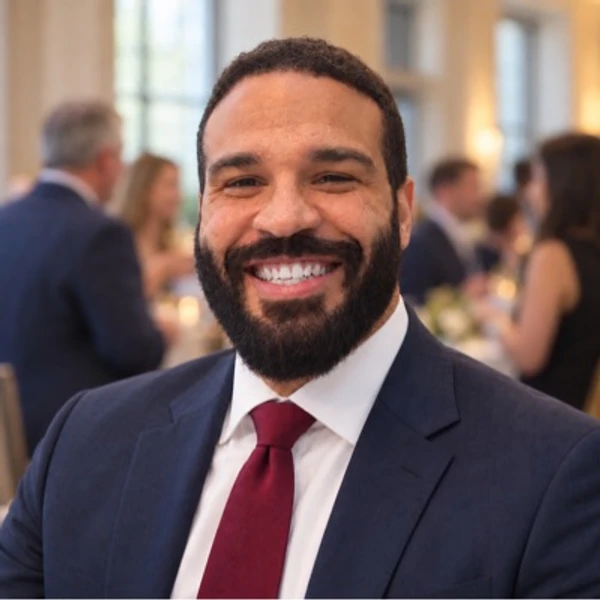
I come from the places most people don’t like to look at, and I use writing to make them. I’m a first-generation college student and aspiring educator and writer from Cleveland, Ohio. I’m a non-traditional African American and Hispanic student whose path to higher education has been shaped by resilience— not tradition.
I grew up navigating instability and learning early how to adapt and endure. While many follow a direct path into college, mine was delayed by years of responsibility and real-world experience. But what was delayed was never abandoned. The calling to this life has been there my entire life, getting louder and louder the more prepared I became.
Writing became my way of making sense of life— my way of confronting difficult truths and giving voice to human experiences often left unheard. My goal is to be an educator and writer, teaching in underserved communities— similar to my own growing up— using language as a tool for healing, a space to grow within, and a way of reaching and uplifting others.
Scholarships are an integral part of my education, allowing me to fully invest in my education and creative development. Thank you for considering me for your scholarship opportunity.
Education
Ohio State University-Main Campus
Bachelor's degree programMajors:
- Music
- English Language and Literature, General
Minors:
- Education, General
Cuyahoga Community College District
Associate's degree programMajors:
- Liberal Arts and Sciences, General Studies and Humanities
Miscellaneous
Desired degree level:
Doctoral degree program (PhD, MD, JD, etc.)
Graduate schools of interest:
Transfer schools of interest:
Majors of interest:
- Education, General
- Rhetoric and Composition/Writing Studies
- English Language and Literature/Letters, Other
- Education, Other
- Literature
Career
Dream career field:
Writing and Editing
Dream career goals:
To teach and write creatively professionally
Carpenter
Local 373 Cleveland, Ohio2009 – Present17 years
Sports
Mixed Martial Arts
Intramural2012 – 20164 years
Awards
- Bellator Tournament Semi-Finalist
Arts
Word Church
Music2023 – 2026Anointed Church of Jesus Christ, and Word Church
Music2023 – 2026
Public services
Volunteering
Anointed Church Of Jesus Christ — Lead guitarist2023 – 2026Volunteering
Evolve Fitness and MMA — Instructor2018 – 2020Volunteering
Word Church — Lead guitarist2023 – 2026Volunteering
Anointed Church Of Jesus Christ — Lead Carpenter2024 – 2025
Future Interests
Advocacy
Volunteering
Philanthropy
Entrepreneurship
Shape the News No-Essay Survey Scholarship
Adrin Ohaekwe Memorial Scholarship
I have been playing chess since elementary. My 5th grade teacher, Mr. Sunyak, had an after-school chess club, and that was the first extracurricular activity I participated in besides sports.
I remember being deeply drawn to the game because of my older brother playing, but it wasn’t the usual, ‘big brother likes it, so I like it,’ dynamic. Not this time. This was about a compulsion elicited by the possibilities— two armies facing off within those 64 squares, and the billions of different ways each battle could occur. I was fascinated by the game. I have only ever felt that kind of compulsion towards art. Over time I came to understand Chess wasn’t just a game for me. Chess was a part of me— a way of thinking and seeing the world.
My educational plan is to complete a BA in English by Spring 2028– minoring in education. Then I plan to pursue a master’s degree. My career goals are to become a writer and educator in underserved communities. I want to show people from similar backgrounds as my own, the power of language— contributing to their educational initiatives, and showing them how to use language, storytelling, and art as a tool for healing and self empowerment. Whether through teaching, workshops, or publishing work that challenges and expands perspective, my goal is to help literature be accessible and transformative for others, the same way it has been for me.
Getting to this moment in my life took balancing the weight of every move I’ve made— weighing every decision against short term gratification, and what serves the end game. In chess, the end game must be the master of one’s decisions. Always moving towards the best version of myself, writing professionally, and becoming an educator, has been my end game. I have had opportunities to commit to careers and ideas that look great on paper, but they did not serve my end game. I stuck to my plan, used discipline and perseverance to raise my children into the kind of people that make this world a better place, and now that they have graduated, it’s time to checkmate my life.
Possibly the most important lesson chess has taught me, is the danger of overconfidence. It only takes one careless move— a moment of distraction— to blunder, and lose control of the game. I have experienced that firsthand, both on the board— taking an easy piece only to have my queen captured two moves later— and in life. As any good chess player does, I’ve studied my mistakes, and allowed those moments to teach me humility and the importance of staying focused— even when things seem secure.
That mindset is how I’m approaching my education now— with discipline fueled by fervor, awareness of the blessings bestowed upon me to have this opportunity, and unwavering intention to step fully into the person I believe I was born to be. My goal is not just personal success, but to use my education and abilities to create work and spaces that reach others— especially those who may not yet see a path forward for themselves. I want to show people— young and old— who need to know that even a pawn can become a king or queen.
RonranGlee Literary Scholarship
For my close reading essay, I’ve chosen excerpts from section 15 of Thus Spake Zarathustra by Friedrich Nietzsche. In this section, Nietzsche exposes the instability of moral values across cultures— not simply to argue that nothing has meaning, but to show that meaning is created through human evaluation. Rather than affirming nihilism, Nietzsche is pointing toward the necessity of becoming creators of values ourselves. Each excerpt will begin a new paragraph, followed by my close reading of the excerpt.
Excerpt 1:
“Much that passed for good with one people was regarded with scorn and contempt by another: thus I found it. Much found I here called bad, which was there decked with purple honours.”
Nietzsche uses juxtaposition between different groups to destabilize the idea of universal moral truth. The contrast between “scorn and contempt” and “purple honours” is especially important. “Purple” suggests royalty, prestige, and reverence— meaning what one culture elevates to the highest status, another rejects entirely. By placing these extremes side by side, Nietzsche reveals that “good” and “bad” are not fixed categories, but products of cultural valuation. The phrase “thus I found it” reinforces that this is an observation, not a doctrine— he is showing, not prescribing. This challenges the reader to question whether their own values are inherent, or simply inherited. If values differ so dramatically across cultures, Nietzsche next turns to how those values are actually formed.
Excerpt 2:
“It is laudable, what they think hard; what is indispensable and hard they call good; and what relieveth in the direst distress, the unique and hardest of all,— they extol as holy.”
Here Nietzsche links moral value to difficulty. The repetition of “hard” suggests that societies often equate struggle with virtue. What is “indispensable and hard” becomes “good,” and what is “hardest of all” becomes “holy.” This progression reveals how moral systems are constructed by elevating certain forms of behavior— often those that demand restraint, sacrifice, or endurance. The word “extol” implies active praise, suggesting that these values are not discovered but reinforced through collective approval. Nietzsche is not simply criticizing these values, but exposing how they are formed— through a shared agreement that difficulty itself is meaningful. Having shown how values are constructed, Nietzsche then examines how they are preserved and passed down over time.
Excerpt 3:
“To honour father and mother, and from the root of the soul to do their will”— this table of surmounting hung another people over them, and became powerful and permanent thereby.”
Nietzsche’s phrase “hung… over them” introduces a powerful image of weight and dominance. The command to honor one’s parents appears virtuous on the surface, but Nietzsche suggests it functions as a structure of continuity, where past generations impose their values onto the present. The word “table” refers to a moral code, but something fixed and external— something handed down rather than chosen. By describing this code as something that “became powerful and permanent,” Nietzsche shows how such values sustain themselves across time. His focus is not limited to religion, but to any system that preserves authority by embedding it within moral obligation. If inherited values maintain their power in this way, Nietzsche next raises the question of how they can ever be changed.
Excerpt 4:
“Change of values— that is, change of the creating ones. Always doth he destroy who hath to be a creator.”
This is one of Nietzsche’s most profound assertions: creation requires destruction. The phrase “change of values” is immediately tied to “the creating ones,” suggesting that new values do not emerge passively— they are made by individuals willing to break from what already exists. The word “always” is absolute, reinforcing that destruction is not incidental, but necessary. Nietzsche forces the reader to confront a tension— we often admire creation, but ignore what must be dismantled to make it possible. Here, he reframes the creator not as purely constructive, but as someone willing to challenge and overturn existing systems of meaning. Yet if creation requires breaking from the past, Nietzsche recognizes that most people are not naturally inclined to do so.
Excerpt 5:
“Older is the pleasure in the herd than the pleasure in the ego: and as long as the good conscience is for the herd, the bad conscience only saith: ego.”
Nietzsche contrasts “herd” and “ego” through the language of “pleasure” and “conscience.” The use of “pleasure” is important— it suggests that conformity is not just enforced, but emotionally rewarded. The “good conscience” aligns with the herd, while the “bad conscience” is associated with individuality. This reversal reveals how moral systems condition people to feel guilt for separating from the group. The word “older” implies that herd instinct is deeply rooted, making individuality feel unnatural or even wrong. Nietzsche is exposing how morality operates psychologically, shaping not just behavior, but internal feelings of right and wrong. Given this tendency toward conformity, Nietzsche then changes focus from individuals to humanity as a whole.
Excerpt 6:
“A thousand goals have there been hitherto, for a thousand peoples have there been. Only the fetter for the thousand necks is still lacking; there is lacking the one goal.”
Nietzsche emphasizes a lack of unity of the whole of humanity through repetition: “a thousand goals… a thousand peoples.” This suggests that every group creates its own system of meaning. The image of a “fetter for the thousand necks” introduces the idea of constraint— a unifying force that could bind all people under a single purpose. The absence of “the one goal” is significant. Nietzsche is not simply underlining this lack, but pointing to a deeper condition: humanity has not yet defined a shared direction. Rather than presenting this as failure, he leaves it open— as a problem still to be addressed. This absence leads Nietzsche to conclude the section with a question that turns the entire argument back onto the reader.
Excerpt 7:
“But pray tell me, my brethren, if the goal of humanity be still lacking, is there not also still lacking— humanity itself?”
Nietzsche ends with a question that reframes everything that came before it. The phrase “my brethren” creates a sense of shared inquiry, but I believe the question itself is meant to destabilize the reader. If humanity has no unified goal, then what defines it? The pause before “humanity itself” gives the line weight, forcing the reader to confront the possibility that what we call “humanity” is incomplete. Rather than offering an answer, Nietzsche leaves the question open— suggesting that the task of defining humanity may fall to those willing to create new values.