
Hobbies and interests
Running
Baking
Reading
Politics
History
true crime
I read books daily
Chloe Taylor
1x
Finalist
Chloe Taylor
1x
FinalistBio
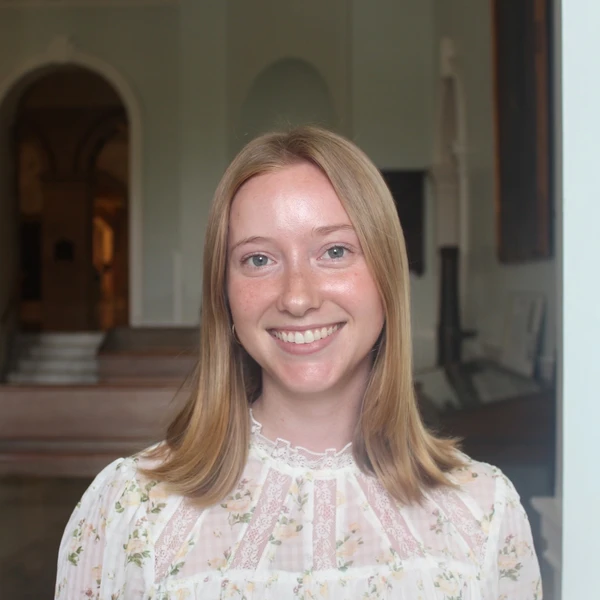
Chloe A. Taylor is an incoming 1L at New England Law | Boston, where she will begin her legal studies in August 2026 with the goal of becoming a government affairs attorney. A dual Political Science and Philosophy major at the University of North Carolina at Chapel Hill, she has built a strong foundation in law and public policy through internships with Massachusetts State Senator Barry Finegold — where she analyzed legislation and briefed the Senator on policy gaps — and the New Hanover County District Attorney's Office, where she supported trial preparation across violent crimes and domestic violence cases. A dedicated civic organizer, she has also led voter registration campaigns with Rally NC and spearheaded clean energy public education efforts as Outreach Coordinator for the NC PIRG CLEAN Campaign.
Education
University of North Carolina at Chapel Hill
Bachelor's degree programMajors:
- Philosophy
- Political Science and Government
New Hanover High
High SchoolMiscellaneous
Desired degree level:
Doctoral degree program (PhD, MD, JD, etc.)
Graduate schools of interest:
Transfer schools of interest:
Majors of interest:
- Law
Career
Dream career field:
Law Practice
Dream career goals:
Attorney
Future Interests
Advocacy
Volunteering
Philanthropy
Margot Pickering Aspiring Attorney Scholarship
I’ve always been drawn to the challenges most people avoid. My favorite sport is the punishment of all sports: running. I love the numbers, the measurable grind. You either do the work or you don’t, and when you do, the numbers reflect it. This same drive carried me through high school, where I was thrust into the fire of an accelerated academic program while simultaneously recovering from an eating disorder and the most traumatic experience of my life. I came out of that season battle-hardened and better for it, with the perspective and determination that will guide me through law school.
On August 30, 2021, there was a shooting at my high school. I will never forget the sheer terror in my classmates’ screams as we ran for our lives, or my fear of not knowing whether one of my best friends had been shot. For two months, everything around me felt dreamlike and unfamiliar, as though I were watching my life unfold from outside of it. The people closest to me seemed strangely unfamiliar, and although I knew I was safe, I was in a constant state of fight-or-flight. I was in a complete state of dissociation and it was the most bizarre feeling I’d ever experienced. Though these challenges made me fear I might never feel grounded again, I have since found comfort in curiosity– in the act of questioning, learning, and finding purpose in understanding what once felt senseless.
During that time, I started seeing a psychologist, who helped me recognize what I couldn't at the time: I had been forced into a perspective most people never experience, one that made me acutely aware of fragility, morality, and how thin the line is between order and chaos. I spent a lot of time contemplating my own existence, shaken by how minuscule and fleeting it seemed in the grand scheme of things. At first, I feared that perspective, but my psychologist taught me to embrace it, to confront the challenge, rather than to run from it. It gave me a new way of seeing the world– skeptical, curious, and unwilling to accept anything at face value. That time of my life taught me to interrogate everything, a quality that has manifested itself in my desire to understand the world through the law.
Reading became my way forward. I devoured books, often finishing a book every other day. I tore through nonfiction books about Kennedy’s assassination, Bill Clinton’s affair, Pablo Escobar, and countless other stories that raised questions about power, responsibility, and truth. Even as I confronted my own fear and disorientation, I found myself drawn to challenges most people shy away from, digging into uncomfortable truths about human behavior and accountability. What drove me then and still drives me now is my insatiable desire to understand the world around me. It’s why this past year I spent Christmas break reading Caesar and Christ and Pax Romana simply because I woke up one morning curious about the Roman Empire. My desire to understand the world challenged me to abandon biology– a path I had stubbornly clung to– after my first semester, and drew me toward political science and philosophy, where I could turn abstract questions into concrete understanding of how ideas influence societies and the laws that govern them.
The shooting didn’t just test my resilience, it rewired the way I think. I don’t take stability for granted, and I don’t take systems at face value. I know how quickly order can collapse and how urgently it must be rebuilt with clarity and intention. That is why I am drawn to the law. Law isn’t abstract, it’s where ideas meet consequences, where the fragility of life collides with the structures meant to protect it. Since then, I’ve tested my commitment to understanding how the law can transform fragility into structure both in and out of the classroom, from winning the Shepard Jones Award for the best paper in international relations, to writing on topics like the school-to-prison pipeline and Aristotle’s views on women, to working in a District Attorney’s office and for a Massachusetts state senator.
I can tell you countless anecdotes about how my drive has pushed me to excel. Each step has confirmed the mindset I developed in the aftermath of the shooting– skepticism, resilience, and hunger for knowledge– which I plan to carry into law school. I wake up every morning and go for a run, embracing the physical pain that is progress. That discipline mirrors the way I tackle challenges in academics and in life. I don’t see the world the way I did before August 30, 2021. I see it more clearly, more critically, and with more urgency. That perspective is what has shaped me, and it’s what I will bring with me into law school: a mind honed by curiosity, a body and will trained with perseverance, and a determination to transform understanding into action.
Bulkthreads.com's "Let's Aim Higher" Scholarship
For as long as I can remember, I have been drawn to the space where law and public life intersect, the place where policy is written, challenged, and made real in the lives of ordinary people. What I want to build is a career as a government affairs attorney that is genuinely rooted in public service, one that uses legal expertise not as a tool for private gain but as an instrument for making government more transparent, more accountable, and more responsive to the communities it is supposed to serve.
That vision has been shaped by concrete experience. Working in the office of Massachusetts State Senator Barry Finegold, I saw how much depends on the people who occupy the space between elected officials and the public, the staffers, advocates, and attorneys who translate policy into action and hold institutions accountable to their stated commitments. I want to be one of those people, equipped with a legal education that allows me to work at the highest level of that process. Beginning my studies at New England Law in August 2026 is the foundation on which that career will be built.
But the career is only part of what I am trying to construct. Alongside it, I want to build a life defined by genuine civic participation and a commitment to the communities I am part of. My work as a Campus Organizing Fellow with Rally NC, as an outreach coordinator for the NC PIRG CLEAN Campaign, and as a mental health policy advocate through The Policy Network has taught me that meaningful change rarely comes from a single dramatic moment. It comes from sustained, unglamorous work: knocking on doors, drafting policy briefs, showing up to meetings, and building relationships with people who share a commitment to something larger than themselves. I want to keep doing that work, at a higher level and with better tools, for the rest of my career.
The impact I hope to have is not abstract. Housing affordability, healthcare access, civic participation, and government transparency are issues that shape the daily reality of people's lives in ways that are often invisible until something goes wrong. I want to work on those issues from the inside, using my legal training to understand how legislation is written and implemented, where it falls short, and how it can be improved. I believe that state government, in particular, offers an opportunity to do that work in a way that is close enough to real communities to be genuinely responsive.
What I am building, ultimately, is a version of a life in public service that takes seriously both the privilege and the responsibility of having access to legal and political systems that most people never get to see from the inside. I want to use that access well, and I want the work I do to leave those systems more just than I found them.
RonranGlee Literary Scholarship
Selected Paragraph:
"And then, as offspring are born, won't they be taken by the officials appointed for this purpose, whether these are men or women or both– for surely our offices are also open to both women and men… And I suppose they will take the offspring of good parents to the rearing pen and hand them over to special nurses who live in a separate part of the city. But those of inferior parents, or any deformed offspring of the others, they will hide in a secret and unknown place, as is fitting… And won't these nurses also take care of the children's feeding by bringing the mothers to the rearing pen when their breasts are full, while devising every device to ensure that no mother will recognize her offspring?" The Republic, Plato (Book V, 460b-d)
Plato occupies a strange position in the history of thinking about women. Read quickly, he looks like an anomaly among ancient philosophers, a thinker willing to argue that women could serve as guardians, soldiers, and rulers in his ideal city at a time when Athenian women were confined to the household and placed under the legal authority of male guardians. But this surface-level progressivism has always been difficult to reconcile with the deeper logic of his work, and nowhere is that tension more visible than in Book V of the Republic. My thesis is this: by forcibly separating mothers from their children and reducing women's biological contributions to the provision of breast milk, Plato exposes a fundamental contradiction at the heart of his ideal city, one in which women are granted the appearance of inclusion while being systematically denied the roles that would give that inclusion genuine meaning.
To understand why this contradiction matters, it is necessary to first take Plato's egalitarian argument seriously on its own terms. In Book V, Socrates defends the claim that the differences between men and women do not, in themselves, justify assigning them different societal roles. What determines a person's function in the city is not the nature of their body but the nature of their soul. If a woman has the rational capacity and temperament of a guardian, she should serve as one. This is a genuinely striking claim in its historical context, and it would be a mistake to dismiss it entirely. Plato is working against a deeply entrenched set of assumptions about female inferiority, and his insistence that women be evaluated on the basis of their souls rather than their sex represents a real, if limited, departure from the norms of his time.
But the passage above makes clear how much that departure costs women on Plato's own terms. The system he describes is one in which newborn children are immediately removed from their mothers and transferred to communal rearing pens managed by appointed nurses. Mothers are brought to these pens only when their breasts are full, their bodies called upon to provide milk for children they are deliberately prevented from identifying as their own. Officials are instructed to use every available device to ensure that no mother recognizes her offspring. Plato is not simply reorganizing the logistics of childcare. He is engineering the deliberate erasure of the mother-child bond, and the precision with which he describes this erasure makes clear that it is not incidental to his vision but central to it.
The reason for this becomes clear when the passage is read against Plato's theory of the soul. Throughout the Republic, Plato argues that the rational part of the soul must govern the spirited and appetitive parts for a person to function justly. The guardian class is defined above all by the dominance of reason, and the entire structure of the ideal city depends on guardians whose souls are oriented toward wisdom and the common good rather than toward personal attachments or private desires. When a woman gives birth and bonds with her child, she engages the deepest instincts of the spirited and appetitive soul, the drive to protect, nurture, and attach. For Plato, this is not a virtue. It is a threat. A guardian woman whose soul is oriented toward her own child cannot orient it fully toward the city. The communal rearing system is not designed to liberate women from domestic labor. It is designed to prevent maternal attachment from disrupting the rational order Plato requires.
This is where the passage becomes most philosophically revealing. The instruction that nurses use every device to prevent mothers from recognizing their own children is not a logistical footnote. It is a deliberate philosophical intervention, an attempt to engineer out of existence a bond that arises prior to and independent of any social institution. In doing so, Plato reduces women's maternal nature to a purely transactional function. Their bodies produce children and milk for the city. Their emotional and relational connection to those children is treated not as a contribution to be honored but as a liability to be managed. The result is a vision of women in which their most distinctly female biological capacity is simultaneously required and stripped of meaning.
This dynamic is not unique to the Republic. It mirrors a pattern I have traced in the Symposium, where Plato, through the voice of Diotima, borrows the imagery of pregnancy and childbirth to illustrate the process of intellectual reproduction, the conception and delivery of beautiful and immortal ideas, while simultaneously placing physical reproduction at the lowest rung of the philosophical ascent. In both works, women's biological reality is appropriated to serve Plato's broader argument and then discarded or diminished when it threatens to exceed the boundaries he has set for it. The pregnant woman is a useful metaphor for the philosopher's intellectual labor, but actual pregnancy, and the actual woman who undergoes it, is placed beneath that labor in value and significance. The Republic extends this logic into the political realm. Women's bodies are necessary to produce the next generation of guardians, but the maternal relationship those bodies naturally generate is perceived as incompatible with the rational order of the city and must therefore be suppressed.
What makes this all the more striking is the specific detail Plato includes about the fate of children born to inferior parents or with physical deformities. In the same passage in which he describes separating mothers from their newborns, he instructs that such children be hidden in a secret and unknown place. Both acts reflect the same underlying logic: the individual, and particularly the individual woman, exists to serve the collective rather than as an autonomous being with inherent worth. The progressive rhetoric of Book V cannot survive careful contact with this passage. What it reveals, read closely, is not the liberation of women but their careful management. Plato is willing to extend to women the roles traditionally reserved for men, but only after removing the one role that belongs to women alone. That substitution is not equality. It is a more sophisticated form of the same exclusion that defined Athenian life, dressed in the language of nature and reason, and made harder to see precisely because it presents itself as progress.
Dream BIG, Rise HIGHER Scholarship
Education has never been something I pursued passively. From the time I was young, I approached learning as a way of making sense of the world around me and figuring out where I fit within it. That orientation has only deepened over time, and my years at the University of North Carolina at Chapel Hill have been the most formative chapter of that journey so far.
When I arrived at UNC, I knew I was interested in law and politics, but I did not yet have a clear sense of what that interest meant in practice or where it would take me. Choosing to pursue dual degrees in Political Science and Philosophy turned out to be one of the best decisions I have made. Political Science gave me frameworks for understanding how governments are structured, how policy is made, and how power operates in democratic systems. Philosophy pushed me deeper, asking me to examine the values and assumptions underneath those structures. Courses in Legal Philosophy and Criminal Justice and Legal Reform were particularly formative. They did not just teach me about the law. They asked me to think critically about whether the law, as it exists, reflects the principles of fairness and justice it claims to uphold. That question has never left me, and it is central to the kind of attorney I want to become.
Outside the classroom, my education has been just as meaningful. My internship with the New Hanover County District Attorney's Office the summer after my freshman year gave me my first real look at how the legal system functions on the ground. I supported Assistant District Attorneys across violent crimes, domestic violence, and crimes against children cases, and I helped prepare materials for a murder retrial more than twenty years after the original conviction. That experience was sobering. It showed me the weight of what is at stake in legal proceedings and the enormous responsibility that comes with working inside a system that has the power to take away someone's freedom. It also made me more serious about my own preparation and more committed to pursuing legal work in the public interest.
My internship with Massachusetts State Senator Barry Finegold the following summer shifted my focus toward the legislative side of that same commitment. Drafting bill summaries, researching housing and crime data, analyzing gaps in benefit programs, and briefing the Senator on policy issues gave me a concrete sense of how laws are actually made and what it takes to move an idea from a proposal into a statute. I left that internship with a clearer vision of the career I want to build, one centered on government affairs and the work of shaping policy that is fair, transparent, and responsive to the communities it affects.
The challenges I have faced along the way have shaped me as much as my successes. For several years during high school and into my early college years, I struggled with an eating disorder that affected my physical health, my confidence, and my ability to show up fully in my own life. Recovery was not linear, and it required a level of honesty and persistence that was genuinely difficult. During that time, I started a food and wellness platform that grew to over 34,000 followers, where I shared recipes, personal reflections, and resources for others navigating similar struggles. What began as a personal outlet became something larger, a community where people felt less alone in their recoveries. That experience taught me that vulnerability can be a form of advocacy, and it deepened my commitment to mental health as a policy issue. My later work with The Policy Network, where I developed policy briefs on student mental health and collaborated with UNC Student Government to advocate for expanded counseling resources, grew directly out of that personal history.
I do not think it is a coincidence that so much of my academic and professional work has centered on systems that either support or fail the people who depend on them. Whether I was researching gaps in state benefit programs, canvassing for voter registration, or educating communities about clean energy incentives, I was always asking the same underlying question: who does this system serve, and who does it leave behind? Education has given me the language and the tools to ask that question more rigorously, and law school will give me the ability to act on the answers more effectively.
I am attending New England Law beginning in August 2026 because I want to become a government affairs attorney with the skills to work inside legislative and regulatory systems and push them toward greater fairness and accountability. I am particularly drawn to state-level policy, where I believe dedicated advocates can have a tangible and lasting impact on issues like housing affordability, healthcare access, and civic participation. The experiences I have accumulated, in legislative offices, courtrooms, organizing campaigns, and campus advocacy, have all pointed me in the same direction. I want to use the law not as an abstraction but as a practical instrument for building a more just and responsive government.
Education has given me direction, discipline, and a deepening sense of purpose. The challenges I have overcome have made me more empathetic, more resilient, and more certain that the work I am pursuing matters. I am not going to law school to achieve status or security. I am going because I believe that people deserve a government that works for them, and I want to spend my career helping to make that a reality.
Cooper Congress Scholarship
My interest in legislative and policy work did not begin in a classroom. It grew out of a genuine belief that government, when it functions well, has the capacity to meaningfully improve people's lives. That belief has been tested and strengthened through direct experience at multiple levels of the legislative and legal process, and it is what drives my decision to pursue a career as a government affairs attorney.
I am most drawn to state-level government, where I believe policy can be both substantive and responsive in ways that are harder to achieve at the federal level. My internship in the Office of Massachusetts State Senator Barry Finegold gave me a close look at how state legislatures operate and how much real impact state-level decisions have on the day-to-day lives of constituents. I drafted bill summaries, researched housing and crime data, analyzed gaps in state benefit programs, and observed how the Senator navigated complex issues ranging from healthcare access to economic development. That experience confirmed for me that state government is where I want to build my career. It is close enough to the ground to be genuinely responsive to communities, yet powerful enough to drive structural change.
The policy issue I care most deeply about is housing affordability. During my internship, I conducted quantitative research on housing prices and crime rates in Lawrence, Massachusetts, and what I found illustrated a pattern visible in cities and towns across the country. As housing costs rise and supply fails to keep pace with demand, low and moderate income residents are pushed out of their communities, social mobility narrows, and inequality compounds over time. Housing is not a peripheral issue. It shapes access to education, employment, healthcare, and safety. I believe state governments have both the authority and the responsibility to address this crisis through zoning reform, investment in affordable housing development, and stronger tenant protections, and I want to be part of that work.
Civil discourse is essential to making any of that progress possible. One of the most important things I observed during my time in Senator Finegold's office was how much of the legislative process depends on the ability to engage across disagreement. Good policy rarely emerges from a single perspective. It is built through negotiation, compromise, and a willingness to take seriously the concerns of people who do not already agree with you. As a Campus Organizing Fellow with Rally NC and as a policy advocate with the NC PIRG CLEAN Campaign, I worked to bring accurate information to people who might be skeptical or disengaged, and I learned that listening is just as important as persuading. When civic discourse breaks down, the people who suffer most are those who already have the least access to power.
I am going to law school because I want to be a more effective advocate for the communities and causes I believe in. A legal education will give me the tools to understand how legislation is written, challenged, and implemented, and to work within those systems strategically. My goal is to bring the same commitment to public service that has guided my work so far into a career dedicated to shaping policy that is fair, transparent, and responsive to the people it affects.
Jeffrey J. Douglas First Amendment Scholarship
My interest in free expression is not abstract. It has been shaped by years of work at the intersection of civic engagement, policy, and public advocacy. From organizing voter registration campaigns to leading public education initiatives on clean energy policy, I have seen firsthand how the ability to speak, organize, and disseminate information freely is the foundation upon which all other civic participation rests.
As a Campus Organizing Fellow with Rally NC ahead of the 2024 election, I coordinated outreach efforts that reached over 8,000 households and helped distribute voter information to more than 5,000 UNC students. That work taught me that free expression is not just a legal principle. It is a practical prerequisite for democracy. When students don't have access to accurate information about their voting rights, or when that information is suppressed or obscured, their ability to participate in self-governance is directly undermined. Protecting free expression, in that sense, is inseparable from protecting the vote itself.
My work as Outreach Coordinator for the NC PIRG CLEAN Campaign deepened that conviction. Educating communities about clean energy incentives required navigating a landscape where corporate interests often work to suppress or discredit public information about environmental policy. Helping residents understand their rights and options, and ensuring that accurate information reached people who might otherwise be left out of that conversation, felt like an act of advocacy in itself.
Academically, my coursework in Legal Philosophy and Public Policy has pushed me to engage seriously with the theoretical underpinnings of expressive freedom, including questions about the limits of speech, the role of government in regulating public discourse, and the tension between free expression and competing rights. These questions are not just intellectual exercises for me. They are directly relevant to the kind of government affairs attorney I want to become.
My internship in the Office of Massachusetts State Senator Barry Finegold also gave me a window into how free expression plays out in the legislative process. Drafting bill summaries, researching policy positions, and helping the Senator communicate clearly with constituents are all, at their core, exercises in ensuring that public information flows freely and accurately between government and the people it serves. Transparency in government, and the ability of citizens to know what their representatives are doing and why, is one of the most consequential expressions of free speech principles in practice.
I am pursuing a career in government affairs law because I believe that law is one of the most powerful tools available for protecting the conditions that make free expression possible. Whether that means defending the right to organize, ensuring government transparency, or challenging policies that restrict access to information, I want to use my legal education to advocate for the open exchange of ideas that a healthy democracy requires. The ability to speak, question, and dissent is not a privilege. It is the precondition for everything else.
Bold Perseverance Scholarship
When I started cross country training in June of 2020, there was no way of anticipating what was to come. After training for six months straight because the season was pushed back, not being able to participate in usual team festivities, and having a limited number of people in each race, cross country started to lose its appeal. All of these aspects pretty much cut the size of the team in half and our team didn’t feel like much of a team anymore. Running has always been an extremely positive outlet for me but the cross country season of my junior year definitely tested my dedication. Having to run through the covid regulations without the team that I was used to was extremely difficult. It was hard to show up to practice, much less push through the physical and mental barriers while racing. Even though there wasn't always someone neck and neck with me, I gave every race my all. Though we were small in numbers, our team of 5 girls was strong. After running in the freezing cold rain in shin-deep mud at regionals, our girls team made it to the State Championships and placed in the top ten overall for the first time in New Hanover high school history. Though it wasn’t my ideal season, I will always remember my junior cross country season as a test of my mental strength that left me with the resilience I hold today.
Bold Persistence Scholarship
When I started cross country training in June of 2020, there was no way of anticipating what was to come. After training for six months straight because the season was pushed back, not being able to participate in usual team festivities, and having a limited number of people in each race, cross country started to lose its appeal. All of these aspects pretty much cut the size of the team in half and our team didn’t feel like much of a team anymore. Running has always been an extremely positive outlet for me but the cross country season of my junior year definitely tested my dedication. Having to run through the covid regulations without the team that I was used to was extremely difficult. It was hard to show up to practice, much less push through the physical and mental barriers while racing. Even though staying motivated was hard, I trained six days a week, rain or shine, ran 12 mile long runs on the weekends, and continued to work hard every single day. Even though there wasn't always someone neck and neck with me, I gave every race my all. Though we were small in numbers, our team of 5 girls was strong. After running in the freezing cold rain in shin-deep mud at regionals, our girls team made it to the State Championships and placed in the top ten overall for the first time in New Hanover High School history. Though it wasn’t my ideal season, I will always remember my junior cross country season as a test of my mental strength that left me with the resilience I hold today.
Bold Helping Others Scholarship
For the past two years I have had an instagram account called chloe.foods where I create recipes and support people who are recovering from eating disorders. What started out as a way for me to encourage myself in my own eating disorder recovery has turned into an outlet for me to help thousands of people recover from their eating disorders. Now with over 30,000 followers, my account serves as a positive place where people can find motivation to choose recovery, tips to help them face their fears, and recipes to make in the process. There is a stigma in today's society that you have to be skinny to be beautiful. I am trying to break that stigma by preaching that food is fuel and telling people what I needed to hear when I was in the thick of my eating disorder: there is a life outside the prison of their eating disorder and they should not be ashamed of their mental illness. Encouraging people to seek professional treatment for their eating disorders is extremely difficult when today’s society praises women for destroying their bodies. Seeking help to recover from an eating disorder should be praised, not frowned upon. Through my account, I get to share the lessons I have learned with others as they overcome what feels like the impossible. Anorexia is the most deadly mental illness and it takes thousands of lives each year. I find extreme gratitude in knowing that I can help to reduce that number.