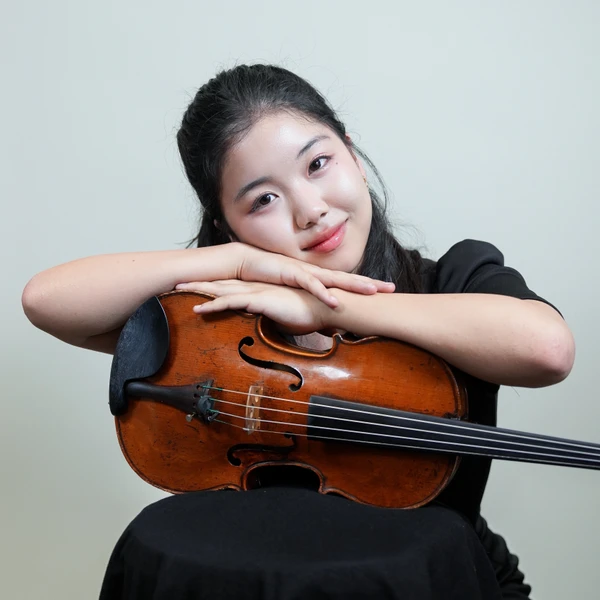
Hobbies and interests
Violin
Reading
Writing
Poetry
Sewing
Piano
Art
Bible Study
Church
Psychology
Neuroscience
Counseling And Therapy
English
Comedy
Reading
Academic
Adventure
Art
Classics
Contemporary
Drama
Education
Gothic
Music
Philosophy
Romance
Religion
Plays
Tragedy
Short Stories
I read books daily
Chloe Yoon
1x
Finalist
Chloe Yoon
1x
FinalistBio
Chloe Yoon is a senior at the Los Angeles County High School for the Arts and a violinist studying under Dr. Chan Ho Yun at the Colburn Community School of Performing Arts. She is a 2026 National YoungArts winner in the classical instrumental category and has won numerous competitions, including the Bellflower Symphony Concerto Competition, International Liana and Ruben Cohen Music Festival, Moments of Music Scholarship Competition, Elite International Music Competition, and the Junior Bach Festival. Chloe has performed as a soloist with the Los Angeles Virtuosi Orchestra, Los Angeles Sinfonietta, Bellflower Symphony Orchestra, and Pasadena Summer Youth Chamber Orchestra. She has served as concertmaster of six total orchestras, including the CODA High School All-State Honor Orchestra in 2022.
Outside of music performance, Chloe has explored the intersection of music and science, publishing a research paper in the Curieux Academic Journal about the effects of music therapy on memory loss. She has since developed projects to apply those benefits of music therapy, such as Harmonies for Hope, a volunteer group made up of high school musicians who regularly perform at a rehabilitation center and see the cognitive benefits of music in real time. In college, Chloe hopes to continue her research of music therapy on patients with neurocognitive disorders, and influence the widespread inclusion of music based therapy as a prescription in hospitals.
Education
Rice University
Bachelor's degree programMajors:
- Music
L.a. County High School for the Arts
High SchoolMiscellaneous
Desired degree level:
Bachelor's degree program
Graduate schools of interest:
Transfer schools of interest:
Majors of interest:
- Music
- Cognitive Science
Career
Dream career field:
Music
Dream career goals:
To become an orchestral and chamber musician with a private studio for teaching students.
Violin hand double for Alma in American Horror Story Season 10
FX Studios2021 – 2021Fellow - programmed and scheduled concerts, stage managed 300+ concerts, gave lessons to violin students, worked in the office for student support.
Montecito International Music Festival2023 – 20252 years
Sports
Tennis
Intramural2015 – 20194 years
Research
Rehabilitation and Therapeutic Professions, General
Curieux Academic Journal — Researcher2023 – 2024
Arts
Colburn Community School of Performing Arts
Music2026 National YoungArts Winner in Classical Instrumental, Bellflower Symphony Concerto Competition First Prize, International Liana Cohen Music Festival Grand Prize, Appointed Concertmaster of 2022 CODA All State Honor String Orchestra, First Prize at the Junior Bach Festival, First Prize at the Moments of Music Scholarship Competition, Acceptance to the 2025 Encore Summer Academy's Solo Young Artists Program, Accepted as a Fellow to Montecito International Music Festival in 2023, 2024, and 2025, LACHSA Best Orchestral Musician Award, Colburn Honors Chamber Orchestra First Violin, Coda All State Orchestra2015 – Present
Public services
Volunteering
Los Angeles Sinfonietta Debut Orchestra — Concertmaster2016 – PresentVolunteering
Love Through Music — First violinist (performer)2022 – PresentVolunteering
Harmonies for Hope — President, Concertmaster2024 – Present
Future Interests
Advocacy
Volunteering
Philanthropy
Entrepreneurship
Dream BIG, Rise HIGHER Scholarship
My musical education in violin performance has been the core of my long-term goals and has shaped my lifestyle and direction for as long as I can remember. Ever since my first violin lesson at seven years old, my studies of violin performance have expanded my knowledge and skill in fields beyond just violin technique in ways I never would have imagined.
When I was seven, “What do you want to be when you grow up?” felt like an easy question. I’d answer without hesitation: a professional violinist. People would smile, impressed, maybe even a little charmed. But by the time I entered high school, that same answer landed differently. Now that I was attending a public arts high school and taking music seriously, the smiles faded into something else. Their curiosity turned into concern, and I was constantly being urged to keep the violin as a hobby and aim for medicine or law instead. As an academically high-achieving Asian American student, people constantly discouraged me from pursuing music, claiming I was “too gifted” to choose something so uncertain, something that wouldn’t lead to a “real job.”
Despite constant pressure to choose a different path, I refused to let go of music. My insistence on choosing music despite the opinions of others showed me from a young age where my values lay, and what it meant to choose my own path. I achieved a deep understanding of what I was passionate about and learned to set my goals based on those passions, rather than living according to the blueprint that others drew out for me. Given this strong sense of direction, I became determined to work as hard as I could to achieve my goals. I willingly practiced 4-6 hours daily, sometimes even up to 13 hours a day, chasing perfection. Through that process, I gained discipline and learned how to manage my time and push myself even on days when I felt unmotivated.
But that intensity soon caught up with me, and by sophomore year, I hit a plateau. Despite the long hours I would spend in my practice room, I made no progress. After talking with my orchestra conductor, I began to understand that true mastery of music is achieved through a combination of collaborative elements, rather than solely spending endless hours alone in the practice room. Since then, my approach has shifted from solitary perfectionism to a more curious, outward-looking practice.
I started by changing the way I approached my school orchestra. Instead of solely focusing on playing well, I started connecting with my orchestra members on a personal level. As concertmaster of my high school orchestra, I began offering one-on-one lunchtime support to my violin section. The conversations I had with my classmates during those lunchtime sessions about their personal experiences and relationship with music ended up inspiring me in ways I didn’t expect and opened my eyes to perspectives I never would have reached on my own.
After seeing how much I grew through conversations with others, I started seeking out opportunities to work with artists outside my usual world as a classical instrumentalist. I joined the school’s opera pit and talked with singers, dancers, and theater students, listening to their various artistic journeys. I also joined a project led by my Chemistry teacher and a few student vocalists called Freeman & Friendz, and ended up recording an album with them as a pop violinist. Writing the violin part for rock tracks and playing in a recording studio alongside pop singers showed me a completely new side of my instrument and craft.
Fascinated by the magic of interdisciplinary work, I began exploring collaborations beyond the arts. I published a systematic review on the cognitive benefits of music therapy, then formed a group of high school musicians to perform nostalgic Korean songs at a rehabilitation hospital in Koreatown, observing these effects in real-life settings. Watching residents who had been silent or asleep suddenly start humming along, dancing, or even crying opened my eyes to a completely different kind of musical power. For my next project, I plan to integrate music therapy into hospital care as a recognized and prescribed part of patient care.
Over the years, my musical education transformed from a personal ambition into the lens through which I experience the world. It challenged me, broke me out of isolation, and ultimately connected me to people and ideas far beyond myself. Through it, I discovered not only new artistic possibilities but also the power of collaboration and human connection. My goals are no longer to merely achieve personal mastery of the violin, but to keep pushing limits and inspire others to collaborate beyond their disciplines. I hope to use my musical education to continue connecting and learning from others, inspire others to question the “impossible,” and foster the development of forward-thinking perspectives together.
Nick Lindblad Memorial Scholarship
When I was seven, “What do you want to be when you grow up?” felt like an easy question. I’d answer without hesitation: a professional violinist. People would smile, impressed, maybe even a little charmed. But by the time I entered high school, that same answer landed differently. Now that I was attending a public arts high school and taking music seriously, the smiles faded into something else. Their curiosity turned into concern, and I was constantly being urged to keep the violin as a hobby and aim for medicine or law instead. As an academically high-achieving Asian American student, the message felt especially pointed: I was “too gifted” to choose something so uncertain, something that wouldn’t lead to a “real job.”
Despite constant pressure to choose a different path, I refused to let go of music. I practiced 4-6 hours daily, sometimes up to 13 hours, chasing perfection, until that intensity caught up with me. By sophomore year, I hit a plateau. Despite the long hours I would spend in my practice room, I made no progress. After talking with my orchestra conductor, I began to understand that true mastery of music is achieved through a combination of collaborative elements, rather than solely spending endless hours alone in the practice room. Since then, my approach has shifted from solitary perfectionism to a more curious, outward-looking practice.
I started by changing the way I approached my school orchestra. Instead of solely focusing on playing well, I started connecting with my orchestra members on a personal level. As concertmaster of my high school orchestra, I began offering one-on-one lunchtime support to my violin section. The conversations I had with my classmates during those lunchtime sessions about their personal experiences and relationship with music ended up inspiring me in ways I didn’t expect and opened my eyes to perspectives I never would have reached on my own.
After seeing how much I grew through conversations with others, I started seeking out opportunities to work with artists outside my usual world as a classical instrumentalist. I joined the school’s opera pit and talked with singers, dancers, and theater students, listening to their various artistic journeys. I also joined a project led by my Chemistry teacher and a few student vocalists called Freeman & Friendz, and ended up recording an album with them as a pop violinist. Writing the violin part for rock tracks and playing in a recording studio alongside pop singers showed me a completely new side of my instrument and craft.
Fascinated by the magic of interdisciplinary work, I began exploring collaborations beyond the arts. I published a systematic review on the cognitive benefits of music therapy, then formed a group of high school musicians to perform nostalgic Korean songs at a rehabilitation hospital in Koreatown, observing these effects in real-life settings. Watching residents who had been silent or asleep suddenly start humming along, dancing, or even crying opened my eyes to a completely different kind of musical power.
Over the course of high school, music transformed from a personal ambition into the lens through which I experience the world. It challenged me, broke me out of isolation, and ultimately connected me to people and ideas far beyond myself. Through it, I discovered not only new artistic possibilities but also the power of collaboration and human connection. Music is no longer just one part of my life, but has come to define how I grow, how I lead, and how I hope to make an impact.
Redefining Victory Scholarship
Tawkify Meaningful Connections Scholarship
I once challenged myself to practice forty hours of violin in three days. It felt like the kind of extreme discipline great performers all seemed to have, and I wanted to prove I could match it. By the end, I’d barely eaten, gone record hours without talking, and driven my family crazy. Instead of becoming the virtuoso I dreamt of, I had squeezed all the joy out of what I cared about most. That experience made me realize that growth and mastery as a musician are achieved through a combination of collaborative elements born from human relationships, rather than simply spending endless hours alone in the practice room. Thus, my artistic practice has evolved from a personal and internal pursuit into one that is collaborative, curious, and outward-facing.
I started by changing the way I approached my school orchestra. Instead of solely focusing on playing well, I started connecting with my orchestra members on a personal level. As concertmaster of my high school orchestra, I began offering one-on-one lunchtime support to my violin section. The conversations I had with my classmates during those lunchtime sessions about their personal experiences and relationship with music ended up inspiring me in ways I didn’t expect. Those exchanges opened my eyes to perspectives I never would have reached on my own and showed me how much I could learn simply by talking with other musicians.
After seeing how much I grew through conversations with others, I started seeking out opportunities to work with artists outside my usual world as a classical instrumentalist. I joined the school’s opera pit and talked with singers, dancers, and theater students, listening to their various artistic journeys. I also joined a project led by my Chemistry teacher and a few student vocalists called Freeman&Friendz, and ended up recording an album with them as a pop violinist. Writing the violin part for rock tracks and playing in a recording studio alongside pop singers showed me a completely new side of my instrument and craft.
Fascinated by the magic of interdisciplinary work, I began exploring collaborations beyond the arts. I published a systematic review on the cognitive benefits of music therapy, then formed a group of high school musicians to perform nostalgic Korean songs at a rehabilitation hospital in Koreatown, observing these effects in real-life settings. Watching residents who had been silent or asleep suddenly start humming along, dancing, or even crying opened my eyes to a completely different kind of musical power. For my next project, I plan to integrate music therapy into hospital care as a recognized and prescribed part of patient care.
The more I explore music and its connections to other fields, the more convinced I am that there’s no end to what I can learn. There’s a unique human and artistic growth I can only attain by studying music and collaborating with others in a college environment, and that’s what compels me to major in violin performance. I want to stay curious, continue connecting and learning from others, and inspire them to think creatively, fostering the development of forward-thinking perspectives together.
David Foster Memorial Scholarship
Every day after school, my mom picks me up and asks the same question: “How was school?” For most of high school, my answer was an automatic “good,” usually followed by the latest drama with friends or complaints about upcoming tests. But during junior year, I found myself giving her full debriefs of the books and poems we were reading in English class. My English 11 teacher, Dr. P, was infamous for having the most dreaded class–his grading was ruthless, his lectures seemed endless, and his expectations were higher than anyone else’s. I left every lesson with my head buzzing from the insane connections he uncovered between passages, but unable to share my enthusiasm out of fear of looking like a nerd or a goody-goody in front of my friends. So by the time I got in the car, you can imagine how ready I was to spill my excitement to somebody, anybody, about the brilliance I had just witnessed.
I became particularly obsessed with “The Great Gatsby.” Dr. P had dissected nearly every word in each chapter, uncovering hidden meanings and cross-references between colors, objects, and movements. I could read the same chapter hundreds of times, and he would still point out something I had never noticed or offer a perspective that completely shifted my understanding of the story. I was stunned by his ability to notice such small details, but even more so by the idea that Fitzgerald, the author, had packed so much meaning into every word and phrase. I began to wonder if some of Dr. P’s observations were coincidental. I nervously walked up to him after class one day, with a question that challenged the core assumptions of his field: Did Fitzgerald even intend to create such complex, implied layers in the story? He responded in a way that changed how I see art forever. He said it wasn’t about what the author meant to do, but about what the author did do.
As a violin major, that moment taught me what makes not just literature, but also music so compelling. The ambiguity, the freedom to interpret, and the space left for the audience to explore. I sat in my practice room with my violin that day, overwhelmed by this new freedom. Suddenly, the white paper behind the dark notes of my sheet music became a canvas. I had been practicing Wieniawski’s first violin concerto, arguably the most technically demanding violin piece. For months, I had approached it like a math problem, focusing on hitting the right finger in the right place at the right time. Now, with this newfound perspective, I began annotating the sheet music the way I annotated poems in Dr. P’s class. I highlighted recurring themes, underlined meaningful passages, and drew arrows connecting ideas across the page. Music, like literature, became a space for exploration and personal expression.
Dr. P. taught me that art is not something to be merely solved or mastered, but also to be inhabited. I realized that every note, every word, is a doorway into thought, emotion, and imagination, and the act of engaging with it is as important as the final performance. I discovered that the beauty of art lies in the gaps it leaves, in the space for interpretation, for feeling, and for my own perspective to emerge. That permission to explore, to make connections, to create meaning, expanded my discipline into curiosity, and a simple practice session into an encounter with something larger than myself.
Pamela Branchini Memorial Scholarship
I once challenged myself to practice forty hours of violin in three days. It felt like the kind of extreme discipline great performers all seemed to have, and I wanted to prove I could match it. By the end, I’d barely eaten, gone record hours without talking, and driven my family crazy. Instead of becoming the virtuoso I dreamt of, I had squeezed all the joy out of what I cared about most. That experience made me realize that growth and mastery as a musician are achieved through a combination of elements, rather than simply spending endless hours in the practice room. Thus, my artistic practice has evolved from a personal and internal pursuit into one that is collaborative, curious, and outward-facing.
I started by changing the way I approached my school orchestra. Instead of solely focusing on playing well, I started connecting with my orchestra members on a personal level. As concertmaster of my high school orchestra, I began offering one-on-one lunchtime support to my violin section. The conversations I had with my classmates during those lunchtime sessions about their personal experiences and relationship with music ended up inspiring me in ways I didn’t expect. Those exchanges opened my eyes to perspectives I never would have reached on my own and showed me how much I could learn simply by talking with other musicians.
After seeing how much I grew through conversations with others, I started seeking out opportunities to work with artists outside my usual world as a classical instrumentalist. I joined the school’s opera pit and talked with singers, dancers, and theater students, listening to their various artistic journeys. I also joined a project led by my Chemistry teacher and a few student vocalists called Freeman&Friendz, and ended up recording an album with them as a pop violinist. Writing the violin part for rock tracks and playing in a recording studio alongside pop singers showed me a completely new side of my instrument and craft.
Fascinated by the magic of interdisciplinary work, I began exploring collaborations beyond the arts. I published a systematic review on the cognitive benefits of music therapy, then formed a group of high school musicians to perform nostalgic Korean songs at a rehabilitation hospital in Koreatown, observing these effects in real-life settings. Watching residents who had been silent or asleep suddenly start humming along, dancing, or even crying opened my eyes to a completely different kind of musical power. For my next project, I plan to integrate music therapy into hospital care as a recognized and prescribed part of patient care.
The more I explore music and its connections to other fields, the more convinced I am that there’s no end to what I can learn. There’s a unique human and artistic growth I can only attain by studying music and collaborating with others in a college environment, and that’s what compels me to major in violin performance. I want to stay curious, continue connecting and learning from others, and inspire them to think creatively, fostering the development of forward-thinking perspectives together.