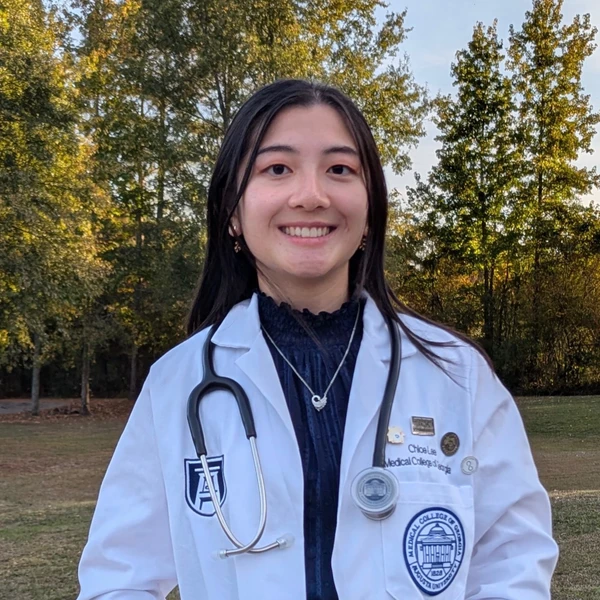
As a lifelong resident of Georgia, I’ve always felt a deep connection to the people and places that shaped me. Growing up in Gwinnett County—Georgia’s most ethnically diverse county—meant I was surrounded by classmates, neighbors, and mentors from a wide variety of cultural, linguistic, and socioeconomic backgrounds. This environment taught me early on that effective communication, cultural understanding, and compassion are not optional in healthcare—they are essential. This lesson has always guided my educational and professional goals. I plan to become a pediatrician who can bridge the gap between clinical care and real-life understanding, ensuring that no child or family is left behind because of barriers they cannot control.
Currently, I am pursuing a medical degree to practice in Georgia, where my roots run deepest. The people here—my teachers, mentors, and patients—have made a lasting investment in me, and I am committed to giving back by providing accessible, culturally competent care to underserved communities across the state. My long-term goal is to serve not just as a clinician, but also as a trusted advocate for families navigating the complexities of the healthcare system. I want to be the type of physician who remembers stories as well as symptoms, one who understands that healing doesn’t always begin or end in an exam room.
Over the past two years, I’ve worked as a medical assistant and scribe in Cumming, GA, alongside pediatricians, family nurse practitioners, and internal medicine doctors. These roles gave me the privilege of working directly with patients and witnessing how impactful compassionate care can be. It’s also where I encountered some of my most formative experiences—writing medical letters for DFCS to advocate for substance-exposed infants, interpreting for Mandarin-speaking families through diagnoses, and supporting physicians who served patients long after clinic hours were over. Every task reminded me that medicine is both technical and deeply human.
One patient in particular stands out. At Peach Clinic, we were treating a young girl for persistent respiratory issues. Her family had been exposed to black mold in their apartment for nine months, and the children’s father had passed away from a related condition. Even after they moved, the youngest child’s symptoms lingered. As her mother told us the full story in Spanish with an interpreter, I remember feeling helpless. Medicine could manage her asthma now, but it couldn’t undo the past. I was forced to confront the limits of clinical care and the devastating impact of preventable illness, especially when compounded by language barriers, poverty, and systemic neglect.
This experience, along with many others, has strengthened my resolve to address the broader context of health disparities in my future practice. While volunteering at Shifa Clinic, a free clinic in Athens, I saw how uninsured patients would line up for hours just to be seen. On Saturdays, we distributed meals to people experiencing homelessness and shared information about the clinic, knowing it might be the only place they could access care. But even those efforts felt like short-term solutions to long-standing structural problems. Healthcare access, housing insecurity, and health literacy are deeply interconnected, and I plan to keep these intersections central to my work as a physician.
Another impressionable experience came through my time at Health 4 Kids, where we worked with children from low-income families in after-school programs. There, I learned how deeply education and health are linked. Helping kids with homework or hygiene lessons was not just educational—it was preventative care. We weren’t just helping them read or wash their hands properly; we were building trust, stability, and confidence. I began to see that health is a lifelong process shaped not only by medicine but also by education, environment, and social opportunity.
These experiences have shaped both my goals and my values. I want to practice medicine in Georgia not only because it is my home, but because I understand its challenges and have already seen how small, compassionate actions can make a lasting impact. I want to be a pediatrician who advocates for food security, housing safety, and early intervention—not just because they matter medically, but because I’ve seen firsthand how they change lives.
Growing up in an Asian immigrant household also shaped how I view care. I witnessed firsthand the coexistence of traditional Chinese medicine with Western practices, and the quiet hesitancy my own family members had toward formal healthcare. I am still trying to navigate how to convince my mother to get her first mammogram done, and how to emphasize to my aunt the importance of taking her blood pressure medication consistently. For many in my community, healthcare was something to be delayed until absolutely necessary, not due to ignorance, but because of cost, mistrust, and cultural distance. This reality isn't unique to Asian communities. In my work and volunteering, I’ve seen similar hesitations across many underrepresented and low-income populations. These shared patterns of hesitancy reinforced my belief that physicians must be more than medical experts—they must be advocates, educators, and empathetic communicators.
As the first in my family to graduate from college in the U.S., I carry the weight of my family’s sacrifices and dreams with me. I’ve been fortunate to have mentors and educators who saw potential in me, even before I fully saw it in myself. Their support has fueled my belief that no one achieves anything alone, and that I have a responsibility to use my education to lift others along on my journey.
Receiving this scholarship would mean more than financial aid—it would be a recognition of the values I hold: commitment to service, compassion in action, and a belief in healthcare that sees the whole person. It would allow me to continue my education without adding further financial strain to my family and free up time and energy that I could instead pour into clinical experiences, community engagement, research, and leadership development. It would also affirm that my story—and the communities I represent—deserve to be heard and invested in.
I believe I deserve this scholarship not because I’ve done more than anyone else, but because I am committed to doing the most I can with what I’ve been given. I have a great record of service, resilience, and integrity, and I intend to carry those qualities forward into my career in medicine. I want to be the doctor who shows up early, listens without judgment, and remembers the names and stories that may not be heard. I want to be a leader in community health, an advocate for underserved populations, and a mentor for the next generation of healthcare providers.
Ultimately, this scholarship would help me take another step toward building the kind of future I believe in—one where healthcare is accessible, compassionate, and just. A future where every child, regardless of zip code or background, has the opportunity to grow up healthy and hopeful. A future I will work every day to make possible.