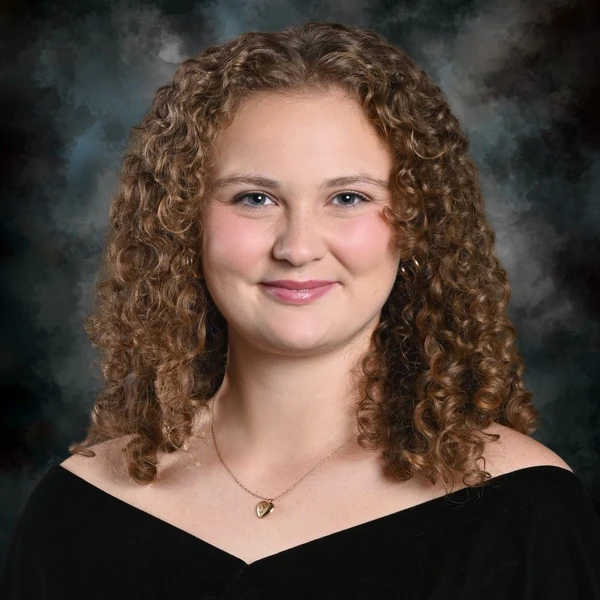
From a young age, I knew I loved science. I was eager to understand the world and how it worked, especially the human body. As I grew older, my fascination deepened into medicine, and I spent my free time reading up on new medical technology. At 13, I set my sights on becoming an Anesthesiologist. At 15 I thought I'd become an Orthopedist. Now, at 18, I'm confident I will become a Physician Assistant.
Being a PA allows me to combine my passion for medicine with my drive to help others. But this career path also reflects something deeper: my commitment to addressing inequities in women's healthcare. I want to be part of the solution by providing compassionate care and advocating for patients whose concerns have too often been dismissed.
Women's healthcare has long been underfunded, under-researched, and underserved. Despite technological and educational advancements, female patients still face a significant gap in care. Women are more likely to have their symptoms minimized or misdiagnosed, often because those symptoms don't align with the male-centric medical model. Conditions like endometriosis can go undiagnosed for years, with patients told their pain is "just a part of life". These disparities are not just frustrating- they are dangerous. They reveal a healthcare system that hasn't been designed with all patients in mind.
To me, being a woman in medicine is essential. I want to form meaningful relationships with patients who know they can trust me to listen, truly listen, and advocate for them. My goal is not just to treat, but to push for a more inclusive, informed, and responsive healthcare environment. I plan to stay up to date on gender-based research, pursue continuing education, and always bring a critical and compassionate lens to my work.
Beyond the hospital and over the course of my high school career, I've worked to promote women's empowerment through leadership and outreach. As president of my school's Women in Science and Engineering (WISE) Club, I've created spaces for women to shine in STEM. I spearheaded the publication of our yearly magazine celebrating female scientists, helping highlight role models who often get left out of conversations. I led efforts to secure WISE our first-ever booth at our school' science day, which put women in science front and center for many of my peers as well as younger students. I also launched an elementary school outreach program to inspire young girls to explore science and normalize women in scientific and leadership roles. In conjunction with my position as my school's Chief Science Officer, I also organized a Women in STEM Career Day, connecting students with real-world mentors and careers they could envision for themselves.
Representation matters. Not only in who provides care, but in who conducts research, who designs clinical trials, and who shapes policy. Women have historically been left out of these spaces, resulting in systemic biases that affect everything from medical school curriculum to drug development. Increasing diversity in these roles bring new perspectives, fosters innovation, and ensures women's health receives the attention it deserves.
Ultimately, I see my future in medicine as a platform to continue my advocacy. I want to be the kind of healthcare professional who recognizes the social and structural issues in medicine and work to change them. And in doing so, I hope to inspire others to do the same.