Age
25
Gender
Male
Ethnicity
Black/African
Hobbies and interests
YouTube
Basketball
Volleyball
Soccer
Blogging
Gaming
Counseling And Therapy
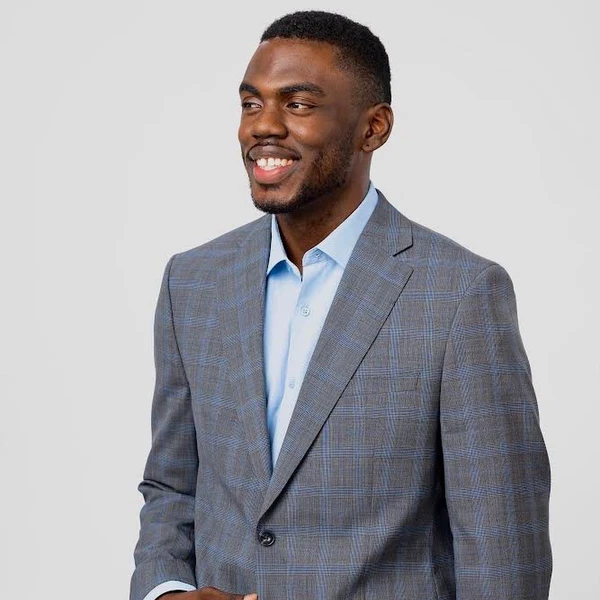
Chikwado Akpunonu
1x
FinalistChikwado Akpunonu
1x
FinalistBio
My name is Chikwado Akpunonu, and I like to consider myself a lifelong student and learner. My specific goal in life is to be a better version of myself the next day.
I think it's important to know that every small step in a certain direction is a step nonetheless, and as long as you are willing to continue taking those steps and have fun doing it, then eventually you can and will accomplish your goals!
Education
Minnesota State University-Mankato
Master's degree programMajors:
- Clinical, Counseling and Applied Psychology
California State University-Northridge
Bachelor's degree programMajors:
- Public Health
Miscellaneous
Desired degree level:
Master's degree program
Graduate schools of interest:
Transfer schools of interest:
Majors of interest:
Career
Dream career field:
Broadcast Media
Dream career goals:
Sports
Basketball
Varsity2014 – 20195 years
Michael Pride, Jr/ProjectEX Memorial Scholarship
Humanitarian work, for me, isn’t something I do on the side. It’s woven into my everyday life and the way I show up for others. As the Program Administrator of an assisted living facility in Brooklyn Park, Minnesota, I work directly with adults who are part of the state’s waivered programs. Many of our residents have experienced significant trauma, whether through incarceration, domestic violence, or unmanaged mental and physical health issues. My role isn’t just about overseeing day-to-day operations. It’s about building trust with individuals who often feel forgotten, creating a space where they feel safe, heard, and supported.
This work has pushed me to grow in ways I never expected. I’ve had to advocate fiercely for residents, coordinate with case managers and county services, and at times work closely with emergency responders during crises. I’ve learned that showing up consistently and with compassion can make a lasting impact on someone’s life, especially when they’re at their most vulnerable.
Outside of this role, I’ve also contributed to efforts that tackle homelessness and food insecurity. As a data collector with UCSF’s Benioff Homelessness Housing Initiative, I interviewed individuals experiencing homelessness across Southern California. It wasn’t just about gathering data, it was about listening to stories with empathy and honoring the lived experiences of people often left out of policy conversations. I’ve also volunteered with Cal State Northridge’s pop-up food pantry, helping provide produce and low-cost meal ideas to students and community members in need. These experiences have only deepened my desire to be of service and to use my time and skills to support those who are struggling.
Now, I’m taking the next step by pursuing a Master of Social Work at Minnesota State University, Mankato. I see this degree not as a destination but as a necessary tool. With it, I’ll be able to expand the scope of my work, particularly in the areas of mental health, crisis intervention, and systems advocacy. I want to be in a position where I can not only provide direct clinical support but also help shape programs and policies that address the root causes of the issues I see every day.
Long-term, I hope to create programs that bridge gaps in care for people transitioning out of correctional facilities or unstable living situations. I want to help change the narrative around what healing and justice can look like, especially for people who’ve been stigmatized or underserved. My work so far has given me a strong foundation. However, I know I can do more with the right education and training.
This scholarship would help ease the financial burden of graduate school and allow me to stay focused on the work that matters most: being present for my community and showing up in the ways they need, both now and in the future
Elizabeth Schalk Memorial Scholarship
Family from my father’s side have always suffered from underlying schizophrenia, and it was actually how my father died when I was 12 years old. For most of my dad’s life, the symptoms were dormant and only presented themselves when he was in his early 30s. By then, he had already built a life for himself. He had a stable job, a family, and from what I remember in my early childhood, a strong presence as a father. But once the symptoms took hold, everything started to unravel.
At first, it was subtle. He would have trouble concentrating, sometimes staring off into space like he was lost in another world. Then, he became paranoid, convinced that people were out to get him. My mother did everything she could. She got him into treatment, made sure he took his medication, and tried to create as much stability as possible. But schizophrenia isn’t something you can simply contain. It changes the way a person thinks, feels, and sees the world. Over time, his episodes became more frequent, and so did the hospitalizations. He would get better for a little while, only for everything to come crashing down again. The cycle of medication, stability, relapse, and hospitalization became our normal.
By the time I was old enough to fully grasp what was happening, my father was already slipping further away. There were days when he didn’t recognize me, when he would speak to people who weren’t there, and when his fear of unseen forces took over completely. My mother tried to shield me from the worst of it, but it was impossible to hide. I remember the quiet tension in the house, the uncertainty of never knowing if today would be a good day or a bad one. And then, one day, he was gone.
He had been in the middle of one of his episodes when he wandered into traffic and was struck by a moving vehicle. The news hit me in a way I still can’t fully describe. It wasn’t just that I had lost my father. It was the way it happened, the feeling that his illness had led him to an inevitable end that no one could stop. I remember feeling angry, not at him, but at the fact that no amount of treatment, care, or intervention had been enough to save him.
Losing a parent at 12 is already difficult, but losing one to mental illness is something different. There was no real closure, just a lingering sense of confusion, grief, and unanswered questions. I wanted to understand why this happened to him, why his mind turned against him, and why, despite all the treatment available, it wasn’t enough.
As I got older, my interest in mental health grew, not just because of my father’s story, but because I began to see how many others were struggling with similar battles. Working in assisted living and public health exposed me to individuals facing severe mental health challenges, some who had been abandoned by their families, others who had cycled through hospitals and institutions their entire lives. I saw people who, much like my father, had moments of clarity and moments of complete disconnect. And I saw how society often fails those who need the most help.
This is why I decided to pursue a Master’s in Clinical Mental Health Counseling. I don’t want to be a bystander. I want to work directly with individuals who are struggling, support families who feel lost, and advocate for better care and resources for those battling serious mental illness.