Hobbies and interests
Dance
Track and Field
Soccer
Real Estate
Community Service And Volunteering
Psychology
Criminology
Baking
Cinematography
Cooking
Girl Scouts
Music
Reading
Young Adult
Romance
Psychology
I read books multiple times per week
Cheyenne Smith
1x
Finalist1x
WinnerCheyenne Smith
1x
Finalist1x
WinnerBio
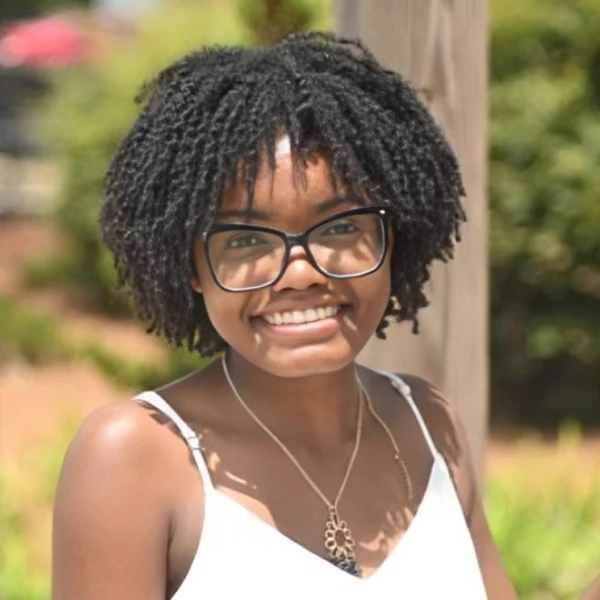
Hey there! I’m Cheyenne Smith, a high school senior from Atlanta, GA.
I’m a Girl Scout Gold Award winner, Silver Award winner, Bronze Award winner, and Young Women of Distinction honoree. For my Gold Award project, Silent No More: A Path to Freedom and Empowerment, I wrote a book to support women and teen girls who have experienced abusive relationships, helping them find strength, healing, and self-worth.
Outside of my advocacy work, I bring my creativity to Wolfpack News (my school production team), where I serve as the sports anchor and producer. My job is to help share stories that highlight our school’s achievements and community spirit. I’m also a dedicated track athlete who loves the 100m hurdles, a soccer player, an avid reader, and a baking enthusiast.
I plan to major in psychology and criminal justice with the goal of becoming a forensic psychologist.
Education
North Paulding High School
High SchoolGPA:
3.4
Miscellaneous
Desired degree level:
Doctoral degree program (PhD, MD, JD, etc.)
Majors of interest:
- Criminology
- Criminal Justice and Corrections, General
- Psychology, General
Career
Dream career field:
Mental Health Care
Dream career goals:
Forensic Psychologist
Wake Park Employee
Terminus Wake Park2025 – 2025AV Technical Assistant
Propel Church2024 – Present2 yearsCenter Assistant
Kumon - Wade Green2023 – 20241 year
Sports
Track & Field
Varsity2022 – Present4 years
Awards
- 1st Place Winner, 4 X 400 Meter Girls (Junior Varsity), 2023
- • 3rd Place Winner, 400 Meter Dash Girls (Junior Varsity), 2023
- • 2nd Place Winner, 4 X 400 Meter Girls (Varsity), 2024
- 4th Place Region Champion, 100 Meter Hurdles (Varsity), 2025
Soccer
Club2024 – Present2 years
Public services
Volunteering
Girl Scouts of Greater ATL — Author of the book, the organizer of the project, and the leader who collaborated with experts and community partners2023 – 2025
Future Interests
Advocacy
Volunteering
Philanthropy
Entrepreneurship
Burke Brown Scholarship
My whole life, I have grown up in the suburbs in the outskirts of Atlanta, where success was often assumed rather than explained. College was mentioned...but rarely mapped out. Resources existed...but only for those who knew where to look (aka people with the money). Navigating that environment taught me that education is not simply about being present in the classroom but about understanding how systems work and how easily some students are left to figure things out on their own.
Georgia’s economic landscape is a lot like my familiar suburbs. While parts of the state thrive, many communities struggle with limited school funding, crowded classrooms, and outdated resources.
In my school, advanced programs existed, but they required students to self-advocate, seek information independently, and push past the assumption that college was optional rather than expected. Success was possible, but it was not automatic. You either have to know of people that could help or help yourself.
Those conditions forced me to grow resilient early. I learned how to ask questions when information was not offered, how to seek help when support systems were limited, and how to stay disciplined even when the path forward felt uncertain.
I've watched my peers balance school with jobs, family responsibilities, and financial stress. Education was never just about grades. It was about stability, escape, and the chance to change our circumstances.
These experiences influenced my commitment to leadership and service. Whether through mentoring, community service, or advocacy, I strive to be someone who helps make opportunities more visible and accessible to others. I want younger students to see possibilities where they may have only seen limitations.
My long-term career goals are directly shaped by these realities. I am drawn to psychology and criminal justice because I have seen how economic strain, trauma, and lack of access affect behavior and life outcomes. I plan on being a forensic psychologist. I want to work within systems that too often overlook the emotional and social factors tied to poverty. Higher education will give me the tools to analyze those systems critically and work toward change with empathy and accountability.
My upbringing in Georgia taught me to look beyond surface-level privilege and recognize how access, guidance, and opportunity truly function. Education became not an assumption, but a responsibility I chose to pursue with intention. That perspective continues to drive my academic ambition and my commitment to creating pathways for others in the future.
Valerie Rabb Academic Scholarship
Forensic Architect: Rebuilding Cheyenne Smith (C.S.)
Date Opened: August 2015
Filed By: Self
______________________________________________________________________________________
Initial Observations:
Subject reports feeling like a constant outlier in her early childhood.
“I never knew what it meant to belong. My peers saw me as 'white-washed' or ‘not white, but not black either,’” the subject described.
She became a master of blending in: good student, a social chameleon, and always the "understanding" friend. She consistently prioritized maintaining an agreeable persona over being herself. She was a listening ear toward others, but her own internal world was locked tight.
She was never too loud, never too messy, and never, ever too real.
Incident Report: March 2020
Trigger: Global pandemic of Covid-19
Pandemic isolation vaporized her carefully constructed social mask. Suddenly, the silence of her room was louder than any middle school hallway. The subject wasn't losing connection with her social circle. She realized she was never truly connected at all.
Daily routine included: attending virtual classes she’s failing, silent crying behind closed doors, and forced positivity around loved ones.
Self-harm initiated. A razor to her chest became a harsh ledger of her fight to control at least one aspect of her life.
Family unaware.
Progress Notes: 2022 – 2023
Reintegration into in-person school reveals some personal growth. Isolation forged independence. While this self-reliance is good, it comes with a price. C.S. was scared to make real connections with others.
New behaviors observed:
- Increased leadership in organizations like Girl Scouts.
- Strong involvement in sports and clubs.
- Subject makes surface friends, but fear blocks deeper connection.
Intervention: 2023
The subject begins therapy once parents find out about the self-harm.
Therapy introduces grounding exercises and reframes negative self-talk. She learns that nobody is perfect, including herself.
Imperfection is humanity.
While therapy introduced structure, she found footing through faith. Spirituality was not as a sudden epiphany, but she realized the silence she thought was abandonment, was being in God’s presence.
“A hand I couldn’t see but always felt.” God lifted the weight off her chest — a burden she once sought to control with a razor.
As her scars healed, she vowed to help heal others as well.
Academic and Emotional Development: 2023 - 2025
The quarantine years formed a terrifying, walled-off independence for the subject.
That fear of judgment held until one afternoon, a new friend, over a shared playlist of deeply embarrassing indie rock music, simply said, "Oh, I love this song, too." While it wasn't profound, it was the first time I realized being different didn’t mean being alone.
The vulnerability unlocked by that simple moment, combined with the momentum of my therapeutic journey, sparked my interest in human behavior. I began independently studying psychology, drawn to forensics and the intersection of justice and emotions.
Current Status:
I am stable. Spiritually grounded. Emotionally self-aware. Happy.
I have two good friends that I am not afraid to be open and share my innermost thoughts with.
I am recognized as a community leader, excel academically and socially while continuing therapy for long-term wellness.
Future plan: Major in psychology and criminal justice. I aspire to become a forensic psychologist.
Final Analysis:
Once silenced by fear, I now speak with faith.
Once hidden by isolation, I now lead in my community.
Faith built my foundation. Therapy refined my strength.
Purpose redefined my story.
Case C.S. is officially closed.
The new objective is open: to use the evidence of my own transformation to analyze the hearts and minds of others, shaping the future, not as a subject of my past, but as an architect of my own design.
Angelia Zeigler Gibbs Book Scholarship
“You are beautiful, Cheyenne. Those kids don’t matter. Don’t mind them. And you do you.”
I rolled my eyes when she said that. As a child, it was just another one of those phrases she repeated, like a daily routine. Only after she passed did I realize how much love she wove into those simple words, and how much I would miss them.
I was twelve when she died.
Looking back, I realize she wasn't just my grandmother, she was my best friend. She was the person I could tell anything and everything to. Whether it was a silly story from school or some cute guy I saw earlier. With her, I never felt judged. In fact, I felt the opposite. I felt safe, understood. I felt loved.
Everything changed when I turned eleven. It was then that the steady presence in my life began to shift as her health declined. Our days, once filled with laughter over "Family Feud," turned into regular trips to the hospital. At first, the changes were small. She would repeat questions or forget the day. Gradually, those slips grew heavier. By the end, she couldn’t remember my name. The lips that had once called me "beautiful" now searched for what to call me.
The hardest part was not her passing, it was the long goodbye that came before. I didn’t lose her all at once; I lost her in fragments. Each forgotten detail, each confused look, felt like a brick wall rising between us. At twelve, I didn’t know how to handle that grief. I didn’t have the words for depression, but I carried that weight every day.
Her loss forced me to face critical questions about care and compassion. These moments became the foundation of my life and fueled my calling: psychology. I want to study the mind to help others navigate the same struggles I faced as a child.
My grandmother’s legacy instilled in me a deep sense of compassion and the importance of listening. Aging matters because it shaped my first lessons in love, loss, and confidence. Receiving this scholarship would ease the financial burden of higher education and allow me to honor her.
“You are beautiful, Cheyenne. Those kids don’t matter. Don’t mind them. And you do you.”
I will, Grandma. I promise.
Mental Health Profession Scholarship
Before everything changed, I lived to please others. I was what many call a “people pleaser”. I was the “understanding” friend, the acceptable student, and the girl who never made waves. I shaped myself into what people expected me to be. I was quiet and adaptable. But under the surface, I felt like I didn’t belong anywhere. I was never “enough” of one thing or another, caught between labels that didn’t fit. So, I smiled through the confusion, convincing everyone, including myself, that I was fine.
Then the world slowed down, and so did I. Then the pandemic hit. Soon all my distractions vanished, leaving me alone with thoughts that were becoming more sinister by the moment. I began cutting myself at that point, leaving tiny, undetectable scars that served as a coping mechanism for me. This became my way of taking control of my life when everything else felt out of control. I kept it a secret. I had to. Suffering in silence seemed more comfortable than running the risk of being perceived as broken.
But pain doesn’t stay silent forever. When my parents found out, I was terrified...but that fear led to something life changing: therapy. When I first entered into therapy I did not know what to exspect, but for the first time, I spoke honestly about what I felt. My therapist taught me that I didn’t have to earn love through perfection. She helped me see that imperfection wasn’t weakness...it was proof that I was human. Therapy became the mirror that reflected the strength I had overlooked for years.
The more I healed, the more I found my footing again through faith. I started to understand that what I once thought was abandonment from God, was actually His quiet way of holding me up. I no longer felt like I was drowning in silence; instead, I was learning to breathe again.
I have altered my way of moving through the world after that change. I began leading to empower people instead of living to please them. A key example of this was my Girl Scout Gold Award project, in which I gave a voice to women and teen girls who experienced abuse through my book, “Silent No More: A Path to Freedom and Empowerment.”
I have made it my goal to normalize those difficult talks and became more forthcoming with my friends about mental health. Every time I told a bit of my story, I witnessed others gain the confidence to tell theirs.
Looking ahead, I plan to major in psychology and criminal justice so I can eventually become a forensic psychologist. I will be someone who listens not just to stories, but to silences. I want to help people who feel trapped by trauma and remind them that they, too, can rebuild.
My path from self-harm to self-acceptance taught me that healing is about turning suffering into meaning rather than trying to erase it. The girl who once hid her scars now uses them as symbols of survival. Helping others discover that same light in their own darkness is what I want to do with my life.
I used to think silence was my strength. Now, I know my voice is.
Kayla Nicole Monk Memorial Scholarship
I remember the heaviness in my chest and the gentle hum of the A/C unit when I first met my therapist. My brain was in knots and I was nervous beyond words. She made me feel comfortable with her gentle questions and empathy, which gave me clarity I wasn't aware I needed. I saw firsthand the transformational power of comprehending human behavior and mental health in that calm exchange. I became inspired after realizing how crucial it is to assist others in overcoming obstacles and processing trauma. Psychologhas been important to me ever since, because trust me, you don't want to let trauma marinate. Since then, I decided to study forensic psychology because of this personal experience and my want to change our legal system.
Both empathy and analytical abilities are necessary in forensic psychology. It entails applying psychological concepts to actual cases and comprehending the perspectives of those engaged in the legal system, including witnesses, offenders, and victims. I can learn how to evaluate behavior, evaluate the evidence, and advocate for just outcomes in the legal system by combining my studies in psychology and criminal justice. I have the critical thinking, research, and problem-solving skills necessary for a successful career in forensic psychology thanks to my STEAM-based education.
My ultimate objective is to become a forensic psychologist who works closely with law enforcement and the legal system to evaluate people's mental health, offer expert testimony in court, and create victim and offender intervention programs. I want to use my understanding of psychology to help with investigations, make sure that the law is applied fairly, and provide advice to people who have been impacted by crime.
Getting this scholarship would have a big influence on my ability to accomplish these objectives. I could concentrate on my studies, take part in internships, and obtain practical experience in places like research labs, law offices, or mental health programs. I could devote my time to opportunities that will help me get ready for a career where I can truly make an impact thanks to this scholarship.
More than just financial aid, this scholarship is an essential step in turning my passion and life experiences into a lifetime career focused on justice and service. I will be able to acquire the knowledge, self-assurance, and opportunities I need to develop into a sympathetic forensic psychologist who is prepared to make a significant, long-lasting impact on people and society as a whole.
Patrick Roberts Scholarship for Aspiring Criminal Justice Professionals
One of the most profound and pressing challenges facing the criminal justice system today is the systemic over-reliance on law enforcement and correctional facilities to manage severe mental illness. As community mental health services have shrunk over decades, jails and prisons have become, by necessity, the largest de facto psychiatric facilities in the United States. This situation results in a cycle of inappropriate incarceration, escalating costs, and alarmingly high rates of recidivism. With estimates showing that up to 44% of individuals in local jails have a diagnosable mental health condition. This rate is significantly higher than that of the general population, clearly indicating that the criminal justice system is failing to fulfill a public health role for which it is fundamentally ill-equipped. This criminalization of mental health symptoms not only violates the dignity of the individuals involved but actively undermines public safety by failing to provide the evidence-based treatment necessary for true rehabilitation.
My future career as a forensic psychologist will be dedicated to addressing this issue by facilitating systemic diversion and providing specialized, evidence-based interventions. The core of my work would focus on shifting the system’s primary response from punishment to therapeutic intervention, particularly through the establishment and rigorous support of mental health diversion courts. In this role, I would conduct comprehensive forensic assessments, moving beyond mere diagnosis to evaluate the critical nexus between the defendant’s psychological functioning and the precipitating criminal behavior. My evaluations would inform judges and attorneys on the defendant’s competency to stand trial, their potential for rehabilitation, and the specific risk factors for future violence, providing the court with a clinical framework for decision-making.
Furthermore, a forensic psychologist serves as a key liaison in designing and implementing treatment plans within correctional settings or community diversion programs. This involves utilizing empirically validated therapies, such as Cognitive Behavioral Therapy (CBT) and Dialectical Behavior Therapy (DBT), tailored to justice-involved individuals who often present with co-occurring disorders, trauma histories, and antisocial features. By focusing on reducing the risks that lead to crime and enhancing protective factors—like stability, vocational training, and social support—we can effectively reduce the risk of re-offense and support successful reentry into the community.
My direct experience comes from a personal connection to law enforcement rather than formal volunteering or shadowing. My father is a sheriff in Cherokee County, and ever since I was little, he has shared countless stories of individuals who ended up in prison because our "justice" system did not know how to help them. These stories have stayed with me and shaped my perspective. I care deeply about these people and believe they deserve the opportunity to get better, rather than simply being incarcerated due to a lack of appropriate support. This ongoing exposure has been my primary window into the intersection of mental health and the law, fueling my commitment to advocate for systemic change and more humane treatment within the criminal justice system. I understand the importance of gaining hands-on experience, which I plan to achieve through practical placements and internships during my time at Kennesaw State University and graduate school. This will help me hone the skills necessary to effectively bridge the gap between mental health and the law. After all, jail is never going to heal the sick. The only things that can are therapy, support, and hard work, which offer a real path to recovery.
I now recognize that simply diagnosing a disorder is insufficient; the future of criminal justice reform relies on skilled forensic practitioners who can translate complex clinical data into compelling, practical plans for sentencing alternatives and treatment. I am determined to utilize my knowledge to fill this gap, making the necessary connections between behavioral health and criminal law, ultimately fulfilling my goal of becoming a forensic psychologist.
Resource:
Substance Abuse and Mental Health Services Administration. (2024). About Criminal and Juvenile Justice: Behavioral Health. Samhsa.gov. https://www.samhsa.gov/communities/criminal-juvenile-justice/about
"Most Gen Z Human Alive" Scholarship
WinnerI'm always excited to see my Spotify Wrapped results at the end of the year. It usually says something along the lines of: “High emotional intensity! 99.99% of life is narrated by playlists. Likely rapping her heart out to Tupac or shedding tears to indie rock music.” That’s me - chaotic, creative, and completely powered by vibes.
I am the most Gen Z person alive because I treat Spotify like my therapist, my hype squad, and my love language all in one. Every mood, every moment, every midnight overthinking session has a playlist to match. Some playlist names include: "I'm JUST a girl", "pov: you're the main character" and "Which knee? Disney." (I mean come on, who doesn't have a Disney mix?) I don’t just listen to music, I feel it. I curate entire soundtracks for imagined futures and aesthetic Pinterest boards. Speaking of which, Pinterest is essentially where I plan my dream (very realistic) future life, and Notion is where I try (keyword: TRY) to organize it.
Instagram is where I let my creativity breathe and shine through. I love photo dumps, color themes, and random captions that ALWAYS rhyme.
I’m living proof that Gen Z is just a beautiful mess of multitasking and digital dreaming. TBH, I wouldn’t have it any other way!
(Follow my Instagram at: Chey2fly_)