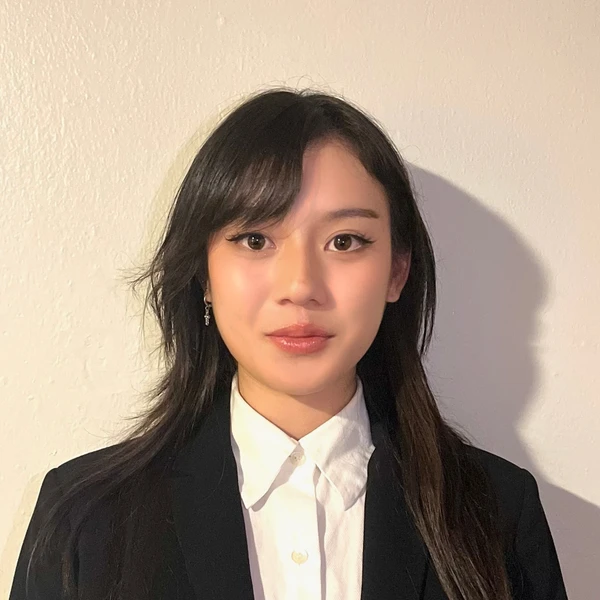
user profile avatar

Chelsea Chung

1x

Finalist

General information

Hobbies & Interests

  • Advocacy And Activism
  • Animals
  • Animation
  • Anime
  • Art
  • Biology
  • Board Games And Puzzles
  • Blogging
  • Chinese
  • Cinematography
  • Coffee
  • Coding And Computer Science
  • Collecting
  • Conservation
  • Counseling And Therapy
  • Concerts
  • Crafting
  • Crocheting
  • Ecology
  • Education
  • Environmental Science and Sustainability
  • Exploring Nature And Being Outside
  • Fashion
  • Food And Eating
  • Foreign Languages
  • Hiking And Backpacking
  • Human Rights
  • Japanese
  • Journaling
  • Karaoke
  • Knitting
  • Learning
  • Mental Health
  • Mentoring
  • Movies And Film
  • Music
  • Reading
  • Research
  • Robotics
  • Science
  • Sewing
  • Shopping And Thrifting
  • STEM
  • Sustainability
  • Swimming
  • Teaching
  • Theater
  • Travel And Tourism

Reading

  • Adult Fiction
  • Academic
  • Classics
  • Environment
  • Horror
  • Literary Fiction
  • Social Issues
  • Science‎
  • Science Fiction

I read books daily.

Bio

I am a senior at Northern Arizona University, set to graduate in May 2027. I am an Environmental Sciences B.S. major with a Japanese language minor, with a current 3.68 GPA. I graduated from Troy High School in Fullerton, CA in 2022. I love insects and entomology, and hope to pursue a career in entomology research, conservation biology, and insect phylogenetics/taxonomy. My long-term career goals are to become a professor of entomology to continue to foster an appreciation for insects, as they become increasingly important with climate change and agricultural processes. I found my love of teaching through TA-ships for my Japanese language classes and Microbiology lab. In the summer of 2026, I worked as a summer camp counselor, where I taught robotics and coding for children ages 5-12. In doing so, I was able to teach them about insects as well, which affirmed my love for working with children, teaching, and insects overall. I studied abroad in Yamaguchi, Japan in the Fall of 2025, where I did research on Japanese rhinoceros beetles and took classes in Japanese. It was a life-changing experience, and meeting people who also loved insects inspired me to continue my research and hope to share that love to generations to come.

Education

Northern Arizona University

Bachelor's degree program

2022 – 2027

Majors:
  • East Asian Languages, Literatures, and Linguistics, General
  • Ecology, Evolution, Systematics, and Population Biology
  • Geography and Environmental Studies

Troy High School

High School

2018 – 2022

Miscellaneous

Desired degree level:
Doctoral degree program (PhD, MD, JD, etc.)
Graduate schools of interest:
University of Florida, Virginia Technical Academy, University of California-Berkeley, University of California-San Diego, University of California-Riverside, University of California-San Francisco, Indiana University-Purdue University-Indianapolis, Central Washington University, University of Washington-Seattle Campus
Majors of interest:
Ecology, Evolution, Systematics, and Population Biology
Desired degree modality:
In-Person
Medical school interest:
No

Career

  • Summer Camp Counselor

    Teaching · Brains and Motion Education

    Jan 2026 – Jan 2026

Miscellaneous

Dream career field:
Zoology, Research, Teaching, Biology
Work experience:
4 years
Has nursing license:
No

Future Interests

  • Advocacy
  • Volunteering
  • Philanthropy
Marie Humphries Memorial Scholarship
Not many people can say they regularly go paddleboarding and get coffee with their seventh grade science teacher. I owe it all to her for saving my life. I was not a model student growing up. When I was on the verge of repeating 7th grade, I distinctly remember my English teacher telling me he was "wasting his breath even talking to me" about getting work done. Unbeknownst to me, I was struggling with ADHD and severe depressive symptoms. For Asian immigrant families, mental health is not often prioritized. My father works as a custodian at my middle school, beloved by students, parents, and teachers alike. They saw a side of him that wasn't shown at home. Besides physical and verbal abuse, I constantly felt monitored; negative emotions other than anger went undefined, brushed under the rug labeled as puberty. Depression, ADHD, and OCD were all terms my parents had never heard of until I was diagnosed in high school. I coped with substance abuse, self harm, and an eating disorder for years. I learned to dismiss and brush off my issues as first-world problems rather than a debilitating disorder that affected my ability to succeed. My former science teacher, Mrs. Stenton, was the only teacher who truly cared about my academic success, and would invite me to catch up on work in her classroom, or let me watch her classroom pet snake, Cornelius. She studied environmental science at UCI and mentored me during a science achievement camp called MESA (Math Engineering Science Achievement). Before I finished eighth grade, I would often visit her classroom and tell her about my desire to attend UCI and follow in her footsteps. Near the end of my senior year, my depression was at an all-time high (relative to being 17). All of my harmful coping mechanisms were being utilized at once, and I felt that another suicide attempt was imminent. However, something told me to contact Mrs. Stenton. After graduating middle school, my father would tell me she often asked how I was doing. I had never reached out to a former teacher before, and in my nervousness I ended up sending an essay of an email catching her up on the internships and experiences I had in high school. We got coffee that year, at a Yemeni coffeeshop in Downtown Fullerton called Qamaria. She gifted me a book on the 1854 cholera outbreak in London. Although I still viewed our relationship as teacher-student, something about growing a little bit older and meeting outside of the classroom lent itself more familiarity. I told her about my strained relationship with my father (her former coworker) and mental illnesses, and she was nothing but empathetic and understanding throughout. She provided a sense of safety that enabled me to express myself more fully, and fostered thoughtful conversations on social and environmental justice, books, relationships, and self-actualization. After working with children, we bonded over how life-affirming it is to inspire youth. Despite being a "bad" student in my adolescence, we both firmly believe that educating children is invaluable, and that leading with passion–whether for insects or snakes–excites them as much as any movie day. Mrs. Stenton attended my high school graduation. I have dried and kept the flowers from that night. Her unyielding support helped me through the worst of times, and she is the reason I am here today. Now, I am on track to finishing my degree in environmental sciences, with plans to go to graduate school and eventually become a professor of entomology. I hope to one day become someone else's Mrs. Stenton.
Ethel Hayes Destigmatization of Mental Health Scholarship
September 16, 2025. I had just landed in a small airport in Yamaguchi, Japan, where I would be living and studying for the next ten months. I was paired with an incredible research lab, focusing on Japanese rhinoceros beetles, my all-time favorite insect. I met other international students from every corner of the world, boldly practiced my Japanese with locals, and was surrounded by insects you would never see in America. This had been in the works for the last three years; I excelled in my Japanese classes, volunteered to support international students at my home university, and won $7,500 in scholarships to fund my education abroad. Fast forward to January 2026; I made the decisive phone call to my study abroad coordinator that I would be cutting my year short and going home. In the three months following my arrival, I faced one of the worst depressive episodes of my life. I skipped all my classes. I neglected my personal hygiene for days at a time. I ordered delivery every day to avoid leaving the apartment. When I did go out, I'd anxiously make sure none of my friends were outside so I wouldn't have to talk to them. I'd bike to the nearest grocery store and buy $60 worth of snacks, ice cream, ready-made meals, and soda, so I could lock myself back in my room and binge eat. People were worried about me, but I constantly lied to their faces and said I was fine, just feeling a little homesick and tired. I woke up at a dark 5:00AM to join my Zoom meeting, accounting for time differences. When I had finished the call and realized there was no going back on my decision, I cried for the first time in years, longer and harder than I had since I was a child. Years of emotional suppression, substance abuse, self harm, and disordered eating had broken the surface during one of the most anticipated periods of my life. I remember walking out of the sharehouse lobby right as the sun was starting to stream through the dense clouds, a hazy purple and grey that comforted me and affirmed that I was making the right decision. When I got back to California, I enrolled in an eating disorder partial hospitalization program (PHP). Those few months are hazy for me, but gave me exactly what I needed as I slowly crawled my way out of hell. When I transitioned to IOP and outpatient therapy, I was medicated again, for both my depression and ADHD symptoms. Despite the constant silver linings throughout my life, I was experiencing consistent emotional stability and profound happiness for the first time in my life. I used to view my eating disorder as completely separate from other facets of my self, like a Venn diagram with no middle. After weeks of therapy, I can conceptualize it as a sort of mind map – every incident from my childhood, the need for validation from others, the belief that I wasn't good enough, all of it is interconnected and the outlet was my eating disorder. By healing one part of myself, I inadvertently healed several others. Before going back to therapy, I was arrogant, self-centered, and took my relationships for granted. At my sickest, I was fueled by constant validation from outsiders, praising my sick body. I only saw my external self. My achievements, my academic and career goals, the volunteer work I did, and my kindness were overshadowed by my need to present myself as unattainably beautiful. I believed that I could only be successful if I was also beautiful. I'd forget about dates with my partner, ignored calls from my mother, and canceled plans with friends to self-isolate. Despite knowing I was being an inconsiderate partner, daughter, and friend, I believed that my beauty would excuse all of it. In treatment, I reevaluated my values. Authenticity is at the top of that list. For years, I had put on masks, molded myself to fit what I believed to be others' standard of acceptance. The reliance on external validation stunted me from assuming my truest self: someone who researches insects, who made a mac-and-cheese book review account for fun, who gives their all at karaoke. In August 2026 (one week ago at the time of writing), I participated in a monastic meditation retreat. I ordained as a nun for the week. Part of that ceremony involves shaving your head. We hide behind and take pride in our hair. By shaving your head, you strip yourself of the closest thing to your identity and ego. When I shaved my head, I felt immediate relief, a physical rebirth of sorts. Reading Thich Nhat Hanh and books on Theravada Buddhism, my childhood understanding of reincarnation and impermanence were transformed. I felt as though I could truly sit with myself for once, and experience profound peace and happiness. During my meditation sessions, I found forgiveness for my parents, my friends, people who wronged me in the past, and most importantly, myself. I have failed many, many times in life. Each failure brought me closer to self-actualization, and made me the authentic (and now bald!) person I am today. The last ten months were transformative, but not in the way I expected. They were better than I could have imagined. As I enter my final year of college, I have also entered a new state of self-assurance, confidence, and the firm belief that I can get through the worst of times. The people I neglected are now entangled in my life, forming a water-tight net of support and community. With this new mindset I will help others find their own footing, whether that's a stranger I met in class, an international student here, or the students who come to the entomology club. It takes a village to raise one person, and I am relieved to find that I can now help pull others out of their own personal hell.
Barbara Cain Literary Scholarship
English wasn't my favorite class in school. Despite being an avid reader, I oftentimes dealt with frustration at the inability to articulate myself as well as I wanted. I procrastinated essays, I never raised my hand in class, and almost failed 7th grade. I distinctly remember my English teacher telling me he was "wasting his breath even talking to me" about catching up. After years of stagnancy I have reignited my passion for reading. There is a separation between the humanities and sciences that can be traced back to the Reagan administration – the emphasis on learning sciences for advancement and forgoing literature and history. Most of my peers are deep in engineering and biology fields. I was the odd one out in my love for art museums, film, and literature. I believe that art cannot exist without science, and vice versa. And yet there were still times that I felt I should have been reading even more than I already did. I hoarded used books from libraries, columns of words that reflected the intellectual I wanted to be rather than the person I currently was. When circumstances related to mental health advanced to the point of neglecting basic hygiene (and taking a gap semester to focus on treatment), I only found solace in reading. From Anna Karenina to Waiting for Godot, books have taught me valuable lessons in the human condition, religion, empathy, passion, trauma, and grief. The book Watership Down, on the surface, is an epic tale about rabbits. Going deeper, their leporine society reflects aspects of humanity, and how we can abandon it at times in favor of reduced friction and an easier way of living. I'd often heard Lolita being dismissed as an unapologetic pedophile-fantasy-highbrow smut. After reading it I realized how Nabokov's provocative message was misinterpreted for years, and even through the eyes of Humbert you still feel disgust and disdain towards him. I finally understand why classics have stood the test of time. Much like The Twilight Zone, classic literature often explores various aspects of humanity and society through another era, country, and universe. One of my favorite franchises is Planet of the Apes; while the movies depict rogue primates on horses wielding guns, after reading the novel I was able to identify the racial discourse and look deeper into this gripping intergalactic adventure. Whenever I meet new people I love to bring up Planet of the Apes and how it reflected Cold War tensions in America. Reading again has reignited my passion for learning, for analysis, for connection and discussion. My close friend, a fellow victim of short-form content who wanted an escape, excitedly suggested that we make a joint book review account on Instagram. We're both foodies, so we aptly called it Mac and Read. There we review mac and cheese from various places and provide a document of critical analysis (and personal opinion) of the last book or film we watched. I am currently finishing a report on the Planet of the Apes novel and franchise – voluntarily over ten pages long. I have found great joy in discovering reading again. The ability to articulate WHY I liked or disliked a book after reading has become a source of pride. Another English teacher once said that "in order to become a better writer, you must read much, much more." As a STEM major, my voracious reading is reflected in my renewed focus, clarified speech, and overall passion for thoughtful discussion with others. I find myself participating in class more, speaking up for others, and being unashamed of being outspoken without judgement.
Learner Mental Health Empowerment for Health Students Scholarship
It is hard enough to navigate life as a first-generation Asian American growing up in predominantly white neighborhoods. It's harder when cultural and language barriers prevent you from learning about mental health and finding the proper language to describe what you're facing. This is a struggle that I and many other POC first-gens have faced with mental health. My depressive symptoms started as early as middle school, and it was brushed off as puberty. My parents called me hcateto, "grumpy" in Burmese. The dismissal of my depressive and ADHD-related symptoms prevented me from getting the help I needed to succeed until late into my college career. While my academic performance was satisfactory on paper, I struggled with substance abuse, an eating disorder, and debiliatating self-confidence. My Buddhist mother said that I should "pray it away", "meditate", or "don't let things affect you so deeply". When a doctor's visit revealed my self-harm scars to her, she was outraged and then deeply concerned. "This doesn't exist in Myanmar," she proclaimed. "I don't understand why you would do this to yourself." Unbeknownst to me, a paternal family member had died of suicide years before I was born. The lack of family history knowledge and education around mental health delayed my prioritization of mental health. For Asian immigrant families, the concept of mental health is rarely discussed. There is a strong value placed upon "saving face" and presenting yourself as polished, stable, and successful to others. This pressure can be traced back to Japan and Korea's suicide rates, harsh mental states in China and Southeast Asia, and estrangement from families. Generational trauma manifested in my resentment towards my mother for not understanding, when her understanding of care and affection came from my grandmother, and her mothers before her. My college years were spent distracting myself from my ailments with extracurriculars, research, and social events. I spent one year as a peer supporter for international students, where I hosted an event that focused on mental health for those who were far away from home. These students often dealt with racial prejudice, isolation, and severe homesickness. I became a pillar for students from all over the world; despite the language barrier I did my best to help them look beyond their cultural norms and find solace in the unfamiliar territory. Years had passed before I put a halt to everything I was working on and put myself through treatment. I was a semester into my highly anticipated year abroad in Japan, a journey I had spent the last three years preparing for. Forced sobriety in Japan broke the dam of suppressed emotions I had willfully ignored for the past six years, until the days blended together and my grades tanked. Every day was painful – I only found solace in sleep. After painful deliberation, I went home early, took a gap semester, and threw myself into a partial hospitalization program (PHP) for three months. I sorted out my diagnoses, got properly medicated, and developed a newfound self-acceptance that I didn't think was possible. Treatment and intensive therapy was the greatest thing I put myself through. As I go into my final year of college, I will still be active in the entomology club, research club, and my senior capstone. Even if they aren't focused on mental health, I will advocate for a safe environment in these spaces as much as I can. I am proud to be a proponent of mental health, a role model for my younger sister, and a friend to others, no matter where they're from.
The Concrete Rose Scholarship Foundation
"Have you ever eaten... a cricket?" The fear of insects is learned – through our parents, our friends, and even our teachers. When I worked as a summer camp counselor for Brain and Motion Education (BAM!), I would often ask them that question. Have you ever eaten a cricket? What is initially met with shock and disgust transforms into fascination about my experience with insect research. I found that I could influence a group of thirty kids at a time into loving insects as well; that realization was incredibly life-affirming. In a lesson that combined pollination and robotics, I asked the TK-1st graders what would happen if all insects were wiped out. One child calmly raised his hand and said that all of the other animals and plants would collapse. I was shocked at this 6-year-old's insight. Children today are witnessing ecological collapse and can grasp the gravity of insect extinction rates. That is why I believe prioritizing insect conservation and insect education are vital to extending the longevity of our species. If we can set aside the stigma and learned fear around insects, transform it into fascination and curiosity, I believe there will be a new generation with changed beliefs on how we view and treat insects. We do not fight fear with avoidance and stigma. These positive experiences did come with their fair share of obstacles, mostly racially motivated insults and comments from the parents. A black co-worker and I were assumed to be trespassing the campus while we were working. Another mother dismissed her child's racist gesture (pulling his eyes back and saying he was Chinese) as innocent fun, and claimed I was taking it personally because I was "of that country." This goes to show how the behavior of adults is modeled through children, and I find it imperative that we reteach them what acceptance of others looks like, and to be a positive representation of WOC in STEM, a role model I certainly would have appreciated as a child. I strongly believe in environments with strong equity and inclusion, to allow those like me a shot at success in academia. Promoting empathy towards the smallest of creatures extends towards others, contributing to an overall more inclusive world. Towards the end of summer camp, I would receive urgent messages calling me to the soccer field so that a child could proudly display whatever insects they had gently caught in their little hands to show off to me. One kid came to camp with a makeshift insect net – modeled after the one I used to catch dragonflies with them. Another pulled a dead figeater beetle out of her backpack in a plastic bag and asked me to pin it for her. From field and lab work, to presenting scientific posters, to catching a beetle and showing it to the kids, I have found my niche: teaching others through the veil of insect fascination. My ultimate career goals are to work in entomology research, conservation biology, and eventually become a professor of entomology to continue to share my love for insects with future generations of scientists. This scholarship will help me attain my goals as they will go towards my tuition, and funds for the entomology club at NAU so we can continue to volunteer for insect education outreach events. My part in this in small, but with lasting effects. I may never see these summer camp kids again, but I can confidently assume that I've changed the minds of a few of them and sparked their interest in insects for the years to come.
Sangha Support Scholarship
I was raised by Buddhist immigrant parents in Southern California. They emphasized the importance of never harming another living thing. Rather than a fly swatter, we kept an insect net for catching stray flies in the house to release them outside. I spent my childhood honing in this skill, and never imagined it would be integrated into my career field and university research. When we would go to temples and meditation centers, my parents reiterated the fact that I should never let things affect me personally, and to simply let things go. I was set to study abroad in Yamaguchi, Japan, for a full year with my university's study abroad program. I spent the first three years of college learning Japanese alongside my main environmental science courses, and was heavily looking forward to being placed in a lab that researched Japanese rhinoceros beetles, one of my favorite insects. However, as the Buddha says, "all things are impermanent". My beauty, my youth, my interests, even the set plans I had made for myself in my career could change at any moment. Although this was always in the back of my mind, I ignored it for social connections, social media traction, and excitement for the year to come. As you can imagine, I was humbled immediately. I had spent three years in college suppressing my mental state, and silently battled with an eating disorder that contributed to rapid weight fluctuations and shaky self-confidence. Even if my academic performance looked satisfactory, I was dealing with mental turmoil and a harmful outlet. I believed that once I got to Japan, all of it would go away. Instead, all of my suppressed emotions and ailments were brought to light in the new environment; being so far from home, I could only cope using the harmful behaviors I had relied on in the past. I cut my year abroad short, and took a gap semester earlier this year. I dedicated it to treatment and revisiting Buddhism. Through months of intensive therapy coupled with meditation and a reminder of impermanence, I knew that my low mental state would soon turn around, and I was right. Like in meditation, you cannot relieve yourself of distractions through sheer willpower. Despite being raised with Buddhism, I realized only recently that I had misinterpreted my parents' teaching about letting things go. Instead, I learned to face them, accept them, process them, and then finally release my anchors. During the summer, I worked as a summer camp counselor. With the mental progress I had made and relearning of Buddhism, I found that I had a much better temperament with children than I thought I would have. I taught them about insects, about the value in the smallest creatures, and why they should never kill them. I brought my insect net to catch dragonflies and beetles and give them an up-close view of their beauty. When a child was frustrated or ill-tempered, I learned to communicate with them patiently and calmly, which they are much more receptive to than verbal discipline. I am set to graduate in the Spring of 2027. I envision a future where I work in conservation biology and entomology research to prioritize insect populations. Alongside that, I wish to continue to volunteer to teaching children about insects and the importance of loving-kindness to all creatures, big or small.
Rosie Walks Human–Wildlife Coexistence Scholarship
Urban development and human disturbance has led to the rapid decline of global biodiversity. I want to specifically focus on the smallest of these animals, which take up more than half of all described species on Earth – insects. As the insect-loving friend, a lot of people have confidently told me they "wished that all mosquitoes could be wiped out". As the insect-loving friend, I immediately counter with the fact that although mosquitoes are the number-one cause of human deaths globally, they are still highly important: from unintentional pollination to being a common food source for other animals, these oft-hated insects still have a reason to remain on Earth. We are currently living through another mass-extinction event, one that can be pinpointed to the consumption patterns and ecologically harmful behaviors of the humans who inhabit it. Insects are at the foundation of it all, bearing the forefront of ecological collapse. Their sensitivity to climate and environmental conditions have led to relocations previously unrecorded, which offset the balance of native and nonnative species. This affects agriculture, disease spread, pest populations, and native plant and wildlife. Despite this, they provide a multitude of environmental services for us: pollination, decomposition, pest management for crops, and more. I believe that we need to place urgent emphasis on the conservation of insects because of our silent reliance on them. During the summer of 2026, I worked as a summer camp counselor for children ages 5-12. Although I was given a curriculum to teach them coding and robotics, during our off-periods I would whip out a video on dragonflies and continue to teach them about different mouthparts, wing venation, pinning strategies, and their environmental importance. While they may not have grasped the jargon I pulled from my lecture slides, hands were always raised with questions about how to tell the differences between insects, why some are carnivorous, and if I could catch a dragonfly for them later (I did). In a lesson that combined pollination and robotics, I asked the TK-1st graders what would happen if all of the insects were wiped out. Children are keener than you'd assume. One child calmly raised his hand and said that all of the other animals and plants would collapse. I was shocked at this 6-year-old's insight. Even if they were born during the sheltered COVID era, children today are witnessing ecological collapse and can grasp the gravity of insect extinction rates. That is why I believe prioritizing insect conservation and insect education are vital to extending the longevity of our species. If we can set aside the stigma and learned fear around insects, transform it into fascination and curiosity, I believe there will be a new generation with changed beliefs on how we view and treat insects. We do not fight fear with avoidance and stigma. By placing them at the forefront of environmental conservation, whether through the lens of agricultural stability, disease control, or pest management, we can hopefully preserve the few insect species we have left and continue to honor their underrated work for the environment. My part in this in small, but with lasting effects. My ultimate career goals are to work in entomology research, conservation biology, and eventually become a professor of entomology. I want to continue to foster an appreciation for insects for generations to come. I may never see these summer camp kids again, but I can confidently assume that I've changed the minds of a few of them and sparked their interest in insects for the years to come.
Chelsea Chung Student Profile | Bold.org