Hobbies and interests
Horseback Riding
Community Service And Volunteering
Crocheting
Reading
Graphic Design
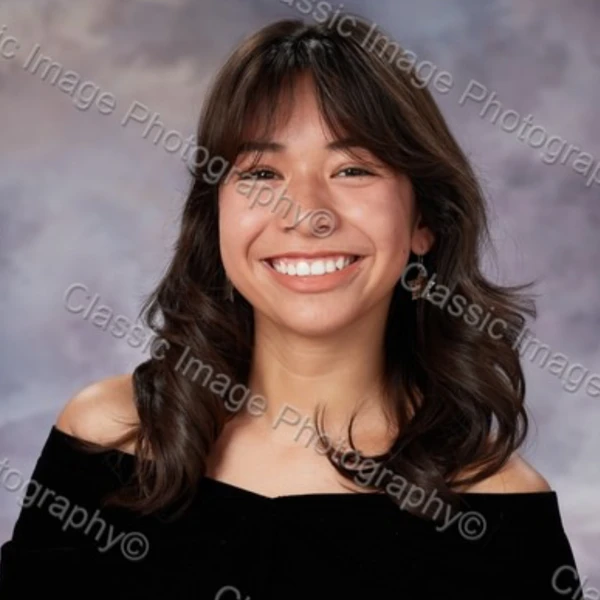
Charlie Soto
2x
FinalistCharlie Soto
2x
FinalistBio
Hello my name is Charlie Soto, I am currently an incoming high school senior at Paramount High School. My intended major that I feel very passionately about is biotechnology. I have been able to further foster this passion by taking AP biology, 3 years of Biomedical CTE pathway, and have become president of our only Science based club at school. Outside of school I volunteer at the Aquarium of the Pacific in Long Beach California where I work closely alongside Marine Biologist to help educate the general public about beloved marine organism surrounding us.
Education
Paramount High School
High SchoolMiscellaneous
Desired degree level:
High School
Majors of interest:
- Biological and Physical Sciences
- Public Health
- Microbiological Sciences and Immunology
Career
Dream career field:
Biotechnology
Dream career goals:
Sports
Horse Racing
Club2022 – Present4 years
Research
Biological and Biomedical Sciences, Other
CSULB department of molecular and life Science — Lab Technician and Intern researcher2025 – Present
Public services
Volunteering
Parks and Rec Department with the City of Compton Kelly Park — Organizer, lead for the community based Club2023 – PresentVolunteering
Aquarium of the Pacific — Stationed at carts around the aquarium as a volunTEEN to explain various topics2025 – 2025Volunteering
Paramount Teen Leadership Alliance — Assist in community events, like 5K run2025 – Present
Women in STEM Scholarship
My transition from resentment to love and appreciation for science was so fast becoming I never acknowledged it. If someone had told middle school me that I would be going into a STEM field, even more so Biology, I would have not believed them. Now even the idea of walking in a lab is filled with excitement.
Regardless, this love for biology began as a simple fascination with the human body- all 206 bones, 1 brain, and many cells- a curiosity that never let me rest without marveling at the ability each cell has.
I knew I had found my vocation the first time we genetically engineered a bacterial plasmid (circular DNA) in class. Using a free floating plasmid we were able to incorporate a green fluorescent protein (GFP) gene and introduce it into E. Coli. If the bacterial transformation was successful the bacteria now containing the GFP gene would glow when exposed to UV light.
My E. Coli. colony glowed, the moment was electrifying.This experience solidified my love for science.
I nurtured this passion relentlessly: completing four years of the biomedical CTE pathway at school, challenging myself with AP Biology, becoming president of my school’s only lab-based club, and most importantly earning the privilege of interning as a CSULB lab tech as a high school student. There I work alongside a professor researching vaginal bacterial health, an often overlooked but vital field.
That internship has changed me. For the first time, I wasn’t just learning science; I was contributing to it. I was surrounded by a strong woman in STEM who encouraged me, challenged me, and reminded me that my voice belongs in these spaces. Being part of that research solidified my desire to pursue microbiology in higher education. But it also opened my eyes to something larger: the importance of representation. Women -especially women of color- are often underrepresented in STEM fields.
Growing up I never thought that going into the STEM field would've been possible, not only did I come from a low income background but I was a girl of color wishing to go into a field historically dominated by white men. The lack of mentorship and role models in STEM fields not only is intimidating to navigate but discourages many from even attempting to enter. Additionally, the daunting cost of higher education STEM fields often require further discouraged me from even considering the idea of pursuing biology. I want to be part of changing that by paving the way for more girls of color to see themselves in science.
In the future, I hope to continue my work in microbiology while uplifting the next generation of young women in STEM. I want to mentor students who, like me, never thought they belonged in a lab. I hope to create a platform where I can use my voice to uplift underrepresented communities in STEM. I hope to show them that their voices, their perspectives, and their questions are needed in science. My dream is to one day create programs that provide mentorship, lab experience, and financial support to young women of color. Just as my professor at CSULB opened the lab door for me, I want to hold it open for others.
David Foster Memorial Scholarship
“History is not was, it is.”
That was the lesson Mr. Larkins repeated almost every day of my freshman year. The first time hearing it I believed it was just a phrase, fortunately it turned out to be a lesson I would carry far beyond his classroom.
My first memory of Mr. Larkins is unforgettable. On the chaotic first day of school, as freshmen rushed through crowded halls, there he stood: a man in medieval armor holding a shield. Underneath the helmet was an even greater surprise, a white graying-haired man with piercing blue eyes, teaching in a classroom filled with students resembling little to him. I didn’t know it then, but he would become one of the most influential figures in my life.
Mr. Larkins had a way of bringing history alive. He filled his lessons with historical realia- objects we could hold, touch, and wonder at- a collection he himself was very keen to have acquired. But more than the irrelevant relics of the past, it was his belief that history was alive, still unfolding, that changed me. He taught us to question, to speak up, and to recognize injustice in any form.
That lesson was tested during my junior year. Months after the 2024 presidential election, news spread that Mr. Larkins had been dismissed. He had shown the 1930s German flag during his World War II unit. One complaint led to his suspension and suddenly he was gone. To me, this felt like an injustice, history being censored.
I remembered his words: “History is not was, it is.” For the first time, I realized it was my turn to live that lesson. Alongside other students, I organized petitions, wrote letters, and even spoke at district meetings to advocate for his reinstatement. The fight wasn’t just about Mr. Larkins- it was about protecting the right to learn uncensored history.
That experience changed me. Advocating for a cause I cared deeply about helped me find my voice, one I didn’t know I had before stepping into his classroom. Mr. Larkins taught me that history belongs to everyone, and that telling it truthfully no matter how uncomfortable it may be is how we prevent it from repeating.
Because of him, I want to double major in microbiology and political science. Science helping me cultivate my passion for discovery, while politics provides me with the tools to create change, using the skills I gained.
Even though he no longer teaches at Paramount, his lessons live on. To this day, I carry his mantra with me, proud to be one of his “Larkins kiddos,” stepping into the world with the responsibility he entrusted to us: to remember that history is not was, it is.
Pete and Consuelo Hernandez Memorial Scholarship
For most of my childhood, I spent hours sitting on carpeted steps, a safe space I created for myself in the homes of strangers. The carpet ruffles became landscapes for Barbie adventures until my mom’s voice, “Ya vamonos” pulled me back to reality. Because she couldn’t afford childcare, I accompanied her to her housecleaning jobs in Manhattan Beach. My pink backpack, filled with books and toys, provided the only source of entertainment while she worked tirelessly around me.
Growing up this way forced me to mature quickly. While other children worried about sleepovers or sports practice, I worried about how much money my mom had left after rent, groceries, and bills. Despite child support, it never seemed enough. I learned early that financial stability was never guaranteed and that education was the only way out of financial struggle. My mother carried us for so long, working multiple jobs, facing language barriers, and sacrificing her dreams. Now it is my turn to take on that responsibility.
These experiences have shaped me into the person I am today. Watching my mom work multiple jobs in order to provide for her three daughters have taught me the value of hard work, endurance, and resilience. Lessons I will carry with me into higher education, as a constant reminder that just like my mother made her way in a foreign country, I too can create my own path to success in science.
Amidst financial uncertainty, science became my anchor. While money worries left me anxious about the future, I found comfort in the reliability of biology, the way every cell and system worked with purpose. That curiosity soon grew into a passion for microbiology, where the smallest organisms reveal solutions to some of our biggest health challenges.
This passion led me to an internship at CSULB, where I work alongside a professor researching vaginal bacterial health, an often overlooked but vital field. For the first time, I wasn’t just learning science; I was contributing to it. Being surrounded by a strong woman in STEM who challenged and encouraged me showed me that my voice belongs in these spaces. That experience solidified my desire to pursue microbiology, while also highlighting the importance of representation. Women, especially women of color, are still underrepresented in STEM, and I want to help change that
In the future, I hope to continue my work in microbiology while uplifting the next generation of young women in STEM. I want to mentor students who, like me, never thought they belonged in a lab. My dream is to one day create programs that provide mentorship, lab experience, and financial support for underrepresented students. Just as my professor opened the lab door for me, I want to hold it open for others.
My experiences growing up in a low-income household have shaped not only my goals but also my values. I have learned resilience from my mother, responsibility from financial struggle, and purpose through science. These lessons drive me forward: to pursue higher education, to contribute to microbiology, and to ensure that young women of color know they belong in science too.
Pereira Art & Technology Scholarship
For most of my childhood, I spent hours sitting on carpeted steps, a safe space I created for myself in the homes of strangers. The carpet ruffles became landscapes for Barbie adventures until my mom’s voice, “Ya vamonos” pulled me back to reality. Because she couldn’t afford childcare, I accompanied her to her housecleaning jobs in Manhattan Beach. My pink backpack, filled with books and toys, provided the only source of entertainment while she worked tirelessly around me.
Growing up this way forced me to mature quickly. While other children worried about sleepovers or sports practice, I worried about how much money my mom had left after rent, groceries, and bills. Despite child support, it never seemed enough. I learned early that financial stability was never guaranteed and that education was the only way out of financial struggle. My mother carried us for so long, working multiple jobs, facing language barriers, and sacrificing her dreams. Now it is my turn to take on that responsibility.
These experiences have shaped me into the person I am today. Watching my mom work multiple jobs in order to provide for her three daughters have taught me the value of hard work, endurance, and resilience. Lessons I will carry with me into higher education, as a constant reminder that just like my mother made her way in a foreign country, I too can create my own path to success in science.
Amidst financial uncertainty, science became my anchor. While money worries left me anxious about the future, I found comfort in the reliability of biology, the way every cell and system worked with purpose. That curiosity soon grew into a passion for microbiology, where the smallest organisms reveal solutions to some of our biggest health challenges.
This passion led me to an internship at CSULB, where I work alongside a professor researching vaginal bacterial health, an often overlooked but vital field. For the first time, I wasn’t just learning science; I was contributing to it. Being surrounded by a strong woman in STEM who challenged and encouraged me showed me that my voice belongs in these spaces. That experience solidified my desire to pursue microbiology, while also highlighting the importance of representation. Women, especially women of color, are still underrepresented in STEM, and I want to help change that
In the future, I hope to continue my work in microbiology while uplifting the next generation of young women in STEM. I want to mentor students who, like me, never thought they belonged in a lab. My dream is to one day create programs that provide mentorship, lab experience, and financial support for underrepresented students. Just as my professor opened the lab door for me, I want to hold it open for others.
My experiences growing up in a low-income household have shaped not only my goals but also my values. I have learned resilience from my mother, responsibility from financial struggle, and purpose through science. These lessons drive me forward: to pursue higher education, to contribute to microbiology, and to ensure that young women of color know they belong in science too.
Eric W. Larson Memorial STEM Scholarship
For most of my childhood, my time was spent sitting on carpeted steps. They were comfortable, a safe space I had created for myself in the homes of strangers. The ruffles of the carpet transforming into anything I could imagine; oftentimes through the adventures for my barbies.
I was always snapped back into reality observing my mom clean, passing by with a broom, a rag, vacuum, and a mop, a continuous cycle that repeated until I heard the words “Ya vamonos” signifying it was time to go. Because she couldn’t afford childcare, I accompanied her to her house cleaning job. Inside the houses of Manhattan Beach’s elite, I would spend hours watching the clock pass until it was time to go home. My only form of entertainment was the pink backpack I carried, stuffed with books, coloring pages, and small toys.
In many ways, my upbringing forced me to mature faster than most. While other children worried about sleepovers or sports practice, I worried about how much money my mom was left with after rent, groceries, and bills. And despite receiving child support it never seemed to be enough. I learned early on that financial stability was not always guaranteed, and that the only way I could change that reality was through education. The financial strain we endured shaped me into having one focus: pursuing higher education, not only to follow my passion but also to create stability for my family. My mother carried us for so long, working multiple jobs, enduring language barriers, and sacrificing her own dreams. Now it is my time to take on that responsibility.
This is why going into a coveted STEM field has been one of the toughest decisions I have made. On one hand, STEM careers offer financial security and stability, something my family has always lacked. On the other hand, these careers demand years of higher education, and with that comes significant debt. For a student like me, who do not come from wealth, that reality can be intimidating, often relying on financial aid and scholarships like these to pay for schooling. Even then it goes all down to luck, competing with students in similar situations like mine. Scholarships like this one would mean not having to choose between my passion and my ability to support my family.
These experiences have shaped me into the person I am today. Watching my mom work multiple jobs in order to provide for her three daughters have taught me the value of hard work, endurance, and resilience. Lessons I will carry with me into higher education, as a constant reminder that just like my mother making her way in a foreign country, I too can create my own path to success in science.
Amidst the uncertainty of my upbringing, science became something to fall back on. While financial instability often left me anxious about the future, I found comfort in the reliability of biology -the way every cell, every system, worked with purpose. My curiosity about the human body- its 206 bones, one brain, and billions of cells- offered me not just wonder, but also a sense of order when life felt unpredictable. That curiosity soon grew into a passion for microbiology, where the smallest organisms reveal answers to some of our biggest health challenges.
I nurtured this passion relentlessly: completing four years of the biomedical CTE pathway at school, challenging myself with AP Biology, becoming president of my school’s only lab-based club, and most importantly, earned the privilege of interning as a CSULB lab tech. There, I work alongside an incredible professor researching vaginal bacterial health- a field often overlooked but vital.
That internship has changed me. For the first time, I wasn’t just learning science; I was contributing to it. I was surrounded by a strong woman in STEM who encouraged me, challenged me, and reminded me that my voice belongs in these spaces. Being part of that research solidified my desire to pursue microbiology in higher education. But it also opened my eyes to something larger: the importance of representation. Women -especially women of color- are often underrepresented in STEM fields. The lack of mentorship and role models discourages many from even attempting to enter. I want to be part of changing that.
In the future, I hope to continue my work in microbiology while uplifting the next generation of young women in STEM. I want to mentor students who, like me, never thought they belonged in a lab. I hope to create a platform where I can use my voice to uplift underrepresented communities in STEM. I hope to show them that their voices, their perspectives, and their questions are needed in science. My dream is to one day provide programs that provide mentorship, lab experience, and financial support to young women of color. Just as my professor at CSULB opened the lab door for me, I want to hold it open for others.
SnapWell Scholarship
“Ponte las pilas” is a widely known idiom amongst Hispanic children. Regardless of whether you are of Chilean, Mexican, or Dominican descent, one thing stays the same: your parents' determination for you to succeed. In my case – a first-generation Mexican daughter of immigrants- “ponte las pilas” became my motivation to succeed, regardless of how physically and mentally exhausted I may feel.
When translated into English, the phrase literally means “put your batteries in”, but the cultural significance it holds had a far greater effect than five year old me could comprehend. Since the beginning -at the very least, in my household- the possibility of having less-than-perfect mental health was something shied away from, suppressed even; the phrase “mental illness” was a scary omen.
The only explanation I have ever found to justify the behavior around mental health is “the culture”, carried 200 miles across borders, rivers, and bridges. The negative stigma surrounding mental health is still very much alive within Mexican culture, where stress is viewed as an indicator to push forward- or even as a metric of success. Not feeling any stress or anxiety is considered being lazy or an indication of not working hard enough.
“Ponte las pilas” – those three simple words ingrained in me, the generational expectation to suppress my feelings until I reached success– or my breaking point.
My negative relationship with mental health came to an all time high during my first year of high school, a time which is supposed to be about “new beginnings” and “finding your path”, according to high school counselors. Instead, it was drowned in anxiety , so much so that crying in class became part of my daily routine. During this time I had a myriad of problems in my home life: my parents had started another custody battle, my relationship with my mother was on the rocks, my grades were slipping, and physical health was deteriorating as I managed my lifelong battle with juvenile Arthritis. The next thing I knew, PANIC ATTACK.
It wasn’t until my parents began to see what their c constant bickering and court hearings was doing to me -and a fateful call from the school counselor -that they finally put their armor down and took me to a therapist. I was soon diagnosed with situational anxiety.
My experience with mental health has influenced the way I regard my own success and worth. I’m still figuring out that it’s okay to call it a night and close my computer when I’m tired. I’ve continued forward, understanding that by saying “Ponte las pilas,” my parents never meant to hurt me; they only wanted the best for me by providing opportunities they fought so hard to give. Hustling, growing into an entrepreneur, a student, a daughter -learning that at the end of the day, it’s not about how many times you stumble, but whether you give yourself time to rest and keep going- proving that their dream and sacrifice was worth it. And after everything: sí, me puse las pilas.
I carry these lessons I’ve learned throughout my years as badges of honor as I prepare to enter a new chapter of my life in college, where those wise words will be the ones keeping me going while studying biomedical engineering.
Looking back, I now realize “Ponte las Pilas” isn't a burden to carry, but a sense of cultural pride- knowing I’ve come a long way, battling mental and physical health, academic boundaries, and gaining a sense of self-pride.
I Can and I Will Scholarship
“Ponte las pilas” is a widely known idiom amongst Hispanic children. Regardless of whether you are of Chilean, Mexican, or Dominican descent, one thing stays the same: your parents' determination for you to succeed. In my case – a first-generation Mexican daughter of immigrants- “ponte las pilas” became my motivation to succeed, regardless of how physically and mentally exhausted I may feel.
When translated into English, the phrase literally means “put your batteries in”, but the cultural significance it holds had a far greater effect than five year old me could comprehend. Since the beginning -at the very least, in my household- the possibility of having less-than-perfect mental health was something shied away from, suppressed even; the phrase “mental illness” was a scary omen.
The only explanation I have ever found to justify the stereotypical latino behavior around mental health is “the culture”, carried 200 miles across borders, rivers, and bridges. The negative stigma surrounding mental health is still very much alive within Mexican culture, where stress is viewed as an indicator to push forward- or even as a metric of success. Not feeling any stress or anxiety is considered being lazy or an indication of not working hard enough.
“Ponte las pilas” – those three simple words ingrained in me, the generational expectation to suppress my feelings until I reached success– or my breaking point.
My negative relationship with mental health came to an all time high during my first year of high school, a time which is supposed to be about “new beginnings” and “finding your path”, according to high school counselors. Instead, it was drowned in anxiety , so much so that crying in class became part of my daily routine. During this time I had a myriad of problems in my home life: my parents had just filed for another custody battle, my relationship with my mother was on the rocks, my grades were slipping, and physical health was deteriorating as I managed my lifelong battle with juvenile Arthritis. The next thing I knew, PANIC ATTACK.
It wasn’t until my parents saw what their constant bickering and court hearings were doing to me -and a fateful call from the school counselor -that they finally put their armor down and took me to a therapist. I was soon diagnosed with situational anxiety.
My experience with mental health has influenced the way I regard my own success and worth. I’m still figuring out that it’s okay to call it a night and close my computer when I’m tired. I’ve continued forward, understanding that by saying “Ponte las pilas,” my parents never meant to hurt me; they only wanted the best for me by providing opportunities they fought so hard to give. Hustling, growing into an entrepreneur, a student, a daughter -learning that at the end of the day, it’s not about how many times you stumble, but whether you give yourself time to rest and keep going- proving that their dream and sacrifice was worth it. And after everything: sí, me puse las pilas.
I carry these lessons I’ve learned throughout my years as badges of honor as I prepare to enter a new chapter of my life in college, where those wise words will be the ones keeping me going while studying biomedical engineering.
Looking back, I now realize “Ponte las Pilas” isn't a burden to carry, but a sense of cultural pride- knowing I’ve come a long way, battling mental and physical health, academic boundaries, and gaining a sense of self-pride.