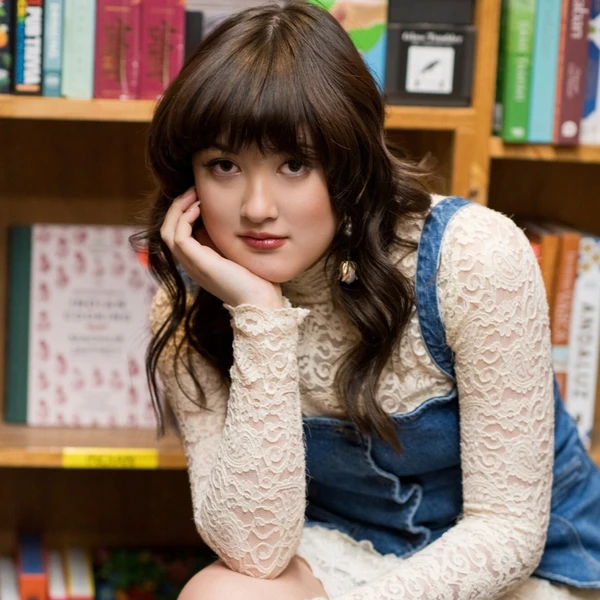
Gender
Female
Ethnicity
Asian, Caucasian
Hobbies and interests
Animals
Babysitting And Childcare
Anatomy
Anime
Art
Art History
Child Development
Coffee
Comics
Concerts
Crafting
Gardening
English
Poetry
Acting And Theater
Classics
Costume Design
Community Service And Volunteering
Criminology
Drawing And Illustration
Driving
Fashion
Forensics
Korean
Learning
Liberal Arts and Humanities
Manga
Music
Meditation and Mindfulness
Painting and Studio Art
Philosophy
Psychology
Printmaking
Reading
Roller Skating
Scrapbooking
Self Care
Sleeping
Studying
Spanish
Taekwondo
Tattooing
Volunteering
Special Effects and Stage Makeup
Yearbook
Yoga
Writing
Tutoring
Pet Care
Ceramics And Pottery
Collecting
Collaging
Education
Mental Health
Beach
Beading
Cosmetology
Embroidery And Cross Stitching
Reading
Adult Fiction
Art
Biography
Book Club
Classics
Contemporary
Education
Gothic
Horror
Literary Fiction
Realistic Fiction
Tragedy
Suspense
Historical
Cultural
Drama
Health
How-To
Humor
Magical Realism
True Story
I read books daily
Charlie German
1x
Finalist
Charlie German
1x
FinalistBio
I am a senior at Western Reserve Academy and will be attending the Rhode Island School of Design to study illustration. My work focuses on mixed media, often exploring how visual language can communicate what words cannot. I am particularly interested in forensic art and the role it can play in helping others through reconstruction, identification, and storytelling.
I have exhibited my work in venues including a White House Exhibition and a solo show at Negative Space Gallery. I have received three Gold Keys, two Silver Keys, and an Honorable Mention through the Scholastic Art & Writing Awards in the Mixed Media, Short Story, Fashion, and Drawing categories. I am also a thrice-published poet, and a short story of mine received a Scholastic Gold Key, reflecting my interest in storytelling across both visual and written forms. Additional honors include the Margot Eiseman Scholarship for Visual Arts.
At Western Reserve Academy, I serve as Head Art Editor for Viewpoints, the school's literary art and nonfiction magazine, and have contributed artwork and writing to multiple publications, including as a cover artist. My coursework spans advanced studio art, design, printmaking, and college-level art history, supporting an interdisciplinary approach to my practice. Beyond my own work, I teach as a private tutor across subjects, lead art initiatives, and serve as a dorm prefect.
I approach art as a way of observing and translating experience. At RISD, I plan to pursue forensic art, using my work to support others and give form to stories that may otherwise go unseen or unheard.
Education
Western Reserve Academy
High SchoolMiscellaneous
Desired degree level:
Bachelor's degree program
Majors of interest:
- Visual and Performing Arts, General
Career
Dream career field:
Arts
Dream career goals:
Forensic Artist
Head Art Editor and Cover Designer
Viewpoints Non-fiction & Art Magazine2025 – 20261 yearArt Instructor (Group Classes)
Bright Minds Learning Academy2023 – 2023Art, math, English tutor (Pre-k through 12th grade)
Bright Minds Learning Academy2023 – 20252 years
Sports
Tennis
2019 – 20234 years
Taekwondo
2020 – 20222 years
Arts
Western Reserve Academy
DesignBeauty and the Beast2024 – 2024Western Reserve Academy
ActingMean Girls2023 – 2023Western Reserve Academy
Visual ArtsViewpoints Art and Nonfiction Magazine2023 – PresentWestern Reserve Academy
Visual ArtsBUFO: The Holiday Edition2025 – 2025Western Reserve Academy
Visual ArtsBUFO Art and Fiction Magazine2023 – PresentWestern Reserve Academy
Visual Arts2024 – 2025Western Reserve Academy
Visual ArtsViewpoints Volume 222025 – PresentHoly Cross Academy
Visual ArtsHoly Cross Academy Catholic School Art Contest2016 – 2016Knights of Columbus
Visual ArtsKnights of Columbus Poster Contest2020 – 2021White House
Visual ArtsBuilding the Movement: America's Youth Celebrate 100 Years of Women's Suffrage2020 – 2020Scholastic Art & Writing Awards
Visual ArtsDrawing: "Come on Home"2026 – 2026Scholastic Art & Writing Awards
DesignFashion: "Weight of Feathers"2026 – 2026Scholastic Art & Writing Awards
Visual ArtsMixed Media: "All the Same"2026 – 2026Scholastic Art & Writing Awards
Visual ArtsDrawing: "Last Drop"2026 – 2026Akron-Summit County Public Library
Visual ArtsGeek Fest2023 – 2023Akron-Summit County Public Library
Visual ArtsGeek Fest2022 – 2022Western Reserve Academy
Visual ArtsSenior Art Showcase2026 – 2026Western Reserve Academy
Visual ArtsWestern Reserve Academy Student Art Exhibition2022 – PresentWestern Reserve Academy
Visual Arts50 Years of Women at WRA2022 – 2022Valley Art Center
DesignCrafted Couture Wearable Art Showcase2026 – 2026Negative Space Art Gallery
Visual Arts2026 – 2026
Public services
Volunteering
Western Reserve Academy — English, writing, and reading comprehension tutor (Grades 9-12 and post-graduate)2023 – PresentAdvocacy
Bring Change 2 Mind — Western Reserve Academy leader2025 – 2026Volunteering
Akron Children's Hospital — Lead organizer of card making event2024 – 2026Volunteering
Chair-ity — Designer2025 – 2025Volunteering
Junior Achievement Stark County — Designer, painter, builder, and distributor2021 – 2021Volunteering
One of a Kind Pet Rescue — Animal Foster2024 – Present
Future Interests
Advocacy
Volunteering
Philanthropy
Entrepreneurship
Hilda Klinger Memorial Scholarship
Some of my earliest memories are of staying up late watching cartoons while the house was quiet. My mom traveled frequently for work, and while I never felt unloved, I often spent long stretches of time on my own. The worlds I found on television became a source of comfort and inspiration. I was fascinated by the way artists could create entire stories from lines, colors, and movement. Long before I understood what an arts degree was, those late nights taught me something important: art has the power to connect with people, make them feel understood, and leave a lasting impact on their lives.
My love of art was also shaped by my mom. She often told me that she had wanted to be an artist herself but never had the opportunity to pursue that path. Even though she chose a different career, she made sure creativity was always encouraged in our home. She nurtured my curiosity, celebrated my projects, and taught me to value artistic expression. Because of her, art became more than something I enjoyed, it became a part of who I am.
Today, I create mixed media artwork because I enjoy the freedom it offers. Combining different materials and techniques allows me to experiment and communicate ideas in ways that feel authentic to me. Art is how I process the world, share my perspective, and connect with others. It has been a constant presence throughout my life, and I cannot imagine a future without it.
That is why I am pursuing a degree in the arts. I believe the world is better because of art. Art can inspire people, bring communities together, and provide comfort during difficult times. It can make someone feel seen, just as cartoons did for me when I was younger. I want to dedicate my life to creating work that has that kind of positive impact. I already try to give back through tutoring children, volunteering in my community, and participating in creative activities that encourage young people to express themselves. Seeing the confidence and joy that art can bring to others has strengthened my commitment to this field.
My favorite artist is Vincent van Gogh. Growing up, my mom would tell me stories about his life, and I became fascinated by him. As a child, I used to imagine being his friend. Beyond his remarkable talent, I admire the emotion and humanity present in his work. His paintings feel alive, and they remind me that art can communicate experiences and feelings that words sometimes cannot. I am also inspired by his dedication to creating despite hardship and uncertainty.
Art has shaped my childhood, strengthened my connection to my community, and given me a sense of purpose. Pursuing an arts degree is not simply a career choice for me, it is a continuation of a lifelong passion and an opportunity to create the same sense of connection, inspiration, and belonging that art has given me.
Hampton Roads Unity "Be a Pillar" Scholarship
One of the most meaningful ways I have been affected by members of the LGBTQIA+ community has been through both personal involvement and cultural influence. As a member of my school’s GSA, I have been surrounded by people who are open about their identities and willing to advocate for themselves and others in ways that are often quiet but deeply powerful. Being part of that space has made me more aware of how important visibility and support are in shaping whether someone feels safe being fully themselves.
As a lesbian, my connection to the LGBTQIA+ community is also personal. It has shaped how I understand identity, belonging, and self-expression. There was a time when I felt unsure about how to take up space in certain environments, but being in community with others who were open about who they are helped shift that for me. It showed me that identity is not something to hide or shrink, but something that can exist openly and confidently in everyday life.
Outside of school, I am especially influenced by drag performance and LGBTQIA+ creative spaces. Going to drag shows has been one of the most inspiring experiences for me visually. The combination of fashion, makeup, movement, and performance creates something that feels completely intentional and expressive. It has made me think more about how identity can be communicated visually, and how art can be used to transform how someone is seen and understood.
I am also drawn to media that explores queer identity in different ways, particularly work like The Rocky Horror Picture Show and Bottoms. What stands out to me is not just representation, but how these works use humor, style, and genre to express identity in ways that feel layered and specific. They show that LGBTQIA+ stories are not one-dimensional, and that there is room for boldness, imperfection, and creativity in how those stories are told.
These experiences have shaped how I think about advocacy. I’ve learned that support for the LGBTQIA+ community exists in both large and small ways through visibility, through conversation, and through the spaces we choose to create and participate in. Through my involvement in GSA, I try to contribute to an environment where students feel seen and supported, whether that is through discussion, events, or simply being present for others.
Looking forward, I want my advocacy to continue through both my personal and creative life. As an artist, I am interested in how visual work can reflect identity and emotion, and how aesthetics can shape the way people understand themselves and others. As someone within the LGBTQIA+ community, I want to continue helping create spaces where people feel able to exist fully and without hesitation.
Ultimately, being part of and surrounded by LGBTQIA+ communities has shaped how I understand both identity and creativity. It has shown me that advocacy can be expressive, everyday, and deeply personal, and that visual culture can be a powerful part of how people feel seen.
Sabrina Carpenter Superfan Scholarship
I’ve followed Sabrina Carpenter since watching her on Girl Meets World, but what has stayed with me most is not just her career growth, but the way she builds a visual world around her work. I’m drawn to how intentional her choices are when it comes to fashion, staging, and overall presentation. There’s a consistency in her aesthetic that still feels flexible, and it makes her work feel very cohesive without being repetitive.
What I find especially interesting is how much she relies on visual storytelling alongside music. Her performances and visuals often reference different eras of film and pop culture, and that layering adds another dimension to her work. I love the way she brings in influences from films like Rocky Horror Picture Show, Psycho, Death Becomes Her, Texas Chainsaw Massacre, and Jennifer’s Body. These references are not just decorative details they shift the tone of her work and create a sense of narrative that exists beyond the music itself. It feels like she is building a larger visual language that draws from history while still being very current.
One of the moments that stood out to me was when she incorporated Susan Sarandon into her Coachella performance. That choice felt very intentional, especially in how it connected her work back to film and performance history. I liked that it wasn’t just about spectacle, but about acknowledging influence and creating something that felt layered with cultural references. It made the performance feel more like a constructed visual experience rather than just a concert.
As someone who works in mixed media and is interested in illustration, I’m very inspired by that approach. My own work often involves combining different materials and ideas, and I’m always thinking about how visual elements interact with each other to create meaning. Seeing how she integrates references and aesthetics has made me more aware of how I build visual language in my own pieces, especially when it comes to mood, tone, and storytelling.
It has also influenced how I think about identity in art. There is something very deliberate about how she presents herself, and it made me realize how much control artists have over the way their work is interpreted through visual choices. Even when her references are playful or nostalgic, they still feel intentional, and that balance between accessibility and specificity is something I really admire.
Overall, even though my work is in a very different medium, I find her career interesting because it shows how strong visual direction can expand the meaning of creative work. It has encouraged me to think more carefully about how I use imagery, references, and composition in my own art, and how those choices can shape the way people experience what I create.
Ethel Hayes Destigmatization of Mental Health Scholarship
My experience with mental health has shaped the way I understand both myself and the people around me. For a long time, I struggled with self-harm and intense social anxiety. Both made it difficult to feel present in my own life. Social situations felt overwhelming, and I often second-guessed how I came across or whether I belonged in a space at all. At the same time, my internal struggles felt isolating, like something I had to manage quietly.
One of the most defining experiences for me was losing my cousin to suicide. I was one of the last people to talk to him, and for a long time, that stayed with me in a way I didn't know how to process. It turned into guilt replaying conversations, questioning what I could have said differently, and feeling like I had missed something important. That kind of grief wasn't straightforward; it was layered with responsibility even when I didn't fully understand it.
That experience changed the way I see mental health in others. It made me more aware of how much people can carry without showing it, and how important it is to take even small moments of connection seriously. It also made me realize that being present for someone and really listening, even when you don't have the right words can matter more than you think. That understanding has stayed with me in every role I've taken on since.
Over time, those experiences began to shift how I see others. I became more aware of how much people carry that isn't visible. Someone can seem completely fine and still be struggling in ways you would never expect. That realization changed how I approach relationships. I try to be more attentive, more patient, and more willing to listen without assuming I understand everything on the surface.
Ironically, the same anxiety that once made it difficult for me to connect with people has made those connections more meaningful. As a peer tutor, private tutor, dorm prefect, and student listener, I've found that showing up consistently matters more than being perfectly confident. I don't always feel completely comfortable, but I've learned that being present especially for someone who might feel uncertain or overwhelmed can have a real impact. Working with younger students and peers, I try to create an environment where people feel supported rather than judged, because I know how much that can matter.
My involvement with Bring Change 2 Mind has also allowed me to be more active in mental health advocacy. Through that work, I've helped contribute to conversations that make it easier for students to talk openly about what they're experiencing. For me, advocacy isn't just about large initiatives it's about small, consistent actions that help shift how people think about mental health, making it feel less isolating and more understood.
These experiences have also shaped my goals. I want to pursue a path where my work is both meaningful and connected to others. Whether through art, education, or advocacy, I am drawn to roles that involve observation, empathy, and communication. I've learned that impact doesn't come from being the most outspoken person in the room, it can come from paying attention, listening carefully, and responding thoughtfully.
My understanding of the world has become more grounded in that idea. People are more complex than they appear, and everyone is navigating something you may not fully see. Because of that, I try to approach both my work and my relationships with more awareness and care.
While mental health has been a challenge in my life, it has also pushed me to grow in ways I might not have otherwise. It has made me more intentional, more empathetic, and more committed to creating spaces where others feel supported. Those are qualities I carry with me in everything I do.
Dick Loges Veteran Entrepreneur Scholarship
My father's work as both a veteran and the owner of a machine shop has influenced my educational and artistic path in ways that are often practical, but deeply meaningful. Growing up around his work, I was exposed early to a mindset built on precision, problem-solving, and persistence. Even though his field is very different from mine, those values have shaped how I approach my own creative process.
One of the most direct ways this has impacted me is through the physical making of my work. As my projects have grown in scale, especially in mixed media, I've often relied on his knowledge and space to help bring them to life. When I created a large 8-by-10-foot piece, he helped me think through how to construct and support it. How to make something not only visually impactful, but structurally sound. That experience changed how I think about art. It pushed me to consider not just the concept, but the engineering behind it, and it gave me the confidence to take on work at a larger, more ambitious scale.
That influence goes back even further. When I was younger, he helped me build costume pieces things like flapping wings and spinning skirts. At the time, it felt playful, but looking back, it introduced me to the idea that creativity and construction could exist together. It wasn't just about how something looked, but how it functioned and moved. That combination of imagination and mechanics continues to shape the way I work today.
His military background has also had an indirect but important impact. The discipline and work ethic that come from that experience are reflected in how he approaches business, and in turn, how I've learned to approach my own goals. Pursuing art, especially at a serious level, requires consistency, patience, and the ability to push through challenges even when the outcome isn't immediate. Watching that mindset in practice has influenced how I hold myself accountable in my own work and education.
As I plan to study illustration and pursue a career in forensic art, those influences remain relevant. Forensic art requires both creativity and precision. It involves careful observation, attention to detail, and the ability to construct something accurate and meaningful from limited information. In many ways, it mirrors the balance I've seen between technical skill and problem-solving in my father's work.
While our paths are different, his journey has shaped how I think about making, discipline, and ambition. It has shown me that meaningful work often happens through persistence, attention to detail, and a willingness to build something from the ground up. Those are values I carry with me as I continue my education and work toward a career where my art can have a tangible impact.
Elijah's Helping Hand Scholarship Award
Mental health has impacted my life in ways that have shaped not only how I see the world, but how I understand myself. One of the most defining experiences was the loss of my cousin to suicide. I was one of the last people to speak with him, and for a long time, that stayed with me in a way I didn't know how to process. It turned into guilt, into replaying conversations, into wondering if there was something I could have said differently. Grief didn't feel like a single emotion; it was layered, unpredictable, and often isolating.
Around the same time, I was also dealing with my own mental health struggles, including self-harm that lasted for years. It became a way of coping when I didn't have the language to explain what I was feeling. For a long time, I didn't see a clear way out of that cycle. It felt private and difficult to talk about, which only made it harder to break.
What changed over time was not a single moment, but a gradual shift in how I processed those experiences. Art became a central part of that. It gave me a way to express things I couldn't fully articulate, especially when emotions felt too complex or overwhelming to put into words. Through mixed media, I began to work with layering, fragmentation, and reconstruction. These processes reflected how my memory and emotion actually felt. Instead of trying to make something clean or resolved, I allowed my work to hold uncertainty.
That process helped me move from feeling stuck in those experiences to being able to engage with them more openly. It also changed how I understand mental health more broadly. I've learned that what people carry is often invisible, and that struggling does not always look the way you expect it to. That awareness has made me more attentive to others and more intentional in how I show up in my community.
Over time, I have worked to move forward in a healthier way, and I am now in a place where I can reflect on those experiences without being defined by them. They are still a part of me, but they no longer control how I see myself or my future.
Art continues to be the way I process, communicate, and make sense of what I've experienced. It allows me to take something that once felt overwhelming and turn it into something that can be understood, shared, and, in some way, transformed. Because of that, these experiences have not only impacted my life, they have shaped the direction of my work and the way I hope to connect with others through it.
Learner Mental Health Empowerment for Health Students Scholarship
Mental health is important to me as a student because it directly shapes how we learn, connect, and see ourselves. In academic environments, there is often an unspoken expectation to keep pushing forward regardless of how you feel, which can make it difficult for students to acknowledge when they are struggling. I've seen how easily stress, pressure, and isolation can build when there isn't space to talk about it openly, and how much of a difference it makes when there is.
My involvement as a Student Listener has made this especially clear. In that role, I am often one of the first people someone turns to when they are overwhelmed or unsure how to express what they're going through. What I've learned is that support doesn't always come from having the perfect response, it comes from being present, listening without judgement, and allowing someone to feel heard. The experience has shaped how I approach both leadership and everyday interactions, making me more aware of how important small moments of understanding can be.
I also serve as a leader of Bring Change 2 Mind at my school, where I help organize conversations and initiatives focused on reducing stigma around mental health. A large part of that work is creating an environment where these discussions feel normal rather than uncomfortable. Whether through group meetings or school-wide efforts, the goal is to make mental health something students feel they can talk about openly, without fear of being dismissed or misunderstood.
As a leader of Art Club, I take a slightly. different approach by organizing mental health-focused relaxation events. These are spaces where students can step away from academic pressure and engage in art without expectations. There's no emphasis on skill or outcome only the act of creating. I've seen how effective that can be, especially for students who might not usually think of themselves as artistic. It gives people a way to process stress in a quieter, more personal way, and it reinforces the idea that creativity can be a form of care.
Advocating for mental health, for me, is about consistency. It's not limited to formal roles or organized events it's in how I show up for people every day. It's checking in, paying attention, and recognizing when someone might need support even if they don't say it directly. It's also about helping shift the culture so that asking for help feels acceptable, not like a failure.
As a student, I've come to understand that mental health is not separate from academic or personal success, it is the foundation of it. When students feel supported, they are more able to engage, take risks, and grow. Through listening, leadership, and creating spaces for expression, I try to contribute to that kind of environment within my community.
CollectaBees, LLC Golden Hive Gallery Art Scholarship
I plan to use my art to build a future that is both sustainable and purposeful, centered on forensic art as a professional path and grounded in a continued commitment to service. For me, art has never only been about personal expression; it has always been about observation, communication, and impact. I want to apply those skills in a way that has real-world meaning, particularly in work that supports identification, reconstruction, and investigative processes.
My long-term goal is to pursue forensic art within a professional investigative setting, such as working with federal agencies like the FBI or within related forensic departments. I am drawn to the precision of the work. The need to carefully observe details, reconstruct information from limited evidence, and translate that into something usable and human. It feels like a direct extension of the way I already work in mixed media, where I often build images from fragments, layering materials and ideas to create something cohesive and intentional.
At the same time, I understand that sustaining a future in art requires more than technical skill; it requires adaptability, communication, and a willingness to engage with people beyond the studio. That is where my experience in tutoring and community engagement becomes important. Working with students has taught me how to explain complex ideas in accessible ways and how to meet people where they are. More importantly, it has shown me how powerful encouragement can be in shaping someone's confidence and willingness to try.
I want to carry that mindset forward into my artistic career. Whether through forensic work or broader creative practice, I hope to remain connected to communities in a way that makes art feel approachable rather than distant. I am interested in using my skills not only in investigative contexts, but also in educational or community-based settings where art can help people feel more capable, more expressive, and more seen.
Sustainability, for me, also means building a career that allows me to continue creating while contributing to something larger than myself. Forensic art offers that balance it is a field where artistic ability has a direct function and responsibility, and where attention to detail can have real consequences for individuals and families. At the same time, my involvement in tutoring and mentorship ensures that I remain grounded in communication and service.
Ultimately, I plan to sustain my future by keeping both aspects of my work connected: the technical and investigative side of forensic art, and the human, educational side of community engagement. My ambition is to develop as an artist in a way that is not isolated, but actively connected to people, purpose and impact. In doing so, I hope to build a career where my work consistently serves others. Whether this is by helping identify unknown individuals or helping someone realize they are capable of creating something themselves.
Kay Sykes Arts Scholarship
My work in art began with mixed media because it reflected the way I naturally experience things. Layered, fragmented, and constantly shifting. I was never drawn to a single medium so much as the process of combining materials, images, and textures to create something that felt closer to lived experience than a traditional, finished image. Over time, though, my focus became less about medium itself and more about purpose. I started to ask what I wanted my work to do, not just what it looked like.
A major turning point in that process came through the support of Gadi Zamir, who gave me space for my first solo exhibition in his gallery. Having someone not only believe in my work but actively create space for it made me take myself more seriously as an artist. He offered practical guidance, but more importantly, he encouraged me to stop waiting for permission and to fully commit to what I was already building. That experience made art feel less like something I was experimenting with and more like something I was responsible for pursuing.
Another defining influence came from a school event where Dr. Robert Shott spoke about his career in forensic pathology. I was immediately drawn to the way he described his work. The careful observation, attention to detail, and the responsibility of reconstructing truth from what remains. It felt strangely connected to the way I approach my own art, especially in mixed media, where I am often building meaning from fragments. After speaking with him later about my path, I began to see forensic art not as a distant idea, but as a direction I could actively pursue.
That realization shifted my ambition into something clearer and more focused. I am now working toward becoming a forensic artist, combining my interest in illustration with a practice rooted in observation, accuracy, and empathy at the Rhode Island School of Design. I want my work to exist in a space where art is not only expressive, but useful, where it can help reconstruct identity and support real people in meaningful ways.
Outside of my own artistic practice, I have also found drive through tutoring. Working with students across different ages has shown me how powerful it is when someone begins to understand a concept they once thought was out of reach. I love seeing that moment of clarity, and I try to bring that same sense of patience and encouragement into everything I do. It has reinforced my belief that art, and learning more broadly, should feel accessible rather than intimidating.
Art is my passion; I see it in everything and am constantly excited by it, especially when I see that same excitement in others. Alongside forensic art, I want to serve underserved communities and children, both through my work and through continued engagement in education and mentorship. My ambition is not only to develop as an artist, but to use that development in ways that reach beyond myself and into communities, classrooms, and ultimately, into lives that can be impacted by care, attention, and creativity.
WCEJ Thornton Foundation Music & Art Scholarship
I want my art to have a real-world impact, not just exist in galleries or on paper. That’s what draws me to forensic art. The idea that drawing can help return someone’s name, or give a family answers, feels like one of the most direct ways art can matter. I like that it relies on observation and care, paying attention to details most people might overlook, and using that to rebuild something meaningful.
At RISD, I want to build the technical skills to work in that field, but I don’t see it as separate from everything else I care about. A lot of my work already comes from noticing things and trying to translate them into images that feel honest, even when they’re hard to put into words.
Outside of that, I’ve found I really like teaching and working with younger students. I’ve tutored for a while now, and what sticks with me isn’t really the academics, it’s the moment when something clicks for someone and they realize they can do it. I want to keep building spaces where art feels accessible, not like something you have to be “good enough” to start.
I also care about art in everyday places. Work that exists outside of traditional art settings. A mural on a wall, a project in a school, something you pass without expecting it but still remember later. I like the idea that art can quietly change how a space feels, or how people move through it, even if they don’t stop to analyze it.
For me, impact isn’t one thing. It’s the careful, technical work of forensic art, but it’s also the smaller moments—someone feeling more confident, a space feeling more alive, or a person realizing they have something to say visually. I want my work to exist in both of those places.
Big Picture Scholarship
Some advice is easy to ignore, but the line "You do what you love, and fuck the rest" from Little Miss Sunshine stayed with me long after the film ended. It's blunt and a little irreverent, but it captures something that I have had to learn over time: that meaning doesn't come from perfection or approval, but from commitment to what matters to you.
As an artist, that idea has shaped the way I approach both my work and my future. My practice is rooted in experimentation mixed media, large-scale pieces, and projects that don't always have a clear outcome when I begin. Recently, I completed an 8-by-10-foot piece, a process that required patience, risk, and a willingness to let the work become something unexpected. Like Olive's performance in Little Miss Sunshine, it wasn't about fitting into a standard or meeting expectations. It was about showing up fully, even when the result might be unconventional or misunderstood.
The film also reframed how I think about success. Throughout high school, I have been fortunate enough to receive recognition for my work, including multiple Scholastic Art & Writing Awards, exhibitions, and publication as both a visual artist and writer. But Little Miss Sunshine challenged me to reconsider what those achievements mean. The characters in the film are not traditionally successful; in many ways, they are struggling, overlooked, or failing by external standards. Yet the film treats them with dignity and empathy, suggesting that value lies not in accolades, but in authenticity and persistence.
This perspective has been especially important as I've developed an interest in forensic art. It's a field that exists at the intersection of technical skill and human empathy. Reconstructing faces, assisting in identification, and giving form to stories that might otherwise remain unknown. It is not glamorous work, and it often operates outside of recognition or visibility. But it is meaningful. Watching Little Miss Sunshine helped me understand that choosing a path like this doesn't require external validation to be worthwhile. It only requires a commitment to doing something that matters.
Beyond my own art, the film has influenced how I engage with others. As a tutor, dorm prefect, and mentor, I work with students across a wide range of ages and abilities. One of the most important lessons I've taken from the film is the value of encouragement without conditions. Olive's family supports her not because she is the best, but because she is trying, because she cares, and because showing up matters. I try to bring that same mindset into my work with others focusing less on outcomes and more on growth, effort, and confidence.
There is also something deeply honest about the way Little Miss Sunshine portrays imperfection. The characters are flawed, messy, and often uncertain, yet they continue forward together. That sense of imperfection has resonated with me as both an artist and a person. My work often explores what cannot be easily expressed in words the emotion, memory, and experience that resist clarity. Accepting that not everything needs to be resolved or understood has allowed me to create more openly and take greater risks.
Ultimately, Little Miss Sunshine has had the greatest impact on my life because it gave me a framework for thinking about purpose. It reminded me that doing what you love is not always easy or comfortable, and it may not always lead to recognition. But it is meaningful. As I prepare to study illustration and pursue forensic art, that idea continues to guide me: to commit fully to what matters, to embrace uncertainty, and to keep going regardless of outcome.