Reading
Cookbooks
Fantasy
Romance
Science Fiction
True Story
Young Adult
I read books multiple times per month
Chantel Chaney
1x
Finalist1x
WinnerChantel Chaney
1x
Finalist1x
WinnerBio
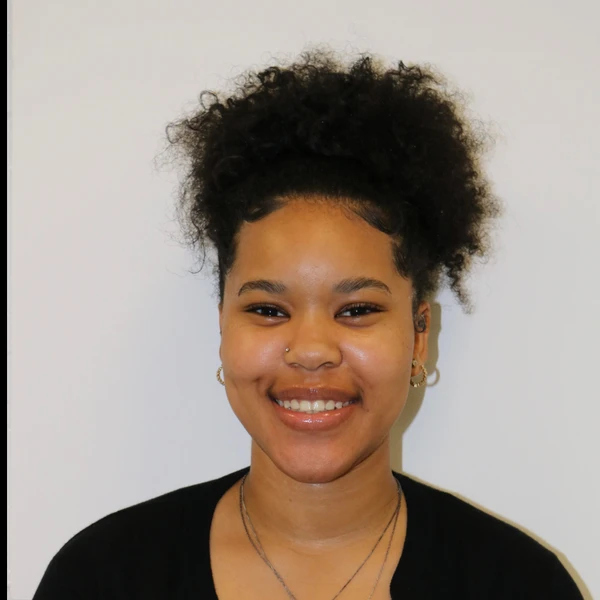
I am currently a junior Nursing major at Howard University. Upon earning my degree, I aim to help underrepresented groups have a voice in the medical system. It is my hope to provide the comfort and happiness once afforded to me by my nurses and doctors.
Education
Howard University
Bachelor's degree programMajors:
- Registered Nursing, Nursing Administration, Nursing Research and Clinical Nursing
GPA:
3.1
The Springfield Renaissance School
High SchoolGPA:
4
Miscellaneous
Desired degree level:
Graduate schools of interest:
Transfer schools of interest:
Majors of interest:
- Registered Nursing, Nursing Administration, Nursing Research and Clinical Nursing
Career
Dream career field:
Hospital & Health Care
Dream career goals:
Nurse
Student Nurse Extern
MedStar Health2025 – Present1 yearSales Assosciate
Atlantis Fresh Market2022 – 20242 yearsCrew Member
Dunkin’ donuts2020 – 20211 year
Sports
Softball
Varsity2019 – 20223 years
Cheerleading
Varsity2022 – 2022
Volleyball
Varsity2016 – Present10 years
Public services
Volunteering
Christina's House — Warm Presence/Volunteer2023 – PresentVolunteering
boys and girls club west springfield — junior counselor2018 – 2018
Future Interests
Advocacy
Volunteering
Wicked Fan Scholarship
For me, Wicked is more than a musical—it’s a story that speaks directly to how I see myself and the world around me. As someone who has often found myself being “the only one” in academic or professional spaces, I naturally connect to Elphaba’s journey. She’s judged before people even know her, and yet she refuses to shrink herself. That resilience mirrors my own experiences navigating spaces where representation is limited. Seeing Elphaba embrace her difference and transform it into her power inspires me to stand firmly in my own identity, whether in nursing, leadership, or life.
Another reason I love Wicked is its emphasis on perspective. The show reminds us that the story we’ve always heard—the one about the Wicked Witch—was never the full truth. That message resonates with me because I value uncovering deeper truths, especially in healthcare, where patients’ voices are often overlooked. Just like in Wicked, listening beyond the surface can reveal courage, love, and humanity where others only see stereotypes or assumptions.
On a personal level, the music itself fills me with energy and hope. Songs like Defying Gravity remind me that even when life feels overwhelming—whether it’s exams, grief, or the pressures of nursing school—I have the ability to rise above and create my own path. That’s why the story stays with me: it’s both a mirror and a motivator.
Ultimately, I am a fan of Wicked because it combines everything I care about: resilience, representation, perspective, and the belief that even when the world misunderstands you, your story and your purpose still matter.
Ms. Catherine Gipson Scholarship
At 12:17 am on November 29th of 2003, I opened my eyes to a world that had already labeled me a “failure,” and it was my job to prove them wrong. Throughout my life, I cannot recall having more than one Black teacher to set an example for me. I’ve never had a Black school nurse who could relate to my experiences as a person of color. This was my pivotal moment. My moment of self-realization. Since nobody was there to set an example, I had to become the example.
When I was a few months short of 5, I began attending a white, private school, full of white teachers and white students who couldn’t understand me. At school, I was just another student who happened to be Black but out in the city, being Black was a part of who I was. Beginning in fourth grade, I attended public schools in urban areas where I expected to be guided to higher education. Yet, it was my mother who had to instill the importance of education in me. My school was full of Black and Brown kids who had the bar set low for them. I had strong ambition and mediocrity wasn’t something I could settle for.
In the end, it was my mother who pushed me to add nursing to my list. I loved the way she cared for me when I was sick. She served me hot soup in bed, took my temperature, rubbed Vicks on my chest and back. I imagined myself in scrubs walking the halls of the hospitals, checking on my patients and taking their vitals, making them feel as my mother had once made me feel. In my front pocket would be a tub of Vicks acting as my piece of hope in times of despair. Reminiscing in the moment, I would remember when I knew becoming a medical professional was in my future. I would remember counting to 3 and finding my classmate’s tooth in my hand. Most importantly, I would cherish the optimism and euphoria that filled my heart when I helped someone. It was also my mother who peaked my interest in HBCUs from a very young age. I would tell anyone who asked me that I was planning to enroll at Tuskegee University, my mother’s alma mater. About 13 years later, I've decided not to enroll at Tuskegee, but at Howard instead. I was never deterred from the dream of attending an HBCU. The sense of community and love my mother and others who attended HBCUs pushed me towards an affirmation for them and ultimately choosing to attend Howard University.
Representation is extremely significant to me because I felt I had lacked it the majority of my life. Look into the medical books, you’ll find the words used to discriminate against People of Color and belittle their medical needs. You’ll find sections that emphasize that Black people are less sensitive to pain because apparently, they have thicker skin or less sensitive nerves. Black people are too often overlooked at the doctors, too often left to handle their medical care, too often left to suffer alone. I want patients to look at me and see someone who understands and empathizes with them. I want them to see me and immediately feel at ease. Nurse Chantel Chaney is in the grasp of my hands and no obstacle will stop me from achieving that title.
Ruth and Johnnie McCoy Memorial Scholarship
At 12:17 am on November 29th of 2003, I opened my eyes to a world that had already labeled me a “failure,” and it was my job to prove them wrong. Throughout my life, I cannot recall having more than one Black teacher to set an example for me. I’ve never had a Black school nurse who could relate to my experiences as a person of color. This was my pivotal moment. My moment of self-realization. Since nobody was there to set an example, I had to become the example.
When I was a few months short of 5, I began attending a White, private school, full of white teachers and white students who couldn’t understand me. At school, I was just another student who happened to be Black but out in the city, being Black was a part of who I was. I started attending public schools in urban areas from 4th grade on and I always expected the school to push me towards the path of higher education. My school was full of Black and Brown kids who had the bar set low for them. I modeled after the behavior of my mother, being ambitious and fighting for things that seemed out of reach. In first grade, it was already expected of me that I received straight As or a maximum of 1 B. Nobody understood why my expectations were so high, especially so young but my future aspirations depended on it. In 4th grade, I received my first “C” and I bawled my eyes out. A “C” as a fourth-grader may not seem bad but to 10-year-old me, it was everything. By accepting a “C”, I was accepting that I would not attend college and major in Nursing which I decided at a mere 6-years-old. I had strong ambition and mediocrity wasn’t something I could settle for.
In the end, it was my mother who pushed me to add nursing to my list. I loved the way she cared for me when I was sick. She served me hot soup in bed, took my temperature, rubbed Vicks on my chest and back. I imagined myself in scrubs walking the halls of the hospitals, checking on my patients and taking their vitals, making them feel as my mother had once made me feel. In my front pocket would be a tub of Vicks acting as my piece of hope in times of despair. Reminiscing in the moment, I would remember when I knew becoming a medical professional was in my future. I would remember counting to 3 and finding my classmate’s tooth in my hand. Most importantly, I would remember the optimism and euphoria that filled my heart from helping someone.
Representation is extremely important to me because I felt I had lacked it the majority of my life. Look into the medical books, you’ll find the words used to discriminate against People of Color and belittle their medical needs. You’ll find sections that emphasize that Black people are less sensitive to pain because apparently, they have thicker skin or less sensitive nerves. Black people are too often overlooked at the doctors, too often left to handle their medical care, too often left to suffer alone. When patients look at me, I want them to see someone who understands and empathizes with them. I want them to see me and immediately feel at ease, to feel as they should’ve felt in the beginning. Nurse Chantel Chaney is in the grasp of my hands and no obstacle will stop me from achieving that title.