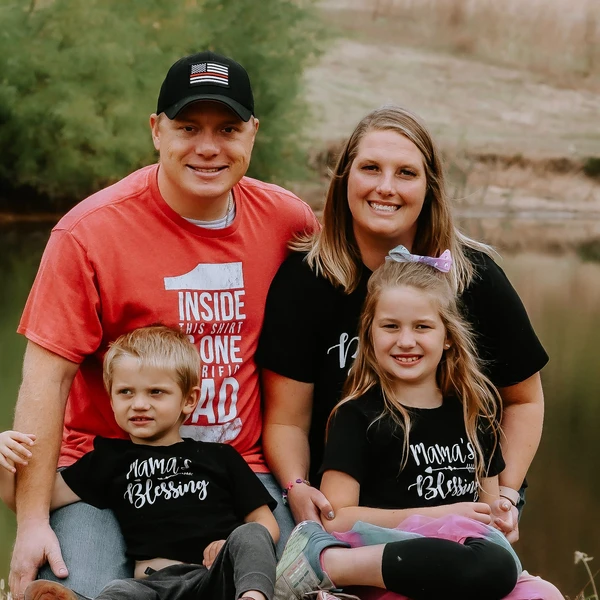
Chad Tilley
1x
FinalistChad Tilley
1x
FinalistBio
Hello, my name is Chad Tilley, and I’m a 35-year-old husband, father, and lifelong learner pursuing my bachelor’s degree in elementary education. For nearly a decade, my wife and I have talked about me returning to school, and we finally decided that now is the right time to make it happen. She has been a teacher for nine years, and I’m excited for the opportunity to follow in her footsteps—both to be on the same schedule as our children and to make a difference in the lives of students.
Before returning to school, I worked as an EMT and have served as a volunteer firefighter since 2009, experiences that taught me the value of service, teamwork, and staying calm under pressure. Those same qualities are what I hope to bring into my future classroom as an educator—helping children learn, grow, and discover their potential.
When I’m not working or studying, I love spending time with my family, going fishing, and driving my race car. I’m passionate about being a positive role model for my kids and showing them that it’s never too late to chase your dreams. I’m deeply grateful for your consideration and the opportunity to further my education through this scholarship.
Education
Central Methodist University-College of Graduate and Extended Studies
Bachelor's degree programMajors:
- Teacher Education and Professional Development, Specific Subject Areas
Three Rivers College
Associate's degree programMajors:
- Education, General
Miscellaneous
Desired degree level:
Master's degree program
Graduate schools of interest:
Transfer schools of interest:
Majors of interest:
Career
Dream career field:
Education
Dream career goals:
Public services
Volunteering
Dexter Fire Department — Firefighter2015 – Present
Sunni E. Fagan Memorial Music Scholarship
Music has always played a powerful role in my life, especially country music and Christian music. These two genres speak to me in a way that nothing else does. Country music tells real stories—about family, hard work, heartbreak, and hope. Christian music reminds me of my faith and keeps me grounded, especially during difficult times. Together, they’ve helped shape my values, my outlook, and the kind of person I try to be.
I’ve always been especially inspired by Garth Brooks. His music is about grit, loyalty, and doing what’s right even when life gets tough. Songs like The River and Standing Outside the Fire have pushed me through some of my hardest moments, reminding me that dreams are worth chasing and that courage often looks like simply staying in the fight. Listening to his music growing up—and even now—taught me that you’re never too old, too late, or too far behind to start walking toward the life you want. That message is a big part of why I finally decided to go back to school to earn my bachelor’s degree.
Even though I’m not pursuing a career in music, my passion for it has shaped the kind of teacher I want to become. Music has always helped me deal with stress and emotions—whether I was responding to tough calls as a firefighter/EMT, pushing through my own battles with depression, or juggling work, family, and school. Because music helped me so much, I want to use it to help my future students as well.
In my current job working in a special education reading classroom, I’ve seen how music can change a child’s entire day—helping them stay calm, focused, or engaged. A simple song can help a student remember a reading pattern. A rhythm can help them regulate their emotions. A fun country tune can make a reluctant student smile and start participating. These moments have shown me that music isn’t just entertainment—it’s a tool that helps kids learn, feel safe, and build confidence.
As a future elementary school teacher, I want to use music intentionally in my classroom. I plan to use songs to teach lessons, help students transition between activities, and create a positive, welcoming environment. Country and Christian music both carry messages of hope, resilience, and doing the right thing—messages I want to pass on to my students. Kids need to hear that they matter, that their stories matter, and that they can overcome challenges. Music is one of the ways I hope to deliver that message.
Beyond the classroom, I want to give back to youth by being someone who listens, encourages, and supports them in discovering their own passions—whether it’s music, sports, art, or something completely different. My career goal isn’t just to teach academics; it’s to help build confidence and character.
Country music taught me to value hard work and humility. Christian music strengthened my faith. And Garth Brooks taught me to dream boldly and stand “outside the fire.” With those lessons in my heart, I plan to use my career to lift up the next generation—to help kids believe in themselves the way music helped me believe in myself.
Champions for Intellectual Disability Scholarship
My decision to pursue a career supporting individuals with intellectual disabilities was shaped by a mixture of personal experience, professional exposure, and a calling I have felt grow stronger over time. Working in a special education reading classroom has allowed me to see firsthand the challenges these students face, but more importantly, it has allowed me to see their strengths, their creativity, and their incredible potential. Every day in that classroom reminds me why I want to dedicate my career to helping students with intellectual disabilities grow academically, emotionally, and socially.
Before working in the classroom, I spent years as a firefighter and EMT, starting in 2009 and continuing today as a volunteer. In emergency situations, I often met individuals who needed not only medical assistance, but patience, reassurance, and understanding. Serving people in moments of crisis taught me that communication is not one-size-fits-all, and that compassion is sometimes the most important tool you can offer. That lesson carried into my work in education, where I realized how powerful it can be to meet a student exactly where they are and guide them forward with encouragement rather than expectation.
In the special education classroom, I’ve seen how students with intellectual disabilities thrive when someone believes in them fully. Some of my students struggle with reading, attention, communication, or regulating emotions, but every day I watch them overcome obstacles—sometimes small, sometimes huge. When a student reads a word they’ve been practicing for weeks or learns to calm themselves during a difficult moment, it’s a reminder that progress looks different for everyone, and every victory matters. These moments inspired me to pursue my bachelor’s degree in elementary education and later earn a special education certification so I can help more students reach those victories.
My experience has also taught me the importance of advocacy. Many families face challenges navigating the school system, understanding accommodations, or simply feeling seen and heard. I want to be a teacher who stands beside them, listens to their concerns, and ensures that their children receive the support they deserve. My goal is to help create classroom environments where students with intellectual disabilities feel capable, valued, and included—not placed on the sidelines, but welcomed into the heart of the learning community.
Although I am not a caretaker for a family member with an intellectual disability, the students I work with every day feel like family to me. They have shaped my patience, my sense of purpose, and my belief that every child deserves a teacher who sees their worth before they see it themselves.
In the future, I hope to use my degree to continue supporting the intellectual disability community both inside and outside the classroom. Whether it’s through teaching, coaching, mentoring, or advocating for stronger resources, my mission is to help each student discover their abilities, their confidence, and their place in the world. This career isn’t just a job to me—it’s a calling, and one I’m grateful to follow.
Learner Online Learning Innovator Scholarship for Veterans
As a college student pursuing a degree in elementary education, I’ve learned that teaching and learning don’t just happen in classrooms anymore—they happen everywhere, thanks to the incredible number of online tools and resources available today. Whether it’s developing better teaching methods, deepening my understanding of child development, or finding creative ways to help students grasp difficult concepts, online platforms have become an essential part of how I learn and prepare for my future career.
One of the most valuable tools I use is Khan Academy, which has helped me not only strengthen my understanding of core subjects like math and reading but also given me a model for how to explain complex ideas in simple, engaging ways. Their step-by-step lessons have taught me how to break down material for students who may struggle or need extra support—something especially valuable in the special education reading classroom where I currently work. Watching how lessons are structured online has helped me build patience, creativity, and flexibility in my own teaching approach.
I also rely heavily on YouTube and educational podcasts, such as Teachers Off Duty and Science of Reading: The Podcast, which allow me to learn from real educators with years of classroom experience. These platforms give me practical advice and strategies that go beyond what textbooks teach. For example, I’ve learned behavior management techniques, classroom organization tips, and ways to support students’ emotional health—all from listening to or watching teachers share their experiences. Hearing their successes and struggles has made me more confident that I can make a difference, even when challenges arise.
In addition, I use Google Classroom and Canva for Education to explore interactive ways of creating lesson plans and student materials. Google Classroom helps me understand how technology can make communication and collaboration smoother between teachers, students, and families. Canva allows me to create visually engaging learning tools, which can be especially helpful for younger students and those in special education who benefit from visual learning. Using these tools has shown me how technology can make learning more inclusive and accessible for all students.
Beyond education-specific platforms, I often turn to online communities and forums, like Reddit’s r/Teachers and Facebook educator groups, where teachers and education students share resources, advice, and encouragement. These spaces have helped me connect with others who share my passion for teaching. It’s reassuring to know that I’m part of a larger community of educators who are constantly learning, adapting, and supporting one another.
These online resources have not only deepened my understanding of education but also improved how I apply knowledge in real-life situations. As a volunteer firefighter and EMT, I’ve seen how continued learning and training—often through online modules and simulations—can make a life-or-death difference. The same principle applies in education: continual growth, learning, and adapting are key to success. The digital tools I use today are preparing me to be a teacher who never stops learning and who uses technology to make lessons more meaningful, accessible, and engaging for every student.
In the end, these online platforms have given me more than information—they’ve given me confidence, creativity, and connection. They’ve allowed me to grow as both a learner and a future educator, helping me see how knowledge can be shared and applied in ways that truly change lives.
ADHDAdvisor Scholarship for Health Students
Helping others with their mental health has always been important to me. Over the years, I have witnessed firsthand how emotional struggles can impact lives—both in my family and in my community. I have personally battled periods of depression and self-doubt, and through that experience, I have developed empathy and understanding for others facing similar challenges. This perspective has shaped how I interact with people in crisis and inspired my commitment to serve others, both professionally and personally.
As a firefighter and EMT, I regularly encounter individuals during some of the most stressful moments of their lives. Many are frightened, anxious, or overwhelmed, and a calm presence or listening ear can make a real difference. I’ve learned that mental health is just as important as physical health in these situations. Offering reassurance, patience, and understanding has taught me the value of emotional support, even in high-pressure environments.
I also extend this care to the educational setting. Volunteering in a special education reading classroom, I support students who struggle with learning or confidence. Many of these students face anxiety, frustration, or self-doubt, and part of my role is encouraging them, celebrating their progress, and creating a safe, supportive environment. By helping them build resilience and a sense of self-worth, I contribute to their mental and emotional development as much as their academic growth.
My decision to pursue a degree in elementary education is closely tied to my desire to provide emotional support to others. As a teacher, I plan to create classrooms where students feel seen, heard, and valued. I want to equip children with tools to cope with challenges, foster self-confidence, and understand the importance of mental well-being. Beyond the classroom, I aim to collaborate with families and communities to promote awareness and healthy emotional development.
In the future, I hope to use my education and life experiences to help students, colleagues, and community members manage stress, build resilience, and develop positive coping skills. Supporting mental health isn’t just about intervention—it’s about prevention, encouragement, and connection. I am committed to using my career as a platform to provide that support, helping others feel understood, empowered, and capable of thriving in every aspect of life.
Live From Snack Time Scholarship
From a young age, I have been drawn to helping others and making a tangible difference in people’s lives. Over the years, this desire has taken many forms: serving as a volunteer firefighter and EMT, mentoring children in special education classrooms, and supporting my own family through the ups and downs of life. All of these experiences have shown me the power of guidance, patience, and care, and they have led me to pursue a career in early childhood and elementary education, where I can support children during the formative years of their development.
My decision to enter this field was inspired by my own life experiences and the people who shaped me. I have seen how a strong mentor or teacher can change a child’s trajectory—helping them believe in themselves, develop confidence, and discover their potential. In my case, my wife, who has been a teacher for nearly a decade, has shown me firsthand the profound impact educators have on students’ lives. I also draw inspiration from my own experiences as a first-generation college student. I understand the importance of early support, encouragement, and guidance, and I want to provide that same foundation for the students I teach.
Supporting early childhood development requires more than just teaching academic skills—it requires creating environments where children feel safe, valued, and capable of learning. I plan to support this development by fostering social, emotional, and cognitive growth in my classroom. I want to provide experiences that encourage curiosity, problem-solving, and collaboration while also helping students develop self-confidence and resilience. By identifying individual strengths and challenges early, I can help students build the skills and habits they will need to succeed academically and personally throughout their lives.
My experience volunteering in special education classrooms has already taught me the importance of individualized instruction and patience. Every child learns differently, and understanding their unique needs is critical in supporting their growth. I have seen how meaningful encouragement, consistency, and a caring approach can transform a child’s attitude toward learning and build lasting self-esteem. These lessons will guide my teaching philosophy and approach to early childhood development.
Beyond the classroom, I also hope to support families and communities by promoting literacy, parent engagement, and healthy learning habits from the very beginning of a child’s educational journey. Education is most effective when children, families, and educators work together, and I want to build those connections early to create a strong foundation for lifelong learning.
Ultimately, my goal is to help children develop the skills, confidence, and curiosity they need to thrive, not only in school but in life. I want to be the teacher who inspires students to see their potential, overcomes obstacles with resilience, and embraces learning as a path to personal growth. Early childhood is such a critical time in development, and by dedicating myself to this work, I hope to positively shape my students’ futures, empower families, and contribute to the long-term strength of my community.
Priscilla Shireen Luke Scholarship
Giving back has always been a central part of my life. For over a decade, I have served my community as a volunteer firefighter and EMT, responding to emergencies, helping people in crisis, and providing care in moments when every second counts. These experiences have shown me that service isn’t just about performing tasks—it’s about showing up with empathy, integrity, and a commitment to making a difference, even in the smallest ways. I’ve witnessed families at their most vulnerable moments, and the knowledge that my actions can bring comfort, safety, and hope motivates me every day. Each call I answer reminds me that one person’s dedication can create a ripple effect, impacting neighborhoods and communities far beyond the immediate emergency.
Outside of emergency response, I also give back through volunteering in educational settings, particularly in a special education reading classroom. Supporting students as they develop confidence in their skills and discover joy in learning has been one of the most rewarding experiences of my life. I’ve seen how encouragement, patience, and consistent guidance can transform a child’s outlook—not only academically, but personally. These moments have reinforced my belief that service is not just a responsibility; it is a privilege that allows me to positively shape the lives of others.
Looking toward the future, my ambition is to extend this impact through a career in elementary education. I want to create a classroom environment where students feel valued, understood, and empowered to reach their full potential. I hope to teach children not just the fundamentals of reading, writing, and math, but also resilience, empathy, and curiosity. I believe that education is one of the most powerful ways to give back because it allows you to influence generations—shaping future leaders, thinkers, and community members who will, in turn, give back to the world.
This mission is deeply personal to me. As a first-generation college student, I understand the obstacles that come with pursuing higher education without a roadmap. I know the weight of responsibility that comes with balancing school, family, and work, and I hope to model for my students—and my own children—that perseverance and dedication can open doors, even when the path seems impossible. I want my story to be proof that faith, hard work, and service can transform challenges into opportunities to make a difference.
By combining the lessons I’ve learned as a firefighter, volunteer, and student, I aim to make a meaningful difference in my community and beyond. Giving back is at the heart of who I am, and it will continue to define the work I do in the future. Whether it’s saving lives, mentoring students, or building classrooms where children can thrive, my mission is to use my skills, experiences, and passion to leave a positive mark on the world. The foundation I build today through service, education, and faith will empower me to impact countless lives for years to come.
Bulkthreads.com's "Let's Aim Higher" Scholarship
For as long as I can remember, I’ve been drawn to helping others. Whether it’s responding to emergencies as a firefighter and EMT or mentoring children in special education classrooms, I’ve seen the power of service to transform lives. Now, I am focused on building something even more lasting: a future in education where I can shape young minds, encourage growth, and inspire students to believe in themselves.
When I say I want to build, I mean I want to construct a life and career rooted in purpose, resilience, and compassion. As a first-generation college student, I understand how difficult it can be to envision higher education as attainable. I know the weight of responsibility that comes with supporting a family, balancing work, and pursuing a degree simultaneously. But I also know that education is one of the most powerful tools for change—not only in my life, but in the lives of the students I will teach.
Through earning my bachelor’s degree in elementary education, I am building the foundation for a career that will allow me to make a positive, lasting impact on my community. I want to build classrooms that encourage curiosity, foster confidence, and provide a safe space where every student feels valued. I want to build relationships with students that help them see their potential and push them to achieve goals they may not have thought were possible. The lessons I’ve learned through my own challenges—overcoming self-doubt, balancing responsibilities, and committing to growth—will shape the way I guide and support my students.
This scholarship would be a key building block in that process. By easing the financial burden of tuition and materials, it would allow me to focus more fully on my education, on strengthening my teaching skills, and on continuing to serve my family and community without compromise. With the support of this scholarship, I can continue building toward a future where my work in education creates ripple effects: confident students, stronger communities, and a new generation inspired to chase their own dreams.
Ultimately, what I hope to build is more than a career—it’s a legacy of service, empowerment, and opportunity. I want my life to reflect the idea that with determination, faith, and education, one person can make a lasting difference. This scholarship would help me continue building that future, one classroom, one student, and one life at a time.
Bright Lights Scholarship
For most of my life, college felt like a dream that was always just out of reach. As a first-generation college student from a working-class family, the idea of earning a degree seemed more like a wish than a possibility. I had responsibilities—providing for my family, serving my community as a firefighter and EMT, and making sure my children had everything they needed. Still, I carried the quiet hope that one day I’d go back to school and finish what I started. Now, after years of hard work and faith, I’m pursuing my bachelor’s degree in elementary education, determined to build a better future not just for myself, but for my family and for the students I will one day teach.
My plan for the future is simple but meaningful: I want to become a teacher who makes a difference. I want to create a classroom where every student feels seen, capable, and valued—especially those who come from backgrounds like mine, where education sometimes feels out of reach. I’ve seen how powerful encouragement and compassion can be, both in my work as a firefighter and in my experiences mentoring students in special education reading classrooms. My goal is to bring that same sense of purpose and care into teaching, helping students believe that their dreams are worth pursuing no matter the obstacles.
Going back to school has not been easy. Balancing my studies with work, family life, and volunteer service requires long nights and constant focus. There are times when the financial strain feels heavy, and moments when I wonder how I’ll make it all work. But then I remember why I started—because I want my children to see that it’s never too late to chase your dreams, and because I believe education has the power to change lives.
This scholarship would have a tremendous impact on my journey. It would ease the financial pressure of tuition and materials, allowing me to focus more on learning and less on how to make ends meet. Every bit of support moves me closer to my goal of graduating and becoming the kind of teacher who can inspire others to overcome their own challenges. Education is not just a personal goal for me—it’s a way to serve my community in a new capacity, continuing the spirit of service that has guided me through my work in emergency response.
In the future, I hope to continue growing as both an educator and a role model. I want my story to show others—especially students who come from low-income or first-generation families—that no dream is too big and no path is too far gone. With faith, perseverance, and the support of opportunities like this scholarship, I know I can reach my goals and help others do the same.
This scholarship would not only help me financially—it would affirm that the path I’m on matters, that hard work and resilience are worth something, and that dreams, no matter how delayed, can still come true.
Johnna's Legacy Memorial Scholarship
Watching my grandmother battle Alzheimer’s and dementia has been one of the hardest experiences of my life. The woman who once remembered every story, every name, and every laugh slowly began to lose those memories piece by piece. Seeing her confusion, frustration, and fear was heartbreaking, and as a family, we faced difficult decisions—eventually having to place her in a nursing home where she could receive the care she needed. It was a moment that forced me to confront just how fragile life and memory can be, and it changed the way I see people, patience, and purpose.
This experience has taught me more about compassion than anything else in my life. I’ve learned that behind every struggle is a person who still deserves to be seen, heard, and respected. Even when my grandma couldn’t remember who I was, I knew that somewhere inside, she still felt love. Sitting by her side, holding her hand, and talking to her about old memories—even when she couldn’t respond—reminded me that presence itself can be a gift. Those moments taught me that caring for others isn’t always about fixing a problem; sometimes it’s about simply being there and offering kindness.
My grandmother’s journey has inspired me to pursue my degree in elementary education with a heart for service. As a first-generation college student, I’m determined to use my education to help others find strength and confidence in themselves, no matter what challenges they face. Working as a firefighter and EMT has already shown me how fragile life can be, but also how powerful human connection is. My goal as a teacher is to create a classroom environment that mirrors those same lessons—a place where empathy, understanding, and perseverance are at the center of learning.
Her illness also gave me a deeper appreciation for mental health and the importance of supporting others through unseen struggles. Just as my family had to adapt, be patient, and learn to communicate in new ways, I’ve learned that every person—whether a student, coworker, or friend—faces battles that may not be visible on the surface. In my teaching career, I plan to approach every student with that same patience and empathy, ensuring that each one feels valued and supported regardless of their personal circumstances.
What inspires me to keep pushing forward despite life’s challenges is the strength my grandmother showed even in her most vulnerable moments. Though her memory faded, her kindness, faith, and gentle spirit never did. Remembering that gives me motivation to live with purpose and compassion, and to dedicate my life to helping others grow and overcome.
Through my education and service, I hope to empower others to see that even in hardship, there is hope—and in compassion, there is strength. My grandmother may no longer remember the lessons she taught me, but I carry them with me every day: to love deeply, to serve selflessly, and to keep faith even when the path ahead feels uncertain. Those lessons are what drive me to make a positive impact in every life I touch.
Bick First Generation Scholarship
Being a first-generation college student means more to me than simply being the first in my family to earn a degree—it represents courage, faith, and the determination to break barriers. For years, the idea of going back to school felt out of reach. I had responsibilities: a full-time job, a wife, two children, and my service as a volunteer firefighter and EMT. But deep down, I knew there was a greater purpose calling me. I wanted to show my children that it’s never too late to chase your dreams and that education has the power to change the course of a family’s future.
The biggest challenge I’ve faced on this journey has been believing in myself. There were years when I battled depression and felt like I wasn’t good enough to succeed in college. I doubted my abilities, especially as someone who had been out of school for so long. But through prayer, support from my wife, and a strong sense that God was guiding me toward teaching, I finally found the confidence to take that first step and enroll. Since starting my degree in elementary education, every class, every late-night study session, and every small success has reminded me that I am exactly where I’m supposed to be.
Being a first-generation student has taught me the importance of perseverance. I’ve learned that success doesn’t come easily—it comes through faith, hard work, and resilience. It’s about setting an example for my children and for every student I’ll one day teach. I want to be the kind of teacher who helps kids believe in themselves the same way I’ve had to learn to believe in me. My goal is to show my students that education isn’t just about academics—it’s about growth, hope, and creating a better future.
This scholarship would make a tremendous difference in helping me continue my education while supporting my family. It would relieve some of the financial strain that comes with balancing school, work, and service on the fire department, allowing me to focus more fully on my studies and on becoming the best teacher I can be.
My dream is to stand in my own classroom one day and teach with the same passion and purpose that brought me back to school in the first place. I want to inspire young people to see that no obstacle is too big, no dream too distant, and that with faith and determination, anything is possible.
Travis Ely Collegiate Angler Memorial Scholarship
For as long as I can remember, fishing has been one of my favorite ways to spend time. It’s more than just a hobby for me—it’s a way to connect with my family, my faith, and my values. Whether I’m out on the water early in the morning or casting a line with my kids at a local pond, fishing reminds me of the importance of patience, perseverance, and gratitude. Those same lessons guide me in every part of my life—at home, in my community, and in the career I’m working toward.
Fishing has taught me a lot about character. There’s no shortcut to success on the water. Some days, you can fish for hours without a single bite, but you keep showing up, trusting that persistence will eventually pay off. Life works the same way. I’ve faced setbacks, doubts, and challenges—both personally and professionally—but I’ve learned to keep faith in the process. That determination helped me return to college to pursue my bachelor’s degree in elementary education, even as a husband, father, and firefighter. I want to show my children that no matter how tough things get, hard work and patience always lead somewhere good.
Sportsmanship, to me, is about respect—respect for others, for nature, and for yourself. When I take my family fishing, I teach my kids that the goal isn’t always to catch the biggest fish, but to enjoy the experience and treat the environment responsibly. We clean up after ourselves, release fish we don’t need, and appreciate the quiet moments that remind us how blessed we are. That same sense of respect extends into my service as a volunteer firefighter and EMT, where teamwork and integrity are essential. In both settings, success depends on humility, cooperation, and the willingness to put others first.
When it comes to work ethic, fishing may seem relaxing, but it actually takes discipline and consistency—qualities that have carried over into every area of my life. As a firefighter, I’ve learned that preparation and focus can be the difference between chaos and calm in an emergency. As a college student, I’m learning that balance and commitment are what make success possible, especially while raising a family. And as a future teacher, I plan to bring that same mindset to the classroom—showing my students that great things take time, effort, and belief in themselves.
In my community, I strive to live by example. Whether I’m responding to a fire call, helping a child in a special education reading classroom, or spending time with my family, I try to approach every situation with integrity and kindness. Fishing has become a metaphor for how I view life: stay patient, stay humble, and never give up.
Character, sportsmanship, and work ethic aren’t just values I talk about—they’re values I try to live out every day. The lessons I’ve learned on the water mirror the lessons I hope to pass on to my students: appreciate the process, respect the world around you, and always keep faith that something good is waiting beneath the surface.
Arthur and Elana Panos Scholarship
Faith has always been an important part of my life, but there have been seasons when I didn’t fully understand the direction God wanted me to go. For years, I felt a quiet calling in my heart to become a teacher, yet I kept putting it off—telling myself it wasn’t the right time, that life was too busy, or that maybe I wasn’t good enough. But recently, while sitting in church one Sunday morning, I felt God speak to me more clearly than ever before. It wasn’t an audible voice, but a deep conviction in my heart: “It’s time.” That moment brought me peace, clarity, and the courage to take a step of faith. Soon after, I enrolled in college to pursue my bachelor’s degree in elementary education, finally answering the call God placed on my life long ago.
My faith has been the anchor that has carried me through some of the most challenging and uncertain times. I’ve faced moments of doubt, loss, and discouragement—times when I questioned my worth and wondered if I was really capable of achieving my goals. But through every season, God has been faithful. His guidance has reminded me that He doesn’t call the qualified; He qualifies the called. That truth has strengthened me to move forward, trusting that even when I don’t see the full picture, God does.
Being a firefighter and EMT has also given me many opportunities to see how faith works in real life. I’ve been present during people’s most difficult moments, and I’ve learned that sometimes faith isn’t just about words—it’s about showing up with compassion and serving others selflessly. Those experiences have taught me to lean on God for strength, wisdom, and peace, even in the face of pain and uncertainty. They’ve also prepared my heart for teaching, where faith and patience are needed just as much as skill and knowledge.
As I work toward becoming a teacher, I know that my faith will continue to guide me every step of the way. Teaching isn’t just a career—it’s a calling to make a difference in the lives of others. I want to be the kind of teacher who reflects God’s love through kindness, encouragement, and grace. Not every student will come from a supportive home or believe in themselves right away, but I want them to know that they matter, that they have purpose, and that someone believes in them.
My faith reminds me daily that success isn’t measured by status or wealth but by the impact we have on others. God has blessed me with the opportunity to serve my community through firefighting, and now He’s opening a new chapter where I can serve in the classroom. I know that He led me to this path for a reason—to shape young minds, to show compassion, and to help students see their own worth, just as He helped me see mine.
When I look back at that Sunday morning in church, I realize that it wasn’t just a moment of inspiration—it was a turning point. God didn’t just call me to teach; He called me to trust Him fully. And as I walk this new journey of faith and education, I know He will continue to lead, strengthen, and use me to make a difference in the lives of others.
Eden Alaine Memorial Scholarship
The person who has had the greatest influence on my life is my grandfather, and losing him was one of the hardest experiences I have ever faced. He was a man of quiet strength, steady faith, and endless kindness—a role model who shaped the way I view life, family, and service to others. My grandfather endured more than most people could imagine. He suffered multiple heart attacks, went through several open-heart surgeries, and ultimately passed away from an aneurysm around his heart. Through it all, he faced each challenge with courage, humor, and humility.
As a kid, I didn’t fully grasp what he was going through. I just knew he was tough and that no matter how many surgeries or hospital stays he had, he always came home with a smile. As I grew older, I began to understand the depth of his strength and what it meant to truly persevere through pain. Watching him fight so hard for so long showed me that courage isn’t about being unbreakable—it’s about facing fear head-on and never giving up.
The day he passed away is something I’ll never forget. I was serving with the fire department when I heard the call come over the radio. I instantly recognized the address—it was my grandparents’ home. In that moment, my worlds collided. I was both a firefighter trained to respond to emergencies and a grandson realizing that my own family was in crisis. That experience shook me to my core. It was one of the hardest days of my life, but it also became a defining one. It reminded me how fragile life is and how important it is to make every moment count.
After losing my grandfather, I struggled with grief, but I also felt an overwhelming desire to carry forward his legacy. His life taught me the importance of helping others, no matter the situation. That calling has guided me ever since—first through my continued service as a firefighter and EMT, and now through my pursuit of a bachelor’s degree in elementary education. To me, both professions are rooted in the same mission: serving others with compassion and purpose.
My grandfather’s passing also deepened my sense of empathy. It reminded me that behind every face, there’s a story—often one filled with pain, hope, and resilience. I bring that understanding into everything I do, whether I’m responding to an emergency call or helping a student in the classroom. His example taught me that real strength comes from kindness and that even the smallest acts of compassion can make a lasting difference.
Though I miss him every day, my grandfather’s influence continues to guide me. His strength lives on in my determination to serve others, his compassion in the way I treat people, and his courage in the way I face challenges. Losing him was a devastating experience, but it gave me a deeper sense of purpose—a reminder to live each day with gratitude, to help others whenever I can, and to honor his legacy through the life I lead.
Emma Jane Hastie Scholarship
My name is Chad Tilley, and service has always been at the heart of who I am. I’ve spent much of my adult life serving my community as a firefighter and EMT, and now I’m pursuing a bachelor’s degree in elementary education so I can continue that service in a different but equally meaningful way. Whether it’s responding to a call at two in the morning or helping a child learn to read, my goal has always been the same—to make a positive impact on others.
One moment that stands out to me as a defining example of servitude happened several years ago while serving with my local fire department. We were dispatched to a serious accident involving a young family whose vehicle had gone off the road during a heavy storm. When we arrived, the scene was chaotic—downed power lines, flooding, and terrified passengers trapped inside their car. Working with my team, I helped stabilize the vehicle, remove the passengers safely, and provide emergency care until paramedics could transport them.
That night reminded me of why I chose this path in the first place. It wasn’t about recognition or adrenaline—it was about compassion, teamwork, and giving people hope in their darkest moments. Later, the family reached out to thank our department for saving their lives. Knowing that our actions made that kind of difference reinforced my belief in the power of community service. It taught me that servitude isn’t about heroism; it’s about showing up when others need you most.
Over the years, my service has gone beyond emergency response. I’ve volunteered at local schools, assisted with community events, and spent time helping children in special education reading classrooms. These experiences have shown me that service takes many forms. Sometimes it’s pulling someone from danger; other times, it’s sitting beside a struggling student and helping them sound out a word until they get it right. Both moments matter, and both can change lives.
My decision to pursue a career in education stems directly from my experiences in the fire service. Being on the front lines has given me perspective on how vital early encouragement and guidance are. I’ve seen how quickly lives can change and how important it is to invest in people before they face their hardest moments. As a teacher, I’ll have the opportunity to serve my community by building confidence, compassion, and resilience in my students—qualities that last a lifetime.
Making a positive impact on my community has never been about a single act; it’s about a way of living. Through firefighting, volunteering, and now through education, I’ve learned that the most meaningful service comes from empathy, patience, and commitment. Every time I put on my fire gear or step into a classroom, I carry that same purpose with me—to serve others and make a difference, one person at a time.
Mikey Taylor Memorial Scholarship
There was a time in my life when I didn’t believe I was good enough. I battled depression and self-doubt, and even when I was surrounded by people who cared about me, I struggled to see my own value. It felt like no matter how hard I tried, I was falling short—both for myself and for the people who depended on me. Those were some of the hardest years of my life, but looking back now, I can see how those experiences shaped who I am and the kind of person I strive to be every day.
Overcoming depression wasn’t something that happened overnight. It took honesty, courage, and a lot of support from my wife, my family, and my faith. I learned that mental health isn’t a sign of weakness—it’s a part of being human. Through that process, I developed a deep empathy for others who are struggling silently. It changed how I see the world and how I interact with people. I’ve learned to listen more, to check in on others even when they seem okay, and to remind people that they matter. Those small acts of compassion can make a world of difference—because I know firsthand what it feels like to need them.
My journey through mental health challenges has also had a major impact on my career aspirations. As a first-generation college student pursuing a degree in elementary education, I want to be a teacher who helps students believe in themselves the way others helped me. I want my classroom to be a place where every child feels seen, valued, and supported—not just academically, but emotionally. Kids face enormous pressures today, and sometimes, all it takes is one caring adult to remind them that they’re capable and worthy. I hope to be that person for my students.
At the same time, I’ve continued serving as a firefighter, a role that constantly tests emotional resilience. I’ve witnessed others’ pain and loss up close, and those moments can weigh heavily. But because of my own experience with mental health, I’ve learned to process those emotions in healthier ways and to support my fellow firefighters when they’re struggling. Mental health challenges are especially common in emergency services, and I’ve come to believe that vulnerability is a form of strength. Talking about it openly can save lives.
Being a first-generation college student adds another layer to my journey. I’m not just working toward a degree—I’m working to break a cycle, to show my children and my community that it’s never too late to learn, to grow, or to heal. My experience with depression taught me that even when life feels dark, there’s always a path forward. That perspective keeps me grounded and motivates me to keep pushing toward my goals.
My struggles with mental health didn’t define me—they refined me. They taught me empathy, resilience, and purpose. Today, I use those lessons to lift others up, whether it’s through firefighting, teaching, or simply being someone who listens. My hope is that my journey will remind others that no matter what they’re facing, they’re not alone—and that it’s never too late to find strength within yourself.
John Nathan Lee Foundation Heart Scholarship
Throughout my life, my grandfather was one of my greatest role models. He was a man of quiet strength, steady faith, and endless compassion for others. But behind that strength was someone who faced incredible challenges with his health. He suffered multiple heart attacks, underwent several open-heart surgeries, and ultimately passed away from an aneurysm around his heart. Watching him endure years of cardiac complications—and seeing how he faced every setback with courage and grace—shaped me into the person I am today.
As a child, I saw my grandfather’s resilience but didn’t yet understand what it meant. As I grew older, I realized that every moment he spent with us was a victory, the result of his determination to keep living for his family. His ability to find joy even in hardship taught me one of life’s most valuable lessons: that strength isn’t about being invincible, but about standing firm when life tests you the hardest.
The day he passed away is one I’ll never forget. I was serving on the fire department when I heard the emergency call come over the radio. I recognized the address immediately—it was my grandparents’ house. In that instant, my worlds collided. I was a firefighter trained to respond to crises, yet I was also a grandson hearing the call for someone I loved deeply. That moment broke me in ways I can’t describe, but it also lit a fire in me—a drive to continue helping others in their moments of greatest need.
Since that day, my grandfather’s battle with heart disease has been a constant source of motivation. His perseverance inspires me not only in my service as a firefighter and EMT, but also in my pursuit of a bachelor’s degree in elementary education. I’ve come to realize that teaching, like firefighting, is another form of service. It’s about showing up for others, offering compassion, and making a difference in people’s lives—just in a different setting. My goal is to become the kind of teacher who helps students find strength in themselves, just as my grandfather taught me.
His journey also made me more aware of the importance of health education and prevention. I’ve seen firsthand how cardiac disease impacts entire families, and I want to use my classroom as a place to promote healthy habits and emotional resilience. If I can teach even one student to care for their heart—both physically and emotionally—then my grandfather’s legacy of strength will continue to live on.
Though losing him was one of the hardest experiences of my life, it gave me a clearer sense of purpose. Every time I put on my fire department gear or step into a classroom, I carry his example with me. His courage, compassion, and perseverance continue to guide me, reminding me to live with purpose, to help others, and to never give up—no matter the challenge.
Brooks Martin Memorial Scholarship
Loss has a way of changing a person forever. For me, that moment came while I was on duty with the fire department. I still remember the exact sound of the radio when the call came through—a medical emergency at my grandparents’ address. Before I even heard the full dispatch, my heart sank. As the details came over the radio, I realized that I was hearing my own grandfather’s death being paged out.
It’s hard to put into words what that feels like—the shock, the helplessness, the sudden collision of personal and professional worlds. I had always been trained to stay calm under pressure, to respond with focus and control, but this was different. This was family. That day, I experienced loss not as a firefighter, but as a grandson who would have given anything to change the outcome.
As painful as it was, that experience has become a turning point in my life. It reminded me that every call, every person we serve, represents someone else’s loved one. Since then, I’ve carried that perspective with me into everything I do. Whether I’m responding to an emergency, helping a child learn to read in the special education classroom where I work, or pursuing my degree in elementary education, I approach every situation with compassion and empathy first.
My grandfather was one of the kindest and hardest-working people I’ve ever known. He believed in helping others and doing your best no matter the circumstances. Losing him reinforced those lessons for me in a way nothing else could. It gave me a deeper appreciation for life and a stronger drive to serve others—not just in emergencies, but in everyday ways that make a difference.
That loss also shaped my goals for the future. I plan to become an elementary and special education teacher, where I can continue to help others in a new capacity. Teaching, in many ways, feels like another form of service. It’s about being there for children who need guidance, patience, and encouragement—just as I needed during one of the hardest moments of my life. My hope is to teach my students not only academics but also the values of empathy, perseverance, and kindness.
Hearing that call over the radio was one of the most difficult experiences I’ve ever had, but it also gave me a sense of clarity. Life is unpredictable, and we don’t always get to control what happens—but we do get to choose how we respond. I choose to respond by helping others, by living a life my grandfather would be proud of, and by carrying forward his spirit of compassion in everything I do.
Learner Math Lover Scholarship
Math has always been my favorite subject. From an early age, I was drawn to the way numbers make sense—the logic, the patterns, and the satisfaction that comes from solving a problem step by step. There’s something incredibly rewarding about finding an answer and knowing it’s correct because you worked through it carefully. Math has a way of building confidence; it teaches that persistence and problem-solving can turn confusion into clarity.
As I’ve grown older, my appreciation for math has deepened. I love that math is universal—it connects people across languages and cultures. Whether it’s measuring a piece of wood for a project, budgeting for a family, or analyzing data in science, math is woven into everything we do. It’s not just about numbers on a page; it’s a way of thinking logically and approaching challenges with patience and creativity.
Now that I’m pursuing my bachelor’s degree in elementary education, my love for math has taken on an even greater purpose. I want to share that excitement with my future students and help them see that math isn’t something to fear—it’s something to enjoy. Too many children grow up believing they’re “not good at math,” and I want to change that mindset. My goal is to make math fun, hands-on, and accessible to every learner, showing them that with effort and encouragement, they can succeed.
For me, math represents more than equations—it’s about perseverance, discovery, and confidence. Those are lessons I hope to pass on to my students every day in the classroom.
Kyla Jo Burridge Memorial Scholarship for Brain Cancer Awareness and Support
Brain cancer has always been more than just a medical term to me—it’s something that has touched my family in a very real and lasting way. My grandmother has battled brain cancer multiple times, enduring several surgeries and endless rounds of treatment. Each time, she’s faced the diagnosis with remarkable strength and grace. Watching her fight through pain, recovery, and uncertainty has left a deep mark on my heart. Her resilience has shaped the way I view both life and learning—it has taught me that perseverance, hope, and compassion are at the core of what truly matters.
Seeing my grandmother go through her journey opened my eyes to the human side of cancer that statistics can’t show—the fatigue, the fear, the family’s quiet prayers, and the strength that grows out of love. It also gave me a deep respect for caregivers, medical professionals, and educators who support families through these challenges. Her fight has inspired me to approach life with purpose, to stay positive through adversity, and to dedicate myself to helping others—especially those who feel unseen or overwhelmed.
While I haven’t led large fundraising efforts or advocacy campaigns yet, I’ve done what I can on a personal level to raise awareness and support others. When my grandmother was going through treatment, I helped organize family and community support—coordinating meal deliveries, helping her with daily routines, and sharing her story with others to remind them that cancer isn’t just a diagnosis, it’s a shared fight. In my current work in a special education reading classroom, I’ve found small but meaningful ways to channel that same compassion and patience—recognizing that everyone faces unseen battles and that kindness can be as powerful as medicine.
I hope to build on these personal experiences by using my future role as an elementary and special education teacher to promote understanding, empathy, and awareness. Children often experience cancer indirectly—through family members or community members—and I want my classroom to be a place where compassion and courage are taught as much as reading and math. I plan to participate in local awareness walks, host classroom discussions or service projects about health and kindness, and involve students in learning about how small acts can make a big difference.
Receiving this scholarship will help me continue pursuing my bachelor’s degree in elementary education and eventually add a special education certification, allowing me to reach even more students who need extra support. My goal is to use my education to serve as both a teacher and an advocate—raising awareness about brain cancer, supporting families in my community who are impacted by it, and teaching my students the value of empathy and perseverance.
My grandmother’s courage has been a lifelong lesson in strength and faith. She has shown me that even when life presents challenges that seem impossible, there’s always room for hope. Through teaching, I want to pass that same message on—to help others believe that no matter what they face, they can keep learning, keep fighting, and keep shining through it all.
RonranGlee Special Needs Teacher Literary Scholarship
Harold Bloom once said, “The purpose of teaching is to bring the student to his or her sense of his or her own presence.” To me, this quote captures the heart of what education—especially special education—is all about. Teaching is not simply the transfer of information or the pursuit of grades. It’s about helping each student discover their identity, their voice, and their place in the world. When students recognize their own presence, they stop seeing themselves as just participants in school and start seeing themselves as capable learners, thinkers, and contributors.
As someone currently working in a special education reading classroom, I have the privilege of seeing how transformative this process can be. Many of my students come in feeling defeated before they even start the day. They’ve been told—sometimes subtly, sometimes directly—that they’re behind, that they learn “differently,” or that they’ll never quite catch up. These messages can slowly chip away at a child’s confidence. My goal every day is to begin rebuilding that confidence, one small victory at a time.
When a student who once avoided reading finally volunteers to read aloud, that’s presence. When a child who has struggled to sound out words proudly finishes a page, that’s presence. When a student looks up at me and smiles because they realize, “I can do this,” that’s the moment they begin to see themselves not through their limitations, but through their potential.
Defining “Presence”
To me, “presence” means awareness of one’s own value and ability. It’s when a student begins to understand that they matter—not just as learners, but as individuals with thoughts, emotions, and dreams that are worth sharing. In special education, this idea carries profound meaning. Many of these students face daily reminders of what they can’t do, from standardized tests to reading benchmarks. Bringing them to a sense of their own presence means shifting the focus away from comparison and toward growth.
Presence is also about connection. Students find their presence when they feel seen and heard. They begin to believe in themselves when they realize that their teacher genuinely cares about who they are, not just how they perform. It’s my job as a future special education teacher to create an environment where students feel safe enough to take risks, make mistakes, and express themselves freely.
My Mission as an Educator
My mission is to help students recognize and embrace their strengths. Every student has unique gifts, but not every student has had someone to point them out. I want to be that person. I want to teach my students that their challenges do not define them—their courage does.
In my classroom, learning will be flexible, hands-on, and individualized. I believe that every student learns differently, so instruction should meet them where they are. For example, I often use multisensory reading strategies, where students can see, hear, and physically interact with the words they’re learning. For some, that means tracing letters in sand or using magnetic tiles to build words. For others, it means acting out stories or connecting vocabulary to real-life experiences. These methods not only make learning more engaging—they make it more meaningful.
I’ve also learned that celebrating small victories makes a tremendous difference. Something as simple as a high-five, a note of encouragement, or a short classroom celebration can remind a student that progress matters more than perfection. When children see that their effort is noticed, they begin to internalize a sense of pride and ownership over their learning.
Beyond academics, I want to help students build emotional intelligence and self-advocacy skills. Many students in special education need guidance not just in reading or math, but in managing frustration, communicating needs, and setting goals. Teaching them to recognize their emotions and articulate their feelings empowers them to take charge of their learning and their lives.
Why Special Education
My growing passion for special education comes from seeing what happens when a child who once felt invisible suddenly realizes they belong. Working in a special education reading classroom has been one of the most meaningful experiences of my life. Each day, I’m reminded that progress doesn’t always come in big leaps—it often comes in steady, small steps. And those steps are just as worth celebrating.
My long-term goal is to earn my special education certification after completing my bachelor’s degree in elementary education. I want to specialize in reading intervention and individualized instruction, helping students overcome learning challenges and develop confidence as readers and thinkers. I believe that literacy is the foundation for independence and that every child, regardless of ability, deserves to experience the joy of reading.
Teaching as Service
Before entering education, I served as a firefighter and EMT, and I’ve volunteered in that role since 2009. Those experiences taught me lessons that translate directly into the classroom: stay calm under pressure, be adaptable, listen carefully, and treat every person with dignity. As a first responder, you learn quickly that every situation—and every person—is different. The same is true in education. You can’t take a one-size-fits-all approach. You meet each person where they are and do your best to help them move forward safely and confidently.
In many ways, teaching feels like a continuation of my life of service. But instead of responding to emergencies, I now respond to opportunities—to build trust, to spark curiosity, and to remind students that they are capable of greatness.
A Fairy Tale of Presence
Once upon a time, there was a teacher named Mr. Tilley who carried a small lantern of light wherever he went. In his village, there were children who believed they were invisible. They hid behind quiet voices and uncertain eyes, convinced that their thoughts didn’t matter.
Each morning, Mr. Tilley would visit the children and lend them a spark from his lantern. “This isn’t my light,” he’d tell them. “It’s yours. You’ve just forgotten where to find it.”
At first, the children didn’t believe him. They stumbled through their lessons and grew frustrated when words tangled on their tongues. But Mr. Tilley never gave up. He celebrated every small victory—a brave answer, a completed page, a question asked out loud. Slowly, the children began to notice their own glow.
The lantern in Mr. Tilley’s hands grew dimmer each day, but the classroom grew brighter. One morning, he realized he no longer needed to carry the lantern at all. The children’s light filled every corner of the room.
When they looked around, they didn’t see a teacher who had given them light. They saw themselves—radiant, confident, and present. And for Mr. Tilley, that was the truest kind of magic.
Conclusion
Professor Bloom’s words remind me daily why I chose this path. Teaching is not about standing at the front of a classroom—it’s about standing beside each student as they discover who they are. My mission as a future special education teacher is to help students find their voice, recognize their value, and experience the joy of learning in a way that celebrates who they are.
Every child deserves to feel seen. Every child deserves to find their presence. And if I can help even one student light that spark within themselves, then I will have accomplished my greatest goal as a teacher.
Marie Humphries Memorial Scholarship
For as long as I can remember, I have been drawn to helping others and finding ways to make a difference. That desire is what led me to serve as a firefighter and EMT, and it’s the same drive that is now leading me toward a career in teaching. I am currently pursuing my bachelor’s degree in elementary education, and my goal is to use what I’ve learned in life—about perseverance, teamwork, and compassion—to inspire and guide the next generation.
My inspiration to become a teacher began years ago with a man named Coach Knight, my high school basketball coach. He wasn’t just a coach; he was a mentor, a motivator, and one of the first adults who truly believed in my potential. Coach Knight had a way of seeing the best in his players—even when we couldn’t see it ourselves. He taught me that success isn’t just about winning games; it’s about effort, attitude, and how you treat the people around you. When I think about the kind of teacher I want to be, I think about the lessons Coach Knight taught me—both on and off the court.
One moment that stands out was during a tough season when I felt like giving up. Coach Knight pulled me aside and said, “You may not control every shot, but you can always control your heart.” That lesson stuck with me. It taught me that persistence matters more than perfection and that true leadership is about consistency and character. I didn’t realize it at the time, but that conversation planted a seed. It showed me the power one educator can have in shaping a young person’s outlook on life.
As I’ve grown older, that message has come full circle. My wife has been a teacher for nine years, and I’ve seen firsthand how much heart and dedication go into this profession. Watching her light up when a student finally “gets it” or when she receives a note from a child saying she made a difference has only deepened my respect for educators. I want to experience that same fulfillment—to help children build confidence, discover their potential, and learn lessons that go far beyond the classroom.
My years as a firefighter and EMT have taught me the value of staying calm in pressure-filled situations, the importance of teamwork, and the reward of serving others. Those experiences, combined with the guidance I received from Coach Knight, have shaped my belief that teaching is one of the most meaningful forms of service there is. It’s an opportunity to guide students through both their triumphs and challenges, helping them grow not just academically but as human beings.
I’m pursuing teaching because I want to pay forward the encouragement and belief that Coach Knight once gave me. My goal is to be the kind of teacher who helps students see the best in themselves, even when life gets tough. Just like Coach Knight did for me, I want to remind them that they may not control every outcome—but they can always control their heart.
Reimagining Education Scholarship
If I could create a class that all students from kindergarten through 12th grade were required to take, it would be a course called “Life Skills and Resilience.” This class would focus on teaching students the practical, emotional, and social skills they need to navigate real-world challenges with confidence, compassion, and perseverance. As someone who has spent years serving as a firefighter and EMT, and now pursuing a degree in elementary education, I’ve seen firsthand how vital these skills are—yet how rarely they’re taught in schools.
The Life Skills and Resilience course would grow with students as they progress through school. In the early grades, lessons would focus on emotional awareness, communication, and empathy—helping children recognize their feelings and understand how to express them in healthy ways. As students get older, the class would incorporate more practical topics: conflict resolution, teamwork, goal setting, and decision-making. In high school, it would include lessons on financial literacy, basic first aid, stress management, and how to handle failure and disappointment constructively.
The goal of this course would be to teach students that education is not only about academics—it’s about preparing them to thrive as people. So many of the struggles I’ve witnessed in my time as a first responder come down to people not having the tools to cope with stress, loss, or uncertainty. Teaching resilience early helps prevent those struggles later in life. I want students to learn that setbacks don’t define them; rather, how they respond to challenges is what truly shapes who they become.
This class would also emphasize service and community involvement. Students would participate in age-appropriate service projects—helping at local food drives, supporting younger students, or volunteering in their neighborhoods. These experiences would teach them that they have the power to make a difference no matter their age. When children learn to serve others, they develop empathy, gratitude, and a stronger sense of belonging—values that strengthen entire communities.
The impact of this class could be life-changing. Students would graduate not only knowing math, science, and language arts, but also how to manage their emotions, make responsible choices, and support those around them. They would have the confidence to face life’s uncertainties and the character to lead with kindness and integrity. In many ways, this class would serve as a bridge between academic knowledge and real-world application—the missing link that connects what students learn in school to the lives they will live outside of it.
As a future teacher, I believe that the best education prepares students for both the tests in the classroom and the tests life will bring. My experiences as a firefighter have taught me that knowledge and preparedness can save lives; my journey into teaching has shown me that encouragement and empathy can change lives. A Life Skills and Resilience class would combine both—equipping students with the tools, mindset, and heart to not only succeed but to make the world around them a better place.
Earnestine Clay Educational Scholarship
My name is Chad Tilley, and I am a 35-year-old husband, father, firefighter, and future teacher pursuing my bachelor’s degree in elementary education. For nearly a decade, my wife and I have talked about me returning to school to finish my degree, and we finally decided that now is the right time. My wife has been a teacher for nine years, and seeing the difference she makes in her students’ lives every day has been incredibly inspiring. Beyond the benefit of being on the same schedule as our children, my decision to pursue teaching is rooted in my desire to serve others and to set an example for my kids that it is never too late to follow your dreams.
Before going back to school, I spent several years working as an EMT and have served as a volunteer firefighter since 2009. These roles taught me lessons that extend far beyond emergency response—they taught me about patience, teamwork, empathy, and the importance of staying calm in challenging situations. In those moments, I learned how much of an impact one person can have on another’s life. That understanding is what drives me to teach. Education, to me, is another form of service. It’s about helping children navigate the world, believe in themselves, and realize that they can overcome obstacles through hard work and perseverance.
As an elementary teacher, I want to create a classroom environment where every child feels seen, valued, and capable of success. I believe that learning should be engaging and hands-on, helping students connect what they learn to the real world around them. My goal is to not only teach academic skills but also life skills—empathy, respect, and resilience. I want my students to know that mistakes are part of learning and that effort matters just as much as results. I want to inspire them to stay curious, ask questions, and never give up on themselves.
My experiences as a first responder have given me a deep appreciation for community and the importance of positive role models. Teachers often play that role for children during some of the most formative years of their lives. I hope to be that steady, encouraging presence for my students—the kind of teacher who believes in them even when they doubt themselves. Through education, I want to make a lasting impact not only on individual students but also on the broader community by helping raise thoughtful, compassionate, and confident young people.
Returning to school has not been an easy decision, but it has been one filled with purpose. Balancing work, family, and coursework takes dedication, but it’s a challenge I’m proud to take on. I want my children to look at my journey and know that dreams don’t have expiration dates. Every step I take toward my degree is one step closer to the classroom where I hope to make a difference. With the support of this scholarship, I will continue working toward that goal—using education as a way to serve, inspire, and build a brighter future for the next generation.