Hobbies and interests
Music
Animals
Anatomy
Biomedical Sciences
Biology
Cleaning
Community Service And Volunteering
YouTube
Volunteering
True Crime
Trivia
Swimming
Health Sciences
Celina Stone
2x
FinalistCelina Stone
2x
FinalistBio
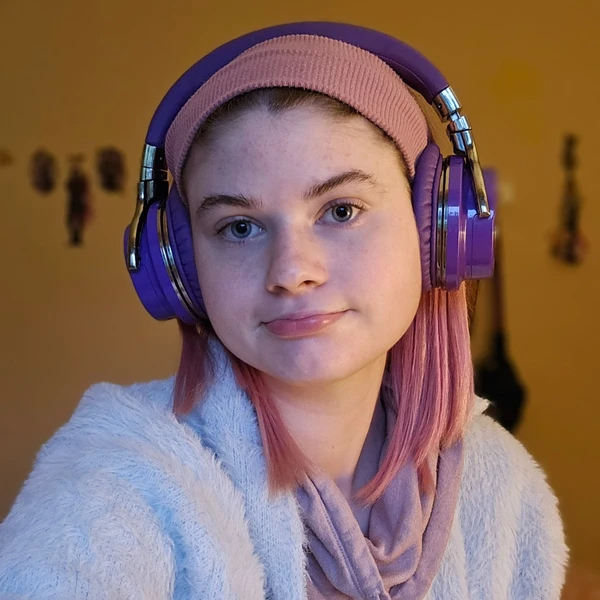
I am a 20 year old community college student beginning dental hygiene school in fall of 2025. I am very interested in biology and teeth. As some with autism spectrum disorder, I want to be a dental hygienist who is accommodating to other neurodivergent individuals in regard to sensory and social difficulties. Additionally, I have an interest in aquariums and have a love for listening to music and animals. My family has 12 cats and lots of chickens.
Education
Clark College
Bachelor's degree programMajors:
- Health Professions and Related Clinical Sciences, Other
- Dentistry
- Dental Support Services and Allied Professions
Miscellaneous
Desired degree level:
Bachelor's degree program
Graduate schools of interest:
Transfer schools of interest:
Majors of interest:
- Dentistry
- Dental Support Services and Allied Professions
Career
Dream career field:
Dentistry
Dream career goals:
Dental Hygienist
Sports
Dancing
2016 – 20193 years
Arts
Dance Fusion NW
Dance2017 CATS Theater Performance2016 – 2019
Public services
Volunteering
Nordic Northwest — Member of the official Oregon Lucia Court, a Scandinavian tradition2022 – 2024Volunteering
Healing Steps Equine Centered Therapy — Monitoring safety and helping children maintain balance while riding on a horse2022 – 2025
Future Interests
Advocacy
Volunteering
Dental Hygiene Basics Scholarship
As an adolescent, I was diagnosed with autism spectrum disorder. On my quest to improve my social skills, I discovered that these skills require practice for everyone, but the learning process comes naturally to those without social or communication difficulties, and they don’t realize they are practicing. For individuals with social difficulties, we must, in a way, learn it artificially. And doing so gives a unique perspective on how intricate and challenging things like small talk can really be.
I have not seen many autistic dental hygienists; however, there are a number of aspects to this field that are compatible with common autistic traits—such as a need for routine and repetition. The socialization aspect of the field is where I anticipated it could get complicated, but I knew that this was my dream, and I could persevere because what really fueled my passion for becoming a dental hygienist was frequently hearing the perception that some dental hygienists have of patients who don’t engage in small talk when they expect it.
“When patients just give one-word answers after I ask how they’re doing, I expect that they’re going to be rude and difficult patients.”
“I was taken aback when my patient wasn’t receptive to prompts for small talk. I do that with every patient; what’s their problem?”
“When I ask a patient how they’re doing, any decent patient would ask me how I’m doing in response.”
I was deeply saddened to think about how patients like me may be perceived, and I immediately felt a strong drive to be a part of the change that would emphasize how not every disability, disorder, or difficulty with socialization or communication is outwardly visible. Healthcare workers are taught that small talk is a helpful distraction for anxious patients, but this is not true for everyone. For socially anxious patients, this approach can increase anxiety.
Neurodivergent individuals often struggle at dental offices, not just in regard to communication but also sensory difficulties. I have struggled with discomfort in my teeth that is different from the traditional hypersensitivity that is well known in dentistry. Sensory issues are often a result of excessive sensory information being sent to the conscious parts of the brain. This makes me aware of things that many people don't notice; I have to intentionally distract myself from them. I want to use my lived experience to help patients who might struggle in similar ways.
It’s no secret that dental hygiene school is costly, often due to expensive equipment. When I start dental hygiene school in four weeks, I would like my main focus to be on my learning, so being financially prepared is essential for staying in the program and also having the brain space to process all this new information that we have to learn in a short amount of time. A scholarship would support my ability to focus the majority of my attention on learning how to become a great dental hygienist who understands patients with communication and sensory difficulties.