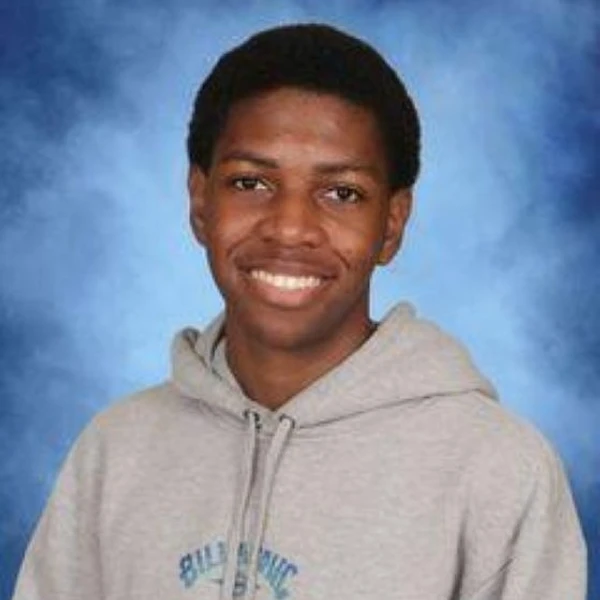
Cedric Dorcent
1x
Finalist
Cedric Dorcent
1x
FinalistBio
High school senior seeking internships in technology or engineering fields where I can apply programming fundamentals, technical knowledge, and analytical problem-solving skills.
Education
Boca Raton Community High School
High SchoolMiscellaneous
Desired degree level:
Bachelor's degree program
Majors of interest:
- Electrical and Computer Engineering
Career
Dream career field:
- Electrical Engineering
Dream career goals:
Crew Member
Chipotle2025 – Present1 year
Patricia Lindsey Jackson Foundation - Eva Mae Jackson Scholarship of Education
Faith has played a big role in my life as a Christian, but it has not always been simple or easy to hold onto. A lot of the time it was actually tested in ways I did not expect, especially through loss and instability, and there were moments where I had more questions than answers but I still kept believing because it was the only thing that gave me some sense of direction.
When I was two years old, my mother died in the 2010 Haiti earthquake while holding me in her arms, and even though I do not remember that moment, it has affected my life in ways I am still understanding. Growing up without her and then being sent to live with three different aunts meant I was always adjusting, always trying to figure out where I fit, and honestly there were times where I wondered why my life turned out like this and why I had to go through it.
There were moments where my faith felt challenged and I questioned God, not because I stopped believing but because I did not understand, and I think that actually made my faith stronger over time because I had to choose to believe instead of just being told to. I started to see faith as trusting God even when nothing around me made sense, and that mindset helped me keep going when things felt uncertain.
That same mindset has carried into my academics and my goals. I pushed myself to earn my AICE Diploma and AP Scholar Award, even while working at Chipotle for over seven months, and trying to balance everything was not always easy but I stayed consistent. I also spent two years with Community Service Leaders, starting as one of the first volunteers and eventually becoming a Leadership Ambassador, which taught me responsibility and how to be there for other people even when I was still figuring things out myself.
My faith has also shaped how I think about independence, especially because my relationship with my father has been complicated, since he lives in Boston while I live in Florida and a lot of the time his support has come with control. Because of that, I have become really determined to build a life where I can rely on myself, and I believe God has given me the strength to do that even when it feels difficult.
I plan to study Electrical Engineering or Molecular Engineering because I want to solve problems and actually build things that matter, and in the future I am interested in either going to graduate school or becoming a patent attorney so I can combine innovation with protecting ideas. For me, higher education is not just about getting a degree, it is about creating a path to stability and independence that I did not always have growing up.
At the end of the day, my faith has been tested many times but it is still what keeps me grounded and moving forward, even when I am unsure about what comes next. It reminds me that my past does not define me and that there is still purpose in everything I have been through, and with the support of this scholarship I know I can continue building the future I have been working toward.
Mark Caldwell Memorial STEM/STEAM Scholarship
The hardship I want to describe is not a single event. It is a condition: growing up without a stable home, without consistent guidance, and without anyone around me who worked in a technical field. I did not have a parent who could explain what an engineer does or a family member who had written a line of code. Whatever I built in STEM, I was going to have to build from scratch, in more ways than one.
My mother died in the Haiti earthquake of 2010 when I was two years old. My father was not present in any practical sense. I moved between three different households growing up, and the instability of that meant I often had to be my own advocate, my own motivator, and my own teacher. In middle school, I found my way into a computer science classroom, and something clicked. Not just the material, but the method. In coding, if something does not work, you debug it. You read the error. You isolate the problem. You try again. That logic felt like something I already knew how to do in life. I just had not had a name for it before.
The achievement I am most proud of is completing my AICE diploma while simultaneously dual-enrolling at Palm Beach State College, earning an AP Scholar award, and building an independent coding project, all while working at Chipotle to support my own financial independence. None of those things happened by accident. Each one required a deliberate strategy.
The first strategy was structure. Without a stable home environment, I learned to create my own. I treated my schedule like a system to be managed: work shifts mapped around class times, study blocks protected the way other people protect appointments. I used tools like task lists and calendar blocking not because anyone taught me to, but because I needed external structure when internal conditions were inconsistent.
The second strategy was deliberate skill-building. I earned two coding certifications in middle school. I took AP Computer Science Principles in high school. I enrolled in Java programming and network technologies at Palm Beach State College. And outside of any classroom, I built a sales data analyzer in Python using Pandas and Matplotlib, a project I put on GitHub because I wanted something tangible to show for the hours I had put in. Every skill I added was a choice, not a requirement. I was building a toolkit for a future I had already decided was mine.
The third strategy was simply refusing to equate difficulty with impossibility. That sounds obvious, but it is harder to hold onto than it sounds when you are tired, when the circumstances are genuinely hard, and when no one around you is doing what you are trying to do. I kept going because I understood that the gap between where I started and where I am going is not a barrier. It is the work. And I have never been afraid of work.
Peter and Nan Liubenov Student Scholarship
There is a social norm that says certain people are not supposed to end up in certain rooms. The kid without stable parents, without a consistent home, without generational wealth or connections is not the one people picture when they imagine the next engineer, the next attorney, the next person shaping how technology gets built and protected. I am aware of that norm. I have been aware of it my whole life. And I think the most positive thing I can do for society is to make it increasingly irrelevant.
I grew up without my mother, who died in the Haiti earthquake of 2010 while holding me as an infant. I was raised across three different homes, moved between relatives, and learned early that the systems designed to support young people do not always reach everyone equally. That experience did not make me bitter about society. It made me precise about where its gaps are, and serious about being someone who works on closing them.
Right now, I am a positive force in small but concrete ways. I have served with a nonprofit called Community Service Leaders for two years, starting as their first volunteer and growing into a Leadership Ambassador role. Service, for me, is not symbolic. It is a practice of paying attention to what people around you need and doing something about it. That habit was shaped by knowing what it feels like to be on the other side of it.
In the future, I intend to work at a larger scale. I am pursuing a degree in electrical or molecular engineering, disciplines where the work of solving problems is embedded in the physical world. I am also drawn to patent law, specifically because of what it represents: the legal infrastructure that determines whose ideas get protected and whose get passed over. The history of innovation is full of inventors from marginalized backgrounds who built things that others profited from. I want to be someone with the technical depth to create and the legal knowledge to ensure that credit, ownership, and opportunity flow more fairly.
Social norms shape my thinking in a specific way: they tell me what the default expectation is, and I use that as a reference point for what I want to push against. The norm says first-generation students from unstable homes are unlikely to pursue advanced degrees or high-skill careers. The norm is not malicious. It is statistical. But statistics describe the past, and I am more interested in what I can make true going forward.
Being a positive force does not require a grand gesture. It requires showing up, building something real, and making sure the path you carved is wide enough for someone behind you to follow. That is what I am doing now. That is what I intend to keep doing, at every level of whatever comes next.
Hines Scholarship
For most people, college is the next step. For me, it is the first step that is entirely my own.
I have spent my life navigating circumstances I did not choose. I lost my mother in the Haiti earthquake of 2010 before I was old enough to remember her face. I was raised across three different households by relatives doing their best with what they had. I grew up with the feeling, present and persistent, that the ground beneath me could shift at any moment. College is where I plant something permanent.
What I am trying to accomplish is specific. I plan to study electrical or molecular engineering, fields where the work is about understanding systems at their most fundamental level, whether that is how electrons move through a circuit or how molecules bond and break apart. I am drawn to problems that operate at scales most people cannot see but everyone eventually feels. Clean energy, medical technology, materials science: these are not abstract interests. They are areas where an engineer who actually understands the stakes can do work that outlasts them.
I am also thinking seriously about patent law. Growing up in circumstances where other people held power over my choices taught me something about what it means to protect what belongs to you. Patent law sits at the intersection of technical knowledge and legal advocacy, and I think there is important work to be done there for people and communities that have historically had their ideas overlooked or taken. I want to understand the science deeply enough to create, and the law well enough to protect.
I have not waited for college to start preparing. I am a senior at Boca Raton Community High School with an AICE diploma and an AP Scholar award. I have taken dual enrollment courses at Palm Beach State College in Java programming, network technologies, and microcomputer operating systems. I have held a job at Chipotle for over seven months. I rose from first volunteer to Leadership Ambassador at a nonprofit called Community Service Leaders. I built a sales data analyzer in Python on my own time because I wanted to know if I could. Every one of these things was a choice I made, with no one pushing me.
College means the chance to go deeper. It means access to labs, to mentors, to problems too large for one person working alone after school. It means being in rooms where the questions I already carry can finally meet the tools to answer them. I am not going to college to find direction. I already know where I am going. I am going to get there faster, and to do more once I arrive.
Sunshine Legall Scholarship
I did not join Community Service Leaders because someone told me to. I joined because I showed up one day as a volunteer and realized that being useful to people felt like something I was supposed to do.
That was two years ago. I was their first volunteer. Today I serve as a Leadership Ambassador, helping organize initiatives, support newer members, and represent the organization in the community. The role grew because I kept showing up, kept taking on more, and kept asking what else needed to be done. Nobody appointed me. I just refused to leave.
Community service, for me, is not about resume lines. It is about a simple belief I developed early: that the people around you are part of your responsibility. I grew up without a stable home, moving between relatives, figuring out a lot on my own. That experience taught me what it feels like to need support and not always have access to it. It also taught me that when you are in a position to show up for someone, you should. No calculation required.
My academic goals are rooted in that same orientation toward impact. I plan to pursue a degree in electrical or molecular engineering. Both fields sit at the frontier of how the physical world gets designed, how materials behave, how energy moves and transforms. I am drawn to the idea that engineering is, at its core, problem solving on behalf of people who need something to work better than it currently does.
Beyond the degree, I am interested in patent law. It is a field that not many engineering students think about early, but I do, because I understand what it means to have something taken from you or controlled by someone else. Patent law is where technical expertise meets the protection of ideas, and I think there is real work to be done there, especially for inventors and innovators from communities that have historically been locked out of those protections. I want to be someone who understands both the science and the system well enough to bridge that gap.
I am currently a senior at Boca Raton Community High School with an AICE diploma, an AP Scholar award, and dual enrollment credits from Palm Beach State College in subjects ranging from Java programming to network technologies. I work at Chipotle. I build projects on GitHub in my spare time. I have been putting together a life that belongs to me, piece by piece, for years now. The academic and professional goals I am describing are not wishful thinking. They are the next steps in a direction I am already moving. Community is what taught me to move that way in the first place.
Marie J. Lamerique Scholarship for Aspiring Scholars
I was two years old on January 12, 2010, when a 7.0 magnitude earthquake struck Haiti. I was in my mother's arms. She did not survive. I did.
I have no memory of that moment, but I have lived inside its consequences every day since. My father, overwhelmed and unwilling to raise me on his own, sent me to live with relatives in the United States. Over the years, I moved between three different aunts across different homes, different cities, different rules, different versions of what family was supposed to look like. My father settled in Boston. I ended up in Boca Raton, Florida. The distance between us was not just geographic.
The specific moment I want to describe is not a single afternoon but a slow-building realization that arrived sometime during my freshman year of high school. My father had remained a presence in my life, not through time or attention, but through money and control. He made it clear that financial support came with conditions: decisions about my schooling, my future, my path were subject to his approval from 1,300 miles away. I was expected to be grateful for the arrangement. For a long time, I tried to be.
But sitting in my room one evening, looking at a college savings account I had no access to and a phone full of instructions I hadn't asked for, something shifted in me. I understood, clearly and for the first time, that if I wanted a future that was actually mine, I was going to have to build it myself. No one was going to hand it to me. The people who were supposed to be my foundation had shown me, in different ways, that I could not rely on them as one.
So I started building. I got a job at Chipotle and have worked there for over seven months, learning how to manage a schedule, handle pressure, and earn my own money. I joined a nonprofit called Community Service Leaders as their very first volunteer and eventually rose to become a Leadership Ambassador, a role I have held for two years. I enrolled in dual-credit courses at Palm Beach State College while still in high school, earning A's in subjects like U.S. History, Microcomputers, and College Success Strategies. I taught myself Python and built a sales data analyzer on GitHub because I wanted to understand how data could tell a story. I earned an AICE diploma and an AP Scholar award not because anyone pushed me, but because I had decided that my record would speak for itself.
My upbringing did not give me stability. It gave me something harder to teach: the understanding that stability is built, not inherited. I watched adults around me make choices out of obligation, convenience, or avoidance, and I decided I would make mine out of intention. Every early shift at work, every late night studying, every line of code I wrote after school was a small act of authorship over a life that started without a mother and without a plan.
I plan to study electrical or molecular engineering, and I am exploring a path toward patent law, where technical knowledge meets the work of protecting ideas. I do not know exactly what that future looks like yet, but I know how I will get there: the same way I have gotten everywhere else. By deciding it is mine, and doing the work.
David Foster Memorial Scholarship
There is a version of me that never makes it out of middle school. Not because of poverty or circumstance, though both were present, but because of anger. I was a kid carrying grief I didn't have language for, and one afternoon in sixth grade, that grief came out as a fight. I was suspended.
Most adults responded the way adults usually do: with disappointment, with paperwork, with warnings. Mr. Creighton responded differently. He pulled me aside, looked me in the eye, and said: "You're so much better than this." Not as a reprimand. As a fact. Like he had already seen the version of me I hadn't yet become, and he was simply reporting back.
Mr. Creighton was my computer science teacher across 6th, 7th, and 8th grade at Boca Raton Community Middle School, but that title barely captures what he was. He introduced me to robotics when I didn't know what robotics was. He guided me through two coding certifications when I had never thought of myself as someone who coded. He stayed late after school to let me tag along while he managed the sports department, talking with me about money, about discipline, about how the world actually worked. Those were the conversations no one else was having with me at home.
He also held me accountable in ways that cost him nothing but meant everything. When the pandemic hit and school moved online, I started slipping. Without structure, without someone physically present to push me, my grades fell. Mr. Creighton noticed. He reached out to my family directly and pushed for me to come in for in-person instruction. They agreed. I finished that year with an A, not because the material suddenly got easier, but because someone refused to let me disappear.
I grew up without my mother, passed between relatives, often without a consistent adult anchor. Mr. Creighton became, in many ways, the first person outside of family who genuinely invested in my future. He didn't just teach me how to write code or build a robot. He taught me that showing up, even when it's hard, is what separates the person you are from the person you could be.
I am now pursuing a degree in electrical or molecular engineering. I have an AICE diploma, an AP Scholar award, dual enrollment credits from Palm Beach State College, and a GitHub repository with projects I built on my own time because I want to. Every one of those things traces back, in some way, to a middle school teacher who decided I was worth the trouble. I intend to spend the rest of my life proving he was right.
DeJean Legacy Scholarship For Haitian American Students
My Haitian heritage has shaped nearly every part of who I am today. I was raised in a household where perseverance, faith, and hard work were not just encouraged but expected. Haiti’s history is one of strength and resilience, and my family constantly reminds me that challenges are meant to be overcome, not feared. Hearing stories about sacrifice and determination taught me to value opportunity and never take education for granted. As a first-generation Haitian American, I feel a responsibility to succeed not only for myself but also for my family and community.
Culturally, I was taught to approach life with discipline and gratitude. Education has always been viewed as the pathway to stability and impact. That mindset directly influences my academic goals. I plan to pursue a degree in electrical engineering because I am passionate about technology and problem-solving. Engineering allows me to think critically and create practical solutions that can improve people’s lives. Coming from a country where infrastructure and access to reliable energy can be limited, I understand how transformative technology can be. My background motivates me to contribute to advancements in energy and communication systems that can strengthen communities both in the United States and in Haiti.
My long-term goal of attending law school and becoming a patent attorney is also influenced by my cultural identity. Haiti is a nation built on independence and the protection of freedom. That legacy inspires me to protect innovation and intellectual property. I want to combine my engineering knowledge with legal expertise so I can advocate for inventors and ensure their ideas are protected. Many talented individuals, especially those from immigrant and minority communities, may not have access to legal resources. I hope to be someone who bridges that gap and supports creators in securing recognition for their work.
In addition to my academic goals, I have actively contributed to my community as an ambassador for the nonprofit organization Community Servant Leaders. In this role, I participate in service initiatives and help promote leadership, mentorship, and volunteerism among young people. Being involved in this organization has strengthened my commitment to giving back. It has shown me that leadership is not about titles but about service. Whether helping organize community outreach events or encouraging peers to get involved, I have learned the importance of using my voice and time to uplift others.
These experiences have reinforced my desire to continue serving in the future. As I advance in my education and career, I plan to mentor younger students who are interested in STEM fields, particularly those from Haitian and immigrant backgrounds. I also hope to support community programs that focus on education and innovation. By becoming both an engineer and a patent attorney, I will be in a position to contribute not only technical solutions but also legal protection that empowers others.
My Haitian heritage has given me resilience, purpose, and a strong sense of responsibility. It drives my academic ambitions and my commitment to service. Through education, leadership, and community involvement, I plan to honor my roots while creating opportunities that extend far beyond myself.
Chris Ford Scholarship
My name is Cedric Dorcent, and I am a 17-year-old Haitian student who plans to build a career at the intersection of engineering and law. Growing up in a Haitian household taught me resilience, discipline, and the importance of education. My parents often reminded me that opportunity is not guaranteed, but earned through hard work and consistency. Because of their sacrifices, I understand that higher education is not just a personal milestone. It is a responsibility to use my skills to create meaningful change.
My interest in electrical engineering began with curiosity about how everyday technology works. I have always been the type of person who wants to understand what is happening behind the scenes, whether it is a phone charging, lights turning on, or a device connecting to the internet. Over time, that curiosity grew into a passion for math and science. I enjoy solving complex problems step by step and finding logical solutions. Electrical engineering stands out to me because it shapes nearly every part of modern life, from renewable energy systems to communication networks. By earning a degree in this field, I hope to contribute to innovations that improve efficiency, expand access to technology, and promote sustainable solutions.
However, I do not want to stop at engineering. After completing my bachelor’s degree, I plan to attend law school and specialize in patent law. Innovation drives progress, but without legal protection, many ideas can be copied or taken advantage of. I want to help inventors and engineers secure patents so their hard work is protected. This is especially important for individuals from underrepresented communities who may not always have access to legal resources. By combining technical knowledge with legal expertise, I will be able to understand inventions deeply while also advocating for the people behind them.
Through my future career, I plan to make a positive impact in two major ways. First, as an engineer, I want to contribute to technologies that improve quality of life, particularly in areas such as energy and infrastructure. Access to reliable power and modern systems can transform communities, both in the United States and in countries like Haiti. Second, as a patent attorney, I want to protect innovation and encourage creativity. When inventors know their ideas are secure, they are more likely to continue building solutions that benefit society.
Ultimately, my goal is to use education as a tool to create opportunity not only for myself, but for others. I want to represent the values of hard work and perseverance that my family instilled in me. By pursuing electrical engineering and later patent law, I hope to stand at the intersection of innovation and justice, ensuring that progress is both advanced and protected.
Evangelist Nellie Delores Blount Boyce Scholarship
My name is Cedric Dorcent, and I am a 17-year-old Haitian student with a strong interest in technology and problem-solving. Growing up in a Haitian household, I was raised to value hard work, education, and perseverance. My family has always emphasized that education is the key to opportunity. Because of their sacrifices and support, I am committed to pursuing higher education so that I can build a successful career and make a meaningful impact.
My interest in electrical engineering started with small, hands-on experiences at home. I remember helping fix a fan that I had broken when I was younger while playing around with my brother, and fixing this device instead of throwing it away Is what really got me thinking and interested in the field. Sitting on the floor with tools and wires, I realized that even complicated systems could be understood if you were patient enough to learn how each part worked. That moment sparked my curiosity. In school, I became more interested in math and science because I enjoyed solving problems and understanding how things function. Over time, I realized that electrical engineering would allow me to turn that curiosity into a career.
I plan to pursue a bachelor’s degree in electrical engineering because I want to help design and improve the technology that powers everyday life. Electrical engineers play a role in everything from energy systems to communication devices. I want to gain the technical knowledge and skills needed to contribute to innovation and solve real-world problems. Earning this degree will give me a strong foundation and open doors to advanced opportunities.
After completing my engineering degree, I hope to attend law school and specialize in patent law. My goal is to combine technical knowledge with legal expertise so I can help inventors protect their ideas. Many innovators, especially those from underrepresented communities, do not always have the resources or guidance to secure patents. I want to advocate for them and ensure their hard work is recognized and protected.
Higher education is important to me because it represents growth, opportunity, and the chance to give back. As a Haitian student, I carry the values of resilience and determination with me. By earning a degree in electrical engineering and eventually becoming a patent attorney, I hope to build a career that allows me to support innovation, protect creativity, and inspire the rest of my family to pursue their goals.