user profile avatar

Chidinma Woko

1x

Finalist

Bio

Chidinma "Miracle" Woko is a Nigerian-American screenwriter, director, and producer based in Anchorage, Alaska, on the unceded traditional lands of the Dena’ina people. Her work examines how inherited belief systems and perceptual boundaries shape identity, misunderstanding, and conflict. She is the creator of the Perspective Convergence Framework, a diagnostic lens for understanding how perception forms, fractures, and fails to converge — particularly through narrative and film. She is known for Dawning (2022), Make-Believers (2021) and Ghetto Bird (2020), and recently filmed and appeared in a documentary alongside Nigerian directors Asurf Oluseyi — known for 3 Cold Dishes (2025; Executive Produced by Burna Boy), Kasanova (2019), and Hakkunde (2017) — as well as Adeoluwa Owu, known for The Griot (2021). Miracle has lived across four continents and works across narrative, analysis, and spoken-word formats. She plays piano and guitar and speaks multiple languages, including English, Igbo, German, Korean, and Japanese, and continues to study additional languages. She has taught Korean language and cultural communication to students ages 14–70+ at the university level—an experience that informs her work exploring identity, perception, and belonging across cultures.

Education

Regent University

Bachelor's degree program
2026 - 2028
  • Majors:
    • Business/Corporate Communications
    • Communication, General
    • Communication, Journalism, and Related Programs, Other
  • Minors:
    • Public Policy Analysis
    • International/Globalization Studies
    • Philosophy, Politics, and Economics
    • Political Science and Government

Miscellaneous

  • Desired degree level:

    Master's degree program

  • Graduate schools of interest:

  • Transfer schools of interest:

  • Majors of interest:

    • Political Science and Government
    • Rhetoric and Composition/Writing Studies
    • Communication, Journalism, and Related Programs, Other
    • Communication, General
    • Business/Corporate Communications
  • Not planning to go to medical school
  • Career

    • Dream career field:

      • Public Policy
    • Dream career goals:

    • Certified Nursing Assistant

      Providence St. Joseph Health
      2019 – 20223 years

    Sports

    Volleyball

    Varsity
    2012 – 20164 years

    Research

    • International and Comparative Education

      University — Student
      2019 – 2019

    Arts

    • The Di Experience Modeling and Acting Development Center

      Acting
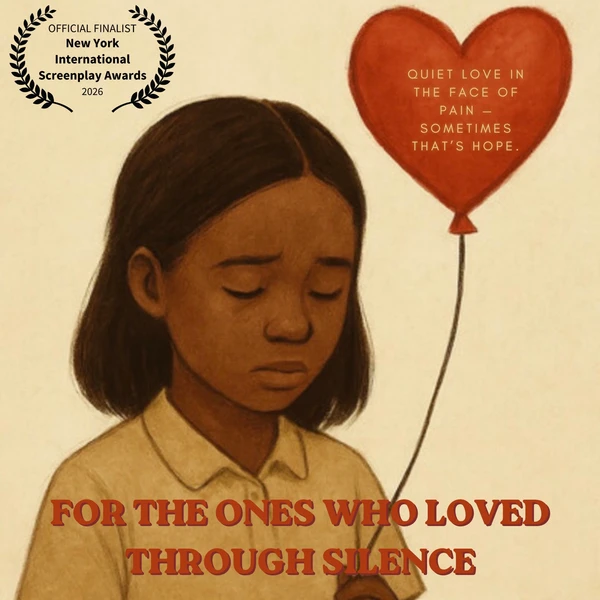
      Daddy Unscripted, For the ones who loved through silence., 뽕짝 디바 (I Want To Be A Trot Superstar), Sad Cake
      2021 – 2022

    Public services

    • Volunteering

      Covenant House Alaska — Youth Mentorship Facilitator & Community Outreach Volunteer
      2026 – Present
    • Advocacy

      Office of the Long-Term Care Ombudsman (OLTCO) - State of Alaska — Volunteer Ombudsman Representative
      2026 – Present
    • Volunteering

      Keys to Life Alaska — Community Arts & Cultural Development Partner
      2026 – Present
    • Volunteering

      The Walter Bruce Foundation (WBF) — Homeless Outreach & Food Distribution Volunteer
      2026 – 2026
    • Volunteering

      International Youth Fellowship, IYF — Assistant Language Teacher
      2025 – 2025
    • Volunteering

      Wendler Newcomer Program Partnership | University of Alaska Anchorage — English Second Language Tutor
      2017 – 2017
    • Volunteering

      International Youth Fellowship, IYF — Community Volunteer
      2017 – 2017

    Future Interests

    Advocacy

    Politics

    Volunteering

    Philanthropy

    Entrepreneurship

    Minority Women in LAS Scholarship
    My immigrant experience has shaped not only my education but the lens through which I see the world. As a Nigerian‑American woman raised across continents, I learned early that perception is inherited. In my cornerstone essay for a framework I developed, Diaspora + Perception, I describe how diaspora children grow up navigating multiple perceptual worlds—each with its own emotional logic, expectations, and vocabulary for love, fear, duty, and belonging. That tension between collectivist and individualist seeing has defined my journey as both a student and an artist. In 2022, while working full‑time as a CNA and attending university, my life fractured. I experienced a cataclysmic disruption of everything I believed to be true—emotionally, spiritually, and academically. The pressure to perform strength, something immigrant daughters often learn early, became unbearable. I eventually left both work and school, believing I had failed. I did not yet understand I was carrying burdens shaped by diaspora survival logic: the expectation to be responsible, resilient, and self‑sacrificing, even when breaking. During this period, my father left our eight‑member household due to infidelity. As the eldest daughter, I absorbed the emotional fallout, trying to stabilize my siblings, support my mother, and make sense of the rejection that reshaped our family. Depression followed, and I gained significant weight as my body mirrored the emotional weight I carried. In many African immigrant families, daughters inherit the unspoken debt of sacrifice; love becomes duty, and gratitude becomes performance. My educational goals were not simply interrupted—they were swallowed by responsibility. Healing began when I had a supernatural experience that allowed me to see my father not only as the man who hurt us but as a child shaped by his own wounds. When I put myself in his shoes not to excuse his actions but to better understand them, I found the strength to forgive him. That forgiveness became a turning point. In less than a year, I shed more than 80 pounds along with the emotional heaviness that had clouded my vision. Through this process, I discovered a deeper truth: I have a Heavenly Father who loves me more than my earthly parents ever could. Ephesians 2:19 reminds me that I am no longer a stranger or foreigner, but a fellow citizen with the saints and a member of God’s household. Philippians 3:20 affirms that my citizenship is in heaven, and Galatians 3:26–29 declares that in Christ, there is neither Jew nor Greek, slave nor free, male nor female—for we are all one. These verses form the foundation of my worldview and the multicultural vision of my production company, Divine CTZN Productions, which exists to tell stories that transcend borders and reveal our shared humanity. After a four‑year hiatus, I returned to university to complete my Bachelor’s degree. This return was not simply academic; it was perceptual. It represented rewriting the lens through which I saw myself, moving from inherited survival logic to an identity rooted in Jesus Christ. As I express in my Director’s Statement for my feature film pitch deck, my work is rooted in culture, perception, and transformation. My educational journey mirrors that arc: fracture, clarity, and reformation. My immigrant experience has made attaining my educational goals more difficult—but it has also made me more determined. It taught me resilience, cultural intelligence, and the ability to hold complexity without collapsing under it. I should be considered for this scholarship because I am committed to using my education and my art to honor the communities that shaped me and to create work that reflects the depth, dignity, and unity of immigrant women and global citizens in Christ.
    Christian Fitness Association General Scholarship
    In 2022, my life underwent a tumultuous upheaval that reshaped everything I believed to be true about myself, my future, and my stability. At the time, I was a part‑time university student and working full‑time as a CNA. I carried responsibilities that stretched me thin, but I pushed forward because I believed that perseverance alone would sustain me. Instead, the pressure fractured me. A series of personal crises converged—emotional exhaustion, spiritual confusion, and family instability—and I eventually reached a breaking point that forced me to leave both my job and my education. What I thought would be a temporary pause became a four‑year hiatus. During that time, my father left our eight‑member household due to infidelity. As the eldest daughter, I felt the weight of the family’s emotional and practical burdens fall squarely on my shoulders. The rejection, instability, and grief that followed plunged me into a deep depression. I gained significant weight, eventually becoming extremely overweight, not because I lacked discipline, but because the emotional weight I carried was too heavy for my body to hide. My physical condition became a visible manifestation of the internal turmoil I was trying to survive. Yet even in that darkness, God was working. One day, I had an experience that allowed me to see my father not only as the man who hurt our family, but as a child shaped by his own wounds. When I put myself in his shoes—not to excuse his actions, but to understand the brokenness behind them—I found the strength to forgive him. That forgiveness became a turning point. It was as if the emotional weight I had been carrying finally loosened its grip. Over a span of less than 10 months, more than 80 pounds came off without my ever going to the gym, along with the heaviness that had clouded my vision and suffocated my hope. Through this process, I discovered a truth that changed my life: I have a Heavenly Father who loves me more deeply than my earthly father or mother ever could. Psalms 139:13 reminds me that God formed me intentionally, and Jeremiah 1:5 affirms that He knew me before I was born. My identity is not defined by abandonment, instability, or rejection. It is defined by the God who created me with purpose. For years, depression made it impossible for me to see that purpose. Jeremiah 29:11 declares that God has plans to prosper us and not to harm us, plans to give us hope and a future. I could not see that future when I was weighed down by grief, responsibility, and emotional exhaustion. But as healing took root, clarity returned. I realized that the same God who sustained me through the darkest seasons was calling me to rise again. After four years away from school, I returned to university to complete my current Bachelor’s degree program. This decision was not simply academic—it was spiritual. It represented reclaiming the future that depression once obscured. It represented choosing hope over despair, discipline over stagnation, and purpose over pain. Returning to school required courage, sacrifice, and faith, but it also revealed the resilience God had been cultivating in me all along. My journey has shaped not only my character but also my ambitions. I am driven to complete my education because I understand the value of perseverance, the importance of healing, and the necessity of purpose. I want to use my experiences to impact others—especially those who feel overwhelmed by family instability, emotional burdens, or spiritual confusion. My testimony is not one of perfection but of redemption. It is a story of how God can take brokenness and turn it into strength, how He can take setbacks and turn them into stepping stones, and how He can take a life clouded by depression and illuminate it with hope. I should be considered for this scholarship because my journey reflects ambition forged through adversity, drive strengthened through healing, and impact shaped by compassion. I have overcome significant personal, emotional, and spiritual challenges, yet I stand today with renewed purpose and a commitment to finish what I started. Financial support would not only help me complete my degree—it would help me continue walking in the calling God has placed on my life. The same truth that restored me is the truth I carry into my future: God has plans for me that far exceed the pain of my past. And the same is true for anyone reading my story. If depression, instability, or rejection has clouded your vision, know that God’s purpose for you remains unchanged. His love is deeper than any wound, His plans are greater than any setback, and His presence is constant—even when life feels overwhelming. My life is evidence that healing is possible, purpose is real, and God’s promises endure. I am returning to school not as the person I once was, but as the person God is shaping me to become.
    Max Bungard Memorial Scholarship
    My struggle with addiction began during a season of emotional exhaustion and spiritual confusion after my best friend’s suicide and significant family challenges. In my grief, I believed the enemy’s lie that God had abandoned me, opening the door to harmful coping mechanisms. I began smoking marijuana and consuming mushroom gummies containing 4‑amo‑DMT, which my body converted into psilocin. As my use increased, I experienced a profound disintegration of the self or ‘ego death,’ a collapse of identity that often occurs during bad psychedelic trips. My inner world was fracturing because I had no true foundation. What I called “relief” was escape. I used substances to numb pain and avoid confronting heartbreak. Scripture teaches in Romans 8 that our identity must be rooted in Christ, and Ephesians 2:6 declares believers are seated with Him in heavenly places. Romans 8:34 affirms that Christ intercedes for us, grounding our sense of self. Without that foundation, I was spiritually exposed. These attacks escalated until they culminated in a temporary psychiatric evaluation after I began experiencing auditory hallucinations. Yet God’s mercy prevailed. Today, most people would never believe I once endured such a crisis — a testimony to His saving grace. At the same time, I was involved in New Age practices — astrology, self‑focused meditation, and teachings that promised enlightenment but pulled me from God’s truth. Scripture teaches that the mind is a gate, and whatever enters it shapes the heart. Verses such as Psalms 24:3–10, Proverbs 4:23, Matthew 6:22–23, Romans 12:2, Philippians 4:8, and Psalms 119:105 emphasize guarding one’s gates and meditating on the Word so the mind can be transformed. Instead of guarding my gates, I opened them to influences that darkened my discernment. Drugs, secular music, and New Age meditation created a spiritual vulnerability I did not recognize until intense spiritual attacks began. I realized substances are not just physical gateways — they can be spiritual ones. Hosea describes idolatry and occult practices as adultery against the Living God, and I saw that I had sought comfort outside His presence. In that crisis, God intervened. Yahweh Jehovah used the consequences of my choices to expose deception. Instead of condemning me, He extended mercy and delivered me from darkness through the blood of Jesus Christ. A message by Apostle Guillermo Maldonado on supernatural transformation helped me understand: “You will never taste, enjoy, or experience the will of God until you change your mind.” Romans 8:5–11 reinforced this — yielding to the Holy Spirit requires directing our attention, our gates, toward Him. When I stopped renewing my mind, I regressed. When I returned to the Word of God, transformation began. Sobriety is not just abstaining from substances; it is choosing daily to guard my gates and yield my mind to the Holy Spirit. I replaced harmful coping mechanisms with prayer and fasting, Scripture meditation, fitness, journaling, and creative work that honors God. I stopped producing secular music and redirected my artistic gifts toward projects that bring clarity and truth. Moving forward, I want my recovery to serve others. As a filmmaker and cultural theorist, I hope to expose deceptive ideologies, encourage spiritual discernment, and help people understand how meaning and identity are shaped. I also aim to build programs that help young adults — especially Nigerians and international students — access legitimate remote work opportunities so they do not turn to harmful coping mechanisms. Deuteronomy 31:1–8 says God will never leave nor forsake us. He repeats this here because we often forget. My life is evidence that even in confusion, grief, and addiction, His presence remains — and His deliverance is real.
    Future Nonprofit Leaders Award
    The first time I realized how deeply people can be affected by what they believe to be true—even when it isn’t—was through volunteer work and personal experiences where I saw confusion, fear, and misinformation shape real decisions. It made me recognize something important: some of the most vulnerable moments in a person’s life are not just caused by a lack of resources, but by a lack of clarity. That realization is what draws me to study Communication with a concentration in Rhetoric and Advocacy. I have always been fascinated by how people interpret the world—how identity, culture, and narrative shape perception. Through both my volunteer work and my own lived experiences, I have seen how gaps in understanding can create real harm. This led me to develop the Perspective Convergence Framework (PCF), a conceptual model that examines how people can experience the same environment yet walk away with entirely different understandings. What began as a way to analyze narrative and communication has become a tool for understanding how misalignment in perception can lead to mistrust, disconnection, and missed opportunities for support. Studying rhetoric and advocacy allows me to deepen this work. The discipline focuses on how people form beliefs, how arguments shape public life, and how communication influences identity and culture. These are the same questions at the heart of the PCF. I want to learn how to write and speak with clarity, how to engage ethically in persuasion, and how to help communities navigate the narratives that shape their lives. My long‑term goal is to work in the nonprofit sector, particularly in areas like reentry and homelessness support, where communication is often as critical as resources. Many formerly incarcerated individuals—and people experiencing homelessness—possess professional backgrounds or untapped strengths that are overlooked because their stories are misunderstood. I envision programs within transitional housing models that use an asset‑based, peer‑led approach, where individuals can teach, learn, and rebuild professional identity together. Through nonformal, competency‑based education focused on digital literacy, communication skills, and future‑of‑work tools, these programs could strengthen protective factors linked to reduced recidivism and long‑term stability. In practical terms, I hope to support nonprofits that focus on equitable access to information, community resilience, and public‑facing education. Whether developing communication strategies, designing advocacy initiatives, or helping people navigate complex systems, my goal is to ensure individuals are not left vulnerable simply because the world around them is difficult to interpret. What motivates me most about nonprofit work is its focus on people over profit. It is a space where impact is measured not by visibility, but by meaningful change—by whether someone is safer, more informed, or better supported than before. That is the work I want to dedicate my career to. Ultimately, I see my role as contributing to clarity in spaces where confusion can cause harm. By studying communication—especially rhetoric and advocacy—I hope to build systems, messages, and programs that help communities understand and navigate the world around them. For me, this path is not just an academic choice; it is a commitment to using my voice and my framework in service of others.