Hobbies and interests
3D Modeling
Advocacy And Activism
Anatomy
Biomedical Sciences
Reading
Academic
Anthropology
Biography
Classics
Health
Novels
Religion
Social Science
I read books daily
Catherine Cavey
1x
Finalist1x
WinnerCatherine Cavey
1x
Finalist1x
WinnerBio
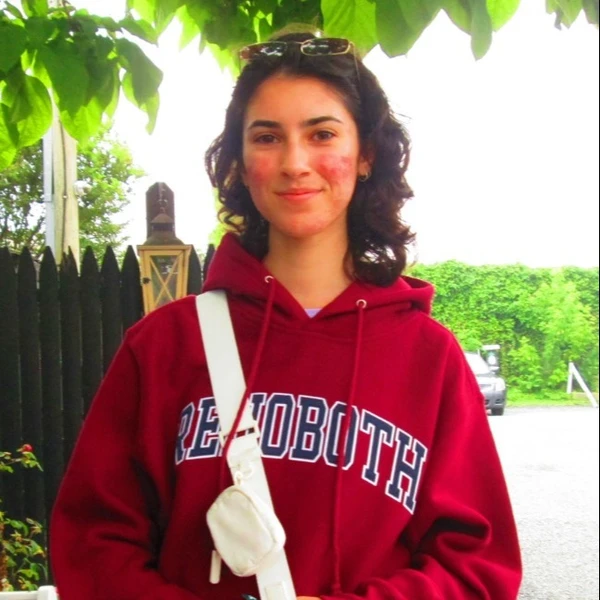
Catherine is a second year studying biomedical engineering on the pre-med track at the University of Virginia. Inspired by her mother's 9-year cancer battle, she is passionate about lung cancer research and advocacy for early detection awareness, methods, and funding. Through her previous research at the NIH, experience in mobile clinics in low-income, rural areas in Peru, and shadowing experiences in multiple departments in the US and abroad, she has become more aware of the need for equitable access to quality healthcare and the need for positive change. She is determined to be a part of that change.
Education
University of Virginia-Main Campus
Bachelor's degree programMajors:
- Biomedical/Medical Engineering
Miscellaneous
Desired degree level:
Doctoral degree program (PhD, MD, JD, etc.)
Graduate schools of interest:
Transfer schools of interest:
Majors of interest:
Career
Dream career field:
Medicine
Dream career goals:
Care Giver
N/A2022 – 20231 year
Research
Biopsychology
University of Virginia Psychology Department — Undergraduate Research Assistant2024 – PresentMicrobiological Sciences and Immunology
National Cancer Institute, National Institutes of Health — Researcher2023 – 2023
Public services
Volunteering
MEDLIFE — Clinical Volunteer2024 – PresentAdvocacy
American Cancer Society — Researcher, Poster Producer, Podcast Creator2021 – Present
Future Interests
Advocacy
Volunteering
Philanthropy
Entrepreneurship
Future Women In STEM Scholarship
I grew up in a low-income, first-generation household surrounded by classical artists. My family members were dancers, potters, painters, and sculptors, each trained in their craft with a devotion that shaped my childhood. Creativity lived in every corner of our home, but science did not. I was the first to look at a microscope the way my family looked at a dance studio or a pottery kiln. As a young woman of color stepping into STEM without a single role model in my immediate world, I learned very early what it means to walk into a room where no one looks like you and want to stay anyway.
The moment that shaped my interest in STEM came during my mother’s battle with cancer. I was old enough to understand the gravity of her illness but young enough to feel helpless. I remember sitting beside her during treatments, wishing I could do something more than hold her hand. I watched machines hum beside her bed and medications drip through IV lines, wondering how they were made, who invented them, and how they knew they would help. I did not know the language of pathways, receptors, or therapeutics yet, but I knew one thing clearly: I wanted to understand the science behind the tools keeping her alive.
When she passed, the sense of helplessness I felt transformed into motivation. Instead of being pushed away from the hospital environment, I was pulled toward it. STEM became not just an academic interest, but a path that offered the possibility of doing for others what I couldn’t do for her. I chose biomedical engineering because it exists at the intersection of problem-solving, compassion, and innovation. It felt like the closest thing to giving families the hope mine once needed.
As a woman from an underrepresented background, stepping into STEM has required resilience. I have been the only woman in the room, the only student with a low-income background, the only person whose family had no connection to science. But instead of discouraging me, these experiences strengthened my commitment. Representation is not a distant concept for me. It is a daily reality, one that shapes how I move through classrooms, labs, and clinical spaces. It has made me more determined to carve a place for myself and to show young women behind me that they belong in STEM just as much as anyone else.
My internships and volunteer work further solidified my calling. At the National Cancer Institute, I conducted research that helped me understand the biological complexity of disease at a deeper level. In the emergency department, I witnessed firsthand how science and medicine intertwine to save lives. Through MEDLIFE in Peru, I saw what happens when people do not have access to the innovations we create. In each of these settings, I carried the memory of my mother with me, along with the drive to turn loss into purpose.
STEM changed the trajectory of my life. It gave me a way to transform grief into action, disadvantage into determination, and underrepresentation into leadership. I want to use my career to advance healthcare, support marginalized communities, and open doors for other women who feel out of place in STEM spaces.
My interest in science began with heartbreak, but it continues because I believe that women like me can help change the world.
Leading Through Humanity & Heart Scholarship
1. I grew up in a low-income, first-generation household surrounded by classically trained artists in pottery, ballet, painting, and sculpture. My family taught me discipline, creativity, and the importance of dedicating yourself to something that matters. But my life took a very different shape. Losing my mom to cancer at a young age became the defining turning point of my childhood. Watching her illness taught me, more than any classroom ever could, how fragile health is and how deeply families depend on compassionate, skilled healthcare workers.
That loss guided me toward global health, clinical volunteering, and biomedical engineering. I have worked in emergency departments in the U.S., in oncology clinics in Italy, in mobile medical clinics in low-income communities of Peru, and in neuroscience research labs. Through each experience, I learned that health is not just a biological state. It is a human experience shaped by dignity, fear, trust, and access.
My values, empathy, service, perseverance, and a commitment to equity, were born from these experiences. They pushed me to pursue a future in medicine where I can care for patients not only with scientific knowledge but with understanding. I want to build a career that protects and uplifts human health because I know personally what is at stake when it falters.
2. To me, empathy is the ability to sit with someone’s fear, pain, or uncertainty and refuse to turn away. It is the willingness to understand someone’s experience without judgment and to honor their emotions even when you cannot fix everything. Empathy is not soft or optional. It is the foundation of meaningful healthcare. It shapes how we listen, how we treat, how we comfort, and how we advocate. Without empathy, medicine becomes mechanical. With it, medicine becomes human.
My understanding of empathy began with my mom’s cancer journey. I remember the physicians who leaned in when she looked afraid, who explained her options slowly enough that she felt seen, and who gave us moments of hope during unbearable days. I also remember the providers who rushed, who spoke in clipped tones, and who treated her like a case rather than a person. Those experiences taught me early that empathy can change the entire trajectory of a patient’s care.
I plan to become a physician, and empathy will be central to everything I do. My clinical and global health experiences have strengthened this belief. In the emergency department, I learned how vulnerable patients feel when they arrive in pain or fear. In Italy, I saw how cancer patients rely on emotional connection just as much as chemotherapy or surgery. In Peru, I witnessed families who had never been offered consistent healthcare and who simply needed someone to look them in the eye and treat them with dignity. These moments taught me that patients do not remember every detail of their treatment plans, but they always remember how you made them feel.
To practice medicine through a human-centered lens means bringing empathy into every interaction. It means speaking with patients, not at them. It means recognizing financial hardship, language barriers, trauma histories, and cultural backgrounds as integral parts of their health—not inconveniences. A human-centered approach means slowing down long enough to listen. It means respecting a patient’s autonomy, fears, and hopes. It means recognizing that every person in the exam room is a whole human being, not just a diagnosis.
In my future career, I will ensure that my work remains human-centered by grounding myself in the values that brought me here. I will ask patients about their concerns before discussing treatment. I will learn about cultural contexts and communication differences. I will advocate for patients who feel unheard or overwhelmed. And I will always remember what it felt like to be the daughter of someone who was sick and vulnerable. That memory will guide every decision I make.
Empathy is not a skill I plan to use. It is the core of who I am becoming—and the foundation of the physician I hope to be.
Manny and Sylvia Weiner Medical Scholarship
I want to become a medical doctor because cancer took my mother from me long before I was ready to lose her. Growing up, I watched her fight through exhaustion, pain, and fear. I learned what it means for a family to live in the shadow of illness, and I learned how deeply a compassionate physician can impact not just a patient, but everyone who loves them. Losing her did not harden me. It broke me open. It made me want to dedicate my life to the one field that could have changed her story. I want to become an oncologist so I can stand beside families during the hardest chapters of their lives and offer the hope, clarity, and care I once needed myself.
My path to medicine has not been easy. I am a low-income, first-generation student, and the first in my family to pursue science. My family is full of classically trained artists who could turn clay into something beautiful or bring a story to life through dance, but financial stability was always fragile. College felt like an impossible dream, and medical school felt even further out of reach. I have worked every year, applied for scholarships constantly, and stretched every resource I had to stay on track academically. The cost of medical school is overwhelming, and sometimes I understand too well why someone like Manny Weiner was forced to set aside his dream.
But the obstacles I have faced have not pushed me away from medicine. They have shaped the kind of doctor I want to become. Through shadowing emergency physicians, volunteering on mobile medical clinics in low-income communities, and observing oncology care abroad, I learned that medicine is not just science. It is presence. It is sitting with someone in their fear. It is showing them they are not a burden. It is promising, through both words and action, that they deserve care no matter their income, education, or circumstance.
Financial hardship has taught me how difficult it can be to ask for help, to trust providers, and to navigate a healthcare system that often feels cold and inaccessible. These experiences will make me a better oncologist. I will see the patient who hesitates to mention cost. I will understand the parent who feels guilty for missing work to attend appointments. I will fight for those who do not feel empowered to fight for themselves. I know what it feels like to sit in a waiting room praying for good news. I will never forget that.
I want to become an oncologist because I want to bring gentleness into a world that often feels unbearably heavy. I want to dedicate my life to helping families stay whole for as long as possible. I want to be the kind of doctor who gives time, clarity, and dignity to every patient who walks through my door.
This scholarship would not only ease the financial burden that stands between me and medical school. It would help me continue a dream born from loss, strengthened by hardship, and rooted in the belief that healing is a form of love.
Anthony Belliamy Memorial Scholarship for Students in STEAM
I grew up in a low-income, first-generation household where nothing about my path was guaranteed. My family is filled with classically trained artists in ballet, pottery, painting, and sculpture. They shaped beauty with their hands and created meaning through movement and craft. I inherited their discipline and creativity, but my life took a different direction. I became the first to pursue science. My childhood, shaped by love as well as instability and illness, pushed me toward a future I would need to build on my own.
The greatest challenge I have faced was losing my mother to cancer. Her illness defined much of my early life. I spent years attending medical appointments, learning to read the changes in her energy, and pretending to be brave when I was scared. Cancer affects everyone in a family. Watching her suffer was the most painful experience of my life. Losing her left a silence that nothing has ever fully filled, but it also awakened a new sense of purpose within me. I wanted to honor her strength through the kind of life I chose to build.
After she passed away, I struggled with grief that felt larger than I was. I had to grow up quickly. I became responsible for things that no child should have to take on, including managing the emotional fallout at home, keeping myself grounded, and continuing school when my heart felt too heavy to focus. I had to become my own support system. That experience forced me to develop resilience, discipline, and independence far ahead of my years.
And at the same time, it gave me direction.
Instead of letting loss define me, I let it shape me. I turned toward science, and specifically biomedical engineering, because I wanted to understand illness at its roots. I wanted to bring something into the world that could help families like mine. Families sitting in waiting rooms wishing for better news. Families clinging to the rare days when their loved one feels like themselves again. My mother’s battle with cancer transformed grief into purpose and purpose into ambition.
Overcoming hardship was not a single moment. It was a long and uneven process. I overcame it by staying committed to my education, even when studying felt impossible. I overcame it through service, by supporting others in ways I once needed myself. And I overcame it by stepping into leadership roles where I could create inclusive and supportive spaces for people facing their own challenges.
In college, I poured myself into service and scholarship. I shadow emergency physicians and oncologists, volunteer with MEDLIFE to bring healthcare to low-income communities in Peru, and work in neuroscience research to understand how biology shapes behavior. I also serve as the Diversity and Inclusion Chair for the American Chemical Society at UVA, where I work to elevate marginalized voices and foster belonging. Each role I take on is shaped by my desire to uplift others. I understand what it feels like to struggle without stability, and I want to make sure fewer people ever have to feel that way alone.
The challenge of losing my mother has shaped my career goals in deeply personal ways. I want to become a biomedical engineer focused on cancer therapeutics and use science to create hope for families facing devastating diagnoses. I also want to be a leader who carries empathy, ethical responsibility, and service into every part of my work. I want to show younger minority students that their hardships do not diminish their potential. Instead, hardship can deepen their compassion and strengthen their drive.
Anthony Belliamy lived with integrity, strength, and resilience. Although our stories are different, I strive to embody the same values he represented: rising above adversity, leading with compassion, and dedicating myself to serving others.
The most significant challenge I have faced became the foundation of my purpose. It taught me to be brave, to persevere, and to dream beyond my circumstances. It shaped the future I am building now, one where I use science, service, and compassion to create the kind of impact I once prayed someone could make for my family.
Christina Taylese Singh Memorial Scholarship
My journey into healthcare began with loss. My mom’s illness shaped my childhood in ways that are hard to put into words. Watching someone you love fade in and out of pain teaches you things you never forget: how fragile people can be, how deeply families hurt, and how desperately we depend on compassionate, attentive care. Her loss left an ache in my life, but it also planted a purpose in me. I knew I wanted to dedicate my life to helping others the way I wished someone could have helped her.
Today, I am a Biomedical Engineering student at the University of Virginia, working toward a career in medicine where I can care for patients with both technical understanding and genuine empathy. I want to enter healthcare as a physician who listens, who understands the emotional weight illness places on a family, and who uses science as a tool for healing. I want to give people what I needed at my most vulnerable: hope, steadiness, and someone who refuses to give up on them.
Every experience I’ve had so far has brought me closer to that calling. At the WellSpan Gettysburg Emergency Department, I shadow physicians for entire shifts, sit with families in moments of uncertainty, and learn what it means to care for people when they are most afraid. I take histories, watch cases unfold, and see how compassion can change the entire tone of an exam room.
In Milan, through the Atlantis Program, I witnessed patients facing cancer diagnoses and major surgeries at the Istituto Nazionale dei Tumori. Speaking with them in Italian, watching surgeons operate, and seeing how families cling to any piece of hope showed me just how universal the language of care really is. It made me want to be a provider who sees patients as whole human beings, not just conditions.
My volunteer work in low-income communities of Lima, Peru through MEDLIFE affected me deeply. Families waited in long lines for basic healthcare many people take for granted. I helped triage patients, assisted physicians, and saw firsthand how limited access to care can determine someone’s entire future. That experience taught me that healthcare is not just a system. It is a lifeline, and one that not everyone has access to. It made me more determined to use my life in service to others.
Research has also shaped me. At the Connelly Psychology Lab, I run immunohistochemistry experiments and study behavioral neuroscience in vole models, learning how fragile and intricate biological systems truly are. At the National Cancer Institute, I studied developmental mechanisms and presented my findings to NIH scientists, experiencing for the first time what it feels like to contribute to knowledge that might one day help patients . Research taught me patience, humility, and the understanding that healing often begins long before anyone steps into an exam room.
Christina Taylese Singh devoted her life to caring for others, and even though her journey was cut short, her spirit lives on through this scholarship. Like Christina, I want to spend my life easing suffering and helping people reclaim pieces of themselves that illness has taken. Whether through clinical care, research, or advocacy, I want my work to reflect compassion, resilience, and service.
This scholarship would help me continue walking the path that loss first carved into my life and that purpose has strengthened ever since. I hope to carry Christina’s legacy forward by becoming the kind of healthcare provider who sees, values, and supports every patient who places their trust in me.
Emma Jane Hastie Scholarship
I grew up in a family of classically trained artists, surrounded by pottery wheels, ballet shoes, and canvas frames. Creativity and discipline shaped my childhood, but my path took a different direction. I became the first in my family to pursue science, and as a low-income, first-generation student, I learned quickly that my future would depend on resilience, resourcefulness, and a deep commitment to serving others. Today, I am majoring in biomedical engineering with the goal of designing cancer therapeutics that can give families more time with the people they love. For me, service is not a career category. It is the purpose that anchors everything I do.
Losing my mom to cancer changed the way I understand service. Watching her struggle, and seeing how medical care shaped her quality of life, taught me that helping others goes far beyond grand gestures. It is often about quiet dedication, daily compassion, and the willingness to show up even when it is difficult. My mom’s experience ignited my desire to pursue a service-driven career focused on improving health outcomes for patients and families facing devastating illnesses. I want to spend my life developing solutions that reduce suffering and expand possibilities.
Service has always been part of how I move through the world, but one experience stands out as especially meaningful. During my time at the National Cancer Institute, I volunteered to assist in patient-support programming for families participating in clinical studies. Although my primary role was scientific, I often stayed after hours to help create resource packets, organize care items, and speak with families who were navigating complex treatment journeys. One afternoon, I met a young girl whose father was enrolled in an advanced cancer trial. She sat in the waiting area, anxious and quiet, while her mother tried to balance paperwork and worry. I sat with the girl, showed her how to work through a small STEM activity kit we kept on hand for visitors, and talked with her about her favorite things to learn in school.
It was such a small moment, but something shifted. She relaxed. Her mother’s eyes softened with relief. And I realized that service is not measured by size. It is measured by presence. By choosing to support someone in a moment when their strength is stretched thin. That day reaffirmed my belief that I want to serve others not only through research and engineering, but also through compassion, mentorship, and community engagement.
Outside of research, I have continued to volunteer in community education settings, particularly with first-generation and low-income students who remind me of younger versions of myself. I help them navigate academic pathways, explore STEM opportunities, and build confidence in spaces where they often feel out of place. Seeing their excitement grow, knowing I helped create that spark, has been one of the most fulfilling parts of my journey.
In my future career, I hope to embody the same spirit of service that defined Emma Jane Hastie’s life. I want to uplift my community by contributing to medical innovations that save lives, by mentoring students from underserved backgrounds, and by continuing to show up for people in both small and significant ways.
Service is not something I do once in a while. It is the core of who I am becoming. And I hope to continue honoring that commitment throughout my life and career.
Lavender Ribbon Cancer Scholarship
WinnerCancer is not just a diagnosis. It is a weight that settles into a family and never fully leaves. Losing my mom to cancer changed everything about my life, my future, and the way I understand service. It reshaped who I am and clarified the kind of person I want to become. Her absence created a space that will never truly be filled, but it also lit a determination in me to dedicate my life to helping others, just as she helped me for as long as she could.
My mom fought quietly but fiercely. She tried to protect me from fear, even when she was the one enduring the pain. I grew up watching how cancer wears someone down physically, emotionally, and spiritually. I also saw the way it impacts a family: the strain, the uncertainty, and the silent grieving that begins long before the loss itself. When you lose someone you love, especially to a disease like cancer, you learn how precious time is. You learn how much compassion matters. And you learn how deeply service can change someone’s life.
My mom was the reason I first cared about science, but losing her is the reason I chose biomedical engineering as my path. It is my way of turning grief into purpose. I want to work in cancer therapeutics and research so I can help prevent other families from experiencing the devastation that mine did. I want to devote my career to creating treatments that extend life, improve quality of care, and give people the chance to stay with the families who need them. To me, service means dedicating your skills, your time, and your heart to easing someone else’s burden. Biomedical engineering allows me to do exactly that.
I have already taken steps in this direction through my internships at the National Cancer Institute. There, I worked alongside researchers who spend their lives unraveling the complexity of cancer biology. I contributed to projects focused on understanding tumor behavior and therapeutic response, and each day reminded me why this work matters. Every data point represents someone’s mother, father, partner, or child. Every breakthrough represents a moment of hope for a family like mine. Being part of research felt like the most meaningful act of service I could offer.
Losing my mom also taught me empathy for people whose lives have been disrupted by illness. I know what it feels like to sit beside someone you love, hoping for one more day without pain. I know how isolating grief can feel. Because of that, my commitment to service extends beyond research. I want to mentor other first-generation and low-income students who feel overwhelmed by personal circumstances they never asked for. I want to help younger students realize that hardship does not make them weak. It makes them capable of extraordinary compassion.
Sylvie and Ralph dedicated their lives to serving others. Although their paths differed—hospitality and public safety—they both embodied the belief that helping people is one of the most meaningful things a person can do. I want my life to embody that same spirit.
Cancer changed my family forever. But it also gave me a reason to dedicate my future to service. I want to honor my mom by working toward a world where fewer families have to experience what mine did, and by using my career to make a difference in the lives of others.
That is the legacy I hope to build.
Saswati Gupta Cancer Research Scholarship
My career goal is to become a biomedical engineer specializing in cancer therapeutics, with a long-term focus on gastric cancer. I want to help create treatments that extend lives, reduce suffering, and bring hope to families who face diagnoses that feel overwhelming. Cancer research is where my academic interests, personal experiences, and sense of purpose come together.
I am a low-income, first-generation student, and the first in my family to pursue science. Everyone in my family is a classically trained artist in pottery, ballet, sculpture, or painting. I grew up surrounded by creativity and discipline, but my curiosity pulled me toward a different kind of artistry. While they shaped clay or practiced choreography, I became fascinated by cells, molecular signaling, and the engineered solutions that could save lives. Stepping into biomedical engineering as the first scientist in my family has required resilience, independence, and a willingness to push beyond what I was raised to expect for myself.
My internships at the National Cancer Institute strengthened my commitment to this field and showed me what rigorous, patient-centered research looks like. At NCI, I worked alongside scientists who dedicate their lives to understanding cancer behavior and therapeutic development. I contributed to research examining tumor biology and response mechanisms, and those experiences helped me see how engineering principles can directly inform medical breakthroughs. It was the first time I felt not just inspired by science, but truly part of it.
Professionally, I hope to pursue graduate training and join a research team focused on developing targeted therapies for high-mortality cancers. I want to use my engineering foundation to build treatments that are effective, equitable, and grounded in compassion.
This scholarship would allow me to continue advancing toward that future and toward becoming the cancer researcher I am determined to become.
Second Chance Scholarship
I want to make a change in my life because I am ready to step into a future shaped not by fear or uncertainty, but by purpose. For a long time, I carried the weight of circumstances I could not control. My mom’s health struggles, my own challenges, and the instability that followed us shaped my early years in ways that were often difficult to navigate. There were times when I felt like I was trying to grow in the middle of a storm. But even in those moments, a quiet belief began forming inside me. I wanted my life to move toward something better. I wanted to become someone my younger self could look up to. And most importantly, I wanted to use what I had experienced to help others.
The change I am working toward now is becoming a biomedical engineer who designs medicines and technologies that give people a second chance at health, strength, and hope. This dream grew from watching my mom fight through years of medical complications and from learning how powerful effective treatments can be. I want to be part of creating solutions that help families hold on to the people they love. It is my way of turning hardship into healing.
To move closer to this goal, I have taken concrete steps in my education and personal growth. I have challenged myself academically, studying biomedical engineering with a focus on understanding therapeutic design. I have sought out research experiences, volunteered in labs, and pushed myself to develop the resilience needed in a demanding field. I also worked on strengthening my mindset. Healing from personal adversity is not a single moment. It is a series of choices, sometimes uncomfortable ones. I learned to ask for help when I needed it, to stay committed during difficult semesters, and to rebuild confidence when life disrupted my plans. These steps have brought me closer not only to my goal, but to the version of myself I want to be.
Receiving this scholarship would make an enormous difference. Financial strain has always been a quiet barrier in the background of my goals. Balancing school, medical costs in my family, and my own needs has created stress that sometimes overshadows what I want to achieve. This scholarship would not only relieve part of that burden, but it would also symbolize something deeper. It would be a reminder that second chances are real. That people believe in my future even when I have stumbled or struggled. That I am allowed to grow beyond the challenges that shaped me.
If I am fortunate enough to receive this scholarship, I will make sure its impact does not stop with me. I plan to pay it forward by mentoring younger women in STEM who feel intimidated or unsure of themselves. I want to offer them the same encouragement I desperately needed when I was starting out. I also hope to work with community programs that support students facing personal adversity, especially those who feel their circumstances limit their potential.
I believe that every second chance creates a ripple. Someone once helped me believe that my life could be more than its hardest moments. I want to offer that same belief to someone else.
That is how I will honor this opportunity. And that is how I hope to continue the cycle of giving.
Harvest Scholarship for Women Dreamers
My “Pie in the Sky” dream is to become a research and design biomedical engineer who creates medicines that help families hold onto the people they love. It is a dream that feels both powerful and slightly out of reach, but it has lived in my heart for as long as I can remember. It began with my mom and the many years I spent watching her navigate complicated health challenges with strength she didn’t always feel.
Growing up around illness shapes you quietly. I learned to do homework in waiting rooms, to read the expressions on nurses’ faces, and to measure time by doctor’s appointments. Even when I was little, I noticed how much difference one successful treatment could make. A medication that worked did not just ease pain. It brought pieces of my mom back. It gave us moments of normalcy that felt like small miracles.
The moment that sparked my dream happened during one of those rare good days. My mom had just started a new medication, and for the first time in weeks, she laughed. Really laughed. I remember staring at her and thinking about how someone, somewhere, had developed the treatment that gave her that moment. I did not know the words “biomedical engineering” yet, but I knew I wanted to be someone who helped create hope like that.
As I grew older, my classes finally gave shape to the feeling I had carried for so long. Biology and chemistry showed me the science behind the medications I grew up watching my mom depend on. Learning about molecular pathways and therapeutic mechanisms made me feel like I was finally stepping into the world I had long imagined. My curiosity was no longer just emotional. It became academic, grounded, and purposeful.
This dream is big, and pursuing it takes courage. The coursework is challenging, and there are days when doubt creeps in. But whenever I feel uncertain, I think of my mom and the families who wait for better treatments. That is where my strength comes from. I remind myself that difficult dreams are worth pursuing precisely because they have the power to change lives.
I also know I cannot reach this dream alone. I want to grow in community, surrounded by women who are dreaming boldly in their own ways. I have learned that courage expands when shared, and that we rise higher when we support each other. Harvest’s mission resonates deeply with me because I believe women become unstoppable when they speak their dreams openly.
To reach my goal, I will continue studying biomedical engineering and pursue research in therapeutic design. I want to join labs where I can learn how ideas transform into treatments and develop the skills necessary to contribute to that process.
My dream is simple at its core. I want to use science to give hope to families like mine. It may feel big now, but it is the dream that makes me feel most alive, most determined, and most myself.
This is my “Pie in the Sky,” and I am ready to grow toward it.
Dream BIG, Rise HIGHER Scholarship
I did not always know what I wanted to become, but I always knew the kind of person I needed to be. My education has been more than a path forward. It has been a lifeline, a source of direction during times when everything around me felt unsteady. Much of that feeling began in childhood as I watched my mom struggle with her health. Her pain and her strength shaped me long before I fully understood what illness meant. I remember sitting quietly beside her bed, tracing the IV line with my eyes and wondering why no one could make her feel better. When you love someone who is suffering, you learn very early what fear feels like. You learn what hope feels like too, especially when a new treatment or a compassionate doctor offers a moment of relief.
My desire to become a research and design biomedical engineer started as a quiet wish. I did not know the vocabulary for it, but I understood the feeling of wanting to fix what was hurting her. As I grew older and began studying biology and chemistry, those early memories started to make sense. Learning about cells, proteins, and how the body tries to heal itself felt deeply personal. Every concept connected to a question I had carried for years. Why did certain medications work, and why did others fail? How did scientists discover new treatments? Could someone like me help families like mine?
Education became more than an expectation. It became the way I could transform the helplessness of my childhood into something powerful. It became a promise to myself that I would find answers for people who live in uncertainty, the same way my family did.
But my journey through education has not been easy. Balancing school with the emotional weight of home life often felt like trying to climb a hill while carrying something heavy on my back. There were nights when I stayed up studying after hours spent at my mom’s doctor appointments. There were mornings when I sat in class pretending to take notes even though my mind was fifteen miles away, worrying about her. Other students seemed to move through school effortlessly, and I sometimes wondered why my path needed to be harder. Over time, I learned that difficulty does not diminish potential. It prepares you for a purpose that is rooted deeply in who you are.
During my first year of college, life tested me again when I experienced a series of health issues of my own. I spent weeks in medical offices, undergoing tests and missing classes. My grades slipped, and with them, my confidence. I had always prided myself on being strong, so it felt painful to admit I needed time to heal. But healing became another kind of education. I learned that strength is not measured by how much you can endure without breaking. It is measured by your willingness to rest, recover, and rise again.
This period changed me. It made me more compassionate, more patient, and more determined to enter a field where healing is at the center of the work. It reminded me why I chose biomedical engineering in the first place. The world needs people who understand pain from the inside. My experiences allow me to see research not just as data and design, but as a chance to change the lives of people who wake up every day with fear or uncertainty. I want to create medicines that lessen that fear. I want to design solutions that give families back the ordinary moments they might otherwise lose.
Education has given me the skills to pursue these goals, but it has also given me direction in a deeper way. Through labs and engineering projects, I have learned how to ask questions that matter. Through teamwork, I have learned how to listen with empathy, especially when others feel overwhelmed. Through late nights studying, I have learned what it means to persist even when the outcome is not guaranteed. These lessons have shaped the kind of engineer I hope to become. I do not want to contribute to innovation just for the sake of advancement. I want to contribute to innovation that cares about the people behind the data.
I also want to use my education to help others who are navigating struggles similar to my own. As someone who has balanced academics with personal hardship, I know how lonely it can feel. I hope to mentor students one day and remind them that every challenge they overcome becomes part of their strength. I want them to know that they are not defined by the difficult moments, but by the way they continue forward despite them.
My mom has always encouraged me, even when her own strength was fading. She taught me that perseverance is not about being fearless. It is about choosing to move forward because something matters to you. She believed in my future long before I believed in it myself. Every time I study, every time I step into a lab, I carry her hope with me.
Looking ahead, I want to devote my career to developing treatments that are more effective, more accessible, and more compassionate. I want to help create a future where fewer families feel powerless when someone they love is sick. I want to build the kinds of technologies that make healing possible and that allow people to stay with the ones who depend on them.
Education has shaped my goals by giving me the tools to chase answers. My challenges have shaped my direction by giving me a reason to search for them. And my dream of becoming a biomedical engineer comes from a place of love, loss, hope, and an unshakeable belief that science can give people back their tomorrows.
Elevate Women in Technology Scholarship
Telemedicine revolutionizes healthcare by providing accessible and affordable medical care to remote and underserved communities, significantly enhancing the quality of life for millions worldwide. This innovative technology leverages digital communication tools to bridge the gap between healthcare providers and patients, irrespective of geographical barriers. Telemedicine has emerged as a transformative force in the medical field, offering a myriad of benefits that address both immediate healthcare needs and long-term systemic challenges.
One of the most significant advantages of telemedicine is its ability to reach remote and rural areas where access to healthcare facilities is often limited. In many parts of the world, people live far from the nearest hospital or clinic, making it difficult for them to receive timely medical attention. Telemedicine overcomes this hurdle by allowing patients to consult with healthcare professionals through video calls, phone calls, and online messaging platforms. This means that a patient in a remote village can receive expert medical advice without the need to travel long distances, thereby saving time and reducing the cost of transportation.
Furthermore, telemedicine plays a crucial role in addressing the shortage of healthcare professionals in underserved areas. By connecting patients with specialists who may be located hundreds or even thousands of miles away, telemedicine ensures that individuals receive the care they need, regardless of their location. This is particularly important for patients with chronic conditions or those requiring specialized treatments that are not available locally. For instance, a patient with a rare disease can consult with a top specialist from a leading medical institution without leaving their home.
The COVID-19 pandemic has further highlighted the importance of telemedicine. During times of crisis, when in-person visits to healthcare facilities may be risky or impractical, telemedicine provides a safe alternative for both patients and healthcare providers. It has proven to be an invaluable tool in maintaining continuity of care while minimizing the risk of infection.
In conclusion, telemedicine is a powerful technology that has the potential to transform healthcare by making it more accessible, affordable, and efficient. By bridging the gap between healthcare providers and patients, especially in remote and underserved communities, telemedicine is paving the way for a more equitable and healthier world.
Elevate Mental Health Awareness Scholarship
How do you stay positive as a care giver for your mom who is dying right in front of your eyes? When I was in my senior year of high school, I became the care giver for my mom who was beginning to lose her battle against stage-4 cancer. Night after night, I would stay up with my mom after a full school day to help give her pain medicine, wheel her to the bathroom, and reassure her that things would get better soon. As much as I wanted to be there for her, it was always a struggle to stay positive for her. I was tired, stressed from college applications, and scared for her health. Throughout her last few months, I learned to balance being her caregiver, school, and my own mental health. I found strong support in my community who helped take care of my mom and me. Even after her passing, I never felt alone. I grieved with my community and could freely express my emotions with them. It was through this experience, which continues even now, that I realized how beneficial it is to have a community.
Throughout my mom's cancer battle, I witnessed the developments in cancer care and how innovative the field is. I decided then to become a biomedical engineer to develop medicines like the ones which prolonger her life 12 fold past her original 6-month prognosis. I was determined to help others like her to live a longer, healthier life. However, as she lay in the hospital during her last month, I saw the interactions she had with nurses and doctors and how much comfort she got from those caring people. It was then that I decided I wanted to not only become a biomedical engineer but also a cancer physician. I wanted to interact with patients to be a source of support and community for them. As someone with knowledge of healthcare, biology, and a previous experience with cancer, I want to support and comfort each patient I will have. If the cancer warrior is comfortable, I want to help them and their families to never feel alone during their cancer battle.
I know that this level of involvement can take a tremendous toll on my mental health. This is when I will lean into my own community of support, which includes not only friends and family but also my trusted therapist. (This also includes my emotional support cat, Blu!) Even before my greif and other mental health diagnoses, I have always found it extremely beneficial to talk to others and express my self. Many times, they would express their own experiences with mental health and what strategies helped them. After these interactions, I feel lighter and envigorated knowning that I am not alone and now have formed a stronger community. Community is a mutual thing, so I am also there for my community in whatever they need.
"It takes a village" is a statement that I have come to realize is true more and more everyday. As a physician, I hope to not only provide premire healthcare for my cancer warriors but also a shoulder to lean on through and even maybe after their battles. Even as an individual with her own mental health to take care of, my community is always there for me as I am for them. I hope to continue this legacy as a physician.