Hobbies and interests
Athletic Training
Bible Study
Cooking
Crafting
Reading
Exercise And Fitness
Running
Soccer
Tennis
Fishing
Exploring Nature And Being Outside
Genetics
Hunting
History
Music
Nutrition and Health
Reading
Christianity
Fantasy
History
Mystery
Novels
Realistic Fiction
Science Fiction
I read books daily
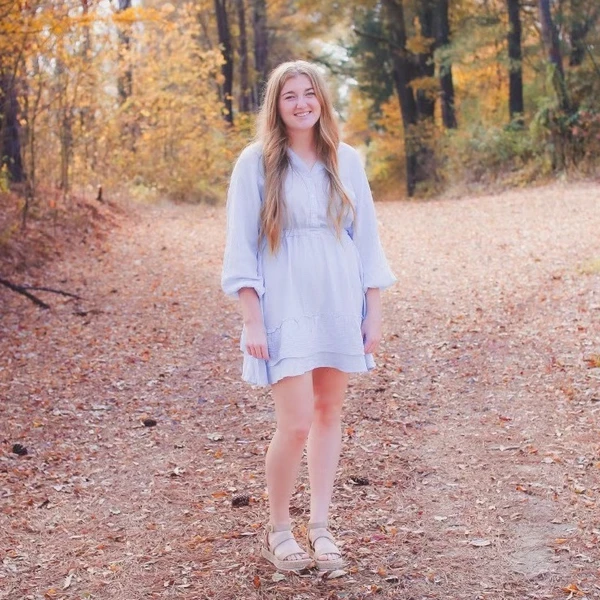
Casey Thornton
1x
Finalist1x
WinnerCasey Thornton
1x
Finalist1x
WinnerBio
I am a second-year student at the University of Tennessee studying civil engineering.
Education
The University of Tennessee-Knoxville
Bachelor's degree programMajors:
- Civil Engineering
Crockett County High School
High SchoolMiscellaneous
Desired degree level:
Bachelor's degree program
Graduate schools of interest:
Transfer schools of interest:
Majors of interest:
Career
Dream career field:
Civil Engineering
Dream career goals:
I hope to be able to return to my hometown of Brownsville, Tennessee and pursue a job working for Blue Oval City, which is the Ford Motor Company factory that has just come to our county.
Student Assistant
University of Tennessee Dwight Hutchins Engineering Office of Diversity2025 – Present1 yearSummer Feeding Program Empolyee
Crockett County High School2025 – 2025Server, Barista
Livingston's Soda Fountain and Grill2023 – Present3 years
Sports
Soccer
Varsity2020 – 20233 years
Cross-Country Running
Varsity2022 – 20231 year
Tennis
Varsity2022 – 20242 years
Track & Field
Varsity2023 – 20241 year
Public services
Volunteering
Crockett County Carl Perkins Center — I was a volunteer who dressed as a character from the Wizard of Oz for the theme "There's No Place Like A Safe Home."2023 – 2023Volunteering
Crockett County High School Youth Soccer Camp — I led elementary aged groups through soccer games and drills.2020 – 2023
Future Interests
Volunteering
Philanthropy
Entrepreneurship
Dynamic Edge Women in STEM Scholarship
The most influential person in my decision to pursue a technical field was not an engineer or someone working in a STEM industry. It was my high school biology teacher, who also happened to be my track and cross country coach.
At first, biology and running felt like two separate parts of my life. In the classroom, she taught about cellular respiration and muscle function. On the track, she pushed us through workouts that tested our limits. One afternoon during cross country season, after a particularly difficult interval workout, she gathered us together and explained why our legs felt like they were burning. Instead of brushing it off as part of training, she broke down what was happening inside our bodies and explained how oxygen use and muscle fatigue affected performance. That moment was the first time I realized science was not confined to a textbook. It was actively shaping how I trained, recovered, and improved.
What made her influence unexpected was the way she approached teaching and coaching with the same mindset. She believed understanding mattered just as much as effort. In biology class, she encouraged questions and emphasized reasoning rather than memorization. On the track, she applied that same approach by explaining how small adjustments in form or pacing could lead to measurable improvements. When I struggled, whether with a concept or a workout, she never framed it as failure. Instead, she treated it as a problem to work through, reinforcing that persistence and thoughtful analysis often go together.
As a young woman, seeing someone confidently lead both a science classroom and a competitive athletic program made a lasting impression on me. She showed me that technical knowledge and leadership are not limited to one kind of person. She also demonstrated that empathy and communication can strengthen problem solving rather than weaken it. Her example helped me recognize that STEM fields need people who can think critically while still understanding the people affected by their work.
That lesson stayed with me beyond high school. It shaped how I approach engineering today, not only as calculations and designs, but as tools that directly affect communities. Whether she was helping an athlete refine their training or helping a student grasp a difficult concept, she consistently connected knowledge to real outcomes. Watching her balance discipline with encouragement taught me that effective technical work is grounded in both skill and responsibility.
Because of her, I learned to see science as practical and people focused. That perspective is what ultimately pushed me toward a technical career, where I hope to apply analytical thinking in ways that are meaningful and impactful. Her influence continues to guide how I learn and how I envision my future in STEM.
Elizabeth Schalk Memorial Scholarship
For most of my life, I did not think of myself as someone affected by mental illness. I moved through school with ease, earning a 4.0 GPA and graduating as salutatorian. I never struggled academically, never questioned the way my brain worked, and never imagined that mental health would become a defining part of my story. Everything changed when I entered college and suddenly found myself unable to keep up in the way I always had. No matter how hard I tried to study or stay organized, something felt off. It was the first time in my life that effort did not match results, and it left me discouraged, confused, and unsure of who I was academically.
My ADHD diagnosis this past July gave me clarity I had been searching for. It reframed the challenges I faced not as personal shortcomings, but as symptoms of something real. Learning this at nineteen, after a lifetime of believing that success came naturally because of my own abilities, forced me to rethink how I understood myself. My diagnosis allowed me to stop blaming myself and start building strategies that actually work for my mind. It also made me realize how much mental health impacts everyday life, even in ways that are easy to overlook.
Mental illness affects more than the person who carries it. Some people in my family accept my diagnosis and want to understand it, while others believe ADHD is not real. Hearing dismissive comments or being told that I am “fine” made the process more isolating. Their reactions taught me that mental health misunderstandings can create distance even between people who care about each other. Instead of letting this discourage me, I learned to trust my own experience and advocate for myself. I also learned how important it is to show compassion to others who face challenges that may not be visible.
My experience with ADHD has reshaped my goals and the kind of future I want to build. I started college as a mechanical engineering major, but through learning more about myself, I realized my interests aligned more naturally with civil engineering. I want a career that strengthens communities and improves the daily lives of the people around me. Understanding my own mental health challenges has helped me recognize the value of creating spaces where people can feel safe, supported, and seen. Whether through designing infrastructure or simply being someone who listens, I want to contribute to environments that help others thrive.
Mental illness has become a meaningful part of my story, not because it defines me, but because it has shaped how I grow. It has made me more resilient, more self-aware, and more empathetic. It has taught me to seek support when I need it, to take responsibility for my education, and to believe that obstacles do not erase potential. My journey has changed the way I see myself and the world, and it motivates me to pursue a future where I can make a positive impact on others who may be struggling quietly, just as I once was.
Priscilla Shireen Luke Scholarship
Serving others has always been a central part of my life. I grew up in a community where helping neighbors, supporting local programs, and showing kindness were considered essential parts of daily life. As I got older, service became more than something I participated in. It became something that shaped my values and the way I hope to impact the world.
My earliest experiences were through church projects and school service clubs. I participated in Operation Christmas Child through my high school BETA Club and my church. Preparing shoeboxes for children taught me that even a small gesture can bring joy and comfort to someone I may never meet. For four years, I also served as a group leader at CCHS Youth Soccer Camp, which allowed me to guide younger players and support an activity that meant a lot to me growing up. These early opportunities showed me how meaningful service can be when it connects directly with a person’s daily life.
Throughout high school, I continued to volunteer wherever I was needed. I led a Vacation Bible School group, worked score tables for middle school volleyball games, served concessions at basketball games, helped pack food boxes for the Midsouth Food Bank through my school and local organizations, and volunteered at community events such as the Carl Perkins Center Car Show. I also served lunch at a local soup kitchen, which taught me how important consistent care is for families who rely on community support. Each experience strengthened my understanding that service is not defined by the size of the task but by the willingness to meet a need with compassion.
Now, as a college student, I remain committed to giving back. I am a member of a sorority that prioritizes service and offers opportunities to support local nonprofits, campus programs, and national philanthropic efforts. Being part of an organization dedicated to helping others encourages me to stay involved and to expand the ways I contribute. My volunteer work now includes both campus and community events, and I am building relationships that help me understand the long-term impact of service. Most recently I have volunteered at the Lakeside of the Smokies Balloon Fest and a local high school basketball game.
Looking ahead, I plan to continue serving communities wherever I am. I hope to support programs that focus on youth, food security, and outreach for families in need. My goal is to be someone who brings comfort and stability to others, whether through organized service events or simple acts of kindness. Service has shaped my character, and I want it to continue shaping the way I interact with the world.
I give back because I believe that helping others creates hope. The people who supported me when I was younger taught me what generosity feels like, and now I want to offer that same support to others. Every volunteer opportunity shows me that positive change often begins with one person who is willing to help. My aim is to be that person and to continue building a life that prioritizes compassion, community, and service.
This Woman's Worth Inc. Scholarship
I didn’t choose civil engineering just because I liked math or building things—I chose it because it’s practical, purposeful, and problem-driven. Growing up, I was often involved in hands-on projects with my dad, and I developed an interest in how things work and how they can be improved. Whether we were working on a shed, repairing something around the house, or building something from scratch, I loved seeing a project go from an idea to something useful. Over time, that interest turned into a goal: to use engineering to improve infrastructure in real communities, especially in places like where I’m from.
I’m currently a sophomore at the University of Tennessee, Knoxville, majoring in civil engineering. I want to work on projects that serve the public—things like safer roads, stronger buildings, and better access to utilities. Civil engineering allows me to work at the intersection of structure and service. I’m especially interested in improving systems in rural or underserved areas where problems are often overlooked but still deeply affect people’s lives. I believe that improving infrastructure is one of the most powerful ways to uplift entire communities.
To help pay for school, I currently work two part-time jobs. I made the decision early on not to fully rely on my parents financially, even though they’ve always supported me in every other way. They’ve sacrificed a lot to help me get here, and I want to carry my share of the responsibility. This choice has taught me how to manage my time, stay organized, and push through when things get difficult. It’s also made me more appreciative of every opportunity I’ve had to stay in school and keep working toward my goals.
This past year, I learned something important about myself. After a long period of feeling unfocused and overwhelmed, I was officially diagnosed with ADHD. Finally having a name for what I’d been experiencing helped me understand my own learning and attention challenges, and it gave me a clear way forward.
Since then, I’ve started adjusting how I approach school and daily tasks. I’m learning better systems for managing time and responsibilities, and I’m looking into campus resources and accommodations to help me stay on track. I feel more in control now and more confident in my ability to handle what’s ahead. I know that being proactive and flexible will be key not just in school, but also in my future career.
I believe I’m worth the dreams I aspire to achieve because I don’t back down from setbacks. I’ve learned how to be resourceful, self-motivated, and resilient. My goals are not just personal achievements, they’re tied to the impact I want to make through my work. With the right support, I know I can become the kind of engineer who solves real problems and creates lasting improvements for others.
Lynch Engineering Scholarship
My interest in engineering began long before college. Growing up, I spent countless hours helping my dad build all sorts of things. Whether it was fixing something around the house or taking on a new weekend project, I learned how to work with my hands and solve problems by doing, observing, and asking questions. Those early experiences built the foundation for the career path I’ve chosen today.
I am currently a sophomore at the University of Tennessee, Knoxville, majoring in civil engineering. I chose this field because I want to make a real impact in the world by creating safer, stronger, and more sustainable infrastructure. Civil engineering is more than just math and design. It is about solving practical problems and improving everyday life for real people.
Coming from a small rural town, I’ve seen how much work there is to be done. Roads are cracked and patched, public spaces are neglected, and many people lack access to reliable water systems or transportation. These problems don’t just make life inconvenient. They affect safety, health, and opportunity. That is what motivates me: the chance to bring lasting improvements to communities like mine through thoughtful engineering.
I take great pride in being self-driven, especially when it comes to my education. To avoid putting financial strain on my parents, I currently work two part-time jobs while attending school full-time. Balancing both has taught me discipline, time management, and a deep sense of responsibility. My parents have done everything they can to support me emotionally, and I want to carry the financial weight myself to honor the sacrifices they have made.
Beyond financial need, I believe I reflect the values this scholarship seeks to support. I’m ambitious about my future, but I’m also generous with my time and energy. I care deeply about doing work that helps others and have a strong desire to give back to the places and people who shaped me. I know that engineering can be a powerful force for good, and I want to use my skills to create safer communities, reduce environmental impact, and improve quality of life for those who often go overlooked.
My long-term career goal is to become a licensed civil engineer working in public infrastructure or community development on projects that benefit low-income or rural areas.
Receiving this scholarship would not only help alleviate the financial burden I’m currently facing, but it would also allow me to keep working toward my goals without compromise. I’m grateful for your consideration and for the opportunity to continue my education with the support of those who believe in the power of engineering to change lives.
Stephen LeCornu Routh Memorial Scholarship
WinnerMy interest in engineering began long before college. Growing up, I spent many hours helping my dad build all sorts of things, learning how things work by putting them together. I always prided myself on being the one to find the unexpected solution to whatever project we were working on. Those moments shaped the way I think and gave me a deep appreciation for how things are made. I didn’t realize it at the time, but those early experiences laid the foundation for what would become a strong passion for engineering.
I am currently a sophomore at the University of Tennessee, Knoxville, pursuing a degree in civil engineering. I chose this path because I want to play a direct role in building stronger, safer, and more sustainable communities. Civil engineering gives me the opportunity to solve real-world problems in a way that helps people, whether that’s through designing infrastructure, improving public spaces, or protecting the environment. The idea of creating something that others rely on and benefit from every day is incredibly meaningful to me.
Coming from a rural area, I see firsthand how much can be improved through better infrastructure. Roads are often in poor condition and public spaces are limited. A change that I've seen personally is my area has recently gotten hardwired internet connection. Before, we had spotty Wi-Fi connection on the best days, which completely eliminated all productivity at home. Without that change it would have been much more complicated for me to even be applying for this scholarship. These challenges have shown me just how important civil engineering is, especially in small communities like mine. I want to be part of the solution by using my education to bring meaningful improvements to places that are too often overlooked.
While working toward this goal, I’ve taken on two part-time jobs to help pay for school. I’m doing this because I’m determined not to place a financial burden on my parents. They’ve always supported me financially and emotionally and done everything they could to help me succeed, and now I want to take on the responsibility. Balancing work and school hasn’t been easy, but it’s taught me important skills like time management, perseverance, and discipline. These qualities will not only help me get through college but will also carry over into my future career.
My long-term goal is to use my degree to make a meaningful difference in the world. I hope to work on projects that improve quality of life, particularly in communities that are often overlooked or lack the resources they need. I believe engineering is one of the most powerful tools for creating lasting change, and I want to be a part of that.
Receiving this scholarship would help ease the financial pressure I’m facing and allow me to stay focused on my education. I’m grateful for the opportunity to be considered, and I appreciate the way this scholarship honors Stephen LeCornu Routh’s legacy by supporting students like me who are passionate about building a better future.