
Casey Gilchrist
2x
Finalist1x
Winner
Casey Gilchrist
2x
Finalist1x
WinnerBio
I am a Data Science major, returning to college after taking time off to raise my two young children. Now that they are old enough to be in school, I’m pursuing my degree with renewed passion and purpose.
My journey has been anything but traditional, and I believe that’s one of my greatest strengths. I bring life experience, perseverance, and a deep appreciation for the opportunity to grow through education. I’m bilingual in English and Spanish, and I have a wide range of interests that reflect my curiosity and love for life, traveling (including a trip to Italy and taking local cooking classes), hiking, music, classic cars, thrift shopping, reading, and spending quality time with my family.
Outside of school, I work as a nanny and have a strong desire to help others. I also have an athletic background, having played softball for over a decade, was a cheerleader for several years, and won second place in regionals for pole vaulting.
Whether I’m coaching my kids' sports teams, exploring a new trail, or diving into a great book, I approach life with energy and enthusiasm. I’m committed to using my education to create meaningful impact and to be a role model for my children and community.
Education
Middle Tennessee State University
Bachelor's degree programMajors:
- Marketing
- Data Analytics
- Computer Science
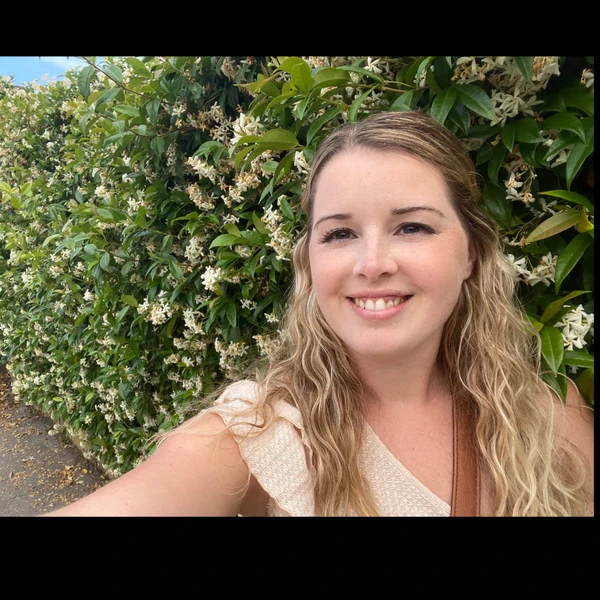
Miscellaneous
Desired degree level:
Bachelor's degree program
Graduate schools of interest:
Transfer schools of interest:
Majors of interest:
- Data Analytics
- Data Science
- Computer Science
- Second Language Learning
- Marketing
- Sports, Kinesiology, and Physical Education/Fitness
Career
Dream career field:
Technology
Dream career goals:
My dream is to work at the intersection of data science and baseball, using data-driven insights to develop winning strategies, evaluate player performance, and improve team decision-making. I want to help organizations make informed choices through predictive modeling, game analysis, and player segmentation. Ultimately, I see myself in a role where I can blend a deep understanding of the game with analytics, turning complex data into clear insights that help teams compete at a higher level and create a measurable impact on performance
Sports
Cheerleading
2004 – 20117 years
Pole Vault
Varsity2008 – 20091 year
Awards
- 2nd Place in Regionals
Softball
Varsity2000 – 202525 years
Research
Statistics
Motlow Community Collegr — Analyst2026 – 2026
Public services
Volunteering
Baseball Coach — Coach2025 – PresentVolunteering
Youth Group — Youth Group Leader2015 – 2018
Future Interests
Advocacy
Volunteering
Philanthropy
Entrepreneurship
Dynamic Edge Women in STEM Scholarship
For much of my life, I believed my mind was a problem I needed to fix. I processed information differently, patterns would jump out at me before explanations did, and I often approached problems in ways that didn’t match how they were being taught. In classrooms and workplaces that valued linear thinking, this difference felt like a defect. I learned to second guess my instincts, to slow down ideas that came too quickly, and to hide the ways my brain worked naturally.
The person who changed that perspective for me was not a teacher, mentor, or industry professional. It was my six-year-old son.
Watching him learn has been like watching a reflection of my own mind, only without the doubt that I learned to attach to it. From a young age, he has approached the world by building systems. When he struggles with a task, he doesn’t give up; instead, he reorganizes it. He creates his own shortcuts, visual patterns, and repeatable processes to make sense of information. Where others might see distraction or unconventional thinking, I see structure.
One moment that stands out happened during his homework time. He was working on a simple assignment, but instead of following the instructions step-by-step, he paused and began grouping the problems in a way that made sense to him. He sorted them by patterns he noticed, essentially creating his own framework for solving them faster. At first glance, it looked like he wasn’t following directions. But when I sat with him and watched more closely, I realized he wasn’t avoiding the task, he was optimizing it.
That moment shifted something in me. I recognized that same instinct in myself, the drive to reorganize, to find patterns, to see connections others might miss. What I had spent years viewing as a weakness was actually a strength that had simply never been framed correctly.
Through my son, I began to understand that our way of thinking is not defective, it is analytical, adaptive, and deeply suited to solving complex problems. We not only follow systems, we naturally build them.
This realization is what drew me toward pursuing a career in data analytics. Data analysis is, at its core, about identifying patterns, drawing connections, and creating meaningful structure out of complexity. It requires the exact type of thinking I once tried to suppress. Curiosity-driven exploration, non-linear problem solving, and the ability to see what isn’t immediately obvious.
My son helped me see that these traits are advantages. In a world increasingly driven by data, the ability to interpret information in new and innovative ways is critical. Diverse perspectives are necessary in STEM. The most complex challenges cannot be solved by a single way of thinking.
By embracing how my mind works, I am not only pursuing a field where I can succeed, but one where I can contribute something unique. My son reminded me that thinking differently is not something to overcome.
He may only be six years old, but his influence has reshaped how I see myself and my abilities.
Playmakers Nashville x Nashville Predators Undergraduate Scholarship
WinnerFrom the first time I stepped onto a field at 7 years old, sports have been a constant in my life. I have played several sports throughout my childhood and adult life, but baseball and softball have always held a special place in my heart. There is something exciting about the strategy behind every pitch, the decisions made in a split second once the ball is hit, and the way statistics can tell the deeper story of a game. That curiosity has grown into a passion for pursuing a career as a data analyst for baseball or softball. I want to be someone who helps teams make more informed decisions using performance data and analytics.
I am especially drawn to the analytical side of sports because it blends two things I love: competition and problem-solving. Behind every great team is a network of people working off the field, analyzing trends, evaluating player performance, and identifying opportunities for improvement, and I want to be part of that process. Whether it’s breaking down hitting patterns, evaluating defensive efficiency, or using data to support player development, I hope to contribute in a way that helps teams succeed while advancing the role of analytics in the game.
At the same time, my interest in sports extends beyond numbers and strategy. I care deeply about the culture of sports and who feels included in it. As a coach of my daughter’s tee ball team, I’ve had a firsthand look at how subtle assumptions can shape who participates. During my certification training, the instructor suggested asking “a few dads” to come help run drills. While I understand that it may reflect what he typically sees, it stood out to me. Language like that, even unintentionally, can make others feel like they don’t belong. A mom who is just as capable may hesitate to step forward if she doesn’t feel included in that invitation.
I had a similar experience when I went to pick up my coaching badge. The person helping me asked, “What’s his name?” assuming the badge was for a man. The assumption wasn’t meant to exclude, but it reflects a common expectation that coaches are usually men. Moments like that made me realize how important representation really is. Just by showing up, coaching my team, and being visible in that role, I have a chance to challenge those assumptions in a positive way.
As I pursue a career in sports analytics, I know there may be challenges. Women are still underrepresented in many areas of the sports industry, especially in data and decision-making roles. However, that reality motivates me rather than discourages me. I am passionate about sports, confident in my abilities, and committed to working hard to succeed. My goal is not only to excel as an analyst but also to help normalize the presence of women in all areas of sports.
Through this career, I hope to make an impact in two ways: by contributing meaningful insights that help teams perform at their best, and by being part of a shift toward inclusivity in the sports industry. I want young girls, including my daughter, to grow up seeing women not just playing sports, but analyzing them, leading them, and shaping their future.
With the support of this scholarship, I would continue pursuing my education and career path with confidence.
Playmakers Nashville Scholarship
From the first time I stepped onto a field at 7 years old, sports have been a constant in my life. I have played several sports throughout my childhood and adult life, but baseball and softball have always held a special place in my heart. There is something exciting about the strategy behind every pitch, the decisions made in a split second once the ball is hit, and the way statistics can tell the deeper story of a game. That curiosity has grown into a passion for pursuing a career as a data analyst for baseball or softball. I want to be someone who helps teams make more informed decisions using performance data and analytics.
I am especially drawn to the analytical side of sports because it blends two things I love: competition and problem-solving. Behind every great team is a network of people working off the field, analyzing trends, evaluating player performance, and identifying opportunities for improvement, and I want to be part of that process. Whether it’s breaking down hitting patterns, evaluating defensive efficiency, or using data to support player development, I hope to contribute in a way that helps teams succeed while advancing the role of analytics in the game.
At the same time, my interest in sports extends beyond numbers and strategy. I care deeply about the culture of sports and who feels included in it. As a coach of my daughter’s tee ball team, I’ve had a firsthand look at how subtle assumptions can shape who participates. During my certification training, the instructor suggested asking “a few dads” to come help run drills. While I understand that it may reflect what he typically sees, it stood out to me. Language like that, even unintentionally, can make others feel like they don’t belong. A mom who is just as capable may hesitate to step forward if she doesn’t feel included in that invitation.
I had a similar experience when I went to pick up my coaching badge. The person helping me asked, “What’s his name?” assuming the badge was for a man. The assumption wasn’t meant to exclude, but it reflects a common expectation that coaches are usually men. Moments like that made me realize how important representation really is. Just by showing up, coaching my team, and being visible in that role, I have a chance to challenge those assumptions in a positive way.
As I pursue a career in sports analytics, I know there may be challenges. Women are still underrepresented in many areas of the sports industry, especially in data and decision-making roles. However, that reality motivates me rather than discourages me. I am passionate about sports, confident in my abilities, and committed to working hard to succeed. My goal is not only to excel as an analyst but also to help normalize the presence of women in all areas of sports.
Through this career, I hope to make an impact in two ways: by contributing meaningful insights that help teams perform at their best, and by being part of a shift toward inclusivity in the sports industry. I want young girls, including my daughter, to grow up seeing women not just playing sports, but analyzing them, leading them, and shaping their future.
With the support of this scholarship, I would continue pursuing my education and career path with confidence.
Dynamic Edge Women in STEM Scholarship
In a world filled with groundbreaking advancements, my favorite tech invention of the last ten years is the Skylight Calendar. While it may not be the flashiest innovation, it has transformed the way I manage my life as a full-time student, working professional, and most importantly, a mother of two. The Skylight Calendar is a digital touchscreen calendar that syncs with my phone and online platforms to keep our family’s schedule visible and organized. For me, it's more than a piece of technology, it's a lifeline that helps me stay grounded in the chaos of everyday life.
Mothers returning to school face unique and often invisible challenges. We aren’t just students. We are caretakers, homemakers, financial planners, and emotional support systems for our families. We juggle school assignments with dentist appointments, study sessions with soccer practice, and exams with bedtime routines. Technology that eases that burden, like the Skylight Calendar, isn't just convenient, it's empowering. It gives me the structure I need to show up in every part of my life with purpose and presence.
Returning to college to pursue a degree in Computer Science with a focus on Data Analytics has been one of the most challenging and rewarding decisions of my life. It has required courage, sacrifice, and resilience, but I believe that what I’m gaining through this journey will allow me to give back in powerful ways. I’m fascinated by the way data can tell a story, uncover trends, and create actionable solutions in fields like healthcare, education, and business. With the right tools, data can improve lives, and I want to be a part of that impact.
More than anything, I hope to use my future career to uplift others, especially women who face obstacles similar to mine. I want to mentor young women who feel like giving up because they are caregivers, financially strained, or lacking support. I’ve been there, and I know how easy it is to feel like you’re falling behind or don’t belong in the tech world. That’s why I want to create mentorship programs specifically for women who have had to pause their education or careers to care for others. Representation matters, and so does access, and I want to be part of building both.
My story is not traditional, but it is filled with determination, adaptability, and heart. I am proud to be showing my children that it’s never too late to pursue your dreams, and that perseverance matters. The Skylight Calendar may seem like a simple invention to some, but to me, it represents balance, hope, and the ability to move forward without losing sight of what matters most.
Technology has the power to lighten our load and open doors, and as someone who has experienced its impact firsthand, I am excited to contribute to that future. Whether it's through analyzing data, supporting a marketing team with strategy, or mentoring the next generation of women in tech, I am committed to making my education count, not just for me, but for others walking a similar path.