
Cary Bloom
1x
Finalist
Cary Bloom
1x
FinalistBio
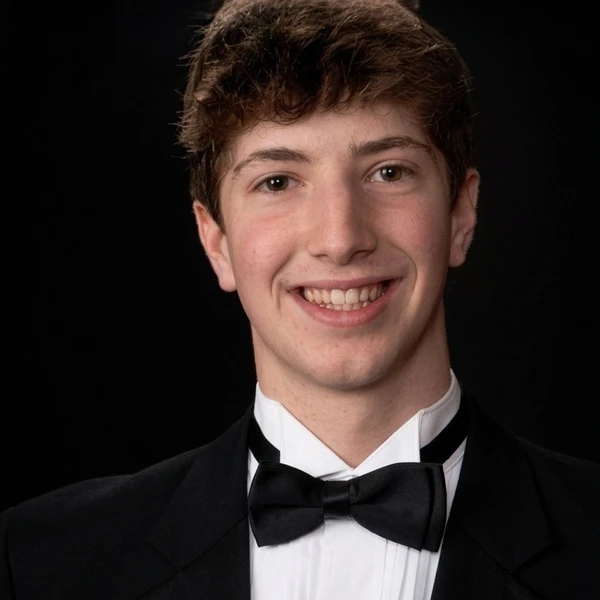
Incoming freshman at the University of North Carolina at Chapel Hill studying economics. Graduated in 2026 from Cherry Hill High School East with a 3.96 unweighted GPA and a 6.89 weighted out of 7. During high school, I served as my schools Cum Laude Honors Society president, a student government representative for four years, and as the community outreach captain of our DECA business club, where I won 2nd place internationally for my financial literacy initiative $martSavings. I founded $martSavings in 2024 and have taught over 800 local elementary and middle schoolers the principles of financial literacy and ran a school supply drive, donating needed resources to an underfunded school.
Education
University of North Carolina at Chapel Hill
Bachelor's degree programMajors:
- Economics
- Business/Managerial Economics
- Finance and Financial Management Services
Cherry Hill High School East
High SchoolMiscellaneous
Desired degree level:
Bachelor's degree program
Graduate schools of interest:
Transfer schools of interest:
Majors of interest:
- Economics
- Business/Managerial Economics
- Finance and Financial Management Services
Career
Dream career field:
- Financial Services
Dream career goals:
Implement economic policy changes that promote equal opportunity for all people and lift underserved communities up.
asd
asd2025 – Present1 year
Sports
Ice Hockey
Varsity2022 – 20264 years
Arts
Congregation Kol Ami
Acting2020 – 2026
Public services
Volunteering
$martSavings Financial Literacy — Founder/Lead Educator2024 – Present
Future Interests
Advocacy
Politics
Volunteering
Philanthropy
Entrepreneurship
Arin Kel Memorial Scholarship
My passion for finance began before I even knew the word. My brothers were obsessed with coin collecting, and, as the youngest of three boys, I wanted in. Captivated by the stories behind the coins, we looked for them everywhere: under car seats, along sidewalks, and even once jumping into a public fountain before our parents pulled us out.
This fascination never faded, but it evolved. In pandemic-era 7th grade, bored with online classes, I learned everything I could about coins and scoured auctions for days before taking on eBay dealers. At that time, Ravi, my oldest brother, was excelling in stock market games in his financial literacy class. Fascinated, I took in everything he taught me. Soon, I was dipping my own birthday money into the market, sure I could outsmart the experts. I made risky plays, I lost big, I was embarrassed and confused, but I never abandoned the drive to learn more.
Looking back, it is clear how much Ravi shaped me. Anything he did, I tried with his guidance. People called me his “mini-me.” His contagious kindness pushed me to be a better person—it still does. When he passed away in 2021, I was 13. I didn’t know how to grieve, but one way I felt close to him was by continuing the path we had started together. Ravi sparked my love for finance, and continuing that passion keeps his spirit with me.
Last year, I started a financial literacy initiative, $martSavings. My goal was to teach kids to think about earnings, saving, and budgeting as a route to financial independence. At the same time, leading workshops in historically underserved communities showed me that financial stress is complex. It shapes how people think, dream, and make decisions under pressure. $martSavings has taught me what kind of leader I am: someone who uses finance as a tool for empowerment and passions as a way to heal. I’ve taught some 800 students through 15 events, and still live for watching a kid’s face light up with understanding. Finance really can change futures.
In essence, Ravi and I already started a business together. With him, I know it could be more. Ravi’s memory inspires me to carry this vision further. During the 2020 election, he taught me to value politics, and his guidance showed me that advocacy changes the world. Our dream would be to transform $martSavings into a political lobbying non-profit dedicated to educating lawmakers about the financial challenges everyday citizens face. We would advance bills that promote financial literacy and reform systems that prevent people from reaching stability. Our office in the heart of Washington, D.C., would bustle every day with people dedicated to building a better future for all. Most importantly, we would teach officials that progress starts with understanding the people they serve. Ravi is not here to build this future, but every lesson I lead and life I impact carries forward my dream of the business we would build together.
Future Green Leaders Scholarship
A tiny oasis in a suburban development, Joe’s Lake has always been a steady part of my life. I’ve fished for bass there with friends, hiked its trails year-round, and even played pond hockey on ice that was probably too thin for safety. Spending time there gave me a genuine appreciation for nature and made it harder to ignore the damage pollution causes.
When a local clean-up effort came together, I signed up. Working hands-on at the lake felt natural. Over several days, we pulled piles of trash from the water and trails, and even a fully submerged shopping cart, which I wheeled back to CVS.
Afterward, I noticed the lake seemed more alive: more families were fishing along the shore, more people were spending time outside, and fewer bottles and bags were left behind. I bring my dogs there and feel a quiet kind of pride knowing I helped take care of a place that’s always been part of my life.
That experience motivated me to step up elsewhere. Last summer, I helped start my camp’s first environmental leadership team. We discussed simple ways to reduce waste, such as composting and minimizing food waste, that encouraged campers to think more intentionally about how they interact with their environment. Outside of camp, I wrote and delivered speeches to my congressional representative for the Environmental Justice for All Act, a piece of legislation crucial to addressing the disproportional effects that pollution has had on minority communities.
I’ve learned to take initiative when I see glaring issues and that small actions can fundamentally shift how a community feels. For me, caring for the climate is caring for myself and for the places that make me who I am.
As an incoming business student at the University of North Carolina at Chapel Hill, I see business as the most powerful driver of environmental change. While individual actions matter, enterprises shape the systems that determine how products are made, resources are used, and waste is managed. Sustainability must be a priority in business because long-term success depends on the health of the communities, workers, consumers, and natural resources that companies rely on.
I am fortunate to attend a university with a dedicated Sustainable Enterprise degree, where I hope to learn how environmental responsibility can be integrated into business strategy rather than treated as an afterthought. In my career, I hope to pursue impact investing or sustainable entrepreneurship, directing capital toward companies developing renewable energy, cleaner manufacturing processes, and more efficient supply chains.
One of the largest sources of environmental harm is the modern supply chain. Products often travel thousands of miles before reaching consumers, generating emissions at every stage while excessive packaging creates unnecessary waste. In my career, I will help organizations reduce their waste by using recycled materials for packages, moving manufacturing facilities closer to the people they serve, and transitioning to renewable energy sources. By engaging with public policy, I will advocate for sustainability standards that reward responsible businesses and encourage industries to reduce their footprint through tax incentives. Policies and actions like these show that profitability and sustainability are not competing goals; they are two sides of the same coin.
Through cleaning up Joe’s Lake, I learned that meaningful change begins when someone decides a problem is worth addressing. Just as removing a shopping cart from a lake improves a community space, thoughtful business decisions create environmental benefits on a much greater scale. As I pursue a career in business, I plan to carry that same sense of responsibility into larger systems and prove that profitability and sustainability strengthen each other.
Hazel Joy Memorial Scholarship
Three bright red flashes pop up on the screen of our clunky family desktop. Suddenly, the camera’s rolling. Today I’m Harsh—an overconfident hero with terrible instincts and dramatic flair. Lee is Mr. Pelican, a villainous bird with a grudge. Ravi is the rich guy—a smooth-talking aristocrat, always one step ahead. Fighting for the center spot in our newest movie, we turned ordinary moments into frenetic scenes straight out of a Shel Silverstein poem.
We discovered the Photobooth app by aimlessly clicking around the computer, and it became our favorite stage. We built fantastical worlds that made big dreams feel attainable.
My brothers are my heroes. They helped shape my humor, instilled strong academic values, and instigated my competitive nature, like when they strung me in our basement’s hockey net, peppering me with nonstop shots. They never left me out, not in the games, the jokes, or even the chaos. That sense of belonging stuck with me. It showed me how important it is to make others feel like they matter. Ravi, five years older, took it further, walking my seventh-grade self through serious topics like gerrymandering and climate change, opening my eyes to injustice and showing me how to care.
Photobooth captured our unwavering love and friendship through countless hours of footage. It saw my growth from an overly energetic kid to a playfully ambitious teenager alongside Lee beating me up for breathing too hard. My voice deepened, my interests shifted, but still, we told stories into those waiting red lights.
That would change in the spring of 2021. Ravi passed away in a car accident. Driving home from a tour of James Madison’s Montpelier, it felt like my life’s video had frozen on a still frame. The months that followed were a blur. At night, I’d knock on the thin wall between our rooms, hoping for a knock back or him to walk in like he used to. When none came, I’d whisper into the dark, telling him how much I missed him. I tried to rewind to normalcy, continuing life as if nothing happened. Maybe that would soften the blow of losing Ravi. Spoiler alert: it did not.
My instinct was to look for practical solutions, but grief cannot be troubleshooted into submission. I felt the constant weight of painful memories. Still, in those dark moments, my mind drifted back to our videos. They weren’t solutions, but they made me feel closer to Ravi. Photobooth showed me to approach healing like stories: with imagination, not just logic. My path forward was to create a world with meaning.
So, I created.
I turned my energy to causes like voting rights and equity. I wrote postcards to unregistered voters in Georgia to make their voices heard and to Floridians about a law threatening their freedoms. Every action felt worthwhile. I designed lessons for my school’s first No Place for Hate program, combating prejudice and discrimination. Partnering with TD Bank, I started a financial literacy initiative, $martSavings, introducing budgeting and savings skills to 800 students in Camden, NJ. I focused on what little me would enjoy: quick lessons, lots of games, and a sense that learning could be fun. I hope to inspire the same curiosity and imagination that Ravi sparked in me. The imagination that once filled my family desktop now shapes the way I engage with an imperfect world.
In many ways, I’m still that overly energetic kid from Photobooth. Absurdity always finds its place in my day, and even if carrying Ravi’s influence can’t bring him back, it lights my path and gives purpose to what I create.
Treye Knorr Memorial Scholarship
My passion for finance began before I even knew the word. My brothers were obsessed with coin collecting, and, as the youngest of three boys, I wanted in. Captivated by the stories behind the coins—their history, rarity, and every hand they passed through—we looked for them everywhere: under car seats, along sidewalks, and even once jumping into a public fountain before our parents pulled us out.
This fascination never faded, but it evolved. In pandemic-era 7th grade, bored with online classes, I learned everything I could about coins and scoured auctions for days before taking on eBay dealers. At that time, Ravi, my oldest brother, was excelling in mock stock market games in his financial literacy class. Fascinated, I took in everything he taught me about stocks, ETFs, and mutual funds. Soon, I was dipping my own money into the market, sure I could outsmart the experts. I made risky plays, I lost big, I was embarrassed and confused, but I never abandoned the drive to learn more.
Looking back, it is clear how much Ravi shaped me. Anything he did, I did. People even called me his “mini-me.” His contagious kindness pushed me to be a better person—it still does. After he passed away in 2021, it was hard for me to know how to grieve, but one way I felt close to him was by continuing the path we had started together. Ravi sparked my love for finance, and continuing that passion keeps his spirit with me.
Last year, I started a financial literacy initiative, $martSavings. Teaching kids how to save and budget demystifies finance and shows it does not have to be about flashy cars and expensive houses. Finance paves the path to independence. At the same time, leading workshops in Camden, NJ, a historically underserved community, showed me financial stress is complex. It shapes how people think, live, dream, and make decisions under pressure. $martSavings has taught me what kind of leader I am: someone who uses finance as a tool for empowerment. And, even after teaching some 800 students through 15 events, watching kids’ faces light up with understanding only fuels my passion.
$martSavings shows kids that they have agency over their future, and it has taught me that service starts by listening to what a community needs. Last month, I organized a supply drive with Volunteers of America, collecting more than 500 donated items for an underfunded school that had just run out of supplies. I am currently organizing more visits to schools in Camden and beyond. I am excited to continue empowering kids to take charge of their lives by confronting a subject that often feels confusing and intimidating.
I have learned that finance isn’t just about profits. Understanding how scarcity shapes past experiences, guides present decisions, and influences future outcomes is essential. As I pursue a degree in finance and economics, I hope to build a career at the intersection of business and social impact, whether through financial advising, economic policy, or community-based education initiatives. By helping to fund my education at the University of North Carolina at Chapel Hill, the Treye Knorr Memorial Scholarship would ease the financial strain of attending as an out-of-state student and allow me to focus more fully on my education, my service work, and future projects that make a difference in my community. I dream of building a world where opportunity is no longer a privilege, but a promise. I believe in the power of finance to build futures and in my ability to share that power.