
Hobbies and interests
Music
African American Studies
Anime
Biology
Photography and Photo Editing
Art
Chess
Child Development
Electric Guitar
Dentistry
Fashion
Poetry
Track and Field
Medicine
Babysitting And Childcare
Board Games And Puzzles
Bodybuilding
Calisthenics
Chemistry
Cleaning
Cooking
Driving
Fitness
Football
Gaming
Guitar
Mental Health
YouTube
Weightlifting
Studying
Social Media
Pediatrics
Reading
History
I read books multiple times per month
Carter Holt
2x
Finalist1x
Winner
Carter Holt
2x
Finalist1x
WinnerBio
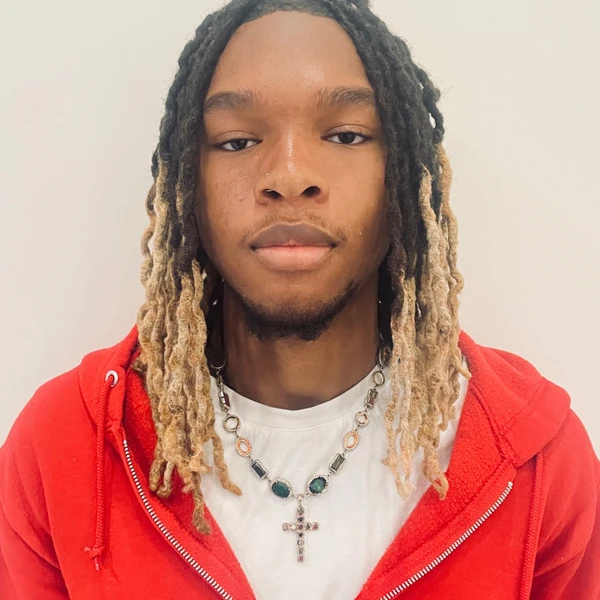
I am a Biology major on the pre-dental track at Miami University with aspirations of becoming a dentist. Growing up in Dayton, Ohio, in a single-parent household taught me resilience, discipline, and the importance of education as a pathway to opportunity. My passion for dentistry developed through shadowing an oral surgeon during high school and assisting a mobile dental hygienist who provided care to children in my community. These experiences showed me the impact oral healthcare can have on people's confidence, health, and quality of life. Currently, I am a member of my university's Dentistry Club, where I continue exploring the profession and preparing for dental school. My goal is to combine clinical excellence with community service by increasing access to quality dental care for underserved populations while serving as a role model for future students from backgrounds similar to my own.
Education
Miami University-Oxford
Bachelor's degree programMajors:
- Dentistry
- Biology, General
Minors:
- Medicine
Miscellaneous
Desired degree level:
Doctoral degree program (PhD, MD, JD, etc.)
Graduate schools of interest:
Transfer schools of interest:
Majors of interest:
- Biology, General
- Behavioral Sciences
- Health/Medical Preparatory Programs
Career
Dream career field:
- Dentistry
Dream career goals:
Pediatric Dentist
Team Lead
Chick Fil A2023 – 20252 years
Sports
Track & Field
Varsity2021 – 20254 years
Public services
Volunteering
Nursing Home — STNA2025 – 2025
Emerging Leaders in STEM Scholarship
My interest in STEM comes from seeing how science can directly change someone’s quality of life. I have always been drawn to healthcare because it combines technical knowledge with the opportunity to help people during moments when they may feel vulnerable. As a biology student at Miami University pursuing a future in dentistry, I want to understand not only how the human body works, but also how that knowledge can be used to restore someone’s health, and confidence.
My interest in dentistry became more serious after I shadowed an oral surgeon and assisted a mobile dental hygienist who provided care to children. While shadowing, I saw how much precision, scientific knowledge, and trust were involved in treating each patient. Working with the mobile hygienist showed me another side of healthcare. Some of the children were nervous and needed reassurance before they were comfortable receiving care. Helping them taught me that being a successful healthcare professional requires more than understanding biology or completing a procedure. Patients also need to feel safe, heard, and respected.
I hope to become a dentist who provides that kind of care. Many people avoid the dentist because of fear, embarrassment, or negative past experiences. I want to create an environment where patients can ask questions without feeling judged and understand the treatment they are receiving. If I eventually operate my own practice, I want honesty to remain at the center of it. My decisions should be based on what a patient genuinely needs, not simply what would produce the greatest profit.
I also hope my career can have an impact beyond the patients I treat. As a Black man pursuing a STEM education, I understand the importance of representation. Young Black students do not always see people who look like them studying science, entering healthcare, or preparing for doctoral-level careers. I want my presence in dentistry to expand what they believe is possible. I hope to mentor students, share what I learn about navigating college and healthcare education, and make the path less unfamiliar for those coming after me.
The greatest adversity I have overcome has been growing up with an absent father while watching my mother raise three children on her own. My mother had me when she was nineteen and never had the opportunity to attend college. Although she lacked a college education herself, she never treated education casually. She saw it as a source of freedom and wanted her children to have choices that were not available to her.
My father’s absence required my mother to carry the responsibilities of both parents. She supported us financially, protected us, encouraged us academically, and continued showing up even when she was exhausted. Watching taught me that overcoming adversity does not always mean that the difficulty disappears. Sometimes, it means continuing to move forward despite having more weight to carry.
Becoming the first person in my family to attend college has brought its own challenges. I entered higher education without a generational blueprint and had to learn how to navigate many parts of college through experience. At times, that process has been overwhelming, but my mother’s example reminds me that being unfamiliar with a path does not mean I am incapable of completing it.
My mother gave me the determination to pursue an education she never had the chance to receive. My experiences in healthcare gave that education a purpose. Through STEM and dentistry, I hope to serve patients with compassion, create a new educational legacy in my family, and become an example for students who have ambition but may not yet see a clear path.
Arthur and Elana Panos Scholarship
My relationship with faith is still developing. I no longer identify as Christian, but I have never stopped believing in God. What I question is religion, especially when people use it to claim moral superiority without living by the values they preach. Separating God from the Christianity I was raised around has made my faith more personal and honest.
My father's side of the family was deeply religious. Whenever I visited, church was mandatory, and my grandfather often preached. As a child, I did not enjoy sitting through sermons, but not because at a young age I rejected God. I was young, and religion felt more like an obligation than something I had chosen.
As I grew older, I noticed a contradiction I could not ignore. My father was absent from the lives of me and my younger sister, leaving my mother to raise two children without his help. Yet the same relatives who spoke strongly about faith rarely held him accountable. I struggled to understand how people could preach about family, responsibilities, and love while overlooking the neglect within their own family.
That experience did not make me stop believing in God. It made me question whether calling yourself religious means anything if your actions do not reflect it. I later saw similar contradictions online and in politics, where Christianity was sometimes used to judge or excuse cruelty. I am not perfect, and I have also failed to live by my values. Still, I believe faith should make a person more accountable, not shield them from accountability.
My mother showed me a different kind of faith. She did not attend church regularly, but she believed in God and prayed consistently. Her prayers were never about riches or status. She prayed for the safety, health, and success of her children and for the strength to keep raising us. Her faith was quiet, but I saw it in everything she did.
Despite growing up without a father and with relatives who did not care for me, I was blessed with an extraordinary mother. She took on the roles of both parents, protected us, pushed us academically, and kept going when she was exhausted. To me, she is the greatest gift God could have given me. I have always felt close to Him because I have seen his presence through her strength, sacrifice, and love.
Learning that Christianity was forced upon many of my enslaved ancestors also made me reconsider the religious identify I inherited. I could not ignore that history or accept that someone else's interpretation had to define my relationship with God. Today, I consider myself spiritual. I still pray, believe in a higher power, and allow myself to question without pretending I have every answer.
My faith will guide me in dentistry by shaping how I treat people and define success. Patients may enter a dental office in pain, afraid, embarrassed, or unable to afford ideal care. I want to listen without judgement, explain their options honestly, and never recommend treatment because it is more profitable. If I own a practice, I want my character to remain more important than my income.
My mother taught me faith does not need to be announced loudly. It can appear in a prayer for strength, a sacrifice made without recognition, or the decision to keep loving through difficultly. I am still discovering what faith means to me, but I know what I want it to produce in my life: honesty, accountability, compassion, and integrity.
Henry Respert Alzheimer's and Dementia Awareness Scholarship
During my senior year of high school, I worked in a nursing home while gaining experience in the healthcare field. I entered the facility expecting to learn the responsibilities of patient care, but I did not expect one resident to shape the way I viewed service and my future. Her name was Judy. She was receiving hospice care and living with what appeared to be early-to-middle-stage dementia. When I was first assigned to care for her, our relationship was very rocky.
Judy was not particularly fond of me in the beginning. I was still fairly new, and I did not yet understand how to build trust with someone whose memory, emotions, and comfort could shift from one interaction to the next. At first, our time together mainly consisted of short check-ins. I would speak to her even when she did not respond, reposition her to prevent discomfort, and complete the regular duties expected of me. I tried to not to take her distance personally, but as a very social person and someone got along with the other residents it was difficult to know whether I was helping her or simply becoming another unfamiliar person entering her space.
Still, I continued showing up and speaking to her with the same patience each day. I believe the repetition helped her begin to recognize me. After about four weeks, something changed. Judy allowed me to bathe her instead of the woman who normally helped her. At that time, I understood that bathing a resident was part of my responsibilities, but i also recognized that it required an enormous amount of trust. She was allowing me to care for her during one of her most vulnerable moments.
While I was helping her, she began telling me things about herself. I appreciated that conversation dearly because it was the first time I felt that Judy was allowing me to know the person behind the illness. Before that moment, our interactions had often felt one-sided. I would speak, and she would give me little or no response. During that bath, however, she opened a door into her life. I do not remember every detail she shared, but I remember how meaningful it felt to finally earn her trust.
That experience became the foundation of a much closer relationship. My time with Judy was no longer limited to quick check-ins and basic care. I began wheeling her through the facility, encouraging her to leave her room, helping her interact with other residents, feeding her, and simply spending time talking with her. There were still difficult moments because her dementia did not affect her the same way everyday, but I learned to meet her where she was rather than expecting every interaction to be predictable.
Judy taught me that healthcare is not only about completing a list of physical tasks. But the way I performed those responsibilities mattered just as much. She needed to feel safe, and recognized as a person. Dementia had affected parts of memory and independence, but it had not taken away her dignity, personality, and need for human connection.
Before meeting Judy, I thought helping someone meant doing something visible for them and receiving some sign that I had made a difference. Our relationship taught me that care is often quieter than that. Sometimes it means continuing to speak kindly when a person does not answer. Sometimes it means returning the next day even when the previous interaction was difficult. Sometimes it means helping a person leave the isolation of their own room so they can feel connected to the world around them again.
My experience with Judy also helped me understand why Alzheimer's and dementia research are so important. Compassionate caregivers can make life more comfortable and meaningful, but care alone cannot stop the progression of these illnesses. Dementia can gradually affect a person's memory, independence, relationships, and ability to communicate what they need. it also places emotional responsibilities on family members and caregivers who may watch someone they love change over time. Continued research is necessary to better understand these diseases to move closer to prevention or a cure.
Most importantly, Judy made me want to become a source of light for people during vulnerable periods of their lives. What began as a difficult assignment became one of the most meaningful relationships I formed while gaining healthcare experience. I entered her room believing I was there to care for her, but she gave me something in return: patience, purpose, and a clearer understanding of the healthcare professional I hope to become.
As I continue pursing my degree and preparing for a career in healthcare, I will carry Judy's influence with me. She taught me that meaningful care begins when a patient feels safe enough to trust you. No matter what area of healthcare I enter, I want to be the person who continues showing up, especially to know that their illness does not make them invisible and that, even during their hardest moments, someone still sees the value in their life.
Learner Calculus Scholarship
Calculus is often viewed as one of the most difficult mathematics courses a student can take. While it certainly presents challenges, I believe its importance extends far beyond the classroom. At its core, calculus is the study of change, and because the world around us is constantly changing, it has become one o the most essential tools in every STEM discipline. From understanding how diseases spread to designing safer bridges and developing new technologies, calculus provides the foundation for solving some of society's most complex problems.
One of the reasons calculus is so important is that it allows STEM professionals to move beyond simple observations and make accurate predictions. Engineers use calculus to determine how structures will respond to stress and changing environmental conditions. Physicists rely on it to describe motion, energy, and gravity, while chemists use it to analyze reaction rates and molecular behavior. In biology, calculus helps researchers model population growth, understand the spread of infectious diseases, and analyze countless biological processes that occur continuously over time. Although these fields focus on different subjects, they all depend on the same mathematical language to understand change and make informed decisions.
As a biology student pursing a career in dentistry, I recognize that calculus will play an important role in own education and future profession. Modern healthcare depends on technology, research, and evidence based decision making, all of which are supported by mathematical principles. Whether it is interpreting medical imaging, understanding how medications interact with the body, or reading scientific research, healthcare professionals must be able to think analytically and solve complex problems. While I may not calculate derivatives everyday as a dentist, the logical reasoning and problem solving skills developed through calculus will help me become a more effective clinician and lifelong learner.
Beyond its practical applications, calculus teaches students how to approach difficult problems with patience and persistence. Many STEM challenges cannot be solved with a single formula or immediate answer. Instead, they require breaking large problems into smaller, manageable pieces and working through them methodically. This mindset is just as valuable as the mathematical concepts themselves because it encourages critical thinking, resilience, and creativity. Those to me are qualities that every scientist, engineer, physician, and researcher must possess.
Ultimately, I believe calculus is important because it provides the framework for understanding a world that is constantly changing. It equips STEM professionals with the ability to analyze complex systems, make meaningful discoveries, and develop solutions that improve people's lives. Whether advancing medicine, protecting the environment, or creating innovative technologies, calculus serves as one of the fundamental building blocks of scientific progress. For these reasons, I believe it is not simply another required mathematics course but an essential foundation for anyone pursing a future in STEM.
Zelaya Creativity Scholarship
The intense neon humming of Aisle 4 felt like a full-blown battleground. Mark’s fingers were securely locked onto the left corner of the last box of Crunchy O’s. On the right corner were the perfectly manicured, yet absolutely vice-like fingers of Sarah.
"I grabbed it first," Sarah whispered, her sharp voice laced with pure ice. "My twins will completely tear the house apart if they don't get their favorite sugar-loops tomorrow morning."
"I am a very desperate man, Sarah," Mark hissed back, refusing to budge an inch. "My wife explicitly texted me to get this exact brand. If I return home empty-handed, I will be banished to the living room couch. Do you have any idea what that ancient couch does to my lower back?"
A tense silence fell over the breakfast section. A stray toddler wandered into the aisle, sensed the overwhelming aura of hostility, and slowly backed away. Mark narrowed his eyes, visualizing his path to victory. He could try a sudden jerk to the left, but that risked ripping the flimsy cardboard and spilling the precious neon-colored loops across the linoleum floor. Sarah, meanwhile, planted her running shoes firmly into the ground, adjusting her grip.
"Let's be reasonable here," Mark suggested, his knuckles turning white. "We can split it. Sixty-forty. I take the bag inside, you keep the cardboard box."
"Are you insane?" Sarah scoffed. "And let the cereal go stale within an hour? Absolutely not. I will gladly die on this hill today."
Suddenly, the store's PA system crackled to life. “Attention shoppers, we have just restocked a massive, fresh pallet of Crunchy O’s on the far end cap of Aisle 12.
”Both of them froze. They looked at each other. They looked down at the box. Without a single word, they simultaneously dropped the contested item and bolted toward Aisle 12, sprinting past the bakery like elite Olympic athletes chasing a gold medal.
Mark’s sneakers squeaked loudly against the waxed floors. Sarah used her shopping cart as a scooter, gliding past the organic produce display. They reached the endcap at the exact same moment, panting heavily, eyes wide with manic determination.
There, glowing under the bright fluorescent lights, sat a magnificent mountain of cardboard boxes. Mark grabbed three. Sarah stacked four into her cart. They shared a brief, silent nod of mutual respect before racing full speed toward the cash registers, ready for the next dramatic grocery showdown, completely determined to win the final race.
Our Destiny Our Future Scholarship
The first thing I noticed wasn't the dental instruments or the procedure itself. It was the children's faces. Some were excited, but many were nervous, uncertain about what was about to happen. When a mobile dental hygienist visited my high school to provide dental care for younger students, I was asked to observe the appointments while helping comfort children who felt anxious. Because I had always enjoyed working with kids and planned to pursue dentistry, my teachers believed the experience would be valuable. I expected to learn about dentistry. instead, I learned something even more important about compassion.
As I talked with the children, answered their questions, and reassured those who were scared, I watched their anxiety slowly fade. It became clear that healthcare begins long before any procedure starts. Before patients can trust a treatment, they first have to trust the person providing it. Watching the hygienist patiently explain each step and treat every child with kindness showed me that compassion is just as important as clinical skill. She wasn't simply cleaning teeth, she was creating an environment where children felt safe, respected, and cared for.
That experience changed the way I think about making a difference in the world. Positive impact is often associated with extraordinary accomplishments, but I have come to believe it is built through ordinary moments of compassion that are repeated every day. A few encouraging words, a patient conversation, or helping someone feel comfortable during a stressful moment can leave a lasting impression. Those moments may seem small, but they can completely change how some experiences healthcare.
As a Biology student on the pre-dental track at Miami University, my goal is to become a dentist who serves communities where quality dental care is difficult to access. I want to provide more than treatment. I want to educate patients about their oral health, reduce the fear many people associate with visiting the dentist, and create an environment where every patient feels valued regardless of their background. Through outreach programs and community service, I also hope to expand access to preventive care for children and families who might otherwise go without it.
Beyond caring for patients, I want to make an impact by serving as a role model for young people who may not see themselves represented in healthcare. As a first-generation college student, I understand how meaningful it is to see someone with a similar background succeed. I hope my journey encourages other students to pursue careers in STEM and healthcare, believing that those opportunities belong to them as well.
The world becomes better when people choose to improve the lives of others in ways both large and small. My goal is to do exactly that through dentistry, one patient, one family, and one community at a time. If i can help someone leave my office healthier, more confident, and feeling genuinely cared for, then I know I will be making the kind of positive impact that lasts far beyond the dental chair.
Adrin Ohaekwe Memorial Scholarship
One of the reasons that I have continued playing chess for the past few years is because every game is different. There is never set formula for winning, and every move forces you think critically about the consequences of your decisions. While many people see chess as a board game, I have come to see it as something much deeper. I believe you can learn a great deal about a person's character simply by playing a game with. Chess reveals how someone responds to pressure, how they handle mistakes, and whether they allow setbacks to define the rest of the game.
One of the most valuable lessons chess has taught me is that a simple mistake does not have to determine the outcome. Early on, I would become frustrated after blundering a piece of overlooking a move, convinced me the game was already lost. As i continued playing, I realized that dwelling on one mistake often led to another. The better approach was to stay composed, evaluate the position in front of me, and search for the next best move. that mindset extends far beyond the chessboard. Life rarely unfolds exactly as planned, and success often depends less on avoiding mistakes than on learning how to respond to them.
Those lessons have shaped the way i approach my education and my future career. I am pursing a degree in Biology on the pre-dental track because I want to become a dentist who improves both the health and confidence of my patients. Dentistry requires many of the same qualities that chess develops: patience, careful observation, critical thinking, and the ability to make thoughtful decisions under pressure. Every patient presents a unique situation, and providing quality care means evaluating problems from multiple angels before deciding on the best course of action.
Beyond treating patients, I hope to use my career to make quality dental care more accessible in underserved communities and to serve as a positive example for young people who may not see themselves represented in healthcare. Just as chess has taught me to think several moments ahead, I hope to build a career that creates opportunities not only for myself but also for those who come after me. Whether I am sitting across from an opponent or a patient, I want to approach every challenge with patience, integrity, and a real commitment to make the best possible move each time.
Stephan L. Daniels Lift As We Climb Scholarship
When people think about STEM, they often think about innovation, technology, or scientific discovery. While those are certainly important, what draws me to STEM is something much simpler: the opportunity to improve someone's quality of life.
Growing up, education was never presented to me as just a path to a good job. My mother, who raised my siblings and me on her own, believed education created opportunities that she never had. Her belief in learning taught me to see careers not only as personal achievements but also as opportunities to serve others. As the first person in my family to attend college, I carry that lesson with me everyday.
That perspective is what led me toward healthcare and ultimately dentistry. My interest became more than curiosity after I shadowed an oral surgeon and volunteered alongside a mobile dental hygienist who provided care for children. Watching patients leave with healthier smiles and greater confidence showed me that dentistry reaches far beyond oral health. it restores comfort, confidence, and dignity while preventing health problems that can affect the entire body.
Pursing a STEM degree will give me the scientific knowledge and clinical skills needed to make that kind of impact. through coursework in biology, chemistry, and other sciences, I am preparing for a profession built on evidence, precision, and lifelong learning. Stem is challenging, but that challenge is exactly what prepares professionals to solve meaningful problems and improve lives.
My long term goal is to use my education to increase access to quality dental care in underserved communities. Too many families postpone treatment because of financial barriers, transportation challenges, or a lack of nearby providers. I hope to work in communities where those barriers are common while participating in outreach programs that provide preventive care and oral health education. I want children to receive care before problems become emergencies and families to understand that oral health is an essential part of overall health.
Receiving this scholarship would help me continue pursing a STEM education that is centered on service. My goal is not simply to earn a degree but to use it as a too to improve the health and well-being of others. Through dentistry, I hope to strengthen the communities i serve by making quality healthcare more accessible and helping every patient leave healthier and more confident than whey they arrived. I hope my career will encourage young students to see careers in STEM as attainable and inspire them to pursue opportunities they may not have previously considered.
7023 Minority Scholarship
The concept of “building” is usually tied to and describes physical structures—blueprints, brick, and mortar. However, to me, a nineteen-year-old African American man and a first-generation college student at Miami University, the foundation that I am most driven to build is almost entirely cultural. By pursuing a biology degree on the pre-med track, I am actively constructing two interconnected frameworks: a fresh legacy of normalized higher education within my own family and a visible blueprint of possibility for young black men and women in my community.
Being raised in a single-parent household, I watched my mother struggle day in and day out to keep our family afloat. Her work ethic and unrelenting personality gave me the stamina to navigate higher education, but doing so without a generational blueprint was, at the very least, incredibly overwhelming. As the first to break this barrier, I aim to ensure I am not the last. I wish to build a foundation where attending college is no longer viewed as a rare, overwhelming anomaly at our family dinner table, but as a standard, celebrated milestone. By obtaining my degree, I am laying the first brick so that future generations can follow in my footsteps, viewing higher education as a natural path rather than an out-of-reach dream.
But to think on an even grander scale, I wish to expand this architecture into my community and culture. My people being represented in healthcare is critically low, and young black men and women rarely see men and women who look like them navigating intense science labs or heading toward a doctorate. This lack of visibility breeds a subconscious belief that these spaces are not meant for them. I want to build a visible pathway that abolishes the notion. When youth in my community see me practicing dentistry, it expands their definition of what is achievable. I am building a career that doubles as a mentorship platform, actively inviting young Black men and women into STEM and encouraging them to think bigger and strive for greater heights in their lives.
Ultimately, what I am building is a bridge between academic opportunity and community empowerment. This scholarship is the exact financial tool that will help me secure this future. Navigating higher education with limited household resources means constantly balancing intense pre-dental coursework with financial stress. By alleviating this economic burden, the funding will allow me to pour my full focus into my sophomore biology labs and clinical preparation. This investment helps me secure the education required to become a dentist, a trailblazer for my family, and a leader who proves to the next generation that their ambition belongs in every room.
Bulkthreads.com's "Let's Aim Higher" Scholarship
The concept of “building” is usually tied to and describes physical structures. blueprints, brick, and mortar. However, to me, a nineteen-year-old African American man and a first-generation college student at Miami University, the foundation that I am most driven to build is almost entirely cultural. By pursuing a biology degree on the pre-med track, I am actively constructing two interconnected frameworks: a fresh legacy of normalized higher education within my own family and a visible blueprint of possibility for young black men and women in my community.
Being raised in a single-parent household, I watched my mother struggle day in and day out to keep our family afloat. Her work ethic and unrelenting personality gave me the stamina to navigate higher education, but doing so without a generational blueprint was, at the very least, incredibly overwhelming. As the first to break this barrier, I aim to ensure I am not the last. I wish to build a foundation where attending college is no longer viewed as a rare, overwhelming anomaly at our family dinner table, but as a standard, celebrated milestone. By obtaining my degree, I am laying the first brick so that future generations can follow in my footsteps, viewing higher education as a natural path rather than an out-of-reach dream.
But to think on an even grander scale, I wish to expand this architecture into my community and culture. My people being represented in healthcare is critically low, and young black men and women rarely see men and women who look like them navigating intense science labs or heading toward a doctorate. This lack of visibility breeds a subconscious belief that these spaces are not meant for them. I want to build a visible pathway that abolishes the notion. When youth in my community see me practicing dentistry, it expands their definition of what is achievable. I am building a career that doubles as a mentorship platform, actively inviting young Black men and women into STEM and encouraging them to think bigger and strive for greater heights in their lives.
Ultimately, what I am building is a bridge between academic opportunity and community empowerment. This scholarship is the tool that will help me secure the education required to become a dentist, a trailblazer for my family, and a leader who proves to the next generation that their ambition belongs in every room.
Dinakara Rao Memorial Scholarship
As a first-generation college student raised solely by my mother, I have passed through extreme resilience, perseverance, and hope. Traversing the world of higher education without a family blueprint has presented me with special challenges but has also inspired me to create my own path. Growing up, I witnessed my mother’s unrelenting work ethic and sacrifices, which inspired my ambition to pursue a degree in Biology and Pre-Medical studies. Her being my role model of what a hard worker should look like imparted to me a sense of responsibility, not just to achieve personal success, but to establish a brighter future for my family, my community, and many others with a similar upbringing to mine.
As I grew older, I watched my mother face countless struggles, but despite it all, she never allowed those challenges to ever get in the way of our relationship. As a single independent parent, she played both mother and father, working hard to keep our family afloat while instilling within me the values of dependability, honor, and sympathy. Despite the financial hardship, she managed to build a household with love and care while still focusing on my education and future. Her relentlessness taught me that conditions do not exactly define people; instead, it is your determination. Who are you when you're truly pushed to the wall? Facing college without a clear framework and limited resources was exhausting and overwhelming, but my mother’s sacrifices encouraged me to obtain guidance from teachers and advisors, balance schoolwork with a part-time job, and keep pressing on even when I felt overworked or out of place.
Being an African American man, I have also faced obstacles and forms of oppression that go far past academics. There were many times when I felt alone or underestimated, both in school and in more unforgiving situations. Even so, in those moments, I decided to treat them as teaching lessons and so steeled my resolve to succeed and to represent my family and culture with overwhelming pride. They pushed me to prove that with determination and support, it is possible to overcome even the toughest circumstances.
A lot of my passion for dentistry is deeply rooted in a lifelong desire to help others, intertwined with a lifelong desire to help others, combined with a love of science that has always inspired me to understand how things work to a deeper level and then apply that understanding in real-world settings. In high school, I had the opportunity to take a healthcare class that allowed me to provide hands-on care to the elderly. While it wasn’t the exact field I wanted to pursue, at the time, I was grateful to be able to provide comfort and support to those who could no longer support themselves. This experience confirmed for me the extreme impact that compassionate care can have on people’s lives.
My true calling became clear when I had the chance to shadow an oral surgeon. Getting to watch him interact with patients, I saw genuine passion and satisfaction exude from him. The way he spoke about his work and the sense of purpose he found in assisting others left a lasting impression on me. In that moment, I realized that dentistry would allow me not only to combine my love for science and medicine but also to make a tangible, positive impact on people’s lives every day. My time shadowing him emboldened my resolve to become a dentist, to inspire others through work, and carry forward the values of service and compassion instilled in me by my upbringing.
Sola Family Scholarship
When I was a kid, I used to sit around and wonder about my mom’s life before she had my siblings and me. What did she picture for herself? What did she want to become? One day, I finally asked her, straight up, what she’d hoped to do with her life. I was waiting for an answer like nurse, teacher, or something specific. That isn’t what she said. She told me the only thing she’d ever really wanted was to be a mother.
My mom had me when she was nineteen. She never went to college. She raised three kids on her own. And even though she didn’t have the chance to get a degree herself, she believed in education in a way that never felt casual. She saw it as a way out, a way forward, the kind of thing that could lead to options she didn’t get to have. She might not have known every detail of how college worked, but she understood what it could do: it opened doors. More than anything, she wanted those doors open for her children.
In our house, doing well in school wasn’t a “nice if you can.” It was expected. She treated education like one of the strongest tools a person can carry, and she pushed us because she wanted us to have real choices, not just take whatever life handed us. As I got older, I came to understand her point more clearly. It wasn’t only about grades or proving I could apply myself. It was about opportunity. It was about the freedom to decide.
Now, looking back, I can see exactly how much her standards shaped me. Because of her expectations, I took school seriously, and that work led to my graduating from high school with honors. Today, I’m the first person in my family to attend college, and I’m working toward my degree at Miami University. There’s something ironic about it. She never had the chance to go herself, but she’s one of the biggest reasons I’m here.
The opportunities in front of me exist because of what she gave up and what she kept insisting on, year after year. And even now, I can’t fully put it into words, but watching her pour herself into her children taught me what it means to serve others and to practice real self-sacrifice. She didn’t act like taking care of us was a burden. She chose it, and she did it with her whole heart.
As I grew up, I started wanting the same kind of impact. I wanted my work to matter to someone else’s life. That thinking is what pulled me toward healthcare, and eventually toward dentistry. My interest grew even stronger after shadowing an oral surgeon and working with a mobile dental hygienist who provided care to children. Those experiences made something click for me. Dentistry isn’t just about teeth. It’s about health. It’s about confidence. It’s about giving people a better quality of life.
In a lot of ways, the reason I’m drawn to dentistry started long before I ever stepped into a clinic. It started at home. I watched my mother put her kids first, again and again, and she taught me that the kind of success that lasts is the kind that leaves other people better than you found them.
Ginny Biada Memorial Scholarship
WinnerWhen I was a kid, I used to sit around and wonder about my mom’s life before she had me and my siblings. What did she picture for herself? What did she want to become? One day, I finally asked her, straight up, what she’d hoped to do with her life. I was waiting for an answer like nurse, teacher—something specific. That isn’t what she said. She told me the only thing she’d ever really wanted was to be a mother.
My mom had me when she was nineteen. She never went to college. She raised three kids on her own. And even though she didn’t have the chance to get a degree herself, she believed in education in a way that never felt casual. She saw it as a way out, a way forward, the kind of thing that could lead to options she didn’t get to have. She might not have known every detail of how college worked, but she understood what it could do—it opened doors. More than anything, she wanted those doors open for her children.
in our house, doing well in school wasn’t a “nice if you can.” It was expected. She treated education like one of the strongest tools a person can carry, and she pushed us because she wanted us to have real choices, not just take whatever life handed us. As I got older, I understood her point more clearly. It wasn’t only about grades or proving I could apply myself. It was about opportunity. It was about the freedom to decide.
Now, when I look back, I can see exactly how much her standards shaped me. Because of her expectations, I took school seriously, and that work led to me graduating from high school with honors. Today, I’m the first person in my family to attend college, and I’m working toward my degree at Miami University. There’s something ironic about it—she never had the chance to go herself, but she’s one of the biggest reasons I’m here.
The opportunities in front of me exist because of what she gave up and what she kept insisting on, year after year. And even now, I can’t completely put it into words, but watching her pour herself into her children taught me what it means to serve other people and to practice real self-sacrifice. She didn’t act like taking care of us was a burden. She chose it, and she did it with her whole heart.
As I grew up, I started to want that same kind of impact. I wanted my work to matter to someone else’s life. That thinking is what pulled me toward healthcare, and eventually toward dentistry. My interest became even stronger after I shadowed an oral surgeon and helped a mobile dental hygienist who provided care for children. Those experiences made something click for me. Dentistry isn’t just about teeth. It’s about health. It’s about confidence. It’s about giving people a better quality of life.
In a lot of ways, the reason I’m drawn to dentistry started long before I ever stepped into a clinic. It started at home. I watched my mother put her kids first, again and again, and she taught me that the kind of success that lasts is the kind that leaves other people better than you found them.