user profile avatar

Caroline Martel

1x

Finalist

Bio

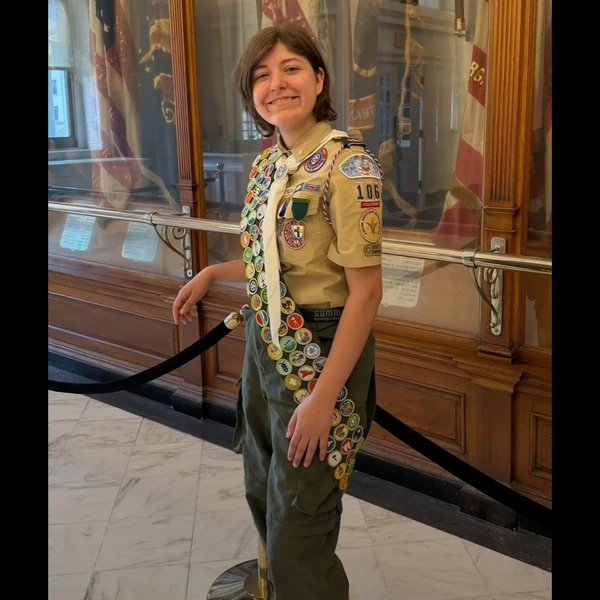
Caroline Grace Martel is an Eagle Scout from Manchester, New Hampshire, and an active member of several Scouts BSA troops, Venturing crews, and Sea Scout ships. A dedicated leader and servant to her community, Caroline earned Scouting America’s highest rank through years of commitment to leadership, service, and outdoor adventure. Her Eagle Scout project transformed an area of unmarked graves at Hillsborough County Cemetery into a memorial and reflection space, complete with benches, landscaping, and a flagpole honoring those laid to rest there. She was named the New Hampshire 2025 Eagle Scout of the Year. Caroline has served in numerous leadership roles across Scouting America, including Council Boatswain for New Hampshire, Interim CVOA President, and leadership positions in Venturing, Sea Scouts, and Scouts BSA. She currently is the Boatswain's Mate of Administration for the National Sea Scout Quarterdeck. She has earned 135 merit badges, with plans to complete all 141 available merit badges. In addition to her Scouting accomplishments, Caroline is homeschooled as a senior in high school and actively volunteers with The Salvation Army, supporting programs that serve families and individuals in need throughout her community. She is passionate about service, leadership development, and inspiring younger Scouts to reach their full potential. When she is not volunteering or participating in Scouting activities, Caroline enjoys spending time with her cats.

Education

Homeschooled

High School
2020 - 2026

Miscellaneous

  • Desired degree level:

    Bachelor's degree program

  • Majors of interest:

    • Psychology, General
    • Psychology, Other
  • Not planning to go to medical school
  • Career

    • Dream career field:

      • Mental Health Care
    • Dream career goals:

      Creative Arts and Play Therapist for Children and Adolescents

    • Lifeguard

      Scouting America
      2026 – Present8 months

    Sports

    Snowboarding

    2024 – Present2 years

    Swimming

    2022 – Present4 years

    Sailing

    2025 – Present1 year

    Kayaking

    2024 – Present2 years

    Golf

    2025 – Present1 year

    Cycling

    2024 – Present2 years

    Canoeing

    2023 – Present3 years

    Archery

    2023 – Present3 years

    Alpine Skiing

    2024 – Present2 years

    Arts

    • The Salvation Army

      Graphic Art
      2026 – Present

    Public services

    • Volunteering

      Scouting America — Scout Leader
      2025 – Present
    • Volunteering

      The Salvation Army — Volunteer
      2014 – Present

    Future Interests

    Advocacy

    Volunteering

    Philanthropy

    Entrepreneurship

    Joe Gilroy "Plan Your Work, Work Your Plan" Scholarship
    My long-term goal is to become a licensed Mental Health Counselor specializing in children and adolescents. Throughout my volunteer service, leadership experiences, and work with young people, I have seen how early intervention, compassion, and positive relationships can change the direction of a child's life. I want to build a career helping young people develop resilience, heal from trauma, and discover their strengths. To achieve this goal, I have developed a thoughtful plan with both short-term and long-term objectives. I will graduate from high school in December 2026 while continuing to gain practical experience through community service and employment. After graduation, I plan to enroll at Southern New Hampshire University to pursue a bachelor's degree in Psychology. During my undergraduate studies, I intend to continue working part-time to help offset educational expenses while also gaining experience in human services and youth-focused organizations. After earning my bachelor's degree, I plan to continue directly into a master's program in Clinical Mental Health Counseling. Completing graduate school, supervised clinical experience, and state licensure requirements will prepare me to practice as a licensed mental health counselor. My ultimate aspiration is to work with children, adolescents, and families, providing evidence-based therapy while advocating for accessible mental health services within my community. Financial planning is an essential part of reaching these goals. Tuition, books, technology, transportation, and licensing costs represent significant investments. I plan to finance my education through a combination of scholarships, grants, savings from employment, and, if necessary, student loans used responsibly. Working throughout college will help reduce debt while also strengthening my professional skills. Scholarships such as this one are particularly meaningful because they allow me to focus more fully on my education and service rather than financial stress. My greatest resources extend beyond finances. My experiences as an Eagle Scout have taught me how to set long-term goals, solve problems, manage complex projects, and lead others with integrity. Through Scouting, volunteer service with The Salvation Army, and leadership in my community, I have developed perseverance, adaptability, and a commitment to serving others. These experiences have shown me that meaningful change happens through consistent effort and collaboration. I also recognize that success is rarely a straight path. Life presents unexpected challenges, and I have built flexibility into my plans. If financial or personal obstacles arise, I am prepared to adjust my course by attending school part-time if necessary, increasing my work hours temporarily, or seeking additional scholarships and internship opportunities. Every adjustment will keep my long-term goal in focus without compromising my commitment to completing my education. My career goal is not simply to earn a degree but to make a lasting difference in the lives of children and families. By carefully planning my education, managing financial responsibilities, seeking mentorship, and continuing to serve my community, I am confident I can build a career that combines compassion, leadership, and professional excellence. Every step I take today is an investment in becoming the counselor I aspire to be tomorrow.
    Mad Genius Scholarship
    The Cartographer of Forgotten Places Most people think a genius is someone who already knows the answers. A Mad Genius is the one who refuses to believe the questions have all been asked. When I was younger, I imagined inventors working in cluttered workshops, their desks buried beneath blueprints, coffee cups, and impossible ideas. Their brilliance wasn't neat. It was loud, curious, relentless. They looked at ordinary things and asked, "Why does it have to stay this way?" Years later, I realized that a Mad Genius doesn't always invent machines. Sometimes, they restore forgotten places. One Saturday morning, I stood in an old cemetery where time had quietly erased parts of history. Grass had grown wild. Stones had disappeared beneath years of soil and leaves. Some graves had no markers at all. The people resting there had names once spoken every day, families who loved them, stories that mattered. Yet now, many visitors walked past without ever knowing they existed. Most people saw an overgrown patch of land. I saw a question. What if someone remembered them again? The idea seemed unrealistic. I was a high school student with limited resources, no construction crew, and no experience transforming public spaces. Friends politely suggested smaller projects. Adults wondered if I was taking on too much. They weren't wrong. It was too much. That was exactly why I couldn't stop thinking about it. The strange thing about impossible ideas is that they refuse to leave. They follow you while you're eating dinner. They interrupt your homework. They appear while you're trying to sleep. Eventually, they become less like thoughts and more like responsibilities. So I started mapping. Not just the physical space, but the possibilities. I measured every corner, researched local history, spoke with community members, gathered donations, redesigned plans, adjusted budgets, and solved one problem after another. Every obstacle became another puzzle waiting to be solved. Some days progress felt invisible. Other days it felt like moving mountains with a shovel. Little by little, the forgotten place began changing. Volunteers arrived. Materials were donated. Benches appeared. Landscaping replaced weeds. A flagpole stood where silence had once settled. The project became something larger than I had imagined. It wasn't just a cemetery anymore. It became a place where families could sit, reflect, grieve, remember, and reconnect with stories that deserved to be told. Standing there after it was complete, people congratulated me on "finishing" the project. They misunderstood. Projects end. Ideas don't. That experience changed the way I think about genius. The world celebrates people who invent the next smartphone or discover distant galaxies. Those achievements deserve celebration. But I believe there is another kind of genius. The person who notices the lonely student everyone else overlooks. The volunteer who quietly serves meals every week without expecting applause. The counselor who helps someone rediscover hope. The teacher who sees potential before anyone else does. The leader who asks, "Who have we forgotten?" That kind of thinking often appears irrational at first. Why spend hundreds of hours helping strangers you'll never meet? Why volunteer weekends instead of relaxing? Why keep trying when easier paths exist? Because every meaningful change begins as an unreasonable idea. History is filled with people whose visions sounded impossible until someone proved otherwise. Bridges were impossible. Flight was impossible. Space travel was impossible. Equal opportunity was impossible. Someone had to become just stubborn enough to ignore the word impossible. Maybe that's what a Mad Genius truly is. Not someone consumed by chaos. Someone consumed by purpose. Someone whose imagination is stronger than other people's doubt. Someone willing to look foolish while building something no one else can yet see. As I prepare to study child and adolescent psychology, I often think about the children I'll someday meet. Some will struggle with anxiety. Some will carry trauma. Some will believe they are broken because the world has only measured them by grades, behavior, or mistakes. I hope to be the person who asks different questions. What strengths haven't been discovered? What story hasn't been heard? What future hasn't been imagined? Those questions may never earn headlines. But they might change a life. And changing one life has a remarkable way of changing many more. So if someone asked me to describe a Mad Genius, I wouldn't point to a laboratory filled with strange inventions or a villain plotting world domination. I'd point to an ordinary person standing in a forgotten place, holding an idea everyone else thinks is impossible. Because the maddest idea of all may be believing that one person can change the world. Until they do.
    Barbara Cain Literary Scholarship
    Books have been my greatest teachers. Throughout high school, I have read more than 500 titles spanning history, psychology, leadership, science, biographies, fantasy, literature, and personal development. While each book offered a different perspective, together they taught me that knowledge has little value unless it is used to improve the lives of others. Reading has shaped not only what I know, but also who I aspire to become. One of the greatest lessons books have given me is empathy. Reading allows you to experience the world through someone else's eyes—to understand struggles, cultures, emotions, and triumphs that may be very different from your own. Whether I was reading memoirs of individuals overcoming adversity, historical accounts of communities facing hardship, or novels exploring complex human relationships, I learned that every person has a story worth understanding. That lesson has influenced the way I interact with others and reinforced my desire to pursue a career helping people through difficult seasons of life. Books also taught me the importance of lifelong learning. Every subject I explored led to new questions and inspired me to continue seeking knowledge beyond the classroom. Reading about psychology, child development, resilience, and human behavior confirmed my passion for understanding how people grow, heal, and overcome challenges. These experiences solidified my goal of earning a bachelor's degree in Child and Adolescent Psychology and ultimately becoming a licensed mental health counselor. Reading has strengthened my leadership as well. Through biographies of influential leaders, I learned that true leadership is rooted in humility, integrity, perseverance, and service rather than authority or recognition. These lessons have guided me throughout my journey as an Eagle Scout, where I have had opportunities to mentor younger Scouts, organize community service projects, and lead by example. The values I encountered in books became principles I worked to practice in my everyday life. Perhaps most importantly, reading has taught me resilience. Many of the people whose stories inspired me faced extraordinary obstacles, yet they continued moving forward with courage and determination. Their examples reminded me that setbacks are not failures but opportunities for growth. This perspective has helped me remain committed to long-term goals, even when they required years of dedication and hard work. Although I have read more than 500 books, I believe my education is only beginning. Every book opens another door to curiosity, compassion, and understanding. As I continue my education, I hope to use the knowledge I gain to advocate for children, adolescents, and families facing mental health challenges. I want to help others discover hope, resilience, and healing, just as so many authors have inspired those qualities in me through their words. Reading has shaped my goals by teaching me that learning is not simply about acquiring information—it is about becoming a person who uses knowledge with wisdom, compassion, and purpose. The lessons I have found within the pages of hundreds of books will continue to guide me as I pursue a career dedicated to serving others and making a meaningful difference in my community.
    Michael Rudometkin Memorial Scholarship
    Michael Rudometkin's legacy reminds us that a meaningful life is measured not only by personal achievements, but by the lives we touch through compassion, service, and genuine care for others. His belief that life is about relationships, helping those in need, and making the world a better place deeply resonates with my own values. Throughout my life, I have sought opportunities to serve my community, lead with integrity, and encourage others to discover their own potential. Service has never been something I do to earn recognition—it is simply part of who I am. As an Eagle Scout, I have dedicated countless hours to serving others through leadership, mentoring younger Scouts, community improvement projects, and volunteer work. My Eagle Scout project transformed an area of unmarked graves at Hillsborough County Cemetery into a peaceful remembrance and reflection space with benches, landscaping, and a flagpole. While the physical improvements were meaningful, the greatest reward was creating a place where families could honor loved ones with dignity and reflection. My commitment to service extends beyond Scouting. Through my volunteer work with The Salvation Army, I have assisted with Toy Shop distributions, helping provide Christmas gifts to hundreds of children whose families were experiencing financial hardship. Seeing the excitement and relief on parents' faces reinforced that even small acts of kindness can have lasting impacts. Whether serving behind the scenes or working directly with families, I have learned that compassion often speaks louder than words. Leadership has also allowed me to serve by empowering others. As an active member of multiple Scouting units, I mentor younger Scouts, helping them develop confidence, outdoor skills, and leadership abilities. I believe leadership is not about being in charge—it is about encouraging others to succeed and creating opportunities for them to grow. Watching younger Scouts accomplish goals they once thought impossible has been one of the most rewarding experiences of my life. Perseverance has been equally important in pursuing my passions. Earning the rank of Eagle Scout required years of dedication, resilience, and commitment, especially as part of the first generation of young women eligible to achieve Scouting's highest rank. Along the way, I learned to overcome obstacles, remain focused on long-term goals, and continue moving forward even when challenges arose. Those experiences strengthened my belief that meaningful change is achieved through consistent effort rather than momentary success. This fall, I will begin pursuing a bachelor's degree in Child and Adolescent Psychology at Southern New Hampshire University with the goal of becoming a licensed mental health counselor. My passion for helping others has grown through every volunteer opportunity and leadership experience. I hope to dedicate my career to supporting children, adolescents, and families as they navigate life's challenges, empowering them to heal, build resilience, and recognize their own strengths. Michael Rudometkin believed that fulfillment comes from investing in people rather than ourselves alone. I strive each day to embody that philosophy by serving my community, leading with compassion, and using my experiences to make a positive difference in the lives of others. Receiving this scholarship would not only help me continue my education but would also strengthen my ability to carry forward a legacy of kindness, service, and unwavering commitment to making the world a better place.
    Julie Adams Memorial Scholarship – Women in STEM
    I am passionate about pursuing a degree in psychology because it represents the intersection of science, human behavior, and healing. Psychology is part of STEM, and I am drawn to the way it uses research, data, and evidence-based methods to understand how people think, feel, develop, and recover from adversity. For me, this field is not just academic—it is deeply connected to my purpose in life and my personal story of resilience. I grew up in an abusive home environment and was later adopted by my grandparents at the age of six. Although that change provided safety and stability, I continued to carry the emotional effects of early trauma throughout my development. For many years, I struggled with understanding my emotions and how my past experiences influenced my thoughts, relationships, and sense of self. Therapy became a turning point in my life. It helped me process my trauma, develop coping skills, and begin rebuilding my identity. Most importantly, it showed me that healing is possible when people are given support, understanding, and the right tools. That experience is what first sparked my passion for psychology. I became curious about why people respond the way they do to trauma, stress, and emotional pain, and how recovery is possible even after difficult beginnings. Psychology gives me a framework to understand these questions through science rather than assumption. It combines research-based knowledge with practical application, allowing professionals to support individuals in meaningful and measurable ways. My passion for this field is also strengthened by my achievements in Scouting. Through years of dedication, leadership, and service, I earned the rank of Eagle Scout, one of the highest honors in Scouting. I was awared the New Hampshire Eagle Scout of the Year award and I have earned 135 merit badges with plans to complete the final 6 prior to my 18th birthday. I hold numerous leadership positions and am motivated to inspire others to overcome adversity and follow thier passions. These achievements required perseverance, responsibility, and a long-term commitment to community service. It taught me how to lead with integrity, work through challenges, and remain dedicated to goals even when the process is difficult. Scouting also gave me opportunities to serve my community through volunteer projects, teamwork, and leadership experiences that strengthened my sense of purpose and accountability. These experiences reinforced my belief that meaningful change comes from consistent effort and a commitment to helping others. My passion for psychology is also driven by my desire to help children and adolescents who are experiencing similar challenges to those I faced. I want to become a child therapist who can support young people through trauma, anxiety, and emotional distress. I understand what it feels like to struggle internally while trying to function externally, and I know how important it is for someone to feel seen, heard, and validated. Psychology provides the tools to turn that understanding into effective, evidence-based care. In addition to my personal experiences, I am motivated by the broader impact psychology can have on society. Mental health affects learning, relationships, physical health, and overall quality of life. By studying psychology, I am preparing myself to contribute to a field that not only helps individuals heal but also strengthens communities through early intervention, emotional awareness, and mental wellness. I am especially passionate about using my education to support suicide prevention efforts and reduce stigma around seeking help. As a STEM discipline, psychology also appeals to me because it requires critical thinking, research, and continuous learning. I am motivated by the idea of being part of a field that evolves through scientific discovery and improves through evidence-based practice. I want to ensure that the care I provide in the future is both ethical and grounded in research. Ultimately, I am passionate about psychology because it connects my personal journey, my achievements in Scouting, and my professional goals. It allows me to transform lived experience and leadership development into a foundation for helping others. My purpose is to use this degree to become a compassionate, skilled mental health professional who helps children and families find healing, resilience, and hope for the future.
    Ethel Hayes Destigmatization of Mental Health Scholarship
    My experience with mental health has fundamentally shaped who I am, how I relate to others, and the direction I want my life to take. I grew up in an abusive home environment and was adopted by my grandparents at the age of six. Although that change brought safety and stability, I continued to carry the emotional impact of early trauma for many years. As a result, I learned early on what it feels like to navigate life while managing intense internal emotions that others could not see. For a long time, I did not fully understand my emotional responses or how deeply my early experiences influenced my behavior, relationships, and sense of self. Therapy became a turning point in my life. It gave me a structured, supportive space to make sense of my experiences and begin developing healthier ways of coping. One strong memory for me was going outside on the deck and screaming out my fears before I went to bed. My therapist told me to try that. I was shocked when it actually worked. I started to beleive in the benefits of counseling. I began investing in my mental health. Through this process, I started to realize that my past did not have to define my future. That realization became the foundation for my personal growth and my long-term goals. I was in NY City standing across from the Statue of Liberty when I found out that my efforts in therapy resulted in my diagnosis of PTSD being removed from my diagnoses. This was incredibly powerful. Because of my experiences, I have developed a strong interest in pursuing a career in child mental health. I want to support children who are facing trauma, anxiety, instability, or emotional distress because I understand how overwhelming those experiences can be. I also understand how meaningful it is when a trusted adult provides consistency, patience, and understanding. My goal is to become a child therapist who can offer that kind of support—someone who helps children feel safe enough to express what they are going through and supported enough to begin healing. My experiences have also influenced how I view relationships. I have learned that healthy relationships require emotional safety, trust, and the ability to listen without judgment. Because I know what it is like to feel unheard or misunderstood, I try to approach others with empathy and patience. I am more aware that people often carry struggles that are not visible on the surface, and that small moments of understanding can have a significant impact. Mental health has taught me that connection is not just social—it is a critical part of emotional well-being. In addition to therapy, Scouting played an important role in shaping my values and perspective. Earning the rank of Eagle Scout required commitment, leadership, and perseverance. It taught me how to take responsibility, work through challenges, and contribute to something larger than myself. I was awared the NH Eagle Scout of the Year. I continue to dedicate my efforts to achieving what I am passionate about. I have 135 merit badges and have 6 more to have earned all 141 in scouting. These lessons reinforced my belief that growth often comes from persistence and that service to others can be a powerful source of meaning. Over time, my understanding of the world has shifted. I now see mental health as central to how people experience life, make decisions, and build relationships. I also recognize that many individuals do not have access to the support they need, which can deepen cycles of struggle. This awareness has strengthened my desire to work in a field where I can help reduce barriers to care and support early intervention, especially for children and adolescents. Ultimately, my mental health journey has given me direction and purpose. It has shaped my career goals, influenced how I interact with others, and helped me develop a deeper sense of empathy. I no longer view my past only as something I survived, but as something that has helped me understand others more deeply. My goal is to use that understanding to support children in developing resilience, hope, and the belief that their circumstances do not determine their future.
    Marsha Cottrell Memorial Scholarship for Future Art Therapists
    My interest in art therapy began through my volunteer work in the art room at The Salvation Army, where I supported children from disadvantaged families. Many of the children I worked with came from environments shaped by instability, stress, or limited access to emotional support. While they often struggled to express their feelings verbally, I noticed that art gave them a different way to communicate. Through drawing, painting, and creative expression, they were able to show emotions that they could not always put into words. That experience showed me how powerful creativity can be as a tool for healing. Working in the art room also reminded me of my own experiences as a child. I understand what it feels like to carry emotions that are difficult to explain and to feel overwhelmed by experiences that are not easily expressed. Seeing children use art to process their feelings made me realize how important it is to provide alternative ways for young people to express themselves, especially when traditional conversation feels too difficult or intimidating. Art became a bridge between internal emotions and external expression, and I saw how it helped children feel safer, calmer, and more understood. This experience led me to develop a strong interest in art therapy as part of my future career in child mental health. I plan to become a child therapist who integrates creative and expressive approaches into treatment, especially for children who have experienced trauma, abuse, anxiety, or emotional distress. I want to use art not just as an activity, but as a therapeutic tool that helps children explore their emotions, build self-awareness, and develop healthy coping skills. Creative expression can reduce barriers to communication and allow children to process experiences in a developmentally appropriate and non-threatening way. Incorporating art therapy principles into my future work will allow me to meet children where they are. Not every child is ready or able to talk directly about their feelings, especially those who have experienced trauma. Art provides an alternative pathway for expression, helping children communicate what they are experiencing in a way that feels safe and natural. It also helps build trust between the child and therapist, which is essential for effective healing. My volunteer work at The Salvation Army has shown me that healing does not always begin with words—it often begins with feeling safe enough to create, explore, and express. I want to carry this understanding into my professional practice by creating therapeutic environments where children feel free to express themselves without fear of judgment. I believe that combining traditional mental health therapy with creative approaches like art therapy can support deeper healing and emotional growth. Ultimately, my goal is to become a child mental health therapist who uses both clinical knowledge and creative methods to support healing. My volunteer experience in the art room helped me see firsthand how powerful art can be in helping children process emotions and build resilience. I hope to use this insight to create a therapeutic space where children not only feel heard, but also feel free to express themselves in ways that support healing, confidence, and hope for the future.
    STLF Memorial Pay It Forward Scholarship
    One of the most meaningful ways I have given back to my community has been through my involvement in Scouting and service-based leadership. Over time, I have participated in and helped support multiple community service efforts, including organizing and contributing to projects focused on improving public spaces, supporting families, and assisting community needs. One of the most impactful experiences was earning the rank of Eagle Scout, which required me to plan, organize, and complete a service project that benefited my local community. This experience taught me what it truly means to take responsibility for a project from beginning to end while ensuring that it creates lasting value for others. In my service work, I learned that volunteering is not only about completing tasks, but about identifying needs and responding with action, compassion, and consistency. Through planning and leading my Eagle Scout project, I worked with others to coordinate materials, schedule volunteer support, and ensure that the project was completed with care and attention to detail. It required communication, problem-solving, and perseverance, especially when challenges arose. Most importantly, it required learning how to lead people in a way that encouraged teamwork and shared purpose rather than control. Beyond a single project, I have continued to volunteer in ways that reflect my commitment to helping others. Whether supporting community initiatives, participating in service activities through Scouting, or assisting with local needs, I have learned that consistent service builds stronger communities. These experiences have shown me that even small contributions can have a meaningful impact when they are done with intention and respect for those being served. Leadership through service is important because it is rooted in action rather than title. True leadership is not about authority; it is about responsibility to others. It means recognizing needs within a community and being willing to step forward to help address them. Through my experiences, I have learned that effective leaders listen first, work alongside others, and remain committed even when challenges arise. Service-based leadership also teaches humility, because it requires understanding that the purpose of leadership is to support and uplift others rather than to seek recognition. These lessons have directly influenced my future goals. As I pursue a career in mental health, I see leadership through service as the foundation of effective care. In therapy, leadership means creating a safe space, advocating for clients, and guiding individuals toward healing with compassion and respect. It means meeting people where they are and helping them move forward without judgment. My volunteer experiences have helped me understand that lasting impact comes from consistency, empathy, and a genuine commitment to helping others grow. Ultimately, my service experiences have shaped how I view my role in the world. I have learned that giving back is not a single event, but an ongoing commitment to showing up for others in meaningful ways. Leadership through service has taught me that I can make a difference not only through major accomplishments, but through everyday actions that support, encourage, and uplift those around me. These lessons continue to guide my education, my goals, and my desire to contribute positively to my community in the future.
    Robert and Suzi DeGennaro Scholarship for Disabled Students
    I am someone who has had to learn early in life how to turn adversity into direction and purpose. I have autism and ADHD, and I also experienced abuse in early childhood before being adopted by my grandparents at the age of six. These experiences shaped how I see the world, how I process information, and how I have learned to navigate both school and personal challenges. While they have created real obstacles, they have also strengthened my awareness, empathy, and determination to build a future centered on mental health and helping others. Living with autism and ADHD has impacted my schooling in both challenging and meaningful ways. I have had to work harder to manage focus, organization, and emotional regulation, especially in fast-paced or overstimulating environments. There have been times when executive functioning challenges made academic demands more difficult, requiring me to develop strategies for structure, time management, and persistence. At the same time, these experiences have given me a strong ability to think deeply, notice patterns, and approach problems with a unique perspective. I have learned that success for me does not come from doing things the “easy” way, but from consistent effort, adaptation, and resilience. My early childhood trauma also influenced my educational path. For a long time, I carried emotional stress that affected my sense of safety and confidence. Therapy became a turning point in my life, helping me understand my experiences and develop healthier coping skills. It taught me that healing is possible and that support systems can change the direction of a person’s future. This realization is what led me toward a career in mental health, specifically working with children who have experienced trauma. I understand what it feels like to struggle internally while trying to function externally, and I want to help others feel understood and supported in ways that I was able to experience through care and intervention. Because of these combined experiences—neurodiversity and early trauma—I have developed a strong sense of purpose. I am committed to becoming a child therapist who can support young people facing emotional challenges, developmental differences, and difficult life circumstances. My goal is to create a safe, structured, and compassionate environment where children feel accepted as they are and supported in their growth. Additional financial support would make a significant difference in my ability to pursue higher education. College and training programs require not only tuition, but also costs related to books, transportation, supplies, and time that could otherwise be spent working. Financial assistance would reduce the pressure of having to balance excessive work hours with a demanding academic load, allowing me to fully focus on my studies, internships, and clinical training. This focus is essential for someone pursuing a career in mental health, where hands-on experience and academic preparation are both critical. Ultimately, I have turned my trauma into purpose and my challenges into motivation. My disability and early experiences have shaped my path, but they have not defined my limits. Instead, they have strengthened my commitment to mental health and my desire to help others heal. With continued education and financial support, I am determined to use my experiences to create meaningful change in the lives of children and families who need understanding, stability, and hope.
    Sloane Stephens Doc & Glo Scholarship
    The impact I want to make begins with a simple but powerful goal: to ensure that children who are struggling emotionally are seen, supported, and given real opportunities to heal. My vision for the future is shaped by my own lived experience with trauma, recovery, and resilience. I was born into an abusive home environment and later adopted by my grandparents at the age of six. That transition gave me safety, but not immediate emotional healing. For years, I carried the effects of early trauma while trying to navigate school, relationships, and my sense of identity. What changed my life was access to therapy and the presence of adults who believed in my ability to heal. Through therapy, I learned that healing is not linear, but it is possible. I was given tools to understand my emotions, cope with distress, and rebuild a sense of self-worth. That experience helped me realize how powerful mental health support can be when it is consistent, compassionate, and accessible. It also made me aware that many children do not have access to the same resources or safe spaces that I was fortunate to receive. I am inspired by the therapists who supported me during my healing process. They did not just listen—they helped me feel understood, validated, and capable of change. Their work showed me that mental health professionals have the ability to change the trajectory of a person’s life. I also draw inspiration from my experience in Scouting, where I earned the rank of Eagle Scout. That journey taught me discipline, leadership, and service to others. It reinforced my belief that meaningful impact comes from showing up consistently and committing to something greater than yourself. Using my education, I plan to become a child therapist specializing in trauma-informed care. My goal is to work with children and adolescents who are experiencing abuse, neglect, anxiety, depression, or instability. I want to create a space where they feel safe expressing emotions they may not yet fully understand. I will use evidence-based practices learned through higher education—combined with empathy shaped by my own experiences—to help children develop coping skills, emotional awareness, and resilience. Beyond direct clinical work, I hope to give back by being an advocate for mental health awareness in schools and community settings. I want to help normalize conversations about emotional well-being so that children and families understand that seeking help is a strength, not a weakness. By sharing knowledge, promoting understanding, and offering support, I hope to contribute to a culture where mental health is treated with the same importance as physical health. Higher education is the foundation that will make this vision possible. It will provide me with the academic knowledge, clinical training, and professional experience needed to become an effective and ethical mental health provider. My lived experience gives me purpose and empathy, but my education will give me the tools to turn that purpose into meaningful, evidence-based care. The change I am determined to create is one where children who have experienced trauma are not defined by what happened to them, but supported in discovering who they can become. I want to help build a future where mental health care is accessible, compassionate, and proactive, and where every child has the opportunity to heal, grow, and feel hopeful about their future. Through my education and career, I plan to give back by turning my past into purpose and my purpose into lasting impact.
    Learner Mental Health Empowerment for Health Students Scholarship
    Mental health is deeply important to me as a student because it is not only something I study and care about academically, but something that has shaped my lived experience and personal growth. I was born into an abusive home environment and later adopted by my grandparents at the age of six. While that change brought stability, I carried the emotional impact of early childhood trauma for many years. As a student, I have had to learn how to manage stress, build resilience, and stay focused while also working through the lasting effects of those experiences. Mental health has therefore not just been an academic interest for me—it has been a foundation for how I understand myself, my learning, and my future. Therapy played a critical role in helping me move forward. It gave me a safe and supportive space to process my past, understand my emotions, and develop healthier coping skills. Through that process, I learned that mental health is essential for learning and personal success. Without emotional well-being, it becomes difficult to focus, grow, and reach one’s full potential. Because of this, I value mental health as something that directly affects a student’s ability to succeed both inside and outside the classroom. As a student, I advocate for mental health by using my experiences to promote understanding, compassion, and openness in my community. I believe that one of the most important ways to support mental health is by reducing stigma and encouraging honest conversations about emotional struggles. I try to be someone who listens without judgment and who recognizes that many people are carrying challenges that are not always visible. In both school and personal settings, I support the idea that it is okay to ask for help and that seeking support is a strength, not a weakness. My involvement in Scouting has also shaped how I view leadership and advocacy. Through earning the rank of Eagle Scout, I learned the importance of service, responsibility, and leading by example. Those values influence how I interact with others today. I strive to demonstrate empathy, patience, and respect, especially when others are struggling. I understand that small acts of kindness and understanding can make a meaningful difference in someone’s emotional well-being. In my community, I also advocate for mental health by encouraging awareness of how early life experiences and stress can impact emotional development. I believe that many individuals, especially young people, struggle silently because they do not feel safe expressing what they are going through. I try to help create a more supportive environment by normalizing conversations about emotions, stress, and coping strategies. Even simple conversations can help others feel less alone and more willing to seek help when needed. My long-term goal of becoming a child therapist is also a form of advocacy in itself. By pursuing higher education in mental health, I am preparing to provide professional support to children and adolescents who may be experiencing trauma, anxiety, or depression. I want to be part of a system that prioritizes early intervention and ensures that young people receive the support they need before their struggles become overwhelming. Ultimately, mental health is important to me because it has shaped both my challenges and my strengths. It has taught me that healing is possible and that support can change the direction of a person’s life. As a student, I carry that understanding into my academic work, my relationships, and my community. I hope to continue advocating for mental health by promoting empathy, reducing stigma, and encouraging others to seek help so they can also move toward healing and growth.
    Our Destiny Our Future Scholarship
    I plan to make a positive impact on the world by dedicating my career to mental health, specifically supporting children and adolescents who have experienced trauma, abuse, and emotional hardship. My life experience has shown me that early adversity can shape a person’s development in profound ways, but I have also learned that healing is possible when people are given safety, support, and access to compassionate care. I was born into an abusive home environment and later adopted by my grandparents at the age of six. While that transition provided stability, I carried the emotional effects of my early experiences for many years. Therapy became a turning point in my life. It gave me a safe space to process my past, understand my emotions, and develop healthy coping strategies. With support from caring professionals, I learned that my circumstances did not define my future. That experience not only helped me heal, but also inspired me to pursue a career where I could offer the same hope to others. In addition to therapy, Scouting played a significant role in shaping my values. Through years of commitment and service, I earned the rank of Eagle Scout. That journey taught me discipline, leadership, perseverance, and the importance of serving others. It reinforced my belief that even difficult experiences can be transformed into purpose when paired with responsibility and dedication. My goal is to become a child therapist who provides trauma-informed, compassionate care. I want to work with children who may feel unheard, unsafe, or overwhelmed by their emotions. I understand what it is like to struggle internally while appearing fine on the outside, and I understand how powerful it can be when a caring adult helps a child feel seen and understood. I want to be that supportive presence in the lives of young people who are navigating emotional pain, helping them build coping skills, emotional awareness, and resilience. Higher education is essential to achieving these goals because it will provide me with the academic knowledge, clinical training, and ethical foundation needed to become an effective mental health professional. My lived experience gives me empathy and insight, but formal education will equip me with evidence-based practices that ensure I can support clients safely and effectively. Learning about human development, trauma, and therapeutic interventions will allow me to turn my personal experiences into professional skills that can benefit others. Financial aid will play an important role in making this path possible. It will reduce the financial burden of college and allow me to focus more fully on my education and training. With this support, I will be able to take full advantage of academic opportunities, clinical experiences, and internships that prepare me for a career in mental health.
    WCEJ Thornton Foundation Low-Income Scholarship
    Growing up, my life could have easily followed a very different trajectory. Research shows that children raised in abusive environments often face increased risks of long-term trauma, instability, and barriers to higher education. By those expectations, I should have been defined by my circumstances. Instead, I made a conscious decision to pursue healing, growth, and purpose. I was born into an abusive home and was adopted by my grandparents at the age of six. That adoption gave me safety and consistency, but it did not immediately resolve the emotional impact of my early experiences. I carried the effects of trauma into my childhood and teenage years, often feeling overwhelmed internally while trying to appear outwardly stable. The turning point in my life came through therapy and the steady support of caring adults. In therapy, I was finally able to process my experiences, understand my emotional responses, and develop healthier ways of coping. Over time, I began to rebuild my sense of identity and realized that my future did not have to be limited by my past. Alongside therapy, Scouting played a meaningful role in shaping who I am today. Through years of commitment, leadership, and service, I earned the rank of Eagle Scout. That experience helped me develop discipline, responsibility, and a deep appreciation for helping others. It also showed me that personal adversity can be transformed into strength when it is met with perseverance and purpose. These experiences led me to a clear professional goal: becoming a child therapist. I want to work with children who are experiencing the kinds of challenges I once faced—children living with trauma, instability, or emotional pain. I understand what it feels like to struggle silently and to not have the words to explain what is happening internally. I also understand the life-changing impact of having even one supportive adult who listens, validates, and provides a sense of safety. My goal is to be that consistent, supportive presence for others and to help children recognize that they are not defined by what has happened to them. Higher education is a necessary step in turning this goal into reality. It will provide me with the academic knowledge, clinical training, and ethical foundation required to practice effectively as a mental health professional. My lived experience gives me empathy and understanding, but formal education will equip me with evidence-based tools to assess, support, and treat children in a responsible and effective way. Courses in psychology, human development, and trauma-informed care will allow me to translate my personal insight into professional skill. Financial aid will play a critical role in making this path possible. It will reduce the financial pressure that often prevents students from fully engaging in their education and training. With this support, I will be able to focus more deeply on my studies, participate in learning opportunities, and prepare for clinical work without the constant stress of financial strain. In this way, financial assistance becomes more than help with tuition—it becomes an investment in my ability to serve others in the future. My long-term goal is to create a meaningful impact in the lives of children and families through mental health care. I hope to provide trauma-informed support that helps children develop emotional awareness, coping skills, and resilience. I am especially committed to early intervention and suicide prevention, ensuring that children receive support before emotional struggles escalate into crisis. Ultimately, I want my life to reflect a full transformation of experience into purpose. What once could have been a story defined by hardship has instead become a foundation for service. Through education and training, I hope to help children heal from trauma and discover that their past does not determine their future.
    Kayla Nicole Monk Memorial Scholarship
    Statistically, I was expected to follow a very different path in life. Many children who grow up in abusive home environments face significantly higher risks of substance use, early pregnancy, mental health crises, and instability. By those odds, I should have been defined by my circumstances rather than my potential. Instead, I made a different choice. I chose healing. I chose growth. I chose to turn what I survived into purpose. I was born into an abusive home environment and, at the age of six, was adopted by my grandparents. That adoption gave me safety and stability, but it did not erase the emotional impact of my early years. I carried fear, confusion, and trauma into my childhood and adolescence. For a long time, I struggled internally while trying to appear “okay” on the outside. What changed the direction of my life was access to therapy and consistent support. Through therapy, I learned how to process what I had experienced, understand my emotions, and develop healthy coping skills. I began to rebuild my identity and recognize that my past did not have to define my future. Scouting also became a major part of my healing and growth. Through years of dedication and service, I earned the rank of Eagle Scout. This experience taught me discipline, leadership, resilience, and the importance of helping others. It showed me that I could take even painful experiences and transform them into something meaningful. Together, therapy and Scouting helped me build the strength and confidence to move forward with purpose instead of being held back by my past. Because of these experiences, I developed a clear goal: to become a child therapist. I want to dedicate my life to helping children who are growing up in environments similar to the one I came from. I understand, from lived experience, what it feels like to be overwhelmed, unheard, and emotionally unsafe. I also understand how powerful it is when a caring adult helps a child feel seen, safe, and valued. I want to be that person for others and help children learn early that their circumstances do not define their worth or their future. I chose to further my education in mental health because I know that lived experience alone is not enough—I need professional training to provide safe, effective, and ethical care. College will give me the knowledge and clinical skills to become a competent therapist who can truly make a difference in children’s lives. I want to turn my personal journey into a professional strength that helps others heal. This scholarship will have a direct impact on my ability to achieve my goals by reducing the financial burden of higher education. It will allow me to focus more fully on my studies, training, and preparation for a career in mental health instead of financial stress. More importantly, it will bring me closer to becoming a child therapist who can offer children the same support, understanding, and hope that changed my own life. My story is not one of statistics—it is one of choice, resilience, and purpose. I chose healing over destruction, growth over survival alone, and hope over defeat. Through higher education, I am committed to using my experiences to help children discover that they are not defined by what they have endured, but by what they can become.
    Jake Thomas Williams Memorial Scholarship
    Mental health has become the central focus of my life’s purpose, shaped both by personal experience and by a deep commitment to helping others heal and stay alive. I was born into an abusive home environment and, at the age of six, was adopted by my grandparents. That transition provided safety and stability, but the emotional impact of my early childhood did not disappear. I grew up carrying the effects of trauma—fear, hypervigilance, confusion, and difficulty trusting others. For many years, I did not fully understand how deeply those experiences shaped my emotions and relationships. What ultimately changed my trajectory was access to consistent mental health support, particularly therapy, where I began to understand that healing was not only possible, but something I could actively participate in building for myself. Therapy became the foundation of my healing. For the first time, I had a space where my experiences were not dismissed or minimized, but instead heard and validated. My therapists helped me understand that trauma is not defined by weakness, but by what a person survives and carries forward. They taught me coping strategies, emotional regulation skills, and how to challenge the negative beliefs I held about myself. Over time, I began to rebuild a sense of identity that was not defined by my past. I learned that mental health is not a fixed state, but an ongoing process that requires support, patience, and compassion. These lessons became the foundation of how I understand resilience and human growth. That experience fundamentally changed how I see the world and my future. I no longer view mental health as an abstract field, but as something that has the power to save lives. I chose to pursue mental health because I understand what it feels like to struggle internally while appearing fine externally, and I understand how critical it is when someone finally sees you, listens to you, and helps you hold on during moments of emotional crisis. I want to offer that same sense of safety and hope to others who are experiencing emotional pain, especially those who may feel isolated, overwhelmed, or unseen. A central part of my commitment to mental health is suicide prevention. I understand that suicidal thoughts often emerge when emotional pain feels unbearable and when individuals believe they are alone, unheard, or without options. My goal as a future mental health professional is to be part of the moment where hope is restored. I want to help individuals recognize warning signs early, develop coping strategies before a crisis escalates, and strengthen protective factors such as connection and support systems. I am especially passionate about working with young people, who may not yet have the emotional tools or language to express what they are experiencing. I want to create a safe environment where difficult thoughts can be shared without shame, and met with compassion, validation, and appropriate care. In addition to my personal healing journey, I have demonstrated perseverance, leadership, and service through Scouting. Earning the rank of Eagle Scout required years of dedication, responsibility, and commitment to helping others. It taught me discipline, problem-solving, and the importance of contributing to something larger than myself. These values align closely with my future goals in mental health, where service to others is central to meaningful practice.
    Marcia Bick Scholarship
    Some of the most important lessons I have learned did not come from a classroom—they came from overcoming adversity. I was born into an abusive home environment and, at the age of six, was adopted by my grandparents. While their love, stability, and support changed the trajectory of my life, the effects of my early childhood experiences did not disappear overnight. Like many children who have experienced trauma, I struggled with fear, self-doubt, and confusion. There were times when I felt different from my peers and wondered whether I would ever fully heal from what I had experienced. What made the greatest difference in my life was the support of caring adults, especially the therapists who helped me process my experiences and rebuild my confidence. They provided a safe space where I could talk openly, learn healthy coping skills, and begin to understand that what happened to me did not define who I was. Through therapy, I learned resilience, self-worth, and hope. Most importantly, I learned that healing is possible when someone feels heard, understood, and supported. Those experiences inspired my career goal of becoming a therapist for young children. I know firsthand how powerful it can be for a child to have a trusted professional who believes in them and helps them navigate difficult emotions. Because I have lived through trauma and experienced the healing process myself, I bring a level of empathy and understanding that cannot be taught solely through textbooks. While every child's experience is unique, I understand what it feels like to be scared, overwhelmed, and uncertain about the future. I also understand the courage it takes to ask for help and the life-changing impact that compassionate support can have. I hope to use my experiences to help children who have faced abuse, neglect, loss, or other traumatic events recognize their own strength and potential. I want to create an environment where children feel safe expressing themselves and where they can learn that their challenges do not have to determine their future. My goal is not only to help children heal but also to empower them to build confidence, resilience, and healthy relationships that will serve them throughout their lives. Throughout my journey, I have worked hard to turn adversity into opportunity. Through Scouting, I developed leadership skills, perseverance, and a commitment to service that ultimately led me to earn the rank of Eagle Scout. These experiences taught me that challenges can become a source of strength when met with determination and support. Higher education is the next step toward achieving my goals. This grant would help remove financial barriers and allow me to focus on obtaining the education and training necessary to serve children and families. My past has shaped who I am, but it does not define me. Instead, it has given me a purpose: to help children discover that healing is possible, hope is real, and their future can be brighter than their past.
    Hazel & Olive Sweet Horizons Scholarship
    One of the greatest challenges I have faced began in early childhood. I came from an abusive home environment and, at the age of six, was adopted by my grandparents. While being adopted provided me with safety, stability, and love, the experiences from my early years left emotional wounds that took time to heal. As a young child, I struggled with feelings of confusion, fear, and loss. Fortunately, my grandparents gave me a second chance, and with their support and the help of therapy, I began the journey of healing and rebuilding my confidence. Therapy played a significant role in shaping who I am today. The therapists who worked with me provided a safe space where I could process my experiences, understand my emotions, and learn healthy ways to cope with difficult feelings. Through their guidance, I learned that my past did not have to define my future. They helped me recognize my strengths, build resilience, and develop the confidence to pursue my goals. Their compassion and dedication inspired me in a profound way and planted the seed for my future career aspirations. As I grew older, I sought opportunities to challenge myself and become a leader. Scouting became one of the most important influences in my life. Through years of hard work, perseverance, and service, I earned the rank of Eagle Scout, one of the highest achievements in Scouting. I also received leadership awards that recognized my commitment to serving others and leading by example. Scouting taught me responsibility, teamwork, integrity, and the importance of giving back to my community. These experiences helped me realize that overcoming adversity can become a source of strength and purpose. My experiences have given me a deep sense of empathy for others, especially children facing challenges similar to those I once faced. I know how important it is to have caring adults who listen, encourage, and believe in a child's potential. Because of the support I received, I was able to heal, grow, and thrive despite difficult circumstances. I want to provide that same support to other children. Pursuing higher education is the next step toward achieving my goal of becoming a therapist for young children. A college education will provide me with the knowledge, skills, and training necessary to help children who have experienced trauma, abuse, loss, or other hardships. I hope to create safe spaces where children feel heard, understood, and empowered to overcome their challenges. My personal experiences allow me to understand the impact that compassionate professionals can have on a child's life, and I want to dedicate my career to making that difference for others. Looking back, I am proud of how far I have come. From a child overcoming abuse and uncertainty, to being adopted by loving grandparents, healing through therapy, and earning the rank of Eagle Scout, my journey has taught me resilience, determination, and the value of service. Higher education will help me continue growing into the person I aspire to be and prepare me to help children discover that their past does not determine their future. Through my education and career, I hope to transform my own experiences into a source of hope and healing for others.