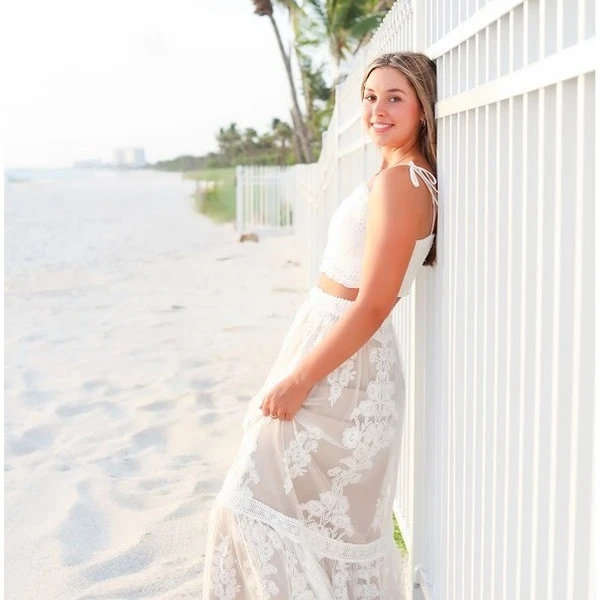
Naples, FL
Age
18
Gender
Female
Hobbies and interests
Student Council or Student Government
Cheerleading
Bible Study
Anatomy
Athletic Training
Community Service And Volunteering
Exercise And Fitness
Nutrition and Health
Nursing
Marketing
National Honor Society (NHS)
Running
Yoga
Pilates
Caroline Harrison
1x
Finalist1x
Winner
Caroline Harrison
1x
Finalist1x
WinnerBio
Motivated student aiming to obtain a BSN on the path toward Nurse Anesthesiology at the University of Florida
- 5.7124 weighted/ 3.9524 unweighted GPA
- 186 volunteer hours (including North Collier Hospital time)
- AP Capstone Diploma Recipient, 30 FSW credit hours
- Student Government leadership, Honors Society leadership, College Advising Club founder
- Passion for exercise and nutrition (Cheerleader, Track and Field, Runner, planning to pursue PT certification)
Education
Aubrey Rogers High School
High SchoolMiscellaneous
Desired degree level:
Bachelor's degree program
Majors of interest:
- Registered Nursing, Nursing Administration, Nursing Research and Clinical Nursing
Test scores:
1360
SAT
Career
Dream career field:
Medicine
Dream career goals:
Nurse Anesthetist
Nanny
Allen Family2025 – Present1 year
Sports
Crossfit
Intramural2020 – Present6 years
Track & Field
Varsity2021 – 20243 years
Cheerleading
Varsity2022 – 20253 years
Research
Biological and Biomedical Sciences, Other
College Board — Research Student2024 – 2025
Public services
Volunteering
KidsCAN — Club Member2023 – 2025Volunteering
National Honor Society — Member, Tutor2024 – PresentVolunteering
Vanderbilt Presbyterian Church — Youth Ministry/ Vacation Bible School Group Leader2022 – 2025Volunteering
College Readiness Club — Founder; CO-President2023 – PresentVolunteering
North Collier Hospital — Surgical Waiting Room director, Cardiac Rehabilitation assistant2024 – 2024
Future Interests
Volunteering
Philanthropy
Losinger Nursing Scholarship
1. As the daughter of a first responder, I grew up surrounded by various aspects of the medical field. I admired my father's dedication to his community, and proudly announced I wanted to be a doctor when I grew up to anyone willing to listen. Throughout my childhood education, my interest continued to develop. By the summer following my sophomore year, I had shadowed under a nurse anesthetist in the operating rooms of Lee Memorial Hospital, witnessing hysterectomies, appendectomies, and coronary artery bypass grafting procedures. The intense, yet captivating procedures piqued my interest in nursing. I entered the application process for a competitive summer volunteering program, in which selected applicants would interview with a panel and be matched into a specialty. I spent countless hours that summer in the surgical bays with patients and families as well as the outpatient recovery center.
While I enjoyed the experience and the insight I was given, I did not expect to return to the hospital until the following summer. However, I did return, less than a month later. This time as a patient. Thanks to the extensive medical knowledge of close family and friends, we recognized the alarmingly high pulse and warning signs of a serious illness. In the ER, I was deemed septic, with a critically low blood pressure. The experience of spending time on the other side of the hospital bed provided an insight that no time volunteering in the operating room could have. The immense gratitude I have to the tireless work of the nurses and doctors who saved my life has further confirmed the true purpose of medicine. I hope to be able to carry this perspective to treat patients with a deeper, more genuine care than I ever knew possible.
2. Human connection is a crucial part of how we view the world. It provides the optimism and emotional intimacy that the world has largely lost. In an increasingly digital age, people have learned to disconnect from community and find their solutions through technology and social media.
As nurses and nursing students, we are often taught the value of a worldly perspective. Having cross-cultural knowledge allows nurses to provide individualized care for a variety of cultures by understanding their belief system and specific needs. By doing so, we can better communicate and build personal relationships with patients from a variety of backgrounds. Understanding the implications of the COVID 19 Pandemic on both the general population and the healthcare field specifically, is a crucial piece of understanding defining moments in history. The shift of jobs, appointments, and face-to-face interactions to reliance on internet-mediated interactions permanently changed society’s desire for true engagement. In addition to the societal impacts, the virus also profoundly impacted the nursing community. By creating extreme physical and mental strain on nurses, inadequate resources and changing protocols provoked many healthcare practice transformations. While many digital tools have increased efficiency in patient care, these changes have also presented a barrier between treatment and empathetic care that requires intentional and authentic compassion.
My experience as a patient redefined the term “human touch”. I learned that in my own crisis, the clinical details of my weeks in the ICU mattered much less than the steadying presence of the nurses. Their guidance through my fluid resuscitation became my source of resilience. Their consistent reassurance allowed me to feel supported. From a patient perspective, the value of feeling understood and connected is invaluable.
As a future nurse, I hope to channel this experience into my own interactions and allow it to shape the way I approach patient care. I expect nursing to present many obstacles I may not feel prepared for, and I understand the highly demanding nature of this career. However, I feel that the rewarding nature of healthcare is the ability to feel the personal impact you have made. To not merely observe a patient’s physical transformation but join them on a healing journey. My drive to enter nursing stems from a desire to offer patients with the same grounding presence I once relied on. ‘Bedside manner’ is so much deeper than a professional requirement; it is something only a human connection can provide.
God Hearted Girls Scholarship
Raised in a Christian household and baptized in the catholic church, I was introduced to Jesus at a young age. My earliest years were spent in a local church led by my relatives, where I learned the posture of faithful Christians. These lessons were foundational as I navigated the anxieties of entering middle school. Like many teenagers, I found a lack of self-confidence triggered by the constant comparison of social media. Sensing this shift, my mother began leading me through the faith, using heartfelt Bible studies. We transitioned to a church community that truly spoke to us, and these moments moved my faith from a family transition to a personal lifeline.
In high school, I began volunteering within my church and in community hospitals, eager to reflect Jesus’s love and healing to others. In service, I found confidence in my identity as a daughter of the Lord. As my relationship with Jesus grew, I felt grounded in my faith and grateful for the way it had transformed my heart and external actions. However, I soon learned that my deepest faith lessons would not come during times of ease. Instead, my faith grew strongest while lying in a hospital bed myself, facing a life-threatening illness.
On Sunday, September 1st, an intense headache and nausea came over me. The severity gradually escalated from dehydration to a medical crisis. As my vision blurred and weakness rendered me unable to stand, I was rushed to the emergency room. The situation alarmed the medical staff as my condition rapidly declined. A weeklong course of one of the strongest antibiotics available, accompanied by countless diagnostic tests and surgical attempts, revealed that my illness was a result of an unknown infection. This infection triggered an inflammatory response known as septic shock, which began to harm my most vital organs. It was only weeks later that I learned the true gravity of the miracle. Had I arrived twenty minutes later, I would not have survived.
The gravity of my survival was difficult to grasp as a 16-year-old. Throughout my long recovery, I grappled with the heavy question of “Why me?” I soon realized the Lord was not done with my story; He was awakening the most powerful chapter. As I embraced the purpose of spreading his love through healing, my story compelled me to lean deeper into healthcare. I spent time shadowing nurses, volunteering in medical programs with a new mission.
While I still navigate seasons of doubt, I am grounded with the peace and knowledge that there is a reason I was blessed with a second chance. I have been given the unique opportunity not only to witness the miracle of survival but to play an active role in it. If I can give back a fraction of what has been restored to me, I will be forever grateful. As I pursue a Bachelor of Science in Nursing at the University of Florida, I will enter each hospital room carrying the weight of my experience and the light of my faith. As a vessel of Jesus’s salvation, I will use my profession to touch lives with same grace that saved mine.
Dashanna K. McNeil Memorial Scholarship
Since birth, I have been immersed in the healthcare world, including the countless nights visiting my father in the fire station, hearing stories of emergency medical crises at family dinners, and playing doctor to my stuffed animals. Naturally, this special interest continued to develop through childhood as I spent time interviewing medical professionals about their jobs and lives, taking many of the volunteer opportunities that had to do with patient care. In high school, I began to refine my career interests through shadowing and occupying my summer in the local hospital. The goal of this volunteer experience was to fill paid indirect patient care positions in the off-season. Following a selective application process, I completed an interview and training session before being matched into a position on account of student strengths.
After a few days of training, I was instructed to transport patients to and from life-saving surgeries. Observing the raw emotions that patients and their loved ones experienced demonstrated to me the impact of interactions in the hospital, especially positive ones. A quick smile from a patient led me to feel that I had made a difference, even if it was small. The hours I spent learning to follow the commands of senior staff provided a glimpse into the many hours of shadowing and clinicals I would complete in nursing school. Watching, interacting, and learning about the thousands of employees required to keep the hospital functioning was an eye-opening experience for me. In my spare time, I learned to ask questions about work-life balance, stress, and rewards of certain careers.
Toward the end of the summer, I spent time reassuring a husband that his wife was in good hands during her surgery. She had recently been diagnosed with a form of cancer, and the procedure was taking much longer than expected. As I waited for my ride home to arrive, the man approached me and thanked me for my patience and support that day. The way those words touched my heart reassured me that healthcare, while demanding, was a career for me.
At that time, I was completely unaware that I would return to that hospital as a patient. Seeing familiar faces and understanding the emotion and effort put into my own fluid resuscitation allowed me to put complete faith in the staff. Most importantly, it allowed me to experience respect and gratitude like never before. The opportunity to begin my journey into the healthcare workforce truly reshaped my perspective on the meaning of nursing, and for that reason, I will mark it as my motivation to attend the University of Florida's nursing school.
Women in Healthcare Scholarship
Since birth, I have been immersed in the healthcare world, including the countless nights visiting my father in the fire station, hearing stories of emergency medical crises at family dinners, and playing doctor to my stuffed animals. Naturally, this special interest continued to develop through childhood as I spent time interviewing medical professionals about their jobs and lives, taking many of the volunteer opportunities that had to do with patient care. In high school, I began to refine my career interests through shadowing and occupying my summer in the local hospital. The goal of this volunteer experience was to fill paid indirect patient care positions in the off-season. Following a selective application process, I completed an interview and training session before being matched into a position on account of student strengths.
After a few days of training, I was instructed to transport patients to and from life-saving surgeries. Observing the raw emotions that patients and their loved ones experienced demonstrated to me the impact of interactions in the hospital, especially positive ones. A quick smile from a patient led me to feel that I had made a difference, even if it was small. The hours I spent learning to follow the commands of senior staff provided a glimpse into the many hours of shadowing and clinicals I would complete in nursing school. Watching, interacting, and learning about the thousands of employees required to keep the hospital functioning was an eye-opening experience for me. In my spare time, I learned to ask questions about work-life balance, stress, and rewards of certain careers.
Toward the end of the summer, I spent time reassuring a husband that his wife was in good hands during her surgery. She had recently been diagnosed with a form of cancer, and the procedure was taking much longer than expected. As I waited for my ride home to arrive, the man approached me and thanked me for my patience and support that day. The way those words touched my heart reassured me that healthcare, while demanding, was a career for me.
At that time, I was completely unaware that I would return to that hospital as a patient. Seeing familiar faces and understanding the emotion and effort put into my own fluid resuscitation allowed me to put complete faith in the staff. Most importantly, it allowed me to experience respect and gratitude like never before. The opportunity to begin my journey into the healthcare workforce truly reshaped my perspective on the meaning of nursing, and for that reason, I will mark it as one of my most impactful experiences.
I plan to enter the anesthesiology division of nursing as a Certified Registered Nurse Anesthetist. I have been motivated to enter this field through interaction with staff and my own personal caretakers. I feel that while it is often viewed as insignificant or impersonal to the healthcare field, I know how it feels to be a patient experiencing the anxiety of an operating room before you. The assurance and bedside manner of a nurse anesthetist could transform a patient's outlook on an operation. With these opportunities, I would make it my mission to take a potentially impersonal position and place proper bedside manner and personal connection at the forefront of my care. And most significantly, mentor young girls to pursue a higher education in healthcare through shadowing opportunities similar to the ones given to me, and friendship that place more women in operating rooms than ever before.
Beverly J. Patterson Scholarship
Since birth, I have been immersed in the healthcare world, including the countless nights visiting my father in the fire station, hearing stories of emergency medical crises at family dinners, and playing doctor to my stuffed animals. Naturally, this special interest continued to develop through childhood as I spent time interviewing medical professionals about their jobs and lives, taking many of the volunteer opportunities that had to do with patient care. In high school, I began to refine my career interests through shadowing and occupying my summer in the local hospital. The goal of this volunteer experience was to fill paid indirect patient care positions in the off-season. Following a selective application process, I completed an interview and training session before being matched into a position on account of student strengths.
After a few days of training, I was instructed to transport patients to and from life-saving surgeries. Observing the raw emotions that patients and their loved ones experienced demonstrated to me the impact of interactions in the hospital, especially positive ones. A quick smile from a patient led me to feel that I had made a difference, even if it was small. The hours I spent learning to follow the commands of senior staff provided a glimpse into the many hours of shadowing and clinicals I would complete in nursing school. Watching, interacting, and learning about the thousands of employees required to keep the hospital functioning was an eye-opening experience for me. In my spare time, I learned to ask questions about work-life balance, stress, and rewards of certain careers.
Toward the end of the summer, I spent time reassuring a husband that his wife was in good hands during her surgery. She had recently been diagnosed with a form of cancer, and the procedure was taking much longer than expected. As I waited for my ride home to arrive, the man approached me and thanked me for my patience and support that day. The way those words touched my heart reassured me that healthcare, while demanding, was a career for me.
At that time, I was completely unaware that I would return to that hospital as a patient. Seeing familiar faces and understanding the emotion and effort put into my own fluid resuscitation allowed me to put complete faith in the staff. Most importantly, it allowed me to experience respect and gratitude like never before. The opportunity to begin my journey into the healthcare workforce truly reshaped my perspective on the meaning of nursing, and for that reason, I will mark it as one of my most impactful experiences.
I plan to enter the anesthesiology division of nursing as a Certified Registered Nurse Anesthetist. I have been motivated to enter this field through interaction with staff and my own personal caretakers. I feel that while it is often viewed as insignificant or impersonal to the healthcare field, I know how it feels to be a patient experiencing the anxiety of an operating room before you. The assurance and bedside manner of a nurse anesthetist could transform a patient's outlook on an operation. To take a potentially impersonal position and place proper bedside manner and personal connection may not be a revolutionary impact in the field as a whole, but in countless patient's lives.
Valerie Rabb Academic Scholarship
Since birth, I have been immersed in the healthcare world, including the countless nights visiting my father in the fire station, hearing stories of emergency medical crises at family dinners, and playing doctor to my stuffed animals. Naturally, this special interest continued to develop through childhood as I spent time interviewing medical professionals about their jobs and lives, taking many of the volunteer opportunities that had to do with patient care. In high school, I began to refine my career interests through shadowing and occupying my summer in the local hospital. The goal of this volunteer experience was to fill paid indirect patient care positions in the off-season. Following a selective application process, I completed an interview and training session before being matched into a position on account of student strengths.
After a few days of training, I was instructed to transport patients to and from life-saving surgeries. Observing the raw emotions that patients and their loved ones experienced demonstrated to me the impact of interactions in the hospital, especially positive ones. A quick smile from a patient led me to feel that I had made a difference, even if it was small. The hours I spent learning to follow the commands of senior staff provided a glimpse into the many hours of shadowing and clinicals I would complete in nursing school. Watching, interacting, and learning about the thousands of employees required to keep the hospital functioning was an eye-opening experience for me. In my spare time, I learned to ask questions about work-life balance, stress, and rewards of certain careers.
Toward the end of the summer, I spent time reassuring a husband that his wife was in good hands during her surgery. She had recently been diagnosed with a form of cancer, and the procedure was taking much longer than expected. As I waited for my ride home to arrive, the man approached me and thanked me for my patience and support that day. The way those words touched my heart reassured me that healthcare, while demanding, was a career for me.
At that time, I was completely unaware that I would return to that hospital as a patient. Seeing familiar faces and understanding the emotion and effort put into my own fluid resuscitation allowed me to put complete faith in the staff. Most importantly, it allowed me to experience respect and gratitude like never before. The opportunity to begin my journey into the healthcare workforce truly reshaped my perspective on the meaning of nursing, and for that reason, I will mark it as one of my most impactful experiences.
Clayton James Miller Scholarship
WinnerSince birth, I have been immersed in the healthcare world, including the countless nights visiting my father in the fire station, hearing stories of emergency medical crises at family dinners, and playing doctor to my stuffed animals. Naturally, this special interest continued to develop through childhood as I spent time interviewing medical professionals about their jobs and lives, taking many of the volunteer opportunities that had to do with patient care. In high school, I began to refine my career interests through shadowing and occupying my summer in the local hospital. The goal of this volunteer experience was to fill paid indirect patient care positions in the off-season. Following a selective application process, I completed an interview and training session before being matched into a position on account of student strengths.
After a few days of training, I was instructed to transport patients to and from life-saving surgeries. Observing the raw emotions that patients and their loved ones experienced demonstrated to me the impact of interactions in the hospital, especially positive ones. A quick smile from a patient led me to feel that I had made a difference, even if it was small. The hours I spent learning to follow the commands of senior staff provided a glimpse into the many hours of shadowing and clinicals I would complete in nursing school. Watching, interacting, and learning about the thousands of employees required to keep the hospital functioning was an eye-opening experience for me. In my spare time, I learned to ask questions about work-life balance, stress, and rewards of certain careers.
Toward the end of the summer, I spent time reassuring a husband that his wife was in good hands during her surgery. She had recently been diagnosed with a form of cancer, and the procedure was taking much longer than expected. As I waited for my ride home to arrive, the man approached me and thanked me for my patience and support that day. The way those words touched my heart reassured me that healthcare, while demanding, was a career for me.
At that time, I was completely unaware that I would return to that hospital as a patient. Seeing familiar faces and understanding the emotion and effort put into my own fluid resuscitation allowed me to put complete faith in the staff. Most importantly, it allowed me to experience respect and gratitude like never before. The opportunity to begin my journey into the healthcare workforce truly reshaped my perspective on the meaning of nursing, and for that reason, I will mark it as one of my most impactful experiences.
Evan James Vaillancourt Memorial Scholarship
As an aspiring Nurse Anesthetist, I feel that attending a college that is highly ranked among nursing majors is a crucial first step toward my extensive post-graduate journey. Being provided with the education benefits of an accredited program and necessary intensive care experience provided through the University of Florida would have a significant impact on the rest of my academic and career development. I was recently accepted into my top choice program, the University of Florida’s pre-nursing major and plan to attend beginning this summer. This decision is highly supported by the program’s credentials, ranking 1st in the state’s nursing programs, and partnered with a nationally renowned hospital in which clinicals are performed.
Attending the University of Florida has been a goal of mine from a young age, recognizing the achievement of those admitted before me. The ability to surround myself with like-minded students would further enhance my academic experience while allowing personal development among other young adults. Other benefits of attending an in-state university include full-ride tuition through the Florida Bright Futures scholarship, earned through strong standardized test scores, community service, and grades, significantly reducing the burden of cost. in additional to the personal and academic experiences that will be provided at the university, a personal appreciation for the UF Health Shands Hospital, stems from the lifesaving care provided to my aunt, Liza McGee. Following a traumatic battle with alcoholism and liver failure, UF Health’s transplant team gave her a second chance to live. Her treatment, recovery, and lifestyle today are the results of the university’s efforts.
Much like Liza’s experience, many influences have directed my path towards pursuing a Bachelor of Science in Nursing in pursuit of the Certified Registered Nurse Anesthetist title. Among these, the consistent exposure to traumatic medical scenarios through my father’s first responder line of work led me to interest in the field. In high school, I narrowed my focus into nursing, observing their impact in hospitals during volunteer time and the ability to shadow Van Obregon, a current nurse anesthetist. She demonstrated to me the possibility of work-life balance as a mother of 2 and an avid traveler. Most certainly, many of the doctors that administered life-saving care during the weeks I spent in the intensive care unit have encouraged this goal. Through my recovery from a life-threatening septic shock experience, I have developed relationships with a variety of medical professionals that have demonstrated the ability not only to save lives but to help transform them through nursing.
Following receiving a Bachelor of Science in Nursing, I plan to return to the Collier community and begin Florida Gulf Coast University's graduate program. This extension of education will allow me to work directly within the operating room of many hospitals, assuring patients are safely sedated in surgery and optimizing recovery. I may even have the ability to return to North Collier Hospital, to return the patient care I once received.
Maxwell Tuan Nguyen Memorial Scholarship
As I flipped the page, I began to write September on the top of my scrapbook. Rummaging through cut-out photos, stickers, and markers, I had been engaged in creating my junior year scrapbook. However, I slowly recounted that for me, there had been no September. The photos I was searching for simply did not exist. Actually, the scrapbook was relatively empty for most of my junior year. The only photos documenting September and the few months that followed were vital charts, monitors, occasional visitors, and attempted diagnoses. Everyone had been shocked that within a 24-hour period, I went from cheering at a Friday night football game to fighting for my life.
On Sunday, September 1st, an intense headache and nausea came over me. The severity gradually escalated from a dehydration-level incident to rushing to the emergency room. My vision blurred as pain and weakness spread, rendering me unable to stand. The situation perplexed and alarmed my family as well as the medical staff. A weeklong course of one of the strongest antibiotics available, accompanied by countless diagnostic tests and surgical attempts, revealed that my illness was a result of an unknown infection. This infection triggered an inflammatory response known as septic shock, which began to impair vital organ function. My case was deemed a medical mystery, forcing the responding physicians to respond aggressively and without hesitation. My resuscitation hinged on a delicate balance of antibiotics and fluids.
While I had always casually considered a career in medicine, my experience as a patient solidified this goal. Even before my own medical crisis, I had expressed interest in the medical field. The previous summer, I spent 50 hours volunteering in the surgery department at the North Collier Hospital. In my moment of crisis, however, I found myself on the other side of patient care. I became a patient of the same medical personnel I’d been working with, learning about fatality and urgency in an emergency room setting. Astonishingly, I learned later that my blood pressure read a critical 68/39, a life-threatening condition. This special line of work gave me my life back, and I want to pay it forward. Medicine feels like my true calling, not just a vague idea.
This experience has led me to continue participating in medical clubs at my school, such as KIDSCAN and the American Heart Association, where we often interact with children experiencing chronic illnesses, hoping that by connecting with them, we can distract from their tedious, draining hospital days. My 50-hour summer volunteer program at North Collier Hospital has grown well beyond that, deepening into a close connection with the Pediatric ICU staff. I feel a special relationship both with the staff who saved my life and with the patients, having been one myself.
I am truly grateful that, despite not having that September, my scrapbook has an October. In the difficult moments, I remind myself that there was almost no October for me. I know there is a reason I was blessed with another chance, and I will make it my purpose to never forget that. Because this is true, I have the opportunity not only to witness but also to play an active role in saving a life. If I can give back a fraction of the value of life that was given to me, I will be forever grateful. As I continue to work toward pursuing a Bachelor of Science in Nursing, and enter new hospital rooms, I’ll carry with me the weight of what it means to have someone else’s life in my hands.
Begin Again Foundation Scholarship
As I flipped the page, I began to write September on the top of my scrapbook. Rummaging through cut-out photos, stickers, and markers, I had been engaged in creating my junior year scrapbook. However, I slowly recounted that for me, there had been no September. The photos I was searching for simply did not exist. Actually, the scrapbook was relatively empty for most of my junior year. The only photos documenting September and the few months that followed were vital charts, monitors, occasional visitors, and attempted diagnoses. Everyone had been shocked that within a 24-hour period, I went from cheering at a Friday night football game to fighting for my life.
On Sunday, September 1st, an intense headache and nausea came over me. The severity gradually escalated from a dehydration-level incident to rushing to the emergency room. My vision blurred as pain and weakness spread, rendering me unable to stand. The situation perplexed and alarmed my family as well as the medical staff. A weeklong course of one of the strongest antibiotics available, accompanied by countless diagnostic tests and surgical attempts, revealed that my illness was a result of an unknown infection. This infection triggered an inflammatory response known as septic shock, which began to impair vital organ function. My case was deemed a medical mystery, forcing the responding physicians to respond aggressively and without hesitation. My resuscitation hinged on a delicate balance of antibiotics and fluids.
While I had always casually considered a career in medicine, my experience as a patient solidified this goal. Even before my own medical crisis, I had expressed interest in the medical field. The previous summer, I spent 50 hours volunteering in the surgery department at the North Collier Hospital. In my moment of crisis, however, I found myself on the other side of patient care. I became a patient of the same medical personnel I’d been working with, learning about fatality and urgency in an emergency room setting. Astonishingly, I learned later that my blood pressure read a critical 68/39, a life-threatening condition. This special line of work gave me my life back, and I want to pay it forward. Medicine feels like my true calling, not just a vague idea.
This experience has led me to continue participating in medical clubs at my school, such as KIDSCAN and the American Heart Association, where we often interact with children experiencing chronic illnesses, hoping that by connecting with them, we can distract from their tedious, draining hospital days. My 50-hour summer volunteer program at North Collier Hospital has grown well beyond that, deepening into a close connection with the Pediatric ICU staff. I feel a special relationship both with the staff who saved my life and with the patients, having been one myself.
I am truly grateful that, despite not having that September, my scrapbook has an October. In the difficult moments, I remind myself that there was almost no October for me. I know there is a reason I was blessed with another chance, and I will make it my purpose to never forget that. Because this is true, I have the opportunity not only to witness but also to play an active role in saving a life. If I can give back a fraction of the value of life that was given to me, I will be forever grateful. As I continue to work toward pursuing a Bachelor of Science in Nursing, and enter new hospital rooms, I’ll carry with me the weight of what it means to have someone else’s life in my hands.