user profile avatar

Caroline Brett

1x

Finalist

Bio

I am going to Penn State so I can become a forensic psychiatrist! I also hope that I can keep pursing music since it is my lifeline.

Education

Edgewater High

High School
2022 - 2026

Miscellaneous

  • Desired degree level:

    Doctoral degree program (PhD, MD, JD, etc.)

  • Majors of interest:

    • Law
    • Biological and Biomedical Sciences, Other
    • Political Science and Government
    • Psychology, General
    • Medicine
    • Neurobiology and Neurosciences
    • Music
  • Planning to go to medical school
  • Career

    • Dream career field:

      • Law Practice
    • Dream career goals:

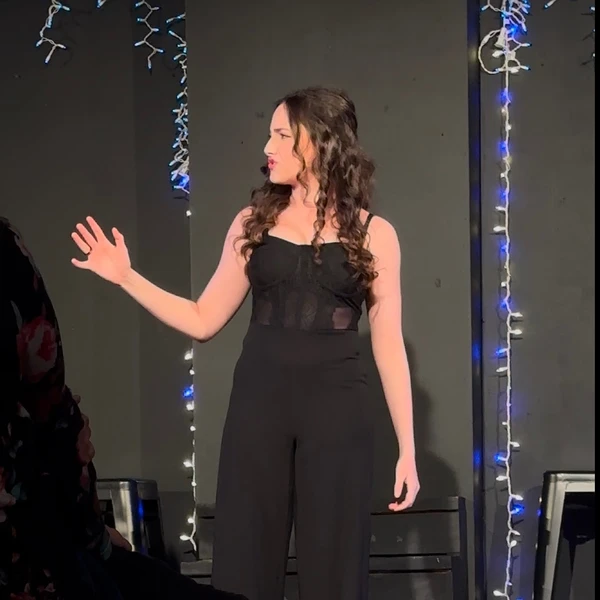
    • Top 30 contestant

      American Idol
      2024 – 20251 year
    • Young Winnie Sanderson

      Winnie's Rock Cauldron Cabaret
      2024 – 2024
    • Performer: state tour performing School House Rock to title one elementary schools.

      Winter Park Playhouse
      2022 – Present4 years

    Sports

    Mixed Martial Arts

    Intramural
    2021 – Present5 years

    Wrestling

    Varsity
    2022 – Present4 years

    Research

    • Music

      Where the Water Speaks — Regional officer
      2025 – Present

    Arts

    • Winnie’s Rock Cauldron Cabaret

      Performance Art
      Yes
      2024 – 2024
    • Winter Park Playhouse

      Performance Art
      Yes
      2022 – Present

    Public services

    • Volunteering

      Dance 360 Orlando — Sound board
      2024 – 2024
    • Volunteering

      OCA — Caretaker
      2023 – 2023

    Future Interests

    Advocacy

    Politics

    Entrepreneurship

    Doing Hard Things My Way: Adaptive Athlete Scholarship
    Hearing Tala El-Kardaly’s 110-pound body crash against the mat echoed through the gym. It was one of the biggest wrestling tournaments of the year, and we were facing a top-ranked, nearly undefeated team. Tala, a Lebanese exchange student, had just brutally lost her match, and I felt the weight of defeat settle over us. But Tala stood up smiling. After the referee’s decision, she ran back to our team, exclaiming, “Ya’Allah, I was like Superman!” We laughed and hugged her, but internally, I cringed. Afterwards, she cheered us on in our matches like nothing had happened. Tala and I weren’t close. I found her relentless positivity confusing, almost irritating. While I measured every match by its outcome, she approached the sport by enjoying the experience and camaraderie. To me, wrestling was about control: controlling my weight, my technique, my record. To her, it seemed to be about freedom, freedom to try, to fail, and to still find joy in the process. I didn’t understand how she could detach herself from the scoreboard so easily, especially in a sport where every point feels personal. When she passed suddenly from a brain tumor, I was not only distraught over losing a teammate, but regret sank in. I regretted judging her so harshly—how much closer could we have been if I hadn’t let my expectations get in the way? In the quiet moments after her passing, I found myself replaying her matches and her laughter, realizing that what I had dismissed as naïveté was actually strength. Tala had found a way to compete without losing herself in the outcome, something I had never learned. Her approach reshaped how I show up for others. I began to encourage effort instead of hand raises, focusing on the courage it takes to step onto the mat rather than the result that follows. After losing matches, instead of cowering in insecurity, I found pride in small improvements—a better stance, a stronger shot, the willingness to keep going. Wrestling stopped being just a measure of success and became a space for growth. I carried this mindset into my role as team captain. I made it a priority to create an environment where my teammates felt supported regardless of their record. Whether it was staying late after practice to help someone drill, or being the first to cheer after a tough loss, I tried to embody the same energy Tala had brought so effortlessly. Leadership, I learned, is not just about setting expectations, but about shaping the culture of a team. High school wrestling has helped me grow not only as an athlete, but as a person capable of empathy, reflection, and change. Tala taught me that resilience is not just about pushing through adversity, but about finding meaning and connection along the way. As I move forward, I carry her lesson with me: to balance discipline with presence, and to measure success not only by victories, but by the way I uplift those around me.
    Nick Lindblad Memorial Scholarship
    The stage manager shoved a microphone into my clammy hands, “Walk on in three… two…” My head was spinning. I heard the roars of the Orpheum Theater, people cheering and hollering, waiting for a performance of a lifetime. In that second, I wasn’t wondering whether I would succeed, but what would happen if I trusted myself completely. Every year of preparation led me here, not to prove I was extraordinary, but to discover who I became after letting go of my perfectionism. “One.” I gripped my mic and started to strut onto the stage, faking every last bit of confidence. I made direct eye contact with Lionel Richie, Luke Bryan gave me a thumbs up, and the new judge, Carrie Underwood, nodded in approval. My relationship with singing began loudly. By second grade, performing felt natural; I sang constantly: at home, at recess by the big oak tree, anywhere my voice could fill space. Throughout my early school years, I was plagued by comments of inadequacy—that I could never turn singing into something meaningful. I refused to let the surrounding negativity silence me; instead, I dove deeper into my passion. Being underestimated didn’t discourage me; it clarified what I wanted and how much effort I was willing to give to reach it. What started as instinct became discipline as I worked to refine tone, control, and consistency. As I progressed in weekly training, music began to take over more than just my afternoons; I memorized every song by the next lesson, practiced until my voice followed every mental command, and measured progress in every technical victory. Perfectionism wasn’t just a habit; it became my only lens for the world. I understood that if I wanted music to work, if I wanted it to be more than instinct, I would have to dedicate myself completely and revolve my life around the notes on the treble staff: by day, I was a student navigating clubs and sports; by night, I was a performer. My schedule blurred into a continuous cycle: school from 7:20 a.m. to 2:20 p.m., wrestling practice until 5:00, homework in the car, Jiu-Jitsu from 6:00 to 8:00, and then rehearsal or a show until around 1:00 a.m. In time, I measured my worth solely in notes mastered, routines perfected, and technical mastery. Though as I advanced through multiple rounds on American Idol, I felt the weight of the choices I had made long before the stage. The excitement of advancing was fleeting—weeks away from my family had left me exhausted, and all I wanted was to go home, to sink into the familiar comfort of my dad’s presence, and be a kid again with my siblings. When I was eventually eliminated, the ache deepened—not because I hadn’t done enough, but because the journey had demanded so much of me. Even in moments of progress, I realized how much the pursuit of perfection reshaped my world, leaving me both exhilarated, unsettled, and searching for something familiar to hold onto. I realized, in my time away from home, that I had divided my life between expectation and longing, discipline and desire, a balancing act I had been performing long before the cameras turned on. Standing on that stage, I thought the outcome would define me. It didn’t. The long days of practice, the nights away from home, the moments of both exhilaration and ache—they showed me that value comes not from technical mastery, nor competitive victory, but humanity behind my work.
    Clayton James Miller Scholarship
    “Girls don’t wrestle. They cheer on the sidelines, fix their hair, touch up their makeup, and avoid bruises on their perfect skin.” I used to hear this in abundance, until I became the one pinning the boys twice my size. The year I began my combat journey, there were only 31,654 girls participating in women's wrestling. In statistical terms, 0.34%, less than one percent of women in high school were involved in wrestling. The world of grappling was simply unheard of, so I decided to make it my mission to make girls' wrestling something people heard and respected. I started by joining two other girls at my school, in my freshman year, to make a team. Of course, by default, we were made fun of. “Wrestling is a boys’ sport. Girls are too delicate, too emotional, too... clean for the mat.” The boys made it a living hell for us girls, but this just fueled our hunger to prove them wrong. They would bother us during the school day and even show up to our matches just to tell us how bad we were. So, when we lost, we got right back in the practice room and trained until our bodies couldn’t take it anymore. Having virtually everyone against you makes it seem impossible to continue. However, the support of my girls and coaches made every tear worth it. One of the biggest lessons I have learned as a wrestler is that I suck. Growing up as a perfectionist, I made it my mission to succeed and place first in everything I ever did. Wrestling was my wake-up call. When I lost my first match, it felt like the world was crumbling, and I felt helpless. Why didn’t I win? What is wrong with me? All of these are questions I have asked myself. The first thought that popped into my head was that it was simply my fault. However, if I looked at it from a different perspective, I could see small improvements. For example, a move that I did wrong in the previous match worked in my recent match. It was the small improvements that were often ignored. Wrestling was a culture shock to me in the best way possible. Throughout time, I grew to “embrace the suck” as my father has always told me. The second you step into the gym, you check your ego at the door and swallow your pride because you know you are there only to learn and better yourself. I learned that my failures are only a part of my journey.
    Lovin Line Boring LLC Scholarship for Florida Wrestlers
    Hearing Tala El-Kardaly’s 110-pound body crash against the mat echoed through the gym. It was one of the biggest wrestling tournaments of the year, and we were facing a top-ranked, nearly undefeated team. Tala, a Lebanese exchange student, had just brutally lost her match, and I felt the weight of defeat settle over us. But Tala stood up smiling. After the referee’s decision, she ran back to our team, exclaiming, “Ya’Allah, I was like Superman!” We laughed and hugged her, but internally, I cringed. Afterwards, she cheered us on in our matches like nothing had happened. Tala and I weren’t close. I found her relentless positivity confusing, almost irritating. While I measured every match by its outcome, she approached the sport by enjoying the experience and camaraderie. To me, wrestling was about control: controlling my weight, my technique, my record. To her, it seemed to be about freedom, freedom to try, to fail, and to still find joy in the process. I didn’t understand how she could detach herself from the scoreboard so easily, especially in a sport where every point feels personal. When she passed suddenly from a brain tumor, I was not only distraught over losing a teammate, but regret sank in. I regretted judging her so harshly—how much closer could we have been if I hadn’t let my expectations get in the way? In the quiet moments after her passing, I found myself replaying her matches and her laughter, realizing that what I had dismissed as naïveté was actually strength. Tala had found a way to compete without losing herself in the outcome, something I had never learned. Her approach reshaped how I show up for others. I began to encourage effort instead of hand raises, focusing on the courage it takes to step onto the mat rather than the result that follows. After losing matches, instead of cowering in insecurity, I found pride in small improvements, a better stance, a stronger shot, the willingness to keep going. Wrestling stopped being just a measure of success and became a space for growth. I carried this mindset into my role as team captain. I made it a priority to create an environment where my teammates felt supported regardless of their record. Whether it was staying late after practice to help someone drill, or being the first to cheer after a tough loss, I tried to embody the same energy Tala had brought so effortlessly. Leadership, I learned, is not just about setting expectations, but about shaping the culture of a team. High school wrestling has helped me grow not only as an athlete, but as a person capable of empathy, reflection, and change. Tala taught me that resilience is not just about pushing through adversity, but about finding meaning and connection along the way. As I move forward, I carry her lesson with me: to balance discipline with presence, and to measure success not only by victories, but by the way I uplift those around me.
    Vision of Music Scholarship
    The stage manager shoved a microphone into my clammy hands, “Walk on in three… two…” My head was spinning. I heard the full house in the Orpheum Theater, people cheering and hollering, waiting for a performance of a lifetime. In one second, I knew I couldn’t turn back. Everything I’ve worked for, all the sacrifices, had led to this moment. This was my moment to prove it was worth it; I was worth it. “One.” It was my turn. I gripped my mic and started to strut onto the stage, faking every last bit of confidence. I made direct eye contact with Lionel Richie, Luke Bryan gave me a thumbs up, and the new judge, Carrie Underwood, acknowledged me with an approving head nod, which signaled to me that this is my chance to prove they made the right decision putting me in their top thirty on American Idol. No one gave me this opportunity; nothing was given to me. I had to work my whole life to get to this moment. Spending endless, sleepless nights perfecting my craft, I could only imagine the outcome and trust myself to succeed. By my second-grade year, I knew I wanted to perform. In my elementary school years, I was known as the “annoying girl who didn’t shut up.” I just would not stop singing. I have to give the kids who bullied me some grace because I know that I, too, would be annoyed with a girl singing Quiet from Matilda during a multiplication test. Most kids told me I wasn’t good enough to make something out of myself, which only fueled my hunger for success. I’d come home, eat a PB & J, and then lock myself in a room so I could focus on bettering my technique. After a couple of years of displaying consistent interest in my musicality, my parents decided I should get professional help, vocal help. As I progressed with weekly training, practicing only became easier. No teacher ever had to ask me to rehearse because the song they gave me was already memorized and performance-ready by my next lesson. I wouldn’t leave my room until I heard perfection in my voice. Technique was something I prided myself on doing well. My brain just understood music unlike anything else. My training became muscle memory, and my brain started to work mechanically towards music. Soon enough, I found that in every subject, there was a musicality within (except math, of course). I began to realize that if I wanted to make music work, my priorities would have to change. Most kids who did my line of work were homeschooled, and it only made sense for me to be as well. However, I wanted a high school experience, even though I knew it would be extremely difficult. I’ve always been known to take the unconventional route. I knew that what I was doing was risky. I essentially lived a double life, or the life of a spy, which I like to say because it sounds cooler. By day, I was an active student involved in clubs and sports; however, by night, I was a performer. While my schedule was grueling, the never-ending cycle showed me I have grit, dedication, and tenacity, which I know I can use in my future, wherever it takes me. I realized on the American Idol stage that day that the outcome was not what mattered (I lost, by the way), but that I could work to accomplish my dreams. I have what it takes.
    Sloane Stephens Doc & Glo Scholarship
    The stage manager shoved a microphone into my clammy hands, “Walk on in three… two…” My head was spinning. I heard the full house in the Orpheum Theater, people cheering and hollering, waiting for a performance of a lifetime. In one second, I knew I couldn’t turn back. Everything I’ve worked for, all the sacrifices, had led to this moment. This was my moment to prove it was worth it; I was worth it. “One.” It was my turn. I gripped my mic and started to strut onto the stage, faking every last bit of confidence. I made direct eye contact with Lionel Richie, Luke Bryan gave me a thumbs up, and the new judge, Carrie Underwood, acknowledged me with an approving head nod, which signaled to me that this is my chance to prove they made the right decision putting me in their top thirty on American Idol. No one gave me this opportunity; nothing was given to me. I had to work my whole life to get to this moment. Spending endless, sleepless nights perfecting my craft, I could only imagine the outcome and trust myself to succeed. By my second-grade year, I knew I wanted to perform. In my elementary school years, I was known as the “annoying girl who didn’t shut up.” I just would not stop singing. I have to give the kids who bullied me some grace because I know that I, too, would be annoyed with a girl singing Quiet from Matilda during a multiplication test. Most kids told me I wasn’t good enough to make something out of myself, which only fueled my hunger for success. I’d come home, eat a PB & J, and then lock myself in a room so I could focus on bettering my technique. After a couple of years of displaying consistent interest in my musicality, my parents decided I should get professional help, vocal help. As I progressed with weekly training, practicing only became easier. No teacher ever had to ask me to rehearse because the song they gave me was already memorized and performance-ready by my next lesson. I wouldn’t leave my room until I heard perfection in my voice. Technique was something I prided myself on doing well. My brain just understood music unlike anything else. My training became muscle memory, and my brain started to work mechanically towards music. Soon enough, I found that in every subject, there was a musicality within (except math, of course). I began to realize that if I wanted to make music work, my priorities would have to change. Most kids who did my line of work were homeschooled, and it only made sense for me to be as well. However, I wanted a high school experience, even though I knew it would be extremely difficult. I’ve always been known to take the unconventional route. I knew that what I was doing was risky. I essentially lived a double life, or the life of a spy, which I like to say because it sounds cooler. By day, I was an active student involved in clubs and sports; however, by night, I was a performer. While my schedule was grueling, the never-ending cycle showed me I have grit, dedication, and tenacity, which I know I can use in my future, wherever it takes me. I realized on the American Idol stage that day that the outcome was not what mattered (I lost, by the way), but that I could work to accomplish my dreams. I have what it takes.
    Stacey Vore Wrestling Scholarship
    “Girls don’t wrestle. They cheer on the sidelines, fix their hair, touch up their makeup, and avoid bruises on their perfect skin.” I used to hear this in abundance, until I became the one pinning the boys twice my size. The year I began my combat journey, there were only 31,654 girls participating in women's wrestling. In statistical terms, 0.34%, less than one percent of women in high school were involved in wrestling. The world of grappling was simply unheard of, so I decided to make it my mission to make girls' wrestling something people heard and respected. I started by joining two other girls at my school, in my freshman year, to make a team. Of course, by default, we were made fun of. “Wrestling is a boys’ sport. Girls are too delicate, too emotional, too... clean for the mat.” The boys made it a living hell for us girls, but this just fueled our hunger to prove them wrong. They would bother us during the school day and even show up to our matches just to tell us how bad we were. So, when we lost, we got right back in the practice room and trained until our bodies couldn’t take it anymore. Having virtually everyone against you makes it seem impossible to continue. However, the support of my girls and coaches made every tear worth it. One of the biggest lessons I have learned as a wrestler is that I suck. Growing up as a perfectionist, I made it my mission to succeed and place first in everything I ever did. Wrestling was my wake-up call. When I lost my first match, it felt like the world was crumbling, and I felt helpless. Why didn’t I win? What is wrong with me? All of these are questions I have asked myself. The first thought that popped into my head was that it was simply my fault. However, if I looked at it from a different perspective, I could see small improvements. For example, a move that I did wrong in the previous match worked in my recent match. It was the small improvements that were often ignored. Wrestling was a culture shock to me in the best way possible. Throughout time, I grew to “embrace the suck” as my father has always told me. The second you step into the gym, you check your ego at the door and swallow your pride because you know you are there only to learn and better yourself. I learned that my failures are only a part of my journey.