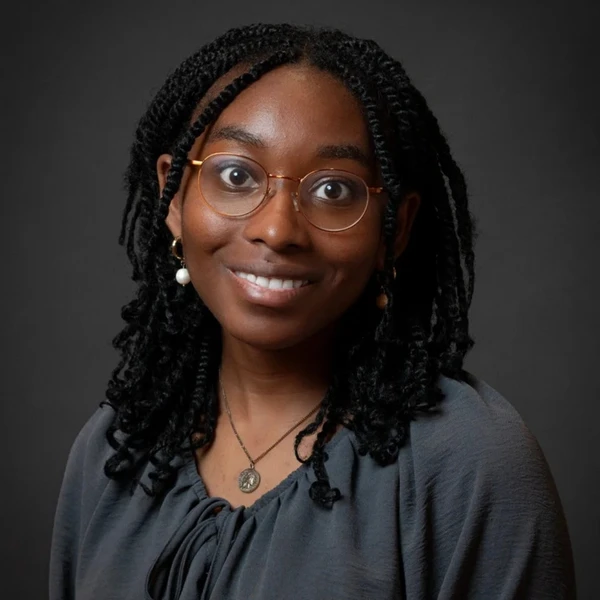
user profile avatar

Carlisle White

1x

Finalist

General information

Hobbies & Interests

  • Writing
  • Cello
  • Community Service And Volunteering
  • Orchestra
  • Anthropology

Reading

  • Adult Fiction
  • Academic
  • Contemporary
  • Criticism
  • Speculative Fiction
  • Short Stories
  • Social Issues
  • Politics
  • Magical Realism
  • Literary Fiction

I read books daily.

Bio

I am a freshman at Northern Illinois University in the Honors Program, researching Open Educational Resources (OER) under Larissa Garcia and Dee Anna Phares. I have spent three years volunteering at my public library, as well as teaching and assisting Writers in the Schools Houston (WITS) with administrative work as an intern. Currently, I am a volunteer archivist for Northern Public Radio, and a paid intern for the Black Metropolis Research Consortium (BMRC)'s Archie Motely Archive archiving the Oscar Brown Jr. Papers!

Education

Northern Illinois University

Bachelor's degree program

2025 – 2029

Majors:
  • English Language and Literature, General
Minors:
  • Linguistics and Anthropology
GPA4.0 GPA

College Park High School

High School

2021 – 2025

GPA3.8 GPA

Miscellaneous

Desired degree level:
Bachelor's degree program
Graduate schools of interest:
Dominican University, Chicago State University, University of Illinois at Urbana-Champaign
Majors of interest:
Library and Archives Assisting, Library Science, Other, Liberal Arts and Sciences, General Studies and Humanities
Desired degree modality:
In-Person, Full-Time
Medical school interest:
No

Career

  • Intern Archivist

    Libraries · Black Metropolis Research Consortium

    Jan 2026 – Present

  • Career Services Peer Counselor

    Education · NIU Career Services

    Jan 2026 – Present

  • Student Ambassador

    Program Development · Huskies Vote

    Jan 2025 – Jan 2025

  • Administrative Intern and Camp Counselor

    Education · Writers in the Schools Houston

    Jan 2025 – Jan 2025

Miscellaneous

Dream career field:
Libraries
Dream career goals:
Public Librarian
Work experience:
0 years
Has nursing license:
No

Future Interests

  • Advocacy
  • Volunteering
Charles B. Brazelton Memorial Scholarship
As boring as this sounds, I love to read. Not just the occasional book or comic book or poem, I devour books. When I was younger, it was to escape to other worlds. Today, I can't say if it was maladaptive daydreaming on account that I most of childhood memories are marked by whatever balancing act between the universe in my head and my comparatively dreary reality I was performing at the time. But if I could talk to my younger self, I'd say: "I won’t bother to address you because at the moment that’s all you are to me. Not a foolish child, but despite your quiet resentment, dear. Something soft and fragile. The perfect homophone to the animal. Any advice I could give you won’t serve you, and I hesitate to say that I wish I would have known then what I do now. It hurts to learn when you have a pea-size brain that can only take so many wrinkles, and I fear that as we grow older the pain will mirror it exponentially." "I could tell you, “Take more advanced classes,” but your self-esteem would have plummeted in turn of the decreased boredom. I could tell you, “Reach out to others,” but I still can’t do that now. They’re sound words of advice. I of all people know how critical those simple words will become. But how defined is hindsight when any advice would change the person I am today? How applicable would they be to my new problems? How would the comfort of that advice aid me now?" "I could tell you, “Keep on going with your silly dream,” but it was barely actualized then. I could tell you, “Feigning apathy is overrated,” but it sure doesn’t feel like that when conveying even a positively reciprocated truth will obliterate me with shame at dawn. But despite that pain, know that light is coming." "Halogens will fade into LEDs, and you will mourn for the soft yellows before sunrise, but the stark white will disappear into your peripheral in time. The same fire that boils you into new flesh rages in your eyes. Stroke the flame. Don’t let anyone put it out—another piece of useless advice due to the fact that we’re still here, but one worth saying again and again and again. I don’t know when or if we’ll ever earn the softness we’ve longed for all our lives, but we can’t stop working towards eternal dawn." My awkward thing doesn't make me stand out. It makes me stand in, but like the prompt writer's tallness and Charles' talent for swimming, those "awkward" features makes us who we are. I'm still a dreamer. This essay makes it clear enough. But after years of introspection from my daydreaming, I've learned I'm not of the nonchalant breed. I was born from soggy moss and even softer loam. And those elements are the ones that I will return to when I die. But before we can reach that, I must keep trying. I must keep dreaming. Because daydreaming gives us the strength to care and keep caring in an increasingly apathetic world.
Our Destiny Our Future Scholarship
One way that I have been able to positively impact the world is through my library volunteer service, and I plan to continue doing that by becoming a librarian myself. Of course, the importance of libraries goes beyond the services offered by the building, and often into whatever is needed of said library. For example, I am a student ambassador for my university’s voting initiative which partners with libraries in order to assure that students are aware of their civic rights and duties. Nonetheless, I have seen the impact that these third-spaces can have on people first hand as a volunteer. I have felt the impact that these third-spaces can have first-hand as a recipient of said volunteer work. Although libraries are typically reduced to their association with books, they also offer a plethora of free community programs and classes. Summer reading programs help improve literacy by encouraging people to read through prizes and various events. Book clubs and even regular social clubs frequently host their meetings at libraries, providing people a safe, free third-space—a breed of which is growing increasingly rare in an individualist, late-stage capitalist world. Classes in a variety of subjects from computer literacy to languages are often hosted—once more, at no charge—to help get or improve at their jobs. Some libraries even serve as historical record-keepers for their towns which can help people learn more about the community while upholding their legacy or aiding in legal battles surrounding cultural protections and ownership. Communities that lack libraries are frequently lower income. Due to the fact that higher property taxes impact the quality of one’s public schools, impoverished communities' access to exemplary education is already likely lessened. As children in these communities get older, they’re then more likely to get involved in crime to support themselves as they are unable to consider how long-term schooling or higher education could improve their lives. Additionally, adolescents involved in crime are more likely to become truants because their crime was likely due to unmet material needs from an expensive world hostile to their existence. Although libraries are not the primary method to mitigate or even eliminate these issues, they can help obtain alternative forms of education through testing books or technology, serving their communities as a free third-space, and providing classes to help people get jobs or just learn more about the world around them. Additionally, when libraries work directly with community colleges or public schools, these resources can be all the more available and connect different parts of a town. Strong and educated communities are the first step towards complex mutual aid projects that promote social and economic equality that otherwise couldn’t be implemented by legislation or policy. Yes, local officials are more significant in people’s day-to-day lives, but anti-establishment action and rhetoric are limited by the fact that they are still sworn to the government. Though government entities, historically libraries have still been bastions and progenitors for change as they promote education. And it is through education that the seeds of change and equality grow. Despite local, state, and federal governments defunding and suppressing libraries under the guise of ensuring “appropriate” books lie in their catalogs, they continue to take a dual role of community center in many neighborhoods. Through volunteering at my local libraries and majoring in English to one day obtain a master’s degree in library science, I will hopefully identify and protect that necessity wherever I settle down.
RonranGlee Literary Scholarship
The World Is Too Much With Us by William Wordsmith The world is too much with us; late and soon, Getting and spending, we lay waste our powers;— Little we see in Nature that is ours; We have given our hearts away, a sordid boon! This Sea that bares her bosom to the moon; The winds that will be howling at all hours, And are up-gathered now like sleeping flowers; For this, for everything, we are out of tune; It moves us not. Great God! I’d rather be A Pagan suckled in a creed outworn; So might I, standing on this pleasant lea, Have glimpses that would make me less forlorn; Have sight of Proteus rising from the sea; Or hear old Triton blow his wreathèd horn. In William Wordsmith’s The World Is Too Much With Us, the reader follows the musing of a speaker who believes themselves to be a part of the material world, but ultimately rejects it in favor of a more metaphysical splendor through nature. This poem traverses through themes of distance from nature to conclude that while we should try our best to resist apathetically falling victim to the easy, instantly gratifying tenets of capitalism, we must not lose ourselves or the real world in it. The poem is primarily written from the perspective of an individual from western Europe or one of its previous or current colonies due to the way they speak of paganism. Considering the poet’s position as a Romanticist, this detail is critical to analyzing how the major themes are constructed through various techniques such as enjambment, stark contrasts, and repetition. There isn’t any particular setting besides a country undergoing early industrialism, yet all of the characters except for the speaker are anachronistic. Personified versions of nature and the sea, Proteus, and Triton are made to stick out in the speaker’s reality. This is because the world is changing mostly due to materialism. The speaker believes that they and humanity are losing touch with nature in favor of abandoning their true state. There is no dialogue. However, the speaker’s passionate yet angry tone is established through charged diction such as “sordid” (line 4), “howling” (line 6), and “forlorn” (line 12), and exasperated exclamations like “Great God!” (line 9) shaped into a Petrarchan sonnet makes the poem feel like a bellowing declaration of frustration. The speaker is disgruntled by everyone falling prey to the vapid, hyper-consumerism that defines their environment. However, as they are also a part of this world, this allows the reader to conclude that a degree of self-loathing underlines their words, too. They’re powerless to their circumstances except to keep creating and finding beauty in those who create and remember their foremother—the sea where all things derive their power even in the moon who moves her tides. The speaker states, “...I’d rather be / A Pagan suckled in a creed outworn; / So might I, standing on this pleasant lea, / Have glimpses that would make me less forlorn,” (lines 9-12). However, the zealously cantankerous tone proves that they’re not too far off from converting. They know the deities by name because they have known the sea and moon all their life. This hints at the acknowledgement of these deities being emblematic of a larger loyalty to one’s natural self. Nature does not perform abnormally or react any differently to the change in humanity. However, the Sea has become a caregiver to the moon that should be controlling her tides because people have forgotten its worth beyond her and all they can take from her. Proteus and Triton—a soothsayer for the sea and a herald of its changing waves—seem to act on their behalf. This hints at a possible punishment or grand disturbance. The first four lines detail the primary problem and its source, and begs the question, who is the recipient of humanity’s “sordid boon” (line 4)? The next four show strange occurrences as a result of humanity’s vanity, and assert that because of this they are in discord. Even if that is humanity’s inherent state, “It moves [them] not,” (line 9). However, the speaker refuses to remain complicit in vanity, so they would rather turn to paganism to continue creating and seeing beauty in the world than become a leach-like pragmatist. The final two lines are declarations that despite the world’s discord, nature and those who appreciate life’s beauty will rise and bring a new era. In a similar vein, the first line’s ending antithesis “late and soon,” (line 1) and the next line’s “getting and spending,” (line 2) contrast each other and illustrate the nature of transactional relationships. Everything is too much because it’s happening all the time, all at once. “For this, for everything,” (line 8) demonstrates a similar relationship that creates over-stimulation at excess. For the events currently happening, and for all that has happened, humanity will always be in discord. The repeated helping verb, “have,” is notable because not only are auxiliary verbs often accompanied by action verbs—which these are not—the subjects of the clauses are the Sea’s helpers, and even in their help are providing a commodity. This twinge of self-interest furthers the speaker’s previously established self-loathing and conflict with their peers. Additionally, the phrase, “out of tune,” (line 8) is notable because it suggests that there is a way to be, “in tune.” Yet the previous parallelism shows that the speaker doesn’t think there was ever a time when humanity was “in tune.” Similarly, “suckled in a creed outworn,” is a statement that (line 10) the speaker cannot understand the full scope of beyond a romantic notion of progress because they are already too grown to forget all that came before and was taught to them. The action verb is a call back to the Sea bearing her breasts to the moon, seemingly for the same purposes. However, the moon—like the speaker—is fully grown, and cannot receive true support from the Sea. The speaker can’t even return to paganism like they want to, because their understanding of it no longer exists and is a tired notion, it is “outworn” (line 10). And they’re fully aware, but still desperate. Enjambment is used to create a sense of movement which dramatizes the zealously cantankerous tone, and adds nuance to fragmented lines such as, “It moves us not. Great God! I’d rather be” (line 9). In the next line the speaker says that they would rather be a pagan, but the cut off here also insinuates that they wish they could retreat from society all together. Or at least become something entirely different. However, they understand that this cowardice would be exemplifying the vanity of those who have grown apathetic to nature, just in a different way. All in all, the speaker knows their insistences are contradictory. They just don’t care. They want change. They want to return to a knowingly idealized past that they never even knew. All of these devices in syntax and diction are ultimately used to create the concession that despite this awareness, the passion is real and purposeful. To reject nature and the simple beauty of life in favor of capitalistic values would only derogate humanity and leave everyone miserable. Even the title amplifies meaning by literally making the poem feel like it’s too much. It practically gushes out of the page if you don’t take everything line by line. But the moment any clause is left without punctuation it becomes infinitely open ended. Although we may be attached to its disorderliness, it’s not how we’re meant to be. And eventually, nature will reclaim our bodies and the earth we walk on and the waters we drink from.
Bulkthreads.com's "Let's Aim Higher" Scholarship
As an aspiring librarian, I have spent a lot of time volunteering at libraries and as an archivist for my local radio station because I want to build a world where education is more accessible for everyone. Of course, the importance of libraries goes beyond the services offered by the building, and often into whatever is needed of said library. For example, I am a student ambassador for my university’s voting initiative which partners with libraries in order to assure that students are aware of their civic rights and duties. Nonetheless, I have seen the impact that third-spaces offering community programs and education initiatives can have on people first hand as a volunteer. I have felt the impact that these third-spaces can have first-hand as a recipient of said volunteer work. Although libraries are typically reduced to their association with books, they also offer a plethora of free community programs and classes. Summer reading programs help improve literacy by encouraging people to read through prizes and various events. Book clubs and even regular social clubs frequently host their meetings at libraries, providing people a safe, free third-space—a breed of which is growing increasingly rare in an individualist, late-stage capitalist world. Classes in a variety of subjects from computer literacy to languages are often hosted—once more, at no charge—to help get or improve at their jobs. Some libraries even serve as historical record-keepers for their towns which can help people learn more about the community while upholding their legacy or aiding in legal battles surrounding cultural protections and ownership. Communities that lack libraries are frequently lower income. Due to the fact that higher property taxes impact the quality of one’s public schools, impoverished communities' access to exemplary education is already likely lessened. As children in these communities get older, they’re then more likely to get involved in crime to support themselves as they are unable to consider how long-term schooling or higher education could improve their lives. Additionally, adolescents involved in crime are more likely to become truants because their crime was likely due to unmet material needs from an expensive world hostile to their existence. Although libraries are not the primary method to mitigate or even eliminate these issues, they can help obtain alternative forms of education through testing books or technology, serving their communities as a free third-space, and providing classes to help people get jobs or just learn more about the world around them. Additionally, when libraries work directly with community colleges or public schools, these resources can be all the more available and connect different parts of a town. While my dreams may seem overly optimistic, I am confident that one day I will help build a future where everyone can access education resources—whatever that may look like for them—by becoming a librarian.
Carlisle White Student Profile | Bold.org