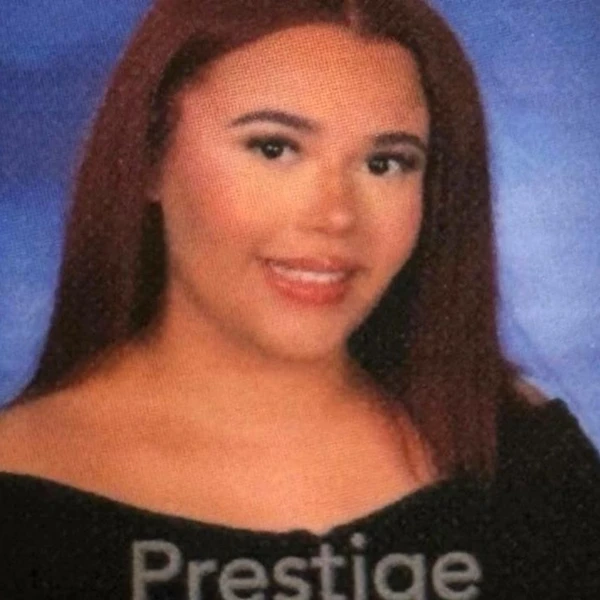
Hobbies and interests
Advocacy And Activism
CARINA REYES-ORTIZ
1x
Finalist
CARINA REYES-ORTIZ
1x
FinalistBio
I am Carina Reyes Ortiz, a 17-year-old Puerto Rican determined to shatter ceilings in the legal world. I serve my community now through advocacy, translation, and supporting families in North Philadelphia who deserve to be heard. I will study law so that one day I can change systems from the inside, not wait for permission from the outside.
Education
Parkway Center City High School
High SchoolMiscellaneous
Desired degree level:
Bachelor's degree program
Majors of interest:
- Political Science and Government
- Criminology
- Criminal Justice and Corrections, General
- Journalism
- Communication, General
Career
Dream career field:
Law Practice
Dream career goals:
Attorney
Public services
Volunteering
City Council — Intern2022 – 2024
Future Interests
Advocacy
Politics
Volunteering
Philanthropy
Entrepreneurship
Cooper Congress Scholarship
Everyone says “use your voice,” but no one talks about what it takes to be heard. To me, ensuring that everyone has a voice means more than giving people the opportunity to speak. It means making sure they are actually listened to, understood, and respected, especially in spaces where they have historically been overlooked. Growing up in North Philadelphia, I have seen how often decisions are made about communities without ever including the people who live in them. That reality shaped how I show up in every space I enter.
During my internship at the office of Councilwoman Quetcy Lozada, I worked directly with community members who came in searching for answers. One moment that stayed with me was when a woman walked in holding immigration paperwork, clearly overwhelmed. She had gone from office to office and no one could explain what she needed to do next. She was not asking for anything extraordinary. She just wanted clarity. I sat with her and went through each document step by step, helping her understand what was being asked of her and what her next steps needed to be. By the time she left, she was no longer confused or stuck. That moment showed me that giving someone a voice is not about speaking for them. It is about making sure they are equipped, informed, and confident enough to speak for themselves.
I had a similar experience during my internship with State Representative Danilo Burgos, where I helped respond to constituent concerns, supported outreach efforts, and observed how policy decisions directly impact everyday lives. I saw how language barriers, lack of access, and limited representation can make people feel invisible. That is why I approach leadership differently. I listen first. I ask questions. I make sure people feel seen before anything else.
Outside of my internships, I have taken initiative in my community through volunteering and mentorship. I have participated in neighborhood clean ups and supported community efforts that bring people together. I also spend time mentoring younger students, especially those who need guidance or someone to believe in them. I understand that leadership is not about a title. It is about consistency, presence, and a willingness to show up for others in meaningful ways.
As a Latina, ensuring that everyone has a voice is deeply personal to me. Representation matters in ways that cannot always be measured. When people walk into a space and see someone who looks like them, who understands their experiences, it builds trust and connection. It reminds them that their voice belongs in that space too. I want to continue being that person in every room I enter.
In a world that often feels divided, I believe the strongest leaders are the ones who bring people together. The ones who choose to listen when it would be easier not to. The ones who create space instead of taking it. My goal is to major in Political Science and pursue a career in law and public policy so I can continue advocating for communities like mine, ensuring that they are not only included in conversations, but that their voices help shape the decisions being made.
Because making sure everyone has a voice is not just something I believe in. It is something I live every day.
Resilient Scholar Award
Strength, in my house, never sounded like a speech. It sounded like my mother whispering, “We’ll figure it out,” even when I knew she didn’t have all the answers yet. It smelled like café con leche at 5 A.M., and it looked like her coming home from work exhausted but still asking how my day was, as if listening were a responsibility she refused to set down. Strength, to me, has never been abstract. It has always had a face.
I was raised in a single-parent household in North Philadelphia, where survival and ambition had to learn to share the same space. Our apartment was small, but our culture was not. Spanish and English lived side by side – sometimes clashing, always coexisting – like a reminder that identity can hold more than one language at a time. Bills piled up. Transportation fell through. Some days the world felt heavier than it should for a child to carry. But there was pride, culture, music, and a kind of resilience that lived in the walls with us. I did not grow up surrounded by perfection. I grew up surrounded by perseverance.
There was a moment in tenth grade when I realized that the way I was raised had already taught me how to lead. A friend of mine, who had recently arrived from another country and spoke mostly Spanish, was told to move to the back of the lunch line simply because she didn’t understand the instructions. No one intervened. The room stayed loud. People looked away, and I understood in that instant how easy it is for harm to go unnoticed when silence makes it comfortable.
So I stepped forward. I translated. I asked, respectfully but directly, why language should determine someone’s place. My voice shook a little, but I did it anyway. And that was the moment I learned that courage is not the absence of fear — it is choosing what is right before you feel ready. That moment didn’t make the room cheer or erupt in applause. But it shifted something in me. I understood that advocacy is not always a headline. Sometimes it’s a hallway, a line in a cafeteria, a decision made quietly but with conviction.
That experience led me to internships with Councilwoman Kendra Lozada and Pennsylvania State Representative Danilo Burgos, where I helped families navigate language barriers, school systems, and questions many are too intimidated to ask. I learned that policy is not just written on paper; it echoes in real lives. I saw how representation can change the temperature of a room. I saw what it means to show up for people.
Growing up in a single-parent household did not limit me. It prepared me. It taught me discipline, responsibility, emotional literacy, and the ability to stand up even before I feel tall enough. It taught me to lead from where I am while preparing for where I’m going. I don’t want to leave my community behind; I want to come back to it with tools.
I am ready to work.
I am ready to learn.
I am ready to rise — without forgetting who raised me.
This scholarship would not just help me attend college — it would allow me to turn my lived experience into service, transforming what I’ve survived into the advocacy and leadership my community deserves.
Raise Me Up to DO GOOD Scholarship
If you want to know what strength looks like, do not look at a superhero. Look at a Boricua single mother packing up a life, leaving the home that hurt her, and starting over with nothing but her child and her faith. That is what I was born into. Soy hija de una madre soltera. I am the daughter of a single mother, and that fact has shaped every part of who I am.
My mom became a single parent when I was only two years old. She did not have a safety net. She had me. And still, she did not stop her life. She went to school while raising me alone. She earned her bachelor’s degree, then her master’s in education, and she recently completed her Letter of Superintendency. I remember her studying at the kitchen table, textbooks spread out next to bills, determination sitting right beside exhaustion. When I talk about resilience and the kind of woman I want to grow into, Lord Jesus knows it is her. My mother is a boss. She did not tell me to break cycles. She showed me how.
Growing up without my father in the home hurt, but my mother refused to let that be the end of our story. His absence taught me something important. Presence is not DNA. Presence is effort. It is choosing to show up for the people you love.
And then God did what God does. He made a way out of no way. My mom met a good man, someone who did not erase our past but helped us build a future. He helped us heal. He reminded us what a safe home could feel like. Then, a year ago, he passed away. Another goodbye we never asked for. Another chapter we had to survive. Our life has not been easy, but God never left us. He protected us. He provided for us. He made roads where the ground did not exist. And now I am applying to college. Look at God. Look at us. After everything that was meant to break us, we are still here.
Being raised in a single parent home made me grow up faster, but it also gave me a heart that pays attention. I learned to see people. I learned to notice hurt without judgment. I learned that some battles are fought in silence, and the least I can do is sit beside someone in theirs. That is why I know exactly what I want to do. I want to become a lawyer. I want to advocate for women, children, and communities. I want to protect families like mine who need someone to stand with them when the world feels heavy. I do not just want to make it out. I want to go back and hold the door open.
I am my mother’s daughter. Built by her courage. Lifted by her faith. Carried by God’s grace. I do not just want a better future. I want to build one. Not just for me, but for anyone still learning how to survive what they never should have had to endure.
Our story does not end in survival. Our story ends in victory.
And I am going to make sure of it.
LOVE like JJ Scholarship in Memory of Jonathan "JJ" Day
If grief had a sound, I think it would be a six-year-old girl trying to understand why her sister isn’t coming home. I remember standing there, small and confused, while the world kept moving like nothing had happened. I didn’t know the word “grief.” I just knew something had been taken from me, and I would spend years trying to name that empty space.
I was six years old when my sister, Celise, died from cerebral palsy on May 26, 2014. She lived in a nursing home from the time I was born, and I could only visit her on birthdays and holidays. I didn’t understand why. I didn’t understand why other kids’ siblings lived at home and mine didn’t. I didn’t understand why my memories of her were scheduled visits instead of everyday moments. To my child mind, it felt like love had rules I didn’t know how to follow.
A part of me was angry. Angry that I didn’t get more time. Angry that I couldn’t just be her little sister the way other kids got to be. Angry at my dad for not letting me see her more. As a kid, I thought he was keeping her from me. Growing up, I realized he was trying to protect me from a kind of pain he didn’t know how to explain. Adults don’t always know how to grieve either. Sometimes they make choices that look like distance but are really fear.
I did get to see her the day before she passed. I didn’t know it was goodbye, but my heart did. And the day we buried her, I remember my mom releasing white doves into the sky. It was the most beautiful thing I had ever seen. The doves flew up like they were carrying her with them, like grief and love rose at the same time, like heaven must have been waiting. I didn’t understand it then, but I understand now: she was gone, but she was never lost. She will never be lost to me.
Losing Celise didn’t just shape me,it built me. It made me softer with people and stronger for them. I can walk into a room and tell who is hurting without them saying a word. I’ve learned to sit with pain instead of running from it, to hold silence without trying to fix it. Grief taught me a language no classroom ever could.
This is why I want to become an attorney. Not for power, but for purpose. I want to stand beside families who are overwhelmed or grieving and say, “I’ve been where you are. You are not alone.” I want to be the voice I needed at six years old.
Celise didn’t get the life she deserved. So I am living for both of us. My grief didn’t break me. It redirected me. It gave me a future with her strength inside it. Every step I take is a step she never got to take, and that’s why I refuse to waste a single one. If this scholarship helps me rise, I will rise for the both of us and I will make sure I am not the last person lifted by her name.
Mema and Papa Scholarship
Throughout my life, I have always found joy in helping others, especially English language learners who sometimes feel unseen or unheard in school. I have noticed that students who are learning English often face extra challenges. They may struggle to understand lessons, complete assignments, or communicate with teachers and classmates. I try to be the kind of person who supports my classmates when they are struggling, whether that means helping translate for families, tutoring a friend who is still learning English, or simply reminding someone that they belong and that their voice matters. I believe that being helpful is not just about doing big things, but about showing kindness, being patient, and making sure others do not feel alone. I know that even small acts of support can make a difference in someone’s life, and I am always willing to lend a hand.
One example of persistence and perseverance that I am most proud of was when I helped start a club at my school to support English language learners. At first, it was difficult to get people involved. Some students did not think anyone would care, and a few worried that the club would not last. There were challenges with finding space, getting teachers to support us, and encouraging students to attend meetings. But I did not give up. Week after week, I kept inviting people, sharing ideas with teachers, and organizing small events to make the club meaningful. Slowly, students began to join and participate. I worked with classmates to plan activities where we could practice English together, share our cultures, and build confidence. We started tutoring sessions, cultural celebrations, and discussion groups that allowed students to improve their English skills while also feeling proud of their backgrounds.
Eventually, the club grew and became a safe space for students to ask questions, share experiences, and learn from one another. Seeing how proud everyone felt to share their cultures and improve their language skills made all the hard work worth it. I learned that helping others requires patience, determination, and the willingness to keep trying, even when things do not go as planned. This experience showed me that perseverance is not just about reaching a goal, but also about creating opportunities for others to succeed.
Helping English language learners has taught me the importance of empathy, leadership, and resilience. I have realized that when I support others, I also grow as a person. I am proud of the impact I have made on my classmates and the community, and I know that this is only the beginning. I will continue to advocate for students who may not always have a voice and to help them achieve their full potential. Helping others succeed, especially English language learners, is something I will always be passionate about.
Patrick Roberts Scholarship for Aspiring Criminal Justice Professionals
One major issue facing the criminal justice system today is the lack of representation and equity, particularly for Latinos and Latina women. While Latinos make up approximately 18.5 percent of the U.S. population, only 5.8 percent of lawyers identify as Hispanic or Latino, and women like me represent less than two percent of all attorneys. This disparity has profound consequences: it affects who is advocating for justice, whose perspectives are considered in legal decision-making, and how laws are interpreted and applied to communities that are often marginalized. Without greater representation, many voices especially those of underrepresented communities remain unheard. In my future career, I plan to pursue law, breaking barriers for Latinas and ensuring that communities like mine have advocates who understand their experiences, challenges, and unique perspectives.
My commitment to addressing this issue began with both personal motivation and real-world experience. Growing up in a Puerto Rican household, I learned the importance of persistence, determination, and lifting others as you climb. My abuela taught me that persistence is a recipe you never skip, my mamá showed me that determination stretches across long days and double shifts, and I learned from the strong women around me that resilience and resourcefulness are non-negotiable. These lessons instilled in me the belief that with effort, I can make a difference not only for myself but for others in my community. This belief has guided my educational choices and extracurricular engagements and has motivated me to seek opportunities where I could actively advocate for equity and justice.
I have taken concrete steps to prepare for a career in law and criminal justice through civic engagement and internships in public service. I interned in the office of Pennsylvania State Representative Danilo Burgos, where I contributed to legislative initiatives, supported community outreach efforts, and helped amplify the voices of underrepresented Latino families. In this role, I was able to analyze complex policy issues, communicate effectively in both English and Spanish, and participate in efforts to make education and public policy more equitable. I also interned with Councilwoman Quetcy M. Lozada in Philadelphia, assisting with constituent services, organizing community events, and contributing to projects that directly impacted residents. Both experiences taught me that advocacy is most effective when combined with empathy, cultural awareness, and practical problem-solving skills. They also gave me a firsthand view of how law and public policy intersect with real communities a perspective that will inform my work in the criminal justice system.
In addition to internships, I have pursued opportunities to mentor and support the next generation of Latino students. By tutoring younger students, especially those who share my cultural background, I help ensure that representation begins early. When a child sees someone who looks like them and shares their language advocating for their success, it reinforces their sense of belonging and possibility. These experiences have strengthened my skills in leadership, communication, and advocacy skills that are directly transferable to a legal career.
These combined opportunities have laid a strong foundation for my future in law and criminal justice. They have shown me how to navigate complex systems, advocate for equity, and approach challenges with both diligence and compassion. They have also confirmed my commitment to increasing representation within the field. I plan to leverage these experiences to pursue law school and eventually a career as a lawyer who fights for justice, equity, and inclusion. My goal is not only to succeed personally but also to open doors for others, ensuring that Latinas and other underrepresented groups see themselves reflected at every level of the legal system.
They say, “break the glass ceiling.” I say, “Point me to it, I’ll break it myself.” That is what it means to be Puerto Rican, determined, and unapologetic. By combining my cultural perspective, academic preparation, and hands-on advocacy experience, I am ready to address systemic inequities in the criminal justice system and to inspire the next generation of Latinas to do the same. With persistence, preparation, and a commitment to equity, I will not only climb for myself but hold the ladder steady for those who come after me.