I never set out to be a doctor. I set out to understand why I felt so broken—and in that search, I found my purpose. Each stage of my life became an escape from something that hurt. In childhood, I was escaping the feeling of being the Black sheep, always fighting for attention. In my preteen years, I was escaping harsh words about my appearance, trying to find beauty and self-worth. In my teenage years, I was escaping the grip of depression and anxiety, constantly feeling trapped in my mind. Now, in young adulthood, I am escaping the silence of grief, healing by learning to understand both myself and others. Psychiatry speaks to me because I know what it’s like to feel unseen, and I believe there’s power in helping people face what they once had to run from.
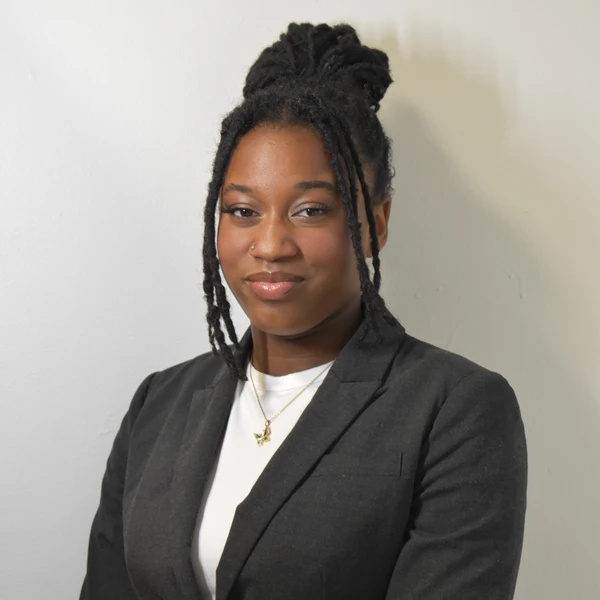
I’m Cameryn Smith, a rising sophomore at Spelman College, majoring in psychology on the pre-medical track. My journey into the medical field didn’t begin in a hospital or a biology class; it started with confusion, isolation, and a personality quiz. In high school, I was quietly battling depression and anxiety without the language to name it. I found solace in learning about the brain through tools like MBTI and the Enneagram. Understanding cognitive functions gave me clarity when no one else could. I started seeing how mental health wasn’t just about thoughts; it was biology, chemistry, and lived experience. That moment of understanding changed everything.
After my father passed away on Christmas Eve of 2024 due to heart surgery complications, everything I’d been quietly passionate about became urgent. I was grieving, but I also had to be strong. Not only for me but for my mom, who now cared for four kids on her own, and for my younger siblings, one of whom was hospitalized for mental health reasons. I didn’t have the luxury to fall apart. In the absence of support, I became support.
Though it was a dark time in my life, it only added fuel to my desire to become a psychiatrist—specifically one who works with children and adolescents. I want to create the kind of care I once needed but didn’t have: holistic, accessible, and rooted in empathy. Too often, especially in Black communities, mental health is stigmatized or overlooked altogether. I want to help shift that narrative.
Currently, I work as a behavior technician with children on the autism spectrum, using Applied Behavior Analysis in a group setting. I meet each child where they are, and I’ve watched breakthroughs happen. Nonverbal children learning to express themselves, once-withdrawn kids lighting up when I walk into the room. It’s one of the most rewarding experiences I’ve ever had, and it affirms that healing, when grounded in care and science, is possible.
My father’s journey also opened my eyes to how deeply physical health and mental wellness are intertwined. I’m passionate about the role nutrition, access to care, and early intervention play in emotional development. I hope to research these intersections and use my findings to educate and empower underserved communities.
This path isn’t just a career, it’s my calling. I’ve seen firsthand what happens when people don’t get the care they need. But I’ve also seen the power of what’s possible when they do. Through psychiatry, I hope to be a bridge for kids who feel misunderstood, families who feel overwhelmed, and communities that deserve more than survival. They deserve to heal.