user profile avatar

Cameron Lewis

1x

Finalist

Bio

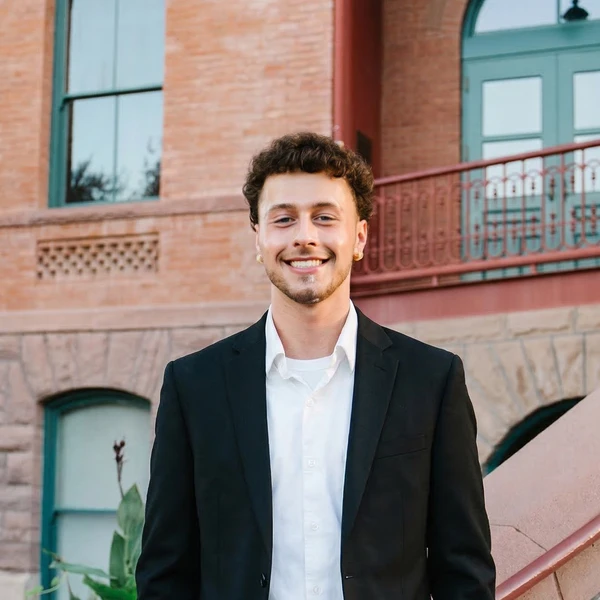
I’m Cameron Lewis, a social work student at Arizona State University and a former foster youth committed to improving the systems that shaped my life. Growing up in foster care gave me firsthand experience with both the strengths and gaps in child welfare and mental health services. Those experiences didn’t define me, but they gave me direction. Today, I work as a Care Coordinator supporting children on the autism spectrum and their families. I help clients build emotional regulation skills, improve communication, and navigate complex systems of care. I also serve in the Arizona Governor’s Office of Constituent Engagement, where I work directly with community members, connect individuals to state resources, and contribute to policy-level conversations affecting vulnerable populations. My goal is to become a licensed clinical social worker, providing accessible, high-quality mental health care to youth and families, especially those involved in the foster care system. Long term, I plan to pursue an MSW to advocate for systemic reform through both direct practice and policy work. I am driven by lived experience, grounded in service, and focused on creating systems that are more effective, accountable, and responsive to the people they serve.

Education

Arizona State University-Downtown Phoenix

Master's degree program
2024 - 2027
  • Majors:
    • Social Work

Miscellaneous

  • Desired degree level:

    Master's degree program

  • Graduate schools of interest:

  • Transfer schools of interest:

  • Majors of interest:

    • Social Work
    • Public Administration and Social Service Professions, Other
  • Not planning to go to medical school
  • Career

    • Dream career field:

      Hospital & Health Care

    • Dream career goals:

      LCSW

    • Constituent Engagement Advocate

      State of Arizona - Office of the Governor
      2025 – Present1 year

    Sports

    Ice Hockey

    Club
    2005 – 201813 years

    Public services

    • Volunteering

      AZ Humane Society — Animal Care Specialist
      2023 – Present
    Special Needs Advocacy Inc. Kathleen Lehman Memorial Scholarship
    My decision to pursue a career serving individuals with special needs is rooted in both lived experience and professional commitment. As a former foster youth who navigated multiple placements, inconsistent support systems, and systemic barriers, I experienced firsthand how vulnerable populations, especially those with behavioral, emotional, and developmental needs, are often underserved or misunderstood. These experiences shaped not only my perspective but also my responsibility to ensure that others receive the advocacy, support, and dignity that I at times had to fight to access. Currently, I work as a Clinical Care Coordinator and Behavioral Health Technician, providing direct services to children and adolescents with complex needs, including autism spectrum disorder, serious emotional needs, and trauma-related diagnoses. In this role, I teach emotional regulation, communication, coping strategies, and daily living skills while coordinating care across therapists, schools, and families. These experiences have shown me that effective support for individuals with special needs requires more than clinical knowledge. It requires consistency, advocacy, and systems-level awareness. I have seen how gaps in trained professionals, underfunded programs, and fragmented systems create barriers for families seeking support. I have worked with youth whose behaviors are often labeled as noncompliant rather than understood through a trauma-informed or developmental lens. I have supported families who struggle to navigate services that are difficult to access and even harder to sustain. These realities reinforce my commitment to not only provide direct care but to advocate for systemic improvements that expand access and equity. My long-term goal is to become a Licensed Clinical Social Worker and provide therapeutic services to individuals and families with diverse and complex needs. I am particularly focused on supporting youth with developmental and behavioral challenges by integrating evidence-based interventions with culturally responsive and trauma-informed care. In addition to clinical practice, I aim to contribute to program development and policy reform that improves service delivery systems, ensuring that support is accessible, coordinated, and responsive to the realities families face. My approach to this work is grounded in accountability and lived understanding. I do not view advocacy as optional, but as a core responsibility of my career. My experience in foster care taught me the consequences of systems that fail to listen, while my professional work has shown me the impact of providers who show up consistently and advocate effectively. These dual perspectives allow me to engage with clients not only with empathy but with a clear commitment to action. Through my career, I plan to make a positive social impact by improving how systems respond to individuals with special needs. This includes strengthening communication between service providers, advocating for equitable access to care, and ensuring that individuals are treated with dignity rather than reduced to diagnoses or behaviors. I am committed to being a professional who challenges barriers, supports families, and contributes to building systems that are not only accessible but truly responsive. Ultimately, my goal is to ensure that individuals with special needs and their families are not left to navigate systems alone, but are met with professionals who advocate, listen, and deliver meaningful, consistent support.
    Kerry Damiano/Oasis Scholarship
    As I move into the next phase of my academic and professional journey, balancing my spiritual walk with increasing responsibility is not something I view as separate, but as something that must be integrated into how I live and work. My faith provides a foundation for how I approach responsibility, accountability, and service to others. Rather than compartmentalizing my beliefs, I intend to carry them into my daily decisions, especially in high-responsibility environments where ethical judgment and consistency matter most. Throughout my life, I have learned that faith is not simply about belief, but about action. In my work supporting children and families involved in behavioral health and foster care systems, I have seen firsthand how consistency, compassion, and integrity can impact outcomes. I approach these responsibilities with the understanding that every individual deserves dignity, patience, and fairness. These principles align closely with my spiritual values and guide how I engage with others, particularly in moments where people feel overlooked or unsupported. My past experiences have significantly shaped my decision to pursue social work. As someone who spent part of my adolescence in foster care, I experienced both the strengths and failures of the systems designed to support vulnerable populations. There were moments where I felt unheard and unsupported, but there were also individuals who demonstrated care, encouragement, and belief in my ability to succeed. Those experiences instilled in me a strong sense of purpose. I made a commitment early on that I would not allow my circumstances to define my outcome, and instead, I would use what I had experienced to help others navigate similar challenges. Since then, I have worked in multiple roles supporting youth and families, including behavioral health and case coordination positions. These roles have allowed me to apply what I have learned in real-world settings, reinforcing my commitment to becoming a Licensed Clinical Social Worker. My goal is to provide direct, ethical, and effective care to individuals and families while also contributing to broader system improvements that increase access to services and reduce harm. As I enter new environments, I plan to make an impact by leading with consistency and accountability. I believe that change is not always driven by large gestures, but by showing up reliably, advocating when necessary, and maintaining high standards in my work. Whether I am supporting a child in crisis, coordinating services, or engaging in policy-related work, I intend to approach each responsibility with the same level of commitment. One thing I hope for as I pursue my career in alignment with my faith is the ability to remain grounded in my values, even in challenging or high-pressure situations. It is easy to lose sight of purpose when demands increase, but I hope to remain steady in my commitment to integrity, service, and growth. Ultimately, my goal is not only to succeed professionally but to contribute meaningfully to the environments I am part of by consistently acting in ways that reflect both my values and my responsibility to others.
    Dr. DeNinno’s Scholarship for Mental Health Professionals
    I am pursuing a graduate degree in mental health because I have seen, both personally and professionally, how deeply mental health systems shape a person’s ability to feel safe, stable, and supported. As a former foster youth, I experienced environments where my needs were overlooked, and my voice was not always heard. There were moments where the systems designed to protect me failed to do so. At the same time, I also encountered professionals who showed consistency, advocacy, and genuine care. Those individuals created a sense of stability during some of the most unpredictable periods of my life. Experiencing both sides of the system made it clear to me that the presence of a competent, ethical mental health professional can significantly alter someone’s trajectory. These experiences did not just influence my perspective; they shaped my direction. I made a commitment early on that I wanted to be the type of professional who shows up, follows through, and advocates for people even when it is difficult. That commitment has guided both my education and my career choices. In my current role as a Clinical Care Coordinator and Behavioral Health Technician, I work directly with youth and families who are navigating trauma, emotional dysregulation, and complex behavioral health systems. I provide skills training, support emotional regulation, and help families build structure and stability in their daily lives. Through this work, I have seen that mental health care is not only about addressing symptoms but about helping individuals develop the tools, confidence, and support systems needed to function in their environments. My professional experience has reinforced that effective mental health care requires strong clinical skills, ethical decision-making, and an understanding of how larger systems impact individual outcomes. I have worked with youth who struggle to trust adults due to past experiences, families who feel overwhelmed by fragmented systems of care, and individuals who need consistent support to maintain progress. These experiences have made it clear that I need advanced clinical training to provide the level of care that clients deserve. Pursuing a graduate degree in mental health is the next step in strengthening my ability to serve others in a meaningful and responsible way. My goal is to become a Licensed Clinical Social Worker and provide therapeutic services that address both individual and family needs. I also want to remain engaged in improving systems of care so that access to mental health services is more consistent, equitable, and effective. Ultimately, I am pursuing this degree because I know what it feels like to navigate systems without adequate support, and I am committed to ensuring that others do not have to do so alone. I want to be a professional who is reliable, accountable, and grounded in both lived experience and clinical expertise, and who contributes to creating better outcomes for individuals, families, and communities.
    For the One Scholarship
    My experience in foster care from ages fourteen to eighteen shaped not only who I am, but also how I approach my education and future. During that time, I moved through multiple placements, navigated court involvement, and experienced instability that often left me without consistent support. One of the most difficult realities was learning that the systems meant to protect me did not always function as intended. There were moments when my concerns were dismissed, and I was not believed, even in situations involving harm. That experience forced me to become my own advocate at a young age and take responsibility for my future in ways many of my peers did not have to. Pursuing higher education as a former foster youth has come with significant challenges. I have been financially independent, balancing full-time work while maintaining full-time enrollment in college. There was no safety net. I had to ensure my own housing, transportation, and basic needs while meeting academic expectations. At times, this meant long days working followed by late nights completing coursework, often with little room for rest. When practicum requirements were added, the demands intensified even further, requiring strong time management, discipline, and the ability to set boundaries to avoid burnout. In addition to financial and logistical barriers, there were emotional challenges. Working in behavioral health and supporting youth in similar situations often brought up aspects of my own experience. I had to learn how to manage those responses while remaining effective in both my academic and professional roles. Through supervision, reflection, and accountability, I developed the ability to separate personal experience from professional responsibility while still using it to inform empathy and connection. Despite these challenges, I remained committed to my education because I understood what it represented. For me, education is not just about earning a degree; it is about creating stability, expanding opportunity, and positioning myself to make meaningful change. My goal is to become a Licensed Clinical Social Worker and provide therapeutic services to youth and families, particularly those involved in foster care and behavioral health systems. I want to be the kind of professional who shows up consistently, advocates when others do not, and ensures that individuals are heard, believed, and supported. Furthering my education through a Master of Social Work will allow me to deepen my clinical skills, expand my ability to intervene effectively, and contribute to both individual and systems-level change. It will also allow me to continue bridging my lived experience with professional practice in a way that improves outcomes for others navigating the same systems I once did. Ultimately, my experiences in foster care did not limit my path; they clarified it. They taught me resilience, accountability, and the importance of advocacy. Advancing my education is how I turn those experiences into action and ensure that others do not have to face the same challenges alone.