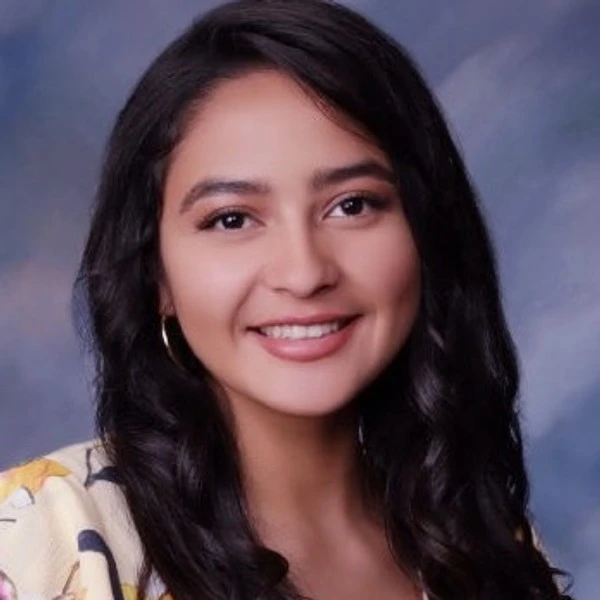
user profile avatar

Caitlyn Ordonez

1x

Finalist

General information

Hobbies & Interests

  • Engineering
  • 3D Modeling

Reading

  • Science Fiction
  • Academic

I read books multiple times a month.

Bio

I grew up in a rough neighborhood where opportunities were limited, but those challenges motivated me to push forward. My goal is to build a stable, fulfilling career and help other students realize their potential. I’m passionate about mentorship and education because I know how powerful support can be. I’ve worked hard, stayed focused, and learned to adapt. I’m committed to using those strengths to create a better future for myself and others.

Education

Azusa Pacific University

Bachelor's degree program

2024 – 2027

Majors:
  • Engineering, General

Downtown Business High

High School

2016 – 2020

Miscellaneous

Desired degree level:
Doctoral degree program (PhD, MD, JD, etc.)
Graduate schools of interest:
University of California-Los Angeles, California Institute of Technology, University of Southern California
Desired degree modality:
In-Person, Hybrid
Medical school interest:
No

Career

  • Member service representative

    Banking · Media City Credit Union

    Jan 2022 – Jan 2023

Miscellaneous

Dream career field:
Electrical Engineering
Work experience:
2 years
Has nursing license:
No
CF Boleky Scholarship
My pursuit of an engineering degree has been a journey of self-reliance, shaped by my upbringing in Southern Los Angeles. As a junior at a university, I am navigating my education without support from my parents. This continuous struggle gave me the drive to work hard and overcome obstacles, particularly as I navigate a field where women are still a minority. My resilience was profoundly tested during my freshman year of college when a severe household crisis forced me to immediately leave and secure my stability entirely on my own. With this renewed focus and emotional foundation, I pushed myself to get back on track academically. I took college courses after school, during the summer, and over winter break, ensuring I could graduate on time in 2020. This demanding schedule was my first step toward creating a new path for myself, leading to three dedicated years at Glendale Community College before transferring. Choosing engineering—a historically male-dominated field—only fuels my ambition. My presence in these spaces is not only for my own success, but to prove that a place exists for other women who wish to follow this path. In critical moments, the friend who became my unwavering lifeline was Vannessa. This is why she is my best friend: she stepped in not just as an emotional anchor, but as the constant force pushing my drive forward. She helped me process the emotional fallout, always there to lend an ear or a shoulder when times were tough, and relentlessly pushed me to get through school, reminding me not to let the crisis derail my goals. Her devotion and steady encouragement proved to be my greatest resource in building a support system, allowing me to fully focus on my education. My commitment to opening these spaces for others has shaped my academic pursuits, which are now centered on both research and community impact. As I continue my engineering studies, I’ve worked on projects exploring student engagement in physics labs and used EMG signals to analyze how music might affect a person's gait. While isolating timestamps from the data proved to be a struggle, I learned perseverance through the process. More critically, I have had the opportunity to do my community service with Vannessa by my side. Together, we worked with Sierra Madre Middle School and Azusa High School to promote STEM fields. Through interactive demonstrations, such as teaching topology and simple coding, we were and continue to be committed to making the best out of it, striving to show young individuals the same beauty in STEM that we have come to love. This shared hands-on experience reinforces my commitment to completing my Electrical Engineering degree and successfully launching my career as a powerful role model. While my drive and ambition have overcome every academic and emotional barrier, the financial strain of supporting myself is a constant reality. I have relied heavily on student loans, but I have now exhausted those resources and no longer qualify for the funding needed to complete my final year. This urgent financial crisis directly threatens my ability to graduate. This scholarship is the critical investment that removes this immediate obstacle. It is the bridge that ensures the resourcefulness I developed while facing crisis, supported by the unwavering loyalty and emotional guidance of Vannessa, can be fully directed toward finishing my undergraduate education and successfully launching my career. I am ready to succeed as an Electrical Engineer and inspire others by example.
Immigrant Daughters in STEM Scholarship
My perspective is rooted in a family history of necessity and adaptation, having grown up in Southern Los Angeles as a woman whose parents brought a relentless work ethic from their homes in Mexico and Guatemala. This background taught me the necessity of self-reliance and responsibility. My resilience was forged throughout my youth by a deeply challenging home environment. This ongoing struggle was profoundly tested during my freshman year of college when a severe household crisis forced me to immediately leave and secure my education and stability entirely on my own. This sudden and total loss of a safety net became my most significant hurdle. I began to navigate the complex systems of higher education while simultaneously finding housing and figuring out funding. This crisis directly threatened my pursuit of an Electrical Engineering degree. My survival required immense resourcefulness. I could focus my energy on academics and managed my finances entirely through student loans, stretching every dollar. This financial drive led to a new struggle—I have now exhausted those loan resources and no longer qualify for the funding needed to complete my final year. The struggles I've faced have profoundly shaped my path, cementing my ambition to excel in STEM, despite being one of the few women in my engineering classes. My presence in these spaces is a testament to the perseverance inherited from my family. My academic journey is now centered on research. I’ve enjoyed projects with my professors, exploring student engagement in physics labs and working with EMG signals to analyze how music might affect a person's gait. Isolating timestamps from the data was difficult, but I learned perseverance through the challenge. These experiences have solidified my commitment to the intellectual demands of Electrical Engineering. This academic rigor has galvanized my commitment to community impact. My work with Sierra Madre Middle School (teaching tangible topology principles with strings) and Azusa High School (teaching fundamental coding for graphics) is my way of using my struggle as a strength. I actively seek out and champion first-generation students, showing them that the university classroom is exactly where they belong, paving the way for my ultimate goal: earning a Ph.D. to become a professor and leading the next generation. This scholarship is the critical investment that removes the immediate financial threat. It ensures I can complete my final year and move toward my goal of becoming a professor. It is the bridge that ensures the resourcefulness I developed while facing homelessness and financial crisis, supported by my sister, can be fully directed toward building a diverse future in Electrical Engineering. Having learned that overcoming barriers is not an exception but a requirement, I am ready to lead the next generation by example.
José Ventura and Margarita Melendez Mexican-American Scholarship Fund
My passion for being a first-generation, Mexican-American student is rooted in a deep understanding of what it takes to break barriers—a resilience that honors the legacy of figures like José Melendez. Growing up in Southern Los Angeles, my identity was shaped by necessity. My home life was marked by constant worry, but this environment only forged my drive. When I started college, this self-reliance became a fierce necessity, as I am now a junior navigating a demanding education without any parental support. This need to stand on my own gave me the intense push to overcome every obstacle, reinforcing my belief that survival is about finding the broken part in the circuit and running the power a new way. The foundation of my academic success was built through hard work. To overcome the challenges from my home environment, I pushed myself to graduate high school on time in 2020 by taking college courses after school, during the summer, and over winter break. This intense, self-imposed schedule was my first step in building a new life, which led to three years at Glendale Community College before transferring. Choosing Electrical Engineering—a field where women are a clear minority—only fuels my ambition. My presence in these spaces is not only for my own success, but to prove a place exists for every Mexican-American woman who wishes to follow this path. My commitment to creating impact is centered on actively sharing the power of STEM with my community, directly preparing me for my goal of becoming a professor. This mentorship work is where I see the immediate results of my drive. I recently worked with Sierra Madre Middle School to teach topology, using simple pairs of strings to challenge students. By having them tie knots and then perform the inverse action to free themselves, I demonstrated complex mathematical principles through a tangible, fun problem. Similarly, with Azusa High School, I taught fundamental coding skills, guiding students on how to generate simple graphics. While I also engage in research projects with professors to hone my technical rigor, it is this hands-on outreach that truly solidifies my ultimate goal: to become a university professor who inspires the next generation. A Ph.D. in Electrical Engineering is the vehicle for this mission. My true purpose is to actively seek out and champion students—especially first-generation, Mexican-American women—showing them that the university classroom is exactly where they belong. This commitment continues the legacy of unwavering support for education. However, the financial strain of supporting myself is a constant reality. I have exhausted my student loan resources and no longer qualify for the funding needed to complete my final year. This urgent financial crisis directly threatens my ability to finish my degree and pursue my Ph.D. This scholarship is the critical investment that removes this immediate obstacle, ensuring the sacrifices made are not in vain. It is the bridge that ensures my drive and ambition can be fully used to reach my vision: to transition from a student struggling to find the next source of funding to a professor building and diversifying the future of Electrical Engineering, one student at a time. I am ready to lead that future.
Harry & Mary Sheaffer Scholarship
Growing up in Southern Los Angeles, my identity as a Hispanic, first-generation college student was defined by self-reliance. My home life was marked by constant worry. When I started college, this self-reliance became a fierce necessity, as I am now a junior navigating this demanding education without any parental support. This need to stand on my own gave me the intense drive to overcome every obstacle, reinforcing my belief that survival is about finding the broken part in the circuit and running the power a new way. My demanding schedule started early. To overcome academic setbacks from my challenging home environment, I pushed myself to graduate on time in 2020 by taking college courses after school, during the summer, and over winter break. This intense schedule was my first step in building a new life, leading to three years at Glendale Community College before transferring. Choosing engineering—a field where women are a clear minority—only fuels my ambition. As one of the few women in the room, I learned the importance of contributing my unique perspective. My presence in these spaces is not only for my own success, but to prove a place exists for every woman who wishes to follow this path. My academic journey is now centered on research. I’ve enjoyed projects with my professors, exploring student engagement in physics labs and working with EMG signals to analyze how music might affect a person's gait. Isolating timestamps from the data was difficult, but I learned perseverance through the challenge. These experiences have solidified my commitment to the intellectual demands of Electrical Engineering. My ultimate goal is a Ph.D. in Electrical Engineering to become a university professor. My true purpose is teaching. I want to actively seek out and help students—especially first-generation women—who haven't had the chance to study science and math before. My work with Sierra Madre Middle School and Azusa High School, where I taught topology and simple coding, showed me the incredible impact of bringing the beauty of STEM directly to young individuals. I want to ignite that same spark in students from backgrounds like mine, showing them that the university classroom is exactly where they belong. The financial strain of supporting myself is a constant reality. The high cost of school has left me heavily reliant on student loans, but I have exhausted those resources and no longer qualify for the funding needed to complete my final year. This urgent financial crisis directly threatens my ability to finish my degree and pursue my Ph.D. This scholarship is much more than money; it is the critical investment that removes this immediate obstacle. It allows me to put my full energy into advanced research and secure the teaching experience required for a Ph.D. placement. This bridge ensures my drive and ambition can be fully used to reach my vision: to go from a student struggling to find the next source of funding to a professor building and diversifying the future of Electrical Engineering, one student at a time. I am ready to lead that future.
Mireya TJ Manigault Memorial Scholarship
Growing up in Southern Los Angeles, my identity as a Hispanic, first-generation college student was defined by self-reliance. My home life was marked by constant worry. When I started college, this self-reliance became a fierce necessity, as I am now a junior navigating this demanding education without any parental support. This need to stand on my own gave me the intense drive to overcome every obstacle, reinforcing my belief that survival is about finding the broken part in the circuit and running the power a new way. My demanding schedule started in high school. To make up for academic setbacks caused by my challenging home environment, I pushed myself to graduate on time in 2020 by taking college courses after school, during the summer, and over winter break. This intense schedule was my first step in building a new life, leading to three years at Glendale Community College before transferring. Choosing engineering—a field where women are a clear minority—only fuels my ambition. As one of the few women in the room, I learned the importance of contributing my unique perspective. My presence in these spaces is not only for my own success, but to prove a place exists for every woman who wishes to follow this path. My academic journey is now centered on research. I’ve enjoyed projects with my professors, exploring student engagement in physics labs and working with EMG signals to analyze how music might affect a person's gait. Isolating timestamps from the data was difficult, but I learned perseverance through the challenge. These experiences have solidified my commitment to the intellectual demands of Electrical Engineering. My ultimate goal is a Ph.D. in Electrical Engineering to become a university professor. My true purpose is teaching. I want to actively seek out and champion students—especially first-generation women—who haven't had the chance to study science and math before. My work with Sierra Madre Middle School and Azusa High School, where I taught topology and simple coding, showed me the incredible impact of bringing the beauty of STEM directly to young individuals. I want to ignite that same spark in students from backgrounds like mine, showing them that the university classroom is exactly where they belong. The financial strain of supporting myself is a constant reality. The high cost of school has left me heavily reliant on student loans, but I have exhausted those resources and no longer qualify for the funding needed to complete my final year. This urgent financial crisis directly threatens my ability to finish my degree and pursue my Ph.D. This scholarship is much more than money; it is the critical investment that removes this immediate obstacle. It allows me to put my full energy into advanced research and secure the teaching experience required for a Ph.D. placement. This bridge ensures my drive and ambition can be fully used to reach my vision: to go from a student struggling to find the next source of funding to a professor building and diversifying the future of Electrical Engineering, one student at a time. I am ready to lead that future.
Future Women In STEM Scholarship
My pursuit of an engineering degree has been a journey of self-reliance, shaped by my upbringing in Southern Los Angeles. As a junior at a university, I am navigating my education without support from my parents. This experience gave me the drive to work hard and overcome obstacles, particularly as I navigate a field where women are still a minority. To overcome the academic setbacks from my challenging home environment, I pushed myself to get back on track. To ensure I could graduate on time in 2020, I took college courses after school, during the summer, and over winter break. This demanding schedule was my first step toward creating a new path for myself. I found my passion for engineering in high school, where I was able to research the different fields and learn tools that provided a solid foundation for my college courses. After graduating, I started my college career at Glendale Community College, where I dedicated three years before transferring. Choosing to major in engineering meant stepping into a field that has historically been male-dominated. Throughout my classes, I have often been one of the few women in the room, and this reality has pushed me to be even more determined. It has taught me the importance of speaking up and contributing my unique perspective. While this has been a challenge, the experience has confirmed my ability to make decisions and succeed on my own terms, regardless of the environment. My presence in these spaces is not only for my own success, but to prove that a place exists for other women who wish to follow this path. As I continue my engineering studies, I have had the opportunity to work on research projects with my professors. I’ve explored how students engage in physics labs and worked with EMG signals to analyze how music might affect a person's gait. While isolating timestamps from the data proved to be a struggle, I enjoyed the challenge of learning through the process. I have also had the chance to work with Sierra Madre Middle School and Azusa High School to promote different STEM fields alongside other students. Through interactive demonstrations, such as teaching topology and simple coding, I strive to show young individuals the same beauty in STEM that I have come to love. The financial strain of supporting myself is a constant reality, but I have come to see it as a motivator to continue my education. Each journey that I have faced has taught me valuable lessons about resourcefulness, perseverance, and the importance of having a clear goal. These are the skills that will serve me well in a demanding field like engineering. I am confident that my commitment to my education will see me through to graduation and beyond.
Learner Calculus Scholarship
When it comes to science, technology, engineering, and math (STEM), calculus is a huge deal. It is the main way we talk about and figure out how things change. For me, as an engineering major, I have seen this firsthand. No matter what classes I take, I am always using some kind of calculus. It's the primary math I know, and yeah, it is still a struggle sometimes, but it is also the foundation for everything I am learning and everything I will do in the future. Calculus is not just about equations; it is a whole way of thinking. Differentiation and integration are the main tools we use to model the real world. In engineering, you need them for almost everything, from designing circuits and building things to figuring out how liquids flow. It helps us calculate how fast something is accelerating, the tension on a wire, or the size of a weirdly shaped part. It turns big, theoretical ideas into real-world things we can test and build. Getting through calculus also teaches you how to solve problems, which is super important in any STEM field. It teaches you how to take a complicated problem and break it into smaller, more manageable pieces. I am currently in multi-variable calculus, and that is when it really clicked for me. I realized that the 2D plane is just a simplified idea. In real life, things like a table or a chair exist in three dimensions, and you need this kind of advanced math to deal with them. For example, my work with EMG signals meant I had to figure out how to isolate specific pieces of data. The problem-solving skills I have built by grappling with calculus are what helped me work through that, even when it was tough. It has taught me to be persistent and keep going until I find a solution. In the end, calculus is what makes a lot of innovation possible. Physics uses it to describe motion, and computer science uses it for things like machine learning and graphics. The real world is always changing, and calculus is the best way we have to understand that. It gives us the power to predict things and to build and design stuff. For me, it is the most important part of my education, and I am confident that practicing it and learning from the parts I struggle with will be a big help as I continue my journey.
Caitlyn Ordonez Student Profile | Bold.org