user profile avatar

Caitlyn McMahon

1x

Finalist

1x

Winner

Bio

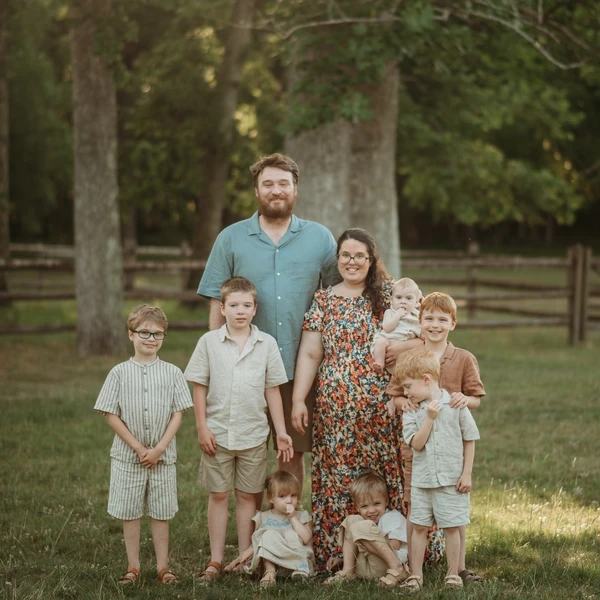
I am an educator, advocate, and mother of seven, shaped by both experience and faith. Balancing family life alongside education, volunteerism, and advocacy is not incidental to my work; it is the foundation of it. Parenting has made me acutely aware of how systems succeed or fail real families, and it has strengthened my resolve to ensure that no child is overlooked due to disability, circumstance, or lack of access. Through my work in special education support, disability advocacy, and reduced-cost tutoring for underserved students in the Greater Mankato area, I focus on practical outcomes: helping families secure appropriate services, supporting students’ academic growth, and building confidence that leads to long-term progress. Initiatives such as Little Way Advocacy Collaborative and Little Way Tutoring reflect my belief that sustained, meaningful change is built through steady, relational work. Not shortcuts. As a mother, I understand that my children are watching how I choose to spend my time and energy. By integrating service, advocacy, and faith into everyday life, I aim to model persistence, responsibility, and compassion in action. I want my children to see that justice is lived, not just discussed; and that doing what is right often requires consistency, sacrifice, and the courage to show up, even when the work is hard.

Education

Saint Mary's University of Minnesota

Master's degree program
2025 - 2027
  • Majors:
    • Special Education and Teaching

New Hampshire Institute of Art

Bachelor's degree program
2012 - 2013
  • Majors:
    • Rhetoric and Composition/Writing Studies

Chester College of New England

Bachelor's degree program
2009 - 2012
  • Majors:
    • Rhetoric and Composition/Writing Studies
  • Minors:
    • Drama/Theatre Arts and Stagecraft

Miscellaneous

  • Desired degree level:

    Doctoral degree program (PhD, MD, JD, etc.)

  • Graduate schools of interest:

  • Transfer schools of interest:

  • Majors of interest:

    • Special Education and Teaching
    • Educational Administration and Supervision
    • Religious Education
  • Not planning to go to medical school
  • Career

    • Dream career field:

      Education

    • Dream career goals:

      Special Education

    • Special Education Support Teacher

      John Ireland Catholic School
      2025 – Present1 year
    • Math Tutor

      AmeriCorps - MN Math Corps
      2024 – 20251 year
    • Public Relations and Social Media Coordinator

      Keene Public School District, NH
      2013 – 20163 years

    Public services

    • Volunteering

      Saint Joseph the Worker Catholic Church — PreK-Grade 1 Catechist
      2023 – Present
    • Volunteering

      Little Way Tutoring (Little Way Advocacy Collaborative) — Executive Tutor
      2025 – Present
    • Advocacy

      Little Way Advocacy Collaborative — Advocate, Founder
      2023 – Present
    • Volunteering

      Chester College of New England — Community Service Coordinator
      2011 – 2012

    Future Interests

    Advocacy

    Volunteering

    Philanthropy

    Jerrye Chesnes Memorial Scholarship
    When I graduated from college in 2013, I could not have predicted what returning to school more than a decade later would look like. By 2016, I had stepped away from the workforce to focus on raising my family. Nearly 9 years later, in 2025, I returned not only to full-time employment but also to an entirely new career path and a graduate program in special education. I did so as the mother of seven children, two of whom have developmental disabilities. Returning to school has required much more than relearning how to write papers, meet deadlines, or navigate graduate-level coursework. It has required me to rebuild my professional identity while remaining fully present for a family that depends on me. My days are divided among working in a school, supporting students, raising children, managing additional appointments, advocating for and caring for individuals with disabilities, and completing the coursework necessary to become a licensed special educator. There is rarely a perfect time to study. Graduate school happens after children are in bed, early in the morning, between appointments, and in whatever quiet spaces I can create. I have learned to write papers while carrying the mental load of a household of nine and to move between being a mother, caregiver, employee, advocate, and student—sometimes within the same hour. Perhaps the greatest challenge in returning has been accepting that determination does not always look graceful. The past year, in particular, tested my ability to balance these roles. During the final weeks of the school year, my principal was hospitalized and unable to return, increasing responsibilities among our very small staff. At the same time, my family experienced a serious situation involving one of my own children at school. I was navigating it as a mother, an employee, and an educator, all while supporting students whose own routines had been disrupted. There were moments when my coursework was completed later than I wanted and nights when opening my laptop again felt nearly impossible. I learned that perseverance sometimes means letting go of perfection. It means asking for grace when necessary, beginning again after a difficult week, and continuing toward a goal even when the circumstances surrounding it are far from ideal. There are financial challenges as well. Graduate tuition must fit within the realities of raising seven children and meeting the additional needs of children with disabilities. Returning to full-time employment has helped make my education possible, but pursuing a graduate degree remains a significant investment for our family. Still, returning to school has affirmed that I am exactly where I am meant to be. The years I spent raising my children were not a gap in my development. They shaped the educator I am becoming. Parenting children with disabilities taught me how deeply families need professionals who listen, advocate, and see the whole child. Returning to the workforce gave me the opportunity to transform that lived experience into a new vocation in special education. My path back to school has been unconventional, but I no longer see that as a disadvantage. At this stage of my life, I know why I am here. I hope my children see in my journey that their presence never stood in the way of my ambitions. In many ways, they gave those ambitions their purpose.
    Rebecca Lynn Seto Memorial Scholarship
    If I were asked to work with a child like Rebecca, I would begin with one assumption: communication is not the same as speech, and a disability does not make a child unknowable. My first responsibility would not be to decide what to teach. It would be to learn who that child is. I would observe closely, listen to the family, collaborate with therapists and educators, and notice the details that formal evaluations cannot always capture: what makes the child laugh, what causes frustration, what sparks engagement, and how they communicate joy, discomfort, refusal, curiosity, or connection. I would use individualized supports such as augmentative and alternative communication, visual systems, sensory supports, modeling, explicit instruction, repetition, and carefully scaffolded routines. But the foundation would always be relationship. I cannot meaningfully teach a child I have not first taken the time to understand. I know this from both sides of the special education table. As a special education support teacher and 504 coordinator in a PreK–6 Catholic school, I support students with disabilities and a wide range of academic, behavioral, communication, and regulation needs. I provide individualized intervention, implement accommodations, collaborate with families and public-school special education partners, and help students develop the skills they need to participate meaningfully in their classrooms and communities. I am pursuing my master’s degree in special education and initial teaching licensure, and I fully intend to continue serving students in special education from PreK through grade 12. I am also the mother of seven children, including children with disabilities. I understand the vulnerability of sitting at a table while professionals discuss your child in terms of data, deficits, goals, and services. I also understand the responsibility of being the educator at that table. Families need to know that the people entrusted with their children see more than a diagnosis or an evaluation report. They need to know we see the whole child. For that reason, I believe families are not simply members of an educational team; they are essential experts within it. They know the histories, patterns, fears, strengths, communication signals, and hopes that may never appear in school data. True family partnership means listening without defensiveness, communicating without unnecessary jargon, honoring family priorities, and recognizing that the strongest educational plans are built with families, not merely presented to them. That belief has also shaped my advocacy outside of school. I have provided families with free support navigating special education, understanding IEPs, researching policy, and learning their rights. I believe a family's ability to advocate effectively for their child should never depend on their income or their fluency in the language of special education systems. Pursuing graduate education while working and raising seven children requires real financial sacrifice. Tuition is another significant responsibility within an already full family budget, yet completing this degree is essential to the work I intend to do with my career. Scholarship support would reduce that burden and allow me to continue building the expertise necessary to serve students and families with both competence and compassion. Rebecca's story reminds me that the measure of successful special education is not how well a child learns to fit within a system designed without them in mind. It is whether we know that child well enough to help them communicate, participate, learn, belong, and experience joy. Rebecca deserved educators who took the time to know her. Every child does. I intend to be one of them.
    Champions for Intellectual Disability Scholarship
    Everything I do in this field begins at home. I am a mother of seven, including two children under the age of twelve with significant neurodevelopmental diagnoses—one with autism and ADHD, and one with severe ADHD. I did not choose a career supporting individuals with intellectual and developmental disabilities out of abstract interest or professional curiosity. I chose it because I had to learn how to support my own children, and in doing so, I recognized the same patterns of struggle shared by families everywhere, navigating special education systems. Raising children with complex support needs quickly exposed how fragile and inconsistent those systems can be. I learned how difficult it is to secure appropriate evaluations, how easily children are misunderstood, and how often families are expected to adapt to systems rather than systems adapting to children. I saw how stigma shapes expectations, how behavior is misread as defiance, and how families are left carrying the emotional and logistical weight of advocacy without guidance or partnership. These experiences did not just inform my perspective. They reshaped my direction. My children taught me that progress is not linear and that success cannot be measured by comparison or compliance. They taught me that regulation precedes learning, that communication takes many forms, and that dignity must never be conditional. As I worked to support them, I found myself walking alongside other families facing the same barriers; families exhausted by paperwork, meetings, and the constant need to justify their children’s needs. That shared struggle became the thread that pulled me into this work. Professionally, I now work in special education support, disability advocacy, and reduced-cost tutoring for underserved students. I help families translate complex systems into clear steps, advocate for appropriate services, and ensure students are not defined by limitations imposed by inadequate structures. My work is grounded in the belief that families should not have to become experts simply to access what their children need to learn and belong. My long-term goal is to strengthen inclusive systems that support individuals with intellectual and developmental disabilities across educational settings, particularly within parochial schools. Families who choose faith-based education often do so with great financial and personal sacrifice. For families raising children with disabilities, that sacrifice should not be compounded by exclusion or reduced support. I am committed to helping build frameworks that allow schools to serve all learners well, through layered academic and social-emotional supports, staff training grounded in best practice, and collaborative partnerships with public systems. My relationship with my children is the reason I am here. It shaped my values, sharpened my resolve, and gave me clarity of purpose. I pursue this work because intellectual disability justice is lived daily in homes like mine, in classrooms, and in communities. Through my education and advocacy, I am committed to building systems that recognize individuals with intellectual disabilities not as problems to manage, but as people worthy of full support, belonging, and respect.
    Bulkthreads.com's "Let's Aim Higher" Scholarship
    I want to build sustainable, inclusive student support systems within parochial school environments. Systems that ensure families are not forced to choose between faith-based education and their child’s learning needs. Too often, parochial schools are perceived as inaccessible for students with disabilities or learning differences, not because of unwillingness, but because of limited structure, training, and resources. My goal is to help build frameworks that allow these schools to serve all learners with clarity, dignity, and accountability. Families who choose parochial education often do so at great personal sacrifice. They budget carefully, work extra hours, and prioritize tuition because they believe in the values, community, and formation these schools provide. For families navigating disability, poverty, or systemic barriers, that sacrifice can be even greater. When learning needs are unmet, the cost becomes more than financial; it becomes emotional and relational. I want to help build systems where those sacrifices are honored, not compounded. What I am building is not a single program, but a model: layered academic and social-emotional supports, clear intervention pathways, staff training grounded in best practice, and collaborative partnerships with public systems where appropriate. This includes reduced-cost tutoring for underserved students, informed advocacy for families, and school-wide practices that normalize support rather than isolate it. My education equips me to move beyond goodwill into implementation—to translate intent into structures that work. This work matters not only to students but to the long-term health of parochial schools themselves. Schools that can support diverse learners are stronger, more resilient communities. They retain families, build trust, and reflect the values they profess: that every child belongs and is worthy of care. By strengthening these systems, I am helping parochial schools remain viable, responsive, and rooted in justice. Building this future also shapes my own. As a mother, educator, and advocate, my work is deeply personal. I am building a path where service and professionalism are not in conflict, where faith and evidence-based practice coexist, and where education functions as a tool for equity rather than exclusion. I am not building something abstract. I am building access, continuity, and belonging: one school, one system, and one student at a time.
    Susie Green Scholarship for Women Pursuing Education
    Returning to school was not a single brave decision, but a series of deliberate ones made over time. As I balanced motherhood, work, and advocacy, I began to understand that remaining where I was carried its own cost, one that limited the impact I could make. As a mother of seven, I have learned that meaningful change often requires sustained effort rather than bold gestures, and that responsibility has a way of clarifying difficult choices. My work in education and disability advocacy exposed me daily to systems that were complex, fragmented, and often inaccessible to families who needed them most. I saw students struggle without appropriate support, parents overwhelmed by procedural barriers, and educators working with deep commitment but limited resources. Over time, it became clear that experience alone was no longer sufficient. If I wanted to lead responsibly and advocate effectively, I needed deeper training, stronger credentials, and a more comprehensive understanding of the systems I was trying to navigate and improve. I also became increasingly aware that my choices were shaping how my children understood challenge and growth. I wanted them to see that learning and vocation are not confined to a particular season of life, and that returning to the classroom later in life is not a setback but a strategic decision. Going back to school required me to accept being a beginner again: asking questions, revising my thinking, and embracing discomfort as part of growth. The practical realities of returning to school were significant. Time was scarce, financial pressure was real, and exhaustion was often unavoidable. There were moments when I questioned whether I could sustain the demands of graduate study while continuing to show up fully as a parent and professional. What sustained me was not certainty, but a deep sense of responsibility to do the work well, for my family and for the students and families who depend on informed, capable advocates. Like Susie Green, whose legacy this scholarship honors, I chose a path that demanded discipline and resilience rather than convenience. Returning to education was not about reinvention, but preparation. Preparation to serve with greater skill, credibility, and impact. Each course strengthens my ability to analyze systems, support students effectively, and contribute meaningfully to educational communities. Going back to school expanded both my capacity and my reach. It reinforced my belief that learning is an act of service when it is pursued with purpose and accountability. The courage to return came from understanding that I was capable of more and that doing this work well required me to keep learning, even when it was difficult. So when you ask, “Who gave you the courage to go back to school?” my answer is simple: I did.
    RonranGlee Special Needs Teacher Literary Scholarship
    Winner
    Essay: Becoming Present The first time I truly understood what it means for a student to “experience a sense of their own presence,” it wasn’t in a classroom or a textbook. It was at my kitchen table. One of my children, overwhelmed and dysregulated, was unable to explain what they needed or why they were struggling. In that moment, my role was not to fix or correct, but to stay, to listen, and to help them reconnect with themselves. That experience mirrors the heart of special education, and it is why I am deeply passionate about becoming and continuing to grow as a special education teacher. Professor Harold Bloom’s statement that “the purpose of teaching is to bring the student to his or her sense of his or her own presence” speaks powerfully to the work of special education. To me, a student’s sense of presence means knowing that they exist as a whole person, valued, capable, and worthy, before skills, behaviors, or academic outcomes measure them. For students with disabilities, this presence is often interrupted by systems that focus on deficits, compliance, or normalization rather than understanding. My mission as a special education teacher is to restore that presence by creating environments where students feel seen, understood, and empowered to engage with learning on their own terms. My passion for special education is rooted in both lived experience and professional practice. As a mother of seven, I understand how deeply systems affect families, especially when children learn differently or require additional support. Parenting has taught me that progress is rarely linear, regulation precedes learning, and dignity must always come before compliance. These truths guide my work as a special education support teacher, advocate, and tutor serving underserved and marginalized families. I have walked alongside parents navigating complex educational systems, helped students access appropriate supports, and translated intimidating processes into actionable steps that lead to real outcomes. Guiding students toward a sense of their own presence begins with a relationship. Before academic goals can be met, students must trust that they are safe, capable, and respected. In my practice, this means slowing down, observing closely, and honoring communication in all its forms: spoken language, behavior, silence, and emotion. Presence is built when students recognize that their needs and experiences matter, even when those needs are complex or inconvenient. When a student understands that they are not a problem to be solved, but a person to be understood, learning becomes possible. Equally important is helping students develop self-awareness and self-advocacy. Many special needs students are spoken about far more often than they are spoken to. I believe it is my responsibility to shift that dynamic by providing students with language, tools, and opportunities to express what they need and how they learn best. Whether through visual supports, choice-based learning, restorative reflection, or collaborative problem-solving, my goal is to help students recognize their own agency. A student who can communicate, “This is hard for me,” or “I need help,” is a student who is present within themselves. My faith also informs my approach to special education. As a Catholic educator and catechist, I believe each student bears inherent dignity that cannot be earned or lost. This belief sustains my patience and determination, especially on difficult days. Teaching students with special needs requires flexibility, endurance, and creativity; qualities often compared to heroic figures or saints. But more than anything, it requires consistency. Showing up day after day, even when progress is slow or invisible, is how trust is built, and presence is restored. Balancing education, advocacy, volunteerism, and family life is demanding, but it is also intentional. My children watch how I choose to spend my time and energy. By integrating service and advocacy into daily life, I aim to model moral courage, responsibility, and compassion in action. I want my children to understand that justice is lived through persistence and that meaningful change often comes through small, faithful acts done consistently. If I were to tell my journey as a fairy tale, it would not be one of slaying dragons or claiming glory. Instead, it would be the story of a guide walking beside travelers who have been lost in the woods for far too long. The guide does not carry them out or choose their path; she simply holds the lantern. With patience and care, she helps each traveler notice their own footsteps again, remember their strength, and recognize that they are capable of moving forward. In the end, the greatest victory is not reaching the destination, but realizing they were never invisible along the way. I am pursuing the special education teaching profession because I believe every student deserves to experience their own presence fully and without apology. With ambition, drive, and deep respect for the students and families I serve, I am committed to building learning environments where students are not merely accommodated, but truly known. This is the work I am called to do and the work I will continue to show up for, with determination and heart.