Hobbies and interests
Acting And Theater
Advocacy And Activism
American Sign Language (ASL)
Babysitting And Childcare
Education
Music
Youth Group
Volunteering
True Crime
Student Council or Student Government
Hair Styling
Piano
Guitar
Reading
Adult Fiction
Christian Fiction
Women's Fiction
Biography
Christianity
Health
Literature
I read books daily
Brooklynn Allen-McLaughlin
1x
Finalist
Brooklynn Allen-McLaughlin
1x
FinalistBio
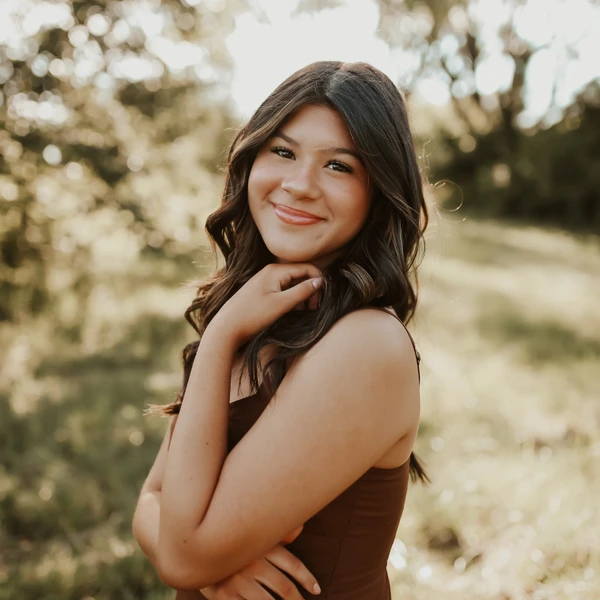
I am a graduating senior from Keller, Texas with a deep love for music and a passion for using it to serve others. Music has been the thread running through everything I do, from singing on my church's worship team to serving as Vice President of my school choir. Outside of music, I volunteer in my church's preschool ministry, support my school's show choir competitions behind the scenes, work part-time at a local family-owned restaurant, and help care for my three younger siblings at home. I am a first-generation college student, and I am incredibly proud to be heading to Belmont University to study Music with the goal of pursuing a career in music therapy or music education. I want to spend my life using music as a tool to heal, teach, and connect with people who need it most. I believe music is not just something you perform. It is something you give.
Education
Timber Creek High School
High SchoolMiscellaneous
Desired degree level:
Bachelor's degree program
Majors of interest:
- Music
Career
Dream career field:
Music
Dream career goals:
Server, hostess, cashier
Devivo Bro2024 – Present2 years
Arts
Timber Creek High School Choir
Music2020 – Present
Public services
Volunteering
Milestone Church — Preschool teacher and on the worship team2023 – Present
Future Interests
Advocacy
Volunteering
Philanthropy
Entrepreneurship
Simon Strong Scholarship
In 2022, my stepfather lost his job. My family had already been through a lot by then. We had moved from Arizona to Texas a few years earlier, and shortly after we arrived, the family we had moved to be near relocated. We were in an unfamiliar place with no support system. Then the pandemic hit before we had found our footing. Losing my stepfather's job on top of all of that was a weight I felt every single day.
But that was not the end of it. In 2023, my mom was diagnosed with Bell's palsy. The condition became permanent. It brought chronic pain and real limitations into her daily life. She kept going as long as she could. In July 2025, she had to close her small business to prepare for a major facial nerve surgery. Her recovery is still ongoing.
I am the oldest of four children. I watched all of this unfold from the front row. I worked part-time at a local restaurant to help my family. I helped care for my younger siblings at home. And I kept going to school, kept singing on my church's worship team, kept serving as Vice President of my choir, kept volunteering in my church's preschool ministry every week.
Music was what held me together. Not because it solved anything. But because it gave me somewhere to go when everything else felt impossible. On my hardest days I would sing. Not to perform. Just to feel something other than the weight. Music reminded me that beauty still existed even when circumstances did not feel beautiful at all. I have carried that with me into my decision to pursue music therapy at Belmont University, where I will be studying this fall. I want to give other people what music gave me.
This season of adversity shaped me in ways I am still discovering. It taught me that resilience is not a feeling. It is a decision. It taught me that showing up even when you do not feel capable is the whole point. The hardest seasons of my life have not broken me. They have told me exactly what I am made of and exactly what I am supposed to do with it.
If I could give advice to someone facing the kind of adversity my family has faced, it would be simple: do not wait until it feels manageable before you start moving. It may not feel manageable for a long time. Move anyway. Find the one thing that reminds you who you are and hold onto it. For me, that thing was music. For you, it might be something else. But find it. And let it carry you.
I am still moving forward. That is what I know how to do. And I plan to keep doing it for the rest of my life.
Sewing Seeds: Lena B. Davis Memorial Scholarship
Getting into Belmont University was not something I stumbled into. It was something I built toward, year by year, through a lot of hard work and a lot of choosing to show up even when it would have been easier not to.
I am a first-generation college student. No one in my family has gone to college before me. There was no roadmap. No one who had walked this path ahead of me and could tell me what it looked like. Just a direction I believed in and a decision to keep moving toward it.
The goal started to take shape when music became more than just something I loved. It became something I felt called to do with my life. I joined my church's worship team as a vocalist and took that seriously. I earned the position of Vice President of my school choir, where I learned what it means to lead with consistency, not just talent. I volunteered in my church's preschool ministry every week. I worked part-time at a local family-owned restaurant to help my family financially. I did all of this while navigating real hardship at home. My stepfather lost his job in 2022. My mom was diagnosed with a permanent medical condition that required major surgery, and her recovery is still ongoing. None of that became an excuse. It became a reason to keep going.
The hardest part of reaching this goal was not the auditions or the applications. It was believing that I belonged somewhere like Belmont in the first place. Belmont is a world-class music school. I was a girl from Keller, Texas, with no one in her family who had ever done this before. I did not have connections or legacy or a clear advantage. What I had was a genuine love for music and a belief that it was meant to serve people. I worked with my teachers. I prepared. I applied for scholarships so that cost would not be the reason the door stayed closed. And I got in.
This fall I will begin my degree in Music at Belmont, with a focus on music therapy or music education and a minor in worship. Both paths lead to the same place: using music in the lives of people who need it most. Whether that is a child working through a developmental challenge, someone processing grief, or a classroom full of students discovering their voice for the first time, I want to be the person who walks in with a song and leaves someone better than they were before.
I believe the goal was never just to get in. The goal was always what comes after. Belmont is how I become equipped to do the work I was made to do. That is what I am working toward now, and I do not plan to stop.
Sabrina Carpenter Superfan Scholarship
I started listening to Sabrina Carpenter when I was in middle school. Back then she was still on Disney Channel. Most people know her from those days. But I watched her grow into something so much more.
What I love about her is that she never apologized for who she was. She just kept evolving. She went from a teenager on a TV show to writing songs that feel deeply personal and genuinely smart. That kind of confidence does not come overnight. It comes from years of showing up and refusing to shrink.
I study music at Belmont University. My goal is music therapy and music education. I grew up singing in church and competing in choir. Music has always been the place where I feel most myself. Hearing Sabrina talk about music being both her art and her armor made me feel understood. She built her career on the idea that music can be both fun and meaningful at the same time. I believe that too.
There were some hard years in my family. My mom went through a major medical surgery. We lost a member of our family we depended on more than we ever realized. There were moments when everything felt heavy. During those seasons, music was how I processed everything I could not say out loud. Sabrina's songs have a way of making you feel like someone gets it, even when they are being funny and clever about it. That balance of lightness and depth is rare.
She is also proof that you can be a woman in the music industry and stay in control of your voice, your image, and your message. As someone going into music professionally, that matters to me. I have watched her navigate fame with a self-awareness that is not always easy to maintain. She seems to genuinely know who she is. That is something I am still figuring out. But watching her do it gives me a framework.
The song that hit me hardest was "Please Please Please." Not because of the content, but because of how she delivered it. It felt completely her. Effortless but deliberate. That is the kind of artist I want to be in my own way. Not performing a version of myself, but actually being myself.
Sabrina Carpenter showed me that making music you love and making music that connects with people are not two different things. They can be exactly the same thing. That is the kind of musician and educator I want to be.
Brooks Martin Memorial Scholarship
I want to be honest about something before I say anything else. I have not lost a parent. I have not lost a sibling. I know that what I am about to describe is not the same as those losses, and I would never claim that it is.
But I lost someone who held our family together in ways we did not fully understand until she was gone. She was our therapy dog. And when she died, I learned something about grief that no one had ever been able to teach me before she did.
She had been part of our household for years. She knew things about each of us that we had never said out loud. She noticed when someone was stressed before they even realized it themselves. She would find you in a room and just sit there, close enough to lean against, steady in a way I have not found words for since. She made every person in our house feel known. Not just loved, but actually known.
When we lost her, I think we all expected the sadness to be manageable. She was a dog. People lose dogs all the time. We were not prepared for what that silence felt like. We were not prepared for how many moments in a day had quietly depended on her presence without any of us ever naming it. The mornings felt different. The house felt different. We all moved through the same grief in different ways, and none of us quite knew how to reach each other through something we did not have language for.
If I can feel that devastated over a support animal, I cannot imagine what it means to lose a child. Or a parent. Or a sibling. I do not say that to minimize what I felt. I say it because losing her opened something in me. It taught me that grief does not announce itself the way you expect. You do not know what will undo you until it does. And once you have been inside that kind of pain, you are permanently changed in how you see someone else who is suffering. You stop trying to rank it. You stop saying "at least" or "it could be worse." You start just showing up.
That is what I want to do with my life. I am heading to Belmont University to study music therapy, and the reason I chose that path runs through every hard season my family has walked through. Music reaches people who cannot be reached by words. On the days when nothing made sense and nothing helped, a song could. I want to be the person who brings that to others. To the child who cannot explain what they are feeling. To anyone carrying something they were not prepared to carry.
Grief taught me that the most powerful thing one person can offer another is not answers. It is presence. It is the willingness to sit in something hard alongside someone who cannot get through it alone. That is what she gave our family for years. It is what I intend to give other people for the rest of my life.
Pamela Branchini Memorial Scholarship
Collaboration, to me, is not a method. It is a belief. It is the belief that what we create together will always be bigger and truer than anything one person could build alone.
I grew up in a family that taught me the value of showing up for one another, sometimes because we had no other choice. That instilled in me something I did not have a word for until I got deeper into music. What music gave me a name for is this: the most powerful things in life are made together.
I serve as Vice President of my school choir, and that role has taught me more about collaboration than any lesson I have sat through. Bringing a group of individuals into something unified is not about having the best voice in the room or knowing all the answers. It is about learning to listen. It is about noticing the person next to you who is struggling and choosing to match your pace to theirs instead of pulling ahead. There have been rehearsals where everything felt off, where the blend was not there and the energy in the room was low. The answer was never to push harder. It was to stop, breathe together, and remember what we were actually doing this for.
My time singing on my church's worship team has shaped how I think about collaboration in an even deeper way. Worship is a collective act. When it works, it is because everyone in the room, from the musicians on stage to the people standing in the pews, is giving something of themselves at the same time. I have stood on that stage and felt the moment when a song stops being a performance and becomes something shared. That does not happen because of one person. It happens because everyone is present, everyone is invested, and everyone is listening.
Those experiences are exactly why I am drawn to music therapy and music education. Both fields are fundamentally collaborative. A music therapist does not perform for a client. They work alongside them, meeting them where they are and building something together that would not exist without both people in the room. A music teacher does not just deliver information. They create an environment where students discover things together, where one student's breakthrough becomes fuel for the rest of the group.
Pam Branchini understood something that I have come to understand through years of showing up in choir rooms, on worship stages, and behind the scenes at competitions doing hair and makeup for students who needed someone in their corner. The work is not the performance. The work is the relationships built in preparation for it. The late rehearsals, the honest feedback, the moments of frustration and the moments when something finally clicks. That is where collaboration lives.
I want to spend my career in those in-between moments, building something real with the people I serve. Music taught me how to do that. I plan to give it back.
Ward Green Scholarship for the Arts & Sciences
I am planning to study Music at Belmont University in Nashville, with a focus on music therapy or music education and a minor in worship. It is a path I chose not because it sounded interesting, but because I have spent my entire life watching music do something that nothing else could. It reaches people in places that logic, medicine, and even words cannot always access. I have seen it move a room full of people in worship. I have watched it light up the face of a three-year-old who can barely speak yet responds fully to a song. I have felt it carry me through some of the hardest seasons of my own life. That is not something I want to keep to myself. It is something I want to give back.
Music therapy is one of the most powerful and underutilized tools in healthcare and education. It is clinically proven to support children with developmental challenges, help individuals process grief, reduce anxiety in medical settings, and improve communication in people who struggle to express themselves in conventional ways. I want to bring that directly into my community, whether that means working in a hospital, a school, a therapy practice, or a church. The research behind it matters to me, but what matters more is the reality behind the research: a child who could not communicate using words can sometimes express themselves through music. That is extraordinary, and I want to be a part of making it accessible to more people.
Music education matters to me for the same reason. A great music teacher does not just teach notes and rhythms. They teach young people how to listen, how to collaborate, how to find their voice, and how to be part of something bigger than themselves. I grew up watching what music did for the students around me, and I want to be the person who opens that door for someone else.
I already try to live this out. I serve as Vice President of my school choir, where I have learned to lead with encouragement and consistency. I volunteer weekly in my church's preschool ministry. I show up to show choir competitions to support other students, even when I am not the one competing. I work part-time and help care for my three younger siblings at home. Service is not something I wait to do until I have a degree. It is already how I live.
My community has given me a lot, and I intend to give it back. I plan to use my education to build a career rooted in access: bringing music therapy and music education to the people and places that need it most, especially those who have historically been underserved. That is the kind of impact I am working toward, and Belmont University is where I plan to begin building it.
Be A Vanessa Scholarship
I grew up as the oldest of four children in Keller, Texas, in a family that has walked through more than its fair share of hard seasons. My stepfather has been in my life since I was three years old, and he has shown me what it looks like to love a family with your whole heart even when things get difficult. My mom has shown me what it looks like to keep showing up for your children even when your body and your circumstances are working against you. In 2022 our family went through significant financial hardship after a job loss, and in 2023 my mom was diagnosed with Bell's palsy, a condition that became permanent and caused her chronic pain and limited her daily functioning. In 2025 she had to close her small business to prepare for a major facial nerve surgery, and her recovery is still ongoing.
I watched all of that happen up close. I could have let it make me bitter or afraid. Instead, it made me more certain of who I want to be and what I want to give to the world.
I am heading to Belmont University in Nashville to study Music with a focus on music therapy or music education, and a minor in worship. I chose this path because I have spent my entire life watching music do something that nothing else can. It reaches people in places that words and medicine and logic cannot always access. I have seen it move a room full of people during worship. I have seen it light up the face of a three-year-old in the preschool ministry where I volunteer every week. I have felt it give me courage on the days when I had very little.
The way I plan to make the world a better place is by bringing that gift directly to the people who need it most. Music therapy gives me the tools to work with children facing developmental challenges, individuals navigating grief, and patients in difficult medical seasons. Music education gives me the opportunity to place a song in the hands of a young person and watch something open up in them that was not there before. Both paths lead to the same place: a life spent in service of others.
I already try to live this out. I serve as Vice President of my school choir. I volunteer weekly in my church's preschool ministry. I show up to show choir competitions not to compete but to support the students who are nervous and need someone in their corner. I work part-time at a local restaurant and help care for my three younger siblings at home.
I am the first person in my family to go to college. There is no map for what I am trying to do, but I have never needed one. My family taught me that resilience is not a feeling. It is a choice you make every single day, even when it is hard, even when the outcome is uncertain. I am walking into this next chapter with everything they gave me, and I intend to use it well.
Nick Lindblad Memorial Scholarship
During my high school years, music has not just been something I do. It has been the thing that shaped who I am.
I have been singing most of my life, but high school is where music became something deeper than a hobby. Serving on my church's worship team as a vocalist was one of the most formative experiences of those years. Every time I stepped onto that stage, I was not performing for an audience. I was helping a room full of people find a moment of peace or joy or release. I watched what a single song could do to someone who was struggling, and it changed the way I understood what music is actually for. It is not about the singer. It is about the person who needs it.
Serving as Vice President of my school choir pushed me in ways I did not expect. I walked in thinking of myself as a singer. I walked out as a leader. That role taught me how to show up consistently for others, how to encourage someone who is ready to give up, and how to help a group of very different people become something unified. I learned that a choir is not a collection of voices. It is a community held together by something that words alone cannot build. Music builds it.
Outside of the formal stage, I found music showing up in quieter moments that meant just as much. I volunteer weekly in my church's preschool ministry, and I have watched the youngest children light up at the sound of a simple song. I have supported students at show choir competitions, doing hair and makeup and cheering them on from backstage, even when I was not the one competing. Those moments reminded me that music is not just for the people who perform it. It belongs to everyone who needs it, in every season of life.
High school has not been easy for me. My family has walked through job loss, financial hardship, and my mom's health challenges, including a serious surgery she is still recovering from. On my hardest days, music was the place I could go to breathe. It gave me courage when I had very little of my own, and it reminded me that I had something worth giving to the world.
I am heading to Belmont University to study Music with a focus on music therapy or music education. That decision was shaped entirely by what music did for me during these years. I want to spend my life giving it to others the way it was given to me. I believe I was not just meant to sing. I was meant to use music to heal, to teach, and to show people what is possible when they stop and listen.
Music changed my high school years. I am hoping to spend my career letting it change someone else's life the same way it changed mine.
Chris Ford Scholarship
I grew up as the oldest of four children in a family that worked hard for everything we had. My parents navigated job loss, health crises, and financial hardship that taught me more about resilience than any classroom ever could. I watched my mom face a permanent medical condition that required major surgery, and I watched my dad work multiple jobs to keep our family stable. Through all of it, I learned that your circumstances do not determine your ceiling. What determines your ceiling is what you choose to do with the life you have been given.
I am a vocalist, a choir leader, a church volunteer, and a first-generation college student heading to Belmont University in Nashville to study Music. My plan is to pursue a degree with a focus on music therapy or music education, with a minor in worship. I chose this path because I have spent my entire life watching music do something that nothing else could. I have seen it move a room full of people during worship. I have seen it light up the face of a child in a preschool classroom. I have felt it give me courage on days when I had very little of my own. Music is not just my passion. It is my calling.
The way I plan to make a positive impact on the world is by putting that calling to work in the lives of people who need it most. Music therapy is a field that uses music intentionally to support healing, whether that is helping a child with developmental challenges communicate, supporting someone through grief, or bringing comfort to a patient in a difficult medical season. Music education is about planting something in a young person that grows long after the lesson is over. I want to do both. I want to be the person in the room who shows up with a song and leaves someone better than they were before.
Outside of music I already try to live this out. I volunteer weekly in my church's preschool ministry. I show up to my school's show choir competitions to do hair and makeup and cheer on students who are competing, even though I am not on the stage myself. I serve as Vice President of my school choir, work part-time at a local restaurant, and help care for my three younger siblings at home. I have learned that impact does not wait for the right credentials or the right moment. It starts right where you are, with what you have.
I am applying for this scholarship because I am a first-generation college student with a clear vision, a strong work ethic, and a genuine financial need. There is no roadmap in my family for what I am trying to do. But I believe that is exactly why it matters. When I walk across that stage one day, I will not just be doing it for myself. I will be doing it for my family, for the students and patients I have not yet met, and for every person who believed that someone like me could get there.
I am not asking for an easy path. I am asking for the chance to walk one.
Gomez Family Legacy Scholarship
Success, to me, has never been about money or recognition. It has been about becoming someone who makes a difference in the lives of the people around me. That definition was shaped early. I grew up watching my family navigate some of the hardest seasons imaginable, and what I learned from that is that success is showing up, persisting, and refusing to let hard circumstances write the final chapter of your story.
My motivation to succeed comes from two places. The first is my family. I am the oldest of four children, and I have watched my parents fight for our family through job loss, health crises, and financial hardship that most people my age have never had to witness up close. My mom has faced a permanent medical condition that required major surgery, and she has never stopped showing up for us. My dad has worked multiple jobs to keep our family stable. Watching them has taught me that resilience is not something you are born with. It is something you choose, every single day. I want to honor what they have sacrificed by making the most of every opportunity they have worked so hard to give me.
The second place my motivation comes from is the people I hope to serve. I have seen firsthand how music reaches people in ways nothing else can. I have watched it move a room full of people to tears during worship. I have seen it light up the face of a child in a preschool classroom. I have felt it give me courage on days when I had very little. I am motivated by the thought of becoming someone who uses that gift on purpose, with intention, in places where people need it most. Whether that is a therapy session, a classroom, or a sanctuary, I want to be present and equipped to do that work well. That requires an education.
Pursuing a degree is important to me because I am the first person in my family to do it. My parents did not go to college. My grandparents did not go to college. There is no roadmap for me to follow and no one in my family who has navigated this path before. That could feel like a disadvantage, and sometimes it does. But it also feels like an incredible responsibility and an even greater privilege. I am not just pursuing this education for myself. I am opening a door that has never been opened in my family before, and I want to walk through it with everything I have.
I chose to pursue a Music degree with a focus on music therapy or music education because I believe education should lead somewhere meaningful. I am not going to college to check a box. I am going because I have a specific calling and I need the training, the knowledge, and the credentials to fulfill it with excellence. Belmont University, with its world-class music program and faith-centered community, is where I believe I will be best equipped to do exactly that.
I want to look back on my life one day and know that I gave everything I had to become someone worth becoming. That starts here, with this education, and with the people who believed in me enough to invest in it.
Marshall and Dorothy Smith Music Scholarship
I have been singing for as long as I can remember, but my music background really took shape when I joined my church's worship team as a vocalist. Leading worship has been one of the most formative experiences of my life. It showed me that music is not just about talent or technique. It is about connection, presence, and giving something of yourself to the people in the room with you. Every time I step onto that stage, I am reminded that music has the ability to reach people in places that words simply cannot.
Beyond the worship team, I serve as Vice President of my school choir, where I have grown as both a singer and a leader. Being in that role has taught me how to show up consistently, how to encourage people who are struggling, and how to use music as a way to bring a group of individuals together into something unified and meaningful. It has shaped the way I think about what music is for and who it is for.
Outside of formal music settings, I have found that my love for music runs deeper than performance. When I volunteer at my church's preschool ministry each week, I watch how even the youngest children respond to a simple song. When I support students at show choir competitions, I see how music gives people courage and confidence they did not know they had. These moments have quietly confirmed what I already believed: music belongs in the everyday moments of people's lives, not just on stages.
After completing my Music degree at Belmont University, I hope to build a career in music therapy or music education, with a minor in worship. Both paths come from the same desire: to use music in service of others. I am drawn to music therapy because of its power to reach people who are struggling, whether that is a child working through a developmental challenge, someone processing grief, or a patient finding moments of peace in a difficult season. The research behind music therapy is compelling, but for me it goes beyond the science. I have seen firsthand how a song can shift the atmosphere in a room and offer comfort when nothing else can.
I am equally drawn to music education because of the opportunity to place an instrument or a song in the hands of a young person and watch something open up in them that was not there before. A great music teacher does not just teach notes and rhythms. They teach children how to listen, how to express themselves, and how to be part of something bigger than themselves. I want to be that person for someone.
My goal is not to perform for audiences. My goal is to use music as a tool for healing, teaching, and hope, and to spend my career giving it away to the people who need it most. I believe I was given this gift not to keep it, but to share it.
William Smith Scholarship
Music has never just been something I do. It is how I understand the world and how I connect with the people in it. I grew up in a home where life was not always easy, and music became the place where I could breathe. It has shaped who I am in ways I am still discovering, and it has pointed me toward a future I am genuinely excited to step into.
I have been singing most of my life, and for the past several years I have had the privilege of serving on my church's worship team as a vocalist. Leading people in worship is one of the most meaningful things I have ever done. There is something powerful about watching a room full of people close their eyes and let a song carry them somewhere they needed to go. That experience taught me that music is bigger than performance. It is presence. It is connection. It is one of the few things that can reach people when words cannot.
I also serve as Vice President of my school choir, where I have grown not just as a singer but as a leader. Being in that role has taught me how to encourage people, how to show up consistently, and how to be someone others can count on. Those are lessons I plan to carry with me long after graduation.
My future goals center on music therapy or music education, and the decision between the two comes from the same place: I want to use music to serve people who need it most. Whether that is a child who struggles to communicate, a person working through grief, or a classroom full of students discovering their voice for the first time, I want to be the person who hands them that key. I plan to pursue my Music degree at Belmont University, where I believe I will be challenged, inspired, and equipped to build a career rooted in purpose.
Giving back is something I do not think of as separate from who I am. I volunteer regularly in my church's preschool ministry, working with young children every week. I also volunteer at my school's show choir competitions, doing hair and makeup and cheering on students who are competing, even though I am not competing myself. I show up because I know what it feels like to need someone in your corner, and I want to be that for other people. I work part-time at a local family-owned restaurant and help care for my three younger siblings at home. My life has required me to be responsible, dependable, and present, and I am grateful for that because it has made me someone who genuinely cares about the people around me.
I hope to spend my life proving that music belongs everywhere, not just on stages, but in hospitals, classrooms, churches, and living rooms. I want to be the kind of musician who measures success not by applause but by impact. I want to give music away as freely as it was given to me.