Hobbies and interests
Animals
Baking
Camping
Child Development
Coffee
Cooking
Exploring Nature And Being Outside
Gardening
Hiking And Backpacking
Kayaking
Ranching
Reading
Veterinary Medicine
Volunteering
Reading
Adult Fiction
Adventure
Fantasy
Historical
Horror
Novels
Mystery
Tragedy
Realistic Fiction
Young Adult
I read books multiple times per week
Brooklyn Bogges
1x
FinalistBrooklyn Bogges
1x
FinalistBio
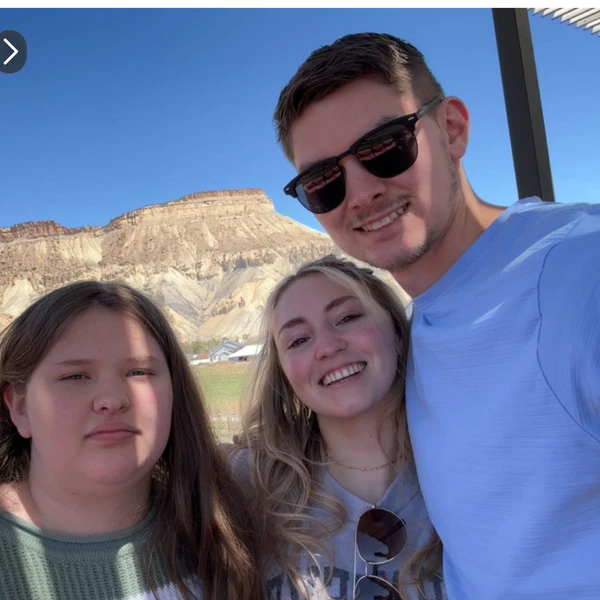
My biggest goal is to become a Veterinarian. I am extremely passionate about animals and am currently a registered veterinary nurse. I have been working and practicing veterinary medicine for 5 years. I live with my 3 cats -Dallas, Sokka, and Castor -my 2 dogs Baker and Kota my Fiancé, Tyler, and my little sister, Natalie. For the past two years, my 13 year old sister has been living with me so I can help give her a better life!
Education
Oklahoma State University Center for Health Sciences
Bachelor's degree programMajors:
- Agriculture/Veterinary Preparatory Programs
San Juan College
Associate's degree programMajors:
- Agricultural/Animal/Plant/Veterinary Science and Related Fields, Other
Ardmore Hs
High SchoolMiscellaneous
Desired degree level:
Doctoral degree program (PhD, MD, JD, etc.)
Graduate schools of interest:
Transfer schools of interest:
Majors of interest:
- Animal Sciences
Career
Dream career field:
Veterinary
Dream career goals:
Doctor of Veterinary Medicine
Kennel attendant/ Veterinary Nurse
Westwood Veterinary Hospital2020 – Present6 years
Sports
Track & Field
Junior Varsity2016 – 20193 years
Public services
Volunteering
Stable Moments — Mentor2024 – Present
Future Interests
Advocacy
Volunteering
Ethel Hayes Destigmatization of Mental Health Scholarship
Growing up, I was homeless. We didn't have a lot because we had to leave a lot behind. My mother and stepdad were always at odds, and it often resulted in violence. As it would for anyone, this took a toll on my mental health. Throughout my days in tents, sheds, and storage units, one thing remained consistent - my dog. Whatever day I was having, no matter who swore what, I would see him, and he would never tell me no. He could not offer me advice, but he taught me how to face adversity- silently and with courage. His constant companionship gave me strength when some days I had none- his unconditional love for me shaped my future. I want to be a veterinarian, not just to care for animals, but to take care of those who take care of us.
Animals are in millions of homes and support their owners in both mental and physical ways. From trained service animals to ordinary house pets, they bring joy and purpose into our lives. We nurture and love them like family- because they are our family. I want to help owners through the difficult and joyful times that come with caring for a pet. I want to prolong and preserve their beloved companions' lives, who may have saved their owners alike..
Today, I am in a healthy and loving relationship with my fiancé, Tyler. Together, we are raising my 13-year-old sister, Natalie. Our home is full—not just with responsibilities, but with devotion. Sokka, Dallas, and Castor, our cats; Kota and Baker, our dogs; and Spike, our Sulcata tortoise, all keep our house lively and remind me daily of the therapeutic power animals have.
I’m also working as a veterinary nurse and volunteer at a horse ranch that supports children's mental health. My experiences have taught me the importance of setting and maintaining healthy emotional boundaries—not just for myself, but for those I support. I now do my best to be mindful of my mental health and teach others to respect their own.
One quote that has lingered with me is from Epictetus:
“What disturbs men's minds is not events but their judgments on events... when we are hindered or upset or distressed, let us never blame others but ourselves—that is, our own judgments.”
This resonates deeply with me. I've learned that the way we interpret our circumstances can determine our strength and growth. Life is often uncertain, even harsh—but I’ve chosen to see trials as opportunities. That mindset, combined with the healing company of animals, continues to shape the way I live and help others today.
RonranGlee Literary Scholarship
"As in a voyage, when the ship is at anchor, if you go on shore to get water, you may amuse yourself with picking up a shellfish or a truffle in your way, but your thoughts ought to be bent toward the ship, and perpetually attentive, lest the captain should call, and then you must leave all these things, that you may not have to be carried on board the vessel, bound like a sheep; thus likewise in life, if, instead of a truffle or shellfish, such a thing as a wife or a child be granted you, there is no objection; but if the captain calls, run to the ship, leave all these things, and never look behind. But if you are old, never go far from the ship, lest you should be missing when called for." - The Enchiridion by Epictetus.
In this passage, Epictetus suggests that having spiritual awareness is of the utmost importance, and any treasured materials or physical attachments should be held loosely; especially in preparation for death. He argues that this mindset should remain constant throughout one's life, and one should remain vigilant, as no one knows when the captain might call.
Epictetus illustrates this using a metaphor of a ship and captain, solidifying the necessity of vigilance for the reader. The ship's captain symbolizes God or Fate as they are in control, while the ship represents the journey of life or the inevitability of death. Together they create a spiritual image lingering over earthly minds. He writes, "But your thoughts ought to be bent toward the ship, and perpetually attentive, lest the captain should call, and then you must leave all these things." This line reinforces the idea that we must be ready to drop everything and depart this world at any moment.
His caution deepens when he writes, "But if you are old, never go far from the ship, lest you should be missing when called for." As death becomes nearer, he warns against becoming too involved in earthly concerns. When one's time is limited, their focus should be placed heavily on the soul. Rather than fighting the call or avoiding it for fleeting pleasures, Epictetus instructs that grace lies in quiet readiness.
This paragraph advocates for what is uncomfortable to us naturally. Accepting death is one of life's greatest challenges, not unlike letting go, and not just of possessions, but loved ones. It doesn't matter what side of death you are on; it is not easy to accept. Epictetus teaches, "Thus likewise in life, if, instead of a truffle or shellfish, such a thing as a wife or a child be granted you, there is no objection; but if the captain calls, run to the ship, leave all these things, and never look behind." This is completely against human nature; we cling to our loved ones and resent departure. Going with ease is not necessarily approval of these circumstances, but rather acceptance and a sense of preparedness. This leaves a person with dignity, rather than the dishonor of the struggle.
While this may feel apathetic to our view today, it is a freeing thought; not fearing death, alongside life. When death grows nearer to us, it is something that, whether we accept it or not, is inevitable. Epictetus teaches that letting go of what we cannot control will lighten our burden in life.
The passage carries an ominous, looming image by using the ship to depict the departure from this world, and the bound sheep to portray how resistance is met- with shame and loss of dignity. It reminds us that we must leave all things when called, and that we must do everything to preserve our soul.
To embrace Epictetus' paragraph is to accept that, regardless of your attempts to predict or delay death, it is both inescapable and unpredictable. It also means going with grace, not fighting or fearing it, for it is something everyone will experience. Minding your ship, and being keen for your call, will ensure that when it's time, you will go with peace, not resistance.
Dr. Samuel Attoh Legacy Scholarship
Legacy, to me, is not about what is passed down in material assets or possessions—it's about where I came from and the values, experiences, and choices that shape the person I've become. The influence imprinted upon me from a young, growing up in hardship, and strong experiences that have shaped who I am and showed me a path I wanted to divert from.
I grew up with nothing. My family was deeply rooted in poverty, alcoholism, and substance abuse. My siblings and I endured homelessness, and we often went without electricity, water, or safety. There were nights when we had no roof over our heads—only a tent or a shed to shelter us. I was the oldest of five and felt an immense responsibility for the well-being of my younger siblings. At just twelve years old, I became a caregiver, a provider, and a regular source of stability for them when the world around us was anything but.
Many of my extended family were oblivious of the reality of our living circumstances. To the outside world, we might have appeared fine, but really, we were enduring day by day. These memories still hang over me eight years later, not as a weight that holds me back but as a reminder of how far I've come—and how much farther I plan to go.
After growing up with so few resources and financial stability, I made a promise that my future children—and my younger sister—would never have to live the way we did. Today I have permanent guardianship of my 13-year-old sister, Natalie, she is safe, happy, and thriving. My fiancé, Tyler, and I have formed a stable home for her. She has her own room, responsibilities that teach her accountability, and even the joy of caring for her own pet—a three-legged kitten named Castor, whom she rescued.
This is the legacy I want to leave: not just surviving but transforming discomfort into purpose. I want to show Natalie—and others who come from hard beginnings—that the cycle can be halted. I want to be the example that proves you can turn adversity into hope.
I plan to continue building this legacy through my career. I am a full-time veterinary nurse, working toward becoming a veterinarian. I care deeply about the animals I serve and the homes that love them. I provide steadiness and reassurance during some of their most difficult days—something I once longed for in my own life. My work is more than a job; it’s an extension of my purpose.
I have already begun to transform the path I inherited. I am breaking generational patterns and replacing them with compassion, resilience, and responsibility. I may not have come from much, but I will leave behind a legacy built from strength and the choice to rise above where I started.
Bright Lights Scholarship
This scholarship will allow me to pursue my undergraduate degree in Animal Sciences, the next step on my journey toward acquiring a Doctorate in Veterinary Medicine. I currently work full-time as a veterinary nurse and take advantage of every opportunity to attain knowledge and financially prepare for my next semester. I have earned an associate’s degree in Veterinary Technology and plan to advance my education further in this field, requiring more education and, thus financial responsibility.
Receiving this scholarship will aid in paying for my tuition, textbooks, and a laptop to help me thrive in my studies. Balancing a full-time job, school, and family is hard, but I am determined. I am the first person in my family to attend college and complete a degree. I carry the weight of not just my dreams, but also the hopes of my family—who have sacrificed so much for me to be here.
As much as my family wants to support me, we are low-income and lack the financial advantages others have. Yet, what little they can give means so much to me. There's a quote, “When a wealthy man gives from his abundance, it's kind. But when a poor man gives all he has, it's profound.” One gives what he can spare; the other gives what he cannot. That quote resonates deeply with me because my family gives from their hearts, even with the little they offer financially. I wish to one day repay the favor—to be in a place where I can give back to them in ways they always hoped they could provide for me.
If I could illustrate my future, it would look like a cutting-edge veterinary facility and a ranch abundant with animals. I picture a place where I can not only provide the highest quality care to animals but also raise a family and support those who have supported me. I am extremely passionate about animal welfare. I want to be an advocate for animals who cannot voice for themselves and improve the standard of care they receive.
This dream has lingered in my heart from a young age. For a long time, I thought it was out of reach, but now I’m pursuing it with everything I have. We only get one opportunity in life to truly chase our dreams, and I know that if I don’t give it everything I have this one time, I’ll feel that regret forever. Receiving this scholarship would lighten the financial burden I carry and make my goals more attainable. More than anything, it would be an investment in someone who is devoted to making a difference—in the lives of all animals, in veterinary medicine, and in the family and community that shaped me.
SnapWell Scholarship
I work in a fast-paced environment. My job can be both physically and emotionally draining. Just recently someone said to me, " Your job really sucks," as I helped them say goodbye to a beloved pet. My only response was, " I don't do it for this part." I am a veterinary technician and work at a general/emergency veterinary hospital. Mental health is of the utmost importance in this field, and I make sure to prioritize that. I manage my emotional and mental health best by engaging in things I love, showing myself I can take the easy way sometimes, and taking time to myself to process my days.
One of my favorite ways to recharge on my days off is spending time with my little sister, Natalie. She is 13 years old and lives with me full-time. I enjoy having her and once or twice a month we plan a girl's day. My best friend Sophia, Natalie, and I take a trip out of town to get coffee and go book shopping. We trade our old books for new ones and discover hidden bakeries in the local areas we visit. These are my favorite days- and the moments rejuvenate me the most.
I can typically tell if my day is going to be tough, even before I leave for work. Sometimes it has nothing to do with what's ahead and everything to do with which side of the bed I woke up on. On days when I get up on the wrong side, I plan to take it easy on myself. I might put on makeup and help myself feel more put together- this may seem like something so superfluous, but it makes a difference to me. I'll also plan on an easy dinner, setting up the crockpot with something like stew, taco meat, or even chicken thighs so I can come home to a ready meal. I call these "kindnesses to myself," and have found them to be the best things I can do for my mental soundness.
On exceptionally draining days, I allow myself to come home and relax before I cook dinner for my family. I take a quick 10-20 minutes to decompress before switching to my second role at home. I do this by changing out of my scrubs, sitting down, and reading a little of my current book. Other times I will take a quick shower to rinse the day off of me. Little things like this help me to relax into my home life and let go of my daily worries. I have begun to associate these things with a reset of my mind and find that once I've done them, I seldom find my mind back at work.
My mental health is important to me. I know myself well enough to recognize when I'm feeling overwhelmed and and need to give myself grace. These little practices- time away with my girls, simplifying my evenings, and small niceties for myself- allow me to reset and keep going. Resilience is not about pushing through to the end nonstop. It's about acknowledging your limits and caring for yourself so you can continue to care for others. As I continue my practice and career in Veterinary Medicine, these habits will help me center myself, avoid burnout, and give the best to those who rely on me.
RodentPro.com® Animal Advocate Scholarship
If I could be anything, I would be a veterinarian. The conservation of our animals survives through veterinarians' advocacy for their welfare. I am striving to become a part of this amazing advocacy for animals. Among many other fields, veterinarians are massive supporters of the welfare of wildlife. We see this through the diseases treated and vaccinated for, the reproduction programs supported, and the research provided to improve the longevity of these animals' lives.
All of these mentioned above are aspects of animal welfare. Through these acts of research, vaccination, and reproduction programs, veterinarians are supplying the necessities for which these animals need to succeed. By offering this knowledge, they can help those involved to create the utmost environments for these animals.
Many diseases plague wildlife on every continent, stunting or even declining the growth of a population. These can range from the smallest of parasites to the most deadly viruses. Doctors of Veterinary Medicine are responsible for the response and prevention of these diseases by providing treatment and vaccinations. Many diseases have taken their toll on species while vaccinations and treatments were being developed. Vaccination decreases the transmission of these diseases between animal communities, therefore leaving more healthy animals for the future. One species that comes to mind is the Elephant. Elephants are afflicted with a disease called Elephant Endotheliotropic Herpesvirus. This fatal virus has been known to infect juvenile elephants. This is one of the most important parts of conservation: the young's survival. Without young healthy animals, there are no future generations, meaning no future offspring. If there is no future offspring, then the species could come to an end.
Reproduction programs take many shapes. However, they all have the same goal: preservation. An important consideration in the programs though, is the welfare of these animals. While they are receiving food and a safe environment, it is important to also provide them with enrichment. Enrichment may incorporate hiding food in their environment to encourage natural foraging instincts, keeping them physically and mentally engaged. Keeping these animals healthy and flourishing helps keep these breeding programs rewarding. One successful program is that of the black-footed ferret. These animals were not only plagued by a disease called the Sylvac plague but also lost large parts of their habitat. Maintaining a healthy, interactive environment is vital for the success of breeding programs. These factors help ensure a strong diversity and population recovery.
Research provides not only the best way to provide for these animals while plagued but also while they're healthy. Understanding their natural living conditions is beneficial in planning for their future. With conditions changing, these animals are forced to grow and adapt, or cease. We are the perpetrators at times. Veterinarians provide the proof, and research that these animals are being oppressed and conditions that must be met to help these animals succeed. Animals on the run aren't building a future, they are merely surviving. Veterinarians present this kind of evidence to show the necessity for these animals' prosperity in order for them to carry another generation.
As an individual who loves animals, I want to give them the best future possible. I hope to build my life around helping these animals, and I have always wanted that. Veterinarians make a difference every day in conservation, from providing vaccinations to stop the spread of disease, to aiding reproductive efforts, to conducting research to reveal the need for change. Veterinarians are advocates for those who cannot speak for themselves. I want to be that voice -working to promote and protect the welfare of animals in conservation efforts.