Hobbies and interests
Babysitting And Childcare
Beach
Global Health
Cheerleading
Health Sciences
Brooke Schmidt
1x
Finalist
Brooke Schmidt
1x
FinalistBio
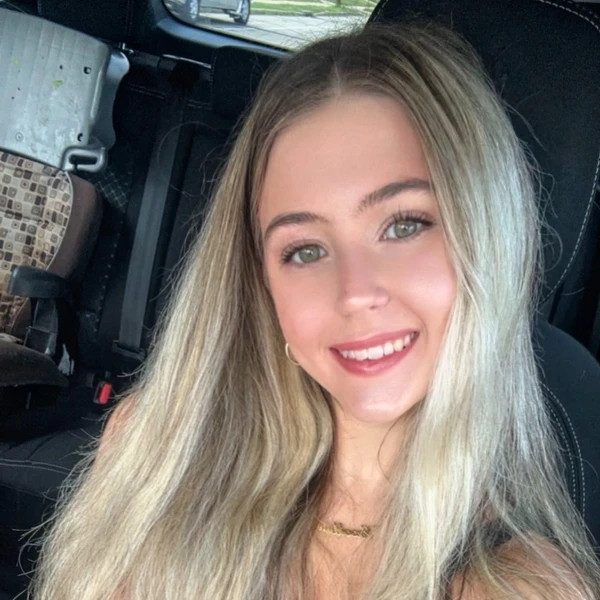
Hello! My name is Brooke and I want to become a traveling nurse practitioner to help children around the world. I love learning as much as possible and I can not wait to start college majoring in Nursing. I thoroughly enjoy helping people and putting good back out into the world!
Education
Reach Cyber Charter School
High SchoolMiscellaneous
Desired degree level:
Bachelor's degree program
Majors of interest:
- Registered Nursing, Nursing Administration, Nursing Research and Clinical Nursing
Career
Dream career field:
nursing
Dream career goals:
Sports
Cheerleading
Varsity2013 – Present13 years
Public services
Volunteering
Education — Tutor2022 – Present
Future Interests
Advocacy
Volunteering
Philanthropy
Overcoming Adversity - Jack Terry Memorial Scholarship
Jack Terry’s story inspires me in many ways, but most of all through his belief in himself. He lost everything important in his life at a young age, yet he never gave up. His resilience and bravery, even in the face of fear, remind me that circumstances do not define a person’s future. Like Jack, I have faced challenges that tested my confidence—especially dealing with teenage bullying—but I have learned to push forward and stay focused on my goals.
My experience with bullying in school was not one single moment, but something I had to overcome day by day. It affected how I saw myself and made school feel like a place where I didn’t always belong. There were times when it was difficult to focus in class or feel confident speaking up. However, I realized that if I let those experiences control me, I would be giving away my power. Instead, I chose to focus on what I could control—my education, my mindset, and my future.
Maintaining good grades became my way of proving to myself that I was capable and strong. Even when it was hard, I stayed committed to completing my work, studying, and asking for help when I needed it. Teachers and supportive adults played an important role in encouraging me, and over time, I built the discipline to keep going. My academic success became more than just grades; it became a reflection of my determination and refusal to give up. Maintaining a high GPA and wanting to go to college, helped me to focus on achievement rather than the cruelty of others.
Going through bullying also changed how I see others. I became more aware of how people around me might be feeling, especially those who seem left out or targeted. Because of this, I try to be someone who stands up for others, includes people, and promotes kindness. Even small actions, like offering support or speaking up, can make a difference. I want others to feel seen and valued in ways that I sometimes struggled to feel.
Like Jack Terry, I believe that strength comes from perseverance and self-belief. My experiences have shaped me into someone who not only works hard for personal success but also strives to make a positive impact on others. Overcoming bullying has taught me resilience, and I will carry that lesson with me as I continue to grow and advocate for those around me.
Hazel & Olive Sweet Horizons Scholarship
For a shy sixteen-year-old, the decision to attend a school social event wasn’t just a normal weekend night plan; it was an act of courage and an attempt to come out of my shell. Having recently transferred to a new high school, I had spent months navigating the hallways in quiet observation. That night, sitting with a friend and my boyfriend, I felt I was finally beginning to belong. That sense of safety was shattered in an instant when I was swarmed and attacked by nearly twenty peers. In a matter of seconds, the world I was trying to join became a place of trauma, and my natural shyness was forcibly replaced by a deep, paralyzing fear.
Being the victim of such a large-scale, coordinated attack at such a young age, completely changed the way I viewed the world. For a long time, the trauma convinced me that being seen was dangerous and that isolation was the only form of protection. However, as the physical wounds healed, I realized that I had a choice: I could remain defined by the violence of that encounter, or I could use the experience to forge a version of myself that was even more resilient than the girl who walked into that event.
This challenge has shaped me into a person of profound observation and empathy. I no longer just "stay quiet" because I am shy; I listen because I understand the weight of what people are afraid to say. I have developed a fierce sense of justice and a protective instinct for those who find themselves outnumbered or unheard. This experience forced me to grow up quickly, giving me a maturity and a drive to create environments where safety and respect are non-negotiable. I learned that my value is not determined by how others treat me, but by how I choose to rise after I’ve been knocked down.
Pursuing higher education is the next vital step in building the future I hope for—a future where I am safe and secure. For me, college is more than just a degree; it is a controlled, intellectual environment where I can continue to step out of my comfort zone on my own terms. It is an opportunity to gain the professional tools needed to become a nurse practitioner and ensure that my patients do not have to feel as alone as I did that night.
The "Sweet Horizon" I envision is one where my past acts as a foundation rather than a cage. By earning my degree, I am proving to myself and the world that twenty people could not stop my progress. Higher education will allow me to turn my survival into leadership, ensuring that my voice—once silenced by a crowd—will eventually be the one that leads the way for others.
Women in Healthcare Scholarship
My decision to pursue a career in healthcare was not born from a single, isolated moment, but from a growing realization that the most profound human impact occurs in the "gaps" where others are struggling. Throughout my life, I have been naturally drawn to roles that require a delicate balance of rigorous technical logic and deep emotional intelligence. I found the perfect intersection of these skills during my time as a peer tutor in high school, an experience that fundamentally reshaped my understanding of service.
During this time, I worked closely with a student who was convinced she lacked the "science brain" necessary to pass chemistry. While others offered her rote study tips and generic encouragement, I recognized that her struggle was not intellectual—it was a significant gap in confidence and personalized support. I shifted my approach, translating complex molecular structures into relatable visual models that resonated with her specific learning style. When she finally succeeded, I realized my true fulfillment came from the act of advocacy: identifying a specific, unspoken need and dedicatedly working to resolve it. This experience transformed my mindset, showing me that nursing is not merely a clinical profession, but the ultimate form of advocacy.
As a woman entering the healthcare field, I am mindful of the unique responsibility and heritage I carry. Historically, women have been the primary caregivers in society, yet we have often had to fight to have our professional voices heard in high-level clinical and leadership settings. I hope to make a difference by using my career to bridge the gap between cold clinical data and the warmth of the human experience. As a woman, I want to champion a holistic approach to medicine—one that prioritizes active listening and ensures that every patient, regardless of their background, feels validated, respected, and heard.
My goal is to ensure that the technical proficiency I gain in my medical training never outpaces my compassion. In a healthcare system that can often feel sterile and transactional, I intend to be a leader who protects the "human touch." By standing in the gaps for my patients—just as I did for my students—I will work to ensure that healthcare becomes a more empathetic and equitable environment. I am pursuing this path to prove that a nurse’s most powerful tool is her ability to see the person behind the diagnosis and to provide the unwavering support they need to heal.
Losinger Nursing Scholarship
My inspiration for pursuing a career in nursing is rooted in the belief that the most significant impact we can have is found in the "gaps" where others are struggling. Growing up, I was always drawn to roles that required both technical understanding and emotional intelligence. However, the definitive turning point occurred during my time as a peer tutor in high school.
I worked with a student who was convinced she lacked the "science brain" necessary to pass chemistry. While others offered her study tips, I saw that her struggle wasn't intellectual—it was a gap in confidence and support. I had to change my approach, translating complex molecular structures into visual models that resonated with her. When she finally succeeded, I realized that my fulfillment came from the act of advocacy. I had identified a specific need and dedicated myself to resolving it.
This experience transformed my mindset. I began to see nursing not just as a medical profession, but as the ultimate form of advocacy. In the healthcare system, patients often fall into gaps of misunderstanding, fear, and vulnerability. I am inspired to become a nurse because I want to be the person who stands in those gaps. My goal is to combine clinical knowledge with the personalized, persistent support that I provided as a tutor. I am driven to enter this field to ensure that no patient feels like just another patient, but rather a person whose unique needs are seen, understood, and met with dedication.
To me, the "human touch" in nursing is the bridge between clinical treatment and true healing. While modern medicine relies heavily on advanced technology, data, and pharmaceuticals, the "human touch" represents the element of empathy that machines cannot replicate. It is the acknowledgement of a patient’s humanity in a setting that can often feel sterile and transactional.
I believe that a nurse’s hands are powerful tools for more than just administering medication; they are essential tools for reassurance and peace of mind. More than just the human touch, it must also encompass an emotional contact. For instance, listening to a patient’s fears, using a calm tone during a crisis, and recognizing the person behind the diagnosis. It is the practice of "good bedside manner" that Mary Lou Losinger modeled throughout her career—treating every individual with a level of dignity that transcends their immediate medical needs.
In patient care, the impact of the human touch is profound and measurable. When a nurse provides a compassionate presence, it reduces a patient’s anxiety, which directly influences their recovery. A patient who feels "seen" is more likely to be honest about their symptoms and more compliant with their treatment plans because of a foundation of trust. Furthermore, this touch extends to the patient's support system. By offering a moment of genuine empathy to a worried family member, a nurse can de-escalate a high-stress environment, allowing the entire care unit to function more effectively. This holistic approach ensures that healing happens not just on a cellular level, but on a psychological one as well.
Finally, the human touch acts as a safeguard against burnout in the medical field. By focusing on the human connection, a nurse transforms a repetitive task into a meaningful interaction. In my future career, I intend to apply this principle by ensuring that my technical proficiency never outpaces my compassion. I believe that a nurse’s hands are tools for more than just administering medication; they are tools for reassurance. I hope to honor the legacy of dedicated practitioners who understood that while medicine saves lives, it is the human touch that makes those lives feel worth saving.
Change of Heart Scholarship
My journey toward nursing began with a simple realization: the most significant impact we can have in our lives is often found in the gaps where others are struggling. Before entering high school, I viewed success through the narrow lens of personal achievement and academic statistics. However, my time at my high school transformed my mindset, shifting my focus from what I could attain for myself to how I could serve as a lifeline for others.
The catalyst for this "change of heart" occurred during my sophomore year when I began tutoring peers in chemistry. Initially, I approached tutoring as a mechanical task—I was there to provide answers and move on. However, I soon met a classmate who was on the verge of giving up, paralyzed by the fear that she simply wasn’t "smart enough" for science. In that moment, my perspective shifted. I realized that being helpful meant more than providing correct formulas; it meant consistently showing up and tailoring my approach to meet her unique emotional and intellectual needs. I stopped being a human answer key and started becoming an advocate. We spent weeks finding relatable metaphors and creating visual diagrams that matched her learning style. Seeing her face light up when she finally grasped a complex concept didn't just change her grade; it changed my heart. I realized that my true calling wasn't just in the sciences, but in the human connection that makes science meaningful.
This transformation in high school has directly shaped my future plans. I am now pursuing a path toward becoming a Registered Nurse, with the long-term goal of specializing in patient advocacy or community health. My educational goal is to excel in a rigorous nursing program where I can combine clinical excellence with the social-emotional learning I first discovered in the hallways of my high school. Professionally, I envision myself working in environments where patients often feel unheard or overwhelmed by the complexities of the healthcare system.
The positive changes I experienced in high school—learning to identify a need and dedicatedly working to resolve it—continue to guide me moving forward. I no longer see challenges as obstacles to my own progress, but as opportunities to step into those "gaps" where others are struggling. In the medical field, helpfulness is the root of patient advocacy. Whether it is translating complex medical jargon into comfort for a family or staying five minutes longer to ensure a patient feels seen, the lessons of empathy and persistence I learned in high school will be the foundation of my practice.
Attending my high school taught me that we are at our best when we are lifting others up. As I move toward my career in nursing, I carry with me the firm belief that a change of heart is the first step toward changing the world. I am committed to being a "change agent" in my community, ensuring that every patient I encounter receives not just medical treatment, but the dedicated support of someone who truly cares.
Mema and Papa Scholarship
My journey toward nursing began with a simple realization: the most significant impact we can have in our lives is often found in the gaps where others are struggling. Throughout my life, I have sought to demonstrate helpfulness not just through convenient acts, but through active support and problem-solving. To me, being helpful is not a passive trait; it is a choice to step into someone else’s challenges and offer a steady hand.
For instance, during my time tutoring peers, I realized that being helpful meant more than providing answers; it meant consistently showing up and tailoring my approach to meet each person's unique needs. I recall one particular student who was demoralized by chemistry. Rather than just repeating the textbook, I spent hours finding relatable materials and creating visual diagrams that matched her learning style. This experience taught me that in healthcare, helpfulness is the root of patient advocacy—identifying a specific need and dedicatedly working to resolve it, even when the solution isn't immediately obvious.
However, helpfulness is often tested by obstacles, which is where persistence and perseverance become essential. I experienced this firsthand during high school with balancing a rigorous courseload with external responsibilities. I faced a significant setback when a complex research project I had been working on for months faced a technical failure right before the deadline. It would have been easy to settle for a lower grade or a simplified version of the work, but I chose to persevere.
I spent many late nights reconstructing data and seeking alternative methods to validate my findings. This period was exhausting, but it resulted in a project that was more robust and insightful than the original. This success wasn't just about the final grade; it was a testament to the fact that persistence turns a potential failure into a platform for growth. In the medical field, things rarely go perfectly according to plan. The ability to stay focused and keep pushing forward when a patient’s health or a treatment plan becomes complicated is a skill I have spent years cultivating.
By combining a heart for helpfulness with the grit to persevere, I hope to honor the legacy of those who are pillars of their communities. As I transition into my nursing education, I am committed to bringing this same drive to my studies and, eventually, to the bedsides of my patients. I believe that through consistent effort and a selfless spirit, I can fill the gaps for those in need and make a lasting impact on the world around me.