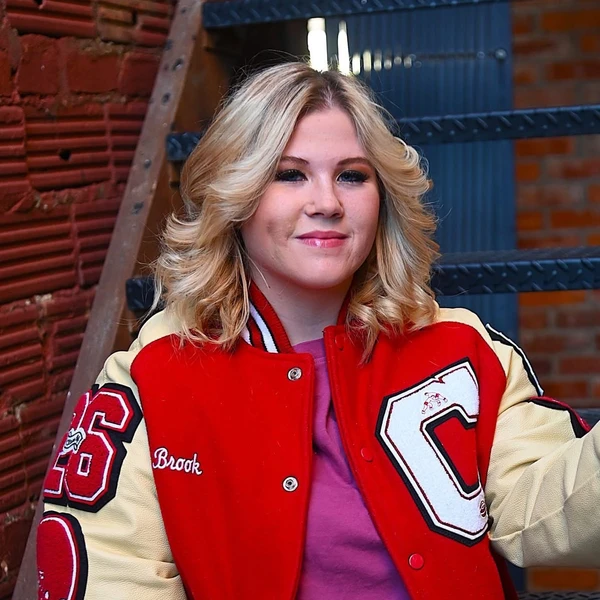
Hobbies and interests
Wrestling
Brook West
1x
Finalist1x
WinnerBrook West
1x
Finalist1x
WinnerBio
I would like to pursue a career in film and production. I also want to continue to compete in women’s wrestling in college and be the first female wrestler from my town to go to college to wrestle.
Education
Comanche High School
Associate's degree programMajors:
- Film/Video and Photographic Arts
- Radio, Television, and Digital Communication
Minors:
- Communication, General
Miscellaneous
Desired degree level:
Associate's degree program
Graduate schools of interest:
Transfer schools of interest:
Majors of interest:
- Film/Video and Photographic Arts
- Arts, Entertainment, and Media Management
- Journalism
- Radio, Television, and Digital Communication
- Design and Applied Arts
Career
Dream career field:
Motion Pictures and Film
Dream career goals:
Cook, server
Braums2022 – 20242 years
Sports
Wrestling
Varsity2019 – Present7 years
Awards
- state champion
- regional champion
- all area
Public services
Volunteering
Comanche Chamber Commerce — Volunteer at events2021 – PresentVolunteering
Comanche Takedown Club — Mentor, instructor2020 – PresentVolunteering
Comanche Takedown Club — Mentor, instructor2020 – PresentVolunteering
Christian Helping Hands — Stocker2021 – Present
Forever90 Scholarship
At a youth wrestling practice in my hometown, a young girl once stood quietly at the edge of the mat, unsure if she belonged there. Wrestling can be intimidating, especially for girls who are stepping into a sport that has traditionally been dominated by boys. I remember walking over to her, showing her a few basic moves, and encouraging her to try. By the end of practice, she was smiling and asking when the next practice would be. Moments like that remind me why service matters. Sometimes all it takes is one person believing in you to change how you see yourself.
Service, to me, means using the opportunities I have been given to help others believe in their own potential. Growing up in a small town and in a low-income household taught me early that success rarely happens alone. Many people invested their time and encouragement into helping me grow—my family, teachers, teammates, and especially my coaches. Their support shaped not only the athlete I have become but also the person I strive to be. Because of them, I have learned that service is not always about recognition. It is about showing up, helping others grow, and creating opportunities for those who may not yet see them for themselves.
Wrestling has been one of the biggest influences in my life. When I first started, girls wrestling was still developing in Oklahoma, and there were not many clear paths for female athletes. At times, it felt like I had to prove that I belonged on the mat. Through hard work, perseverance, and the guidance of my coaches, I was able to achieve goals I once thought were impossible, including becoming the first girls wrestling state champion for Comanche High School and Stephens County. While those accomplishments mean a lot to me, what matters most is what they represent. They show younger athletes in my community that barriers can be broken and that opportunities are expanding for girls in sports.
Because of that, one of the ways I try to live a life of service is by mentoring younger wrestlers. I help coach youth athletes, encourage them during tournaments, and try to lead by example both on and off the mat. I want younger girls to know they belong in this sport and that their goals are worth pursuing. Seeing their confidence grow reminds me that service is often about giving others the courage to believe in themselves.
Service also means representing my community with pride. Every time I compete, I carry with me the support of my hometown, my school, and the people who helped me along the way. That responsibility has taught me humility, leadership, and gratitude. It reminds me that success is not just about personal achievement, but about how we use our experiences to encourage others.
This fall, I will attend Carl Albert State College to continue my wrestling career while pursuing my education. College will allow me to grow academically and expand my ability to serve others. I plan to study graphic design and film technology, fields that allow me to combine creativity with communication. Through these skills, I hope to tell meaningful stories—highlighting athletes, teams, and communities that deserve recognition, especially female athletes who are helping grow women’s sports.
Living a life of service means remembering that our achievements are not only for ourselves. They are opportunities to open doors for others. Through wrestling, education, and mentorship, I hope to continue lifting others up and helping the next generation believe that their dreams are possible.
Dream BIG, Rise HIGHER Scholarship
Education has played a defining role in shaping my goals and giving direction to my life. Growing up in a low-income household, opportunities were not always guaranteed, and the future sometimes felt uncertain. However, through school, athletics, and the support of mentors who believed in me, I discovered not only my potential but also the path I want to pursue. For me, education is more than earning a degree—it is the foundation that allows me to build a better life, pursue my passion for wrestling, and create opportunities for others who may feel like they are starting with fewer resources.
One of the biggest turning points in my life came when I discovered wrestling. When I first stepped onto the mat, I was not the strongest or the most experienced athlete. In fact, girls wrestling was still growing in Oklahoma, and there were not many clear paths for athletes like me. But wrestling quickly became more than a sport—it became a place where I could challenge myself, grow mentally and physically, and learn discipline. It gave me structure during difficult times and taught me how to push through adversity.
Wrestling also introduced me to people who helped shape my future, including my head coach, Casy Rowell. Coach Rowell took a chance on me and believed in my potential at a time when I was still figuring out who I was and what I was capable of. His support and guidance helped change the course of my life. Through his mentorship, I learned that success is not just about talent—it is about effort, consistency, and believing in yourself even when things are difficult. Without wrestling and the coaches who invested in me, my life could have taken a very different path.
Over the years, wrestling has allowed me to accomplish goals that once felt impossible. I became the first girls wrestling state champion for Comanche High School and for Stephens County. I have earned multiple regional championships and state placements, achievements that represent years of early mornings, long practices, and the determination to keep improving. However, the accomplishments I am most proud of are not just the medals. Wrestling taught me resilience, confidence, and the ability to keep going even when things feel overwhelming.
Like many student-athletes, I have faced challenges along the way. Balancing academics, athletics, and personal struggles has not always been easy. At times I have dealt with anxiety, pressure, and the weight of expectations. There were moments when the path forward felt difficult, but wrestling became a healthy outlet that helped me work through those struggles. The structure of training, the support of teammates, and the encouragement of my coaches gave me the strength to continue moving forward. These experiences taught me that setbacks do not define you—how you respond to them does.
Education has also given me the tools to think about my future beyond athletics. This fall, I will attend Carl Albert State College to continue my wrestling career while pursuing a college degree. Continuing to wrestle at the collegiate level will require intense commitment. The competition will be tougher, practices longer, and expectations higher. I will face athletes who were champions in their own regions, pushing me to grow and train harder than ever before. Balancing academics, training, travel, and possibly a part-time job will require strong time management and dedication.
Coming from a low-income background means I understand the value of opportunity. College is not something I take for granted. I know that every class, every practice, and every opportunity to compete is a step toward building a better future. Scholarships and educational support will help reduce the financial burden on my family and allow me to focus on both my academics and athletics. I am committed to working hard not only to remain eligible to compete but also to build the knowledge and skills that will help me succeed long after my wrestling career ends.
My educational goals include exploring fields such as graphic design and film technology, areas where I can combine creativity with communication and storytelling. These interests allow me to express ideas visually and share meaningful stories, whether through design, media, or community projects. Education will give me the tools to turn those interests into a career that allows me to support myself while doing work that inspires me.
Beyond my personal success, I hope to use my education and experiences to give back to others. Wrestling has allowed me to mentor younger athletes in my community, especially young girls who may not yet believe they belong in the sport. I want them to see that someone from a small town, with limited resources, can still chase big dreams. By sharing my journey and continuing to volunteer with youth programs, I hope to encourage others to believe in themselves and pursue opportunities that once seemed out of reach.
Ultimately, education represents possibility. It is the bridge between where I started and where I want to go. Through hard work, perseverance, and the lessons I have learned through wrestling, I am determined to use my education to create a better future—not only for myself but also for the people who look up to me. My journey has shown me that success is not defined by where someone begins, but by the determination they bring to every opportunity along the way.
Josh Gibson MD Scholarship
Raise Me Up to DO GOOD Scholarship
College can be a life-changing experience for a student from a low-income background, especially one determined to continue their wrestling career at the next level. For me, college represents more than higher education—it is an opportunity to rise above financial barriers, pursue my passion, and build a future that once may have seemed out of reach. Coming from limited resources often means I have learned discipline, sacrifice, and perseverance long before stepping onto a college campus. These qualities, combined with the demands of collegiate athletics, will shape me into a stronger student, athlete, and person.
Continuing wrestling in college requires intense commitment. Practices are longer, competition is tougher, and expectations are higher than in high school. I will face athletes who were champions in their own regions, pushing me to train harder than ever before. Balancing early morning workouts, classes, study sessions, and travel for competitions will test my time management skills. However, my background may give me an advantage: I understands the value of opportunity and refuses to waste it. By working closely with coaches, maintaining proper nutrition despite financial challenges, and prioritizing recovery and conditioning, I can continue to improve and compete at a high level.
Financial obstacles will still be present, but college can provide pathways to stability. Athletic scholarships, academic grants, work-study programs, and campus resources can help reduce the burden of tuition and living expenses. Holding a part-time job while competing will not be easy, yet it will strengthen my independence and determination. Learning to budget, seek support, and advocate for myself will prepare me for life beyond graduation. Each semester I complete will be a step toward breaking cycles of poverty and creating new possibilities for myself and my family.
To pursue my passion for wrestling, I will also need to care for my academic success and long-term goals. Excelling in the classroom ensures eligibility to compete and opens doors to careers after my athletic journey ends. I may study fields related to sports science, coaching, education, or another interest that inspires my. Seeking mentors, joining student organizations, and building a network will help me grow beyond the mat. I might volunteer with youth wrestling programs, inspiring younger girls from backgrounds like mine to believe they belong in the sport too.
Ultimately, college will transform my identity from a talented high school wrestler with limited resources into a confident collegiate athlete with a clear future. The challenges I faces—financial strain, physical exhaustion, and academic pressure—will build resilience and self-belief. By the time I graduate, I will not only have pursued my passion but also proven that determination can overcome circumstance. My journey will show that success is not defined by where someone starts, but by the courage and effort I bring to every opportunity I am given.
Arthur and Elana Panos Scholarship
College can be a life-changing experience for a student from a low-income background, especially one determined to continue their wrestling career at the next level. For me, college represents more than higher education—it is an opportunity to rise above financial barriers, pursue my passion, and build a future that once may have seemed out of reach. Coming from limited resources often means I have learned discipline, sacrifice, and perseverance long before stepping onto a college campus. These qualities, combined with the demands of collegiate athletics, will shape me into a stronger student, athlete, and person.
Continuing wrestling in college requires intense commitment. Practices are longer, competition is tougher, and expectations are higher than in high school. I will face athletes who were champions in their own regions, pushing me to train harder than ever before. Balancing early morning workouts, classes, study sessions, and travel for competitions will test my time management skills. However, my background may give me an advantage: I understands the value of opportunity and refuses to waste it. By working closely with coaches, maintaining proper nutrition despite financial challenges, and prioritizing recovery and conditioning, I can continue to improve and compete at a high level.
Financial obstacles will still be present, but college can provide pathways to stability. Athletic scholarships, academic grants, work-study programs, and campus resources can help reduce the burden of tuition and living expenses. Holding a part-time job while competing will not be easy, yet it will strengthen my independence and determination. Learning to budget, seek support, and advocate for myself will prepare me for life beyond graduation. Each semester I complete will be a step toward breaking cycles of poverty and creating new possibilities for myself and my family.
To pursue my passion for wrestling, I will also need to care for my academic success and long-term goals. Excelling in the classroom ensures eligibility to compete and opens doors to careers after my athletic journey ends. I may study fields related to sports science, coaching, education, or another interest that inspires my. Seeking mentors, joining student organizations, and building a network will help me grow beyond the mat. I might volunteer with youth wrestling programs, inspiring younger girls from backgrounds like mine to believe they belong in the sport too.
Ultimately, college will transform my identity from a talented high school wrestler with limited resources into a confident collegiate athlete with a clear future. The challenges I faces—financial strain, physical exhaustion, and academic pressure—will build resilience and self-belief. By the time I graduate, I will not only have pursued my passion but also proven that determination can overcome circumstance. My journey will show that success is not defined by where someone starts, but by the courage and effort I bring to every opportunity I am given.
Robert F. Lawson Fund for Careers that Care
College can be a life-changing experience for a student from a low-income background, especially one determined to continue their wrestling career at the next level. For me, college represents more than higher education—it is an opportunity to rise above financial barriers, pursue my passion, and build a future that once may have seemed out of reach. Coming from limited resources often means I have learned discipline, sacrifice, and perseverance long before stepping onto a college campus. These qualities, combined with the demands of collegiate athletics, will shape me into a stronger student, athlete, and person.
Continuing wrestling in college requires intense commitment. Practices are longer, competition is tougher, and expectations are higher than in high school. I will face athletes who were champions in their own regions, pushing me to train harder than ever before. Balancing early morning workouts, classes, study sessions, and travel for competitions will test my time management skills. However, my background may give me an advantage: I understands the value of opportunity and refuses to waste it. By working closely with coaches, maintaining proper nutrition despite financial challenges, and prioritizing recovery and conditioning, I can continue to improve and compete at a high level.
Financial obstacles will still be present, but college can provide pathways to stability. Athletic scholarships, academic grants, work-study programs, and campus resources can help reduce the burden of tuition and living expenses. Holding a part-time job while competing will not be easy, yet it will strengthen my independence and determination. Learning to budget, seek support, and advocate for myself will prepare me for life beyond graduation. Each semester I complete will be a step toward breaking cycles of poverty and creating new possibilities for myself and my family.
To pursue my passion for wrestling, I will also need to care for my academic success and long-term goals. Excelling in the classroom ensures eligibility to compete and opens doors to careers after my athletic journey ends. I may study fields related to sports science, coaching, education, or another interest that inspires my. Seeking mentors, joining student organizations, and building a network will help me grow beyond the mat. I might volunteer with youth wrestling programs, inspiring younger girls from backgrounds like mine to believe they belong in the sport too.
Ultimately, college will transform my identity from a talented high school wrestler with limited resources into a confident collegiate athlete with a clear future. The challenges I faces—financial strain, physical exhaustion, and academic pressure—will build resilience and self-belief. By the time I graduate, I will not only have pursued my passion but also proven that determination can overcome circumstance. My journey will show that success is not defined by where someone starts, but by the courage and effort I bring to every opportunity I am given.
Edwards Scholarship
College can be a life-changing experience for a student from a low-income background, especially one determined to continue their wrestling career at the next level. For me, college represents more than higher education—it is an opportunity to rise above financial barriers, pursue my passion, and build a future that once may have seemed out of reach. Coming from limited resources often means I have learned discipline, sacrifice, and perseverance long before stepping onto a college campus. These qualities, combined with the demands of collegiate athletics, will shape me into a stronger student, athlete, and person.
Continuing wrestling in college requires intense commitment. Practices are longer, competition is tougher, and expectations are higher than in high school. I will face athletes who were champions in their own regions, pushing me to train harder than ever before. Balancing early morning workouts, classes, study sessions, and travel for competitions will test my time management skills. However, my background may give me an advantage: I understands the value of opportunity and refuses to waste it. By working closely with coaches, maintaining proper nutrition despite financial challenges, and prioritizing recovery and conditioning, I can continue to improve and compete at a high level.
Financial obstacles will still be present, but college can provide pathways to stability. Athletic scholarships, academic grants, work-study programs, and campus resources can help reduce the burden of tuition and living expenses. Holding a part-time job while competing will not be easy, yet it will strengthen my independence and determination. Learning to budget, seek support, and advocate for myself will prepare me for life beyond graduation. Each semester I complete will be a step toward breaking cycles of poverty and creating new possibilities for myself and my family.
To pursue my passion for wrestling, I will also need to care for my academic success and long-term goals. Excelling in the classroom ensures eligibility to compete and opens doors to careers after my athletic journey ends. I may study fields related to sports science, coaching, education, or another interest that inspires my. Seeking mentors, joining student organizations, and building a network will help me grow beyond the mat. I might volunteer with youth wrestling programs, inspiring younger girls from backgrounds like mine to believe they belong in the sport too.
Ultimately, college will transform my identity from a talented high school wrestler with limited resources into a confident collegiate athlete with a clear future. The challenges I faces—financial strain, physical exhaustion, and academic pressure—will build resilience and self-belief. By the time I graduate, I will not only have pursued my passion but also proven that determination can overcome circumstance. My journey will show that success is not defined by where someone starts, but by the courage and effort I bring to every opportunity I am given.
Breeze Sports Scholarship
College can be a life-changing experience for a student from a low-income background, especially one determined to continue their wrestling career at the next level. For me, college represents more than higher education—it is an opportunity to rise above financial barriers, pursue my passion, and build a future that once may have seemed out of reach. Coming from limited resources often means I have learned discipline, sacrifice, and perseverance long before stepping onto a college campus. These qualities, combined with the demands of collegiate athletics, will shape me into a stronger student, athlete, and person.
Continuing wrestling in college requires intense commitment. Practices are longer, competition is tougher, and expectations are higher than in high school. I will face athletes who were champions in their own regions, pushing me to train harder than ever before. Balancing early morning workouts, classes, study sessions, and travel for competitions will test my time management skills. However, my background may give me an advantage: I understands the value of opportunity and refuses to waste it. By working closely with coaches, maintaining proper nutrition despite financial challenges, and prioritizing recovery and conditioning, I can continue to improve and compete at a high level.
Financial obstacles will still be present, but college can provide pathways to stability. Athletic scholarships, academic grants, work-study programs, and campus resources can help reduce the burden of tuition and living expenses. Holding a part-time job while competing will not be easy, yet it will strengthen my independence and determination. Learning to budget, seek support, and advocate for myself will prepare me for life beyond graduation. Each semester I complete will be a step toward breaking cycles of poverty and creating new possibilities for myself and my family.
To pursue my passion for wrestling, I will also need to care for my academic success and long-term goals. Excelling in the classroom ensures eligibility to compete and opens doors to careers after my athletic journey ends. I may study fields related to sports science, coaching, education, or another interest that inspires my. Seeking mentors, joining student organizations, and building a network will help me grow beyond the mat. I might volunteer with youth wrestling programs, inspiring younger girls from backgrounds like mine to believe they belong in the sport too.
Ultimately, college will transform my identity from a talented high school wrestler with limited resources into a confident collegiate athlete with a clear future. The challenges I faces—financial strain, physical exhaustion, and academic pressure—will build resilience and self-belief. By the time I graduate, I will not only have pursued my passion but also proven that determination can overcome circumstance. My journey will show that success is not defined by where someone starts, but by the courage and effort I bring to every opportunity I am given.
Harry & Mary Sheaffer Scholarship
College can be a life-changing experience for a student from a low-income background, especially one determined to continue their wrestling career at the next level. For me, college represents more than higher education—it is an opportunity to rise above financial barriers, pursue my passion, and build a future that once may have seemed out of reach. Coming from limited resources often means I have learned discipline, sacrifice, and perseverance long before stepping onto a college campus. These qualities, combined with the demands of collegiate athletics, will shape me into a stronger student, athlete, and person.
Continuing wrestling in college requires intense commitment. Practices are longer, competition is tougher, and expectations are higher than in high school. I will face athletes who were champions in their own regions, pushing me to train harder than ever before. Balancing early morning workouts, classes, study sessions, and travel for competitions will test my time management skills. However, my background may give me an advantage: I understands the value of opportunity and refuses to waste it. By working closely with coaches, maintaining proper nutrition despite financial challenges, and prioritizing recovery and conditioning, I can continue to improve and compete at a high level.
Financial obstacles will still be present, but college can provide pathways to stability. Athletic scholarships, academic grants, work-study programs, and campus resources can help reduce the burden of tuition and living expenses. Holding a part-time job while competing will not be easy, yet it will strengthen my independence and determination. Learning to budget, seek support, and advocate for myself will prepare me for life beyond graduation. Each semester I complete will be a step toward breaking cycles of poverty and creating new possibilities for myself and my family.
To pursue my passion for wrestling, I will also need to care for my academic success and long-term goals. Excelling in the classroom ensures eligibility to compete and opens doors to careers after my athletic journey ends. I may study fields related to sports science, coaching, education, or another interest that inspires my. Seeking mentors, joining student organizations, and building a network will help me grow beyond the mat. I might volunteer with youth wrestling programs, inspiring younger girls from backgrounds like mine to believe they belong in the sport too.
Ultimately, college will transform my identity from a talented high school wrestler with limited resources into a confident collegiate athlete with a clear future. The challenges I faces—financial strain, physical exhaustion, and academic pressure—will build resilience and self-belief. By the time I graduate, I will not only have pursued my passion but also proven that determination can overcome circumstance. My journey will show that success is not defined by where someone starts, but by the courage and effort I bring to every opportunity I am given.
Stephan L. Wolley Memorial Scholarship
College can be a life-changing experience for a student from a low-income background, especially one determined to continue their wrestling career at the next level. For me, college represents more than higher education—it is an opportunity to rise above financial barriers, pursue my passion, and build a future that once may have seemed out of reach. Coming from limited resources often means I have learned discipline, sacrifice, and perseverance long before stepping onto a college campus. These qualities, combined with the demands of collegiate athletics, will shape me into a stronger student, athlete, and person.
Continuing wrestling in college requires intense commitment. Practices are longer, competition is tougher, and expectations are higher than in high school. I will face athletes who were champions in their own regions, pushing me to train harder than ever before. Balancing early morning workouts, classes, study sessions, and travel for competitions will test my time management skills. However, my background may give me an advantage: I understands the value of opportunity and refuses to waste it. By working closely with coaches, maintaining proper nutrition despite financial challenges, and prioritizing recovery and conditioning, I can continue to improve and compete at a high level.
Financial obstacles will still be present, but college can provide pathways to stability. Athletic scholarships, academic grants, work-study programs, and campus resources can help reduce the burden of tuition and living expenses. Holding a part-time job while competing will not be easy, yet it will strengthen my independence and determination. Learning to budget, seek support, and advocate for myself will prepare me for life beyond graduation. Each semester I complete will be a step toward breaking cycles of poverty and creating new possibilities for myself and my family.
To pursue my passion for wrestling, I will also need to care for my academic success and long-term goals. Excelling in the classroom ensures eligibility to compete and opens doors to careers after my athletic journey ends. I may study fields related to sports science, coaching, education, or another interest that inspires my. Seeking mentors, joining student organizations, and building a network will help me grow beyond the mat. I might volunteer with youth wrestling programs, inspiring younger girls from backgrounds like mine to believe they belong in the sport too.
Ultimately, college will transform my identity from a talented high school wrestler with limited resources into a confident collegiate athlete with a clear future. The challenges I faces—financial strain, physical exhaustion, and academic pressure—will build resilience and self-belief. By the time I graduate, I will not only have pursued my passion but also proven that determination can overcome circumstance. My journey will show that success is not defined by where someone starts, but by the courage and effort I bring to every opportunity I am given.
Kalia D. Davis Memorial Scholarship
College can be a life-changing experience for a student from a low-income background, especially one determined to continue their wrestling career at the next level. For me, college represents more than higher education—it is an opportunity to rise above financial barriers, pursue my passion, and build a future that once may have seemed out of reach. Coming from limited resources often means I have learned discipline, sacrifice, and perseverance long before stepping onto a college campus. These qualities, combined with the demands of collegiate athletics, will shape me into a stronger student, athlete, and person.
Continuing wrestling in college requires intense commitment. Practices are longer, competition is tougher, and expectations are higher than in high school. I will face athletes who were champions in their own regions, pushing me to train harder than ever before. Balancing early morning workouts, classes, study sessions, and travel for competitions will test my time management skills. However, my background may give me an advantage: I understands the value of opportunity and refuses to waste it. By working closely with coaches, maintaining proper nutrition despite financial challenges, and prioritizing recovery and conditioning, I can continue to improve and compete at a high level.
Financial obstacles will still be present, but college can provide pathways to stability. Athletic scholarships, academic grants, work-study programs, and campus resources can help reduce the burden of tuition and living expenses. Holding a part-time job while competing will not be easy, yet it will strengthen my independence and determination. Learning to budget, seek support, and advocate for myself will prepare me for life beyond graduation. Each semester I complete will be a step toward breaking cycles of poverty and creating new possibilities for myself and my family.
To pursue my passion for wrestling, I will also need to care for my academic success and long-term goals. Excelling in the classroom ensures eligibility to compete and opens doors to careers after my athletic journey ends. I may study fields related to sports science, coaching, education, or another interest that inspires my. Seeking mentors, joining student organizations, and building a network will help me grow beyond the mat. I might volunteer with youth wrestling programs, inspiring younger girls from backgrounds like mine to believe they belong in the sport too.
Ultimately, college will transform my identity from a talented high school wrestler with limited resources into a confident collegiate athlete with a clear future. The challenges I faces—financial strain, physical exhaustion, and academic pressure—will build resilience and self-belief. By the time I graduate, I will not only have pursued my passion but also proven that determination can overcome circumstance. My journey will show that success is not defined by where someone starts, but by the courage and effort I bring to every opportunity I am given.
Let Your Light Shine Scholarship
College can be a life-changing experience for a student from a low-income background, especially one determined to continue their wrestling career at the next level. For me, college represents more than higher education—it is an opportunity to rise above financial barriers, pursue my passion, and build a future that once may have seemed out of reach. Coming from limited resources often means I have learned discipline, sacrifice, and perseverance long before stepping onto a college campus. These qualities, combined with the demands of collegiate athletics, will shape me into a stronger student, athlete, and person.
Continuing wrestling in college requires intense commitment. Practices are longer, competition is tougher, and expectations are higher than in high school. I will face athletes who were champions in their own regions, pushing me to train harder than ever before. Balancing early morning workouts, classes, study sessions, and travel for competitions will test my time management skills. However, my background may give me an advantage: I understands the value of opportunity and refuses to waste it. By working closely with coaches, maintaining proper nutrition despite financial challenges, and prioritizing recovery and conditioning, I can continue to improve and compete at a high level.
Financial obstacles will still be present, but college can provide pathways to stability. Athletic scholarships, academic grants, work-study programs, and campus resources can help reduce the burden of tuition and living expenses. Holding a part-time job while competing will not be easy, yet it will strengthen my independence and determination. Learning to budget, seek support, and advocate for myself will prepare me for life beyond graduation. Each semester I complete will be a step toward breaking cycles of poverty and creating new possibilities for myself and my family.
To pursue my passion for wrestling, I will also need to care for my academic success and long-term goals. Excelling in the classroom ensures eligibility to compete and opens doors to careers after my athletic journey ends. I may study fields related to sports science, coaching, education, or another interest that inspires my. Seeking mentors, joining student organizations, and building a network will help me grow beyond the mat. I might volunteer with youth wrestling programs, inspiring younger girls from backgrounds like mine to believe they belong in the sport too.
Ultimately, college will transform my identity from a talented high school wrestler with limited resources into a confident collegiate athlete with a clear future. The challenges I faces—financial strain, physical exhaustion, and academic pressure—will build resilience and self-belief. By the time I graduate, I will not only have pursued my passion but also proven that determination can overcome circumstance. My journey will show that success is not defined by where someone starts, but by the courage and effort I bring to every opportunity I am given.
Shape the News No-Essay Survey Scholarship
Mark Caldwell Memorial STEM/STEAM Scholarship
College can be a life-changing experience for a student from a low-income background, especially one determined to continue their wrestling career at the next level. For me, college represents more than higher education—it is an opportunity to rise above financial barriers, pursue my passion, and build a future that once may have seemed out of reach. Coming from limited resources often means I have learned discipline, sacrifice, and perseverance long before stepping onto a college campus. These qualities, combined with the demands of collegiate athletics, will shape me into a stronger student, athlete, and person.
Continuing wrestling in college requires intense commitment. Practices are longer, competition is tougher, and expectations are higher than in high school. I will face athletes who were champions in their own regions, pushing me to train harder than ever before. Balancing early morning workouts, classes, study sessions, and travel for competitions will test my time management skills. However, my background may give me an advantage: I understands the value of opportunity and refuses to waste it. By working closely with coaches, maintaining proper nutrition despite financial challenges, and prioritizing recovery and conditioning, I can continue to improve and compete at a high level.
Financial obstacles will still be present, but college can provide pathways to stability. Athletic scholarships, academic grants, work-study programs, and campus resources can help reduce the burden of tuition and living expenses. Holding a part-time job while competing will not be easy, yet it will strengthen my independence and determination. Learning to budget, seek support, and advocate for myself will prepare me for life beyond graduation. Each semester I complete will be a step toward breaking cycles of poverty and creating new possibilities for myself and my family.
To pursue my passion for wrestling, I will also need to care for my academic success and long-term goals. Excelling in the classroom ensures eligibility to compete and opens doors to careers after my athletic journey ends. I may study fields related to sports science, coaching, education, or another interest that inspires my. Seeking mentors, joining student organizations, and building a network will help me grow beyond the mat. I might volunteer with youth wrestling programs, inspiring younger girls from backgrounds like mine to believe they belong in the sport too.
Ultimately, college will transform my identity from a talented high school wrestler with limited resources into a confident collegiate athlete with a clear future. The challenges I faces—financial strain, physical exhaustion, and academic pressure—will build resilience and self-belief. By the time I graduate, I will not only have pursued my passion but also proven that determination can overcome circumstance. My journey will show that success is not defined by where someone starts, but by the courage and effort I bring to every opportunity I am given.
Hazel & Olive Sweet Horizons Scholarship
College can be a life-changing experience for a student from a low-income background, especially one determined to continue their wrestling career at the next level. For me, college represents more than higher education—it is an opportunity to rise above financial barriers, pursue my passion, and build a future that once may have seemed out of reach. Coming from limited resources often means I have learned discipline, sacrifice, and perseverance long before stepping onto a college campus. These qualities, combined with the demands of collegiate athletics, will shape me into a stronger student, athlete, and person.
Continuing wrestling in college requires intense commitment. Practices are longer, competition is tougher, and expectations are higher than in high school. I will face athletes who were champions in their own regions, pushing me to train harder than ever before. Balancing early morning workouts, classes, study sessions, and travel for competitions will test my time management skills. However, my background may give me an advantage: I understands the value of opportunity and refuses to waste it. By working closely with coaches, maintaining proper nutrition despite financial challenges, and prioritizing recovery and conditioning, I can continue to improve and compete at a high level.
Financial obstacles will still be present, but college can provide pathways to stability. Athletic scholarships, academic grants, work-study programs, and campus resources can help reduce the burden of tuition and living expenses. Holding a part-time job while competing will not be easy, yet it will strengthen my independence and determination. Learning to budget, seek support, and advocate for myself will prepare me for life beyond graduation. Each semester I complete will be a step toward breaking cycles of poverty and creating new possibilities for myself and my family.
To pursue my passion for wrestling, I will also need to care for my academic success and long-term goals. Excelling in the classroom ensures eligibility to compete and opens doors to careers after my athletic journey ends. I may study fields related to sports science, coaching, education, or another interest that inspires my. Seeking mentors, joining student organizations, and building a network will help me grow beyond the mat. I might volunteer with youth wrestling programs, inspiring younger girls from backgrounds like mine to believe they belong in the sport too.
Ultimately, college will transform my identity from a talented high school wrestler with limited resources into a confident collegiate athlete with a clear future. The challenges I faces—financial strain, physical exhaustion, and academic pressure—will build resilience and self-belief. By the time I graduate, I will not only have pursued my passion but also proven that determination can overcome circumstance. My journey will show that success is not defined by where someone starts, but by the courage and effort I bring to every opportunity I am given.
Scorenavigator Financial Literacy Scholarship
College can be a life-changing experience for a student from a low-income background, especially one determined to continue their wrestling career at the next level. For me, college represents more than higher education—it is an opportunity to rise above financial barriers, pursue my passion, and build a future that once may have seemed out of reach. Coming from limited resources often means I have learned discipline, sacrifice, and perseverance long before stepping onto a college campus. These qualities, combined with the demands of collegiate athletics, will shape me into a stronger student, athlete, and person.
Continuing wrestling in college requires intense commitment. Practices are longer, competition is tougher, and expectations are higher than in high school. I will face athletes who were champions in their own regions, pushing me to train harder than ever before. Balancing early morning workouts, classes, study sessions, and travel for competitions will test my time management skills. However, my background may give me an advantage: I understands the value of opportunity and refuses to waste it. By working closely with coaches, maintaining proper nutrition despite financial challenges, and prioritizing recovery and conditioning, I can continue to improve and compete at a high level.
Financial obstacles will still be present, but college can provide pathways to stability. Athletic scholarships, academic grants, work-study programs, and campus resources can help reduce the burden of tuition and living expenses. Holding a part-time job while competing will not be easy, yet it will strengthen my independence and determination. Learning to budget, seek support, and advocate for myself will prepare me for life beyond graduation. Each semester I complete will be a step toward breaking cycles of poverty and creating new possibilities for myself and my family.
To pursue my passion for wrestling, I will also need to care for my academic success and long-term goals. Excelling in the classroom ensures eligibility to compete and opens doors to careers after my athletic journey ends. I may study fields related to sports science, coaching, education, or another interest that inspires my. Seeking mentors, joining student organizations, and building a network will help me grow beyond the mat. I might volunteer with youth wrestling programs, inspiring younger girls from backgrounds like mine to believe they belong in the sport too.
Ultimately, college will transform my identity from a talented high school wrestler with limited resources into a confident collegiate athlete with a clear future. The challenges I faces—financial strain, physical exhaustion, and academic pressure—will build resilience and self-belief. By the time I graduate, I will not only have pursued my passion but also proven that determination can overcome circumstance. My journey will show that success is not defined by where someone starts, but by the courage and effort I bring to every opportunity I am given.
Maria's Legacy: Alicia's Scholarship
College can be a life-changing experience for a student from a low-income background, especially one determined to continue their wrestling career at the next level. For me, college represents more than higher education—it is an opportunity to rise above financial barriers, pursue my passion, and build a future that once may have seemed out of reach. Coming from limited resources often means I have learned discipline, sacrifice, and perseverance long before stepping onto a college campus. These qualities, combined with the demands of collegiate athletics, will shape me into a stronger student, athlete, and person.
Continuing wrestling in college requires intense commitment. Practices are longer, competition is tougher, and expectations are higher than in high school. I will face athletes who were champions in their own regions, pushing me to train harder than ever before. Balancing early morning workouts, classes, study sessions, and travel for competitions will test my time management skills. However, my background may give me an advantage: I understands the value of opportunity and refuses to waste it. By working closely with coaches, maintaining proper nutrition despite financial challenges, and prioritizing recovery and conditioning, I can continue to improve and compete at a high level.
Financial obstacles will still be present, but college can provide pathways to stability. Athletic scholarships, academic grants, work-study programs, and campus resources can help reduce the burden of tuition and living expenses. Holding a part-time job while competing will not be easy, yet it will strengthen my independence and determination. Learning to budget, seek support, and advocate for myself will prepare me for life beyond graduation. Each semester I complete will be a step toward breaking cycles of poverty and creating new possibilities for myself and my family.
To pursue my passion for wrestling, I will also need to care for my academic success and long-term goals. Excelling in the classroom ensures eligibility to compete and opens doors to careers after my athletic journey ends. I may study fields related to sports science, coaching, education, or another interest that inspires my. Seeking mentors, joining student organizations, and building a network will help me grow beyond the mat. I might volunteer with youth wrestling programs, inspiring younger girls from backgrounds like mine to believe they belong in the sport too.
Ultimately, college will transform my identity from a talented high school wrestler with limited resources into a confident collegiate athlete with a clear future. The challenges I faces—financial strain, physical exhaustion, and academic pressure—will build resilience and self-belief. By the time I graduate, I will not only have pursued my passion but also proven that determination can overcome circumstance. My journey will show that success is not defined by where someone starts, but by the courage and effort they bring to every opportunity they are given.
YOU GOT IT GIRL SCHOLARSHIP
1. What qualities or experiences make you a “YOU GOT IT GIRL”? And why do you believe this YGIG Scholarship will help you achieve your goals?
Being a “You Got It Girl” means showing up even when things are hard. It means pushing through doubt, setbacks, and barriers and continuing to believe in yourself. I believe I represent that because my journey in wrestling and life has required resilience, courage, and determination.
Wrestling became more than a sport for me—it became a place where I learned to face challenges head-on. There were times when anxiety and pressure felt overwhelming, but stepping onto the mat gave me a way to work through those emotions and channel them into something positive. Wrestling taught me structure, discipline, and how to keep moving forward even when things didn’t go my way.
Being a female wrestler also means constantly proving that you belong in a space that hasn’t always been built for women. Instead of letting that discourage me, it motivated me to work harder and help open doors for other girls. I’ve tried to lead by example, showing younger athletes that girls absolutely belong in this sport.
This scholarship would help me continue pursuing both my academic and athletic goals while easing some of the financial pressure that comes with college athletics. It would allow me to focus on training, education, and continuing to grow as an athlete and leader.
⸻
2. Tell us about the sport(s) you compete in, how long you’ve been involved, and any accomplishments or awards you’ve received during your athletic career.
I compete in wrestling and have been involved in the sport throughout my high school career. Wrestling has become one of the most important parts of my life.
During my time at Comanche High School, I became the first wrestling state champion in school and Stephens County history, which is something I’m incredibly proud of. I am a two-time Oklahoma High School State Champion, four-time Regional Champion, and four-time State Qualifier.
Beyond the titles, what means the most to me is how wrestling has helped grow girls’ athletics in my community. When I first started, girls wrestling was still gaining recognition. Being able to compete, win, and represent my school helped show that girls wrestling deserves the same respect and opportunities.
I will continue my wrestling career at Carl Albert State College, where I plan to compete while pursuing a degree in Graphic Design and Film Technology.
⸻
3. Can you share a time when you faced a challenge or setback, and how you turned that experience into a moment of growth and empowerment?
One of the biggest challenges I faced was learning how to manage anxiety and pressure while balancing athletics, school, and expectations.
At times, the weight of everything felt overwhelming. Wrestling became a safe place where I could work through those emotions. Every practice and every match became an opportunity to grow stronger mentally as well as physically.
I set goals, leaned on my coaches and teammates for support, and focused on improving one step at a time.
Those experiences taught me that strength isn’t just about winning—it’s about showing up when things are difficult and refusing to quit.
4.
Someone I admire deeply is my head wrestling coach, Coach Casy Rowell. When I first started wrestling, he took a chance on me and believed in my potential before many others did.
Coach Rowell pushed me to believe in myself and helped me understand that hard work and character matter just as much as talent. His support and guidance helped shape the athlete and person I am today.
5.
This scholarship would help support my transition into college athletics at Carl Albert State College.
Being a college athlete requires significant dedication, training, travel, and equipment. Financial support would allow me to focus more fully on my education and my development as a wrestler without as much financial stress.
It would represent belief and encouragement in my journey.
6.
One of the things I care most about is helping younger athletes find confidence through wrestling. I’ve spent time mentoring younger wrestlers and volunteering to help teach youth programs.
Wrestling gave me confidence, discipline, and direction, and I hope to help others find the same strength.
7. College Athletics
I will be attending Carl Albert State College, where I plan to continue competing in wrestling while pursuing a degree in Graphic Design and Film Technology.
Being a student-athlete means representing more than just yourself. It means representing your school, your community, and the people who helped you get there.
For me, it also means continuing to prove that girls in wrestling belong on the mat and have the ability to lead the next generation of athletes.
Mikey Taylor Memorial Scholarship
Resilience is something I did not fully understand until I had to learn it myself.
Throughout high school, I faced challenges with anxiety and depression while balancing the pressure that came with being a competitive athlete. Wrestling became one of the most important parts of my life, but the expectations, the constant training, and the desire to succeed sometimes felt overwhelming. Like many athletes, I put a lot of pressure on myself to be strong all the time. On the outside I was competing, winning matches, and reaching milestones, but internally I was still learning how to manage the weight of those expectations.
There were moments when the pressure felt heavy. Balancing school, athletics, and personal struggles sometimes made it difficult to keep perspective. During those times, I learned that strength does not mean pretending everything is easy. Real strength is being willing to acknowledge when you need support and choosing to keep moving forward anyway.
Wrestling became more than just a sport for me—it became a safe place. The wrestling room gave me structure, discipline, and an outlet where I could work through difficult emotions. The physical challenge of the sport helped me release stress and focus my mind. It reminded me that progress comes one step at a time, one practice at a time, one match at a time.
One of the biggest sources of support during that time came from the people around me. I formed strong relationships with my coaches, teammates, and school counselor, who helped me understand that asking for help is not a weakness. My coaches believed in me not only as an athlete but as a person, and their encouragement helped me find confidence during difficult moments. That support system helped me realize that I was never meant to carry challenges alone.
Through that journey, I grew not only as an athlete but as a person. Wrestling taught me discipline, resilience, and the importance of setting goals even when things feel difficult. Over time, I began to see that the struggles I faced were also shaping me into someone stronger and more empathetic.
Today, one of the ways I continue to support my own mental health is by setting goals and staying connected to my community. Having clear goals gives me purpose and direction, and it reminds me that every challenge I have overcome has helped prepare me for the future. I also find meaning in volunteering and mentoring younger wrestlers. Being able to encourage younger athletes and help them believe in themselves has become one of the most rewarding parts of my journey.
Sometimes younger athletes face the same doubts and pressures that I once experienced. When I share my story with them, I hope they see that it is possible to overcome those struggles and grow stronger because of them.
My next chapter will take me to Carl Albert State College, where I plan to continue wrestling while pursuing a degree in graphic design and film technology. Education represents an opportunity to build a future that reflects both my passions and my experiences.
Recovery and growth are not single moments—they are ongoing commitments. I plan to continue caring for my mental health by maintaining the habits that have helped me most: staying active through wrestling, setting meaningful goals, surrounding myself with supportive people, and continuing to give back to my community.
My goal is not just to succeed for myself, but to use my experiences to encourage others, create connection, and remind people that even during the hardest seasons, growth and hope are still possible.
Ella's Gift
The wrestling room has always been more than a place to train. For me, it became a place to breathe.
Throughout high school, I faced challenges with anxiety and depression while balancing the pressure that came with being a competitive athlete. Wrestling brought incredible opportunities and accomplishments, but it also came with expectations—both from others and from myself. As an athlete, I often felt like I needed to be strong all the time. On the outside I was competing, winning matches, and achieving milestones, but internally I was still learning how to manage the weight of those expectations.
There were moments when the pressure felt overwhelming. Balancing school, athletics, and personal struggles sometimes made it difficult to keep perspective. During those times, I learned that strength doesn’t always look like winning. Sometimes strength means admitting when you’re struggling and choosing to keep going anyway.
Wrestling became my outlet and my structure. The discipline of the sport gave me something steady to focus on during difficult moments. Each practice and each match reminded me that progress happens step by step. When my mind felt overwhelmed, the wrestling room gave me a place to work through those emotions in a healthy way. It became a space where I could release stress, refocus my mind, and rediscover my confidence.
The support of the people around me also played a huge role in my journey. I formed close bonds with my coaches, teammates, and school counselor, who helped me realize that asking for help is not a sign of weakness. My coaches believed in me not just as an athlete but as a person, and that belief helped me find strength when I needed it most.
Over time, I began to see that the struggles I faced were shaping me into someone stronger and more empathetic. Wrestling taught me resilience in ways that extended far beyond the mat. It showed me that challenges do not define you—they refine you.
As I continued my journey in the sport, I also had the opportunity to help open doors for others. I became the first girls wrestling state champion in my school and county’s history, and that experience showed me how powerful representation can be. Younger girls in our community began stepping into the wrestling room with more confidence, knowing there was a place for them in the sport.
Mentoring younger wrestlers has since become one of the most meaningful parts of my experience. Many young athletes face the same pressures, doubts, and struggles that I once did. Being able to encourage them, support them, and remind them of their strength has been incredibly rewarding. Sometimes a few words of encouragement can help someone feel less alone.
Today, one of the most important ways I continue to manage my mental health is by setting goals and staying connected to my community. Wrestling continues to provide structure and purpose in my life, while mentoring and volunteering remind me that my experiences can be used to lift others up. These practices help me stay grounded and focused on the future.
Next year, I will attend Carl Albert State College, where I plan to continue wrestling while pursuing a degree in graphic design and film technology. My goal is to combine creativity and storytelling to inspire others and share stories of perseverance, strength, and hope.
Recovery and personal growth are ongoing journeys. I plan to continue prioritizing my mental health by staying active, maintaining strong support systems, setting meaningful goals, and continuing to give back to the community that supported me.
Ella’s story reflects incredible determination and courage in the face of difficult challenges. Her willingness to keep fighting, even through adversity, is deeply inspiring. While every journey is different, I understand the courage it takes to confront struggles and continue moving forward.
The challenges I have faced with anxiety and depression have shaped who I am today. They have taught me resilience, compassion, and the importance of supporting others who may be fighting battles of their own.
My hope is to continue using my experiences to encourage others, create connection, and remind people that even during the hardest moments, growth, healing, and hope are always possible.
Kristinspiration Scholarship
Education represents opportunity—not only for my future, but for the generations that will come after me. As a first-generation college student, pursuing higher education means stepping into a path that hasn’t been walked before in my family. That reality carries both responsibility and pride. It means I have the chance to open doors that will make the road a little easier for those who come after me.
Growing up, I learned that success doesn’t always come from having the easiest path. Sometimes it comes from being willing to take the first step into unfamiliar territory. Wrestling helped teach me that lesson early in life. When I first stepped onto the mat, girls wrestling was still growing in my area. There weren’t many examples to follow, and I often had to learn how to navigate challenges without a clear roadmap.
Education has felt similar in many ways. Being the first in my family to pursue college means figuring things out as I go, asking questions, and embracing opportunities that previous generations may not have had access to. While that can feel daunting at times, it also motivates me. I want to prove to myself—and to others—that new paths can be created through determination and hard work.
One of the most influential people in my journey has been my high school wrestling coach, Coach Casy Rowell. He took a chance on me as an athlete and believed in my potential even when my path in wrestling was just beginning. His encouragement helped shape not only my athletic career but also my mindset toward life and education. Through his mentorship, I learned that the right guidance and belief can change the direction of someone’s future.
Those lessons have carried into my academic goals. I will be continuing my education while wrestling at Carl Albert State College, and I hope to use that experience to grow both personally and academically. For me, education is more than earning a degree. It is about gaining the knowledge, discipline, and confidence needed to create opportunities for myself and others.
The legacy I hope to leave is one of courage and possibility. I want younger athletes, especially girls entering wrestling, to see that their goals are achievable. Just as I became the first girls wrestling state champion in my school and county’s history, I hope my journey shows others that barriers can be broken.
Beyond athletics, I hope to leave a legacy within my family as well. Being the first to attend college is not just a personal milestone—it is the beginning of a new tradition. I want future generations of my family to grow up believing that higher education is not only possible but expected.
If my journey can inspire someone else to pursue their dreams, take a chance on themselves, or step into a path that hasn’t been walked before, then the legacy I hope to leave will have already begun.
Ava Wood Stupendous Love Scholarship
“Boldly, Unapologetically Me”
Choosing wrestling meant choosing a path that didn’t always make sense to everyone around me.
When I first stepped onto the mat, girls wrestling in my area was still growing, and there weren’t many examples to follow. At times, there was pressure to step away from the sport or choose something more traditional. Some people questioned whether girls belonged in wrestling at all.
But wrestling had already become part of who I was. It taught me discipline, resilience, and the value of hard work. Instead of trying to fit expectations, I chose to stay true to myself and continue pursuing the sport I loved.
Being authentic meant showing up every day ready to work harder, prove that I belonged, and embrace the challenges that came with being one of the few girls competing in the sport at the time. It wasn’t always easy, but it taught me the importance of courage and self-belief.
Over time, that decision helped shape my journey. I became the first girls wrestling state champion in my school and county’s history, and I’ve continued to grow both as an athlete and as a leader. But the most meaningful part of that journey has been seeing more girls step onto the mat with confidence because they know there is a place for them there.
Choosing to be unapologetically myself taught me that authenticity can open doors—not just for you, but for others as well. Sometimes the most important thing you can do is believe in who you are, even when the path ahead isn’t widely understood yet.
“Creating Connection”
Although wrestling is often viewed as an individual sport, it has taught me the importance of connection and community.
As girls wrestling began to grow in our area, many younger athletes were stepping into a sport where they weren’t always sure they belonged yet. I understood that feeling because I had experienced it myself when I first started.
Because of that, I’ve tried to use my experience to encourage and mentor younger wrestlers whenever possible. Whether it’s helping with youth practices, supporting younger teammates, or simply taking time to encourage someone who is struggling, I try to remind them that they are capable and that they belong on the mat.
Sometimes creating belonging comes from small moments—offering encouragement after a tough match, helping someone learn a new skill, or simply showing younger athletes that someone believes in them. Those small acts of kindness can make a big difference in helping someone feel confident and included.
Beyond wrestling, I have also been involved in volunteering and supporting community events that bring people together. These experiences have taught me that leadership isn’t just about personal success; it’s about helping others feel valued and supported.
The community that has supported me throughout my journey means a great deal to me, and I try to give back by helping create that same sense of belonging for others. I believe when people feel included and supported, they gain the confidence to pursue goals they might not have thought were possible.
To me, building connection means lifting others up, creating spaces where everyone feels welcome, and reminding people that they are stronger when they stand together.
Christian Fitness Association General Scholarship
Sometimes the greatest impact begins with a single person choosing to step forward, even when the path has not yet been created.
When I first walked into the wrestling room at Comanche in junior high, I was the only girl in the program. At the time, girls’ wrestling was still developing across Oklahoma, and there were very few female wrestlers in our area. I remember feeling both excited and uncertain. Wrestling was known as one of the toughest sports in school, and I knew stepping onto the mat would come with challenges. What I didn’t yet realize was how much that decision would shape my life and the lives of others around me.
Being the only girl in the wrestling room meant that every day I had to prove that I belonged. There were no older female teammates to look up to and no examples in my school to follow. I was stepping into something new, not just for myself but for my community. At times that responsibility felt overwhelming, but it also became one of my greatest motivations. I wanted to work hard, learn the sport, and show that girls deserved the same opportunity to compete.
One of the most important influences in my journey was my head coach, Coach Casy Rowell. From the very beginning, he believed in me and gave me the opportunity to prove myself. Instead of focusing on the fact that I was the only girl in the room, he treated me like every other wrestler. He held me to the same standards, expected the same discipline, and pushed me to become stronger both mentally and physically.
Coach Rowell’s belief in me changed the course of my life.
Through his mentorship, I learned that wrestling was about much more than winning matches. It was about discipline, accountability, and resilience. He taught me that improvement comes from showing up every day, working hard when no one is watching, and pushing through challenges that feel impossible. Those lessons helped me grow not only as an athlete but also as a student and as a person.
Wrestling gave me structure, confidence, and a sense of belonging. It provided opportunities that I may never have experienced otherwise. Without Coach Rowell’s willingness to take a chance on me and welcome me into the program, my path in life could have looked very different.
Over time, the hard work began to pay off. Through years of dedication, perseverance, and countless hours of practice, I was able to achieve goals that once seemed far out of reach. I became a two-time Oklahoma state wrestling champion and a four-time regional champion, while also becoming the first female state wrestling champion in the history of Comanche High School and Stephens County.
While those accomplishments mean a great deal to me, the medals themselves are not what matter most. What matters most is the impact those moments have had on others.
When I first started wrestling, I was the only girl in the room. Today, our high school has a full girls’ roster, and our youth wrestling program continues to grow every season. Younger girls now walk into the wrestling room with excitement instead of hesitation. They no longer have to question whether they belong in the sport because they can see someone who has already walked that path.
Seeing that change has been one of the most rewarding parts of my journey.
I have had the opportunity to encourage and mentor younger athletes, especially girls who are just beginning their wrestling careers. I remind them that strength is not only physical but also mental. Wrestling teaches you how to face challenges, overcome setbacks, and keep moving forward even when things feel difficult. These are lessons that extend far beyond athletics and into every part of life.
One of the things I value most about wrestling is the character it builds. The sport teaches humility, discipline, and perseverance. It teaches athletes how to handle both victory and defeat with respect and determination. Wrestling has shown me that success is not defined by how many times you win, but by how you respond when things do not go your way.
These lessons have helped shape the way I approach challenges in school, competition, and life. They have helped me grow into a leader who tries to lead by example and encourage others to believe in themselves.
Wrestling has also opened doors that I once never imagined possible. Through the sport, I have had the opportunity to represent my school and community while developing the confidence to pursue my goals. It has placed me in opportunities and conversations that may have never happened otherwise.
This fall, I will continue my wrestling career at Carl Albert State College, where I hope to build on the lessons the sport has taught me and continue growing as both an athlete and a leader.
My goal moving forward is to continue making an impact by mentoring younger athletes and encouraging more girls to pursue opportunities in athletics and leadership. I want young athletes to know that their goals are possible, even if the path has not been created yet.
Sometimes the most meaningful impact comes from simply opening a door that was once closed and holding it open for others who come after you.
Looking back, I realize that my journey began as an underdog stepping into a wrestling room where few people expected to see a girl on the mat. But through the guidance of mentors like Coach Rowell, the support of my community, and a commitment to hard work, that journey became something much bigger than I ever imagined.
If my story can encourage even one young athlete to believe in themselves, pursue their goals, and step forward with confidence, then I know the challenges along the way were worth it.
Because sometimes the greatest impact we can make is not just achieving our own goals, but helping others believe they can achieve theirs.
Our Destiny Our Future Scholarship
Real impact often begins with one person choosing to step forward, even when the path does not yet exist.
When I first walked into the wrestling room at Comanche in junior high, I was the only girl in the program. At the time, girls’ wrestling was still growing across Oklahoma, and there were very few female wrestlers in our area. I did not fully realize it then, but simply stepping onto the mat meant becoming a trailblazer for other girls who might one day want the same opportunity.
At first, my goal was simply to compete and improve. Wrestling quickly taught me discipline, perseverance, and mental strength. Every practice pushed me to work harder and prove that I belonged in a sport where girls were still uncommon.
Through dedication and determination, I became a two-time Oklahoma state wrestling champion and a four-time regional champion, while also becoming the first female state wrestling champion in the history of Comanche High School and Stephens County. While those accomplishments are meaningful to me, what matters even more is the impact they have had on others.
When I began wrestling, I was the only girl in the room. Today, our high school has a full girls’ roster, and younger girls are stepping onto the mat with confidence and excitement. They no longer have to wonder if they belong in wrestling because they can see that someone before them succeeded.
One of the most meaningful parts of my journey has been encouraging younger athletes to believe in themselves. I try to remind them that strength is not only physical but also mental. Wrestling teaches you how to face challenges, overcome setbacks, and continue pushing forward even when things feel difficult. These lessons are not just about sports—they are lessons that shape the way we approach life.
Looking toward the future, I plan to continue making an impact by using the platform wrestling has given me to inspire and mentor younger athletes. As I continue my wrestling career at Carl Albert State College, I hope to encourage more girls to pursue opportunities in athletics, leadership, and personal growth. I want young athletes to understand that they are capable of more than they may believe.
Impact does not always come from one big moment. Sometimes it comes from opening a door that was once closed and holding it open for the people who come after you.
If I can continue to inspire others to believe in themselves, work hard, and pursue opportunities that once seemed out of reach, then I know I will be making a difference.
Because when one person chooses to step forward, it can change the path for everyone who follows.
David Foster Memorial Scholarship
Throughout my education, there have been many teachers who have encouraged and supported me, but one person who has had a particularly significant influence on my life is my wrestling coach, Coach Casy Rowell. His belief in me and the lessons he taught through the sport of wrestling have shaped the way I approach challenges, opportunities, and my future.
When I first walked into the wrestling room at Comanche in junior high, I was the only girl in the program. At the time, girls’ wrestling was still developing in our area, and there were very few examples of female wrestlers in our community. I remember feeling unsure of where I fit in and whether I truly belonged in such a demanding sport.
Coach Rowell never made me feel like I didn’t belong.
Instead, he treated me like every other athlete in the room. He expected hard work, discipline, and accountability. At a time when many people may have questioned whether a girl should wrestle, he simply saw an athlete with potential and gave me the opportunity to prove myself. That trust and belief made a lasting impact on me.
Because of Coach Rowell, I learned that success does not come from talent alone. It comes from showing up every day, working hard when no one is watching, and pushing yourself to grow even when things feel difficult. He taught me that setbacks are not failures but opportunities to improve.
Those lessons shaped both my mindset and my goals. Through hard work and perseverance, I became a two-time Oklahoma state wrestling champion and a four-time regional champion, while also becoming the first female state wrestling champion in the history of Comanche High School and Stephens County. While those accomplishments are meaningful to me, what matters even more are the lessons I learned along the way.
Coach Rowell showed me the importance of leadership through actions rather than words. By holding me to high expectations, he helped me grow into someone younger athletes could look up to. Today, our wrestling program has a full girls’ roster, and younger wrestlers are stepping onto the mat with confidence. Seeing that growth reminds me how important it is to support and encourage others, just as my coach did for me.
More than anything, Coach Rowell’s influence changed the direction of my life. Wrestling gave me opportunities and experiences that I may never have had otherwise. It built my confidence, strengthened my character, and opened doors for my future, including the opportunity to continue my wrestling career at Carl Albert State College.
The lessons Coach Rowell taught me extend far beyond the wrestling mat. He showed me that believing in someone can change their path, and that hard work and determination can create opportunities where none seemed possible.
Because of his influence, I approach life with confidence, resilience, and the determination to continue growing. I hope to carry those lessons forward and positively impact others the same way he impacted me.
Stacey Vore Wrestling Scholarship
WinnerTo me, wrestling has always meant much more than a sport. It has been a place to fit in, to grow, and to discover who I really am. Wrestling gave me a community when I didn’t know where I belonged, and it offered me a space where I could learn to be confident in myself, even when I was the only girl on the mat. When I first stepped into the Comanche wrestling room in junior high, I had no idea how much this sport would shape my life. I did not know that being the first female wrestler in my school—and one of the first in my county—would come with challenges, expectations, and pressure. But I also didn’t yet understand the strength, leadership, and sense of purpose wrestling would give me in return.
Because I was the only girl in the program, every practice and every match pushed me to prove that I belonged. There were no footsteps for me to follow, no older teammates showing me the way. I became the example without ever meaning to be. That responsibility motivated me to work harder, stay humble, and commit myself fully to learning the sport. Over the years, that dedication paid off. I became the first female state champion for both my high school and my county. That moment didn’t feel like a victory just for me—it felt like a victory for every girl who had ever wondered if she could wrestle, and for every person who believed girls deserved a place in this sport.
What means the most to me now is seeing the growth that has happened because I stayed on the path even when it was challenging. I started as the only girl in junior high, but today, during my senior year, our high school has a full girls’ roster. Our youth program is growing every season. I get to watch younger female wrestlers walk into the room with excitement instead of hesitation. They don’t have to wonder if they belong, because they can see that they do. They can see someone who has been in their shoes, someone who competed, succeeded, and refused to quit. To me, that is one of the greatest gifts wrestling has given me—the chance to open the door wider for those who are coming after me.
I try to give back to younger athletes as much as I can. I encourage them to be bold, to be confident, and to understand that strength is not only physical but mental. I want them to know that it is okay to fail, because every loss teaches something valuable. Wrestling has shown me that character comes from getting back up, from pushing through doubt, and from believing in yourself even when it’s difficult. These are lessons I try to pass on because wrestling is not just about winning matches; it is about becoming a stronger person.
Wrestling has helped shape the kind of teammate, student, and community member I am today. It has taught me discipline, resilience, and humility. It has shown me the importance of supporting others and working hard when no one is watching. It has taught me that what matters most is not where you start, but how you choose to grow.
If I’m chosen, I will continue to represent my school and community with pride, kindness, and heart. I want to be someone younger wrestlers can look up to. Wrestling is my family, and being part of this sport has taught me to live with strength, respect, and pride. I am grateful for the opportunities wrestling has given me.