Age
20
Gender
Male
Ethnicity
Black/African
Hobbies and interests
Writing
Reading
Accounting
Biology
Bodybuilding
Reading
Adult Fiction
Biography
Business
Literature
Fantasy
Self-Help
Young Adult
Religion
I read books multiple times per week
Credit score
US CITIZENSHIP
US Citizen
Brison Johnson
1x
FinalistBrison Johnson
1x
FinalistBio
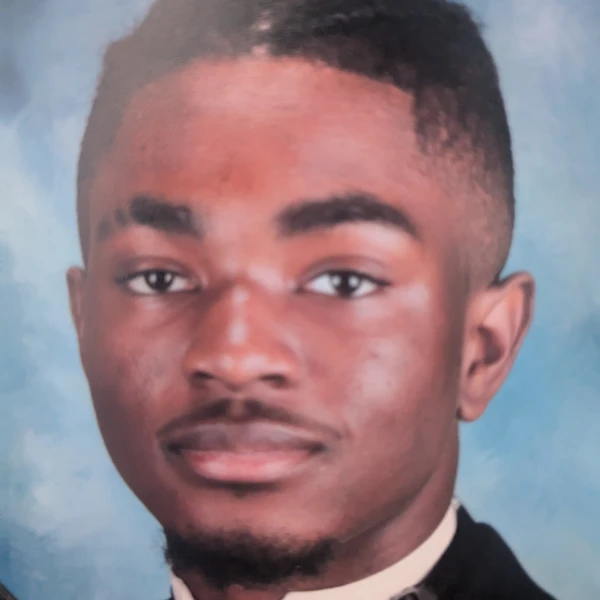
I’m Brison Johnson, an honors biology major at Georgia State University, and I am on a mission to become an orthodontist and serve my local community of Clayton County. I mostly devote my time to literature, personal finance, and philosophy, which, in my opinion, aren’t just hobbies but practical tools to sharpen critical thinking and reshape how I engage with the world around me. Success, for me, isn’t about grades or goals; success to me is about building a disciplined life, serving others, and constantly evolving. Whether in a lab, lecture hall, or Google spreadsheet, I’m here to grow, apply, and give back to others.
Education
Georgia State University-Perimeter College
Bachelor's degree programMajors:
- Biology, General
GPA:
3.8
Miscellaneous
Desired degree level:
Doctoral degree program (PhD, MD, JD, etc.)
Graduate schools of interest:
Transfer schools of interest:
Majors of interest:
- Biological and Physical Sciences
- Dentistry
Career
Dream career field:
Dentistry
Dream career goals:
My long-term career goal is financial independence while providing for my parents’ retirement. I want to build a stable and successful career that allows me to support my family and secure my future.
Cashier
Taco Bell2022 – 20231 yearCashier
Popeyes2022 – 20242 yearsSales Coach
GNC- General Nutrition Center2024 – Present2 years
Sports
Bodybuilding
Club2020 – Present6 years
Future Interests
Advocacy
Volunteering
Philanthropy
Mohamed Magdi Taha Memorial Scholarship
To me, being an “up-stander” means more than speaking up; it means using persistence, action, and compassion to improve the lives of those around me. In my life, I have worked to embody this through resilience in the face of obstacles, service to my community, and a vision for how my future career can uplift others.
As a Black undergraduate student pursuing STEM through my pre-dental studies, my biggest challenge has been balancing the demands of honors coursework with managing a medical disability. It would have been easy to let my circumstances discourage me at times. Still, I chose to stand up for myself by developing new strategies, adapting my study methods, and refusing to let my condition silence my goals. To me, being an “up-stander” includes being willing to advocate for myself so I can be in a position to advocate for others later.
I dream of becoming an orthodontist, but my goals extend beyond a career title. I plan to make orthodontic care accessible and affordable to underserved communities, where too many people go without treatment due to financial barriers. A smile is more than cosmetic; it is often tied to a person’s confidence, opportunities, and dignity. I believe that by providing affordable care and building outreach programs, I can address oral health and the social and mental well-being that comes with it. This is how I envision using my voice: through words and creating tangible systems that expand fairness and opportunity.
At the same time, I am an upstander in everyday ways. Whether that is encouraging a classmate who is struggling, advocating for fairness when I see inequity or simply modeling resilience by continuing to pursue my education, I believe that even small acts can create ripples of change. Like Mohamed Magdi Taha, whose legacy shows that courage and compassion shine in bold moments and quiet consistency, I strive to balance both.
Looking forward, I intend to keep using my voice to advocate for fairness and equity. In my professional life that means ensuring my dental practice is not only a place of treatment but also of empowerment for everyone who walks through my doors. In my personal life, it means continuing to speak openly about my journey so that others who face similar challenges know they are not alone. Change is built on communities where people feel seen, heard, and supported.
Being an “upstander” is not always easy, but it is necessary. It requires persistence, vision, and the courage to act even when silence would be easier, all of which are tenets of stoicism. philosphy/ Through my studies, future career, and everyday actions, I plan to continue standing up for what is right and building a community rooted in compassion, opportunity, and dignity.
Healing Self and Community Scholarship
When I think about making mental health care affordable and accessible, I immediately consider how self-image and confidence affect mental well-being. As someone pursuing a career in orthodontics, my unique contribution to the world will be helping people in my local community access healthier, more confident smiles at affordable prices.
Smiles have more than cosmetic and aesthetic value, but they influence how people see themselves and how they connect with others. Studies have shown that poor oral health can contribute to anxiety, depression, and social withdrawal. I want to dedicate my career to making that transformation accessible to everyone. Everyone should have confident, radiant smiles, not be kept away from those who can afford them.
My vision is to create a practice that provides high-quality orthodontic care and offers flexible payment options and outreach programs for underserved populations. Doing so will reduce financial barriers that keep people from seeking dental and orthodontic support. This is one way of expanding mental health care: treating the mind directly and addressing the social and emotional factors, like self-confidence, that affect mental well-being.
This contribution combines my passion for dentistry with my commitment to community health. Making mental health care more accessible is, in my view, making mental health care more affordable and attainable, because confidence and dignity are just as essential as any medical treatment.
Sabrina Carpenter Superfan Scholarship
Sabrina Carpenter is a rare artist who quietly reshapes pop culture without demanding the spotlight. I became a fan not through a single viral song or headline, but through how consistently she’s evolved, always experimenting, always authentic, and always herself.
What impressed me most is her transition from acting to music. Many performers struggle to bridge that gap, but Sabrina made it seamless. Her performances have an underlying theatricality that never overshadows the emotional depth. Whether she’s performing live or in a studio setting, there’s intention behind every lyric and movement. That sort of thoughtfulness is what first caught my attention.
She’s also unapologetically feminine in her aesthetic and songwriting, which I think is powerful. Instead of trying to prove toughness or fit a mold, she leans into softness, irony, wit, and emotion, sometimes all in the same track. That’s impacted how I think about creative expression, especially regarding how vulnerability can be a strength.
Her fanbase feels like a community of people who appreciate nuance in music, identity, and growth. Watching her continue to carve out her path in an industry that often wants everyone to sound and look the same has been inspiring. She’s proof that staying true to yourself, even in a highly curated world, can connect deeply.
Chappell Roan Superfan Scholarship
Chappell Roan’s music caught me off guard, in the best way. I remember stumbling across one of her live performances online and being struck by how unapologetically theatrical it was. Not just the vocals but also the visuals, confidence, and intent. She wasn’t just singing; she was storytelling. And in a world where so much music feels manufactured, that kind of authenticity hits hard.
What I admire most about her work is her commitment to queer expression and emotional honesty. Her work feels like it’s carved out space for people who don’t see themselves in mainstream narratives. Even when she leans into humor or camp, there’s real vulnerability underneath it. That contrast, the glitter and the grief, makes her stand out.
Even if I don’t know every lyric by heart, she's one of the few artists who still feel like I get what she’s about. Supporting her career means supporting an artist rewriting pop rules without losing heart. That matters.
You can feel that sense of rawness even in how she interacts with fans; there’s a trust, like she’s performing with her audience, not just for them. Artists like that don’t just entertain. They create community. And that’s why I’ll keep rooting for her.
GUTS- Olivia Rodrigo Fan Scholarship
Being an Olivia Rodrigo fan means more than just knowing the lyrics; it means catching the little moments that don’t go viral but stick with you anyway. One of those was her 2023 VMAs performance of “all-American bitch,” a song that most casual listeners overlooked in favor of the radio hits. But for those who dug into GUTS like a diary we weren’t supposed to read, that performance wasn’t just a set, it was a statement.
She opened with soft vocals, almost whispering the sarcasm: "I am light as a feather, I’m fresh as the air.” Then, without warning, the song exploded into gritty punk energy. Rodrigo flung herself around the stage like she had something to exorcise. That’s what hit me. This wasn’t pop polished for a Disney audience. This was rage and irony dressed in glitter and ripped tights. It was rebellion in eyeliner, and the power of the performance wasn’t just in what she sang, it was in what she meant.
What made it special, though, wasn’t just the sound. It was the fact that most people didn’t understand the satire. Olivia was critiquing the impossible expectations of young women be sweet but fierce, soft but confident, perfect but effortless. And she did it in front of an audience who mostly wanted “Vampire” and a red carpet shot. That moment made me realize Olivia Rodrigo isn’t just a singer. She’s a writer. A performer. A mirror held up to a world that tells girls to smile while they bleed.
GUTS isn’t just an album; it’s a manifesto disguised as a breakup diary. And Olivia’s VMA performance? That was the niche moment when I knew she was more than famous. She was fearless.
It’s easy to love Olivia for her chart-topping singles. “Driver's License” was the heartbreak anthem of a generation, and “Vampire” made us all think twice about who’s feeding off our energy. But what separates real fans from casual listeners is appreciation for the deep cuts, the songs where Olivia isn’t trying to craft a hit but to process something raw. Tracks like “making the bed” or “logical” are drenched in emotional confusion, showing a side of her that isn’t manicured. They’re not radio-friendly, they’re journal-entry honest.
And then there’s her lyrical progression. In SOUR, you hear someone experiencing heartbreak for the first time. But in GUTS, Olivia starts asking bigger questions: What happens when you’re supposed to be over it, but you’re not? What if the success you dreamed of doesn’t fill the void? She doesn’t offer clean answers, which makes it real. She's not just singing to be heard. She's singing because she has no other way to process what she's going through.
That honesty is part of why I and many others connect with her. Olivia captures the emotional mess of adolescence and early adulthood with brutal clarity. She's mastered the art of saying what so many of us feel but don’t know how to say. And she does it while still keeping the edge of vulnerability intact.
Love Island Fan Scholarship
For my Love Island challenge, I present: Truth or Tap-Out—a high-stakes, emotional test of honesty, loyalty, and the contestants’ ability to face the truth... or the consequences.
Here’s how it works: Contestants sit in a circle in pairs or trios. Each round, one person must draw a “Truth Card” from a pile. These cards range from silly to intense, such as “Have you ever faked a connection for the cameras?” or “Name the person you think your partner is most attracted to besides you.” The twist? If the contestant refuses to answer, they must tap out, meaning they do a random punishment drawn from the “Tap-Out Box.
Punishments could include everything from being drenched in slime to wearing a ridiculous outfit for 24 hours or even being temporarily “exiled” from the villa’s main area for a few hours with only basic amenities, no hot tub, no kitchen privileges, and no cuddling allowed.
The goal isn’t just drama (though that’s a bonus). It’s to push Islanders to be vulnerable. Real connections come from truth, not just romantic editing. This challenge would create laughter, awkwardness, and maybe even a few tears, keeping the audience engaged and revealing who’s really there for love and who’s just playing the game.
To wrap it up, viewers vote for the “most fearless Islander” after the episode airs. That person gets a secret advantage in the next challenge or even a surprise date.
Even though I’ve never watched Love Island, I get the appeal: emotional drama, connection, and chaos. This challenge would stir the pot while revealing who’s real and pretending. And in a show like that, honesty might be the most entertaining twist.
Learner Math Lover Scholarship
Math wasn’t always challenging, but ironically, I love it. Unlike other subjects that come more naturally, math has always stood as an academic antagonist. Math demands clarity, logic, and effort. Every new concept feels like a wall I’ll never climb. But as I keep practicing, slowly, the pieces start to click into place. That transformation, from confusion to confidence, makes math meaningful to me.
What I admire most about math is that it's fair. There’s no mystery. If you do the work and understand the principles, you'll do well. Math is a subject where consistent effort always leads to progress. It builds knowledge and resilience—principles I try to live by daily. I've learned to sit with frustration, keep practicing, and trust that improvement will come. That discipline helps me in every area of life.
As a pre-dental biology major, I see math not as something separate from science, but as its foundation. Biology is full of patterns, ratios, and data. Whether it’s understanding rates of chemical reactions, calculating molar concentrations, or reading genetic probability charts, math is everywhere. It’s the language that lets us translate biological processes into testable, measurable truths. Without it, we’d just be guessing.
But math goes beyond science; it’s essential to our society. It shapes technology, medicine, and economics. Algorithms power everything from your GPS to medical imaging software. Math helps us predict, model, and solve real-world problems with precision. I love knowing that every time I sit down to study math, I’m learning a tool humans have used to build our world.
Still, what I love most is what math teaches you about yourself. It demands patience and humility. It teaches you to break big problems into smaller ones, to stay calm when you don’t understand something the first (or tenth) time. That mindset has shaped how I approach my classes, goals, and growth. Every math problem I’ve solved reminds me that I’m capable of more than I think, as long as I keep trying.
Ultimately, I love math because it presents a continuous challenge to me intellectually. It pushes me to chase the next breakthrough, to tackle harder problems and think more deeply each time. And that process gives me a sense of accomplishment. It’s about being stubborn enough to keep going. It’s about turning struggle into understanding, one step at a time. That’s not just how math works; that’s how life works.
LeBron James Fan Scholarship
I’ve always admired LeBron James, not just because he’s incredible on the court but also because of the plays he makes off the court. He’s built his career with discipline and long-term thinking. Many athletes peak, burn, and fade out fast, but LeBron has stayed consistent for over twenty years. That longevity takes more than talent. It takes structure, sacrifice, and a mindset focused on growth. That’s something I’m working to develop in my own life.
What makes him stand out to me, though, is how he’s moved beyond basketball. He’s not just a player; he's a businessman, school founder, and builder. Projects like SpringHill Entertainment or the I PROMISE School show that he’s thinking about the future, about creating something that lasts. In a world where so many people struggle to make ends meet, it’s powerful to see someone use their platform to create generational wealth and opportunity for their family and entire communities. That’s what I want too: to break cycles, to create freedom, to leave something behind.
Is LeBron the greatest of all time? It depends on who you ask. He has a strong case if you value leadership, versatility, and long-term impact. If someone only cares about championship rings, they might lean another way and prioritize other things than I do. But for me, greatness is about what you build on and off the court. Based on that, LeBron’s legacy goes far beyond basketball.
Wicked Fan Scholarship
I’ve always resonated deeply with the themes Wicked explores, especially the tension between how the world sees us and who we truly are. Something is haunting; there’s something powerful about watching a character who refuses to be defined by fear, stigma, or misunderstanding. Even without every detail memorized, the emotional weight of Wicked is undeniable.
What stands out most is how it flips the idea of “good” and “evil” on its head. Wicked offers something bolder in a world that loves clean labels and easy heroes: it shows how systems create villains out of people who threaten the status quo. That theme strikes close to home for me. I’ve often felt out of place, not because I was doing something wrong, but because I refused to shrink myself to fit in.
I live the journey of carving your own moral compass, especially when it conflicts with how society wants you to behave, every day. I’m in the middle of a strict academic and personal transformation contract designed to crush distractions, impose structure, and force growth. It’s isolating at times. But like the central figure of Wicked, I believe you have to be willing to be misunderstood if you’re ever going to make real change.
Wicked isn’t about rebellion for its own sake; it’s about staying rooted in what matters, even when the world paints you as the problem. That feels true to my path. I’m pushing against financial hardship, systemic debt, and societal expectations, not to burn it all down, but to rise above it, controlled and proud.
Like in Wicked, I’m learning that loyalty, integrity, and vision don’t always look “pretty” on the outside. But they’re powerful. And they last.
ADHDAdvisor Scholarship for Health Students
Most of the time, mental health support doesn’t always include intimate therapy sessions or a formal diagnosis. The majority of the time, it starts with a simple conversation. I currently work at GNC, and on the surface, it might seem like just a regular sales job. What I offer isn’t just a sale—it’s guidance, empathy, and encouragement. Customers often come in to purchase supplements, ask questions, and seek advice. The majority of customers who come in regularly are those dealing with maladies such as fatigue, anxiety, insomnia, or low mood. Over time, I’ve learned to recommend evidence-backed products like magnesium for stress regulation or creatine monohydrate, which has shown promise in recent studies for supporting mood. These aren’t miracle cures but valuable entry points into a more holistic wellness framework. What I offer isn’t just a transaction, but information, empathy, and encouragement toward small, sustainable steps.
Outside of work, I’m someone people turn to. Friends, classmates, and coworkers have opened up to me about their struggles with self-doubt, isolation, or burnout. I don’t claim to be an expert, but I listen without judgment and respond when invited, offering structure, accountability systems, wellness tips, or simply a silent presence. My passion for personal finance, philosophy, and disciplined living stems from a deep belief that mental, emotional, and financial stability are foundational to a healthy life. At the root of it all, I believe mental, emotional, and financial wellness keeps us going.
Looking ahead, I plan to become an orthodontist. I understand how deeply self-image connects to mental well-being. People often seek orthodontic care for aesthetics, but they truly want confidence, which changes how they speak, how they show up, and how they see themselves. I aim to be a provider who sees beyond teeth and understands the person. I plan to offer low-cost care to underserved communities like Clayton County, where I live. It’s not just about making treatment accessible; it’s about making dignity unconditionally available.
Ultimately, my approach to mental health is holistic. Whether through the supplements I recommend at work, the support I offer peers, or the care I’ll give in my future job as an orthodontist, I want to be a consistent source of strength and compassion. Mental health is a universal human need, and I intend to prioritize helping people achieve better mental health outcomes in any way I can.
LGBTQ+ Wellness in Action Scholarship
When I was diagnosed with a chronic condition last year, everything about my future felt uncertain. I had just begun applying to the military and was going through MEPS when I got the news. It was crushing, everything I’d been working toward felt slipping away. But instead of spiraling, I focused on the one thing I could still control: my health. As a queer person, that decision became about more than just fitness. It was about reclaiming agency over my body, my mental state, and my future, especially in a world that often makes LGBTQ+ people feel powerless. My decision was a holistic health decision, but also a declaration that I would not let my body or identity be defined by stigma, fear, or limitation.
I started going to the gym five times a week. At first, it was a coping mechanism. But it quickly became a source of structure, clarity, and purpose. As I showed up for myself daily, even when I felt overwhelmed or discouraged, I discovered resilience I didn’t know I had. Along the way, I found a refuge in Stoic philosophy, which taught me to focus on what I can control and forget those things I cannot control.. This practice has helped me reframe setbacks and given me a stronger foundation for navigating both my chronic condition and my identity in spaces that weren’t always welcoming.
I now work at GNC, where I help others pursue their health goals, many of whom are dealing with their health struggles. Working at GNC has made me see wellness as something deeply communal. Every customer I help reminds me how diverse and personal the health journey is. As a queer person working in health retail, I’ve learned to be patient, to listen without judgment, and to guide people toward their definitions of strength, mental, emotional, and physical. I also try to be visibly queer and open, because representation itself can be a form of encouragement for those who are still learning how to value themselves.
Now, as a pre-dental student, I carry the lessons I’ve learned with me as I pursue my academic goals. My chronic condition hasn’t gone away, and neither have the challenges that come with being LGBTQ+ in healthcare spaces. However, I’ve learned to prioritize my well-being as a form of self-love and self-empowerment. Taking care of myself is now non-negotiable. It’s what makes me capable of helping others do the same, especially those who feel unseen, underestimated, or overwhelmed. Wellness, for me, isn’t just personal. It’s political, communal, and deeply transformative.
SnapWell Scholarship
When I was diagnosed with a chronic condition last year, everything about my future felt uncertain. I had just begun the long process of applying to the military, and I was going through MEPS (Military Entrance Processing Station) when I found out. Everything I had been planning for suddenly felt like it was slipping away. But instead of spiraling, I focused on the one thing I could still control: my physical health, a decision that introduced me to Stoic philosophy.
I committed to going to the gym five times a week. At the time, it wasn’t just about fitness; it was therapy, stability, and structure. It gave me purpose when everything else was up in the air. Showing up for myself consistently, even when discouraged or overwhelmed, helped me rebuild my confidence and remind myself that progress was still possible, even if my path was changing dramatically, and my dream of joining the U.S Coast Guard was uncertain.
What began as a coping strategy became a long-term lifestyle shift. Through stoic philosophy, I started learning more about nutrition, recovery, and the mental side of discipline. That growth eventually carried into other areas of my life, such as how I studied, managed setbacks, and interacted with others. I began seeing health as something holistic, not just a physical goal but a state of mind. The Stoic principle of focusing only on what I can control became a daily practice, and I slowly replaced frustration with purpose.
That mindset didn’t stop at the gym, though. I now work at GNC, where I spend every shift surrounded by people trying to take control of their health, just like I was. Helping customers who are serious about their fitness, nutrition, and mental well-being keeps me focused on my own health goals. It also reinforces the idea that health isn’t just physical. It’s mental and emotional as well. I’ve learned to be more patient with myself and more empathetic toward others. I’ve learned to listen, offer guidance, and support people on their journeys, no matter where they start.
These experiences have shaped how I approach my future. As a pre-dental student, I know the discipline and empathy I’ve developed will make me a better healthcare professional. One important truth I didn’t expect was how deeply wellness extends beyond the body.. Whether studying for finals, balancing work and school, or helping someone find the right supplement, I carry those lessons. Prioritizing my health taught me to be resilient, and it’s made me someone who can help others find their resilience too, even when life doesn’t go according to plan.
Dr. Samuel Attoh Legacy Scholarship
Legacy means leaving a positive, tangible impact on the world that doesn’t vanish when you check out. It’s not just about being remembered; it’s about what you leave behind for others to build on. Legacy allows someone else's sacrifices to become another person's foundation. As a student pursuing a STEM path, I am working for my future and continuing a legacy that began long before me, and I plan to evolve it for those who come next.
I was raised by a strong African-American father who did not go to college. He worked hard, provided what he could, and showed me what it means to persist despite limitations. Though he wasn’t given the same academic opportunities I have now, he laid the groundwork by instilling discipline and sacrifice. I can see the gap between what was available to him and what is accessible to me. That awareness fuels me. I know I’m walking through doors he never got to open.
But walking through those doors is not easy. Being the first in a line to reach a certain level of education comes with emotional and financial weight. I support myself while attending school and working over 50 hours per pay period. I budget carefully, take no part of my education for granted, and apply to scholarships like this one not only because I need the support but also because I respect what it took to get this far. My upbringing didn’t just shape me, it launched me. It made me determined not to let systemic or generational obstacles define my future.
Still, I know legacy is more than personal progress; it’s about what I give back. I’m choosing to break the cycle of limited opportunity by pursuing higher education strategically and with as little debt as possible. But I’m also planning for a bigger impact. I aim to become an orthodontist, build financial independence, and eventually mentor other students, particularly young Black students who may not see many people who look like them in STEM or healthcare. I want to be a visible proof that where you start doesn’t limit where you can go.
I also dream of funding scholarships of my own one day, especially for high-achieving but overlooked students, those who are disciplined and driven, and just need one opportunity to rise. I believe in creating that chain effect, where one person’s progress lifts another. That’s the kind of legacy I want to leave.
Legacy means recognizing the value of those who came before you and using your life to extend their efforts forward. I carry my father’s work ethic and pride in who we are, but I’m also carving out a new path he never had the chance to walk. One day, I hope someone else will look at what I’ve done and see it not as an endpoint but as the beginning of their own journey.
Alger Memorial Scholarship
Living with an unspoken visual disability means I’ve always had to find creative solutions in a world that wasn’t built for me. Whether sitting in a lecture hall struggling to see a board or scanning fine print on a label at work, I constantly face challenges most people never have to consider. But I’ve never let that stop me. If anything, it’s made me better, more disciplined, more strategic, and more resilient. It’s also given my life more meaning than if I hadn’t been born with my condition.
When I was younger, I didn’t even know I was different. I assumed everyone had to squint at the board or hold papers inches from their faces. I enrolled in Honors and AP classes alongside my peers. I used my phone to magnify whiteboards. I memorized where information would appear in textbooks. I learned how to self-advocate and ask for help, even when uncomfortable. I never wanted pity; I didn’t even realize I had a condition until recently.
That mindset has carried over into every part of my life. I’ve maintained academic excellence in college through strict self-management, planning, and adaptation. I read using screen magnifiers. I convert diagrams into text. I’ve adjusted every part of my learning process to ensure I stay competitive, not just for my GPA, but for the future I’m building. I plan to become an orthodontist and eventually open a low-cost clinic in Clayton County, where I can provide high-quality dental care to communities often left behind regarding having healthy, confident smiles due to income barriers.
Outside of school, I work at GNC, where I help people improve their health and achieve their fitness goals. It’s not just retail, it’s community service in motion. I listen to people’s needs, explain supplement protocols, and support individuals who often feel overwhelmed or left behind in their health journeys. I’m proud that customers return to thank me for helping them feel seen, understood, and empowered. I genuinely believe health is something everyone should have access to; the only two things everyone shares are health and taxes.
While I don’t have formal volunteer hours, I’ve given time, energy, and effort daily to support those around me. I plan to engage in formal community service through drives, cleanup events, and outreach campaigns. Whether helping a customer find the right product, guiding a classmate through a difficult topic, or simply showing up with resilience, I serve my community in every space I occupy.
Johnna's Legacy Memorial Scholarship
There is a quiet challenge that shadows every part of my daily life. Whether sitting in a lecture hall straining to follow a board I cannot see, or scanning a product label with numbers too small to decipher, I live in a world built for people with perfect vision, a world I have never fully accessed. Though I won’t name the medical condition here, its impact on how I move through the world is constant and absolute. And the condition is something I continue to live with and thrive with.
Growing up, I never realized anything was wrong. I thought everyone tilted their heads, blinked hard, or had to hold papers close to read them. Despite the limitations, I still enrolled in Honors and AP classes. I earned strong grades by adapting however I could, using my phone to magnify the board, memorizing where information would likely appear, and asking for clarification when others didn’t have to. It wasn’t always easy to self-advocate or admit I needed help, but I refused to let my condition lower my expectations for myself.
That refusal has shaped how I operate in every space I enter. In college, I maintained academic excellence despite the extra work required to keep up. I adjust screen sizes, coordinate note-taking accommodations, and learn primarily through auditory and written materials instead of visuals. At work, I’ve had to develop systems to handle product information quickly, even when fine print or color contrast makes it difficult to read. These aren’t just passive adjustments; I’ve trained myself to think strategically and push through discomfort.
The Stoic belief keeps me going: While we can’t control our external circumstances, we can always control our actions. That philosophy has grounded me through moments of frustration and allowed me to reframe my condition not as a burden but as a proving ground. I know others face invisible struggles, too, and I hope to serve as proof that challenge and ambition are not opposites; they can walk side by side.
I aim to become an orthodontist and open a low-cost practice in Clayton County. I want to provide care that is not only effective but also accessible. I aim to create a space where individuals facing chronic conditions or financial hardship feel accommodated and respected. Life isn’t easy, but I welcome the difficulty. I believe we are not defined by the challenges we carry but by how we carry them.
Tanya C. Harper Memorial SAR Scholarship
My passion for STEM started when my older cousin Jordan shared her experience working in a research lab focused on developing a low-cost way to desalinate seawater for underserved communities. Hearing about science being used to create real, life-changing solutions inspired me to take my science classes seriously. Biology, in particular, gave structure to things I had always noticed but never fully understood: how cells communicate, how the body heals, and how small changes in DNA can lead to significant effects. It showed me the power science has to shape lives and the world around us.
That passion eventually led me to orthodontics, a field where biology, precision, and design come together to improve health and confidence. Orthodontics is more than straightening teeth; it restores self-esteem and enhances quality of life. As an aspiring orthodontist, I want to offer low-cost dental care in Clayton County, Georgia. My goal is to make sure families like mine, especially in BIPOC communities, can access the kind of care that can truly change lives but is often priced out of reach.
As a Black male pursuing biology and STEM, I am aware of the responsibility I carry beyond academics. African Americans remain underrepresented in healthcare and life sciences, and many young Black men are steered toward limited paths like athletics or music, rather than being encouraged to explore science and medicine. I want to change that narrative by succeeding in my field and being a visible example for the next generation.
I want the youth in my community to see that powerful futures in STEM are available to them, futures where they can innovate, lead, and give back. Whether through mentoring students, speaking at local schools, or opening a community clinic, I want my presence in this field to show that excellence in science has no single face or background.
While it can sometimes feel uncomfortable to “flex” my identity for minority scholarships, I understand the importance of visibility and representation. I hope that by sharing my story honestly, I can honor where I come from and open doors for others.
A medical career in orthodontics is not just about teeth or treatment plans. It’s about solving real problems in my community with empathy and innovation, making healthcare accessible, trustworthy, and inclusive for everyone. By staying committed to this path and lifting others as I climb, I believe I can help build a healthcare future that reflects the brilliance and diversity of all communities, including mine.
Learner Calculus Scholarship
Calculus is often seen as one of the toughest subjects in STEM, and it indeed challenges many students. But calculus is an essential foundation in science, especially for fields like biology and orthodontics, because it helps us understand and predict how things change and interact over time.
In biology, calculus is used to study dynamic processes that don’t stay constant. For example, how populations of cells grow and shrink, how diseases spread in a community, or how the concentration of a medicine changes inside the body over time. These processes often involve rates of change and accumulation, which calculus helps us describe mathematically and visually. Without calculus, these important concepts would be much harder to understand and predict, limiting how we study living systems and slowing the progress of medical research and treatment.
For orthodontics, calculus plays a surprisingly important role. The movement of teeth during treatment isn’t random; it’s a gradual process influenced by forces applied through braces or aligners. Calculus helps orthodontists model these forces and understand how teeth will move over time under pressure. This allows us to create treatment plans that are precise and efficient, minimizing discomfort and maximizing results. Understanding rates of change and optimizing these forces requires the kind of mathematical thinking that calculus develops.
Beyond specific examples, studying calculus builds critical problem-solving skills necessary for success in STEM fields. It teaches us to continuously think about change and break down complex problems into manageable parts. These skills transfer well into research, clinical work, and innovation, making calculus valuable for the problems it solves and how it trains the mind.
Although calculus can be intimidating, I’ve learned that mastering it is more than just passing a challenging course; it’s about gaining a new way to understand the world. It’s a tool that bridges abstract math with real-life biological processes and medical treatment. As a biology major aiming to become an orthodontist, I see calculus as essential to my education. It supports my goal of providing precise, science-based care to patients and advancing my understanding of how biological systems function and respond to treatment. Even if math has, historically been one of my struggle subjects.
Calculus isn’t just a requirement for my degree; it’s a steppingstone to becoming the kind of healthcare professional who can combine science, technology, and compassion to improve lives. By mastering calculus, I’m investing in the knowledge and skills to innovate and serve my community with excellence, affordability and finally care.
STEAM Generator Scholarship
Entering higher education feels like stepping into a world I was never meant to access, and yet, I’m determined to survive here and thrive. I’m a Black, legally blind male, part of the LGBTQ+ community, and raised by parents who’ve worked tirelessly without ever having the chance to navigate this system themselves. My identity layers multiple forms of marginalization, each making the journey harder and fueling a deeper sense of purpose.
My hopes for higher education are rooted in giving back. I want to become an orthodontist and eventually open a clinic in my hometown of Clayton County. Whether I pursue that goal independently or through nonprofit work, I want to provide affordable care to underserved families, especially Black and LGBTQ+ youth who rarely see themselves reflected in healthcare spaces. I also want to create a space that doubles as a mentorship hub, where young people can explore STEM, ask questions, and build confidence in their future. And beyond community service, I have a deeply personal motivation: I want to help my parents retire more comfortably. I may not be able to “retire them” in the traditional sense, but I want to give them a future that reflects the sacrifices they made for mine.
I’ve never had the luxury of a straightforward path. My disability means I navigate education with literal and figurative obstacles: small fonts, inaccessible classrooms, and low expectations from others. I was once determined to join the military, but was rejected due to my vision. That moment devastated me. For a long time, I viewed it as a sign that I wasn’t strong enough or capable enough to serve. But I’ve realized there are many ways to serve, mine looks different. Now, I plan to serve through healthcare, compassion, and opportunity.
The pressure I place on myself is intense. One of my biggest fears is not living up to my potential, because I know I can do so much. I carry the dreams of people who never had the chance to apply to college, much less attend. I’m not just doing this for myself. I’m doing it for my community, family, and every kid like me who was told to “beat the odds” just to survive.
Despite being an outsider to this system, I’m carving my place on my terms. Higher education isn’t just a degree for me. It’s a weapon, a tool, and a promise. While I don’t think we, as humans, were put on the planet to fulfill an assigned purpose, the path I’ve laid for myself is rooted in giving back to the communities. I hope my contributions to my community will branch into the broader city of Atlanta for generations.
Emerging Leaders in STEM Scholarship
My passion for STEM began when my older cousin Jordan shared her experience working in a research lab. Her project focused on developing a cost-effective method to desalinate seawater for underserved communities. I was fascinated by how science could be used to create real, life-changing solutions. Her story inspired me to take my science classes more seriously, and I soon found myself diving deeper into biology.
Biology gave structure to things I had observed but never fully understood. Learning how cells communicate, how the body heals, and how small genetic variations can lead to major changes helped me see how deeply science is woven into our daily lives. I realized I wanted to pursue a career that would allow me to apply this knowledge to improve the lives of others.
That path led me to orthodontics, a field where biology, precision, and design combine to improve health and confidence. As a future orthodontist, I plan to offer low-cost dental care in my hometown of Clayton County. I want to make sure that families like mine, especially in BIPOC communities, have access to care that’s often out of reach but deeply needed. My long-term goal is to open a clinic as a treatment center and a mentorship hub for youth interested in science and healthcare.
My journey hasn’t been easy. I was diagnosed as legally blind at a young age, and that diagnosis has shaped every part of my life. I’ve had to work harder and smarter to keep up in classrooms that weren’t designed with my needs in mind. I’ve had to advocate for myself constantly, pushing through academic and personal barriers. One of the most challenging moments came when I was rejected from joining the military, a dream I held onto for years, due to my vision. That rejection hurt, but it also redirected me. It showed me that while one path had closed, another one, where I could still serve others, was wide open.
Being a minority in STEM and a person with a disability hasn’t made this journey easy, but it’s made it meaningful. Every challenge I’ve faced has deepened my sense of purpose and fueled my determination. I don’t just want to succeed, I want to pave the way for others who feel unseen or underestimated.
To me, STEM is about more than equations and experiments. It’s about solving problems that matter. It’s about using knowledge to make a real difference. And for me, that means starting with the communities I know and love, and showing others that no obstacle has to define your future.
Learner Tutoring Innovators of Color in STEM Scholarship
My passion for STEM began when my older cousin Jordan shared her experience working in a research lab. Her project focused on creating a cost-effective method to desalinate seawater for underserved communities. I was fascinated by how science could be used to develop real, life-changing solutions. Her story inspired me to take my science classes more seriously, and I soon found myself diving deeper into the subjects we studied, especially biology.
Biology gave structure to ideas I had always noticed but never fully understood. Learning how cells communicate, how the body heals, and how small changes in DNA can lead to major effects showed me how much science explains and shapes the world around us. I knew then that I wanted a career where I could directly apply this knowledge to impact people’s lives.
That path led me to orthodontics, a field where biology, precision, and design intersect to improve health and confidence. Orthodontics is more than just straightening teeth; it’s about restoring self-esteem and enhancing quality of life. As a future orthodontist, I plan to offer low-cost dental care in my hometown of Clayton County. I want to make sure that families like mine, especially in BIPOC communities, have access to the kind of care that can change lives but is often priced out of reach.
As an African-American male studying biology, I also have a responsibility that goes beyond academics. We are deeply underrepresented in the STEM field, especially in life sciences. Every time I walk into a classroom or lab, I’m reminded that young Black men are still often pushed toward limited pathways, like athletics or music, rather than shown the vast range of opportunities in science and healthcare. I want to change that narrative.
My goal is to succeed in my field and be a visible example for the next generation. I want the youth in my community to see that powerful futures are waiting for them in STEM—futures where they can innovate, lead, and give back. Whether mentoring students, speaking at schools, or opening my community clinic one day, I want my presence in this field to signal that excellence in science has no single face or background.
To me, STEM is not just about labs and equations. It’s about solving real problems in communities, with empathy and innovation. I want to help reshape the future of healthcare, one where access, quality, and trust are available to everyone, regardless of background. I believe that by staying committed to this path and lifting others as I climb, I can help build a future in STEM that reflects the brilliance of every community, including mine.
Hines Scholarship
Going to college means more than simply earning a degree; it represents a transformative opportunity to achieve my personal and professional goals. For me, college is the stepping stone to a future where I can not only secure a career in orthodontics but also work toward positively impacting my family and my community. It is a crucial part of the journey that will allow me to give back to those who have supported me.
One of my most essential goals in going to college is to retire my parents. Growing up, I watched them work tirelessly to provide for our family, often sacrificing their comfort for our well-being. Now, I want to ensure they can enjoy their later years without the stress of financial worries. Achieving this goal will require financial stability, and a career in orthodontics offers the potential to provide that. By attending college and eventually completing my Doctor of Dental Surgery (DDS) degree, followed by an orthodontic residency, I can support my parents and give them the relief they deserve.
Beyond helping my family, I am driven by a desire to give back to my community, particularly in meaningful areas. After establishing myself in my orthodontic career, I plan to transition into nonprofit work. Specifically, I hope to dedicate my time and resources to HIV awareness organizations and initiatives supporting black youth. These causes are deeply personal, and I strongly call to make a difference in these areas.
Through my work as an orthodontist, I plan to generate the financial resources and influence needed to support these important causes.
The college will give me the education and foundation to achieve these goals. It’s the first step in my journey to becoming an orthodontist, and it will equip me with the knowledge, discipline, and skills I need to succeed in my professional and philanthropic endeavors. The hard work I put into my studies now will set me up for the future I envision—one where I can financially support my parents and devote my time and energy to causes I care deeply about.
In conclusion, going to college is not just about earning a degree; it’s about giving myself the tools to create a life where I can fulfill my dreams. It will help me build a career that allows me to retire my parents, contribute to my community, and eventually work in nonprofit organizations focusing on HIV awareness and supporting black youth. College is the foundation that will help all these aspirations, and I am excited to take the first step toward making them a reality.
Henry Respert Alzheimer's and Dementia Awareness Scholarship
Alzheimer’s disease has affected my family in profound ways, particularly as my grandmother is currently struggling with this debilitating illness. Her long-term memory remains intact, allowing her to recall events from her past clearly, yet her short-term memory has dramatically suffered. She often forgets recent conversations, appointments, and daily tasks—things many of us take for granted. Witnessing this deterioration has been heart-wrenching, and it has opened my eyes to the many challenges that individuals and families face when dealing with dementia.
As a family, we have done our best to help her manage the disease. We have explored both herbal remedies and pharmaceutical treatments in an attempt to improve her condition, seeking any possible relief from the devastating effects of Alzheimer’s. Our family has also incorporated daily physical activity, hoping to provide both mental and physical stimulation that could slow the disease's progression. Yet, despite our efforts, she forgets crucial aspects of her care. She often fails to take her medications, which are essential for managing the symptoms and slowing down the progression of the disease. Additionally, she forgets to eat the healthy foods we’ve carefully planned to support her well-being. Even when healthy meals are prepared for her, she might not remember to eat, which is a constant challenge for us.
One of the most challenging aspects of watching my grandmother struggle with Alzheimer’s is seeing how it affects her quality of life. The bright, energetic woman I once knew is now often confused and agitated, unable to remember the things that used to bring her joy. It is heartbreaking to see her lose a sense of autonomy and even more difficult to witness her frustration when she cannot remember important details or tasks. My family and I are learning to navigate these moments with patience and compassion, but it has been a challenging and emotional experience for all of us.
Through this journey, I have learned valuable lessons about the importance of empathy, communication, and the need for a holistic approach to health. Alzheimer’s disease not only affects the individual but also impacts the entire family, requiring a collective effort to provide care and support. This experience has shown me how vital it is to have patience when dealing with those who are struggling with memory loss and cognitive decline. It has also deepened my understanding of memory care, medication adherence, and maintaining a healthy lifestyle to manage such conditions.
As I reflect on my grandmother’s battle with Alzheimer’s, I feel a renewed sense of urgency to learn more about neurodegenerative diseases. I want to help others in my community affected by similar conditions through caregiving, advocacy, or future healthcare endeavors.
Alzheimer’s disease may have robbed my grandmother of many things, but it has also taught me invaluable lessons about resilience, love, and the power of family. Through these experiences, I am more determined than ever to help others who are facing the challenges of dementia and to contribute to the fight against Alzheimer’s.
SigaLa Education Scholarship
From a young age, I understood the meaning of sacrifice. My parents dedicated their lives to ensuring my siblings and I had opportunities we never had. They worked tirelessly, putting their dreams on hold to support ours. Their unwavering dedication instilled a sense of responsibility within me. To succeed and give back to them and my community. That is why I have chosen to pursue a career in orthodontics.
A smile is more than just an expression; it is a source of confidence, a gateway to opportunities, and, for many, an unaffordable luxury. In Clayton County, where access to affordable healthcare is limited, many families are forced to choose between essential living expenses and dental care. I want to change that. My goal is to provide low-cost orthodontic care to my community, ensuring that financial barriers do not prevent people from receiving the treatment they need. By offering free consultations, partnering with schools for early assessments, and creating payment plans tailored to low-income families, I hope to make orthodontics accessible to all. A single orthodontic treatment can transform someone’s self-esteem and open doors they never thought possible.
Beyond my career, I am committed to a cause that deeply resonates with me—HIV awareness and education. Like many, I once held misconceptions about the virus, shaped by stigma and misinformation. However, through research and listening to personal stories, I came to understand the devastating impact of HIV stigma, particularly in underrepresented communities. In the future, I plan to work with an HIV awareness nonprofit to help spread education, dismantle misconceptions, and provide support for those affected. As an underrepresented minority in the medical field, I understand the importance of representation. Seeing people who look like me in positions of success has been rare, but it has also fueled my determination. I want to be an example for others, proving that no dream is out of reach. However, the financial burden of higher education is significant. This scholarship would bring me one step closer to my goals by alleviating some of that burden, allowing me to focus on my studies and the future I am working hard to build.
My dreams extend beyond personal success; they are rooted in service, giving back, and creating lasting change. With many struggles in life, I want the one thing people can have: access to low-cost dental care. With the right education, resources, and support, I am confident that I can make a difference—one smile and one life at a time.
Trees for Tuition Scholarship Fund
When I was younger, I watched my cousin hide his smile like a secret, tucking it away behind closed lips and lowered eyes. His teeth, uneven and crowded, became a wall between him and his confidence—a barrier built not by his own doing but by circumstances beyond his control. His family couldn’t afford braces, so he learned to speak with his hand hovering near his mouth, laughter muffled and joy dimmed. It was then that I realized a smile is more than just an expression—it’s a doorway to self-assurance, an unspoken language of belonging.
Years later, I understood that orthodontic care isn’t just about perfecting teeth; it’s about restoring confidence, opening doors, and giving people the courage to face the world without fear of judgment. That moment etched itself into my purpose, solidifying my goal: to become an orthodontist who transforms not just smiles but lives—especially for those who would otherwise be left in the shadows of affordability.
After college and dental school, I plan to provide low-cost orthodontic care in my local community of Clayton County, where many families struggle to afford dental treatment. Orthodontics is often seen as a luxury, but I want to change that by offering affordable options, hosting free consultation events, and working with local schools to provide early assessments for children. A healthy smile can change a person’s confidence, opportunities, and overall well-being, and I want to make that transformation possible for as many people as possible.
Beyond my career, I also plan to contribute to a cause that has profoundly impacted communities, especially low-income African American communities—HIV awareness and education. However, my passion for this cause did not begin as an immediate understanding and acceptance. Initially, I held my misconceptions about HIV. Like many, I was influenced by outdated stereotypes, misinformation, and fear-based narratives that painted the virus as something malicious and only affected certain groups of people. I never questioned these ideas until I read a book titled Velvet Rage.
Through reading books, watching documentaries, and listening to personal stories of those affected by HIV, my perspective shifted entirely. I learned that the real danger was not the virus itself but the stigma surrounding it—the isolation, the judgment, and the fear that prevented people from getting tested or seeking treatment. I came to understand that HIV is a public health issue that affects people from all walks of life and that education, awareness, and compassion are the most powerful tools in combating both the virus and the social prejudices tied to it.
By working with nonprofit organizations, I aim to spread education and promote open conversations to help destigmatize HIV. Whether through community workshops, social media outreach, or fundraising efforts, I want to empower people with knowledge and compassion. No one should feel ashamed or isolated because of a medical condition, and I will do my part to create a world where those affected by HIV are met with understanding rather than fear.
By pursuing orthodontics and advocating for HIV awareness, I believe I can improve the lives of individuals in ways that extend far beyond my profession. With education as my foundation, I will take action to create lasting change. Through affordable dental care and public health advocacy, I hope to leave a lasting impact—one smile and one conversation at a time.