Hobbies and interests
Tennis
Yearbook
Drawing And Illustration
Poetry
Food And Eating
Roller Skating
Flute
Cleaning
Writing
Music
Yoga
Pilates
Chess
Counseling And Therapy
Reading
Adventure
Historical
Romance
Brianna Landin
1x
Finalist
Brianna Landin
1x
FinalistBio
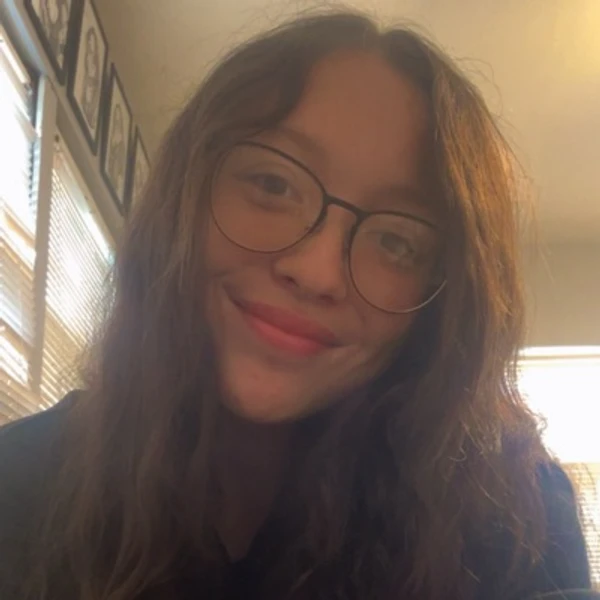
Hi! I'm Brianna Landin. Tennis has been with me for over 6 years, and it's taught me discipline, determination, and resilience, while poetry has given me a chance to express my experiences to inspire others. I am living proof that while negativity can affect us as people, it will never define us. With hope and the will to persevere, challenges can not only be overcome but turned into something much more meaningful.
Education
Big Spring High School
High SchoolMiscellaneous
Desired degree level:
Bachelor's degree program
Majors of interest:
- Clinical, Counseling and Applied Psychology
- Sports, Kinesiology, and Physical Education/Fitness
Career
Dream career field:
Hospital & Health Care
Dream career goals:
Family/Marriage Counseling
Nursery Worker
First Methodist Church2026 – Present5 months
Sports
Tennis
Varsity2020 – Present6 years
Arts
Big Spring High School Honor Band
Music2022 – 2023Yearbook
Photography2022 – 2026
Public services
Volunteering
Keep Big Spring Beautiful Trash Off — Trash pick up/Trash bag donations2026 – 2026Volunteering
Salvation Army — Helper2026 – 2026Volunteering
First Methodist Church — Group Leader/Helper for two summers2021 – 2022Volunteering
H-E-B Feast of Sharing — Server2025 – 2025
Future Interests
Volunteering
Sarah Eber Child Life Scholarship
I learned early that silence could be louder than praise. A missed shot or a grade shy of perfection felt like the end of the world. I grew up believing love was proven through excellence. Anything less was a disappointment. I tried harder, not out of passion, but out of fear.
Every goal carried the same question: Will this finally be enough? I pushed through exhaustion, terrified that if I stopped striving for gold, I would be inadequate. I mistook pressure for purpose, believing perfection dictated my worth. Fear became consistent in me, whispering that rest was laziness and satisfaction was dangerous. I became skilled at anticipating expectations, tightening my grip on control because it felt safer than hope. Over time, my worth became negotiable, dependent entirely on performance. Mistakes were never lessons. They were evidence of my terrible feelings of inadequacy.
Recently, I finally named what put me in the mindset I had lived in for years. I realized I spent my life striving to meet my father’s expectations, assuming every shortcoming was a personal failure. I internalized the idea that if I were just more disciplined or accomplished, I would finally be good enough. The truth is much harder: I would never be perfect for him. And that is okay.
This realization brought grief for the child who thought love had to be earned, but relief for the person I am becoming. My drive has shifted. It no longer comes from a need to outrun the disappointment I had always feared, but from a self-built, steady identity. I am learning that discipline can coexist with gentleness and that ambition does not have to cost my peace of mind. I intend to persist in excellence without sacrificing my soul in the process. I am no longer chasing perfection to feel worthy. I chase and follow the person I want to become.
Instead, I am moving forward grounded in purpose, resilience, and hope. I trust that growth matters more than flawlessness and that becoming whole and at peace is a greater achievement than becoming perfect, especially for someone else. This understanding will shape my college career, allowing me to pursue my education with a discipline rooted in purpose, rather than the fear I was taught. I am ready to lead and learn, knowing my value is already there, and I don't have to earn it. I just have to push myself to be better out of passion, not fear.
I reached success while carrying a hundred-pound weight of fear. Imagine what I can do now that I’ve dropped the weight I was never meant to carry.
David Foster Memorial Scholarship
In Mrs. Adams' AP Language and Composition classroom, the phrase "a lot" was extremely forbidden. "A lot is where you park your car," which was her reminder if someone did, in fact, use it. To an outsider, it was just an annoying reminder about proper grammar, but to her students, including me, it was the greatest, most memorable lesson. She taught immense precision and real analysis in writing more than I thought. I realized that if I were too lazy to find a more descriptive word, then I was not writing my best. Through her teaching, I learned that writing isn't just about communicating a point across. Writing is a discipline. Writing is observing the mistakes you made in a rough draft and finding not only better words, but a better version of yourself.
Mrs. Adams wasn't just my teacher who corrected my essays. Yes, she was for my academics, but she also had empathy for her students going through the hardships of high school. She understood the physical and mental toll of being a high school student. For the ones with "black holes" as stomachs, like myself, she always made sure the fruit bowl on her desk was available and full of apples, oranges, and bananas, as well as continuing Pop-Tarts sales for a dollar to support the debate team. Mrs. Adams understood that students couldn't fully focus on their work if factors like hunger or other basic needs were ignored. For me, there were days when I was facing issues with my mental health, and my day would instantly brighten up once I heard her call me "pumpkin" or "sweet pea" with open arms. Mrs. Adams not only taught me that excellence comes from discipline, but also tenderness, care, and consideration.
Mrs. Adams was very insistent on meeting our classmates by using forced connection. She always encouraged us to work with partners, which pushed many students, like myself, to leave our comfort zone and make new connections. It was through her class that one day, I had to move seats due to someone taking my own. I was devastated because it meant I had to sit somewhere else other than my safe spot I had chosen at the beginning of the year. After observing the open seats available, I chose to sit next to a girl I had never talked to before. After my offer of mini M&M's as an icebreaker, she declined the chocolate but offered me the seat, and we ended up talking the whole period once I sat down. And thank you to Mrs. Adams and her scary expectations of interaction, I found a best friend I still laugh with to this day.
The foundation Mrs. A built in me carried on into my senior year when I decided to do Composition I and II as dual-credit classes. Because of the discipline she taught me, and that confident voice of hers I hear whenever I write, I ended up acing both courses. The emotional connection and flow of my writing today, qualities I had to work for, are the result of her belief in me.
In a more serious writing environment, her voice remains. Yet, in my personal life, the forbidden phrase has its moments. When I tell people i love them, "like a lot," I say that consciously. I am willing to break that rule to honor the person who gave me the voice to say it. Mrs. Adams took my rough drafts and gave me the tools to park my own car, but more importantly, how to drive it towards something even greater.
#Nfinite8 Legacy Scholarship
Tennis had always been my happy place, but my senior year revealed a darker side.
I wasn't just a player to my coach; I was a safe bet locked in a cage she was in full control of. Through my last few years of high school, I realized my head coach made a habit of using me as her "safe" option. For her, if I had a better shot of making it to regionals stuck in doubles, no matter how miserable I was, regardless of any practice I had done for singles, she didn't want me to risk her reputation and make her look bad just because I had lost in the singles bracket. Because of my ability to "make things work," she used me to ensure she could have a guaranteed win at district, no matter how much I desired and begged her for a singles spot.
This year, my senior year, I expected to finally get my chance at singles. My previous partner in girls' doubles, whom I was forced to play with, had graduated, so I was free. At least I thought I was.
I wanted to play singles for my last year, and I knew I could because my coach wasn't able to throw me in doubles with the partner I had always resented due to her graduating. Yes, I'll admit, even though my mixed doubles partner, Gavin, and I played some great matches this year, I didn't want that. I loved playing doubles with someone who valued the game just as much as I did, and I didn't want to let him down. I had been craving a singles title for years, and I thought I would get that chance. I spent my final season in doubles. I spent my final year in high school tennis fighting a mental battle just to stay focused while my own coach refused to believe in my potential as an individual.
The weight of being the safe choice became unbearable every time I looked at my friend, Sarah, from Snyder. We had been rivals, but great friends ever since I lost to her at district my freshman year. This year, my dear friend won the regionals singles title I had always dreamt of. Yes, she put in so much work and effort, and that's why she got that accomplishment. The truth is, she also had a head coach who worked with her, believed in her, and let her chase everything she had ever wanted. I was so proud of her that day, and I love her so dearly, but seeing her take a picture with her gold medal was bittersweet. It hurt. It hurt because of the chance she got that I was never given. It felt like I had thrown away my senior year, on a path I know I didn't want no less, only to lose my last match in the second round of mixed doubles at regionals.
However, the loss didn't detour me. It has forced me to find a resilience that isn't connected to a medal or trophy. If I continue to go on with resentment, I am letting my coach get the best of my character all because of her own fear. I chose to show up and finish my year doing doubles, even if it wasn't what I had always wanted. I learned that I won't always have a leader that believes in me, or I'll be forced into roles I didn't ask for, but I now know my worth, and being my head coach's safe bet does not determine my dignity.
Brian Moore Memorial Scholarship
My connection with healthcare runs deeper than academics or career plans. Growing up, I learned to adapt and navigate a world like everyone else, but it was also a world that was not designed for my two brothers with Autism Spectrum Disorder (ASD). From an early age, I learned how important patience, understanding, and communication are in medical settings. The need for those characteristics shapes the way I view healthcare today. I learned that healthcare leadership is not about being the loudest voice in the room, but about truly listening, adapting, and supporting others who often feel confused or unheard.
Because of my brothers, I began to see how powerful empathy was. The moments that meant the most to our family were not always the treatments, but the simple acts of patience and understanding from professionals and even school counselors who took the time to truly see and understand them as individuals. Those experiences inspired me to pursue a career in healthcare by studying psychology and focusing on how people think, communicate, and experience the world around them differently.
In the future, I hope to serve my community by contributing to the healthcare environment where patients feel respected and understood. Too often, individuals with neurodivergent conditions are treated only through their symptoms rather than as people with unique strengths and needs. I want to advocate for care that recognizes those differences through compassion, patience, and inclusivity.
Receiving this scholarship would allow me to pursue this path and continue building the knowledge and skills necessary to serve in healthcare. More importantly, it would assist me in carrying forward the lessons my brothers taught me: patience, empathy, and understanding. My goal is not only to work in healthcare, but to contribute to a system where every patient will have value, no matter their differences.
“I Matter” Scholarship
Throughout my years of playing tennis, I was given the opportunity to be my team's captain. I was extremely nervous to carry this expectation, especially as a sophomore in high school starting that role. I worried my age would affect my ability to command respect or show authority. I never knew why I was chosen. I was a great player, and I was responsible, but I didn’t think that was enough to be the glue holding my team together. Years later, I finally understood why I had been chosen.
Last semester, during a tennis match in Lubbock against All Saints High School, my partner and I won our matches as the top players. Another younger teammate, a friend, had not done so well in his match. He tended to beat himself up mentally after losing a match, which I understood because I used to do that, too. He held himself to these unbelievable standards that no high school sophomore could realistically meet. It broke my heart seeing him so hard on himself because I had once been that disappointed sophomore sitting alone on the bleachers, replaying every little mistake from my previous match, wondering what I did wrong. It hurt to see someone go through the same self-doubt. That was something I would’ve never wished upon someone, especially a younger teammate who I know will learn one day that not every loss is negative.
After his match, he went to be alone and face his loss. I immediately followed to check on him and ensure he was okay. He cried once I sat next to him. “What are you doing here?” he asked, wiping away his tears stubbornly. I told him, “I know how badly it hurts to lose a match you truly wanted to win, but our expectations can distort how we see ourselves. I saw how you played and how much you’ve improved this year. I’m so proud of you.” He took that in, shedding a few more tears, finally letting himself accept the loss. I hugged him, and he thanked me for understanding and going to him when no one else did. In that moment, I realized leadership wasn’t the authority I was worried about. Leadership wasn’t about being the best player. Leadership wasn’t just about keeping a team together and motivated. It was about showing understanding and giving the encouragement I once needed myself. Finally, I knew why my coach had chosen me. I learned my coach wasn’t just giving me a title. She allowed me to help others work through what I’ve been through myself as a younger player.
Hines Scholarship
Going to college means many things to me. To me, college is stepping into a completely different life, where you build something that feels like your own. My experiences growing up haven't always been easy, and there were times when stability, confidence, and even hope felt completely out of reach. Those moments, as terrible as they were, I can say it did not break me. I was forced to grow up faster, think deeper, and understand myself in ways I might not have otherwise.
My whole life, I've always wanted to go to college and get a higher education. It's been a lifelong dream, and as a senior in high school, I cannot wait to write my next chapter of life. Because of the positivity I've always associated with college, I feel it's a turning point for me. It represents an opportunity to take everything I have gone through and turn it into something that means so much more. I don't want my past to hold me back; I want to use it to enhance my success and create a future that is different from the one I started with.
Then, there's growth. I want to challenge myself, not just through academics, but through personal interaction. College will give me the space to keep asking questions, form my own perspectives, and find my passion.
It also means independence. At times, I've had to be resilient in ways that not everyone has seen. Now, I'm ready to create my own path by being responsible and making good decisions. Independence doesn't ever come easy. Independence is something I don't take lightly. Independence is something I have worked for.
But more than anything, college represents a certain peace and acceptance for me. Not just "fitting in" and finding my group, but feeling a sense of security within myself. College isn't just a great place to meet others and find yourself. It challenges you to form real connections and learn to lose ones, too. It helps you grow into a person who isn't afraid of experiencing something new. College is where you feel like you're where you're meant to be, leading yourself into the life you've always wanted.
Finally, college is change. Change can be scary, but it turns those challenges and fears into purpose. It turns that terrifying growth into confidence. It turns that scary uncertainty into a sense of direction and passion. College is the next step for me, and I can't wait to start building my future.
Sola Family Scholarship
In 2018, my parents' divorce changed everything. Even though I was young, I realized I would no longer have both of my parents in the same place without conflict. Of course, my mom fought to keep custody of my siblings and me, which I am extremely grateful for, but growing up in a single-parent household shaped me in ways I’m still uncovering.
I witnessed my mother’s emotional struggles and felt a desperate, heavy need to 'fix' her. When I couldn't, it broke me. That 'fixer' mentality followed me into my adult relationships. My mom went through so much emotionally, and that's all I could feel at times. Now, in relationships, romantic or platonic, I notice the slightest shifts in tone and emotion. I value closeness and need reassurance, and I overthink, worrying that I will be abandoned eventually if I am too much. I feel the need to be loyal, protect those close to me, and hold myself to high emotional standards in relationships. It can be painful and rough at times, but knowing my strengths and weaknesses has allowed me to seek therapy and work through the healing process.
Being a child of a single mother made me tend to walk on eggshells around those I'm emotionally intimidated by or close to. I often feel like a burden whenever I ask for help or simply engage in conversation, especially when I feel there's something more important to talk about. I feel the need to bottle things up because I don't want to add to others' stress. Guilt and shame fill my mind if I even think about asking for help or love, because I don't want to be so high-maintenance that I might be abandoned or ignored. My mother always reassures me I'm not a burden to her and never will be, but I was never worried about her leaving. I always felt so inadequate because I believed my mom was a single mother because of me and my siblings. My father never had enough patience, so it wasn't my or my siblings' fault, but I was too young to understand right and wrong. Now I know that I was so much stronger and more important than I realized, not just to my mom, but to myself.
My mom never wanted us to feel like we were too much for her, but deep down, I always felt guilty whenever I asked her for anything, whether it was a simple candy bar I wanted at a store or a pair of shoes I knew I needed but were too expensive in my eyes. My mom always tried so hard to keep financial troubles away from our worries. I still worry about money, but I try to trust my mom now instead of questioning my needs.
I knew my dad wasn't the best person. I knew my mom went through so much, but she still did everything she could to give my siblings and me the lives we deserved with all she could give. Through therapy, I’ve realized my parents' marriage was not my responsibility, but a lesson. I am learning to take up space and ask for love without guilt. It has been a painful journey, but I truly believe my inner child would be proud of the person I have become.
1000 Bold Points No-Essay Scholarship
Finance Your Education No-Essay Scholarship
YOU GOT IT GIRL SCHOLARSHIP
Early in life, I realized that not every match is related to tennis.
I have been dreaming of playing college tennis since the very first day I stepped into my coach's classroom in seventh grade. I found not only a passion, but a purpose. I look up to my coach, Jeremy Landin, who has been my inspiration from the very beginning. He saw potential in me before I saw it in myself, and through his guidance, I learned what true dedication, discipline, and belief look like. Tennis became more than just a sport. It became my outlet, my sense of control, and a place where I could grow into a person I can be proud of.
One of my biggest challenges I've faced mentally has been navigating through my parents' divorce. Many athletes look to the sideline for support, usually from two parental figures, but I've made the difficult decision to ask my father not to attend my matches. With my father, my accomplishments were used in ways I didn't feel were genuine, and I realized I needed to protect myself and what I've worked for in one of my favorite things in the world. There are moments when that absence of him feels heavy, but it has taught me that boundaries are important, especially for those who don't value you as a person, but only as a trophy.
I used it as motivation. Tennis became the one place where I could channel my emotions into something meaningful. Tennis taught me resilience, and I kept going, no matter whether a parental figure showed up. My success should never depend on who is watching, but on the effort and heart I bring to the court every single day.
I have worked endlessly to reflect on the values tennis has taught me. I was honored to be named Greater Texas Ford 4A Varsity Female Athlete of the Month. I received the Maureen Connolly Brinker Sportsmanship Award through USTA Texas, which recognizes integrity and respect for others. I was also named District MVP and became a two-time District Champion in 4A Varsity Girls Doubles, as well as a Regional Qualifier. While these accomplishments mean so much to me, they represent more than awards because they reflect the growth behind each one.
I plan to attend Lubbock Christian University and continue my tennis career at the collegiate level while pursuing my education. This scholarship would play a huge role in helping me achieve that goal by supporting tuition and other expenses as a student-athlete. I've learned that balancing academics and athletics requires discipline, but also financial support. This scholarship would allow me to focus on both.
This scholarship opportunity will bring me closer to my long-term goals, not just as a tennis player, but as a human being. The lessons tennis has taught me will stay with me beyond the court. I plan to continue beyond high school and college to pursue a career where I can support and guide others.
Tennis has shaped me into the person I am today. I have overcome so much. I have learned to lead with integrity. I have learned to keep pushing forward even when circumstances are not always in my favor. No matter where my journey takes me, I will continue to carry the lessons the court has taught me and use every challenge as an opportunity for growth.
Big Picture Scholarship
The movie that has had the greatest impact on my life is, surprisingly, Zoolander. Not because of the satirical storyline or humorous message, but because of the moment it created for me and someone else.
I watched it for the very first time while staying with my cousin, who is also my coach, for a tennis camp he was taking me to. We were just in his living room, relaxing, looking for something to do to pass the time, his dogs coming in and out of the doggy door nonstop. But the moment he found the movie and decided to put it on, I noticed something different about him. He already had the biggest smile on his face. He had been wanting to show me this movie ever since he found out I had never seen it, and you could tell he had been waiting for this moment to show me one of Ben Stiller's most ridiculous masterpieces.
As the movie went on, that smile he had originally turned into laughter, real, uncontrollable laughter. I'm not talking about a quiet chuckle, but the kind of laughter where you genuinely cannot stop, where every ridiculous scene somehow makes it funnier. It was the first time I had ever seen him laugh like that, completely carefree, relaxed, and unfiltered.
And to be completely honest, that's what stuck with me.
It wasn't just that the movie was hilarious; it was the experience it gave him, and the fact that he wanted to share that feeling with me felt so precious. There was something special about being included in something that clearly meant so much to him. In that moment, everything felt so easy and relaxed. This feeling was strange to me, but it felt so good. It felt so good to be in the presence of a man, a father figure to me, no less, who actually wanted to share amazing moments like that. There was no pressure, no expectations. Just laughing together, and that was enough.
Even now, we still joke about it. Lines and funny moments from the movie come up randomly, and somehow, we end up laughing just as hard as we did that day. What started as a simple movie became a shared memory that we always come back to and smile at.
That experience changed how I see the moments that matter. I used to think important memories had to be bigger or planned, but that day showed me the complete opposite. Because of that moment, I've learned that the most meaningful moments don't always come from loud, planned, or most expensive experiences. It's always going to be the ones that you never expected, where nothing extraordinary happened, yet everything felt so right.
It also showed me how much it means when someone wants to share a thing they love with you. It wasn't about the movie. It was the thought behind it. The excitement in his eyes and the willingness to let someone else into a crazy part of his world.
Zoolander didn't just impact my life because of the laughs or the hilarious role that Ben Stiller brought to life. It impacted me because of what it represented. Because of the moment Zoolander brought, my connection grew stronger through the kind of moments that seemed so small at first but stuck with me long after they were gone.
Elijah's Helping Hand Scholarship Award
I used to feel the need to hide my hands, specifically my fingertips.
It wasn't something others noticed about me right away, but I did. Years of biting at my nails and the skin around them had left them so raw, sometimes even bleeding. This was something I felt ashamed of and unable to stop. It wasn't just a bad habit. It felt much deeper. It felt tied to constant restlessness and obsessive thoughts I wasn't able to turn off. For years, no matter how hard I tried, even when I wanted to stop, I couldn't. That loss of control became one of the many ways my mental health quietly shaped my life.
I remember sitting at my desk during an exam, trying to focus on questions I know I studied for.
Instead of thinking clearly, calmly, and confidently, my mind would race. My heart would beat faster, my eyes would look around at everyone else who found it so much easier, and the more I thought about it, the worse it became. My thoughts felt scattered, my hands would fidget until I folded into my nail biting again, and I could feel my valuable time left in the test fading away. In memories like that, anxiety didn't just make things difficult. I felt like I was being taken over.
At a young age, I was diagnosed with Attention-Deficit/Hyperactivity Disorder (ADHD), Anxiety, Depression, and Obsessive-Compulsive Disorder (OCD). Each diagnosis explained many different parts of what I had experienced. Together, they created constant internal conflict with my self-worth, motivation, and even habits. Depression would leave me feeling drained and unmotivated, while ADHD made it nearly impossible to slow down. Even when my body needed rest, my mind refused to stop moving at an unbelievable pace. At the same time, OCD fueled certain patterns of behavior I couldn't easily stop. It may have seemed small for people who only knew me on the outside, but inside, it felt like I was screaming in a room all alone.
Even then, there are times when I feel stuck between all extremes. I can feel exhausted, but still feel the need to perform, whether I feel overwhelmed or not. For years, I've learned to keep going even when I didn't feel okay, but that didn't mean I was healing. For the longest time, I didn't know how to.
What changed wasn't everything all at once. It took small, intentional moments. Slowly, I began to realize that control doesn't always mean forcing myself to move forward. Sometimes, the greater strength lies in the ability to pause. Breaking my nail-biting habit became one of the first visible signs of change in me. I can assure you that it didn't happen overnight, but it showed me that growth is possible, even if it may feel out of reach. That realization shifted how I see both myself and others. I've learned that struggles aren't always obvious, and that people carry more than they show. Because of my experiences, I have developed a strong sense of empathy and a desire to help others feel understood, especially because I know how it feels to need that most.
Mental health has impacted every part of my life negatively, but it has also given me something so much more meaningful. It has taught me perspective, patience, and resilience.
I don't hide my hands anymore. Not because everything is perfect, but because they are a symbol of how far I've come.
And I can say, very happily and proudly, I type this essay with healed hands.
Bold.org No-Essay Top Friend Scholarship
$25,000 "Be Bold" No-Essay Scholarship
Text-Em-All Founders Scholarship
I used to think family was something you were born into. Something written in the molecules of your DNA that's always going to be permanent. But growing up, I realized that love doesn't always follow biology. Sometimes, the people who choose to stay matter more than the ones who were supposed to.
Growing up, I had to learn how to redefine stability for myself. Divorce rewired my brain, reshaping what my life looked like, but it taught me something much deeper. Love is not always a simple favor for one another, and identity is not a straightforward educated guess. I found a father figure not through shared DNA, but through presence, consistency, and choice. That experience changed the way I see others. I see now that everyone carries misunderstandings, and understanding someone requires more than external judgment.
At the same time, I was learning how to understand myself after being diagnosed with Attention-Deficit/Hyperactivity Disorder (ADHD), along with anxiety, depression, and Obsessive-Compulsive Disorder (OCD). Knowing my mental health, I often felt overwhelming and unpredictable thoughts. There were always moments when I felt my mind was working against me, not with me. But over time, with the appropriate help, I began to see these challenges as opportunities to better myself. Living through these experiences gave me a perspective that cannot be taught in a classroom.
My understanding is what drives my passion for pursuing a degree in psychology. I don't just want to study the human mind, I want to connect with it. I want to work with individuals, especially young people, who feel lost in their own thoughts, just as I was once. I want to create spaces where people feel heard, seen, and understood as individuals, not conditions or a specific diagnosis.
Through my education, I plan to focus on supporting those with ADHD, Autism Spectrum Disorder (ASD), and other mental health disorders/challenges. I not only want to help them recognize certain behaviors, but also help them realize that their differences are not flaws but who they are. I want to be the person I once needed, someone who listens without judgment, who explains without dismissing, and who reminds others that they may feel it, but they are not alone in their journey.
My experiences have shaped more than my goals. They have shaped my purpose as a human being with imperfections, just as we all have. I have learned that impact does not always come from grand gestures but from moments of care, even if you won't get anything in return. By pursuing my career in psychology, I hope to contribute to the world that helped me.
I may not have grown up with the traditional definition of family, but I have come to understand that family is something far different from a biological bond for life. You can build your own family, and maybe even be happier. Connection, empathy, and choice are what truly bring a "family" together. And through my future education, I intend to extend that understanding to others, one patient at a time.
Matthew Hoover Memorial Scholarship
My life has been shaped by the sound of tennis, starting with my older sister and then my brother, who first introduced me to the game. Some of my greatest moments and memories involve standing on that court that felt so much bigger than I was, gripping a racket that felt like half my size, heavy. I wanted to follow my siblings’ footsteps once I finally entered junior high: the place where my student-athlete journey started. My cousin, Jeremy, who was also my coach, would show me patience, give me reminders to follow through, and focus on the positives. At the time, I didn’t realize that once I stepped on that court, those early mornings were teaching me so much more than how to play a sport. They were teaching me resilience, discipline, confidence, and trust.
Jeremy, or Coach Landin, wasn’t just a relative who was there to assist me during matches; he became a mentor, a role model. He believed in me long before I learned how to believe in myself. I remember moments when others criticized me, moments when it was easier to doubt myself. Coach Landin never allowed that doubt to settle. He defended me, reminded me of the positives even if I couldn’t see them, and taught me to keep coming back to the court no matter how unmotivated I was.
Through the worst matches, the best ones too, and even the worst shanks and the greatest winners, he was always there. His way of encouragement didn’t just help me improve my game and technique; it helped me believe that growth doesn’t come from perfection, it comes from persistence and determination.
Throughout my last years of high school, tennis became more than an extracurricular activity. Tennis became a commitment. From insanely hot summer practices to the bitter cold spring season, tennis became a routine. Extra-long afternoon practices, competitive matches, and tournaments that lasted till midnight, expectations were only growing higher for me. At the same time, my academics and workload were only growing just as quickly.
There were many evenings when I came home at 8:00, when practice was supposed to end at 5:30. My legs felt sore, my brain exhausted, but satisfied, only to work on the assignments waiting for me once I got home. Balancing both responsibilities was not always easy. However, tennis had already taught me something important. Improvement comes from consistency. Just as practicing my inconsistent serve later that day required repetition and patience. Academic success, from what I’ve learned, requires the discipline to not only focus on getting the work done but also completing it in the best possible way.
I began approaching school the same way I approached my favorite sport in this entire world. I learned how to manage my time and finish assignments, while still remaining organized and motivated. I would be lying if I said I got it on the first try when I became a student-athlete. Studying for tests and exams, hand-writing notes, and with my test anxiety, I was so overwhelmed at first, then I realized it’s just like tennis. In certain matches, you may not feel the confidence you need, but you must adapt mentally to guide yourself and inspire others to follow in your steps once you become the model your coach taught you to be.
Looking back, tennis has given me far more than athletic ability. It taught me I can face the hardest challenges if I can trust myself. With my coach’s inspiration, I can confidently say that I can succeed as a student doing what I love most.
Tawkify Meaningful Connections Scholarship
On the first day of junior high school, I met my dad. I walked into a classroom with numerous science posters, science lab equipment, a red stapler, and a Roger Federer encouragement poster. While admiring the blurred champion, I was sitting at the front table with only five other students in my class. Once I saw his face, I couldn’t help but let out an awkward smile. We both knew we were family, but we had never met. Our eyes met multiple times, and once he got the courage to start, he said, while returning my awkward smile and breaking the silence, “Who are you smiling at?” A genuine laugh followed his question from both of us. I still couldn’t stop smiling after that. “I’m Coach Landin, and I’ll be your tennis coach this year. Some of you may also have me for seventh-grade science.” It was a strange feeling, being told my new tennis coach was a relative, but not knowing the exact nature of our connection yet.
When I first stepped on a tennis court, I met my dad. It was already familiar, the worn-out white lines, green courts, cracks in the cement, and the old raggedy nets. It was the same place where my brother and sister practiced tennis in junior high, but they were long gone in high school now. The breeze was light, and the morning sun beamed behind the huge building in front of the courts, blocking all sunlight and providing a shadow so memorable. “Today, we’re just going to try to work on the basics, but don’t expect to get it down the first day.” The overachiever in me struggled internally, wouldn’t listen, and tried too hard. “We should start serving! I know how to serve!” I said confidently. “No, that is the hardest shot in tennis, and we just started,” he said, reluctant to my joyous idea I’d soon regret asking. While I was eager to prove him wrong, I quietly listened and waited for the next instruction. Although I did try a serve after practice, it was the worst idea of my life. It was terribly out, had horrible technique, and I was burning with embarrassment. He told us to grab the neck of the racket and practice our swing there first. “Brush the ball.” It was his daily mantra, the same old tone in his voice, the same pop of the racket and ball.
For two weeks, the same routine with the same kids drove me a little crazy. I eventually learned to love the end of practice, picking up the balls. I'd stack a perfect pyramid on my racket, creating a small, private game that made my coach smile because I never complained about picking up the balls like the others. Who knew that a moment so nostalgic, so precious, would give me what I always wanted: a dad. He saw the red-faced, frustrated crybaby when I wasn't getting the results I wanted from the ball. I was learning how to gain patience, how to find the positive in the large amounts of doubt on the court, and how to trust the process, not just in tennis, but in life. That's the real lesson I took from the game. Not the serve I thought I knew on the first day, but the consistent, genuine presence of a guy on the other side of the net, reassuring me after every mistake. My parents' divorce was a wound, but his presence was the sound that healed the silence of a girl who had longed for a father. A little girl who hungered for that hole in her heart to be filled. The abyss in her heart was left empty by her biological dad.
Years have gone by, but that moment with him still gives me chills and a smile so genuine you could see it from a mile away. Six tough years of tennis, learning, and supporting each other. From one awkward smile to a million more, memories follow us everywhere we go and every minute we spend together. It took me a long time to trust anyone, especially someone I’d never met before, but now nobody compares to him. He wasn’t my dad by blood, but in every way that mattered, he was. He is my cousin. The one who proved that family isn't always about who you’re related to, but about the people who show up, who see you, and who choose to stay.