Hobbies and interests
Cheerleading
Brianna Oliver
1x
Finalist1x
WinnerBrianna Oliver
1x
Finalist1x
WinnerBio
💫 Brianna Oliver | University of Colorado Boulder | Psychology Major
I’m a 20-year-old Psychology major at the University of Colorado Boulder with a passion for helping others overcome personal and developmental challenges. My goal is to earn a Master’s degree in Clinical Psychology and eventually open my own practice specializing in behavioral therapy and mental-health support for children on the autism spectrum.
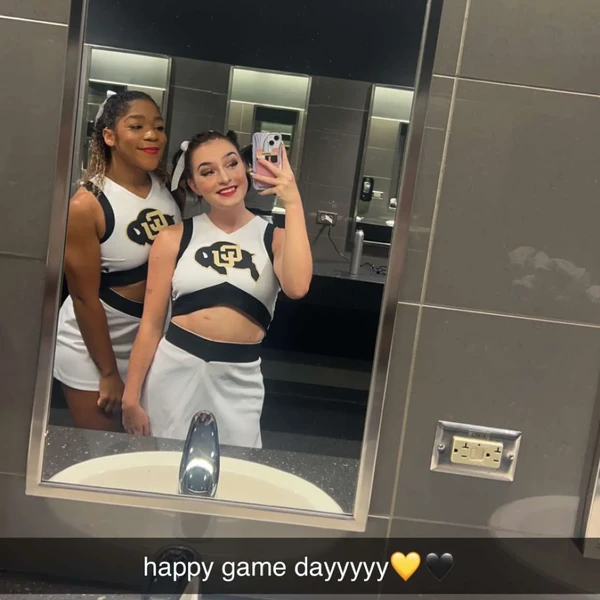
During my freshman year, I proudly represented CU as a member of the Cheer Team, an experience that strengthened my leadership, teamwork, and school spirit. Although health challenges required me to step away temporarily, I’m determined to rejoin the team my senior year — a goal that reminds me daily of the importance of perseverance and balance.
For the past two years, I’ve worked in Adaptive Behavioral Treatment supporting children with autism. This work has been the most rewarding part of my journey so far. It has shown me how compassion, patience, and psychology can transform lives — and it reaffirmed my commitment to pursue a future in mental health care.
I’m deeply motivated to continue learning, growing, and serving others. Every step I take at CU brings me closer to creating a space where young people can access the care, understanding, and encouragement they deserve.
Education
University of Colorado Boulder
Bachelor's degree programMajors:
- Psychology, General
Miscellaneous
Desired degree level:
Master's degree program
Graduate schools of interest:
Transfer schools of interest:
Majors of interest:
Career
Dream career field:
Psychology
Dream career goals:
Registered Behavioral Therapist
Behavioral Innovations2025 – Present1 yearRegistered Behavioral Therapist
Instructional ABA Consultants Inc.2024 – 20251 year
Sports
Rhythmic Gymnastics
Club2010 – 20199 years
Cheerleading
Varsity2019 – 20245 years
Awards
- Colorado State Champions
- 7th place in Nationals
Public services
Volunteering
CU Cheer — Outreach and community engagement2023 – 2024
Sharra Rainbolt Memorial Scholarship
ancer does not only affect the person diagnosed—it touches every life around them. For my family, that experience came through my grandfather, Cecil Oliver. Watching someone I loved deeply battle esophageal cancer reshaped the way I see life, resilience, and the purpose I want my own life to have.
My grandfather was a Navy veteran who served during the Korean War and remained committed to service long after his military career ended. He was a lifelong member of the Veterans of Foreign Wars and served as Post Commander at several VFW posts. Despite his leadership and service, he was also a quiet, faith-driven man with a warm sense of humor and a deep love for his family.
He loved me very much, and I loved him just as deeply.
Some of my most meaningful childhood memories are the quiet moments we spent together. When I was younger, my parents would bring me to visit him, and we would sit in his backyard and talk about life and school. One of the greatest gifts he gave me was introducing me to photography. He would take me to a nearby wildlife refuge where we spent hours photographing birds and animals. Those trips taught me patience and appreciation for the world around us.
When my grandfather was diagnosed with esophageal cancer at age seventy-nine, our lives changed. What followed was a difficult five-year battle filled with treatments and uncertainty. One of the hardest moments came when he had to have his voice box removed as part of his treatment. My grandfather loved conversation and storytelling, so losing his voice was devastating.
But even then, he found a way to communicate.
Instead of speaking, he began writing notes. When I visited him during chemotherapy treatments, we would pass handwritten notes back and forth. Even though cancer had taken his voice, it never took away his humor, love, or determination to stay connected with our family.
Watching his illness progress was incredibly difficult. Cancer affected not only his physical health but also the emotional well-being of everyone around him. I saw how it weighed on him, but also how it affected my grandmother, my parents, and the rest of our family. I also witnessed the financial strain it created, draining much of the savings my grandparents had built over their lifetimes.
One of the most important lessons my grandfather taught me was to live life fully because tomorrow is never guaranteed.
When he passed away, he was in a coma, and I never had the chance to hear him say goodbye. That loss reinforced how precious time and connection truly are.
Watching my grandfather’s battle with cancer shaped the direction of my life. Today, I am a psychology major at the University of Colorado Boulder. Seeing how cancer affected not only my grandfather physically but also the emotional and mental health of everyone around him sparked my interest in psychology. I want to help people navigate the emotional challenges that come with illness, loss, and trauma.
My grandfather’s strength and love for his family continue to guide me. Through my education and future career, I hope to honor his legacy by helping others find resilience and support during life’s most difficult moments.
Patricia Lindsey Jackson Foundation - Eva Mae Jackson Scholarship of Education
Faith has always been a quiet but steady presence in my life. It has shaped how I see others, how I approach challenges, and how I think about the purpose of my education. For me, faith is not only about belief—it is about compassion, humility, and a responsibility to use the gifts I’ve been given to help others.
My faith became especially important during one of the most difficult moments my family has experienced. Two years ago, my family lost my brother-in-law, Zach, to alcoholism and depression. His passing deeply affected everyone who loved him. It forced me to confront questions about pain, purpose, and the fragility of life that I had never fully considered before.
During that time, faith helped me navigate grief in ways I didn’t initially understand. It reminded me that even in moments of loss, we are called to care for one another and to find meaning through service and compassion. Rather than allowing that loss to leave me feeling hopeless, it strengthened my desire to pursue work that helps others who may be struggling silently.
This experience was one of the major reasons I chose to pursue a degree in psychology at the University of Colorado Boulder, where I am currently a junior. I want to understand how the mind works, how trauma affects people, and how mental health professionals can help individuals and families find support before they reach a crisis point. My goal is to build a career where I can help others navigate depression, addiction, and emotional hardship with empathy and dignity.
Faith has influenced not only my career goals but also how I approach my education. It reminds me that education is not simply about personal achievement; it is about stewardship. The knowledge and opportunities we receive carry a responsibility to give back to the communities that helped shape us. I believe education should ultimately lead to service, whether that means advocating for better mental health resources, supporting vulnerable populations, or simply being someone who listens without judgment when another person needs support.
In addition to faith, my family has been the greatest influence pushing me toward higher education. My parents have always emphasized the importance of learning, perseverance, and integrity. They taught me that education opens doors not only for personal growth but also for making a meaningful difference in the lives of others. Watching their work ethic and commitment to helping others has shaped my own approach to my goals.
I have also been inspired by educators and mentors who dedicate their lives to guiding students and helping them see their potential. Teachers who believe in their students can change the direction of a young person’s life, and their example has shown me the power of encouragement and leadership.
The legacy of individuals like Patricia Lindsey Jackson and Eva Mae Jackson—people who uplift their communities through education and faith—reminds me that leadership is not defined by titles, but by the way we serve others. Their example reflects the kind of life I hope to live: one grounded in integrity, compassion, and a commitment to making the world a little better than I found it.
My faith continues to guide me as I pursue my education and prepare for the future. It reminds me that success is not measured only by personal accomplishment, but by the positive impact we have on the people around us.
Through my studies, my values, and my commitment to serving others, I hope to honor that calling and contribute to stronger, healthier communities.
Our Destiny Our Future Scholarship
I believe the most meaningful impact begins with compassion—the willingness to truly see people and care about what they are going through. My desire to make a positive impact on the world grew from a painful experience that changed my perspective on mental health, community support, and the responsibility we all have to look out for one another.
Two years ago, my family lost my brother-in-law, Zach, to alcoholism and depression. Zach was someone who loved deeply and brought energy and humor to every room he entered. But behind that light was someone struggling with pain that many people around him did not fully understand. Losing him forced me to confront the reality of how powerful—and how silent—mental health struggles can be.
In the months after his passing, I found myself asking difficult questions. How many other families experience this same kind of loss? How many people suffer quietly because they feel ashamed to ask for help? And most importantly, what can I do to help change that?
Those questions ultimately led me to pursue a degree in psychology at the University of Colorado Boulder, where I am currently a junior. My goal is to dedicate my career to helping individuals and families navigate depression, addiction, trauma, and other mental health challenges before they reach a crisis point. Too often, people only receive support after they are already overwhelmed. I want to be part of building a system where help is accessible earlier, stigma is reduced, and conversations about mental health are normal and encouraged.
Making a positive impact, however, is not something that starts only after a degree is earned. It starts with how we show up for our communities today. I believe service can take many forms—from volunteering with organizations that support mental health awareness to simply being someone who listens without judgment when another person is struggling. These small moments of connection can change someone’s entire day, and sometimes even their life.
One of the most important lessons I have learned through grief is that healing is rarely something people can do alone. Community support, empathy, and access to resources are critical. That realization has strengthened my commitment to working in mental health and contributing to programs that prioritize prevention, education, and outreach.
In the future, I hope to work with community organizations, schools, and mental health programs to help create environments where people feel safe talking about what they are going through. I want to advocate for better mental health resources and help individuals develop tools that allow them to manage stress, trauma, and emotional challenges in healthy ways.
Positive change in the world rarely comes from a single moment or a single person. It grows through consistent acts of care, service, and leadership within our communities. Zach’s story reminds me every day why this work matters. His life continues to inspire my commitment to helping others find support, understanding, and hope.
By pursuing my education and dedicating my future to mental health advocacy and community service, I hope to turn loss into purpose and contribute to a world where fewer families experience the kind of heartbreak mine did.
Enders Scholarship
Loss has a way of reshaping everything you think you know about the world and about yourself. Two years ago, my family lost my brother-in-law, Zach, to alcoholism and depression. He took his own life, and the impact of that moment continues to echo through my life every day. Zach was not just someone who struggled—he was someone who loved deeply, laughed easily, and cared fiercely for the people around him. Losing him forced me to confront the reality of mental illness and addiction in a way I never had before, and it ultimately shaped both who I am and who I want to become.
Zach’s passing brought with it a storm of emotions: grief, confusion, anger, guilt, and deep sadness. I questioned whether there were signs we missed or words we could have said differently. For a long time, I carried the weight of helplessness—knowing how much pain he was in and how powerless we were to stop it. That grief affected my motivation, my sense of safety in the world, and my confidence in myself. Yet through that pain, I began to learn something unexpected: healing is not about erasing loss, but about learning how to live alongside it.
One of the most important tools in my healing journey has been journaling. Writing gave me a place to put the thoughts I couldn’t say out loud and the emotions I didn’t yet understand. Some days, journaling meant processing sadness; other days, it meant documenting gratitude or small moments of peace. Over time, it helped me recognize patterns in my emotions and reminded me that progress doesn’t have to be linear to be meaningful. Meditation also became a grounding practice—helping me sit with discomfort instead of running from it. Learning to pause, breathe, and observe my thoughts has been essential in rebuilding my sense of inner stability.
Zach’s story is one of the primary reasons I chose to major in psychology at the University of Colorado Boulder, where I am currently a junior. I want to understand the complexities of the human mind, particularly how trauma, depression, and substance use intersect. College represents more than an academic goal for me—it is a path toward helping others feel seen, supported, and understood before they reach a breaking point. My ambition is rooted in empathy and lived experience, and my education is the foundation that will allow me to turn loss into purpose.
The biggest influences in my life are my family members who model resilience every day, especially my parents, who taught me the importance of compassion and perseverance even in moments of profound grief. I am also inspired by mental health advocates and psychologists who speak openly about vulnerability and healing, reminding others that asking for help is a strength, not a weakness.
Zach’s passing changed me, but it did not define me. Through grief, journaling, meditation, and education, I am learning how to transform pain into understanding and understanding into action. This scholarship would support not only my education, but my continued commitment to healing—both my own and, one day, that of others.
Kim Moon Bae Underrepresented Students Scholarship
Embracing My Roots and Redefining Strength
My name is Brianna Oliver; I am a proud Mexican-American woman studying Psychology at the University of Colorado Boulder. My identity is more than a background detail — it’s the lens through which I see the world, the source of my strength, and the reason I’m determined to make a difference in mental health.
Growing up Hispanic in a predominantly white community often meant feeling like I had to fit into two worlds that didn’t always understand each other. At school, I sometimes felt out of place — like I had to work twice as hard to be seen as capable or intelligent. At home, I carried the pride of my family’s culture and the quiet pressure to succeed not just for myself, but for everyone who came before me. I watched my parents work tirelessly, teaching me that sacrifice and resilience are woven into our heritage.
Being part of an underrepresented group has taught me empathy and grit, but it’s also exposed me to how mental health is often misunderstood in minority communities. For many Hispanic families, therapy isn’t something we talk about — emotional struggles are met with phrases like “échale ganas” (“just try harder”) instead of understanding or support. Because of that, many people I love have carried pain in silence. I want to help change that.
When I was younger, I was diagnosed with anxiety and trichotillomania, a condition that causes me to pull my eyebrows when I’m anxious. It was confusing and isolating, especially when I realized how little awareness there was about conditions like mine. But over time, I learned that vulnerability isn’t weakness — it’s a bridge to connection. Therapy gave me tools to cope, but it also gave me a sense of purpose: to make sure others, especially those in underrepresented groups, never feel alone in their struggles.
As a Behavioral Technician, I work with children on the autism spectrum, helping them build communication and emotional regulation skills. Many of these children come from diverse backgrounds, and I see firsthand how culture can influence the way families view mental health and treatment. My heritage gives me an added layer of understanding — I know what it’s like to love deeply but struggle to find the right words for emotions. That connection helps me meet families where they are, without judgment, and walk alongside them toward healing.
Being Mexican-American has also shaped the way I approach education. I was raised to believe that knowledge is a form of empowerment — not just for myself, but for my community. I am the first in my family to pursue a degree in psychology, and I don’t take that privilege lightly. My goal is to earn a master’s degree and eventually open my own mental health practice that focuses on culturally competent therapy for Hispanic and other underrepresented populations.
Representation matters — in classrooms, in clinics, and in conversations about wellness. I want young Hispanic girls to see someone who looks like them working in psychology and know that their stories, emotions, and experiences are valid.
My identity as a Mexican-American woman is both a source of pride and purpose. It’s shaped my compassion, sharpened my determination, and reminded me that being underrepresented doesn’t mean being unseen — it means being part of a powerful story still being written.
Through my work in mental health, I hope to help write that story — one of understanding, empowerment, and healing for people who, like me, have learned that strength isn’t about hiding what makes you different, but about embracing it completely.
Wicked Fan Scholarship
Defying Gravity: What Wicked Taught Me About Being Unapologetically Myself
The first time I heard “Defying Gravity,” I wasn’t in a theater — I was sitting in my bedroom, watching a video of Idina Menzel’s Broadway performance. I remember the lights, the broom rising, and that final note that felt like it could shatter every ceiling I’d ever placed over my own potential. I didn’t just hear Elphaba singing about breaking free — I felt her.
That was the moment I became a Wicked fan.
I’ve always connected with Elphaba’s story — a person judged for how she looks, misunderstood for what she believes, yet determined to stand firm in who she is. Growing up with anxiety and trichotillomania, I often felt like the “odd one out.” I’d pull out my eyebrows when I was anxious, and classmates didn’t understand. For years, I tried to blend in, to be “normal,” but it only made me feel smaller. Like Elphaba, I had to learn that it’s okay to be different — that standing out isn’t a flaw; it’s a kind of magic.
Wicked taught me that being true to yourself will sometimes mean being misunderstood. But it also taught me that integrity is worth it. When Elphaba belts, “Too late for second-guessing, too late to go back to sleep,” she’s not just singing — she’s deciding to rise above judgment. That’s how I want to live.
When I joined the University of Colorado Boulder Cheer Team my freshman year, it felt like a dream. But after developing health issues, I had to step away. It was one of the hardest choices I’ve ever made. I remember listening to “For Good” during that time — the lyrics, “Because I knew you, I have been changed for good,” helped me accept that even endings can be beautiful. The team changed me, and even though that chapter closed, I carried those lessons forward.
Now, as a Psychology major working in Adaptive Behavioral Treatment for children with autism, I see pieces of Elphaba in the kids I work with — unique, brave, often misunderstood, but full of potential. My goal is to become a therapist who helps people see that they are not broken — they’re just learning how to fly in a world that doesn’t always understand their wings.
The message of Wicked — “Everyone deserves a chance to fly” — has become a kind of mantra for me. I survived incredible odds as a micro-preemie, born at just over one pound and battling sepsis and necrotizing enterocolitis (NEC). Even then, the odds said I shouldn’t have made it. But like Elphaba, I did. And every time I’ve faced doubt since, I’ve reminded myself that maybe I wasn’t meant to follow the path others expected. Maybe I was meant to defy gravity.
I love Wicked not just because of its music or magic, but because it mirrors real life — where courage often looks like standing alone, and kindness can change everything.
One day, when I have my own mental health practice, I want to help others find that same power within themselves — to stop apologizing for who they are and to embrace the version of themselves that the world needs most.
Because in the end, Wicked isn’t just about witches or magic.
It’s about courage, compassion, and the choice to rise — even when no one believes you can.
And like Elphaba, I plan to keep rising.
Taylor Swift Fan Scholarship
The Art of Becoming — What Taylor Swift Taught Me
My name is Brianna Oliver, and I’ve been a Taylor Swift fan for most of my life. Like millions of others, her music has been more than just a soundtrack — it’s been a companion through growing pains, heartbreak, self-discovery, and healing.
If I had to choose one performance that moved me most, it would be Taylor’s performance of “Clean” during The 1989 World Tour. It wasn’t the pyrotechnics or lights that made it powerful — it was her vulnerability. In that moment, standing on stage in front of thousands, Taylor reminded me that survival and self-renewal are beautiful acts of courage.
When she said, “You are not the opinion of someone who doesn’t know you,” it hit me in a way I can’t describe. I was 15, sitting in my room, struggling with anxiety and trichotillomania, a condition that makes me pull my eyebrows when I’m anxious. I’d spent years hiding it, feeling broken and ashamed. But hearing Taylor talk about pain, judgment, and the power of starting over helped me see that self-acceptance is its own kind of rebellion. That night, I cried — not because I was sad, but because, for the first time, I felt understood.
Taylor’s ability to evolve through eras — each one unapologetically different — taught me that change isn’t something to fear; it’s something to celebrate.
From the fearlessness of her country beginnings to the razor-sharp confidence of reputation and the introspective poetry of folklore and evermore, she’s shown that identity isn’t static. It’s something we build, lose, and rebuild again. As someone who has survived medical and emotional challenges, that message has guided me more than any book ever could.
I was born prematurely, weighing just over one pound, and survived necrotizing enterocolitis (NEC). I grew up hearing stories about how doctors didn’t think I’d live — but I did. That survival instinct shaped everything about me. So when Taylor sings about clawing your way out of the dark (“It’s me, hi, I’m the problem, it’s me”), I get it. When she writes about letting go, like in “You’re On Your Own, Kid,” I feel it. Her words remind me that even when life feels impossible, there’s always another verse waiting to be written.
As a Psychology major at the University of Colorado Boulder, I’m studying how emotions, memory, and connection shape our identities — the same things Taylor captures in her music. For the past two years, I’ve worked with children on the autism spectrum in Adaptive Behavioral Treatment, helping them develop coping and communication skills. I bring the empathy and hope I’ve learned from Taylor’s music into my work: reminding kids that who they are is enough, and their feelings are valid.
Taylor’s Eras Tour performance of “All Too Well (10 Minute Version)” also left a lasting impression on me. Watching her reclaim her narrative — with poise, grace, and fire — inspired me to reclaim mine. It made me want to tell my story without apology and help others do the same.
If I could thank Taylor, it wouldn’t be for the music itself, but for the message behind it: that growth and grace can coexist.
Her performances remind me that being vulnerable isn’t weakness — it’s art. And like Taylor, I hope to use my voice, my education, and my empathy to help others find healing through self-expression.
Taylor Swift taught me that life isn’t about perfection — it’s about becoming. And I’m still becoming, one song, one chapter, and one brave step at a time.
Sabrina Carpenter Superfan Scholarship
Confidence, Courage, and Espresso Energy
My name is Brianna Oliver, and I’ve been a Sabrina Carpenter fan for as long as I can remember — not just because she’s talented, but because of what she represents: confidence, individuality, and resilience. From her early days as Maya Hart on Girl Meets World to her bold, self-assured music career, Sabrina has been a role model who reminds me to embrace who I am — flaws, fears, and all — and to chase my dreams unapologetically.
I grew up watching Girl Meets World, and Maya Hart was the first TV character who made me feel seen. She was creative, misunderstood, and full of fire — but she also had a tender side that she didn’t always show. As a kid who battled anxiety and often felt out of place, I related to her struggle to balance strength with vulnerability. Watching Maya learn to open up while staying true to herself taught me that toughness and tenderness can exist together — and that lesson still sticks with me today.
When Sabrina transitioned from acting to music, I started following her even more closely. What I love most about her as an artist is her fearless evolution. She’s not afraid to experiment with sound, push boundaries, or address emotional truths in her lyrics. Songs like Nonsense and Because I Liked a Boy showed me that confidence doesn’t always come from having it all figured out — sometimes it comes from owning your story, even when it’s messy.
And then came Espresso. I remember hearing that song for the first time and instantly smiling. It wasn’t just catchy — it was magnetic. It carried that “main character energy” that every girl deserves to feel once in a while. For me, Espresso was more than a fun anthem; it was a reminder to enjoy life, to let loose, and to take up space without apology. As someone who used to struggle with self-doubt and overthinking, that message hit hard. Sabrina has a way of making confidence feel contagious.
Her growth as an artist has also inspired me in my own journey as a psychology major at the University of Colorado Boulder. Like Sabrina, I’ve had to navigate personal challenges while finding my voice. I was born prematurely, weighing just over one pound, and survived both sepsis and necrotizing enterocolitis (NEC) as a newborn. Later in life, I developed trichotillomania, a condition that causes me to pull my eyebrows when I’m anxious. For a long time, I tried to hide my anxiety, but Sabrina’s openness about being herself — imperfections and all — helped me realize that vulnerability can be empowering.
Her confidence on stage reminds me to show up authentically in my own life — whether I’m working with children in behavioral therapy, leading a class project, or simply trying to believe in myself on hard days. Sabrina’s career reminds me that success isn’t about being perfect; it’s about persistence, creativity, and the courage to keep growing, even when the world is watching.
Through her music, Sabrina has taught me that I don’t have to shrink myself to fit expectations. I can be kind and fierce, emotional and strong, and I can turn my struggles into something beautiful — just like she does with her art.
Sabrina Carpenter isn’t just an artist I admire; she’s someone whose journey has inspired me to live louder, dream bigger, and embrace every version of myself. Her music is a soundtrack to my own story — one of resilience, self-discovery, and learning to finally believe that I’m enough.
ADHDAdvisor Scholarship for Health Students
Helping Others Heal from the Inside Out
My name is Brianna Oliver, and I’m a junior at the University of Colorado Boulder, majoring in Psychology. Mental health has always been a personal and professional calling for me. My own experiences with anxiety and trichotillomania have given me a deep understanding of what it feels like to struggle silently — and what a difference compassion can make when someone finally listens.
For the past two years, I’ve worked in Adaptive Behavioral Treatment, supporting children on the autism spectrum. My role involves helping them develop emotional regulation, communication, and coping skills through structured routines and encouragement. Many of the children I work with experience anxiety, frustration, or difficulty expressing themselves. Being there to celebrate their progress — no matter how small — has taught me that mental-health support begins with patience, understanding, and consistency.
In addition to my work, I’ve become an advocate among my peers. When classmates open up about stress, burnout, or depression, I share what’s helped me — therapy, mindfulness, and knowing it’s okay to ask for help. Sometimes, just reminding someone they’re not alone can change the course of their day. I’ve learned that emotional support doesn’t always come from a professional title; it comes from showing up with empathy and without judgment.
My long-term goal is to earn a master’s degree in clinical psychology and open a community-based mental-health practice that focuses on children, families, and underserved populations. I want to combine clinical care with advocacy, helping reduce the stigma that often keeps people from seeking help — especially in Hispanic and minority communities where mental health is still misunderstood.
To me, being in healthcare means more than understanding diagnoses; it means understanding people. It means creating spaces where patients and colleagues feel safe to be honest about their struggles and proud of their progress.
Through my studies and my future career, I want to continue being that voice of calm and compassion — the person who says, “You’re not broken. You’re healing.” Because I know firsthand that emotional support can transform not just one life, but entire communities.
Bryent Smothermon PTSD Awareness Scholarship
Healing Through Understanding
My name is Brianna Oliver, and I’m the daughter of a U.S. Navy veteran who lives with Post-Traumatic Stress Disorder (PTSD). Growing up, I didn’t always understand what PTSD was — I just knew that my dad was different when certain memories surfaced, when the house went quiet, or when he needed space after what looked like an ordinary day to everyone else.
As I’ve gotten older, I’ve learned that PTSD isn’t a weakness. It’s a wound — invisible, but real — carried by people who’ve already given so much of themselves in service to others.
My dad served for over twenty years in the Navy, dedicating his life to leadership, mentorship, and protecting those around him. He taught me discipline, compassion, and what it means to take responsibility for others. But when he retired, the battles didn’t stop. They just changed.
PTSD doesn’t announce itself — it shows up in quiet moments: sleepless nights, hypervigilance, or the need to control one’s environment just to feel safe. As his daughter, I learned to read the signs long before I had the words to describe them. I learned when to talk, when to listen, and when just being there was enough.
Those experiences shaped who I am and what I want to do with my life. Watching my dad navigate PTSD gave me a front-row seat to the realities of mental health — the pain, the stigma, and the strength it takes to heal. It also made me realize how often veterans and their families suffer in silence, afraid of being misunderstood or judged. That realization is what led me to major in Psychology at the University of Colorado Boulder.
For the past two years, I’ve worked in Adaptive Behavioral Treatment, supporting children on the autism spectrum. That work has taught me patience, empathy, and the importance of individualized care — the same principles that apply to veterans dealing with trauma. Every person’s experience with PTSD is unique, but what connects them all is the need to be seen, heard, and believed. I want to dedicate my career to making that kind of care accessible and stigma-free.
My goal is to earn a master’s degree in clinical psychology and eventually open a practice that provides trauma-informed care for both veterans and their families. I want to bridge the gap between clinical treatment and community understanding — to create spaces where veterans can heal alongside their loved ones, not apart from them. Families carry the weight of PTSD too, often quietly, without recognition. I know that firsthand. But I also know that healing is possible when everyone learns to walk that journey together.
What I’ve learned from my dad’s experience — and from my own — is that trauma doesn’t erase who you are; it reveals your strength in ways you never expected. My father’s service and his courage to keep fighting, even after the uniform came off, have shaped my definition of resilience.
I hope to use what I’ve learned — as both a daughter and a future mental-health professional — to help other veterans see that their pain doesn’t define them, and their story isn’t over. Every person living with PTSD deserves to find peace, dignity, and purpose again.
For me, that’s not just a career goal — it’s a mission born from love, service, and the belief that even after war, there is always a way to come home.
A Man Helping Women Helping Women Scholarship
Helping Women Heal, Grow, and Believe Again
My name is Brianna Oliver, and I’m a junior at the University of Colorado Boulder, majoring in Psychology. I’ve faced challenges that nearly took my life before it began, but they also gave me my purpose: to help women and girls find their voice, their strength, and their healing.
I was born weighing just over one pound — a micro-preemie who developed sepsis and necrotizing enterocolitis (NEC), a condition that nearly claimed my life. I lost most of my small intestine and part of my colon, and doctors told my parents that I might not survive. But I did. I believe that survival comes with responsibility — to use my second chance to make a difference in the lives of others who are struggling to find hope.
Growing up, I lived with the long-term effects of my premature birth, and later, I developed anxiety and trichotillomania, a condition that causes me to pull my eyebrows when I’m anxious. For years, I tried to hide it, ashamed of something I didn’t understand. But through therapy, faith, and determination, I learned that strength doesn’t come from perfection — it comes from vulnerability, compassion, and the courage to be real.
That realization inspired my passion for psychology and mental-health advocacy. For the past two years, I’ve worked in Adaptive Behavioral Treatment, supporting children on the autism spectrum. Many of the kids I work with are girls who are already facing challenges with confidence, self-expression, and emotional regulation. I see myself in them — girls who are learning to navigate a world that doesn’t always make space for their feelings or voices. Every time one of them accomplishes something she thought she couldn’t, I’m reminded why I chose this career: to help others discover their strength in the same way I found mine.
Through my education, I plan to earn a master’s degree in clinical psychology and eventually open a community-based mental-health practice that focuses on women’s and girls’ emotional health. I want to specialize in helping those who face anxiety, trauma, and self-image struggles — issues that are often dismissed or minimized, especially in young women.
In my practice, I hope to create a space where women and girls feel safe to share their stories and receive care that acknowledges both their struggles and their potential. I also plan to volunteer with organizations that focus on mentorship and education for underrepresented women, particularly in Hispanic and minority communities, where mental-health stigma still runs deep.
I want to change the narrative that women must endure silently, smile through pain, or minimize their experiences to be respected. I want to show the next generation that being strong doesn’t mean never needing help — it means asking for it, and then helping others rise once you’ve found your footing.
To me, “helping women help women” isn’t just a phrase — it’s a movement. It’s what happens every time a woman chooses empathy over competition, mentorship over judgment, and encouragement over silence. It’s what I strive to embody through my work, my studies, and my everyday interactions.
The A Man Helping Women Helping Women Scholarship would help me continue my education and bring my vision to life — to be a therapist, advocate, and mentor who uplifts women by helping them heal from the inside out.
I want to dedicate my life to ensuring that every woman and girl I meet knows this truth:
You are not broken. You are becoming.
Greg Lockwood Scholarship
A World Where Every Mind Feels Safe
My name is Brianna Oliver, and I’m a junior at the University of Colorado Boulder, majoring in Psychology. The change I want to see in the world is simple but urgent:
I want to see a world where mental-health care is safe, inclusive, and affirming for everyone — especially LGBTQ+ youth.
As someone who has struggled with anxiety and trichotillomania, I know how isolating it can feel when your pain is invisible or misunderstood. Now imagine adding the fear of judgment because of who you are or who you love. That’s what too many LGBTQ+ individuals face every day — not only in society, but even within mental-health systems that are supposed to help them heal.
My path toward psychology started with my own survival story. I was born weighing just over one pound — a micro-preemie who developed sepsis and necrotizing enterocolitis (NEC), both life-threatening conditions that nearly took my life. I spent months in the NICU, and even though I don’t remember it, my family tells me that the nurses called me “the fighter.” I’ve carried that nickname with me ever since. My fight didn’t end when I left the hospital — it just changed form. Growing up with medical complications and mental-health struggles taught me empathy and a deep desire to understand what helps people heal.
Today, I work in Adaptive Behavioral Treatment, supporting children on the autism spectrum. Many of the kids I work with already face challenges related to acceptance, communication, and confidence. Some of them are beginning to explore who they are, including their gender and identity. I’ve learned that one of the most powerful things an adult can give a child is validation — the simple message that “you are okay just as you are.” It’s something every person deserves to hear but not everyone does.
That’s why the change I want to see in the world starts with education and empathy. I want to see schools and mental-health providers trained in affirming care, where LGBTQ+ youth can access counselors who understand their experiences and speak their language of identity and belonging. I want to see communities where family acceptance isn’t rare — it’s the norm. And I want to help lead that change by combining clinical psychology with advocacy, creating programs that provide inclusive care and educate families about how unconditional love can literally save lives.
My dream is to earn a master’s degree in clinical psychology and open a community-based mental-health center focused on children, teens, and families from underrepresented backgrounds. I want to build spaces where mental-health care and identity are not at odds — where a queer teen, a bilingual family, or a child with autism all feel seen and supported in the same room.
If the world is ever going to change, it will be because people choose to stand for one another — not just tolerate, but truly affirm. I want to use my life to do that: to show compassion where others show judgment, to listen where others dismiss, and to make room where others close doors.
The Greg Lockwood Scholarship would help me continue my education and keep working toward that mission. It would be an investment not just in my future, but in the kind of world I want to help build — one where every person feels worthy of love, care, and belonging.
Because healing starts when someone finally feels safe enough to be seen.
Bright Lights Scholarship
Lighting the Way Forward
My name is Brianna Oliver, and I’m a junior at the University of Colorado Boulder, majoring in Psychology.
For me, college isn’t just an education — it’s a promise I made to myself and to my family. As a Mexican-American woman and a first-generation college student, I’ve had to carve my own path through challenges that often made higher education feel out of reach. But I’ve learned that when you don’t see a clear path forward, you build one.
My journey began with survival. I was born weighing just over one pound — a micro-preemie who developed sepsis and necrotizing enterocolitis (NEC), both life-threatening conditions that required multiple surgeries and months in intensive care. Doctors didn’t expect me to live, but through faith, love, and sheer determination, I did. That early fight shaped everything about me. I learned that life itself is a gift — one worth working for, even when the odds are against you.
Growing up, I faced both physical and emotional challenges. I’ve lived with lifelong health effects from my early birth, and I’ve struggled with anxiety and trichotillomania, a condition that causes me to pull my eyebrows when I’m anxious. But through therapy, faith, and perseverance, I’ve learned to manage these challenges and use them as motivation to help others who feel unseen or misunderstood.
Since my sophomore year, I’ve lived off-campus in my own apartment and worked full-time to pay my bills and tuition. Balancing a full course load with a demanding job hasn’t been easy, but it’s taught me independence, time management, and financial responsibility. Every long day at work and late night of studying is a reminder that I’m building something bigger than myself — a life rooted in purpose and stability.
For the past two years, I’ve worked in Adaptive Behavioral Treatment supporting children on the autism spectrum. My role involves helping kids develop communication and coping skills through structured play and encouragement. Many of the families I work with come from underrepresented backgrounds, facing the same barriers my own family faced — limited access, financial stress, and cultural stigma around mental health. Working with them has deepened my purpose: to make mental-health care accessible, inclusive, and compassionate for every child and family who needs it.
My goal is to earn a master’s degree in clinical psychology and eventually open my own practice specializing in children’s mental health and family therapy. I want to provide affordable care, mentor young professionals of color entering the mental-health field, and advocate for early-intervention programs in schools. Representation matters — especially in psychology — and I want young people from minority backgrounds to see that they belong in every space where healing happens.
The Bright Lights Scholarship would not only help ease the financial burden of tuition and living expenses, but it would also represent validation — a reminder that people believe in students like me, who are fighting to turn adversity into opportunity. Financial stability would allow me to reduce my work hours and dedicate more time to research and community outreach in mental-health education.
My plans for the future are simple but powerful: to help others find hope when life feels heavy. Every challenge I’ve faced has been a lesson in resilience, and every victory — no matter how small — has reminded me why I keep going.
This scholarship would be more than assistance; it would be a light that helps me continue lighting the way for others.
Hines Scholarship
Turning Challenges Into Purpose Through Education
My name is Brianna Oliver, and I’m a junior at the University of Colorado Boulder, majoring in Psychology. For me, college isn’t just a step toward a degree — it’s a symbol of everything my family has worked and sacrificed for. As a Mexican-American woman and the first in my family to pursue a career in mental health, earning my college education means breaking barriers, rewriting expectations, and proving that the dreams my grandparents once whispered about can become reality.
My story began with a fight for survival. I was born weighing just over one pound, a micro-preemie who developed sepsis and necrotizing enterocolitis (NEC) — a severe intestinal disease that required multiple surgeries and months in the NICU. Doctors didn’t think I would live, but my parents never stopped praying. Against all odds, I survived. That early fight gave me a deep understanding of resilience — the kind that can’t be taught, only lived.
Growing up, I faced challenges that were both physical and emotional. I’ve lived my whole life managing the long-term effects of being a preemie, and I’ve also struggled with anxiety and trichotillomania, a condition that causes me to pull my eyebrows when I’m stressed. There were moments I doubted myself — times when I wondered if I could handle everything that came with college. But each challenge reminded me why education is so important: it’s the key to independence, stability, and the ability to help others.
Since my sophomore year, I’ve lived off campus in my own apartment and worked full time to pay my bills. Balancing school, work, and health has forced me to grow up quickly. I’ve learned how to budget, manage time, and prioritize long-term goals over short-term comfort. Every rent payment, every late-night study session, every morning I show up tired but determined — they’re all part of the same dream: to build a life where I can give back more than I’ve been given.
Working in Adaptive Behavioral Treatment for children on the autism spectrum has been one of the most rewarding parts of my journey. For the past two years, I’ve helped kids develop communication and coping skills, and I’ve seen firsthand how patience and compassion can change a life. Many of the families I work with come from minority or low-income backgrounds, and their resilience mirrors my own family’s. They remind me every day why I chose psychology — because mental health care should be accessible, empathetic, and inclusive for everyone, not just those who can afford it.
Through my education, I hope to earn a master’s degree in clinical psychology and open a practice that focuses on children’s mental health and family therapy. I want to help break the stigma surrounding mental illness in communities of color and create a space where families feel safe talking about their struggles. Representation in mental health matters, and I want young people — especially Hispanic girls like me — to see that their stories are valid, their pain is real, and their healing is possible.
Going to college means more than personal achievement; it means progress for my family, my culture, and the next generation. It means proving that no obstacle — not poverty, not illness, not fear — can define my future. College is my way of turning survival into service and hope into action.
STEAM Generator Scholarship
Breaking Barriers and Building Bridges
My name is Brianna Oliver, and I’m a junior at the University of Colorado Boulder, majoring in Psychology. As a proud Mexican-American and second-generation college student, I’ve learned that higher education isn’t just about earning a degree — it’s about carrying forward the hopes, sacrifices, and dreams of generations who worked tirelessly so I could have the opportunities they never did.
My grandparents came to the United States seeking a better life. They worked long hours in jobs that demanded everything from them physically but offered little stability in return. My parents grew up believing in the power of education, but the system was not built for them. Navigating it as children of immigrants meant facing cultural and financial barriers — language differences, limited access to college guidance, and a sense of being outsiders in spaces that weren’t made for families like ours.
When it came time for me to go to college, I felt both immense pride and overwhelming pressure. I knew that by walking onto a university campus, I was not just pursuing my own future — I was carrying my family’s faith, their unspoken dreams, and the legacy of everyone who came before me. But with that pride came fear: fear of not belonging, fear of failing, and fear of not living up to everything my family had sacrificed.
During my freshman year, those fears were heavy. I struggled with anxiety and trichotillomania, a condition that causes me to pull my eyebrows when I’m anxious. It was hard to talk about mental health, especially in a culture where silence and strength are often seen as the same thing. But over time, I learned that seeking help wasn’t weakness — it was courage. Through therapy, faith, and the support of my family, I began to understand that resilience doesn’t mean carrying everything alone.
My background has profoundly shaped not just my education, but my purpose. For the past two years, I’ve worked in Adaptive Behavioral Treatment, helping children on the autism spectrum develop communication and social skills. Many of these families are from underrepresented backgrounds, facing the same barriers to access and understanding that my own family faced in other areas. I’ve seen how deeply inequality runs, even in healthcare and education. That’s what drives me to pursue a career in clinical psychology — to bridge that gap by providing culturally sensitive, affordable, and inclusive mental-health care.
Being an underrepresented student in higher education means constantly navigating between two worlds: the one you come from and the one you’re trying to build. But it also means you develop a kind of strength that can’t be taught in classrooms. You learn persistence, humility, and empathy. My family’s story — from my grandparents’ sacrifices to my parents’ perseverance — has given me those qualities. And I intend to use them to create change that reaches far beyond myself.
My hope for the future is to open a community-based mental-health practice that integrates culture, faith, and education into care. I want to show young people, especially those from immigrant and minority backgrounds, that mental health isn’t a taboo — it’s an essential part of living a full, healthy life.
Higher education may have once felt out of reach for families like mine, but we are changing that story. I am proof that when one person breaks through, they hold the door open for others. My goal isn’t just to succeed — it’s to make sure the next generation doesn’t feel like outsiders, but like they belong.
Ella's Gift
Rising Strong — My Journey Through Mental Health and Healing
My name is Brianna Oliver, and I’m a junior at the University of Colorado Boulder, majoring in Psychology. My story is one of survival, resilience, and transformation. I’ve battled anxiety and trichotillomania since I was a teenager, and my recovery has become the foundation for my purpose in life—to help others find the strength to heal, just as I continue to find it every day.
My mental-health journey started long before I understood what anxiety was. I was born weighing just over one pound—a micro-preemie who survived both sepsis and necrotizing enterocolitis (NEC), a severe intestinal disease that nearly took my life. I spent months in the NICU, underwent multiple surgeries, and grew up with ongoing medical challenges. Doctors called me a miracle, but even miracles can struggle.
As I got older, that trauma followed me in ways I didn’t recognize at first. I constantly worried about my health and about disappointing others. I pushed myself to be perfect—academically, socially, physically. Beneath that perfectionism was a constant hum of fear. My anxiety became something I couldn’t turn off. It crept into my relationships, my sleep, and my confidence.
Around that same time, I developed trichotillomania, a condition that causes me to pull my eyebrows when I’m anxious. It became both a habit and a source of shame. I tried to hide it with makeup or excuses, but deep down, I felt broken. I didn’t understand why I couldn’t control something so small, and that lack of control made me spiral further into anxiety. I was caught between guilt and exhaustion—trying to be strong for everyone while silently falling apart.
The turning point came when I finally reached out for help. Starting therapy was terrifying; I worried it would make me look weak. But instead, it gave me freedom. My therapist taught me that mental health isn’t about being “fixed.” It’s about understanding yourself with honesty and compassion. Through therapy, I learned grounding techniques, mindfulness, and the power of reframing my thoughts. Most importantly, I learned to forgive myself for being human.
Over time, I began to rediscover joy—the kind that isn’t tied to achievement or perfection. I learned to talk about my struggles openly, and that vulnerability has been healing. My relationships improved because I stopped hiding behind a mask. My family became my biggest supporters, and together we learned that mental-health challenges aren’t weaknesses—they’re part of the story of how we grow.
That realization inspired my passion for psychology. For the past two years, I’ve worked in Adaptive Behavioral Treatment, helping children on the autism spectrum build communication and coping skills. Many of these kids also experience anxiety, and I see parts of my younger self in them—the restlessness, the self-doubt, the need for reassurance. I use what I’ve learned from my own therapy to meet them where they are—with patience, empathy, and consistency. Every time a child smiles after achieving something they once thought impossible, I’m reminded why I chose this path.
My educational goal is to earn a master’s degree in clinical psychology and eventually open a practice that provides affordable, inclusive mental-health care for children and families. I want to specialize in anxiety disorders and trauma recovery, using evidence-based therapy combined with compassion and cultural awareness. I also hope to advocate for mental-health education in schools, helping students understand that it’s okay to ask for help early.
My recovery plan isn’t about “curing” my anxiety—it’s about managing it with the tools I’ve built: therapy, faith, journaling, exercise, and community. I continue to see a therapist weekly, and I’ve learned to set healthy boundaries and practice gratitude daily. Faith is another anchor in my healing; I truly believe God gave me this journey not as punishment, but as preparation to serve others. Every time I share my story, I feel lighter, and I see how it helps others feel less alone.
When I read about Ella’s story, I saw reflections of my own. Like her, I’ve fought through darkness with determination. I’ve made mistakes, learned from them, and kept moving forward. Recovery isn’t a straight line—it’s a daily decision to keep trying, to keep believing in the possibility of a brighter future.
Receiving the Ella’s Gift Scholarship would not only ease the financial burden of my education but also honor the spirit of resilience that connects Ella’s story to mine. Her life reminds me that even when the world feels heavy, there is strength in persistence, beauty in honesty, and power in never giving up.
I am still learning, still healing, and still growing—but most of all, I am still here. And every day I’m grateful for that gift.
Begin Again Foundation Scholarship
WinnerA Second Chance at Life
My name is Brianna Oliver, and I am a junior at the University of Colorado Boulder, majoring in Psychology. Before I ever learned to walk or talk, I had already fought for my life. I am a survivor of sepsis and necrotizing enterocolitis (NEC) — two life-threatening conditions that nearly took me from this world before I was even a month old.
I was born weighing just over one pound — a micro-preemie so small that my father’s wedding ring could slide up my arm to my shoulder. At two weeks old, I developed NEC, a severe intestinal disease that causes tissue death in the bowel. Complications quickly led to sepsis, a dangerous, full-body infection. My organs began shutting down, and doctors told my parents that my chances of survival were slim. I lost most of my small intestine and part of my colon, and I spent months in the neonatal intensive care unit surrounded by tubes, machines, and prayers.
My family says that I survived because of faith and fight — and I believe that’s true. I may not remember those early days, but the story of my survival has shaped the way I see life, purpose, and the responsibility that comes with being given a second chance.
Growing up with a complex medical history wasn’t easy. I had to navigate ongoing health challenges, frequent hospital visits, and constant reminders that my body had endured something extraordinary. But those experiences gave me a perspective few people my age have: a deep appreciation for the fragility of life and the strength of the human spirit. Every scar on my body is a reminder that I’m still here — and that my survival wasn’t by accident.
That awareness led me to pursue psychology. I’ve always been fascinated by the connection between mind and body, and how people find meaning after trauma. For the past two years, I’ve worked in Adaptive Behavioral Treatment, helping children on the autism spectrum develop communication and coping skills. Many of these children have also faced medical or developmental challenges, and my story helps me connect with them in a personal way. I understand what it means to struggle — to have to work harder just to keep up — and I carry that empathy into every interaction.
My journey with sepsis also taught me that healing isn’t only physical. Survivors often deal with long-term emotional and mental effects — anxiety, fear, and the feeling of being different. I’ve lived that reality. I’ve battled anxiety and learned to manage it through therapy and faith. Those experiences have made me more compassionate and determined to help others overcome invisible wounds, just as I continue to work through my own.
In the future, I plan to earn a master’s degree in clinical psychology and specialize in trauma and resilience. My goal is to open a practice that focuses on children and families dealing with medical trauma, grief, or chronic illness. I want to create a safe space where people can begin again — emotionally, mentally, and spiritually.
The Begin Again Foundation Scholarship means more to me than financial assistance; it represents the very thing I strive to live by every day: beginning again with gratitude and purpose. I survived something that should have ended my story before it began. Now, I’m using that second chance to help others write theirs — with hope, strength, and the belief that no matter how dark things get, healing is always possible.
Ethel Hayes Destigmatization of Mental Health Scholarship
Turning Struggle Into Strength
My name is Brianna Oliver, and my journey with mental health has shaped nearly every part of who I am — my beliefs, my relationships, and the career I’m building for my future. For a long time, I thought my anxiety was something I had to hide. Now, I see it as one of the greatest teachers of my life.
I was born weighing just over one pound — a micro-preemie who doctors weren’t sure would survive. At two weeks old, I developed necrotizing enterocolitis and lost most of my small intestine and part of my colon. My parents spent months by my side in the NICU, praying for a miracle. From the moment I entered this world, my life was a fight — but I’ve come to realize that my survival story didn’t end when I left the hospital. It began there.
Growing up, I struggled with anxiety long before I knew what to call it. I worried constantly about things beyond my control — my health, school, friendships, the future. I always tried to keep a smile on my face and act like everything was fine, but inside, I felt like I was living with a storm that never stopped. Later, I developed trichotillomania, a condition that causes me to pull my eyebrows when I’m anxious. It became something I felt ashamed of — a visible reminder of an invisible battle.
In high school, I reached a breaking point. I was exhausted from pretending to be okay. That’s when I finally decided to see a therapist. It was one of the most important choices I’ve ever made. Therapy taught me that healing isn’t about “fixing” yourself — it’s about learning to understand yourself. I learned to manage my anxiety through mindfulness, journaling, and breathing exercises. I also learned to see trichotillomania not as a flaw, but as a signal that I need rest and compassion.
Therapy didn’t just help me cope; it helped me find purpose. It showed me the incredible impact that mental-health professionals can have, and it inspired me to pursue psychology at the University of Colorado Boulder. For the past two years, I’ve worked in Adaptive Behavioral Treatment with children on the autism spectrum. That experience has been transformative. I’ve seen firsthand how patience, structure, and unconditional support can help children thrive. Many of these kids struggle with anxiety or communication barriers, and I see pieces of myself in them — the fear, the frustration, and the strength underneath it all.
My experiences have made me passionate about destigmatizing mental health, especially in communities where it’s still misunderstood or minimized. I’m Mexican-American, and in many Hispanic households, mental health isn’t discussed openly. There’s often pressure to “push through” or keep personal struggles private. I want to change that. I want to use my education to create safe spaces for honest conversations about anxiety, depression, and trauma. When we share our stories, we give others permission to share theirs — and that’s how healing begins.
My journey has also changed how I see relationships. I’ve learned that vulnerability builds connection. I’m grateful for the friends and family who stayed by my side, but I’ve also learned the importance of setting boundaries and surrounding myself with people who value emotional honesty. My faith has also grown stronger through this process. I’ve learned to trust that God’s plan includes both the light and the dark — and that even pain can have purpose when it leads to compassion.
Looking ahead, my goal is to earn a master’s degree in clinical psychology and open a practice that focuses on children’s mental health and family therapy. I want to create programs that combine therapy with education — teaching emotional resilience in schools and communities to help kids recognize their worth before the world convinces them otherwise.
Ethel Hayes’ story — and her son’s courage in sharing it — reminds me that silence is what keeps stigma alive. Every person who speaks up about their mental-health journey helps someone else feel less alone. That’s what I hope to do for the rest of my life: turn my struggle into service.
My mental-health journey has taught me empathy, resilience, and hope. It’s taught me that even when the storm doesn’t pass, we can learn to dance in the rain. And if my story helps even one person realize that they’re not broken, just human — then every difficult moment will have been worth it.
Arthur and Elana Panos Scholarship
Guided by Faith, Grounded in Purpose
My name is Brianna Oliver, and I’m a junior at the University of Colorado Boulder, majoring in Psychology. My faith has been the constant light in every chapter of my life — from my earliest days in the hospital fighting for survival to my journey now as a college student pursuing a career focused on helping others heal.
I was born weighing just over one pound, a micro-preemie who doctors weren’t sure would make it. At two weeks old, I developed necrotizing enterocolitis, a life-threatening intestinal disease that required the removal of most of my small intestine and part of my colon. I spent months in the hospital, and my parents were told more than once to prepare for the worst. But God had other plans for me. Even as a baby, before I could understand what faith meant, I was covered by it — through my family’s prayers, the compassion of others, and the quiet grace that carried us through each uncertain day.
As I’ve grown, my faith has remained the foundation of my strength. It has taught me that God’s plan is often bigger than our understanding, and that even our struggles can become part of a greater purpose. Living with lifelong health complications and later being diagnosed with anxiety and trichotillomania has not been easy, but through prayer, scripture, and the support of my church community, I’ve learned to see these challenges not as obstacles, but as opportunities to grow closer to God and to others.
Faith also shapes how I treat people. One of my favorite verses is Philippians 2:4 — “Let each of you look not only to his own interests, but also to the interests of others.” That verse perfectly describes why I chose psychology as my major and mental-health care as my calling. For the past two years, I’ve worked in Adaptive Behavioral Treatment, helping children on the autism spectrum build communication and coping skills. Each session reminds me that compassion, patience, and encouragement can change a life. My faith gives me the strength to show up for those children with love, even on the hard days, because I believe that every person is made in God’s image and deserves to be seen and supported.
In my future career as a clinical psychologist, I plan to integrate faith-based principles of hope, forgiveness, and perseverance into my approach. I want to open a practice that provides affordable, inclusive mental-health care for families, especially those in underrepresented or underserved communities. I believe that my success will come not from personal ambition alone, but from using my gifts to serve others — just as God calls us to do.
Faith has taught me integrity, humility, and gratitude — three values I intend to carry into everything I do. Like Arthur and Elana Panos, I want my life to reflect the power of perseverance guided by faith. Their story reminds me that success isn’t about where you start, but about how you work, trust, and serve with purpose.
Whatever comes next, I know my faith will continue to be my compass — grounding me in hope, guiding me in service, and reminding me that every step I take is part of God’s greater plan.
Henry Respert Alzheimer's and Dementia Awareness Scholarship
Carrying Grandma Joann’s Memory Forward
My name is Brianna Oliver, and I’m a junior at the University of Colorado Boulder majoring in Psychology. My passion for understanding the human mind — how it shapes who we are, what we remember, and how we connect — comes from a very personal place. My grandmother, Joann, suffered from Alzheimer’s disease, and walking beside her through that journey changed me in ways I’m still discovering.
When I was little, my grandma was the heart of our family. She was warm, witty, and full of life — the kind of person who could make anyone feel special. She loved to cook, tell stories, and dance in the kitchen while her favorite oldies played. Watching her lose those parts of herself was one of the hardest things I’ve ever experienced. At first, it was small things — forgetting where she put her glasses, mixing up names. But as the disease progressed, the changes became more profound. She began to forget who we were, then eventually, who she was.
The hardest day came when she looked at me and didn’t recognize my face. I remember standing there, smiling through tears, realizing that the woman who had once remembered every detail of my childhood no longer remembered that I was her granddaughter. That moment broke my heart, but it also ignited something in me — a determination to understand what Alzheimer’s does to the brain and to the people who love those affected by it.
Alzheimer’s didn’t just change my grandma; it changed our whole family. We became caregivers, advocates, and students of the disease. My mom shouldered much of the daily care, and I helped however I could — from reading to Grandma to helping her eat when she forgot how. Those experiences taught me patience, empathy, and the importance of preserving dignity, even when memory fades. I learned that caring for someone with Alzheimer’s means loving them through every version of themselves — past, present, and even the ones shaped by the disease.
As painful as it was, watching my grandmother’s decline gave me purpose. It made me want to dedicate my education and career to helping people and families facing similar challenges. I chose to major in psychology because I want to better understand the brain, mental health, and how we can improve quality of life for people affected by neurological and emotional disorders.
For the past two years, I’ve worked in Adaptive Behavioral Treatment with children on the autism spectrum. Though different from dementia care, that work has deepened my understanding of how individualized, compassionate behavioral support can transform lives. It also showed me how powerful it can be when science and empathy work together — a lesson I first learned while helping my grandma.
My long-term goal is to earn a master’s degree in clinical psychology and contribute to research in aging and cognitive decline, particularly in Alzheimer’s and related dementias. I’m especially interested in studying the connection between mental health, brain function, and lifestyle interventions that could slow cognitive decline. Beyond research, I want to focus on family support and education, helping caregivers manage the emotional toll and connect with resources earlier in the process.
Alzheimer’s is often described as a thief — it steals memories, independence, and pieces of identity. But I’ve come to believe that love, understanding, and continued research can reclaim some of what it takes. Even though my grandma lost her memories, the love she gave our family never disappeared. It lives in us. It’s what drives me to study psychology, to volunteer, and to advocate for mental-health awareness in every community I’m part of.
Receiving the Henry Respert Alzheimer’s and Dementia Awareness Scholarship would help me continue my education and strengthen my ability to make an impact in this field. More importantly, it would allow me to honor my grandmother’s memory by turning her story — and the pain of losing her — into something that helps others.
Grandma Joann may not remember me, but I will never forget her. Her life — and the way she faced Alzheimer’s with grace and courage — continues to remind me why I chose this path. My goal is simple: to make sure that one day, fewer families have to watch someone they love fade away.
Stephan L. Wolley Memorial Scholarship
Family, Faith, and the Spirit of Perseverance
My name is Brianna Oliver, and I’m a junior at the University of Colorado Boulder, majoring in Psychology. I’ve always believed that strength isn’t defined by how easy the journey is, but by how you keep going when it gets hard. That belief has carried me through challenges in my health, academics, and athletics — and it continues to shape who I am becoming today.
I come from a close-knit and deeply supportive family. My parents have always reminded me that faith and perseverance can carry you through anything. That message has been a guiding light for me since the very beginning. I was born weighing just over one pound — a micro-preemie who doctors weren’t sure would survive. At two weeks old, I developed necrotizing enterocolitis and lost most of my small intestine and part of my colon. My family spent months in the hospital praying, hoping, and fighting alongside me. Because of them, I grew up with an understanding that life is fragile, but also sacred. Every day we’re given is an opportunity to make it count.
That mindset followed me into sports. Throughout high school, I was a competitive cheerleader and tumbler, and during my freshman year at CU Boulder, I earned a place on the CU Cheer Team. Cheerleading has always been more than a sport to me — it’s a family. We rely on one another, lift each other up (literally and figuratively), and celebrate not just the wins, but the effort it takes to achieve them. Being part of a team taught me accountability, discipline, and humility. It also showed me how powerful community can be when everyone works toward a common goal.
When health challenges forced me to step away from cheer temporarily, it was one of the hardest decisions of my life. But my family reminded me that stepping back doesn’t mean giving up — it means taking care of yourself so you can come back stronger. I plan to rejoin the team my senior year, not just as an athlete, but as someone who’s learned the importance of perseverance and balance.
My experiences have also shaped my purpose beyond athletics. For the past two years, I’ve worked in Adaptive Behavioral Treatment supporting children on the autism spectrum. Each day, I help kids build communication and coping skills through structured play and positive reinforcement. That work has strengthened my patience, empathy, and understanding of how powerful encouragement can be — values that I first learned on the mat with my teammates and at home with my family.
Looking ahead, I plan to pursue a master’s degree in clinical psychology and open a practice that provides affordable, inclusive mental-health care for children and families. I want to combine what I’ve learned as an athlete with my psychology background to create programs that use movement, teamwork, and goal-setting as therapeutic tools for young people struggling with anxiety, trauma, or developmental challenges.
The Stephan L. Wolley Memorial Scholarship stands for everything I believe in — faith, family, competition, and resilience. Stephan’s story is a reminder that life can change in an instant, but the values we live by are what endure. My family has always taught me to live with gratitude, to work hard, and to give back. I hope to honor that legacy by dedicating my life to helping others grow stronger — in body, mind, and spirit — just as sports and family have helped me.
Priscilla Shireen Luke Scholarship
Giving Back Through Service and Compassion
My name is Brianna Oliver, and I’m a junior at the University of Colorado Boulder majoring in Psychology. From as early as I can remember, I’ve believed that the best way to live a meaningful life is to help others find hope — even in their hardest moments. Service has never been just an activity to me; it’s part of who I am, woven into my education, my work, and my purpose for the future.
I was born weighing just over one pound, a micro-preemie who doctors weren’t sure would survive. At two weeks old, I developed necrotizing enterocolitis, a life-threatening condition that required the removal of most of my small intestine and part of my colon. My earliest story is one of community — of doctors, nurses, and volunteers who fought alongside my family to keep me alive. Their compassion taught me what service really means: giving of yourself for the sake of others, even when no one is watching.
That early experience shaped the person I am today. Over time, I developed an anxiety disorder and trichotillomania, conditions that challenged me emotionally but also deepened my empathy for others who struggle silently. Through therapy, I’ve learned that healing is not a straight line — and that sometimes the best thing we can offer another person is understanding. That’s why I decided to pursue psychology. I want to take what I’ve learned from my own challenges and use it to help others navigate theirs.
For the past two years, I’ve worked in Adaptive Behavioral Treatment supporting children on the autism spectrum. My job is part science and part heart. Every session is an opportunity to help a child build communication, social, and coping skills — sometimes through laughter, sometimes through patience, and always through encouragement. Many of the families I work with face additional barriers such as cultural stigma, financial hardship, or lack of access to care. My role gives me the chance to not only support the children, but also empower parents by teaching them techniques they can use at home.
Beyond my job, I volunteer at community events for children with special needs and mental-health awareness campaigns on campus. Whether it’s helping organize sensory-friendly activities or talking to peers about managing anxiety, I feel most alive when I’m part of something that brings people together for a cause bigger than ourselves.
In the future, I plan to earn a master’s degree in clinical psychology and open a practice that focuses on affordable, inclusive mental-health services for children and families. My vision is to combine therapy with community education — creating programs that teach coping skills, emotional regulation, and self-advocacy in both English and Spanish. Mental-health support should never be a privilege; it should be a right. I also hope to partner with local schools to provide early-intervention workshops so that kids learn how to manage emotions and build resilience before problems grow into crises.
Priscilla Shireen Luke’s legacy of spreading hope resonates deeply with me. Like her, I believe in serving not for recognition, but for impact — in giving quietly, consistently, and from the heart. Service is not a single moment; it’s a lifelong commitment to lift others as you climb. I want my life’s work to reflect that belief — to give back the same compassion that once saved me, and to leave the world a little more hopeful than I found it.
Jimmie “DC” Sullivan Memorial Scholarship
Building Confidence, Character, and Community Through Sports
My name is Brianna Oliver, and I’m a junior at the University of Colorado Boulder majoring in Psychology. I’ve always believed that sports have the power to shape people far beyond the field or the gym. They teach teamwork, leadership, resilience, and humility — qualities that define not just athletes, but strong members of any community. For me, being an athlete has never been just about performance; it’s about becoming the kind of person who lifts others up and gives back.
I grew up in Colorado, and from a young age, athletics were a central part of my life. I was a competitive cheerleader and tumbler through high school and earned a spot on the CU Boulder Cheer Team my freshman year of college. Cheerleading taught me that success depends on trust and communication — when one person struggles, the entire team feels it. That understanding shaped how I view leadership and service today.
When health issues forced me to step away from the team temporarily, it was one of the hardest decisions I’ve ever had to make. But that experience deepened my appreciation for what sports truly offer: belonging, structure, and confidence. I realized that even though I couldn’t compete, I could still contribute — by sharing what I’d learned with others. I began volunteering to help local youth cheer programs, teaching younger athletes not just skills and routines, but also how to manage pressure, set goals, and believe in themselves. Seeing their excitement when they master a new stunt or perform with pride reminds me why I fell in love with cheer in the first place.
Sports have been more than a hobby for me — they’ve been a form of therapy and personal growth. As someone who has lived with anxiety and trichotillomania, a condition that causes me to pull my eyebrows when I’m anxious, athletics have always helped me cope and find confidence. Cheerleading gave me a sense of purpose and structure that helped quiet my mind and focus my energy in a positive way. It taught me to turn nervousness into motivation, and self-doubt into self-discipline.
That personal transformation is one reason I chose to study psychology and pursue a career as a clinical psychologist specializing in children and adolescents. I currently work in Adaptive Behavioral Treatment with children on the autism spectrum, and I see every day how powerful structured play, movement, and positive reinforcement can be in building confidence. My dream is to one day integrate sports-based therapy into my work — combining physical activity and mental health strategies to help kids develop both emotional and physical resilience.
I believe that sports and mental health go hand in hand. Athletics can teach kids how to process failure, build relationships, and believe in themselves, but only if they have mentors and coaches who emphasize personal growth as much as performance. That’s the kind of impact I want to make — using my background in cheer, my education in psychology, and my personal journey with anxiety to help youth athletes see that their worth isn’t defined by wins or losses, but by effort, teamwork, and kindness.
Jimmie “DC” Sullivan’s legacy of commitment to youth sports and community involvement reflects the kind of life I want to live — one centered on service, mentorship, and helping others succeed. Sports gave me a foundation of strength and belonging; now I want to pay that forward by helping the next generation build confidence, character, and community through athletics.
Kalia D. Davis Memorial Scholarship
Living, Loving, Laughing, Learning — and Giving Back
My name is Brianna Oliver, and I’m a junior at the University of Colorado Boulder majoring in Psychology. I’ve always believed that strength doesn’t come from what we can do easily, but from what we overcome with grace, determination, and hope. That belief has guided my entire life — from surviving as a one-pound micro-preemie to building a future centered on helping others heal.
Growing up, I was passionate about both academics and athletics. In high school, I competed in cheerleading and tumbling, and when I came to CU Boulder, I earned a spot on the CU Cheer Team my freshman year. Being part of that team taught me discipline, teamwork, and resilience. It also showed me what it means to lead with positivity and support others — qualities that remind me of Kalia’s spirit of encouragement and excellence. When health complications forced me to take time away from cheer, it was difficult, but it also gave me perspective. I realized that the strength I learned from sports isn’t just physical — it’s emotional. It’s about showing up, no matter how hard things get, and continuing to move forward.
Outside of athletics, I’ve found my greatest fulfillment in community service. For the past two years, I’ve worked in Adaptive Behavioral Treatment with children on the autism spectrum. My work involves helping kids develop communication and social skills, often through simple, consistent acts of encouragement. Each child I work with reminds me that patience and compassion can change lives in quiet, powerful ways. Seeing their progress — a word spoken, a new behavior learned, a moment of joy — has strengthened my purpose to dedicate my life to mental health and emotional wellness.
My journey hasn’t been easy. I live with an anxiety disorder and trichotillomania, which causes me to pull my eyebrows when I’m stressed. But instead of letting those challenges define me, I’ve turned them into motivation. Through therapy, I’ve learned to manage my anxiety and to speak openly about mental health — especially within my Hispanic and Mexican-American community, where stigma still keeps many people silent. My experiences have helped me become a more empathetic person, and I plan to use them to advocate for others who feel unseen or misunderstood.
This scholarship would help me continue pursuing my education and career goals without the constant stress of financial strain. Like Kalia, I work hard to balance academics, employment, and service. I’m currently saving to apply to graduate programs in Clinical Psychology, where I plan to specialize in children’s mental health and family therapy. My dream is to open a practice that provides affordable, culturally sensitive care for families who may not otherwise have access to it. I also hope to develop outreach programs that bring mental-health education to schools and youth organizations, helping kids learn coping skills early in life.
Receiving the Kalia D. Davis Memorial Scholarship would be both a financial blessing and an emotional honor. Kalia’s story represents everything I aspire to be — strong, driven, caring, and full of life. Her legacy reminds me that excellence isn’t about perfection; it’s about showing up, giving your best, and lifting others along the way. I want to carry that same energy into everything I do — living fully, loving deeply, laughing often, and never stopping my pursuit of learning and helping others.
Therapist Impact Fund: NextGen Scholarship
My name is Brianna Oliver, and I’m a proud Mexican-American psychology major at the University of Colorado Boulder. My path toward becoming a mental-health professional was shaped long before I entered college. From surviving as a one-pound micro-preemie to navigating anxiety and trichotillomania, I’ve learned that healing isn’t linear — and that empathy born from experience can be life-changing.
Growing up, mental health wasn’t a common topic in my family or culture. Like many Hispanic households, there was an unspoken belief that you just “push through.” It wasn’t until my anxiety began affecting my daily life that I realized I needed help. Beginning therapy was transformative. It gave me tools to manage my anxiety and the courage to face the shame I once felt about my condition. It also opened my eyes to how many others, especially in BIPOC communities, never reach that same point because of stigma, language barriers, or lack of culturally competent care.
These experiences are why I want to become a clinical psychologist specializing in children and families. Working in Adaptive Behavioral Treatment with autistic children has deepened that commitment. Every day I witness the power of patience and representation. Many of the families I serve are bilingual or from underrepresented backgrounds, and I’ve seen how much difference it makes when someone meets them with cultural awareness and compassion. I want to be the kind of therapist who not only listens but also understands the cultural nuances that shape how people express emotion, seek help, and define wellness.
If I could make one significant change to today’s mental-health system, it would be to create stronger bridges between communities and providers through culturally responsive outreach and education. Too often, mental-health support begins only after crisis. I envision community-based wellness programs partnering with schools, churches, and cultural organizations to bring preventive mental-health education directly to where people live and gather. These programs would focus on early intervention — teaching coping skills, recognizing anxiety and depression, and normalizing therapy in both English and Spanish. When people feel seen and spoken to in their own language, trust begins to form — and that trust opens the door to healing.
Teletherapy represents one of the greatest opportunities for expanding access, especially for rural, disabled, or time-constrained clients. Virtual care can eliminate travel barriers and reduce stigma by allowing people to connect privately from home. However, teletherapy’s biggest challenges are ensuring equity in technology access and cultural representation among providers. Not everyone has reliable internet, private space, or a therapist who understands their background.
To make teletherapy more effective for diverse communities, innovation must focus on:
Representation — increasing diversity among therapists and matching clients with providers who share cultural or linguistic backgrounds.
Accessibility — developing low-bandwidth telehealth platforms and offering subsidies for families without internet.
Community Integration — combining teletherapy with local outreach so virtual care is supported by in-person resources when needed.
My vision for the future of mental health is one where care feels personal, inclusive, and barrier-free. I want to help build a system that reflects the diversity of the people it serves — one that uses compassion and innovation to bring healing to those who’ve been left out for too long.
Emma Jane Hastie Scholarship
My name is Brianna Oliver, and I’m a junior at the University of Colorado Boulder majoring in Psychology. My dream is to become a clinical psychologist working with children and families — especially those facing developmental or emotional challenges. For me, community service isn’t something separate from who I am; it’s the foundation of how I live my life and the reason I chose my field of study.
From a young age, I learned what service means not through words, but through experience. I was born weighing just over one pound — a micro-preemie fighting to survive. I spent months in the hospital and lost most of my small intestine and part of my colon due to a severe intestinal disease called necrotizing enterocolitis. My parents and I were surrounded by doctors, nurses, and volunteers who went above and beyond to help us. Their kindness left an impression on me that has shaped the person I’ve become. I learned that the people who serve quietly — the ones who show up when others are struggling — are often the ones who make the biggest difference.
That belief guided me when I began working in Adaptive Behavioral Treatment for children with autism two years ago. My role involves helping children build communication, social, and coping skills. Some days, progress looks like a full sentence spoken for the first time. Other days, it’s just a smile after a hard task. But every small victory feels like a shared triumph. Working with these children and their families has been one of the most meaningful experiences of my life.
One moment that stands out happened last year. I worked with a five-year-old boy who rarely made eye contact or engaged with others. His parents felt defeated and unsure of how to help. I began spending extra time outside of our regular sessions creating sensory-friendly activities that matched his interests — bubbles, soft music, and gentle play routines. After several weeks, he began to smile when I walked in. Eventually, he said my name out loud for the first time. His parents cried, and so did I. It was one of those moments that reminded me exactly why I chose this path — not for recognition or reward, but for the quiet joy of making life a little brighter for someone else.
Service, to me, means giving your time, energy, and heart to others without expecting anything in return. It’s not about grand gestures; it’s about consistency, patience, and compassion. My experiences have taught me that true servitude doesn’t always happen in front of an audience — it happens in classrooms, therapy rooms, and community spaces where people simply care enough to show up.
Looking ahead, I plan to continue my education and earn a Master’s in Clinical Psychology. My goal is to open a practice that provides affordable, inclusive mental health care for children and families, especially in communities where support is limited. I want to create programs that make mental health education accessible in schools and community centers so that families can get help early — before problems grow too large to manage alone.
I believe service is both a calling and a responsibility. Every act of kindness, every hour spent helping others, creates a ripple effect that reaches further than we ever realize. The people who dedicate their lives to serving others may not always be noticed, but they are the reason communities heal and grow. I want to be one of those people — the kind who gives quietly, cares deeply, and serves wholeheartedly.
Arnetha V. Bishop Memorial Scholarship
My name is Brianna Oliver, and I’m a proud Mexican American student at the University of Colorado Boulder majoring in Psychology. My journey toward a career in mental health has been shaped by both personal challenges and my deep desire to help others who feel unseen, unheard, or misunderstood — especially within marginalized communities like the one I come from.
From the day I was born, I’ve been fighting to overcome the odds. I came into the world as a micro-preemie, weighing just over one pound. At two weeks old, I developed necrotizing enterocolitis, a life-threatening intestinal disease that resulted in the loss of most of my small intestine and part of my large colon. My survival was uncertain, but with care, faith, and community support, I made it through. That early experience planted the first seed of gratitude and empathy that has guided my entire life.
As I grew older, I began struggling with anxiety and later developed trichotillomania — a condition that causes me to pull my eyebrows when I feel anxious. For a long time, I felt ashamed and isolated. Mental health wasn’t something people in my family or culture talked about openly. There’s a quiet strength in many Hispanic households — a belief that you just “push through” — but that mindset can also make it hard to ask for help. When I finally began seeing a therapist, everything changed. I learned that asking for help is not weakness; it’s courage.
That realization inspired my passion for mental health advocacy. For the past two years, I’ve worked in Adaptive Behavioral Treatment supporting children on the autism spectrum. Every child I work with has taught me something about resilience, patience, and the power of compassion. Many of the families I work with are from diverse backgrounds and face language barriers, cultural stigma, or financial hardship when seeking behavioral or mental health support. These experiences have shown me how deeply inequities in access and awareness still run — especially for Hispanic, Black, and low-income families.
Through my career, I want to change that. My goal is to earn my master’s degree in psychology and open a practice that focuses on accessible, culturally sensitive mental health care for children, adolescents, and families. I want to create a space where clients can express themselves in both English and Spanish, and where culture is seen as a source of strength — not a barrier to care. I also plan to collaborate with local schools and community centers to host bilingual workshops about anxiety, coping skills, and emotional well-being, helping to break the stigma that still surrounds mental health in so many Hispanic families.
My experiences have taught me that representation matters. Seeing a mental health professional who understands your culture and your story can make all the difference in whether you feel safe enough to open up. That’s the kind of psychologist I want to be — someone who reflects her community, not just serves it.
Mental health advocacy isn’t just my career path; it’s my calling. I want to carry forward the legacy of people like Arnetha V. Bishop, who fought to make mental health care more inclusive, compassionate, and accessible. Every conversation I have with a child, every family I support, and every barrier I help break down will be my way of continuing that legacy — one person, one story, and one act of understanding at a time.
Allison Thomas Swanberg Memorial Scholarship
To me, community service isn’t about checking a box or earning volunteer hours — it’s about seeing the people around you and deciding to show up for them. It’s about connection, compassion, and using whatever strengths you have to make life a little easier for someone else. My understanding of community service comes from both what I’ve received and what I’ve been able to give.
I was born a micro-preemie, weighing just over one pound. I spent the first months of my life in a hospital fighting to survive after developing a life-threatening condition called necrotizing enterocolitis. I lost most of my small intestine and part of my colon, but I made it through thanks to an entire team of doctors, nurses, and people in my community who supported my family through those dark days. Their compassion showed me what true service looks like — giving without expecting anything in return.
As I got older, I wanted to be that same kind of light for others. That desire has shaped the choices I’ve made in school, in work, and in life. For the past two years, I’ve worked in Adaptive Behavioral Treatment with children on the autism spectrum. This job isn’t just work to me — it’s an act of service. Every day, I get to help a child learn new skills, express themselves, or simply feel proud of who they are. The small victories — a word spoken, a smile shared — remind me that impact doesn’t have to be loud to be meaningful.
At the University of Colorado Boulder, I’ve continued to look for ways to give back. Whether it’s helping classmates navigate mental health resources or volunteering at local events supporting children with special needs, I’ve learned that service often starts in small, quiet moments. My own experiences with anxiety and mental health challenges have made me especially sensitive to the struggles others face but may hide behind a smile.
That’s why I’m majoring in Psychology and plan to pursue a Master’s degree in Clinical Psychology. My long-term goal is to open my own practice focused on children and adolescents with anxiety, developmental differences, and behavioral challenges. I want to build a space where mental health care feels safe, welcoming, and stigma-free — especially for families who might not have access to it otherwise. My dream is to one day offer a portion of my services on a sliding scale or pro bono basis so that cost never prevents a child from receiving the help they need.
For me, community service isn’t limited to volunteering a few hours a week — it’s a lifelong mindset. It’s a way of living that asks, “How can I use my experiences to make life better for someone else?” My journey has given me empathy, patience, and purpose — qualities I plan to carry into every part of my career and community involvement.
In the same way Allison Thomas Swanberg helped students pursue their dreams, I want to help others believe in their potential and see a future for themselves that’s full of hope. My career will be my way of paying forward the compassion that once saved my life — one person, one act, and one small victory at a time.
Mental Health Profession Scholarship
From the moment I was born, life tested my strength. I came into the world weighing just over one pound — a micro-preemie with odds stacked against me. At two weeks old, I developed necrotizing enterocolitis, a severe intestinal disease that required the removal of nearly two-thirds of my small intestine, my ileocecal valve, and part of my large colon. Doctors weren’t sure I’d survive, but somehow, I did.
Growing up after such a fragile start wasn’t easy. My childhood was filled with surgeries, hospital stays, and daily reminders that my body worked differently. As I got older, I began to carry that difference emotionally. Anxiety started showing up in ways I couldn’t explain — racing thoughts, sleepless nights, and a constant feeling that something bad might happen. Eventually, I was diagnosed with an anxiety disorder, and I began seeing a therapist weekly to learn how to manage it.
One of the hardest parts of my mental health journey has been living with trichotillomania, a condition that makes me want to pull my eyebrows when I’m anxious. For years, I felt embarrassed and tried to hide it. Over time, I’ve learned that hiding only feeds the shame. Through therapy, I’ve discovered that acceptance and understanding are far more powerful than denial. I now use grounding techniques, journaling, and mindfulness to manage my triggers. It’s still something I work on every day, but I’m proud of how far I’ve come.
During my freshman year at the University of Colorado Boulder, I achieved one of my biggest goals — joining the CU Cheer Team. It was an incredible experience that gave me confidence and community. Unfortunately, my health flared up again, and I had to step away to recover. That decision was difficult, but it reminded me that self-care isn’t weakness — it’s a sign of maturity. My goal is to return to the team my senior year stronger, healthier, and more grounded in who I am.
For the past two years, I’ve worked in Adaptive Behavioral Treatment with children on the autism spectrum. This experience has shaped my career goals more than anything else. Working with these children has taught me that patience and empathy can change lives. Every small breakthrough reminds me why I chose psychology — to help others feel seen, supported, and capable of growth, no matter their challenges.
I plan to continue my education and earn a master’s degree in psychology. My long-term goal is to open my own practice focused on helping children and adolescents with anxiety and developmental challenges. Mental health is something many people are still afraid to talk about, but I believe that the more we share our stories, the more we can change that.
I want to be part of a generation that normalizes therapy, empathy, and asking for help. I want to use my experience — from being a micro-preemie fighting to survive, to a young woman learning to thrive with anxiety — to inspire others to believe that healing is always possible.
My journey began in a hospital incubator, but it has led me to a purpose much bigger than myself. I’ve learned that mental health challenges don’t define you; they shape your strength, your compassion, and your drive to make a difference. That’s the kind of life I want to lead — one built on resilience, understanding, and hope.