user profile avatar

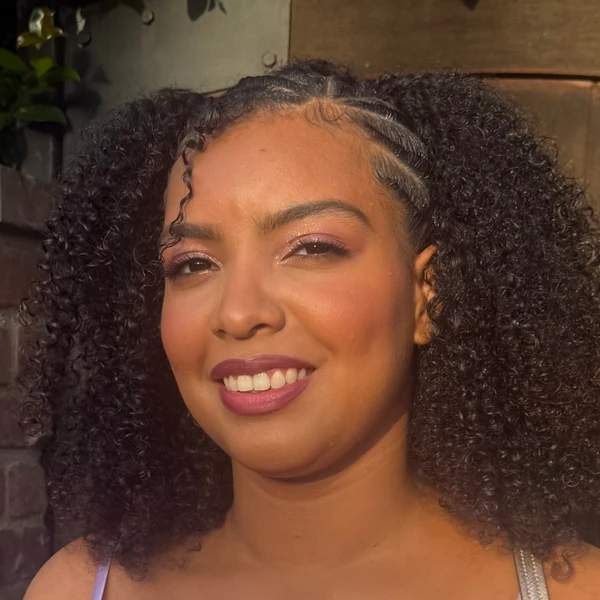
Brianna Frias

1x

Finalist

1x

Winner

General information

Gender
Female
US Citizenship
US Citizen
Ethnicity
Black/African, Hispanic/Latino
Heritage
African American, Mexican

Hobbies & Interests

  • Soccer
  • Community Service And Volunteering
  • Volleyball
  • Art
  • Coding And Computer Science

Reading

  • Adventure

I read books daily.

Bio

If I had to describe myself in a few words I would say that I'm an athelete, a painter, a philanthropist and I'm someone who genuinely cares about showing up for the people around me. Since elementary school, science has made my brain light up. I love digging deeper and going down worm holes for answers. My goal is to be a medical researcher because I want to be on the front lines solving issues that impact people in the real world. I want to be the person who discovers the things that change lives, and use science as a tool for the communities that need it the most. I have a real commitment to service, whether I'm reading with elementary age children to build their literacy skills or helping build homes for unhoused families in rural Guatemala, I've learned how important it is to show up for people, and how communities do not have boarders. Science and service are connected by my deep belief that everyone deserves a better opportunities and access to care. I'm a PAYS Scholar through Pomona College, spending my summers doing college-level coursework, and I was chosen by my peers to act as a go-between for students and adults, help with team-building, and designed merchandise. I also play varsity soccer. I am a strong candidate not just because of what I have accomplished, but because where I am heading. I have the work ethnic to get there. I show up and push myself and take nothing for granted.

Education

Wildwood School K-12

High School

2026 – 2027
Miscellaneous

Desired degree level:
Bachelor's degree program
Majors of interest:
Human Biology, Biochemistry, Biophysics and Molecular Biology, Visual and Performing Arts, General
Desired degree modality:
In-Person
Medical school interest:
No
English as first language:
No
Homeschooled:
No

Career

Miscellaneous

Dream career field:
Arts, Biology, Computer Science, Medicine, Biotechnology
Work experience:
1 year
Has nursing license:
No
Leadership experience:
Yes

Future Interests

  • Advocacy
  • Volunteering
  • Philanthropy
  • Entrepreneurship
Young Women in STEM Scholarship
I remember the smell of food cooking on a small camp stove in my grandmother’s tent, one of a few scattered across MacArthur Park, where I spent early mornings before she walked my siblings and me to school. I didn't grow up with tutors, test prep, or a quiet room to study in. I grew up learning how to find stability where there was none and how to keep going when the path forward was unclear. School meant more than learning. It meant steady meals and a safe space for eight hours. Yet, even in my safe haven, something was wrong. My world was blurry: the whiteboard, the book in front of my face, and the people standing before me. I assumed everyone saw the world this way until someone noticed I was struggling and gifted me my first pair of glasses. The moment I put them on, everything snapped into focus. That pair of glasses was a small piece of science and technology, and it changed how I understood everything. Science stopped being abstract; it became personal. As a first-generation college student heading to my first year of college in the fall, my decision to pursue a career in STEM is rooted in my love and curiosity for science, but also in my lived experiences. Being unhoused showed me that health often comes down to access, and that entire communities go without essential care simply because of cost and systemic barriers. Receiving glasses brought my own life into focus, which inspired me to found Shared Vision, an organization that collects used eyewear and partners with a recycler to distribute glasses to people who cannot afford them. That experience showed me how even relatively simple technologies can make a meaningful difference when they reach the people who need them. My desire to make a difference extended beyond vision care. During two spring breaks, I traveled to Guatemala on service trips to build homes alongside local families in a rural community. Having experienced homelessness myself, helping another family build a place they could call home was deeply meaningful. It was a full circle where I also saw how geography shaped access to basic necessities, including healthcare and technological advances. I began thinking about how advances in biotechnology, portable diagnostic devices, and telemedicine could help bridge that divide, bringing screening and early detection to communities far from hospitals and specialized medical facilities. It reinforced my belief that science is most powerful when it moves beyond the lab and reaches the people who need it most. That realization turned my academic curiosity into a focused mission. Back home, taking honors science classes gave me the space to dive deeper into advanced concepts, leading me to write a research paper on how CRISPR, a gene editing technology, can help crops survive climate change. Exploring how targeted genetic modifications can make plants resistant to severe droughts and extreme heat showed me the potential of biotechnology to safeguard essential food supplies and protect vulnerable communities against ecological shifts. I became fascinated by how scientific discoveries could move beyond the lab and become practical solutions to real-world problems. If I could do anything with my life, I want to be one of the women in the lab creating the next horizon of field diagnostics: tools that push beyond the limits of today's technology to bring equitable healthcare directly to the sidewalk. I dream of pioneering noninvasive devices that can detect health crises before symptoms even manifest. Imagine being able to identify untreated traumatic brain injuries or early cognitive decline without relying on a multimillion-dollar MRI machine. By studying biology and computer science in college, I plan to combine my understanding of biological processes with software engineering to develop devices that can collect and interpret biological data, recognize warning signs, and make diagnostic information accessible outside traditional medical facilities. I want to build technology that decentralizes healthcare so that location and income never dictate whether someone receives proper medical care. Reaching that lab and building those tools will take resilience, something I have already had to develop from a young age. One of the greatest challenges I have had to manage is generalized anxiety and post-traumatic stress disorder as a result of my early childhood. In my opinion, anxiety isn't something you overcome, but something you learn to live with and manage. Panic attacks can show up unexpectedly, and at times they can be overwhelming. Over the years, I have learned to recognize when my anxiety is building, use coping mechanisms and self-care strategies, and keep moving forward even when things feel difficult. I have maintained a 3.68 GPA while taking honors science, language, and math courses, playing varsity soccer, making time for painting and nail art, still while devoted time to Shared Vision. Learning to manage my anxiety has taught me persistence and how to keep working toward something meaningful even when the path isn't easy. That problem-solving mindset, focus, and lived perspective are exactly what I will bring to the lab, proving to young girls from nontraditional backgrounds that they belong in STEM.
Olivia Rodrigo Fan Scholarship
Olivia Rodrigo’s “hope ur ok” reminds me that everyone has a story that deserves to be understood, even when we do not know the person living it. The lyric “I hope that you're okay” expresses a kind of care that extends beyond our immediate circles and experiences. The song makes me think about how much we can learn when we look beyond ourselves and pay attention to what other people might need. That idea became more important to me when I began creating Shared Vision. During my sophomore and junior years, I traveled to Guatemala over spring break to help build homes. Before those trips, I understood that people lived with different circumstances, but being there made the idea more real. Building homes was a way to contribute something tangible, but it also made me think about the lives and experiences behind the work. I could not fully understand someone else’s life simply by visiting their community. I could, however, recognize that their circumstances mattered and that helping meant looking beyond myself. Rodrigo’s words, “Nothing’s forever, nothing is as good as it seems,” remind me that we cannot always know what another person is experiencing beneath the surface. Those experiences stayed with me after I returned home. I did not want service to be something I did for a week and then moved on from. I wanted to find a way to keep that sense of responsibility with me, which helped inspire me to create Shared Vision. Starting it meant taking a feeling I had about helping others and trying to turn it into something more lasting. It also meant recognizing that caring about an issue and actually doing something about it are two different things. What stands out to me most in “hope ur ok” is the lyric “With the courage to unlearn all of their hatred.” To me, it speaks to the importance of questioning what we have been taught, remaining open to perspectives beyond our own, and recognizing that our experiences do not define everyone else’s. Creating Shared Vision has encouraged me to think about that distinction. I cannot assume that I understand another person’s circumstances just because I want to help. I have to remain open to learning, listen to perspectives beyond my own, and think about what meaningful support actually looks like. I am still learning how to do that, but I know I want it to be part of the person I become. This perspective also connects to my interest in biology and scientific research. I want to understand how life works, but I am equally interested in how scientific discoveries can improve people’s lives, especially in underserved communities. Research has the potential to change lives, but those benefits matter most when we consider who has access to them. The song “hope ur ok” reminds me that empathy is more than feeling bad when someone is struggling. It is choosing to care about experiences beyond my own and allowing that awareness to influence my actions. Creating Shared Vision was one way I began putting that belief into practice. I do not have all the answers about how to make a difference, but I am learning that I do not need to have everything figured out before I begin. Sometimes, the first step is simply deciding that someone else’s story matters, too.
Women in STEM Scholarship
As a first-generation college student heading to my first year in the fall, my decision to pursue a career in STEM is rooted in my personal experience. I choose this path because I have witnessed what science can do for a community. It can change lives, but it can only change people’s lives if it reaches disenfranchised communities. As a woman in science, I want to help build a more equitable future in healthcare. For years, I experienced homelessness. Some of my earliest mornings were spent in my grandma’s tent in MacArthur Park, with food cooking on a small camp stove, before she walked me and my siblings to school. Housing instability was normal to me, and so was my bad eyesight, which left my world blurry. Then someone noticed how I was seeing, or really, not seeing, and gave me my first pair of glasses. I could see the whiteboard in class and the words in my favorite book. My entire world was in focus. That pair of glasses was a small piece of science and technology, and it changed how I experienced everything. Experiencing homelessness taught me that health often comes down to access. People go without simple things because they cost too much or because no one notices their need. The people most often overlooked are the ones who live with the problem every day, like families without stable housing and kids who cannot afford glasses. Healthcare needs diverse voices from many different lived experiences, because those voices know where the gaps are. As I thought about ways to help others, I looked at seven pairs of old eyeglasses in my desk drawers and thought about kids squinting at whiteboards they could not read, with headaches they could not explain. I started Shared Vision, a nonprofit that collects preowned eyeglasses and works with eyeglass recyclers to get them to people who need them but cannot afford them. Shared Vision taught me that health care can be accessible when people pay attention. That is the difference I hope to make. As a woman in medical technology, I envision creating devices that can perform health diagnostics out in the field. I imagine devices small enough to fit in a portable case and able to complete a total eye exam anywhere. Finding ways to deliver care to overlooked communities means building around their lives instead of expecting them to find their way to the system. I want to find ways to streamline care, so that where someone lives or how much money they have does not decide whether they get to see clearly, or get well. Representation in science matters. Young girls who do not see women in labs and clinics can come to believe those spaces are not meant for them. I want to be part of changing that, and to show girls from backgrounds like mine that they belong in STEM. This scholarship would help ease the financial pressure of starting college as a first-generation student, and it would let me put more of my time into my studies and into Shared Vision. More importantly, it would tell me that a path that began in a tent in MacArthur Park can lead to a lab. I am pursuing a career in STEM because I want to be part of the change. I want to use science and technology to make people’s lives better, especially the lives of people who have been overlooked, and I am ready to lead with curiosity, courage, and compassion.
Michael Rudometkin Memorial Scholarship
Selflessness was something I received before it was something I gave. For years, I experienced homelessness. Some of my earliest mornings were spent in my grandma’s tent in MacArthur Park, with food cooking on a small camp stove, before she walked me and my siblings to school. Housing instability was normal to me, and so was my bad eyesight, which left my world blurry, until someone noticed how I was seeing and gave me my first pair of glasses. I could suddenly see the whiteboard in class and the words in my favorite book. That one act of attention showed me what selflessness looks like: noticing someone’s need and doing something about it. I tried to return that in Guatemala. On spring breaks of my sophomore and junior years, I traveled there to build homes for unhoused families. Every morning I climbed a steep hill to the construction site, my legs on fire, to lay cement and hammer in nails. One day after work, a mother let me hold her baby girl, who would grow up in the house I was building. I knew what it felt like to not have a home, and now I was building one for a family. Going was not easy. My anxiety is intense, and international travel felt out of reach. Joining in and speaking up, even for things I believe in, do not come easily for me. I went anyway, twice. For me, selflessness has meant putting someone else’s need ahead of my own fear. When I came home, I could not stop asking how to keep serving. I looked at seven pairs of old eyeglasses in my desk drawers and thought about kids squinting at whiteboards they could not read, with headaches they could not explain. I started Shared Vision, a nonprofit that collects preowned eyeglasses and works with eyeglass recyclers to get them to people who need them but cannot afford them. I began collecting on my own. Last year I brought it to my high school and organized the first public collection drive, which meant asking my school community to participate and putting myself out there in ways that felt uncomfortable. We collected glasses that will give others a world that is crystal clear. Perseverance is the part that does not show. Shared Vision keeps asking me to speak up, which still does not come easily, and I keep doing it because I know what one pair of glasses did for me. This fall, I start college, and there are values I plan to keep. I will keep paying attention, because someone did it for me and it changed my life. I will keep speaking up, even when it is uncomfortable, because asking my school community to take part is what made the collection drive happen. Service will stay close as I study science, especially biology, and accessible health technology. I see science as a way to make real change, and I want to get it to people who do not always have access, and think about who benefits from breakthroughs and who gets left out. I am still a shy and quiet person who struggles with anxiety, yet someone noticed me and did something about it, and I want to be that person for others.
Marcia Bick Scholarship
Winner
I remember the smell of food cooking on a small camp stove in my grandmother’s tent, one of few scattered across MacArthur Park, where I spent early mornings before she walked my siblings and me to school. After school, my mother would pick us up and take us "home." That meant wherever we could lay our heads for the evening: a cheap motel, a car, or another tent. I didn't grow up with tutors, test prep, or a quiet room to study in. I grew up learning how to find stability where there was none, and how to keep going when the path forward was unclear. School meant more than learning. It meant steady meals and a safe space for eight hours. Yet, even in my safe haven, something was wrong. My world was blurry: the whiteboard, the book in front of my face, and the people standing before me. I assumed everyone saw the world this way, until someone noticed I was struggling and gifted me my first pair of glasses. The moment I put them on, everything snapped into focus, from the intricate patterns on my classmates’ shirts to the words on the whiteboard. The experience did not just correct my vision; it changed how I understood the world. I began asking questions: How does light bend through glass? How does the eye translate what it sees into something the brain can understand? Science stopped being abstract. It became personal. I pursue honors science classes because I understand science as something tangible, something that solves problems and changes lives. From CRISPR gene editing that can treat disease to research that helps crops withstand climate change, science turns curiosity into discoveries that people can actually feel. Realizing that science could change lives made me question why so few people from my background get the chance to be a part of it. Students from disadvantaged backgrounds don't lack ambition or ability. We lack access to resources and early support that changes the direction of a life. For me, that first life-changing turning point was a pair of glasses. Without it, I might never have found my way to science at all. That experience also shaped how I think about service. Seeing how one person's investment changed my future led me to Guatemala for two spring breaks to help build homes for families. When I returned, I started my own organization to bring vision care to under served communities. I have studied without stability, managed anxiety, and built a vision for my future from very little. This scholarship would allow me to attend college without financial barriers standing between me and my goal of becoming a medical researcher. A scholarship is more than financial aid, it is an investment in potential. Someone once noticed that I could not see clearly and changed my life. This investment will give me the tools to build a future where I can create life-changing breakthroughs for the communities that need them most.
Brianna Frias Student Profile | Bold.org