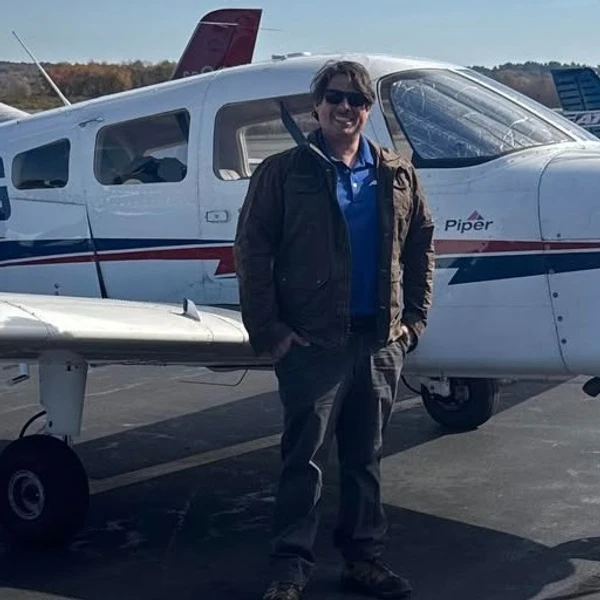
Hobbies and interests
Flying And Aviation
Snowboarding
Motorcycles
Dungeons And Dragons
Board Games And Puzzles
Fishing
Hiking And Backpacking
Kayaking
Travel And Tourism
Reading
Reading
Christianity
Fantasy
Biography
I read books daily
Brian Estano
2x
FinalistBrian Estano
2x
FinalistBio
I am a non-traditional student currently enrolled in an aviation flight training program, working toward becoming a Certified Flight Instructor. My path to education has been shaped by loss, recovery, and rebuilding rather than uninterrupted opportunity. After serving in the military, I returned to civilian life struggling with undiagnosed PTSD and financial instability. While I was deployed, I lost my marriage, my savings, and most of my personal belongings. When my service ended, I came home with very little and no clear understanding of why I felt disconnected and overwhelmed.
I tried to rebuild through college, but during that time I was diagnosed with reproductive cancer. That experience, combined with untreated mental health challenges, led to a prolonged period of depression and unhealthy coping. It took years of therapy, accountability, and support before I was able to stabilize and move forward with clarity.
Education eventually became a grounding force rather than a guarantee. Through recovery, I developed a deep respect for structure, mentorship, and disciplined learning: values that led me to aviation. Flying has given me purpose, confidence, and a future I once believed was out of reach.
My goal is to become a flight instructor and help other veterans and non-traditional students find direction and belonging through aviation. Financial support through scholarships directly impacts my ability to continue training and focus on growth rather than survival. I view education not as an entitlement, but as an opportunity I am committed to earning and paying forward.
Education
ATP Flight School
Trade SchoolMajors:
- Transportation and Materials Moving, Other
Bridgewater State University
Bachelor's degree programMajors:
- Criminal Justice and Corrections, General
Massasoit Community College
Associate's degree programMajors:
- Criminal Justice and Corrections, General
Bristol-Plymouth Regional Technical School
High SchoolMiscellaneous
Desired degree level:
Master's degree program
Graduate schools of interest:
Transfer schools of interest:
Majors of interest:
- Public Administration
- Aerospace, Aeronautical, and Astronautical/Space Engineering
Career
Dream career field:
Airlines/Aviation
Dream career goals:
Gunnersmate
United States Navy2005 – 20094 yearsFreight Conductor
CSXT2013 – 20163 yearsPassenger Conductor
AMTRAK2016 – 20248 years
Sports
Soccer
Varsity2003 – 20052 years
Research
Homeland Security, Law Enforcement, Firefighting and Related Protective Services, Other
Bridgewater State College — C.J. 430 - Student Researcher2013 – 2013
Arts
Jazz Band
Music1997 – 2003
Public services
Volunteering
Broken Chains Biker Church — Volunteer Biker2020 – PresentAdvocacy
Fischer House Foundation — Volunteer2023 – PresentVolunteering
American Legion Post 302 — Member/Volunteer2020 – Present
Future Interests
Advocacy
Volunteering
Entrepreneurship
Grover Scholarship Fund
I was born with wanderlust for wings and wheels—an early fascination with how things move and connect the world. From heavy machinery to airplanes overhead, I was captivated by the systems that build and sustain our country. As long as I can remember, I wanted to take to the skies. As I grew older, I realized just how expensive that dream would be.
Raised with five siblings in a low-income household, we were rich in values but short on resources. If I wanted to become the first in my family to earn a degree, I would have to fund it myself—without a co-signer. With few options available, I joined the United States Navy.
Aviation was not an available path during my enlistment, so I stepped into a critical wartime role as a Missile Technician Gunner’s Mate aboard an Arleigh Burke–class guided missile destroyer. I immersed myself in complex mechanical systems: pneumatics, hydraulics, electrical, electronics, and propulsion. In no small feat, I earned my Enlisted Surface Warfare Specialist insignia, mastering everything from navigation and radar to damage control and firefighting. The experience strengthened my discipline, technical skill, and accountability.
After my enlistment, I used the GI Bill to attend community college and then university. Because funding only covered three years, I petitioned to double my course load. I completed my associate degree in one year and my bachelor’s degree in eighteen months—only to be diagnosed during finals with Stage I non-seminoma cancer. I thankfully finished my degree while undergoing treatment, then began a long recovery. To pursue aviation, I needed five years cancer-free.
Five years later, I am married, a homeowner, and still paying medical debt. Flight training requires over $160,000—far beyond what my debt-to-income ratio would allow. Yet I refused to let the dream die. I secured a loan and enrolled at ATP Flight School. Every lesson feels like a gift. I have studied aerodynamics, weather, navigation, aircraft systems, and performance. Through grit and discipline, I progressed from zero flight time to Commercial Pilot with Instrument rating and Certified Flight Instructor (CFI).
However, program costs exceeded the original loan due to additional checkride fees. I now have three checkrides remaining estimated to cost about $4000 and fifteen flight hours left at $600 per hour totaling $9000. I have exhausted my funding during this final stretch. I've sold what I could and I'm in need of your aid.
Today, I sit at 245 flight hours out of the 260 hours, on the verge of completing my Commercial Multi-Engine, MEI, and CFII ratings. My goal is to instruct; not just to build time, but to mentor. My journey through military service, accelerated education, serious illness, and financial hardship has shaped my perspective. Tomorrow is never guaranteed. Excellence and preparation save lives.
I may be a non-traditional applicant, but I will finish this program. I will instruct with purpose, train safely, and pay forward the support I receive. Aviation is not just my dream - it is my calling, earned through resilience.
Kyle Rairdan Memorial Aviation Scholarship
Kyle Rairdan Memorial Scholarship Essay
I earned my Private Pilot’s License on January 27, 2025. That date represents far more than a certificate. It marks the moment a dream that had been delayed for years finally became real.
I have wanted to fly for as long as I can remember. Aviation drew me in because of the responsibility it carries. There is something profound about sitting at the controls of an aircraft knowing that preparation, judgment, and calm decision making matter deeply. Aviation demands humility and discipline, and those qualities are what inspire me most.
During my final semester of college, I was diagnosed with cancer. Treatment and recovery became my focus, and physically and financially it changed the trajectory of my life. Aviation moved from being a near term goal to something distant and uncertain. There were periods when I did not know if I would regain the stability needed to pursue flight training at all.
Recovery reshaped my perspective. When I finally reached a point where I could begin training, I approached it with urgency and gratitude. Each rating became a milestone that once felt impossible. After earning my Private Pilot’s License, I continued forward and completed my Instrument Rating, Commercial Pilot Certificate, and Certified Flight Instructor certificate. I am now focused on earning my Multi Engine rating, Multi Engine Instructor certificate, and Certified Flight Instructor Instrument. My long term goal is to build a professional career in commercial aviation while mentoring and instructing along the way.
The day I flew solo remains one of the most meaningful moments of my life. It symbolized more than technical ability. It symbolized perseverance. Every checkride since then has carried that same meaning. I am not pursuing aviation casually. I am pursuing it with intention and appreciation for the opportunity to do so.
Community has always shaped who I am. I remain involved with my local Boy Scouts of America, supporting youth development and leadership. I support the Massachusetts Military Support Foundation in its mission to assist service members and their families. I am also active with American Legion Post 302, where service and commitment to community continue long after uniformed duty ends. In addition, I have volunteered in emergency medical services and remain active as a licensed amateur radio operator, contributing to communication and preparedness efforts in my area. Service has shaped my sense of responsibility, and I carry that mindset into aviation. Flying is not just about skill. It is about safeguarding the people who trust you.
Kyle Rairdan’s passion for flight is what this scholarship honors. For me, aviation represents gratitude for a second chance and a commitment to move forward with purpose. Advancing into multi engine and instructor training requires significant financial investment, and support from this scholarship would directly assist in completing those next steps. More importantly, it would affirm that perseverance and dedication matter.
Every hour I log is a reminder that I am fortunate to be here and fortunate to fly. I intend to honor that opportunity throughout my career.
Kevin Howard Memorial Flying Scholarship
Some people spend years searching for their purpose. Others recognize it the moment they sit behind the controls of an aircraft. For me, aviation was not a single defining event, but a gradual awakening that brought together my lifelong love of technical mastery, my respect for service, and my desire to grow beyond every challenge I have faced. Flying has become the place where my experiences and ambitions finally align.
My path has never followed a predictable pattern. I served four years in the United States Navy aboard the USS Mason as a Gunnersmate, where I learned responsibility, precision, and the seriousness of operating advanced equipment. After leaving the Navy, I hoped to continue into aviation, but life had different plans. During college, I became ill with reproductive cancer, and later complex PTSD: and that battle forced me to put flying on hold for many years. Surviving and recovering both physically and mentally changed my outlook on life. It reminded me that time is limited and that the things that bring us joy should never be postponed indefinitely.
Returning to aviation after more than a decade away reminded me who I am at my core. The cockpit challenged me, motivated me, and pushed me to keep improving. Working through instrument procedures, approaches, and workload management made me realize how much aviation brings out the best in me. I am happiest when I am learning, refining my skills, and striving for excellence; and I am discovering at flight school that teaching comes very naturally to me and it's enjoyable!
I am now working toward my Certified Flight Instructor certificate, and this next step has deepened my passion even further. Teaching allows me to help new pilots build strong habits from the beginning and approach aviation with confidence and discipline. As I pursue my CFI, I am also committed to mentoring veterans who want to transition into aviation. Organizations like RTAG have shown how powerful it is when veterans help other veterans take their next steps. I hope to support that mission by guiding others through training and showing them that aviation is an achievable and meaningful path after service.
Being part of Aero Club of New England adds even more purpose to my training. The environment is supportive and rooted in values I lived in the Navy. Professionalism, integrity, camaraderie, and a collective desire to improve are central to the club’s culture. I am proud to be a member in good standing because the club represents a shared standard of excellence, not just a place to fly.
Kevin Howard’s story resonates with me deeply. His journey from a military Aero Club to more than a thousand hours, skydiving operations, flight training, and an internship with United Airlines reflects the kind of passion and determination that inspires others. His dedication to flying and his willingness to help others represent the qualities I hope to embody. His life is a powerful reminder that aviation is both an honor and a responsibility.
My long-term goal is to become a professional pilot who also lifts others up, especially fellow veterans. I want to contribute to a stronger safety culture, to mentor new pilots, and to pass forward the support that has been given to me. Kevin’s legacy reinforces the importance of ambition, drive, and leaving a positive impact on others.
Flying is more than a career path. It is where I feel focused, purposeful, and fully alive. Through this scholarship, I hope to honor Kevin’s memory by pursuing excellence, helping others, and continuing a life that is happiest when it is spent in the air.
Russell Koci Skilled Trade Scholarship
Continuing the Mission: Teaching Aviation Through Discipline and Service
I am currently studying aviation with the goal of becoming a Certified Flight Instructor (CFI). I chose aviation because it is a skilled trade built on discipline, structure, and personal responsibility: values that resonate deeply with me as a veteran. Flying demands preparation, consistency, and accountability. There are no shortcuts, and mistakes carry real and often severe consequences. That environment felt familiar to me and gave me a renewed sense of purpose after my military service; especially since I found it difficult to transition back into the private sector.
I plan to build a career as a flight instructor because instruction is where aviation can truly change lives. Many veterans leave the military with strong work ethics and leadership skills but struggle to find a clear path forward. Aviation offers a tangible, hands-on career where effort and discipline matter more than background or status. As a CFI, I want to help veterans and non-traditional students translate their experience into safe, confident piloting. Having an instructor who understands transition, hardship, and rebuilding can make the difference between giving up and pushing through to their private pilot license and more advanced ratings.
Like many veterans, I spent years not realizing that I was struggling with PTSD. I believed the constant tension, anger, and self-isolation were simply part of life after service. Over time, that untreated struggle began to affect every area of my life. Choosing to confront it - to ask for help, commit to treatment, and rebuild healthy habits: was one of the hardest decisions I have ever made. Recovery required the same qualities aviation demands: honesty, discipline, repetition, and accountability. That process fundamentally reshaped how I approach challenges and responsibility.
My determination was further tested when I was diagnosed with cancer while pursuing my education. Facing cancer forced me to decide whether I would let circumstances define my limits or whether I would continue forward with intention and resolve. The experience deepened my patience and resilience and reinforced my belief that progress is built one deliberate step at a time. Those lessons directly carry over into aviation, where mastery is earned through steady effort, not shortcuts.
I am now a newly certificated Commercial Pilot, a milestone achieved through persistence rather than privilege. Each rating has required sacrifice, long hours, and significant financial strain, resulting in substantial student loan debt. While that burden is real, it has strengthened my resolve to succeed and give back through instruction. This scholarship would provide meaningful relief and allow me to focus fully on completing my CFI training and serving students who depend on instructors who take their responsibility seriously and wish to be good stewards of their educational funds.
To me, a successful life is not defined by titles or income, but by usefulness, reliability, and most importantly - service to others. In aviation, that means training safe pilots, reinforcing sound judgment, and holding high standards even when no one is watching. As a future flight instructor, my goal is to continue the mission: helping others, especially veterans, realize that recovery, discipline, and purpose can lead not just to stability, but to success and a a life full of meaning in the service of others.
Ali Safai Memorial Scholarship
What Impact Has Flying or Aviation Had on Your Life?
Aviation came into my life at a time when I was learning, very personally, that nothing is guaranteed. During college I was diagnosed with reproductive cancer. Treatment, recovery, and the uncertainty that came with it forced me to confront how quickly plans can change and how fragile opportunity can be. Flying had always been something I wanted to do, but like many people, I told myself “someday.” Cancer made it clear that someday is not promised.
When I finally began flight training, I didn’t step into the cockpit feeling fearless or entitled, but feeling rather grateful. Every lesson mattered. Every flight felt earned. Aviation became more than a goal; it became a way to prove to myself that I could still move forward, still grow, and still build something meaningful after life tried to shut the door.
Flying reshaped how I see responsibility and service. My background in transportation taught me the importance of procedure and accountability, but aviation deepened it. In the air, there is no room for ego. You learn quickly that confidence must be built on preparation, humility, and trust in your training. Those lessons didn’t just make me a better pilot; they also made me a better student, teammate, and leader. Lessons I’d say were on par with my military training.
Very early on in flight school, I realized that what excited me most wasn’t just simply flying - it was learning the principals of flight, mechanics and systems of the Archer Piper, using instruments to navigate, and most importantly, helping others understand them too! Watching instructors patiently guide students through moments of doubt, fear, and breakthrough showed me the true heart of aviation. A good instructor doesn’t just teach maneuvers; they build confidence, judgment, and belief. That is why my goal is to become a Certified Flight Instructor.
I am especially drawn to helping those who may feel aviation is out of reach. Feeling the same way I once did: whether due to finances, background, or self-doubt. As someone who has faced serious illnesses and delayed this dream for years, I understand what it feels like to wonder if the opportunity has passed. I also want to help other veterans find their wings. Many veterans already possess discipline, decision-making skills, and resilience, yet struggle with transition and access. Aviation can give them purpose, structure, and a renewed sense of identity, and I want to be part of that bridge.
Ali Safai’s legacy reflects everything I admire about aviation instruction. He didn’t just fly… he inspired, prepared, and believed in others. That is the kind of impact I hope to have. Becoming a CFI is my way of giving back what aviation has given me: direction after uncertainty, confidence after hardship, and a future built on service.
Flying didn’t just change my life; it gave it clarity. Through instruction, I intend to honor that gift by helping others realize that the sky is still open to them, no matter how long the road to get there has been.
Veterans Next Generation Scholarship
How Being the Child of a Veteran Shaped My Career Aspirations
I was raised in a family where military service was not viewed as extraordinary, but as a responsibility that came with being part of something larger than yourself. In the Estano family, service was not announced loudly or worn proudly on sleeves. It was simply expected, modeled through generations, and carried forward through actions rather than words. Being the child of a Navy veteran, and the grandson of one as well, has profoundly shaped my values and my career aspirations.
My grandfather served as a Boiler Technician aboard the USS Salem during World War II. He was one of eight brothers, all of whom served during the war in dangerous and demanding roles. Remarkably, every one of them returned home alive and went on to start families of their own. That fact was never treated as luck in our family. It was understood as the result of discipline, accountability, and an unbreakable bond between brothers, both biological and military.
Behind those eight brothers stood my great-grandmother Minnie. She was a widow who had already endured more hardship than most, having lost her arm in a bakery mixer accident years earlier. Despite that, she raised eight sons on her own during one of the most uncertain periods in history. She wore a wooden prosthetic arm, which she was not shy about removing when her sons stepped out of line. The boys called her “The Enforcer,” a nickname spoken with equal parts fear and respect. Before they went to war, she made one thing very clear: every one of them was expected to come home alive, and there would be consequences if they did not. As family legend goes, even war was less intimidating than disappointing Minnie.
That story stayed with me growing up. It taught me that strength is not always loud, and leadership does not always come from rank. It comes from responsibility, resilience, and unwavering expectations. Those lessons carried into my father’s service in the United States Navy. Watching him live with quiet professionalism reinforced what I had already learned from family history. Service was not something you bragged about. It was something you lived out through discipline, integrity, and consistency.
Being raised in a veteran household shaped my understanding of work, sacrifice, and purpose. I learned that meaningful careers are built on perseverance, not comfort. That mindset guided me into my own service in the Navy and continues to influence my educational and professional goals today. I strive to pursue paths that demand accountability and contribute something real, rather than simply offering personal reward.
Like many military families, ours understood sacrifice in subtle ways. The long hours, the stress, and the unspoken weight that service can leave behind were simply part of life. Seeing that reality made me determined to pursue a career rooted in purpose, one that honors the sacrifices made by those before me.
Today, as I continue my education, I carry forward the legacy of the Estano family. I am motivated to build a career defined by service, resilience, and leadership. Being the child of a veteran gave me more than pride. It gave me direction. This scholarship would help me continue that legacy by allowing me to focus on building a future grounded in responsibility, contribution, and respect for those who served before me as an airline transportation pilot. Like my uncle Chuck, I have taken to the air and am mastering my aeronautical decision making and skills; and have recently obtained a commercial license, now working on my Certified Flight Instructor Certificate.
Elijah's Helping Hand Scholarship Award
My mental health was shaped most intensely by two parts of my life: fighting cancer and living with PTSD. Neither experience showed up gently, and neither left me the same person I was before. When you hear the word “cancer,” you think you understand it. The fear, treatment, recovery; but you don’t truly grasp the mental side until you’re the one sitting in the chair hearing the diagnosis. For me, it hit during a time in my life when I felt like things were finally starting to line up, I was free of my military obligation and about to take my final for the semester. Suddenly everything flipped upside down.
The physical part of cancer is one thing, but the mental side stays with you long after the treatments end. There’s a constant sense of uncertainty that creeps into your everyday thoughts: wondering if it will come back, wondering if the next pain or symptom means something, wondering if you’ll ever fully trust your body again. It changes the way you see time, and it changes the way you move through the world. Even after I healed physically, the mental recovery took far longer. I didn’t expect that. I thought once the doctors said “you’re in remission,” everything would go back to normal. It didn’t.
PTSD added another layer to that. Mine didn’t come from one single moment; it built over years of high-pressure, high-stress environments, piled on top of experiences that most people don’t talk about openly. You learn how to function with it, but that doesn’t mean you’re unaffected. The flashbacks, the hyper-awareness, the moments when something small pulls you right back into a situation you worked hard to move past... those things don’t disappear just because you will them away. They show up at inconvenient times, and they shape how you react, how you trust, and even how you sleep.
When you put cancer and PTSD together, it forces a reckoning. At one point, I was carrying fear about the past and fear about the future all at once. It affected my focus, my energy, and my relationships. I spent a long time feeling like I had to push through it alone, because that’s what I had always done. But cancer humbles you. PTSD humbles you. Eventually you admit either out loud or quietly: that pretending you’re fine doesn’t work forever.
Over time, these experiences changed me, not just in hard ways but in meaningful ones. I became more aware of what I needed mentally, not just physically. I started paying attention to what triggered me, what grounded me, and what actually helped instead of what I thought “should” help. I learned to talk about things I would’ve kept quiet before. I learned boundaries. I learned patience with myself.
Most of all, I realized that mental health is not a side note to physical health; rather it’s half the battle. Cancer taught me fragility. PTSD taught me how memory and trauma shape the present. Together, they forced me to grow in ways I never planned but ultimately needed. I’m stronger now, not because I avoided the hard parts, but because I faced them and kept moving anyway.
A year of group therapy, six months of cognitive processing therapy, six months of written exposure therapy, and an additional two thousand five hundred hours training amongst the Shamans in Peru all taught me how to rebuild. Therapy gave me the tools, and the Shamans in Peru helped me understand my place in the world again. For the first time in years, I’m walking forward with intention instead of fear.
John Nathan Lee Foundation Heart Scholarship
My grandfather, Frederick Estano, was one of the most influential people in my life. He served aboard the USS Salem, a heavy cruiser, and despite being told he would not live past forty-five due to heart complications, he lived an additional twenty years, making the most of every day. His heart condition presented daily challenges, but he never let it define him or limit the life he shared with those he loved. I was only thirteen when he passed, and his death devastated me. He was my primary male role model, as my father worked seven days a week, leaving me without a close male presence. Yet the lessons he taught me continue to shape who I am today.
Even in small moments, he taught me patience, curiosity, and appreciation for the world. We would watch trains at the rail station, a simple activity that sparked endless questions about mechanics and travel, even though we could never afford to ride them. We went fishing and spent hours talking about life, respect for nature, and taking pride in your efforts. Even a trip to the local coffee shop for a donut became a lesson in observation, kindness, and gratitude. He showed me that learning isn’t limited to classrooms or books; every moment contains an opportunity to grow.
My grandfather taught me to truly live. Watching him navigate life with heart disease showed me that even when circumstances are difficult, it is possible to find joy, embrace curiosity, and take pride in small achievements. Inspired by his example, I followed in his footsteps by serving in the United States Navy. My time in the Navy taught me discipline, responsibility, and resilience, and it provided critical support that helped fund my college education. Serving allowed me to pursue my ambitions while honoring the courage and dedication my grandfather demonstrated throughout his life.
His example inspired me to become the first person in my family to attend college, an accomplishment that required determination and perseverance through personal and financial obstacles. Later, his influence guided me toward an even bigger dream: becoming a pilot. Aviation has always been my passion, but the path to the skies is particularly challenging for first-generation students. Scholarships are few, flight schools often lack government aid, and training costs are high. Yet, my grandfather’s lessons reminded me to pursue what truly matters and to approach life with courage and persistence.
His resilience and determination in the face of heart disease also became a guidepost when I was diagnosed with reproductive cancer during college. Facing treatment and the uncertainty of my health, I drew strength from his example. I learned to persevere, focus on what I could control, and embrace every moment fully. Those lessons carried me through treatment, rigorous studies, and ultimately helped me graduate cum laude.
This scholarship represents more than financial assistance. It represents an opportunity to honor my grandfather’s legacy by continuing the lessons he instilled in me. Heart disease challenged him, but it never diminished the impact he had on my life. I carry his lessons forward in everything I do, from my education to my career aspirations. Through my pursuit of flight and all that I strive to accomplish, I hope to reflect the resilience, curiosity, generosity, and courage he exemplified. Frederick Estano taught me to live fully, to embrace challenges, and to never lose sight of dreams. His passing was heartbreaking, but his life and lessons continue to guide me every day. Those lessons are the foundation of who I am, and they will continue to shape the person I strive to be.
Learner Math Lover Scholarship
"Why I Love Math"
Flying is built on math. Every time I take the controls in the cockpit of an aircraft, I’m working through a moving equation that changes with altitude, temperature, and wind. Before my airplane even leaves the ground, I am running calculations for weight and balance, fuel requirements, takeoff performance with and without flaps, center of gravity from the datum, and crosswind limits. Once in the air, math is behind every decision I make. It tells me how fast to descend or climb, how much fuel I’ll have when I land, how to triangulate my position using very high frequency omni-directional ranges, and how to adjust my heading to fight a strong headwind or ride a tailwind for best groundspeed. Math turns all those variables into something predictable and exciting; that’s what makes flight possible!
What I love about math is how it makes sense of uncertainty. There’s a strange kind of peace in knowing that if you respect the numbers, they’ll always give you the truth. Every formula, chart, and calculation in the pilot's operating handbook has a purpose. When I’m flying an approach in low visibility or planning a long cross-country trip, those numbers are what keep me focused and safe. Math doesn’t just explain flight; it gives it structure and meaning.
My respect for math started long before I became a pilot. During my time in the Navy as a Gunnersmate, math was a part of everyday life. Working with large caliber weapon systems like the 5-inch naval rifle and the 25mm chain gun required exact precision. We had to calculate distance, muzzle velocity, and wind drift, often in high-pressure environments. A single mistake could shift an impact point by hundreds of yards. That kind of responsibility taught me to trust math and to never take accuracy for granted.
Today, that same mindset carries into my flying. Whether it’s calculating a glidepath or balancing a fuel load, I approach each task with the same respect for precision that I learned at sea. Math has followed me from the deck of a destroyer to the sky above it. It’s honest, dependable, and always there to guide me when the margin for error is small. That’s why I love math; it keeps me grounded while helping me fly, keeps my passengers and I safe, and and it’s incredibly rewarding when precision turns into performance.
Mikey Taylor Memorial Scholarship
"Flying Through the Storm"
For years, I carried the invisible weight of war; an unseen gravity that pulled on every part of my life. During my four years of service in the United States Navy, I learned discipline, resilience, and leadership. But when I came home, I also carried something else: Post-Traumatic Stress Disorder. Like many veterans, I returned physically whole but mentally fractured. PTSD reshaped how I saw myself, the world, and the people around me. It thrives in silence, and for too long, I believed that silence was strength. It took nearly a decade for me to realize that asking for help wasn’t weakness; it was courage.
My experience with PTSD has deeply influenced my beliefs, relationships, and career aspirations. At first, I believed no one could possibly understand what I had been through. That belief what therapists call a “stuck point”, kept me distant and guarded. I distrusted even those closest to me. Friends and family could see the change in me, but they didn’t know what to say or how to help. Their silence matched my own, and the distance between us grew. I turned to substance use to dull the anxiety and night terrors, mistaking numbness for control. But isolation and avoidance only reinforced the belief that I was alone.
Recovery began when I accepted help through the VA and veteran support programs. Therapy helped me confront those distorted beliefs and understand that vulnerability was not weakness; it was the bridge back to connection. I learned to communicate again, to trust others, and to forgive myself for not being the person I once was. Over time I realized that healing wasn’t about returning to who I was; it was about becoming someone new, someone stronger and more compassionate.
Those lessons have shaped every aspect of my life and inspired the career path I’m on today. I’m currently enrolled at ATP Flight School, an accelerated program for aspiring airline pilots. Aviation has been a lifelong passion of mine, but between battling PTSD and later surviving cancer, my dream was delayed by nearly a decade. Now, I’m determined to see it through. The path is expensive—my student loans total nearly $195,000—but every hour in the air brings me closer to my goal of flying for American Airlines once I reach 3,000 flight hours.
My journey has also given me a new mission: to advocate for mental health reform in aviation. Too many pilots today are afraid to seek help for depression, anxiety, or trauma because they fear losing their medical certification; and with it, their livelihood. The system unintentionally teaches silence, just as PTSD once taught me to hide my pain. I want to help change that. Pilots deserve a culture where mental health care is viewed not as a threat to safety, but as a vital part of it.
My beliefs have evolved from seeing vulnerability as dangerous to recognizing it as essential. My relationships are now grounded in empathy, honesty, and trust: qualities I once struggled to embrace. I’ve learned that true strength is found in connection, and that sharing our struggles can light the way for others still lost in theirs.
Cancer, PTSD, and financial strain have all tested my resolve; each obstacle has reaffirmed my purpose. I know now that not all stars must fall. Some simply burn differently—steadfast against the darkness—guiding others home. My mission is to be one of them: a pilot not only in the skies, but in the cause for change, helping others rise through the turbulence of mental health stigma toward a future where no one flies alone.
Grover Scholarship Fund
Aviation has always been more than just a dream to me; it’s been a calling. Ever since I was a kid staring up at the sky, I knew I wanted to fly. The structure, discipline, and sense of freedom that comes with aviation matched perfectly with the mindset I developed while serving in the U.S. Navy. But after my service ended, life had other plans for me.
In my early twenties, I was diagnosed with cancer. The treatments were long and difficult, and recovery took years. It set my aviation goals back by nearly a decade. At that time, I was focused on simply surviving and rebuilding my health. Later, I was also diagnosed with PTSD, a challenge that forced me to face my mental health head-on. Through care from the VA, therapy, and eventually spiritual healing, I found balance again. But for years, flying felt like a dream out of reach.
Once I was in remission and cleared to pursue a Class 1 Medical Certificate, I decided it was time to stop waiting for the “right moment.” I enrolled full time in ATP Flight School - a fast-track program that pushes students to earn their ratings efficiently and at the highest professional standard. It’s been one of the most demanding and rewarding experiences of my life.
Unfortunately, flight training isn’t covered by FAFSA or federal financial aid. Every hour in the air and every certification comes at a steep personal cost, and I currently carry around $195,000 in private student loans to make this dream a reality. Still, I believe no investment is more worthwhile than one that fulfills a lifelong calling.
My goal is to complete my training, earn my Certified Flight Instructor (CFI) and Certified Flight Instructor-Instrument (CFII) ratings, and help others achieve their aviation goals while I continue to build hours toward my Airline Transport Pilot (ATP) certification. My ultimate dream is to fly for American Airlines once I reach 3,000 flight hours; and I currently have a conditional job offer with Skywest Airlines once I reach 1500 flight hours. Yet, I am currently around 210 flight hours and have a long path ahead still.
Cancer delayed my dream, but it didn’t end it. If anything, it gave me a deeper appreciation for every opportunity to learn, grow, and push forward. The obstacles I’ve faced have shaped me into someone who refuses to give up; someone who understands that perseverance is often what separates those who dream from those who fly.
This scholarship would help lift part of the financial weight off my shoulders and allow me to focus more fully on training, teaching, and giving back to the aviation community. My story isn’t about what grounded me - it’s about what helped me take off again.
Khai Perry All-Star Memorial Scholarship
The phrase “not all stars must fall” reminds me that strength is not defined by how brightly we shine at our best moments, but by our ability to endure through darkness and keep burning even when the world seems determined to snuff us out. It speaks to the idea that resilience, not perfection, is the truest form of light; and that we do not need to fall to prove that we have lived.
My life has tested that belief many times. I was twenty-three when I was diagnosed with cancer. At that age, you believe your life is just beginning: your plans are endless; your energy is boundless; and your future feels invincible. When that diagnosis came, it felt like the universe had gone silent. Treatment was grueling. There were days when getting out of bed was an act of defiance. I lost weight, strength, and at times, hope. But I made a choice early on: if I was going to fight, I would fight with everything I had. I would not fall.
I eventually reached remission, but surviving cancer left me changed. It stripped me down to what mattered most. I realized I was not meant to go back to who I was before; I was meant to grow into someone new - someone who understood what endurance really means. That realization became a guiding principle through every challenge that followed.
Before my illness, I served in the United States Navy aboard the USS Mason (DDG-87) as a Gunnersmate Second Class. My time in service taught me discipline, courage, and how to function under extreme pressure. Yet it also left scars that weren’t visible. I returned home carrying the weight of PTSD, and for a long time, I tried to manage it on my own. Like many veterans, I equated silence with strength. I was wrong. The turning point came when I nearly lost my marriage. That was when I reached out for help through the VA and began therapy. Learning to ask for help was humbling, but it was also liberating. It reminded me that vulnerability and courage are not opposites; they coexist.
Amid all this, I continued to hold onto one dream that had followed me since my time at sea: to fly. I used to watch aircraft launch and recover on the horizon and imagine what it would feel like to command something that defied gravity. After leaving the Navy, I set my sights on becoming a pilot, but my medical history made it a long and uncertain road. Between my cancer recovery, PTSD treatment, and financial setbacks, it seemed like that goal would always be just beyond reach.
Instead of giving up, I poured my energy into helping my wife build her dream. Together, we opened a small-town bakery (Traditions Bakeshop) in Rehoboth, Massachusetts. Through early mornings, long nights, and hard-earned lessons, our business survived even the pandemic; and we've been struggling financially; breaking even most months since. Helping her dream take flight kept my own hope alive. When the day finally came that I was medically cleared to pursue aviation, I enrolled in flight school without hesitation. The first time I took the controls, feeling the aircraft respond to my touch, I knew every struggle had been worth it. The moment the wheels left the runway, I understood what the phrase “not all stars must fall” truly meant. I had weathered the fire; and still found a way to rise.
Every obstacle in my life. My cancer, my trauma, my setbacks, and my self-doubt has taught me that resilience is a form of grace. Not all stars burn out; some simply learn to shine differently. I have learned that it is never too late to reclaim your purpose, never too late to rebuild from the ashes, and never too late to reach toward the sky again.
Today, as I continue my journey through aviation, I try to embody that lesson for others. I share my story with fellow veterans and cancer survivors who feel their dreams have slipped beyond reach. I tell them that endurance is its own kind of brilliance; that even when life dims your light, it cannot extinguish it without your consent. We are all capable of rising again. After all, not all stars must fall. Some of us are meant to keep shining; steady, unyielding, and eternal.
Richard (Dunk) Matthews II Scholarship
My name is Brian James Estano, and I am a first-generation college student and Private Pilot with an Instrument rating, currently pursuing advanced training toward my Certified Flight Instructor (CFI) and Airline Transport Pilot (ATP) certifications. My trade is aviation, but my journey to the cockpit has been shaped by years of hands-on technical work, service, and leadership across multiple trades.
My foundation began in high school, where I studied electronics and earned both CompTIA A+ and 1,000 hour hands on training certification. That early interest in systems and problem-solving led me to serve in the U.S. Navy as a missile technician. There, I learned the importance of precision, discipline, and teamwork; skills that directly translate to aviation. After leaving the Navy, I spent the next decade working as a freight and passenger conductor in the railroad industry, coordinating train movements, ensuring safety, and leading crews. Each of these experiences deepened my respect for skilled trades and the people who keep essential systems running safely and efficiently.
Aviation, to me, is a culmination of everything I’ve learned in the trades: technical understanding, attention to detail, and the ability to perform under pressure. But flying also carries a deeper calling; it’s about responsibility and connection. As pilots, we not only manage complex machines, we safeguard lives. My goal is to master aviation as both a craft and a discipline, just as a skilled tradesman masters his tools and techniques through practice and mentorship.
My path hasn’t been without challenges. I was diagnosed with cancer while finishing my undergraduate degree, which forced me to put my flight goals on hold until I was in remission and medically cleared to pursue my first-class FAA medical certificate. That experience changed my perspective entirely. It taught me patience, gratitude, and the importance of perseverance. Every time I step into an aircraft now, I carry that reminder that each moment, each lesson, and each flight hour is a gift worth giving my best to.
I plan to use this scholarship to complete my CFI training, which will allow me to share my knowledge, experience, and love for aviation with new students. Teaching is one of the best ways to master any trade, and becoming a flight instructor will allow me to give back by helping others safely and confidently enter the world of aviation. My goal is to be the kind of mentor who inspires confidence, discipline, and curiosity; the same way others have guided me throughout my journey.
In the long term, I hope to continue serving my community by volunteering with youth aviation programs and supporting veterans interested in flight training. Aviation, like any trade, thrives when knowledge is shared and passion is passed forward. I want to help build that next generation of aviators who see flying not just as a career, but as a craft worth mastering and a responsibility worth honoring.
Craig Huffman Memorial Scholarship
My name is Brian James Estano, and I am a first-generation college student and aspiring aviator. My interest in aviation began during my time in the U.S. Navy, where I served as a missile technician. While maintaining complex systems, I had the opportunity to watch aircraft operate in real-world missions. Seeing the pilots and crews coordinate with precision, skill, and calm under pressure inspired my dream to pursue a career in aviation and instilled in me a deep respect for the responsibility it requires.
I am currently a Private Pilot with an Instrument rating and actively working toward my Airline Transport Pilot certification. My journey has not been without challenges. Facing cancer put my dream on hold, as I had to wait until I was in remission before passing the first-class medical exam required for professional flight training. Overcoming this obstacle strengthened my resilience, determination, and focus on long-term goals, and it gave me a greater appreciation for every step I take toward achieving my aviation dreams.
My path has also been shaped by leadership experiences in high-pressure environments. In the Navy, I was responsible for maintaining and troubleshooting missile systems, which required discipline, precision, and accountability. After the Navy, I spent ten years working as a freight and passenger railroad conductor, leading crews, coordinating logistics, and ensuring the safety of equipment and people. These experiences taught me that leadership is not just about giving instructions but about setting an example, earning trust, and supporting your team through challenges.
Mentorship and helping others grow are core to how I approach leadership. I have guided new crew members in railroad operations and assisted fellow student pilots with technical questions and flight preparation. I believe leadership means creating an environment where people feel supported, motivated, and empowered to succeed. Integrity, patience, and clear communication are principles I rely on every day.
Receiving the Craig Huffman Memorial Scholarship would allow me to continue developing my abilities and advance my flight training, specifically toward my Certified Flight Instructor (CFI) training. Becoming a CFI will enable me to bring my collective and unique skills and knowledge to the next generation of aviators. It will allow me to share the lessons I have learned from the Navy, railroad operations, and my own personal challenges to help others grow into capable, safe, and confident pilots.
In conclusion, my Navy service, railroad experience, and personal journey through cancer have shaped me into a determined and resilient leader. Witnessing aircraft in action inspired my dream of flight, and I am committed to turning that passion into a career as an Airline Transport Pilot and future flight instructor. This scholarship will help me continue developing the skills and leadership qualities necessary to achieve that dream while honoring the legacy of mentorship and devotion to others that Craig Huffman represented.
Hector L. Villarreal Memorial Scholarship
My name is Brian James Estano, and I am a first-generation college student and aspiring aviator. From a young age, I have been drawn to understanding how things work, which led me to study electronics in high school and eventually serve in the U.S. Navy as a missile technician. During my time in the Navy, I earned the rank of Gunnersmate 2nd Class Petty Officer and was awarded the Navy and Marine Achievement Medal. Watching the aircraft in the military operate - seeing the precision, coordination, and skill required - sparked a fascination in me and inspired my dream of becoming a pilot someday. My naval career instilled discipline, attention to detail, and the importance of teamwork, all of which continue to guide my life and my aspirations.
I feel called to work in aviation because it combines everything I am passionate about: technical mastery, problem-solving, and responsibility. Flying is more than a skill; it is a discipline that demands focus, judgment, and the ability to remain calm under pressure. I am currently a Private Pilot with an Instrument rating and am actively pursuing my Airline Transport Pilot (ATP) certification. Being a first-generation aviator carries even more significance for me; pioneering this path in my family has strengthened my determination to work hard and set an example for others who may follow.
Facing cancer was a turning point in my life. Overcoming such a serious challenge reinforced my resolve to fight for my dreams and not take opportunities for granted. It reminded me that life is finite and that pursuing my goals with resilience and dedication is not just a choice, but a responsibility to myself and those who have supported me. That experience has made my dream of becoming an ATP pilot even more meaningful: it is a goal I am willing to dedicate my full effort to achieving.
This scholarship will make a direct and meaningful impact on my journey. Flight training and advancing to ATP certification requires significant time, focus, and financial resources. Receiving this scholarship will allow me to continue developing the technical skills, flight experience, and knowledge necessary to operate safely and effectively at the highest levels of professional aviation. It will help me bridge the gap between my hands-on technical experience, military training, and the specialized education required to become a professional pilot.
In conclusion, my naval career, first-generation journey, and personal battle with cancer have shaped me into someone determined to pursue excellence in aviation. Witnessing aircraft in action during my military service ignited my dream of flight, and I am committed to turning that passion into a professional career. This scholarship will help me continue that journey, bringing me one step closer to achieving my dream of becoming an Airline Transport Pilot and inspiring others who may follow a similar path. I would use to towards my Certified Flight Instructor training so that I may share my collective wisdom, knowledge, and values with the next generation of aviators; especially veterans looking to the skies!
Track to the Trades
What are your personal goals and aspirations in the trades, and how will this scholarship help you achieve those goals?
My personal goals in the trades are to take the hands-on skills and technical knowledge I’ve gained over the years and use them to build a career in aviation. From studying electronics and computer systems in my technical high school to serving as a MK41 Vertical Launch System missile technician in the U.S. Navy; and later working ten years as a freight and passenger railroad conductor; I’ve always been drawn to understanding how complex systems work and how to solve problems when they don’t. These experiences taught me patience, attention to detail, and the importance of following procedures - lessons that directly apply to aviation, where every system must function correctly and every decision can have serious consequences.
I am currently a Private Pilot with an Instrument rating, ready for my Commercial Pilot checkride, and am actively pursuing my Airline Transport Pilot (ATP) certification. Achieving this goal requires not just flight hours, but a deep understanding of aircraft systems, navigation, and safety protocols. The trades have given me a unique advantage in this pursuit. My electronics background taught me to troubleshoot systems logically. My Navy experience reinforced the discipline and precision needed to maintain and operate high-stakes technical equipment. My railroad work highlighted the importance of teamwork, communication, and planning. Combined, these experiences give me the foundation to excel in aviation and ensure I can operate aircraft safely and effectively.
This scholarship will help me turn my aspirations into reality. It will allow me to focus on flight training, gain the hours I need, and develop the technical expertise required to operate at the highest levels of professional aviation. More than financial support, it represents an opportunity to connect the practical skills I’ve developed in trades and technical fields with the specialized knowledge and experience required to become an ATP pilot. It will help me continue bridging hands-on work with professional expertise, giving me the confidence and ability to meet the demands of a career in aviation.
The trades have had a profound impact on my life. They’ve taught me to approach problems methodically, to stay calm under pressure, and to value skill and experience. Overcoming challenges, including a battle with cancer in my early twenties, strengthened my resilience and determination to pursue my goals no matter the obstacles. Every job I’ve had - from electronics labs to missile systems to running trains - has reinforced the mindset that success comes from preparation, focus, and hard work. These lessons guide me in aviation and in life.
In conclusion, my personal goals in the trades are not just about mastering technical skills; they are about applying them to a career I am passionate about. This scholarship will give me the tools and opportunity to reach my ultimate goal of becoming an ATP pilot, building on the lessons learned from electronics, Navy service, and railroad operations. By supporting my flight training, it allows me to continue developing the practical skills, technical knowledge, and discipline I need to succeed in aviation and beyond. It is my goal to apply such a scholarship towards my Certified Flight Instructor training so that I mass teach my multi-faceted learned values, knowledge, and wisdom to the next generation of aviators.