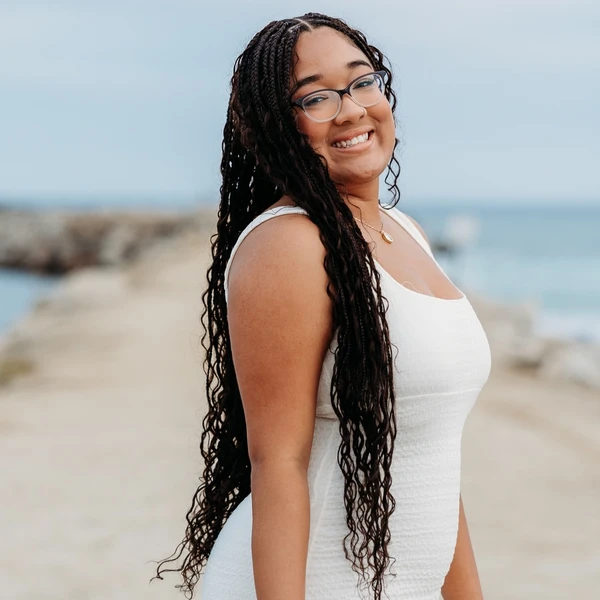
Hobbies and interests
Cheerleading
Singing
Brazill Taylor-Johnson
2x
FinalistBrazill Taylor-Johnson
2x
FinalistBio
Hi, my name is Brazill and I’m a high school senior graduating with the Class of 2026. I’m passionate about helping others through healthcare and plan to pursue a career as an ultrasound technician specializing in OB/GYN. As someone who has overcome personal challenges—from surviving a diabetic coma to navigating the foster care system and being adopted into a loving family—I’ve learned how powerful resilience and support can be.
These experiences sparked my interest in public health, child development, and equity in healthcare access. I currently balance school, college classes, part-time work, and helping care for my younger sibling, all while pushing to raise my GPA and prepare for college. I believe that where you come from doesn’t define where you’re going—it’s what you do with the opportunity you’re given.
I’m committed to using my story not only to succeed, but to inspire others who come from struggle. I’m excited to find scholarships that support students like me who are working hard to break cycles and build better futures.
Education
El Camino High School
High SchoolMiscellaneous
Desired degree level:
Bachelor's degree program
Majors of interest:
- Health Professions and Related Clinical Sciences, Other
- Registered Nursing, Nursing Administration, Nursing Research and Clinical Nursing
Career
Dream career field:
Hospital & Health Care
Dream career goals:
pedatric nurse
babysit
Threw chruch2024 – 20262 years
Sports
Cheerleading
Varsity2022 – 20264 years
Research
Social Sciences, Other
School — Find oppion2025 – 2026
Arts
myself
Drawing2022 – 2026
Public services
Volunteering
Night to Shine — Engage2025 – 2026
Future Interests
Advocacy
Volunteering
Entrepreneurship
Hazel & Olive Sweet Horizons Scholarship
Growing up, my definition of "home" was shaped by shadows. While other children were learning their ABCs, I was learning the frantic geometry of a room—calculating which corners were safest when the violence started. Watching my mother endure the physical toll of domestic violence, and later the hollowed-out version of herself caused by drug abuse, taught me a version of reality that no child should have to master. These experiences didn’t just happen to me; they fundamentally rewired how I saw the world, transforming my childhood into a series of survival maneuvers that eventually led me into the foster care system.
Entering foster care was supposed to be the end of the chaos, but it was actually the beginning of a new, internal battle. Shortly after being placed, I was diagnosed with Type 1 Diabetes. At a time when I was already mourning the loss of my family and navigating the instability of new homes and strangers, I was suddenly forced to become my own doctor. I had to learn to count every carb and measure every unit of insulin, all while my emotional world was still in pieces. The diagnosis felt like a cruel irony: after escaping a home where I had no control over my safety, I was now trapped in a body where I had no control over my own blood sugar.
However, these dual hardships—the trauma of my upbringing and the daily demands of a chronic illness—became the forge in which my character was shaped. I learned that resilience isn't just about "getting through" something; it’s about the active choice to remain whole when everything is trying to break you. Managing Type 1 Diabetes in the foster care system taught me a level of self-advocacy and discipline that most of my peers haven't had to develop. I learned that while I couldn't control my mother’s choices or my pancreas, I could control my response. I chose to be a manager of my health and a protector of my own peace.
Pursuing higher education is the most critical tool in my arsenal for building the future I hope for. For me, a degree is more than a credential; it is a declaration of independence. It represents the ultimate break from the cycle of poverty, violence, and instability that defined my early years. By attending a two or four-year college, I am taking the raw materials of my survival and turning them into a professional foundation. I want to use my education to ensure that I am never again at the mercy of someone else’s chaos.
In college, I plan to grow from a survivor into a leader. I want to immerse myself in an environment where my intellect is the focus, rather than my circumstances. This journey will allow me to build a life rooted in the stability I was once denied—a life where I can manage my health with resources, provide for myself with a career, and eventually advocate for other children caught in the intersection of trauma and illness. I am no longer defined by the violence I witnessed or the foster homes I lived in. I am defined by my grit, my needles, and my unwavering determination to be the best version of myself.
Community Health Ambassador Scholarship for Nursing Students
I want to pursue a degree in nursing because I believe healthcare is one of the most powerful ways to serve others and create lasting change in a community. Nursing is not just about treating illness—it is about compassion, advocacy, education, and trust. Nurses are often the first and last people patients see during vulnerable moments, and I want to be someone who brings comfort, knowledge, and stability when people need it most.
My interest in nursing comes from both my personal experiences and my desire to work in a field where I can make a direct impact. Growing up, I witnessed how important medical support is for families navigating health challenges. These experiences showed me how much a caring and knowledgeable nurse can influence a patient’s physical and emotional well-being. I want to be that source of reassurance for others—someone who listens carefully, explains clearly, and treats every patient with dignity and respect.
I am especially interested in specializing in women’s health and obstetrics. Supporting mothers and families during pregnancy and childbirth is meaningful because it involves two lives at once and often shapes the foundation of a family’s future. By working in this field, I hope to help ensure safe pregnancies, provide education about health and prevention, and support families during some of the most important moments of their lives. I believe that empowering patients with information is just as important as providing medical care.
Beyond clinical care, I hope to contribute to my community by promoting health education and accessibility. Many communities face barriers such as limited access to care, lack of health knowledge, or financial challenges. As a nurse, I want to advocate for patients and help bridge those gaps. Whether it is teaching families about preventive care, encouraging regular check-ups, or providing culturally sensitive support, I want to be actively involved in improving community health outcomes.
I am also committed to demonstrating ambition and drive throughout my education and career. Nursing programs are rigorous, requiring dedication, time management, and resilience. I am prepared to put in the effort needed to succeed academically and clinically. I understand that nursing requires both technical skill and emotional strength, and I am ready to grow in both areas. My goal is not only to earn a degree, but to become a lifelong learner who continuously improves in order to provide the best care possible.
Receiving this scholarship would help reduce the financial stress of pursuing my education and allow me to focus more fully on my studies and clinical experiences. By supporting my education, you would be investing in my ability to serve patients and strengthen my community. I am committed to using my nursing degree to make a positive, meaningful difference in the lives of others.
Gabriel Martin Memorial Annual Scholarship
Living with Type 1 diabetes has significantly shaped my life, my mindset, and my goals for the future. At 12 years old, I experienced a diabetic coma that changed everything. That medical emergency was not only a wake-up call about the seriousness of my condition, but it also led to major life transitions, including moving into the foster system. From that point forward, I had to grow up quickly, take greater responsibility for my health, and learn how to advocate for myself in new and unfamiliar environments.
Managing Type 1 diabetes requires daily attention. I must monitor my blood sugar, plan meals carefully, stay consistent with medication, and remain aware of how stress, activity, and schedule changes affect my body. While many students can focus only on academics and extracurriculars, I must balance those responsibilities with constant health management. This has taught me discipline, organization, and resilience. I cannot afford to procrastinate or ignore warning signs. Instead, I have learned to plan ahead and stay prepared, whether I am in school, volunteering, or participating in activities.
The experience of being hospitalized and later entering foster care also affected me emotionally and socially. Adjusting to new environments while managing a chronic illness required maturity and independence. I had to learn how to communicate my medical needs clearly and confidently. Advocating for myself became essential. These experiences strengthened my voice and helped me understand the importance of self-advocacy, especially for students living with medical conditions.
Although diabetes has presented challenges, it has also given me perspective. I understand the value of health, support systems, and access to resources. Not every student with a chronic illness has the same opportunities, and I recognize that higher education can be especially difficult for students managing ongoing medical needs. However, I am determined not to let my condition limit my future. Instead, it motivates me to succeed and create a meaningful impact.
My goal is to pursue higher education and build a career that allows me to help others, particularly in the healthcare field. I am passionate about health, wellness, and supporting individuals who face medical challenges. I want to use my experiences to inspire and advocate for others who may feel discouraged because of their conditions. Having personally experienced the impact of a medical crisis at a young age, I understand how important compassionate care and education are.
In the future, I hope to complete my degree, remain committed to my health, and work in a field where I can make a difference. My ambition is driven by the challenges I have overcome. My medical condition has not stopped me; it has strengthened my determination. I have learned resilience, responsibility, and perseverance—qualities that will help me succeed in higher education and beyond.
Living with Type 1 diabetes has shaped who I am, but it does not define my limits
Carolyn Craddock Memorial Scholarship
Living with Type 1 diabetes has shaped my strength, independence, and compassion in ways I never expected. When I was 12 years old, I experienced a diabetic coma that changed my life. That moment was not only physically life-altering, but emotionally transformative as well. Shortly after, I entered the foster system, navigating a new environment while learning to manage a serious medical condition. Instead of allowing these challenges to define me, I chose to grow from them.
Waking up from that experience meant relearning stability and trust. Moving into foster care at such a young age required maturity beyond my years. I had to adapt quickly to new routines, new people, and new expectations, all while taking responsibility for my health. Managing Type 1 diabetes requires consistency, awareness, and discipline, and doing so while adjusting to a completely new life environment strengthened my resilience. I learned how to advocate for myself, communicate my medical needs clearly, and stay committed to my goals even when circumstances were uncertain.
These experiences taught me independence. I could not rely on comfort or familiarity; instead, I relied on determination. Diabetes requires daily attention, and after my coma, I understood how important it was to take my health seriously. That responsibility pushed me to become more organized and intentional in school, extracurricular activities, and volunteering. Balancing my academics, involvement in sports and clubs, and community service while managing my condition has strengthened my work ethic and ambition. I approach every opportunity with gratitude and drive because I understand how quickly life can change.
Carolyn’s fierce and kind spirit deeply reflects who I strive to be. Being fierce, to me, means refusing to give up despite setbacks. My coma and transition into foster care could have limited my confidence, but instead they motivated me to push forward. I challenge myself academically and personally, aiming to excel in everything I do. I have learned that strength is not about never facing hardship—it is about continuing forward with determination.
Carolyn’s kindness is equally inspiring. Experiencing instability has made me more empathetic toward others. I understand what it feels like to adapt, to feel uncertain, and to need support. Because of this, I try to be a source of encouragement in my school and community. Through volunteering and extracurricular involvement, I strive to create inclusive spaces where people feel valued and accepted. Like Carolyn, I believe in standing up for others, offering support, and treating everyone with respect regardless of their background.
Living with Type 1 diabetes, surviving a coma, and transitioning into foster care have all strengthened my ambition, discipline, and compassion. These challenges did not stop me—they shaped me. I am committed to continuing to grow, serve my community, and advocate for awareness and understanding within the diabetes community. Like Carolyn, I aim to be both fierce in my determination and kind in my heart.
Philippe Forton Scholarship
The quote, "Compassion is an action word with no boundaries," deeply resonates with me, as I have experienced firsthand the profound power of compassion within a medical setting.
My perspective on healthcare was irrevocably shaped by a severe diabetic emergency I experienced as a child. Hospitalization and subsequent entry into the foster system followed, creating a period of intense uncertainty regarding my health, home, and future. I was scared, confused, and unable to fully grasp my medical condition. Yet, amidst the chaos, one nurse’s presence stands out clearly.
She went far beyond her clinical duties of checking vitals or adjusting an IV. She spoke to me softly, explaining procedures in a language I could understand, treating me as an active participant rather than an object of care. When I felt overwhelmed, she would offer a few extra minutes at my bedside. Her compassion treated me like a person, not just a patient. In a moment when my world felt fractured, her kindness made the hospital room feel less terrifying.
Her consistency, more than any single dramatic action, was what truly impacted me. She remembered small details, inquired about my favorite music, offered reassurance during painful procedures, and maintained eye contact and listened. She granted me dignity when I felt powerless. Looking back, I see her embodying that quote: compassion put into action, without limits.
I have also sought opportunities to extend this compassion to others. Volunteering with my church's childcare and participating in community events like Night to Shine has taught me the impact of simple presence. As a buddy for a guest with special needs at Night to Shine, I witnessed how simple encouragement—cheering, complimenting, and celebrating—completely transformed their confidence. It reinforced that compassion requires intention, not grand gestures.
However, the compassion I received during my medical crisis was the most profound catalyst, reshaping my view of healthcare. Medicine, I realized, is fundamentally about humanity—recognizing the frightened, hurting, or uncertain person behind every diagnosis, not just the treatment plan.
This experience is the primary driving force behind my pursuit of nursing. I aspire to be the kind of nurse who provides safety in vulnerable moments, offers clear explanations, advocates for the unheard, and brings calm to chaos. My personal journey has instilled an empathy that is impossible to learn from a textbook.
Ultimately, compassion did more than save my physical health; it restored my hope. The nurse who cared for me may never know her lasting influence, but her example guides the path I choose today. Through nursing, I aim to uphold that same standard: compassion without boundaries, action without hesitation, and kindness without condition.
The most potent medicine, I believe, is often not found in a prescription, but in the way we treat one another.
Rev. Ethel K. Grinkley Memorial Scholarship
My life story is one of grace emerging from instability. My early years were marked by significant hardship, including serious health issues and time in the foster care system, leaving me with a deep understanding of what it feels like to lack belonging and security. Yet, through every challenge and transition, my Christian faith has been the unwavering constant, providing a foundation when everything else felt uncertain.
Today, I am grateful for a loving family that fully supports my dreams and my walk with Christ. As a first-generation college student, I view education as more than personal achievement; it is a profound opportunity for transformation—a chance to break cycles, uplift my community, and build a purposeful future, carrying the hopes of generations with me.
This faith is central to my daily life and expressed through consistent service. I am actively involved in my church, dedicating time each week to childcare. This role has instilled in me crucial lessons in patience, compassion, and responsibility, as I strive to be a reliable and kind role model for the young children I serve.
My commitment to service extends beyond the church through my involvement in cheerleading and community outreach. Cheerleading is a platform for leadership and encouragement, allowing me to spread joy through parades, school functions, and community volunteering. A particularly meaningful experience was participating in Night to Shine, a prom for individuals with special needs. Witnessing each honored guest walk the red carpet beautifully reflected Christ’s unconditional, inclusive, and joyful love, transforming service into a form of worship.
Professionally, I am called to pursue a career in healthcare as an ultrasound technician specializing in OB/GYN. I desire to work with mothers and families during some of life's most vulnerable and life-changing moments. My goal is to be a source of comfort, reassurance, and hope—a professional who understands that healthcare is fundamentally compassion in practice. Through my career, I intend to serve families with the empathy, patience, and dignity that reflect Christ's love.
Rev. Ethel K. Grinkley’s vision of a Christian community defined by unconditional love and fellowship deeply resonates with my own experiences. I know the power of community compassion and what it means to be lifted up by love without conditions. My ambition is driven not merely by a desire for personal success, but by a deep need to serve, guided by my faith and an understanding of how powerful love in action can be.
Ultimately, I plan to impact the world through continued community involvement, my dedication to healthcare, and my pursuit of education, mirroring the way Christ impacts my life—with sustaining faith, healing love, and uplifting service.
Wesley Beck Memorial Scholarship
My interest in working with individuals who have special needs is rooted in both personal experience and service. Growing up, I faced serious health challenges that disrupted my education and daily life. Managing a chronic condition and recovering from medical trauma taught me resilience, patience, and empathy at a young age. I learned what it feels like to rely on others for support and understanding, and that experience shaped my desire to advocate for people whose needs are often misunderstood or overlooked.
Volunteering at Night to Shine was a turning point for me. Being part of an event created to celebrate individuals with special needs showed me the power of inclusion and genuine human connection. I spent the evening dancing, talking, and building relationships with participants, many of whom were simply excited to be seen and valued. That experience taught me that meaningful impact does not always come from grand actions, but from showing up with kindness, patience, and respect. It reinforced my belief that everyone deserves to feel confident and celebrated for who they are.
In addition to volunteering, I have had the opportunity to take classes alongside students with a wide range of learning and developmental differences. Engaging with classmates who learn and communicate differently challenged me to become more adaptable and attentive. I learned the importance of flexibility, listening, and meeting people where they are. These experiences helped me understand that supporting individuals with special needs requires more than academic knowledge. It requires compassion, creativity, and a willingness to adjust expectations in order to help each person succeed.
I plan to make a difference by working in a field where I can support individuals with special needs through advocacy, care, and education. I want to help create environments that prioritize dignity, accessibility, and emotional well being. My goal is to be someone who listens first, responds thoughtfully, and empowers others to recognize their own abilities rather than focusing on limitations.
I do have financial need. Ongoing medical expenses and life circumstances have made funding higher education challenging for my family. Receiving this scholarship would ease that burden and allow me to continue pursuing a career dedicated to service and inclusion. I am committed to using my education and experiences to create positive change and to support individuals who deserve to be seen, respected, and valued. My interest in working with individuals who have special needs is rooted in both personal experience and service.
Losinger Nursing Scholarship
1. Personal Inspiration for Pursuing a Career in Nursing (≈270 words)
My inspiration for pursuing a career in nursing comes from experiencing healthcare not just as a system, but as a lifeline. As a child, I faced serious medical challenges related to diabetes that changed my life suddenly and completely. I went from being an active student to relearning how to walk, think clearly, and trust my body again. During that time, nurses were the constant presence in my recovery. They were the ones who noticed when I was scared but couldn’t say it, who explained procedures in ways I could understand, and who treated me as more than a diagnosis.
Later, after entering the foster care system, that sense of instability followed me beyond the hospital. What stayed with me, however, was how nurses had modeled consistency, patience, and care even when circumstances were unpredictable. They showed up every day with calm voices and steady hands, reminding me that healing was not only physical, but emotional.
These experiences shaped how I view nursing: not simply as a profession, but as a responsibility to protect dignity during vulnerable moments. I want to be the nurse who makes patients feel safe when everything else feels uncertain. Nursing allows me to combine science with compassion, skill with empathy, and knowledge with advocacy. I am driven to pursue this career because I understand how powerful it is when someone chooses to care deeply, especially when patients may feel unheard or unseen. Through nursing, I hope to give others the same reassurance and humanity that once carried me forward.
2. What “Human Touch” Means and Its Impact on Patient Care (≈380 words)
To me, “human touch” means recognizing the person behind the patient. It is the ability to connect through empathy, presence, and understanding, even in moments when words are limited or emotions are overwhelming. Human touch is not only physical; it includes tone of voice, eye contact, patience, and the willingness to listen without rushing. It is the reminder that patients are people first, not tasks to be completed or charts to be reviewed.
In healthcare, especially nursing, human touch can be the difference between fear and trust. Patients often enter medical spaces feeling vulnerable, anxious, or powerless. A nurse who takes an extra moment to explain a procedure, acknowledge a concern, or simply sit beside a patient can transform the entire experience. These moments build trust, which directly impacts outcomes. When patients feel respected and cared for, they are more likely to communicate honestly, follow treatment plans, and feel confident in their care.
Human touch also plays a critical role in emotional healing. For patients facing long-term illness, recovery, or end-of-life care, compassion can ease isolation and fear. A calm presence or gentle reassurance can provide comfort when medicine alone cannot. Nurses are often the ones who witness patients at their most vulnerable, and human touch allows them to preserve dignity in those moments.
From my perspective, human touch is what sustains nurses as well. It reminds them why they chose this path and reinforces the impact they have beyond clinical tasks. In small towns and close-knit communities especially, nurses become trusted figures who support not just individuals, but families as well.
As a future nurse, I want to practice medicine with humanity at its core. I believe that technical skill and knowledge are essential, but compassion is what truly heals. Human touch turns healthcare into care, and it is the foundation of the nurse I aspire to be.
Raise Me Up to DO GOOD Scholarship
Being raised in a blended family through adoption has shaped every part of who I am and who I hope to become. My childhood did not begin with stability or certainty. Instead, it was marked by disruption, fear, and moments where I did not know what the future held. But through faith, perseverance, and the selflessness of the parent who chose me, my life was redirected toward healing and hope.
Before my adoption, I experienced instability that no child should have to navigate alone. I faced serious health challenges that nearly cost me my life and resulted in a long recovery process. At the same time, I was separated from my biological family and entered the foster care system. Those experiences could have broken my spirit, but instead they prepared me to recognize the depth of love when it was finally offered to me.
When I was adopted, I entered a blended family built on faith, patience, and intention. My adoptive parent did not just provide a home, but a second chance at life. I was welcomed not as a burden, but as someone worth fighting for. Faith played a central role in that transition. I was surrounded by the belief that my life had purpose, that God was not finished with my story, and that healing was possible even after deep loss.
Being raised in this family taught me what perseverance truly looks like. I watched my parent choose grace on difficult days, show up consistently, and love without condition. That example changed how I see responsibility and strength. I learned that family is not only defined by biology, but by commitment and sacrifice. Because of this, I grew into someone who values stability, compassion, and accountability.
These experiences have directly shaped my future goals. I am driven to use my talents to help others who feel unseen, overwhelmed, or uncertain about their worth. Whether through healthcare, mentorship, or community service, I want to be a steady presence in peoples lives, just as someone once was for me. I know what it feels like to need reassurance, patience, and understanding, and I want to offer that same support to others.
My second chance at life has given me a deep sense of responsibility. I do not take opportunities lightly, especially education. I see my future as one where my story becomes a source of hope rather than pain. I may not know every detail of the career I will enter, but I know the kind of person I want to be. Someone who leads with empathy, serves with humility, and believes in the potential of others.
Being raised in a blended family through adoption did not erase my past, but it transformed it. Through faith and love, my life was redirected toward purpose. That is the foundation on which I am building my future, and it is how I plan to make a lasting impact on the world.
God Hearted Girls Scholarship
My relationship with Jesus has been the foundation that carried me through seasons of uncertainty, healing, and growth. My faith was not formed in ease or comfort, but in moments where I had no choice but to trust God completely. Through those moments, I learned that faith is not just believing in Jesus, but relying on Him daily and allowing His love to shape how I live, learn, and serve others.
At a young age, I experienced major disruptions to my life, including serious health challenges and instability within my family that led me into foster care. There were times when my future felt unclear and overwhelming. During those moments, my relationship with Jesus became deeply personal. Prayer was not just something I was taught to do, it became something I needed. I learned to bring my fear, confusion, and hopes to God honestly, trusting that He was present even when my circumstances felt broken.
My faith taught me perseverance. When my education was interrupted and I had to relearn basic skills after a medical crisis, I leaned on God for strength and patience. I reminded myself that my worth was not defined by setbacks or timelines, but by who I was in Christ. That belief pushed me to keep going, even when progress felt slow. I approached school not just as a requirement, but as an opportunity God placed before me to grow and prepare for a purpose bigger than myself.
I have implemented my faith throughout my educational journey by choosing integrity, compassion, and service. I strive to treat classmates and teachers with kindness, even in difficult situations. I serve in my church by helping care for younger children, which has reinforced my responsibility to be a role model and a source of encouragement. These experiences have shown me that faith is lived out through actions, consistency, and love.
As I move forward into higher education, I plan to continue walking with Christ at the center of my journey. I hope to pursue a career in healthcare, where I can reflect Jesus through compassion, patience, and respect for every person I serve. I want to be someone who brings peace into stressful spaces, who listens without judgment, and who treats people with dignity because they are made in God’s image.
I plan to stay rooted in my faith through prayer, community, and service as I continue my education. No matter where God leads me, I want my life to radiate His light. My relationship with Jesus has shaped who I am today, and it will continue to guide how I learn, lead, and serve others. Through faith, I have learned that even the hardest paths can be used for good, and I am committed to walking forward with purpose, trust, and hope.
Aserina Hill Memorial Scholarship
I am a high school senior who has learned early on that success is not achieved alone, and that community support can change the direction of a life. My experiences with instability, health challenges, and foster care shaped me into someone who values service, responsibility, and education. Despite disruptions in my early schooling, I remained committed to learning and growth, and I am now focused on building a future rooted in service to others.
Academically, I am interested in healthcare and plan to pursue a career in pediatric medicine. I hope to attend college and continue my education in a health related field that allows me to work directly with children and families. My interest in pediatrics comes from my own experiences as a child navigating medical challenges while also facing instability in my personal life. Those experiences showed me how deeply supportive adults can influence a child’s sense of safety and confidence.
Outside of school, I am actively involved in community service. I work at my church in childcare, helping care for younger children and supporting families during services and events. This role has strengthened my patience, leadership, and sense of accountability. I also take on significant responsibilities at home, helping maintain stability for my younger sister. These experiences taught me that service is not always formal or recognized, but it is essential and impactful.
If I were given the opportunity to start my own charity, my mission would be to support children in foster care and those facing medical or educational disruption. The charity would focus on providing stability, advocacy, and access to resources that many children lack during critical stages of development. I would serve children who are navigating foster care, hospitalization, or sudden life changes that affect their education and well being.
The charity would offer several key services. First, it would provide academic support such as tutoring, school supplies, and advocacy to help students stay on track despite instability. Second, it would offer mentorship programs that pair children with consistent adult mentors who can provide guidance, encouragement, and emotional support. Third, the charity would help families and caregivers access healthcare related resources, including transportation assistance and informational workshops that help them advocate for their children.
Volunteers would play a central role in this organization. They would serve as tutors, mentors, childcare assistants, and community outreach coordinators. Volunteers would be trained to approach children with empathy, patience, and understanding, recognizing that many carry unseen challenges. The goal would not be to fix children, but to support them as they grow.
Aserina Hill’s legacy of giving deeply inspires me. Like her, I believe that education is a powerful tool and that investing in others is one of the most meaningful ways to leave an impact. Through my education and future service, I hope to continue that legacy by creating opportunities for children to feel supported, valued, and capable of achieving their dreams.
Frederick and Bernice Beretta Memorial Scholarship
Something that deeply interests me is pediatric healthcare. My interest comes from personal experience, not just curiosity. As a child, I experienced a medical emergency that changed my life and required me to relearn basic skills, including how to walk. At the same time, I was navigating instability in my home life and eventually entered the foster care system. Those experiences shaped how I see healthcare, childhood, and the importance of compassionate care.
During my recovery, I spent a lot of time surrounded by doctors and nurses. Some treated me like a chart or a task, but others treated me like a child who was scared, confused, and trying to understand what was happening. The difference between those approaches stayed with me. I learned early on that pediatric care is not just about medicine. It is about patience, reassurance, and understanding that children often carry fear they do not yet know how to express.
Foster care added another layer to that experience. Being moved between environments while trying to heal taught me how important stability and trust are for children. I saw how adults in professional roles could either make a child feel invisible or make them feel safe. Those moments showed me the kind of healthcare professional I want to become. I want to be someone who notices when a child is overwhelmed, who explains things gently, and who understands that a child’s background matters just as much as their symptoms.
Pediatrics interests me because it allows care at a formative stage of life. Helping children heal does not just impact the present moment. It can shape their confidence, their sense of safety, and their willingness to trust others as they grow. I am especially interested in working with children who come from unstable backgrounds, because I understand how vulnerable that position can feel.
Through education, I hope to pursue a career in pediatric healthcare where I can combine medical knowledge with empathy. My experiences taught me resilience, patience, and responsibility at a young age. They also gave me a strong sense of purpose. I am not pursuing this path only to build a career, but to give children the care and understanding I once needed. Pediatric healthcare interests me because it is where healing and humanity meet, and that is where I know I belong.
The Chosen Family Fund Scholarship
Question 1: Being queer has shaped the way I move through the world by teaching me awareness empathy and courage long before I had the language to describe them. I learned early on that parts of who I am would not always be immediately understood or accepted and that realization sharpened how closely I observe people systems and spaces.
One moment that stands out happened during high school when conversations around identity were often simplified or avoided altogether. I remember sitting in a classroom discussion where people spoke about difference as something abstract something that existed somewhere else. As a queer Black student I felt myself disappear in that conversation. I was present but unseen. That moment was quiet but it stayed with me. It taught me how easy it is for systems to exclude without intention and how powerful it can be to choose visibility anyway.
Navigating my queer identity alongside other parts of who I am my race my background my faith and my lived experiences has given me a layered understanding of the world. I have learned that identity is not one dimensional and that people often carry more than what is visible on the surface. This awareness has made me deeply sensitive to the way policies language and institutions impact real people. I do not just ask whether something works I ask who it works for and who it leaves behind.
There were moments when embracing my identity felt isolating especially in environments where I was not sure how safe it was to be fully myself. But those moments also built resilience. I learned how to advocate for myself how to find community even when it was not immediately offered and how to stand firm in my truth without needing to be loud to be powerful.
My queer identity has also strengthened my compassion. It has taught me to listen without judgment and to meet people where they are. I understand what it feels like to want to belong and that understanding guides how I treat others. I carry that awareness into every space I enter whether it is a classroom a workplace or a community setting.
Ultimately being queer has not narrowed my world it has expanded it. It has pushed me to see complexity instead of simplicity humanity instead of labels and possibility instead of limitation. It taught me that living authentically is not just personal it is an act of quiet leadership. That lesson continues to shape the way I move through the world and the impact I hope to make within it.
Question 2: Through my academic pursuits I hope to gain the knowledge and credentials necessary to create meaningful tangible change in peoples lives. I plan to pursue a career in healthcare specifically as an ultrasound technician with a focus on OBGYN care. My goal is to work directly with patients and provide care that is not only clinically competent but also compassionate affirming and culturally aware.
Education represents access to stability opportunity and the ability to advocate for others. By earning my degree I aim to serve communities that are often overlooked or underserved particularly women and marginalized populations who may feel unheard in medical settings. I want to be a healthcare professional who patients trust someone who understands that dignity and representation matter just as much as technical skill.
Beyond my career I hope my education will allow me to mentor and uplift young people who may be navigating identity instability or uncertainty about their future. My academic journey is not just about personal success it is about building a foundation that allows me to give back with purpose and integrity.
Wicked Fan Scholarship
I am a fan of Wicked not simply because of its music or spectacle, but because its story mirrors emotions I have lived with for much of my life. At its core, Wicked is about being misunderstood, feeling responsible for pain you did not cause, and learning that love and growth can exist even when relationships change forever. For me, Wicked gave language to feelings I did not know how to express.
The song “For Good” holds the deepest meaning for me. It reflects the reality that some people are not meant to stay in our lives forever, yet they still shape who we become. When I was separated from my biological mother and my four brothers due to entering foster care, I carried an overwhelming sense of guilt. I believed that my presence, my illness, and my circumstances made everything worse. Leaving them felt like abandonment, even though it was not my choice. “For Good” reminds me that love does not disappear simply because people are no longer together. The line about being “changed for good” reflects how my family, especially my brothers, shaped my heart, my resilience, and my capacity for empathy, even in separation.
Another song that deeply connects to my experience is “Defying Gravity.” Elphaba’s decision to rise despite being labeled as the problem mirrors my journey through foster care. I often felt like the difficult one, the burden, the reason life became unstable. Like Elphaba, I learned what it feels like to stand alone while being misunderstood. Yet that song represents the moment when survival turns into self-acceptance. Foster care forced me to grow up quickly, to advocate for myself, and to learn that I was not broken simply because my life looked different.
What makes Wicked so powerful is that it does not offer a perfect ending. Relationships fracture, people part ways, and guilt lingers—but growth still happens. That truth matters to me. I may not have stayed with my biological family, but that does not mean the love was meaningless or the connection lost. It means I carry them with me differently.
Being a fan of Wicked means believing that people can be both hurt and hopeful, both grieving and becoming. It means understanding that even when you feel like the villain in your own story, you are still worthy of compassion. Wicked helped me forgive myself for circumstances beyond my control and taught me that even painful departures can shape us—for good.
Sammy Hason, Sr. Memorial Scholarship
My desire to pursue a career in healthcare is deeply rooted in personal experience. Long before I ever imagined myself working in medicine, I was a patient whose life depended on it. Living with diabetes led to a medical crisis that placed me in a month-long coma and required extensive hospitalization. During that time, my body was fragile, my future uncertain, and my voice absent. That experience changed the way I see healthcare, not as a profession alone, but as a lifeline.
While in the hospital, I witnessed firsthand how complex and overwhelming serious medical conditions can be. I relied entirely on healthcare professionals to monitor my breathing, manage my blood sugar, and protect my body while I could not protect myself. I saw how patients with lung complications, chronic illnesses, and rare conditions often require constant attention, patience, and advocacy. Even after waking up, I had to relearn basic skills, including how to walk again. Recovery was not just physical, it was emotional and mental, and the compassion of nurses and medical staff played a critical role in my healing.
At the same time, I was navigating the foster care system. Experiencing serious illness without the stability of a permanent family made me especially vulnerable. I understood what it felt like to be scared, confused, and dependent on systems I did not fully understand. This dual experience of being both medically fragile and emotionally unsupported shaped my empathy for patients who feel overlooked, misunderstood, or alone, particularly those with rare diseases or long-term conditions that require ongoing care.
Through my future career in healthcare, I plan to improve the lives of others by being the provider I once needed. I want to work closely with patients who face chronic illnesses, lung disease, or rare medical conditions, ensuring they feel heard, respected, and supported. Patients with complex diagnoses often spend long periods in hospitals and undergo repeated treatments. I want to bring not only medical skill, but also emotional reassurance, patience, and advocacy into those spaces.
My experience with diabetes has taught me the importance of education and prevention. I hope to help patients and families understand their conditions clearly so they feel empowered rather than overwhelmed. For those with lung disease or rare disorders, I want to be someone who explains procedures carefully, checks in consistently, and recognizes that healing involves more than charts and test results.
Ultimately, my goal is to serve patients with integrity, compassion, and resilience. Surviving a coma, navigating foster care, and rebuilding my strength taught me that healthcare professionals can change lives not just by saving them, but by restoring hope. I plan to carry that lesson into my career, using my lived experience to advocate for patients who need someone to see them, fight for them, and believe in their recovery.
Arthur and Elana Panos Scholarship
Faith has been the foundation that carried me through some of the most uncertain and defining moments of my life. When my circumstances felt overwhelming and my future unclear, it was my belief in God that gave me strength, direction, and hope. Through my health struggles, time in foster care, and eventual adoption into a loving Christian family, my faith became not just something I believed in, but something I lived by.
At a young age, I experienced serious health challenges that forced me to confront fear, pain, and uncertainty earlier than most. There were moments when my body felt fragile and my life felt out of my control. During these times, prayer became my source of peace. I learned to trust God even when I did not understand His plan. Instead of allowing my circumstances to define me, my faith taught me resilience and gratitude. I began to see each day as a gift and each challenge as an opportunity to grow stronger.
Being adopted into a Christian family was another life-changing moment that deepened my faith. For the first time, I was surrounded by people who consistently modeled love, forgiveness, discipline, and faith in action. Through family prayer, church involvement, and daily encouragement, I learned what it meant to live with integrity and purpose. Their guidance helped me grow in confidence and self-worth, reminding me that I was chosen, valued, and never alone. This environment allowed me to heal emotionally and spiritually, and it strengthened my relationship with God.
My faith has also shaped how I view success. I believe success is not only measured by achievements or financial stability, but by character, honesty, and the way we treat others. The story of immigrants who came to this country with nothing and built something meaningful through hard work and integrity resonates deeply with me. Their journey reflects the values my faith has instilled in me: perseverance, humility, and trust in God’s timing.
As I look toward my future career, my faith will continue to guide my decisions and actions. I aspire to be successful while remaining grounded in compassion, ethics, and service. Whether in leadership, healthcare, or entrepreneurship, I want to conduct myself with integrity and kindness, making choices that honor God and positively impact others. My faith reminds me to work diligently, lead with humility, and treat every person with respect.
Ultimately, my journey has taught me that faith does not remove hardship, but it provides the strength to endure it and the wisdom to grow from it. God has transformed my challenges into purpose, and I carry that foundation with me as I pursue my education and future career with ambition, integrity, and unwavering faith.
Jorge Campos Memorial Scholarship
Community service, to me, is about showing up consistently with kindness and making people feel seen, valued, and celebrated. One experience that deeply reflects this belief was my involvement as a cheerleader at the Night to Shine event, a prom designed to honor individuals with disabilities. This event was not just about entertainment or volunteering hours, it was about creating an atmosphere of joy, inclusion, and unconditional acceptance.
As a cheerleader, my role went beyond performing routines. From the moment guests arrived, my teammates and I were there to greet them with cheers, high fives, and smiles, making sure every individual felt like a star. Many of the guests were nervous at first, unsure of what to expect. I made it a personal goal to connect with each person I encountered by talking with them, dancing alongside them, and celebrating their unique personalities. Some guests needed extra encouragement or patience, and I learned quickly that genuine kindness and attentiveness could transform hesitation into confidence and happiness.
One moment that stands out to me was dancing with a guest who was initially shy and withdrawn. Instead of rushing or moving on, I stayed with them, encouraging them at their pace. Slowly, they began to smile, clap, and eventually dance freely. Watching that transformation reminded me how powerful simple acts of kindness can be. By the end of the night, that same guest was laughing, dancing, and cheering with everyone else. Moments like this reinforced my belief that service is about meeting people where they are and lifting them up without expectation.
This experience demonstrated unity by bringing together volunteers, families, and guests in a space where everyone belonged. It also reflected positivity through constant encouragement, joy, and celebration. Much like Jorge Campos, whose legacy is rooted in kindness, dedication, and making others feel valued, Night to Shine taught me the importance of showing up with heart and intention.
Participating in this event had a lasting impact on my personal growth. It strengthened my leadership skills, patience, and empathy, and reminded me that real leadership often comes quietly through actions rather than words. Serving at Night to Shine affirmed my desire to continue working in roles that prioritize care, inclusion, and community. It has influenced my future aspirations to pursue a career in healthcare, where compassion, attentiveness, and service are essential.
Through Night to Shine, I learned that positivity can change lives and that service is not about recognition but about impact. This experience continues to guide how I show up in my community and how I hope to serve others throughout my life.
Brooks Martin Memorial Scholarship
One of the most significant losses I have experienced was losing a sense of myself after a diabetic coma when I was twelve. The coma left me fighting for my life and forced me to relearn basic skills like walking, eating, and caring for myself. At the same time, I was navigating the foster care system, adjusting to instability, and learning how to survive in a world that felt unpredictable and uncertain. For a long time, I felt like I had lost not just my health, but my childhood, my independence, and my sense of who I was. The fear, pain, and isolation I felt during that time were overwhelming, and it was difficult to imagine a future where I could thrive again.
My plan of action began with small steps and determination. I worked with medical professionals to regain my strength and practiced walking, eating, and performing daily tasks over and over again until I could do them independently. I pushed myself academically, determined not to let my situation derail my education. I learned to advocate for myself in foster care, to navigate resources, and to create stability in a life that had been chaotic for far too long. Slowly, I began to reclaim myself, building confidence and resilience with every accomplishment, no matter how small.
This experience shaped my perception of life in profound ways. I learned that adversity does not define who you are or who you can become, and that perseverance, patience, and self-belief are critical to overcoming even the most difficult challenges. I also developed a deep sense of empathy for others who face obstacles beyond their control, and a desire to help children and families who may feel alone or unsupported. Living through this loss of myself taught me the importance of using my experiences to inspire, guide, and support others.
These challenges have influenced my goals and outlook on life. I plan to pursue public health so that I can advocate for and support children and families facing medical, social, or emotional hardships. I want to create programs and resources that empower youth to overcome obstacles, just as I had to overcome mine, and to provide guidance and encouragement to help them build resilience and confidence. I understand firsthand how it feels to lose stability, independence, and identity, and I want to use my education to ensure that other children have the tools, support, and hope to reclaim themselves and thrive.
Though my journey has been difficult, I am stronger, more determined, and more compassionate because of it. Losing myself taught me how to fight, how to persevere, and how to turn hardship into purpose. It drives me every day to make a difference in the lives of others, and it motivates me to pursue my education and future career with determination, empathy, and ambition.
Sarah Eber Child Life Scholarship
One of the most significant adversities I have faced occurred when I was twelve years old. I experienced a diabetic coma that left me fighting for my life. When I woke, I had to relearn basic skills like walking, eating, and taking care of myself. At the same time, I was navigating the foster care system, adjusting to a life of instability and uncertainty. For a young child, it was overwhelming, frightening, and isolating. At first, I viewed these challenges as insurmountable obstacles. I wondered if I would ever be able to live a normal life, attend school regularly, or achieve my goals.
Despite the fear and uncertainty, I knew I could not give up. My plan of action began with focusing on small, manageable steps. I worked diligently with medical professionals to regain my physical strength, practiced daily to relearn skills like walking and eating independently, and pushed myself academically to stay on track in school. I also learned to advocate for myself in foster care, navigating resources and support systems that could help me regain stability. It was not easy, and there were times I wanted to quit, but I reminded myself that every small step forward was progress.
This experience profoundly shaped my perception of life. I realized that adversity does not define a person’s future; it tests resilience, determination, and the ability to adapt. I learned to value patience, perseverance, and the importance of seeking help when needed. I also developed a deep sense of empathy for others facing challenges, understanding how critical it is to have support, guidance, and encouragement during difficult times.
These lessons have inspired my passion for helping children who face similar hardships. I have worked in my community caring for younger children through my church’s childcare program and have volunteered in mentorship programs to provide guidance, encouragement, and stability to youth. I hope to pursue a career in public health and pediatric healthcare, where I can combine my personal experiences with my education to provide support, advocacy, and resources to children and families facing medical and social challenges.
Facing a near-death experience at such a young age taught me that life is fragile and every moment is an opportunity to grow, give back, and make a difference. It showed me that resilience and determination can transform adversity into a source of strength and purpose. By dedicating my life to helping children overcome obstacles, I hope to honor the spirit of Sarah Eber, who committed her life to supporting youth, and to ensure that other children have the encouragement and opportunities they need to thrive.
Matthew E. Minor Memorial Scholarship
My name is Brazill Taylor-Johnson, and I am a high school senior preparing to continue my education in public health. Growing up, I faced significant challenges that shaped who I am today. At the age of twelve, I experienced a diabetic coma that left me needing to relearn basic skills such as walking, eating, and caring for myself. Around the same time, I navigated the foster care system, learning to live independently and manage responsibilities at a young age. These experiences taught me resilience, empathy, and the importance of supporting others during difficult times. They have also inspired me to focus on helping children and teens thrive in their communities, particularly in areas of health, safety, and emotional well-being.
I have been actively involved in my community through volunteering and mentorship. I work weekly at my church’s childcare program, helping care for younger children and creating a stable and positive environment. I also participate in tutoring and mentoring programs, guiding students who may struggle academically or socially. These opportunities have allowed me to develop leadership skills, practice patience and encouragement, and witness the positive impact that support and guidance can have on a young person’s confidence and success. My involvement has taught me that small efforts, like listening, offering advice, or modeling positive behavior, can prevent children and youth from feeling isolated or targeted by peers.
Financially, my family and I have limited resources, and receiving this scholarship would significantly alleviate the burden of tuition and educational expenses. While I have worked part-time to support myself and save for college, higher education costs are still a challenge. This scholarship would allow me to focus on my studies and community involvement without the constant stress of financial strain, enabling me to dedicate my energy to academic and personal growth.
Preventing bullying, both in-person and online, is an area I am passionate about. I actively model kindness and respect in my interactions with peers and younger students, emphasizing the importance of empathy and understanding. In the digital space, I advocate for safe internet practices, encouraging youth to speak up if they witness cyberbullying and to report harmful content. I also educate children about the risks associated with online challenges, pranks, or dares, highlighting the consequences of unsafe behavior. By fostering open communication, being approachable, and modeling responsible behavior, I help create an environment where children feel safe and supported.
Ultimately, I hope to continue my work in public health and community education, combining my experiences and education to advocate for youth safety and well-being. This scholarship would allow me to further my studies, continue mentoring and volunteering, and expand my impact in preventing bullying and promoting safe, supportive environments for children and teens. I am committed to honoring the mission of the Matthew E. Minor Awareness Foundation by empowering youth, educating my peers, and ensuring that all children have the tools and guidance they need to navigate life safely, both online and offline.
Joieful Connections Scholarship
My journey toward higher education has been shaped by experiences and challenges that have tested my resilience, determination, and ability to overcome obstacles. At the age of twelve, I experienced a diabetic coma that left me fighting for my life. When I woke, I had to relearn how to eat, walk, and care for myself while navigating the foster care system. This experience taught me the value of perseverance, patience, and hard work, as even the smallest tasks required focus and determination. Living alone at a young age further developed my independence, responsibility, and problem-solving skills, as I learned to manage daily life, make decisions on my own, and maintain stability despite difficult circumstances. These experiences have not only prepared me for the challenges of higher education but have also instilled in me a deep sense of empathy and a desire to help others facing adversity.
I plan to study public health in college because it combines my passion for science, community service, and making a tangible difference in people’s lives. Public health is important to me because I have seen firsthand how access to knowledge, care, and resources can impact an individual’s well-being. Recovering from my coma and adjusting to life in foster care highlighted how critical it is to have support systems and programs that educate, empower, and protect vulnerable populations. I want to use my education to develop initiatives that address health disparities, provide resources to underserved communities, and educate youth about managing chronic illnesses and promoting wellness. Public health will give me the tools to not only understand these problems but also create sustainable solutions that improve the lives of others.
I hope to make an impact in my community by using my experiences and education to guide, mentor, and support others. I want to work with children and families who face health challenges, foster instability, or other obstacles, showing them that their circumstances do not define their potential. By organizing workshops, mentoring programs, and community initiatives, I aim to provide practical knowledge, emotional support, and opportunities for growth. My ultimate goal is to empower individuals to take control of their health and futures while advocating for policies and programs that increase access to healthcare, education, and community resources.
The challenges I have faced have shaped me into a resilient, independent, and compassionate person who is ready to embrace higher education and make a difference. From relearning basic skills after my coma to navigating foster care and living alone, I have developed the perseverance, discipline, and empathy necessary to succeed academically and contribute meaningfully to my community. By pursuing public health, I plan to turn my experiences into impact, supporting and uplifting those who need it most.
Kalia D. Davis Memorial Scholarship
My name is Brazill Taylor-Johnson, and I am a high school senior who has faced challenges that have shaped me into a resilient, driven, and ambitious student. Growing up, I navigated the foster system and experienced a serious health crisis, including a diabetic coma that forced me to relearn basic skills like walking. Despite these obstacles, I have always strived for excellence in everything I do, following the same principles of dedication and perseverance that Kalia D. Davis exemplified.
Academically, I have worked hard to maintain a strong GPA, taking multiple AP and dual enrollment courses to challenge myself and prepare for college. I have also been active in sports, participating in [insert sport(s) here], which has taught me the importance of discipline, teamwork, and pushing through challenges even when I feel exhausted or discouraged. Being part of a team has shown me how to motivate others and how encouragement and collaboration can lead to success, mirroring the spirit of community and support that Kalia valued.
Beyond academics and athletics, I am committed to volunteering and giving back to my community. I work three hours each week at my church’s childcare program, helping care for younger children and ensuring that the environment is safe, stable, and nurturing. I also assist in mentoring programs and community events, understanding that my experiences can inspire and support others who face difficult circumstances. These experiences have strengthened my sense of responsibility, empathy, and leadership, qualities I know Kalia embodied throughout her life.
Receiving the Kalia D. Davis Scholarship would allow me to continue pursuing my education while giving me the financial support to focus on excelling in college without the added stress of managing expenses. I plan to attend college to pursue a career in public health, with the goal of using my education to uplift communities, improve health outcomes, and provide resources and mentorship to youth who, like me, have faced barriers to success. This scholarship would not only ease the financial burden but also serve as a reminder of the legacy of excellence, kindness, and ambition that Kalia represents, motivating me to continue striving for my goals and giving back to others.
Kalia’s life, though brief, demonstrates the power of dedication, compassion, and drive. I aspire to honor her memory by embracing those same qualities, excelling in my studies, athletics, and community service, and using my abilities to create positive change. This scholarship would help me continue on that path, supporting me in turning my ambitions into impact and my challenges into opportunities to serve others, keeping Kalia’s spirit alive through my actions.
Stephan L. Daniels Lift As We Climb Scholarship
I want to pursue a career in STEM because I have always been drawn to understanding how things work and finding solutions to real problems, especially problems that affect people’s health and well-being. Growing up, I faced challenges that gave me a unique perspective on the importance of science, technology, and healthcare. Recovering from a diabetic coma while navigating the foster system taught me that access to knowledge, resources, and innovative care can literally save lives. I realized that STEM is not just about formulas, experiments, or machines, it is about creating tools, systems, and solutions that improve the quality of life for individuals and communities. I want to be part of that process, using what I learn to make a tangible difference for people who, like me, have faced obstacles but deserve the opportunity to thrive.
My goal is to focus on healthcare technology and public health within STEM. I want to combine scientific knowledge with practical applications to create programs, devices, or strategies that help underserved communities access quality care. For example, I am interested in developing tools for monitoring chronic illnesses like diabetes and educating families about disease management. By making healthcare more accessible, understandable, and effective, I hope to empower individuals to take control of their health and improve their overall quality of life. STEM gives me the ability to not only solve problems, but also to create solutions that are scalable and sustainable, helping entire communities rather than just a few individuals.
Beyond technology, I want to use my STEM education to uplift my community by mentoring and inspiring young students, especially those from foster care or low-income backgrounds. I know firsthand how easy it is to feel that higher education and STEM careers are out of reach. I want to show students that their past circumstances do not define their future and that with determination, guidance, and education, they can pursue careers in science, technology, engineering, and math. By organizing workshops, tutoring programs, and community events, I hope to spark curiosity, build confidence, and provide tangible support to young learners who might otherwise be overlooked.
I also aim to advocate for policies and initiatives that expand access to STEM education and resources in underserved areas. Many communities face systemic barriers that prevent students from pursuing STEM careers, including limited access to advanced courses, mentorship, and technology. Using my degree, I plan to work with schools, organizations, and local governments to implement programs that provide equitable opportunities, ensuring that more young people can reach their potential.
Ultimately, I want my STEM career to combine innovation, education, and community service. By creating solutions that improve health and well-being and by mentoring the next generation of learners, I hope to use my education to uplift others and demonstrate that challenges can be transformed into opportunities. STEM is my pathway to making a meaningful, lasting impact on my community and beyond.
Lori Nethaway Memorial Scholarship
I plan to use my college education to give back to my community by focusing on public health and healthcare access, especially for children and families who face challenges like I have. Growing up in the foster system and recovering from a diabetic coma, I saw how important it is to have healthcare providers who truly understand their patients. Healthcare is not just about treating symptoms; it’s about educating, supporting, and empowering people to take control of their health. I want to become a healthcare professional who provides that guidance and care to underserved families, helping them build resilience and confidence in managing their well-being.
I also want to create programs that educate children and teens about managing chronic illnesses, nutrition, and overall wellness. By sharing my experiences and the knowledge I gain in college, I hope to show young people that their circumstances do not define their potential. I want to inspire them to believe in themselves and to make choices that improve their health and their future. Programs like this can provide practical tools, mentorship, and hope to kids who feel isolated or discouraged, and I want to be someone who makes that support real and accessible.
Beyond education, I plan to give back by volunteering in my community. I want to work with clinics, schools, and local organizations to provide mentorship, workshops, and support for families and children. I also hope to advocate for policies and programs that expand access to healthcare and health education, especially for families facing economic or social barriers. Public health is not only about individual care but about addressing the factors that affect entire communities, and I want my work to have a lasting impact.
Ultimately, my college education will empower me to lift up others. I want to use my knowledge, skills, and experiences to make a meaningful difference in the lives of children and families who face challenges like I once did. By giving back, I hope to create opportunities for wellness, growth, and hope, and to show that even in difficult circumstances, it is possible to thrive and succeed.
David Foster Memorial Scholarship
Throughout my high school journey I faced challenges that often made me feel like giving up Between navigating the foster system recovering from a diabetic coma and adjusting to a life of instability school sometimes felt like an impossible mountain to climb Yet amidst all of this there was one teacher who completely changed my perspective and gave me hope when I thought there was none Ms D
Ms D was my avid teacher a presence in my life that went far beyond lesson plans and grading From the first day I walked into her classroom she made it clear that she saw potential in every student including me Her energy was contagious she had a way of making learning feel exciting personal and meaningful More than that she genuinely believed in her students even when we didn’t believe in ourselves For someone like me who had every reason to think college and success were out of reach Ms D’s unwavering encouragement was revolutionary
She didn’t just teach the curriculum she taught life lessons Ms D constantly reminded us that our pasts did not define our futures She shared stories of students who had faced hardships similar to ours and had gone on to accomplish incredible things Her words weren’t empty platitudes they were backed by genuine care practical advice and a belief that every student could exceed expectations if given the right guidance Because of her I began to see that my experiences as painful and challenging as they were did not have to limit me They could instead be the fuel that drove me toward my goals
One of the most profound ways Ms D influenced me was by teaching me to believe in college as a real attainable possibility Before her I had written off higher education as something for other people people whose lives were stable whose paths were smooth whose opportunities hadn’t been interrupted by crises Ms D refused to let me settle for that mindset She encouraged me to explore dual enrollment to aim for honors and to consider universities I had never dreamed of attending She helped me see that my past hardships were not obstacles but experiences that could shape my resilience and determination Every time I doubted myself she was there reminding me that persistence mattered more than perfection and that setbacks were just steps along the way
Beyond academics Ms D also modeled compassion strength and authenticity She treated each student as a whole person recognizing our struggles celebrating our victories and never allowing our circumstances to define our potential Because of her I began to approach my life differently I learned to hold myself accountable to seek opportunities actively and to trust that I could overcome challenges even when the odds seemed stacked against me
Today as I prepare for college and a future in public health I carry Ms D’s lessons with me She transformed the way I see myself and more importantly she transformed the way I approach life Where I once saw barriers I now see possibilities Where I once doubted I now believe Ms D didn’t just teach me a subject she taught me to believe in a future I thought was impossible And for that I will always be grateful.
Strength in Adversity Scholarship
One moment in foster care that made me truly proud of my resilience was the night I accepted that no one was coming to rescue me and chose to keep moving forward anyway. After surviving a life-threatening diabetic coma, I was placed into a facility for children without families. I had lost my health, my sense of safety, and eventually the presence of my mother, who left me there with no clear plan for my future. In that moment, I felt completely alone, surrounded by strangers and uncertainty. I remember lying awake, realizing that I had no control over my situation and no guarantee of stability. What I did have was a choice: to let the weight of abandonment define me or to quietly decide that I would survive it.
That realization became a turning point in my life. I made a promise to myself that even if I had no one else to depend on, I would become someone I could rely on. At a time when most children are protected and guided, I had to find strength within myself. I focused on small victories, learning how to walk again, regaining confidence in my body, and slowly rebuilding trust in adults. Each step forward felt exhausting, but each one also reminded me that I was still capable of growth. Choosing to keep going, even when it felt unfair and overwhelming, became my greatest act of resilience.
This resilience was tested again when I returned to school. I had missed critical years of education, including an entire grade level, and reentered classrooms already behind academically and emotionally. Watching my peers move forward while I struggled to catch up was discouraging and isolating. My academic record did not reflect my potential, but it reflected survival. Instead of giving up, I worked harder, asked for help when I could, and learned to advocate for myself. Every challenge I overcame reinforced the belief that my circumstances did not determine my worth or my future.
That moment in foster care changed how I face challenges today. I no longer see obstacles as signs of failure, but as tests of my persistence. When life feels uncertain, I remind myself that I have already endured instability, loss, and fear, and I am still standing. Foster care taught me adaptability, patience, and emotional strength. It taught me that resilience is not loud or dramatic, but quiet and consistent, showing up even when hope feels distant.
As I look toward the future, this resilience drives my pursuit of higher education and a career in healthcare. I want to support children and families experiencing medical trauma and instability, because I understand what it feels like to be vulnerable and unheard. The moment I chose to keep going in foster care continues to guide how I face every challenge ahead. What once felt like abandonment became the foundation of my strength, shaping me into someone who confronts adversity with courage, determination, and purpose.
For the One Scholarship
Entering foster care was not a choice I made, but surviving it was. After a life-threatening diabetic coma, I lost more than my health. I lost stability, familiarity, and eventually my sense of belonging. When I was placed into a facility for children without families, my mother left me there. I remember realizing that no one was coming back for me, that I had no other options and no family willing or able to take me in. At an age when most children are protected, I was forced to sit with abandonment, confusion, and fear in complete silence. Being left alone in the foster care system changed the way I saw myself and the world, but it also became the moment that quietly defined my strength.
While trying to heal physically and emotionally, my education suffered. I had to relearn how to walk, rebuild trust in adults, and navigate a school system that did not pause for trauma. I missed critical years of education, including an entire grade level, and reentered classrooms already behind, exhausted, and emotionally overwhelmed. Watching peers progress normally while I struggled to simply stay afloat was discouraging. There were moments when I felt invisible, as though my pain did not matter because it could not be measured on a report card. My academic record reflects disruption, instability, and survival, not a lack of ability or ambition.
The greatest challenge I faced was continuing to believe in a future when my past kept telling me I was disposable. With no clear path, no permanent family, and no guarantees, I had to make a decision for myself. I chose to strive for something better. I chose to work harder than my circumstances expected. I chose not to let abandonment define my worth or my outcome. Education became my lifeline, the one thing I could control in a world that had taken so much from me. Every class I passed, every challenge I overcame, became proof that I was more than what happened to me.
Furthering my education represents healing, purpose, and the ability to give back. I aspire to build a career in healthcare where I can support children and families facing medical crises and instability, because I understand the fear of being vulnerable and unheard. Education will allow me to break cycles of trauma, create stability for myself, and become the adult I once needed. Continuing my academic journey is not just about achieving a degree; it is about honoring the child who was left with no options and chose resilience anyway. My story is not one of defeat, but of determination, growth, and the power of choosing hope when none was promised.
District 27-A2 Lions Diabetes Awareness Scholarship
Diabetes has shaped who I am not just as a patient but as a person who understands resilience responsibility and compassion at a depth I never chose but now carry with pride. My experience with diabetes began in the most life-altering way when I fell into a diabetic coma at a young age. When I woke up I had to relearn how to walk how to trust my body and how to trust life again. At just twelve years old I was not only fighting for my health but also navigating the foster care system unsure of where I would end up or who would stay. That moment changed everything about how I see the world and myself. Living with diabetes forced me to grow up quickly. I learned discipline through managing blood sugar levels patience through setbacks and accountability through daily choices that directly affected my survival. There were no days off from my condition and no shortcuts. Each injection each doctor visit and each recovery step taught me that strength is not loud or dramatic it is quiet consistent and built over time. Diabetes taught me to advocate for myself when my voice felt small and to stay alert to my body and emotions when no one else could fully understand what I was experiencing.
This experience has deeply shaped my future goals. Because I know what it feels like to be scared in a hospital bed to depend on nurses for reassurance and to cling to hope during recovery I want to become a pediatric nurse. I want to be the person who notices when a child is afraid who explains procedures gently and who reminds them that their illness does not define their worth or limit their future. My past allows me to connect with patients not just medically but emotionally and that connection is powerful.
Diabetes did not break me it built me. It gave me empathy resilience and purpose. It transformed my pain into motivation and my survival into a mission. As I move forward into higher education and a career in healthcare I carry my experience with pride knowing it will guide me to serve others with compassion strength and understanding. My journey proves that adversity can become direction and that even the hardest beginnings can lead to meaningful futures. I am a proud of who I've grown to be and I would never change anything about my story.