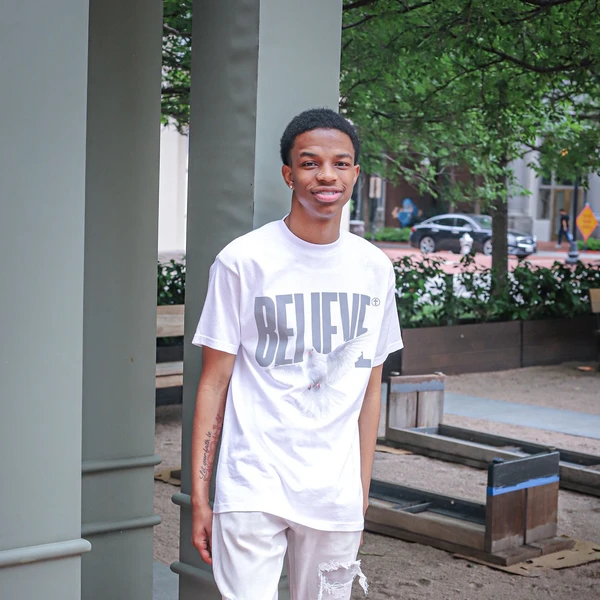
braylon donnell
1x
Finalistbraylon donnell
1x
FinalistBio
"I’m an 18-year-old Computer Science and Engineering major at UNT, big brother to two awesome siblings, and proud product of a single-mom household. When I’m not hitting the books or building projects, you can usually find me gaming late into the night, chasing high scores, and maybe yelling at my screen a little. I’m all about technology, family, and leveling up—both in games and in real life."
Education
University of North Texas
Bachelor's degree programMajors:
- Computer Science
University of North Texas
Bachelor's degree programMajors:
- Computer Science
North Crowley High School
High SchoolMiscellaneous
Desired degree level:
Bachelor's degree program
Majors of interest:
- Computer Engineering
Career
Dream career field:
Mechanical or Industrial Engineering
Dream career goals:
Curbside assistant
HEB2024 – Present2 years
Sports
Track & Field
Intramural2021 – 20221 year
Nebustream Technology Development Scholarship
One moment that really tested me was during my first semester as a computer engineering major at the University of North Texas. I was working on a programming assignment that, at first, didn’t seem too difficult. But once I got into it, everything started going wrong. My code wouldn’t compile, and when it finally did, it didn’t run the way it was supposed to. I kept getting errors I didn’t fully understand, and the more I tried to fix it, the more frustrated I became.
I remember sitting there staring at my screen for hours, feeling completely stuck. It felt like I had hit a wall. Everyone else around me seemed to be figuring things out, and I started to question if I was really cut out for this major. Coming from a background where resources weren’t always the same as everyone else’s, I didn’t always feel as prepared. It would’ve been easy to shut my laptop, take the loss, and move on.
But I didn’t.
Instead, I took a step back and changed how I approached the problem. I started breaking everything down into smaller pieces instead of trying to fix the whole program at once. I went back through my code line by line, trying to actually understand what each part was doing instead of just guessing. I used online resources, watched videos, and read forums to learn what the error messages really meant. I even reached out for help, which wasn’t easy for me at first, but I knew I needed to do something different if I wanted a different result.
It wasn’t a quick fix. It took time, patience, and a lot of trial and error. But eventually, something clicked. I fixed one issue, then another, and finally, my code ran the way it was supposed to. That moment didn’t just feel like relief—it felt like proof that I could figure things out if I didn’t give up.
That experience taught me more than just how to debug code. It taught me how to handle failure. I realized that hitting a wall doesn’t mean you’re not capable—it just means you haven’t figured it out yet. It also showed me that growth comes from pushing through those uncomfortable moments instead of avoiding them.
That “never give up” mindset is a big part of why I’m drawn to IT and computer science. In this field, things don’t always work the first time—or even the tenth time. There will always be bugs, errors, and challenges. But instead of seeing that as a reason to quit, I see it as part of the process. Every problem is an opportunity to learn something new and improve.
Coming from how I was raised, quitting was never really an option. I watched my mom push through challenges every day, no matter how hard things got. That same mindset is what I bring into my education and future career. When something doesn’t work, I don’t walk away—I take a breath, reset, and keep going until I figure it out.
That moment of struggling with my code didn’t break me—it built me. It showed me that persistence matters more than perfection. And it reinforced why I belong in this field: not because everything comes easy to me, but because I’m willing to keep going until I get it right.
Sola Family Scholarship
Growing up with a single mother shaped me into the person I am today, even in ways I’m still discovering as I get older. As a kid, I didn’t fully understand everything my mom was balancing. I just knew she was always moving, always working, and always making sure me and my siblings were taken care of. Now, as a 19-year-old college student at the University of North Texas studying computer engineering, I see her strength in a completely different light.
My mom raised three of us on her own—me, my 11-year-old brother, and my 5-year-old sister. There wasn’t a second parent to split responsibilities with, so everything fell on her shoulders. Even when things were stressful or money was tight, she never let us feel like we were lacking in what truly mattered. We always had love, support, and guidance. Watching her handle everything alone showed me what real strength and resilience look like. It wasn’t about being perfect—it was about showing up every single day, no matter how hard things got.
As the oldest, I naturally stepped into a leadership role within my family. I didn’t just see myself as a sibling—I felt a responsibility to be someone my brother and sister could look up to. I helped out where I could, whether that meant watching them, helping with homework, or just being there when they needed someone. That role taught me accountability and patience at a young age. It also made me more aware of how my actions affected others, which is something that has stayed with me as I’ve grown.
Growing up this way also gave me a deep sense of appreciation. I learned early on that nothing comes easy and that everything my mom provided came from sacrifice. There were times when she put her own needs aside to make sure we had what we needed. Seeing that made me value hard work and not take opportunities for granted. It also taught me to stay grounded and humble, no matter where life takes me.
That mindset has followed me into college. Studying computer engineering is not easy, and there are definitely moments where things feel overwhelming. But when I think about everything my mom has pushed through, it reminds me that I can push through challenges too. Quitting was never an option for her, so I don’t see it as an option for myself either. Her example motivates me to stay focused, disciplined, and committed to my goals.
More than anything, my mom’s sacrifices drive me to succeed. My goals are bigger than just personal success—I want to create a better life for my family. I want to be able to give back to my mom and take some of the pressure off of her. I want my younger siblings to see that all the hard work and sacrifices were worth it. Being raised by a single mother gave me a sense of purpose that goes beyond myself.
Overall, growing up in a single-parent household didn’t limit me—it strengthened me. It taught me resilience, responsibility, gratitude, and determination. It shaped my character and gave me a clear understanding of what it means to work hard and care for others. Everything I’m becoming today is a reflection of the lessons my mom taught me without ever needing to say a word.
First Generation Scholarship For Underprivileged Students
As a first-generation college student pursuing a degree in computer engineering, my journey into higher education represents more than personal achievement—it represents the sacrifices and resilience of my family. I was raised by a single mother of three who worked tirelessly to provide stability, support, and love for us. Watching her balance multiple responsibilities with determination shaped my work ethic and my belief in the power of education to change the trajectory of a family’s future.
Growing up, I saw firsthand what perseverance looks like. My mother carried the weight of providing for our household while ensuring we never felt limited by our circumstances. Although college was not something she had the opportunity to pursue herself, she constantly reminded us that education could open doors she never had access to. As a first-generation student, navigating applications, financial aid, and academic planning felt overwhelming at times because there was no blueprint at home. However, the resilience I learned from my mother gave me the courage to move forward despite uncertainty.
Choosing to major in computer engineering was both exciting and intimidating. STEM fields can feel especially daunting when you do not come from a background where higher education or technical careers are common. There were moments when I questioned whether I was prepared enough or capable enough. But every challenge I faced reminded me of the example set before me. If my mother could raise three children on her own and still push forward, I could push through difficult coursework, long study nights, and self-doubt.
Being raised in a single-parent household also shaped how I plan to inspire and motivate other first-generation students. I understand the quiet pressures many students carry—financial concerns, family responsibilities, and the fear of stepping into unfamiliar spaces. I want other students to see that their background is not a limitation but a source of strength. Our experiences build resilience, adaptability, and determination—qualities that are essential in higher education and beyond.
I plan to inspire others by being transparent about my journey. I want to share both the struggles and the victories. Representation matters, especially for students who may not see people like themselves in engineering or other competitive fields. Through mentorship programs, community outreach, and involvement in campus organizations, I hope to guide younger students through the college process—explaining financial aid, scholarships, time management strategies, and the importance of building support systems.
Additionally, I want to create spaces where first-generation students feel seen and supported. Study groups, peer mentoring, and open conversations about challenges can reduce feelings of isolation. Sometimes motivation comes simply from knowing you are not alone.
Ultimately, my pursuit of higher education is about more than earning a degree. It is about honoring my mother’s sacrifices and creating opportunities that extend beyond myself. If I can inspire even one student from a single-parent or first-generation background to believe that they belong in college, then I will have fulfilled a purpose greater than my own success
Enders Scholarship
In 2021, I experienced a profound loss when my cousin was killed at the age of 25 due to gang violence. His death occurred just two months after my baby sister was born—a moment that should have been filled entirely with joy, hope, and celebration. Instead, I was forced to hold both grief and gratitude at the same time. The contrast between welcoming new life while mourning a life taken too soon reshaped my understanding of family, time, and the fragility of life.
Navigating this loss required me to confront emotions I had never faced so deeply before. I experienced overwhelming sadness, anger, confusion, and moments of emotional numbness. Watching my baby sister grow while knowing my cousin would never experience milestones of his own was especially painful. However, through this experience, I learned that grief is not something to overcome but something to grow with. I discovered an inner resilience and emotional maturity that continues to guide me through life’s challenges. This loss taught me empathy, patience, and the importance of being present for those I love.
During my healing process, meditation and journaling became vital tools. Journaling provided a safe and honest space where I could process my thoughts, reflect on memories, and express emotions I struggled to articulate aloud. It helped me track my healing journey and recognize personal growth over time. Meditation helped me slow my thoughts, manage anxiety, and find moments of peace during emotionally overwhelming periods. These practices strengthened my emotional awareness and taught me healthy coping strategies that I continue to rely on today.
My cousin’s passing played a significant role in my decision to pursue higher education. Witnessing how quickly life can change reinforced the importance of purpose, intention, and long-term stability. I see education as a pathway to empowerment, opportunity, and meaningful impact. Continuing my education allows me to honor my cousin’s life by striving for a future rooted in growth, service, and positive contribution. I am motivated to break cycles of hardship and to build a foundation that allows me to support my family and give back to my community.
The greatest influences in my life are my family members, whose strength, perseverance, and faith have carried us through moments of profound loss. Even in difficult times, their example continues to shape my values and determination. I am also inspired by individuals I admire—both personally and from afar—who have transformed adversity into purpose. Their stories remind me that challenges do not define us; rather, it is how we respond to them that shapes our future.
Dr. Terran Jordan International Excellence in Leadership, STEM & Emergency Management Scholarship
When I think about a time I really had to step up and be a leader, I remember my senior year of high school during a group coding project. Everything was going smoothly until, just a week before our final presentation, the program completely stopped running. At first, the room felt tense—some people were frustrated, and a few even suggested giving up and starting over. I didn’t want to let that happen. I took a deep breath and decided to take charge.
The first thing I did was break the project down into smaller, more manageable parts. I asked a couple of teammates to work on debugging line by line, another group to focus on the user interface, and others to test sections that were still functional. I took responsibility for rewriting the chunk of code that caused the crash. More than the technical work, though, I tried to keep everyone’s energy up. I reminded them that every big project in engineering or computer science runs into problems, and this was just part of the process. Slowly, the team started believing we could fix it. By the time we presented, not only was our program running again, but we had added extra features that made it even better. That experience showed me that leadership is less about being the smartest person in the room and more about keeping people motivated when things feel overwhelming.
Now, as a Computer Science and Engineering major at the University of North Texas, I want to carry that same attitude into my future. What excites me most about this major is how it combines both sides of problem-solving: the creativity of computer science and the practical design side of engineering. Together, those skills open doors to solving real-world problems in ways that actually help people.
One area I feel especially drawn to is emergency management and community safety. Growing up in a single-parent household, I know how hard unexpected events can hit—whether it’s money problems, sudden health issues, or even weather disasters. I’ve seen how stressful it can be when families don’t have the right tools or resources. That’s part of why I want to use technology to make a difference in this space. For example, I want to design apps that help families prepare for emergencies, create systems that make communication faster for first responders, and even use data analysis to predict risks before they turn into major problems.
At the same time, I see myself working on projects outside of emergencies too—things like building stronger cybersecurity to protect people’s data, or developing educational software to make STEM learning more accessible to younger students. Technology is everywhere in our lives now, and I want to make sure I use my skills to create tools that serve people in meaningful ways.
As a first-generation college student, this path is about more than just earning a degree. It’s about proving to myself and my family that hard work pays off, and using what I learn to give back. I know there will be challenges ahead, but I’ve already learned that challenges are where real growth happens. With my Computer Science and Engineering background, I’m determined to build solutions that help people feel safer, more connected, and more prepared for whatever the future brings.
FIAH Scholarship
I’m currently a computer science and engineering major, and honestly, I’m really passionate about how technology can change lives for the better. Growing up in a single-mom household with two siblings, I learned early on what it means to work hard and support each other through challenges. My mom has always been my biggest inspiration — she does everything she can to provide for us, and seeing her dedication motivates me every day. Going to college has been a huge shift for me, not just because of the new environment or learning technical skills, but because it made me realize that my education is about more than just me. It’s about building a future where I can help my family and make a difference in my community.
Before college, I used to think that helping out at home was enough, but now I understand that investing in my education is a way to help even more in the long run. It’s not always easy balancing school, work, and family responsibilities, but knowing that what I’m doing will open doors for us keeps me going. I want to create opportunities for my siblings and be a role model for them, showing that with determination and focus, we can overcome the obstacles life throws at us.
What really excites me about my major is how much potential technology has to improve people’s lives, especially for those who don’t always have access to the tools and resources they need. Whether it’s through building user-friendly apps, developing software that supports education, or working on sustainable engineering projects, I want to use my skills to make things easier and more accessible for everyone. I believe that technology shouldn’t just be for the privileged — it should be a way to level the playing field and help communities thrive.
I’m also a gamer, and that’s where I first saw how technology connects people and creates opportunities for learning and growth. Gaming taught me problem-solving, teamwork, and patience — skills that I’m applying to my studies and future career. Plus, it keeps me grounded and reminds me that technology can be fun and creative, not just serious or complicated.
Looking ahead, I hope to work on projects that combine innovation with empathy. I want to build things that truly serve people’s needs and make their daily lives better. I’m especially interested in helping communities like mine, where people face financial or social challenges, by creating tech solutions that break down barriers instead of creating new ones.
Ultimately, my goal is to use my education and passion to give back in a meaningful way — just like my mom has given so much to support me. I want to be a positive force in my community, showing that no matter where you start, with hard work and heart, you can make a real impact. That’s the kind of future I’m working toward, and I’m excited to see where this journey takes me.
Sloane Stephens Doc & Glo Scholarship
I grew up in a single-mom household with my younger sister and brother, so responsibility has been part of my life for as long as I can remember. Being the oldest meant I had to learn early on how to help out, step up when needed, and put my family first. It wasn’t always easy — there were times when money was tight, and things got overwhelming — but those moments taught me patience, leadership, and the value of hard work. Growing up like that made me appreciate even the small wins and motivated me to keep pushing forward.
Now, as an 18-year-old freshman at the University of North Texas, majoring in computer science and engineering, I’m excited about what lies ahead. Technology has always been a big part of my life. From gaming late into the night to trying to understand how the apps and systems I use every day actually work, I’ve been curious about how things function behind the scenes. Gaming especially pushed me toward coding and problem-solving — I love the challenge of breaking things down and building something new from scratch. It’s like a puzzle I’m always eager to solve.
Starting college changed my role at home a lot. Before, I was the go-to person for helping out with everyday stuff — running errands, helping my siblings with homework, or just being around when things got busy. Now, I can’t be there as much as I want to be, and sometimes that’s tough because I want to support my family every day. But I also know that this is for the greater good. The education and skills I’m gaining now will help me support my family in bigger ways down the road. It’s a long game, and sometimes that means making sacrifices in the moment, but it’s worth it.
Looking ahead, I want to use my degree to work on technology that really matters — whether that’s developing artificial intelligence, creating innovative apps, or working in cybersecurity to protect people online. For me, this isn’t just about building a career; it’s about breaking barriers, setting an example for my siblings, and proving that with hard work and determination, you can change your story.
Every challenge I’ve faced — from tight budgets to late nights studying and balancing family responsibilities — has shaped me into someone who’s persistent, resourceful, and determined. I’m proud of where I come from, and that’s exactly what fuels where I’m going.