user profile avatar

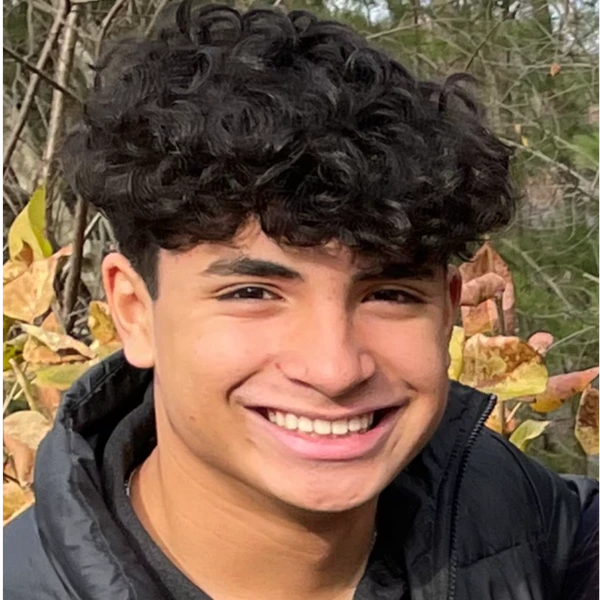
Braden Benzan

1x

Finalist

General information

Hobbies & Interests

  • Baseball
  • Teaching
  • Coding And Computer Science
  • Architecture
  • Psychology
  • Mathematics
  • Art
  • Athletic Training
  • Alpine Skiing
  • Animals
  • Artificial Intelligence
  • Bodybuilding
  • Cooking
  • Driving
  • English
  • Foreign Languages
  • French
  • Spanish
  • Machine Learning
  • Music
  • Paintball
  • Sleeping
  • Soccer
  • STEM
  • Spikeball
  • Table Tennis
  • Volunteering
  • Weightlifting

Reading

  • Academic
  • Human/Nature Interaction
  • Economics
  • Literary Fiction

I read books daily.

Bio

Hi there! My name is Braden, and I'm super excited to start my college application process! I live just south of Boston with my two parents and younger brother, Alex. All four of my grandparents are immigrants from different countries, and I take great pride in their cultural backgrounds. Another thing I'm passionate about is STEM and computer science. To share that enthusiasm with others, I've started a tutoring program for younger students in my local community to teach them computer science basics. I find it rewarding to give access to programs I never had when I was younger, and I thoroughly enjoy seeing the children's faces light up during my classes. I hope you'll consider me for your scholarship!

Education

Northeastern University

Bachelor's degree program

2024 – 2028

Majors:
  • Data Science
  • Finance and Financial Management Services
Milton High

High School

2020 – 2024

Miscellaneous

Desired degree level:
Bachelor's degree program
Majors of interest:
Computer Programming, Computer Science, Computer Systems Analysis, Mathematics and Computer Science
Medical school interest:
No

Career

  • Lifeguard

    Health, Wellness, and Fitness · Life Time Fitness

    Jan 2023 – Present

  • Summer Camp Counselor

    Recreational Facilities and Services · Thayer Academy

    Jan 2021 – Jan 2022

  • Front End Associate

    Food & Beverages · Stop & Shop

    Jan 2022 – Jan 2022

Miscellaneous

Dream career field:
Market Research, Research
Has nursing license:
No

Future Interests

  • Advocacy
  • Volunteering
  • Philanthropy
  • Entrepreneurship
Kalia D. Davis Memorial Scholarship
If there's one thing I'd want someone to know about me, it's that I've always strived to earn my way to where I am. I've worked part-time throughout my entire time at Northeastern, often juggling more than one job at once, as a personal trainer, at a car dealership, and as a physical therapy aide. I lined those jobs up around my class schedule so I was almost always earning something between lectures. None of them were glamorous, but each one taught me something a classroom couldn't: how to show up when I'm exhausted, manage my time when there isn't enough of it, and do my best work even when no one is watching. That work ethic is the part of myself I'm proudest of, because I know exactly what it costs to build. That drive started long before college, and a lot of it came from sports. I've played baseball for as long as I can remember, starting with tee ball as a little kid and working my way up through every level until I made varsity in high school. Baseball has been the one constant in my life, and the sport gave me far more than the game itself. It's built on failure. You can do everything right and still get out seven times out of ten, and the players who last are the ones who come back for the next at-bat like nothing happened. Learning to fail, reset, and keep swinging shaped how I handle setbacks everywhere else. I wasn't willing to give it up in college, so I kept playing at the club level, and this year our team made a run all the way to NCBA Division 1 regionals. Competing at that level reminded me exactly why I never walked away from the game. Giving back has mattered to me just as much as competing. I founded a free coding program in my hometown that taught elementary and middle school students to build their own games through block-based coding. I started it because I remembered how badly I wanted something like it as a kid, and how coding felt like a locked door until someone finally handed me the key. I recruited volunteers, found space with almost no budget, and broke down concepts until a nine-year-old could build something real. Watching a quiet kid light up after finishing his first working game taught me that the point of any skill is what you do with it and who you lift up along the way. Academically, I study finance with a focus on data science, and I want to build a career at the intersection of the two. I'm fascinated by the point where financial judgment meets the technical skill to make sense of large amounts of data, and I'm building that toolkit through equity research, case analysis, and the quantitative side of my degree. This scholarship would make a real difference in how I finish. After two years of covering my costs through work and parental support to stay out of debt, this is the first year the gap is finally bigger than I can bridge on my own. As a finance student, I understand exactly what loans cost over time, and support now means less debt compounding against me for years after I graduate. More than that, it would honor the effort I've put in by letting me finish my degree the same way I started it, working hard and owing as little as possible.
Stephan L. Wolley Memorial Scholarship
For as long as I can remember, my life has revolved around two things: family and sports, and honestly the two have always been tangled together. Some of my earliest memories are of playing with my little brother, whether that was in the backyard, the driveway, or any patch of grass big enough to turn into a field. I was the older brother, so I was the one setting up the games, teaching him the rules, and usually going a little easier than I'd admit. Competing with him taught me how to win without gloating and lose without sulking, long before any coach ever did. Baseball became the center of it all. I started with tee ball as a little kid who mostly wanted to be in the dirt, and I never stopped. I worked my way up through every level until I made varsity in high school, and baseball became the one constant through all of it. When everything else in my life changed, there was still a field, a bat, and a game I loved. The sport gave me far more than the game itself. Baseball is built on failure. You can do everything right and still get out seven times out of ten, and the players who last are the ones who come back for the next at-bat like nothing happened. Learning to fail, reset, and keep swinging shaped how I handle setbacks everywhere else in my life. My family shaped the rest. I grew up understanding that nothing comes for free, and that belief has defined how I've approached college. I attend Northeastern University, where I study finance with a focus on data science, and I've worked part-time the entire time I've been there, often more than one job at once, as a personal trainer, at a car dealership, and as a physical therapy aide. Those jobs have kept me largely out of debt and taught me the same discipline baseball did: show up, do the work, and don't make excuses. Balancing them alongside a full course load hasn't been easy, but it's the kind of hard I'm proud of. I wasn't willing to give up the game when I got to college, so I kept playing at the club level, and it's been one of the best decisions I've made. This year our team made a real run and went all the way to NCBA Division 1 regionals, which stands out as one of the highlights of my time in school. Competing at that level, with a group of guys who love the game as much as I do, reminded me exactly why I never walked away from it. Looking ahead, I want to build a career at the intersection of business and data science. I'm fascinated by the point where financial judgment meets the technical skill to make sense of huge amounts of data, and I'm building the toolkit to work there through equity research models, case analysis, and the quantitative side of my degree. My goal is to become someone who can both understand what the numbers mean and build the systems that find the ones worth paying attention to. When I put it all together, my path hasn't been the easiest route, but every part of it connects. Baseball taught me how to compete and how to handle failure. My family taught me to earn what I have. And my education is turning that foundation into a future I'm working hard to build.
Chadwick D. McNab Memorial Scholarship
The project I've been most passionate about started as a class assignment and turned into something I couldn't stop building. I set out to construct a full equity research model on a public company, the kind of analysis a real analyst produces before making a recommendation. It began simply enough, pulling financial statements and setting up a discounted cash flow valuation. But the deeper I got, the more I realized how much the quality of the output depended on the machinery underneath it, and that's where it stopped feeling like homework and started feeling like something I actually cared about. A good model isn't just a spreadsheet with numbers in it. It's a system. Every assumption connects to a dozen others, so a single change in a growth rate or a cost of capital ripples through the entire thing. I spent hours wiring those connections so the model would react correctly to any input, building out scenarios that let me stress-test the company under different conditions, and reconciling messy, inconsistent data into something clean enough to trust. When I finally had it working, I could change one assumption and watch the whole valuation update in real time, showing me instantly how fragile or solid the company's value really was. That moment, seeing the system respond exactly the way I'd designed it to, is the same feeling I first fell in love with as a kid writing my first lines of code. That's really what working in technology does for me. It takes an idea in my head and makes it real, and then it lets me push that idea further than I could ever go by hand. Building this model taught me that the interesting work in finance is increasingly a technology problem. Anyone can find the data now. The advantage goes to whoever can build the systems that turn thousands of scattered numbers into a clear, defensible decision. I found myself far more excited about designing that machinery than about any single answer it produced. What inspires me most is that technology rewards curiosity in a way few things do. Every time I hit a limitation in my model, the fix wasn't to accept it. It was to learn something new and build past it. When my data was too messy to handle manually, I learned better ways to process it. When my assumptions felt too rigid, I built in flexibility. The tools kept expanding what was possible, and every problem became an invitation to level up rather than a wall to stop at. That loop, of hitting a limit and then engineering my way through it, is genuinely addictive to me. This project also clarified where I want to go. I'm drawn to the intersection of finance and data science precisely because it sits at that boundary between judgment and computation. You still need to understand what a number means, but you also need the technical skill to build systems that surface the numbers worth looking at. My equity model was a small version of that, one company analyzed deeply. The future I'm working toward is doing that same kind of analysis at scale, with better tools and sharper questions. Technology inspires me because it turns effort directly into capability. The more I learn, the more I can build, and the more I can build, the bigger the problems I get to solve. That's exactly the kind of work I want to spend my life doing.
Byte into STEM Scholarship
The thing I'm proudest of about myself isn't a single achievement. It's that I've earned my way here. I've worked part-time throughout my entire time in college, often juggling more than one job at once as a personal trainer, at a car dealership, and as a physical therapy aide. None of those jobs were glamorous, but each taught me something I couldn't have learned in a classroom: how to show up when I'm tired, manage my time when there isn't enough of it, and do the work even when nobody is watching. Those jobs kept me largely out of debt for three years and shaped a work ethic I now bring to everything else. I don't take opportunity for granted, because I know exactly what it costs to create one. That same drive is what pulls me toward finance and data science. I'm fascinated by the point where the two meet, where you need the judgment to understand what a number actually means and the technical skill to process thousands of them without losing the signal. My coursework at Northeastern has been built around real cases rather than pure theory, from full equity research models and discounted cash flow valuations to capital structure decisions I've had to defend the way an analyst would defend them to a client. I like that this work forces a decision at the end, not just a calculation. The more I learn, the more convinced I am that the future of the field belongs to people who are fluent in both the numbers and the technology behind them, and that's exactly the person I'm working to become. But the experience that shaped me most wasn't in a classroom or a job. It was founding a free coding program in my hometown that taught elementary and middle school students to build their own games through block-based coding. I started it because I remembered how badly I wanted something like it as a kid, and how coding felt like a locked door until someone finally handed me the key. Running it taught me more about leadership than any title could. I had to recruit volunteers, book space with almost no budget, and break down concepts like loops and variables into pieces a nine-year-old could actually hold onto. Watching a quiet kid light up after finishing his first working game showed me that teaching isn't about being the smartest person in the room. It's about handing someone power they didn't know they had. That's the thread that ties everything together for me. I want a career analyzing companies and solving real problems with data, and my degree is building the exact toolkit that work requires. But I don't want technical skill to be the end of the story. I want to use it the same way I used that coding program: to open doors for people who assumed those doors weren't for them. Long term, I plan to keep doing both. I want to do the analysis at a high level, and I want to keep reaching back to mentor and teach students coming up behind me, especially the ones who don't see many people like themselves in these fields. The work I care about isn't just becoming good at what I do. It's making sure I'm never the last one through the door behind me.
Learner Tutoring Innovators of Color in STEM Scholarship
Here's the expanded version at about 590 words, same voice, no em-dashes. Why have you chosen to pursue a degree in STEM? How do you hope to have an impact in the STEM field as a person of color? I chose to pursue a degree in STEM because I've seen what technical skill can actually do for people. I'm studying finance with a focus on data science because I want to spend my career analyzing companies and turning messy data into decisions that hold up. What pulls me toward this field is that it rewards both judgment and precision. You have to understand what a number means and have the tools to process thousands of them without losing the signal. That combination is where I do my best thinking, and the more I learn, the more convinced I am that the future of finance belongs to people who are fluent in both the numbers and the technology behind them. Some of that conviction started well before college. I founded a free coding program in my hometown that taught elementary and middle school students to build their own games through block-based coding. I started it because I remembered how badly I wanted something like it as a kid, and how coding felt like a locked door until someone finally handed me the key. Teaching it turned out to be its own education. Breaking down loops, conditionals, and variables into pieces a nine-year-old could actually hold onto forced me to understand them more deeply than any class ever did. And watching a quiet kid light up after finishing his first working game showed me that STEM isn't just problem-solving. It's a way to hand people power they didn't know they had. That experience shaped how I think about my own path. STEM has never been just a set of skills to me. It's a tool for opening doors, and I know from experience that those doors don't open equally for everyone. As a multiracial student with roots in the Dominican Republic, Venezuela, Ecuador, and Egypt, I know how few people in business and STEM share a background like mine. Those rooms are still far less diverse than the world outside them, and that gap is exactly what I want to help close. Representation matters because it's hard to picture yourself in a field where you never see anyone who looks like you or comes from where you come from. I've felt the difference that even one relatable example can make, and I've also felt the absence of it. I don't want the next generation of students like me to assume these fields aren't for them simply because no one showed them otherwise. So my goal isn't just to succeed in these fields. It's to make the path easier for the students coming up behind me. I want to keep teaching kids like me, opening doors that stayed closed for too long, and proving that people from backgrounds like mine belong in every one of these rooms. That work can take a lot of forms, whether it's mentoring, expanding programs like the one I built, or simply being visible in spaces where people from my background are still rare. I also believe diversity isn't just fair, it's better. A field full of people who think alike makes predictable mistakes. Different backgrounds bring different questions, and better questions lead to better decisions, and I intend to be part of building that more equitable and diverse future.
Nickolas Roy & Scott Laverdure Scholarship
I've always been someone who would rather earn something than be handed it. That's shaped most of my life, from how I've paid my own way through college to how I approach the things I care about. I've worked part-time my entire time in school, often more than one job at once, as a personal trainer, at a car dealership, and as a physical therapy aide. None of those jobs were glamorous, but each one taught me something about showing up, staying disciplined, and doing the work even when nobody's watching. That's the background I'm proudest of. Not that things came easily, but that I kept going anyway. Pursuing and succeeding in my education after high school matters to me because it's the clearest path to the kind of career I actually want, and because I don't take the opportunity for granted. I'm studying finance because I want to spend my life analyzing companies and solving real problems with numbers. College is where I'm building the technical skills to do that, but it's also where I've learned how to manage my time, think under pressure, and keep long-term goals in view while handling the day-to-day. For me, education isn't just the degree at the end. It's proof that I can commit to something hard and finish it, then use it to build a future I chose for myself. A lot of that mindset comes from baseball. I've been playing for as long as I can remember, starting with tee ball as a little kid who mostly wanted to be in the dirt, and working my way up through every level until I made varsity in high school. Baseball has been the one constant through all of it. When everything else in my life changed, there was still a field, a bat, and a game I loved. What the sport gave me went far beyond the game itself. Baseball is built on failure. You can do everything right and still get out seven times out of ten, and the best players are the ones who come back the next at-bat like nothing happened. Learning to handle that, to fail, reset, and keep swinging, shaped how I deal with setbacks everywhere else. Slumps taught me patience. Practice taught me that improvement is boring and repetitive and worth it anyway. Being part of a team taught me how to carry my weight and rely on other people at the same time. I didn't want to give that up when I got to college, so I kept playing at the club level. It's been one of the best decisions I've made. This year our team made a real run and went all the way to NCBA Division 1 regionals, which was one of the highlights of my time in school so far. Competing at that level, with a group of guys who love the game as much as I do, reminded me why I never walked away from it. Between work, school, and baseball, my journey hasn't been the easiest route. But it's been mine, and every part of it has taught me something I'll carry forward. Education is how I turn that effort into a future, and baseball is a lot of what taught me how to earn it.
Kyle Lam Hacker Scholarship
The desks in the town's public library were built for people much smaller than me, so I spent most of that first afternoon crouched at eye level with a room of nine- and ten-year-olds who had never written a line of code. I'd started this program a few months earlier. It was a free after-school class in my hometown where I taught elementary and middle schoolers to build their own games using block-based code. I started it because I remembered how badly I'd wanted something like it at their age. Coding had always felt like a locked door until someone sat me down with the patience to teach me, and I wanted to be that person for them. We worked in block-based modules, dragging colorful blocks together instead of typing syntax so the kids could focus on ideas instead of semicolons. Most kids started with something simple, like a sprite that chased a ball or a cat that meowed when you clicked it. Then there was James, one of the youngest in the room, small enough that his feet didn't touch the floor. For the first few weeks he'd been quiet, watching more than building, and I'd started to worry I was losing him. One afternoon I asked what he actually wanted to make. He thought about it and said, almost shyly, "A plane. That you fly." So we built a plane. We dragged out the blocks that lifted his sprite when he pressed the arrow key and dropped it when he let go. We added walls it had to dodge and a score that ticked up the longer it stayed in the air. When his plane crashed for the tenth time and the "Game Over" text popped up exactly like he'd programmed it to, something shifted. He wasn't frustrated, he was thrilled that HE had made that happen. Within minutes, half the class had crowded around his screen to take turns flying his plane. He was beaming, explaining the controls, adding new obstacles on the spot because now he wanted to make it harder. That grin is the reason I kept the program running until I graduated. It wasn't the curriculum or the logistics of booking rooms and recruiting volunteers. It taught me that tinkering isn't really about the technology. It's about handing someone the ability to create their own ideas, and watching them realize they can build things that didn't exist before. I didn't teach James anything complicated that day. I just showed him the basics and how each block worked. He opened the door himself, and the delight on his face when he walked through it is still one of the best things I've ever built.
Braden Benzan Student Profile | Bold.org