user profile avatar

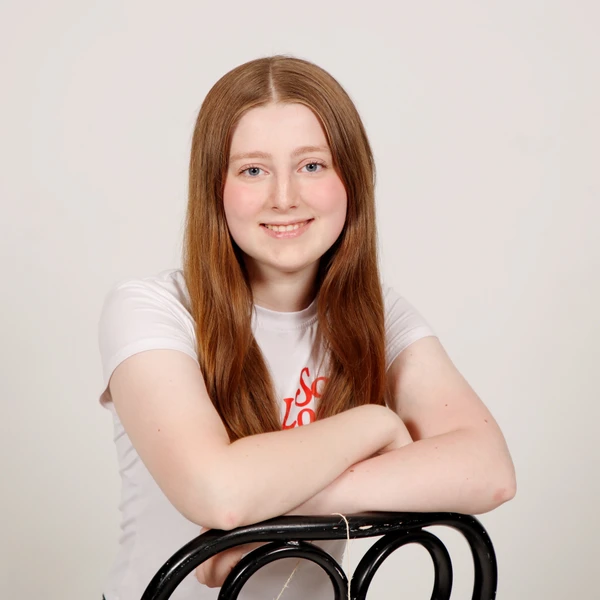
Mallory Wisemiller

1x

Finalist

1x

Winner

Bio

Hi! I’m Mallory Wisemiller, an incoming architecture student at the University of Wisconsin–Milwaukee with a passion for design, creativity, and problem-solving. Ever since I was young, I’ve loved creating things—from building imaginative worlds in Minecraft to sketching and exploring how spaces can shape the way people live and interact. Those interests grew into a desire to pursue architecture, where I hope to combine creativity with practical design to make a lasting impact. Outside of academics, I enjoy reading, creating content on TikTok, and taking on creative projects that challenge me to think differently. I’m also interested in exploring opportunities in set design and the film industry, where architecture and storytelling come together. I value collaboration, curiosity, and continuous learning, and I’m excited to make the most of my college experience through leadership, service, and hands-on opportunities. Scholarships will help me focus on my education, pursue internships and professional experiences, and continue working toward my goal of becoming an architect who designs meaningful, inspiring spaces.

Education

University of Wisconsin-Milwaukee

Bachelor's degree program
2026 - 2030
  • Majors:
    • Architecture and Related Services, Other
Elk Mound High

High School
2022 - 2026

Miscellaneous

  • Desired degree level:

    Bachelor's degree program

  • Graduate schools of interest:

  • Transfer schools of interest:

  • Majors of interest:

    • Architecture and Related Services, Other
  • Not planning to go to medical school
  • Career

    • Dream career field:

      • Architecture & Planning
    • Dream career goals:

    • Fun Guide

      Fergusons Orchards
      2024 – 20251 year
    • Meat Clerk

      Festival Foods
      2025 – Present1 year
    • babysitter

      Private Family Employer
      2024 – 20251 year

    Arts

    • Eau Claire Children's Theatre

      Theatre
      Through the Looking Glass
      2023 – 2023
    • Elk Mound High School

      Theatre
      Murders in the Heir, This Girl Aster, The Legend of Sleppy Hollow
      2023 – Present
    Bick First Generation Scholarship
    A caterpillar doesn’t know what it feels like to have wings. It only knows to keep moving forward, trusting that every inch brings it closer to becoming something it has never been before. Being a first-generation college student feels the same way. I don’t have parents who can explain FAFSA, college registration, or what to expect during my first year. Instead, I’ve learned to move forward by asking questions, seeking opportunities, and believing that every step is leading me toward a future my family has never experienced. As the first person in my immediate family to attend a four-year university, I know that college is about more than earning a degree. It represents a new beginning—not just for me, but for the generations that will follow. There isn’t a roadmap for me to follow, so I’ve had to create one myself. Every scholarship application, financial decision, and unfamiliar process has taught me how to advocate for myself and navigate challenges independently. Those experiences have strengthened my confidence. Being first-generation hasn’t made me feel limited; it has made me resourceful. I’ve learned that success isn’t about already knowing the answers. It’s about having the determination to find them. Each challenge I’ve overcome has prepared me for the next one and reinforced that I belong in higher education just as much as anyone else. My dream is to become an architect because I want to create places that improve people’s everyday lives. Buildings are more than walls and roofs—they influence how people learn, heal, connect, and grow. I hope to design schools that inspire curiosity, hospitals that provide comfort, and community spaces that bring people together. Architecture combines the creativity I love with the opportunity to make a lasting impact, and that purpose motivates me to work hard every day. Receiving this scholarship would ease the financial burden of college and allow me to focus more on gaining the experiences and education needed to become the architect I aspire to be. More importantly, it would affirm that others believe in my potential to succeed, even as I venture into unfamiliar territory. A butterfly is admired for its wings, but those wings are only possible because of the perseverance that came before them. Right now, I am in the middle of that transformation. Every class I take, every challenge I overcome, and every opportunity I pursue is helping me become the person I want to be. Being the first in my family to attend college is not simply an achievement—it is the beginning of a legacy. My hope is that one day, because I had the courage to be first, someone else in my family will find it easier to follow.
    Olivia Rodrigo Fan Scholarship
    Some songs are memorable for their melodies, but hope ur ok by Olivia Rodrigo stayed with me because it changed the way I think about the impact a person can have long after a moment has passed. The lyrics reflect on people from childhood whose paths have drifted away, yet whose stories still matter. What resonates with me is not only the nostalgia in the song, but the idea that even brief encounters can create effects we may never fully see. That message connects directly to my own journey as a student, a leader, and an aspiring architect. It has strengthened my drive to create work that leaves a meaningful and lasting impact. Throughout high school, I have pushed myself to pursue opportunities that challenged me rather than simply choosing the easiest path. I enrolled in college-level courses through Start College Now, balanced demanding academic responsibilities, and remained focused on preparing for a future in architecture. My interest in architecture began with a love for creativity and design, but it grew into something much more ambitious. I became fascinated by the way buildings influence people’s lives every day. A classroom can encourage collaboration, a library can inspire curiosity, and a public space can bring a community together. The smallest design decisions can affect thousands of people, often in ways that are never noticed directly. The lyrics of hope ur ok remind me that influence is not always loud or obvious. In my own life, many of my achievements have come from consistent effort behind the scenes. I have learned to set goals and follow through with them, even when the process is difficult. Whether completing challenging coursework, applying for scholarships, or preparing for the transition to college, I have developed discipline and persistence. I am proud not only of the accomplishments themselves, but of the determination required to reach them. My drive extends beyond academics. I want my future career to improve the experiences of other people. As an architect, I hope to design spaces that are functional, welcoming, and memorable. I am especially motivated by the idea that a building can become part of someone’s success story—a student discovering a passion, a family finding comfort, or a community gaining a place to gather. Just as Olivia Rodrigo reflects on people who left an impression on her life, I hope my work will leave positive impressions on the lives of others, even if I never meet them. What makes this song meaningful to me is that it transforms reflection into motivation. Instead of looking backward with regret, I look forward with purpose. My experiences have taught me that achievement is not only about personal success; it is about using my abilities to create opportunities, solve problems, and contribute something valuable. The same curiosity and determination that have driven me through high school will continue to drive me through college and into my career. When I hear hope ur ok, I do not simply think about the people Olivia Rodrigo remembers. I think about the kind of impact I want to make. I want to be someone whose work continues to matter after the moment has passed—someone who turns creativity into achievement and achievement into lasting influence.
    Learner Math Lover Scholarship
    I still think one of the best compliments I have ever received was, “That’s not how I expected you to solve it.” Instead of following the exact method we had just learned, I approached a math problem from a different direction. At first, I thought my teacher was telling me I had done something wrong. Instead, they asked me to explain my thinking. Soon, what started as one student’s solution became a classroom conversation about different strategies, different perspectives, and why the math worked. That moment showed me what I love most about math: there is rarely only one way to think. While the answer may be the same, the path to get there can reveal creativity, curiosity, and problem-solving skills. Math is not just about memorizing formulas; it is about asking “why?” and being willing to explore new ways of finding solutions. I also love how learning more math feels like discovering hidden features in the world around me. Every year, my scientific calculator seemed to gain another mysterious button. First came exponents, then logarithms, then trigonometric functions. It felt like I was slowly unlocking new levels in a video game—although I am still convinced some of those buttons are there just to intimidate students. As I have learned more math, I have started noticing it everywhere. I see symmetry in buildings, patterns in nature, and geometry in the spaces people create. Math is the invisible structure behind so many things we interact with every day, from technology to architecture. Ultimately, I love math because it connects people. A single problem can lead to different approaches, discussions, and discoveries. Whether it is a classroom debate over a solution or recognizing the patterns hidden in the world around us, math encourages us to think deeper and see possibilities that others might miss. To me, math is not just about finding the right answer—it is about discovering all the ways we can get there.
    Sloane Stephens Doc & Glo Scholarship
    The places that change our lives are rarely the places we travel to see. Growing up in a small Midwest town, I spent nearly two hours every weekday riding the school bus. Most people would probably call that wasted time. For me, it became my first lesson in architecture. Every morning, I watched the world pass by through a bus window. I noticed the schools students rushed into, the libraries that anchored small towns, the parks where families gathered after work, and the downtown buildings that quietly gave each community its identity. As I listened to music and watched familiar roads unfold, I realized something I couldn’t yet put into words: the places we move through every day shape us just as much as the milestones we celebrate. Those ordinary places are where life actually happens. We remember graduations, championships, and weddings, but our lives are built in the spaces between them. They unfold in classrooms where curiosity begins, dorms where strangers become lifelong friends, libraries where futures take shape, and community centers where children discover new passions. These places rarely make headlines, yet they influence thousands of ordinary days. That realization is what led me to pursue architecture. Many people dream of designing iconic skylines or world-famous landmarks. My ambition looks different. I want to design the buildings people rely on every single day; the ones that quietly make life better. I want to create schools where natural light inspires learning, affordable housing that restores dignity, libraries that encourage exploration, and community spaces where everyone feels they belong. If someone walks into one of my buildings and simply feels safer, calmer, or more welcome without ever stopping to wonder why, then I will have succeeded. Education is what will allow me to turn that vision into reality. At the University of Wisconsin-Milwaukee, I won’t just be learning how to design structures. I’ll be learning how thoughtful design can solve real problems, strengthen neighborhoods, and improve the daily lives of the people who use those spaces. Every class, studio project, and internship will equip me with the skills to transform ideas into places that serve entire communities for generations. Sloane Stephens’ story resonates with me because she recognized that success means little if it only benefits yourself. Through her foundation, she has opened doors for young people by creating opportunities they may not have otherwise had. I hope to do the same through architecture. While our paths are different, our goals are similar: to make opportunity more accessible and to leave our communities stronger than we found them. Coming from a small town has taught me that communities are not transformed by one extraordinary building. They are strengthened by the everyday places that make people feel seen, safe, and connected. Those are the spaces that quietly encourage a student to stay after school, give a family somewhere to gather, or inspire a child to dream a little bigger. I don’t dream of designing buildings that people travel across the world to see. I dream of designing the places they return to every day. If my education allows me to improve even a small part of someone’s daily life, then the impact of my work will extend far beyond blueprints; it will become part of the foundation on which stronger communities are built.
    Taylor Swift Fan Scholarship
    I’ve spent years wanting to design buildings that people don’t notice. That sounds like a strange goal until you watch Taylor Swift perform “marjorie” during the Eras Tour. Most concerts are remembered for the screaming. Fans sing every lyric, stadiums shake, and every moment competes to be louder than the last. But during “marjorie,” something different happened. As Taylor sang a song written for her late grandmother, the audience collectively chose silence. Instead of shouting the bridge back to her, tens of thousands of people simply listened. Ironically, that silence became the loudest part of the performance. It was one of the first times I realized that impact isn’t always measured by volume. Sometimes the greatest respect is shown by making space for someone else’s story. The absence of noise allowed the emotion of the song to exist exactly as it was meant to. Nothing needed to compete with it. That idea has stayed with me far beyond music.I’m beginning my first year studying architecture, and I’ve realized that the buildings people remember most aren’t always the ones demanding attention. The best architecture quietly improves people’s lives. It’s the hallway that naturally guides you where you need to go, the window that fills a room with morning light, the bench that invites someone to rest after a difficult day. Most people never stop to notice these details because they’re doing exactly what they’re supposed to do. I’ve started to think that I want my own work to feel like that moment during “marjorie.” I don’t necessarily want to design the loudest building in a city’s skyline. I want to create spaces that people feel before they consciously notice them. Spaces that make someone feel safe, welcomed, or inspired without ever asking for recognition. If someone walks through one of my buildings and simply feels more at peace, that would be enough. Like the silence during “marjorie,” its impact wouldn’t come from demanding attention. It would come from quietly making someone’s experience better. That perspective also reminds me why Taylor’s music has meant so much to me personally. Throughout high school, I spent nearly two hours each day riding the bus. Almost every morning, I would put on folklore or evermore, lean my head against the window, and fall asleep as the Wisconsin countryside passed by. Those albums became part of a routine that made long days feel manageable. They weren’t dramatic moments that changed my life overnight. They were small, consistent comforts that helped me keep moving forward. Looking back, I think that’s what has always made Taylor Swift’s work so meaningful to me. Her biggest moments fill stadiums, break records, and dominate headlines. But sometimes her greatest impact happens quietly, in a three-minute song that helps someone through a bus ride, or in a stadium where thousands of people choose silence over applause. That’s the kind of impact I hope to leave. Not one that demands to be noticed, but one that makes people’s lives better even when they don’t realize why. If the spaces I design can offer the same quiet comfort that Taylor’s music has given me, then I’ll know I’ve created something that truly lasts.
    Ryan Stripling “Words Create Worlds” Scholarship for Young Writers
    As I sit in front of this computer and type this, I create a story. In this instance it’s a tale of my love of writing. But, yesterday it was a tale of romance. When you write, you are in control. That’s what’s beautiful about it. I could sit here and tell you I am a massive purple unicorn, and you would most likely assume I am lying, but you would never be 100% sure. In a world where the words of a leader could lead to a nuclear attack, a slip on ice can change a life forever, and a single click can cause bankruptcy, having the ability to have the final say is a godsend. You alone have the power to create hundreds of stories and characters, and unlike a math problem, you will never write down the “wrong” words. Writing is a place of peacefulness that is so rare, I cherish it with my whole heart. Most of my words are never seen by another person, and they don’t have to be to matter—they still exist, making an impact, even if the only person they touch is me. And that’s exactly why I want to keep writing in college. College is loud—busy schedules, new people, new expectations, and the constant feeling that you should always be doing more. Writing is my way of shutting all that down for a second. It lets me escape and breathe. Whether I’m drowning in architecture assignments or trying to figure out what path I even want to take in life, I know I’ll always have a blank page waiting for me. I plan to keep writing the same way I always have: in the margins of my notebooks, in the notes app on my phone at 2 a.m., or on my laptop when an idea hits hard enough that I can’t ignore it. I want to join writing clubs, take creative writing electives, and surround myself with people who love stories as much as I do. All thinks I currently don't have the opportunity to do in my small Wisconsion school, where people care more about driving their tractor to school than reading chapter 12 of "The Great Gatsby". Not because I need to be published or praised, but because writing is part of who I am. I don’t ever want to lose that version of myself—the one who can turn a feeling into a chapter, a moment into a metaphor, or a random spark into an entire world. Writing will be my constant, my reminder that even when everything around me changes, I still have the power to create something entirely my own.
    Bick First Generation Scholarship
    I don’t always wake up at 7:00 a.m. to my alarm. More often, I wake up at 3:00 a.m. with my father. From my room, I hear him brushing his teeth, making coffee, and starting his car in the frigid Wisconsin winter before heading to his factory job making windows. He is my motivation—not because I want his life, but because I want to build a different one. Growing up, I’ve watched my parents endure the quiet cruelty of a world that gives little back to those who work the hardest. Over time, I’ve begun to see that same grayness myself as I walk crowded hallways into windowless classrooms for seven hours a day. Education, to me, is a way out of that grayness. I want a higher education not just for stability, but so I can create beauty and meaning for others. I dream of becoming an architect—someone who designs spaces people can feel proud of, places that bring light, comfort, and dignity. I don’t want people like my father coming home exhausted because their workplace lacks basic care. There is so much to love in this world, and I want to be someone who opens the door and lets others see it. Being a first-generation student means learning everything the hard way. There is no roadmap at home—no one who has filled out FAFSA forms, college applications, or scholarship essays before. Many nights are spent sitting at the kitchen table with my parents, confusion turning into frustration, words getting shouted, tears getting shed, and Google doing most of the explaining. But even when it’s hard, we finish what we start. That perseverance has become one of my greatest strengths. Despite these challenges, I’ve pushed myself academically. I balance rigorous coursework with leadership roles and extracurriculars, I joined as many clubs as I could, taking every opportunity available, all while working to help support myself. Still, the financial pressure is constant. This scholarship would do more than help pay for school—it would give me breathing room. It would relieve some of the stress that weighs heavily during my senior year and allow me to focus more fully on my education, my clubs, and preparing for college. Most importantly, it would bring me one step closer to transforming my determination into a career that improves lives. As a first-generation student, my journey is about more than me. It’s about honoring my parents’ sacrifices and proving that their hard work can lead to something brighter. This scholarship would help turn that belief into reality.
    Snap EmpowHER Scholarship
    As a child, I often stayed up late building houses for my Sims characters, crafting perfect lives for them before starting over with someone new. Over time, I realized that just like my Sims, the world around me shapes my emotions. My name is Mallory Wisemiller. I’m a high school senior and a future architect. Growing up in the small town of Elk Mound, Wisconsin, I often walked through windowless hallways that left me yearning for more. I wanted my future to mean something, I wanted to have an impact–not just through design, but by showing that young women belong in spaces where decisions are made and futures are built. Choosing architecture wasn’t an easy decision for me, since there are so many careers that can make positive impacts. But once I explored the field, everything clicked. Architecture offers the chance to design open, welcoming spaces where people can truly thrive. The idea that a building I create could influence culture and communities for centuries inspires me deeply. I want to design schools where students feel connected to the world outside—where they notice the rain during class, not just when the final bell rings. I want to help people stepping out of their comfort zones feel at ease in places like therapy offices or hospitals. Architecture is a beautiful blend of technology and creativity, and I know it will fulfill me by offering new challenges and opportunities every day. Growing up, I would often try to connect with my male peers in group settings. When I shared that The Sims was my favorite video game, I was met with scoffs: “That’s not a real game—you’re just making people do boring stuff.” Their words made me doubt my passions. But then I’d go online and see women YouTubers like me making full careers out of the game. They weren’t just playing—they were building, storytelling, designing. They showed me that women didn’t need approval to create meaning in their work. Entering high school, I joined student council and quickly learned how often women’s leadership is undervalued. After our elected male president failed to show up for most of the year, I decided to run against him. Though I lost, I was elected vice president—and ended up running nearly all the meetings and organizing most events. I led fundraisers, handled planning, and kept our class moving forward, even while hearing sarcastic comments like, “Way to go, Mr. President. You really killed it at that meeting.” These experiences taught me how easy it is for women’s work to be overlooked—and how important it is to speak up and take credit. That’s why I’m committed to advocating for women in whatever space I’m in, especially in male-dominated fields like architecture. Whether it’s mentoring younger students, spotlighting women-led projects, or speaking up when others stay silent, I plan to use my voice to make sure no girl feels like her passions are “less than.” Architecture isn’t just about buildings—it’s about the people who live, learn, and heal inside them. I want to design spaces that make people feel seen, safe, and inspired. Just like the women I looked up to when I was younger, I hope to build a career that not only creates change through design, but through leadership, representation, and advocacy. I believe that by pursuing my passion and using my voice, I can help shape a world where every girl knows her ideas are worth building.
    "Most Gen Z Human Alive" Scholarship
    Winner
    As a kid, I dreamed of being a YouTuber. I watched mermaid videos so often, I thought two ads in a row was YouTube punishing me. Then came my Minecraft phase. PopularMMOs practically raised me. And like every childhood YouTuber, they either got divorced, had allegations, or quit entirely. Naturally, I launched my YouTube career with a painfully botched version of Let It Go, directed by my sister. My mom found it. I was grounded. But that didn’t stop me. I started editing and made mini documentaries starring my cat like he was Taylor Swift on the Eras Tour. Then came the dark age: middle school with no phone. While everyone Snapchatted across the lunch table, I sat like an NPC. I couldn’t hang out unless my mom called their mom. But when I finally got a phone freshman year, it was like stumbling across a lake in the middle of a digital desert. That’s when I found fanfiction. Bad grammar? No paragraphs? Didn’t matter. The creativity was unmatched. I even wrote my own (and then ghosted my readers with a fake “family emergency”). It was perfect. Now I’m a full-blown Spotify detective. I’ve uncovered everything from classmates’ emo playlists to the football player’s “Cry My Heart Out” Olivia Rodrigo mix. Respect. Who doesn’t cry to "Hope ur ok"? These days, I’m in my final Gen Z form: scrolling TikTok at 2 a.m., flipping between ASMR, conspiracy theories, and space facts. (Did you know our galaxy is being gravitationally pulled in by something we can’t see? Same energy as my FYP.) I didn’t just grow up Gen Z…I fought my way into it! And now? I’m spontaneous, sleep deprived (it's 3:42 AM right now), unhinged in the best way, and powered by funny videos. I am Gen Z.