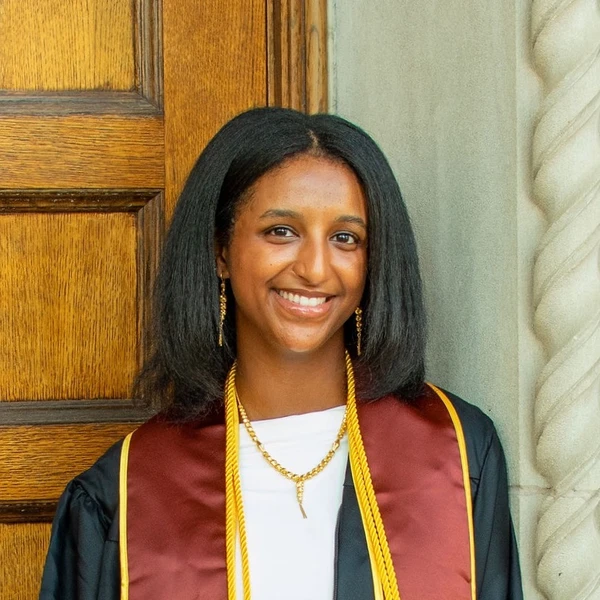
Age
22
Gender
Female
Ethnicity
Black/African
Hobbies and interests
Ceramics And Pottery
Reading
Adult Fiction
I read books daily
US CITIZENSHIP
US Citizen
Bontu Deressa
1x
FinalistBontu Deressa
1x
FinalistBio
I am an incoming Physician Assistant student with a strong commitment to diversity, equity, and patient-centered care. I am passionate about serving communities that are often underrepresented or overlooked in healthcare. Through my experiences as a home health aide and CNA, I've learned that meaningful healthcare begins with compassion, cultural humility, and teamwork. I aspire to become a PA who not only delivers great clinical care but also helps bridge gaps in access for diverse patient populations.
I am excited, grateful, and eager to embrace the challenges ahead and see where this path as a future PA takes me.
Education
Augsburg University
Master's degree programMajors:
- Health Professions and Related Clinical Sciences, Other
University of Minnesota-Twin Cities
Bachelor's degree programMajors:
- Sociology
- Biology, General
Miscellaneous
Desired degree level:
Master's degree program
Graduate schools of interest:
Transfer schools of interest:
Majors of interest:
- Medicine
- Health Professions and Related Clinical Sciences, Other
Career
Dream career field:
Medicine
Dream career goals:
To become a Physician Assistant
Undergraduate Teaching Assistant
University of Minnesota’s Psychology Department2022 – 20231 yearHome Health Aide
Champion's Village2021 – 20232 yearsNursing Station Technician/Assistant
M Health Fairview2023 – Present3 years
Public services
Volunteering
Adult Care LLC — Volunteer2023 – 2025
Future Interests
Advocacy
Volunteering
PAC: Diversity Matters Scholarship
An impactful Physician Assistant is someone who sees patients beyond their symptoms and charts. It's someone who listens closely, advocates, and understands that trust is built through respect and human connection. For me, these qualities weren't just nice things to write on paper, they're rooted in my upbringing, my experiences navigating healthcare spaces, and my work alongside patients at their most vulnerable.
As a first-generation American and the child of Ethiopian immigrants, I grew up acutely aware of how language and culture shape the way people are treated. Although both of my parents are fluent in English and worked as interpreters themselves, I often witnessed them being dismissed or spoken over because of their accents. I noticed how quickly assumptions were made about their intelligence or understanding, even when they were fully capable and knowledgeable. Certain expressions or analogies that carried deep meaning in their language were brushed aside as confusion rather than met with curiosity. Watching this happen was painful, and from a young age I felt a strong instinct to protect and advocate for them. I wanted to step in, to "translate", even though I knew the real barrier was not language proficiency but perception. Those moments taught me to recognize subtle forms of exclusion and to understand how easily people can feel invisible in spaces meant to help them.
These experiences shaped my sense of empathy and my commitment to advocacy. They taught me the importance of active listening, cultural humility, and the responsibility healthcare providers have to make patients feel truly heard. I carry this awareness with me in every clinic setting, constantly mindful of how power dynamics, communication styles, and unconscious bias can affect patient care. I believe an impactful PA must be intentional about creating spaces for patients to share their stories without fear of judgment or dismissal.
Those early lessons shaped the way I show up in healthcare today. Through my work as a home health aide and nursing assistant, I learned that small actions like listening carefully and being present can make a big difference for patients. I remember one patient who kept insisting they were fine, even though I could tell they were uncomfortable, because they didn't want to seem "difficult" or "make our jobs harder", a behavior I've noticed is common in many cultural backgrounds. I took the time to gently advocate for them, explaining why repositioning them would improve their comfort and prevent complications. Seeing the patient finally relax and feel cared for reinforced for me the importance of speaking up, paying attention to subtle cues, and trusting the patient's voices, even when they minimize their own needs. Experiences like this have shown me that empathy, attentiveness, and advocacy are central to meaningful patient care.
While scientists and medicine are essential, it is the human connection and ability to advocate, listen and empower that gives this work meaning for me. I aspire to be a PA who ensures no patient feels dismissed or unseen because of how they speak, where they come from, or how they are perceived. I am committed to being a provider who leads with empathy, curiosity, and respect, and who contributes to a healthcare system where every patient is treated with dignity and care.