
Northeastern University
Bachelor's degree program
2022 – 2026
Majors:
- Biological and Biomedical Sciences, Other
Minors:
- International/Globalization Studies
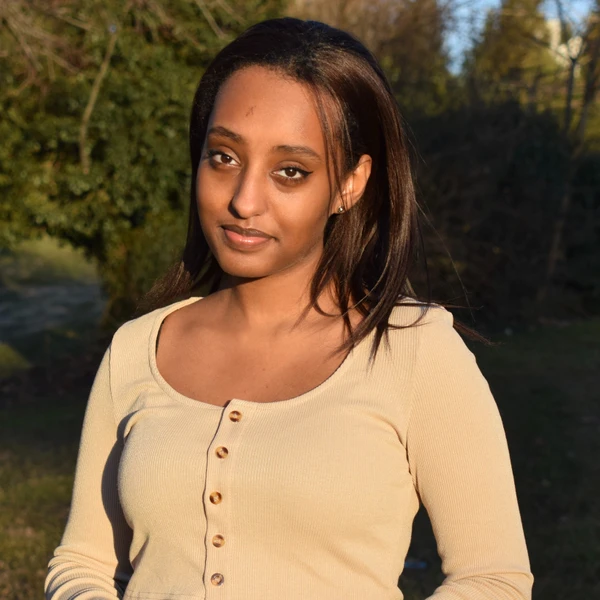
I read books multiple times a week.
I read books multiple times a week.
I am an Ethiopian-American, first-generation college graduate from a low-income, single-parent household. I recently graduated magna cum laude from Northeastern University with a degree in Health Science and am pursuing a career in medicine, with a particular interest in maternal health and the systems that shape women’s experiences of care. I am currently spending my gap year in Ethiopia, where I am developing improvements to mothers’ accommodations at St. Paul’s Hospital through the Samuel Huntington Public Service Award. Through the Global Health Service and Education Network, I also help build partnerships and organize learning programs connecting students with Ethiopian healthcare professionals and institutions. These experiences have deepened my commitment to becoming a physician who combines patient care with research and leadership. I want to help make healthcare more accessible, respectful, and accountable to the people it serves, in the United States and internationally. As I work toward that future, student loans and the cost of continuing my education remain significant concerns. Scholarship support would help ease that financial pressure as I prepare for medical school and continue contributing to the communities that have shaped me.
Bachelor's degree program
2022 – 2026
Boston Medical Center · Public Policy Analysis
2025 – Present
Boston Children's Hospital · Human Biology
2023 – 2025
Northeastern University · Videography
2025 – 2025
Public Service (Politics) · Ethiopian Federal Ministry of Health
2025 – 2025
Advocacy · MCPS DCC Coalition
2021 – 2021
Public Service (Politics) · MCPS Student Member of the Board Semi-Finalist
2021 – 2021
Volunteering · Sunrise Senior Living Nursing Home
2018 – 2019