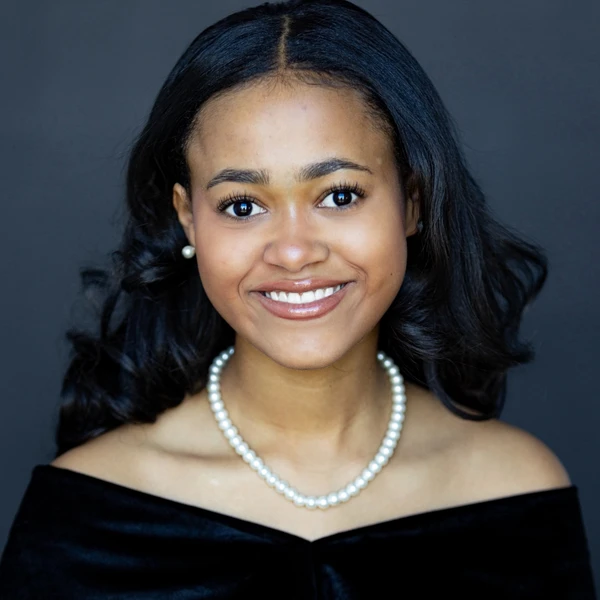
Hobbies and interests
Writing
Legos
Board Games And Puzzles
Singing
Soccer
Gaming
Anime
Reading
Classics
Novels
Literary Fiction
True Story
History
I read books daily
Blake Davis
2x
Finalist1x
Winner
Blake Davis
2x
Finalist1x
WinnerBio
I learned early that high achievement does not prevent people from struggling quietly. That realization shaped not only my interest in psychiatry and neuroscience but also the way I approach leadership, service, research, and community impact.
I am an incoming Spelman College student pursuing the Morehouse School of Medicine MD-PhD pathway toward becoming an adolescent psychiatrist and physician-scientist. My work focuses on understanding how emotional well-being, support systems, and early intervention shape long-term outcomes for young people.
Throughout high school, I balanced rigorous academics, leadership, entrepreneurship, athletics, community service, and navigating narcolepsy while maintaining a 3.98 GPA. Those experiences deepened my understanding of how many young people struggle quietly, while systems often recognize challenges only after they affect confidence or opportunity.
I founded Teen Service Connect, a youth-led nonprofit that has mobilized 150+ student volunteers, coordinated 1,000+ service hours, and reached more than 18,000 individuals across Metro Atlanta through community impact initiatives.
Beyond nonprofit leadership, I tutor bilingual and neurodiverse students, conduct neuroscience-focused research, work in healthcare settings, operate my business Lashes by Blake, and pursue opportunities that help me better understand people and systems of care.
I am not waiting for the future to begin this work. I am already building it.
Education
Spelman College
Bachelor's degree programMajors:
- Neurobiology and Neurosciences
- Psychology, Other
The Galloway School
High SchoolMiscellaneous
Desired degree level:
Bachelor's degree program
Graduate schools of interest:
Transfer schools of interest:
Majors of interest:
- Clinical, Counseling and Applied Psychology
- Neurobiology and Neurosciences
- Medical Clinical Sciences/Graduate Medical Studies
Career
Dream career field:
Mental Health Care
Dream career goals:
Psychiatry/Physician-Researcher/Neurologist
Assistant Organizer
Shared Demands2025 – Present1 year
Sports
Soccer
Varsity2023 – Present3 years
Softball
Varsity2025 – Present1 year
Research
Psychology, General
Global Online Academy — Researcher2025 – 2025
Arts
The Music Studio
Music2011 – Present
Public services
Volunteering
Jack and Jill of America — Community Service Chair2016 – PresentVolunteering
Agape Community Center — Certified Math and Literacy Tutor2022 – PresentVolunteering
Teen Service Connect — Founder and Executive Director2024 – Present
Future Interests
Advocacy
Politics
Volunteering
Philanthropy
Entrepreneurship
Julie Adams Memorial Scholarship – Women in STEM
I first met a doctor at the age of five on a cartoon, Doc McStuffins. It was more than just a thrill to see a little girl in a white coat who looked like me. I did not know the word yet, but I felt seen. Soon after, I received a toy doctor’s kit, and I still remember the feeling of holding a stethoscope to my parents’ chests and listening to their heartbeats. That sound made caregiving feel tangible. It planted a seed in me that has only grown stronger over time: to protect, to heal, and to serve my community with both competence and care.
This flame from childhood has been purpose-fueled by experience. I am a trained literacy tutor and mentor at the Agape Youth and Family Center, working with students who learn differently, and I have seen what it means when young people lack the resources, accommodations, and consistency in their support systems. I have also seen what it means when they do. Confidence can be restored in a flash when a student feels seen and capable. That is why policy decisions that decrease special education capacity or cut rehabilitative services affected me so deeply, because I can picture the students who will feel those impacts first and worst.
My commitment to mental health and education is also personal. I fell in love with psychology as a way to understand myself. As someone who lives with narcolepsy and is neurodivergent, I have spent years learning how my brain works and how it processes stress, relationships, and expectations. Support and self-study have helped me build practical strategies, especially using Cognitive Behavioral Therapy and Dialectical Behavior Therapy. Those tools did not simply give me vocabulary for my emotions. They taught me resilience, self-advocacy, and the power of recognizing patterns and rewriting them. That experience has shaped the professional I aspire to be: one who is grounded in science but driven by empathy.
I plan to study psychology with a concentration on cognitive development and mental health. My goal is to become a Pediatric Psychiatrist, with a focus on working with children and adolescents, because it is in those years where identity, trauma, environment, and learning differences often intersect, and where the right support can alter the entire course of a life. I do not want to treat only individual patients, but also to reinforce the systems that inform their outcomes. I aim to uplift the voices of students, families, and educators and help to increase access to trauma-informed care, early intervention, and school-based mental health support.
In college, I hope to balance research with hands-on service by studying the most promising approaches to anxiety, learning differences, and identity development while remaining grounded in the community spaces where the most support is needed. I want to be the kind of clinician and advocate who listens closely, who treats with precision, and who leads with compassion: someone who not only understands the mind but also honors lived experience and builds pathways for young people to feel safe, supported, and seen.
The heartbeat I listened to at five years old has stayed with me ever since. I now know that caring for people means more than just listening. It means showing up with knowledge, it means advocating when systems break, and it means helping to create the support that allows young people not just to survive, but to truly thrive. Through empathy, I found direction. And through direction, I found a future devoted to uncovering the profound beauty of the human mind and the quiet promise that even in our deepest pain, there is room for growth, for creation, and for hope.
Trees for Tuition Scholarship Fund
Lessons Beyond School Walls
By Blake Davis
Most people think of a backyard as a place where they play, explore, and grow. Mine stretches across Atlanta.
One week, I left a tutoring session at the Agape Youth & Family Center and crossed the city to a Teen Service Connect volunteer project. Later that week, I was supporting older adults at the Helene S. Mills Senior Multipurpose Facility. As I moved between classrooms, community centers, and service sites woven through Atlanta's urban forest, I realized the city itself had become my classroom.
As a certified math and literacy tutor at Agape, I learned how support shapes confidence. Through Teen Service Connect, the nonprofit I founded, I learned how opportunity shapes leadership. This summer at the Helene S. Mills Senior Multipurpose Facility, I am learning how cognition evolves across the lifespan. Together, these experiences deepened my interest in human development and strengthened my desire to understand how opportunity, support, and lived experiences influence outcomes across the lifespan.
Throughout high school, I became increasingly interested in why similar opportunities produce different outcomes and how cognition, emotion regulation, neurological development, and environment shape those differences. That interest deepened through my experience navigating narcolepsy, which heightened my awareness of how neurological conditions, environments, and support systems influence daily functioning and long-term outcomes.
My academic interests led me to explore the neuropsychology of music, memory, and neurodiverse learning through my Global Online Academy Capstone project. Selected as a Global Online Academy Capstone Honoree, one of 54 students chosen from more than 1,300 global submissions, I conducted interdisciplinary research examining how cognitive and environmental factors influence learning. The project strengthened my interest in understanding how cognition, lived experiences, and human development influence outcomes while revealing how much remains unanswered. College will allow me to engage in the rigorous research, mentorship, and collaboration necessary to investigate those questions more deeply.
At Agape, I watched a student who once avoided raising her hand begin answering questions with confidence. I learned that confidence often grows before achievement becomes visible. Through Teen Service Connect, I engaged more than 150 youth volunteers, coordinated more than 1,000 service hours, and reached more than 18,000 individuals through nonprofit partnerships and community initiatives. In recognition of my leadership and community impact, I received the Georgia Youth Leadership Award, recognizing 21 of the state's top student leaders. These experiences taught me that meaningful change requires more than good intentions. It requires leadership, research, strategy, and systems capable of scaling impact.
The questions that emerged from my experiences across Atlanta are the ones I will pursue through college and beyond. At Spelman College and through the Morehouse School of Medicine MD-PhD pathway, I will investigate why underserved youth experience disparities in mental health and access to care and how earlier identification and intervention improve long-term outcomes. Research will deepen my understanding of the factors that shape developmental and mental health outcomes, while medicine will translate those insights into meaningful care for individuals, families, and communities.
College transforms potential into preparation. It is where I will gain the training necessary to develop earlier pathways to identification and care, improve access to adolescent mental healthcare, and help ensure fewer young people go without support until challenges become crises.
The Atlanta communities that served as my backyard and classroom have shown me how profoundly lives can change when support arrives early. Through research, medicine, and community engagement, I will create systems that recognize potential sooner, expand access to care, and ensure more young people receive the support they need before challenges become barriers to opportunity.
Forever90 Scholarship
WinnerSeen, Supported, and Called to Serve
By Blake Davis
The students who worried me most were rarely the ones struggling loudly.
One student I tutored rarely raised her hand and almost always looked down after answering a question, even when she was correct. After weeks of encouragement, I remember the first time she raised her hand confidently without hesitation. What stayed with me most was not the academic improvement but the visible shift in how she saw herself. That moment changed the way I understand service. I realized that people grow differently when they feel safe enough to believe that their voices matter.
Throughout high school, I became aware that many young people struggle because they lack support systems that help them believe in themselves early enough. I saw this while tutoring bilingual and neurodiverse students at the Agape Youth and Family Center. Many of the students I worked with needed more than academic instruction. They needed patience, encouragement, and someone willing to remain beside them so their confidence could grow. I became increasingly interested in how emotional, neurological, and environmental factors shape the way young people learn, respond, and see themselves.
My understanding of these challenges also became deeply personal. Navigating narcolepsy throughout high school while balancing rigorous academics, athletics, entrepreneurship, nonprofit leadership, and service gave me insight into how neurological conditions quietly shape daily life. Living with narcolepsy taught me how easily people confuse performance with wellness. I learned that someone can function highly academically while quietly expending extraordinary energy simply to remain present. There were days when remaining alert through demanding classes felt like a private battle no one else could see. That experience sparked my curiosity about the adolescent brain and strengthened my desire to better understand the relationship between neurological health, emotional well-being, and identity development in young people.
Throughout high school, I dedicated hundreds of service hours to tutoring, mentoring, and youth leadership throughout Metro Atlanta. That commitment inspired me to found Teen Service Connect, a youth-led nonprofit focused on making community service more accessible for teenagers. Through the organization, I have mobilized more than 150 student volunteers, coordinated over 1,000 service hours, and helped reach more than 18,000 individuals through youth-led initiatives and nonprofit partnerships. Watching volunteers return week after week to mentor elementary students showed me how service can transform both the person receiving help and the person giving it.
My faith continues to shape the way I approach service, reminding me that care is most meaningful when it is consistent, personal, and rooted in compassion.
This fall, I will attend Spelman College while pursuing the MD-PhD pathway toward becoming a physician-scientist focused on adolescent psychiatry. I will use my education to better understand and directly treat the neurological and emotional challenges affecting adolescents, particularly within underserved communities where these struggles are often misunderstood or recognized too late. Through neuroscience research, I will better understand why underlying challenges develop and how earlier intervention can improve outcomes. Through medicine, I will support adolescents and families as they navigate those challenges in real time.
Managing rigorous academics, leadership roles, athletics, entrepreneurship, and nonprofit responsibilities while navigating a chronic neurological condition has already required the stamina, resilience, and sustained discipline necessary for the demanding years of medical and research training ahead.
Mrs. Marion Makins dedicated her life to faith, education, and service to others. Those same values continue guiding the way I live and lead. As a future physician-scientist, I hope to combine research, advocacy, and compassionate clinical care to help more adolescents receive support and intervention before quiet struggles become lifelong barriers.
Abigail O. Adewunmi Memorial Scholarship
Seen, Heard, and Understood
By Blake Davis
Some of the most meaningful changes in a young person’s life begin when they feel genuinely understood.
That belief has shaped my goals in medicine, research, and community leadership, and it continues guiding my commitment to psychiatry and neuroscience.
This fall, I will attend Spelman College to study neuropsychology while pursuing the Morehouse School of Medicine MD-PhD pathway toward becoming an adolescent psychiatrist and physician scientist. My long-term goal is to strengthen systems of mental healthcare for young people, particularly in communities where emotional and neurological challenges are often misunderstood or recognized too late. I hope to combine clinical care, neuroscience research, and advocacy to improve how adolescents are supported both within and beyond healthcare settings.
My work will focus on helping young people feel understood before they begin questioning their own potential.
My interest in this path is deeply connected to both personal experience and community service. Navigating narcolepsy throughout high school while balancing rigorous academics, leadership, athletics, entrepreneurship, nonprofit leadership, and service commitments required discipline, adaptability, endurance, and strategic time management. Balancing those responsibilities sharpened my ability to lead under pressure and reinforced the consistency and resilience needed for a demanding medical and research career.
I learned early that high achievement does not prevent people from struggling quietly. Those experiences deepened my understanding of how profoundly support, patience, and early intervention shape confidence, healing, and long-term opportunity.
That understanding became even more meaningful through my community work. Over the past four years, I have contributed hundreds of service hours through tutoring, mentoring, leadership initiatives, and nonprofit service. As a certified math and literacy tutor at the Agape Youth and Family Center, I worked closely with bilingual and neurodiverse students who often needed more than academic instruction. Many needed structure, encouragement, consistency, and someone willing to believe in them before they fully believed in themselves.
One student I worked with rarely participated and often seemed discouraged by mistakes. After weeks of individualized support and encouragement, I watched that same student begin volunteering answers confidently and engaging more fully in class. The academic improvement mattered, but what stayed with me most was the visible shift in confidence. That experience reinforced something I continue to see in both leadership and service: many young people begin changing the moment they feel genuinely seen, heard, and understood.
That realization inspired me to found Teen Service Connect, a youth-led nonprofit organization focused on making service more accessible and meaningful for teenagers. Since launching the organization, I have mobilized more than 150 student volunteers, coordinated over 1,000 service hours, and reached more than 18,000 individuals through youth-led impact initiatives. More importantly, the organization reinforced my belief that leadership is most meaningful when it creates opportunities for others to feel valued, supported, and capable of contributing to something larger than themselves.
What motivates me most is not only the opportunity to become a physician-scientist but also the ability to help pioneer clinical frameworks in which young people are recognized earlier, supported more compassionately, and encouraged to fully realize their potential before they begin to question it themselves.
The values reflected in Abigail Adewunmi’s life, perseverance, faith, curiosity, compassion, and service, deeply resonate with the systemic changes I hope to help establish throughout my career. Like Abby, I believe education carries both opportunity and responsibility. I hope to use mine to create meaningful impact in the lives of others while continuing to lead with purpose, humility, grace, and care.
Chi Changemaker Scholarship
Scaling Access to Service
By Blake Davis
I watched students ready to serve get turned away because there was no system to support them.
In my community, I saw a disconnect between students wanting to serve and organizations needing support. Many peers were eager to give back, but without transportation, connections, or adult coordination, opportunities felt out of reach. At the same time, nonprofits struggled to find reliable volunteers. The issue was not a lack of care, just a lack of structure.
I was motivated to address this while volunteering at the Agape Youth and Family Center, where I saw how consistent support changes outcomes. As a certified math and literacy tutor, I work with students whose progress is tied to their confidence. After weeks, one student looked up and said, “I didn’t know I was smart.” That moment stayed with me. It made clear that access to support does not just change outcomes. It changes how someone sees themselves. That experience pushed me to think beyond my role and consider how more students could access opportunities like this.
In 2024, I founded Teen Service Connect, a youth-led non-profit designed to make service more accessible and consistent. I built partnerships with more than 17 nonprofit organizations, including the Atlanta Beltline Partnership, A.G. Rhodes, and HOPE Atlanta, and developed a framework to organize opportunities. This allows students to take ownership while ensuring nonprofits receive dependable support.
Since launching, Teen Service Connect has engaged more than 150 student volunteers, coordinated over 1,000 hours of service, and reached more than 18,000 individuals. As a result, I was invited to serve as a youth advisor to Hands On Atlanta, guiding youth engagement.
Looking ahead, I plan to expand Teen Service Connect into a replicable model for schools and communities nationwide. Support like the Chi Changemaker Scholarship would accelerate growth, allowing me to strengthen infrastructure, build partnerships, and equip student leaders to launch chapters. At Spelman College, I will continue developing tools that ensure access to service is not dependent on circumstance but built into the student experience, shaping my path in psychology and medicine.
Addressing this gap has shown me that meaningful change does not always require new ideas. It requires building systems that make opportunity accessible and expected. That is the work I will continue to build and scale until access to service is no longer a barrier, but a standard.
Ava Wood Stupendous Love Scholarship
Showing Up So Others Can
By Blake Davis
Kindness means choosing to show up, even when you cannot control the outcome.
I have played soccer since I was a little girl, and this year, I stepped onto a softball field for the first time as a senior. It was unfamiliar and uncomfortable, but I chose to try anyway. That same mindset shapes how I show up for others.
Living with narcolepsy has taught me that showing up is not always predictable, but it is always something I work toward. It has made me more aware of how much presence matters, and how powerful it is when someone chooses to be there for you.
As a certified math and literacy tutor at the Agape Youth and Family Center, I worked with a student who struggled not only with reading but also with confidence. He hesitated, avoided eye contact, and questioned himself before even beginning. Instead of focusing only on progress, I focused on consistency. I showed up each week, creating a space where mistakes were part of learning, not something to fear.
After weeks of working together, he looked up and said, “I didn’t know I was smart.”
That moment was important because it was not about reading. It was about how he saw himself. I realized that kindness is not just encouragement. It is the decision to stay present long enough for someone to recognize their own potential.
Kindness is not about grand gestures. It is about showing up again and again, in whatever ways you can, until someone else begins to see themselves differently.
-----------------
Where Belonging Begins
By Blake Davis
Connection does not begin when people come together. It begins when someone feels safe enough to belong.
When I began volunteering at the Agape Youth and Family Center, I saw how easily people feel disconnected, even in spaces designed to support them. Some students were hesitant to speak, unsure of where they fit or whether they belonged at all. I realized that creating connection was not just about being present. It was about making space for others to feel seen.
That understanding led me to think more intentionally about how connection is built. As a tutor, I focused on consistency, creating an environment where students felt comfortable enough to participate, ask questions, and take risks without fear of judgment. Over time, that consistency built trust and, with it, a sense of belonging.
That work showed me that connection begins with one person, but it cannot end there.
I carried that same approach into founding Teen Service Connect. I saw that many students wanted to serve their communities but did not know how to get started, especially without adult guidance, while organizations needed reliable volunteers. I created Teen Service Connect to bridge that gap and build a system that sustains connection. It is a space where students are not only connected to opportunities, but to each other.
Through this work, students take ownership, collaborate, and begin to see themselves as part of something larger. They are not just volunteering. They are building relationships, contributing to their communities, and creating environments where others feel included.
Connection, I have learned, is not built when people simply come together. It is built when people feel safe enough to truly belong.
S.O.P.H.I.E Scholarship
One Opportunity at a Time
By Blake Davis
Willingness was never the problem. Access was.
Service, for me, is built through consistency, intention, and the belief that opportunity should be within reach. That belief was not abstract. It was shaped by a defining moment.
My great-grandmother, Nana, passed suddenly during a family gathering, in my presence, shifting everything. She was intentional, present, and deeply committed to her community. The way she showed up stayed with me.
In the time that followed, as I processed my grief, I leaned more deeply into community, becoming even more engaged in service than before. Through my work at the Agape Youth and Family Center, I began to notice a structural gap: students wanted to serve, and nonprofits needed support, yet there was no clear, accessible system for young people to find and navigate meaningful opportunities independently.
I founded Teen Service Connect to build that bridge.
Since launching the organization in 2024, I have built partnerships with more than 17 nonprofit organizations, including the Atlanta Beltline Partnership, A.G. Rhodes, HOPE Atlanta, and the Agape Youth and Family Center. I designed a structured, youth-led framework that organizes how service opportunities are identified, communicated, and executed, making participation more accessible while ensuring nonprofits receive consistent support. Through this work, Teen Service Connect has engaged more than 150 youth volunteers, coordinated over 1,000 hours of service, and reached more than 18,000 individuals across Metro Atlanta. The model is intentionally designed to be replicable, built to expand into schools and communities nationwide.
I remain directly involved in service. I have contributed more than 390 hours of community service, including over 85 hours as a certified math and literacy tutor at Agape. After weeks of reading together, one student told me, “I didn’t know I was smart.” That moment reinforced the idea that impact is measured not only by scale but also by how we help individuals recognize their own potential.
At Spelman College, I plan to study psychology with a concentration in neuroscience and pursue a career as a physician-researcher. My goal is to strengthen how communities are supported by connecting research, care, and real-world impact, particularly for individuals whose challenges are not always visible.
To improve my community for future generations, I will continue expanding Teen Service Connect, strengthening partnerships, and extending this framework to additional communities so more students can move from willingness to meaningful action.
The legacy my great-grandmother, Nana, modeled was not about recognition. It was about showing up with intention and purpose. What began as a defining moment is now work I carry forward, strengthening my community one pathway at a time.